

OBD-II Code P1400: EGR System, Sensor, or Cold Start Fault
The ultimate guide to what P1400 means, why it triggers, and how to fix it for good.
- P1400 is a manufacturer-specific code that almost universally indicates a failure within the Exhaust Gas Recirculation (EGR) system.
- Ford vehicles trigger P1400 for a failed DPFE sensor, GM uses it for cold-start emissions failures, and Subaru uses it for EVAP vent valve faults.
- The number one cause of P1400 on Ford models is a melted or moisture-corroded DPFE sensor requiring a $50 replacement.
- A stuck-open EGR valve causes an immediate rough idle and stalling, while a stuck-closed valve causes engine knocking under heavy acceleration.
- Always inspect the brittle plastic and rubber vacuum hoses connecting the EGR valve and sensors before buying replacement parts.
What Does P1400 Mean?

P1400 is a manufacturer-specific code indicating a failure within the Exhaust Gas Recirculation (EGR) system. The Engine Control Unit (ECU) detected incorrect voltage or flow from the EGR valve, control solenoid, or related sensors. The EGR system reduces harmful nitrogen oxide (NOx) emissions by routing metered exhaust gas back into the combustion chambers to lower temperatures.
Technical definition: The generic SAE definition is "Cold Start Emission Reduction Control System Malfunction," but most manufacturers use P1400 for EGR system faults. The specific meaning varies significantly by make. On Ford, Mazda, and Lincoln vehicles, it points to "DPFE Sensor Circuit Low Voltage." On GM vehicles, it relates to the ECU's 'exhaust energy model' failing during a cold start. For Subaru models, it indicates a fault in the EVAP system's 'Fuel Tank Vent Valve Circuit.'
Can I Drive With P1400?
Yes, But With Caution. You can drive short distances, but address the issue promptly. Continuing to drive with an active EGR fault causes engine knocking, reduced fuel economy, and significantly increased emissions. Over several hundred miles, a malfunctioning EGR system causes excessive heat and carbon buildup, destroying the catalytic converter—a repair costing between $1,000 and $4,000.
Common Causes

- Faulty EGR Sensor (e.g., Ford DPFE) (Very Common) — The electronic sensor monitoring EGR flow or position fails due to extreme heat and moisture. Ford's DPFE (Differential Pressure Feedback EGR) sensor is notoriously prone to internal corrosion, causing incorrect voltage readings.
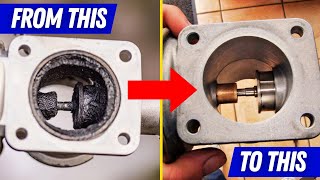
- Clogged or Stuck EGR Valve (Very Common) — Carbon deposits from exhaust gas clog EGR systems. This buildup forces the EGR valve's pintle to stick open or closed, triggering the code.
- Cracked, Disconnected, or Misrouted Vacuum Hoses (Common) — EGR systems rely on vacuum pressure. Rubber hoses become brittle, crack, or disconnect over time, creating vacuum leaks. On Ford DPFE systems, the two rubber hoses connecting to the sensor clog with carbon or degrade.
- Faulty EGR Control Solenoid (Common) — The electronic solenoid controlling vacuum flow to the EGR valve fails electrically, preventing the valve from opening or closing as commanded by the ECU.
- Blocked EGR Passages (Less Common) — Metal tubes and intake manifold passages completely block with carbon, stopping gas flow even with a functional valve.
- Dirty Throttle Body or MAF Sensor (GM Specific) (Less Common) — GM vehicles trigger P1400 when cold start performance fails the ECU's expected model. A dirty throttle body, contaminated Mass Airflow (MAF) sensor, or vacuum leak causes this mismatch.
- Damaged Wiring or Electrical Connectors (Less Common) — Wiring to the EGR valve, solenoid, or sensor frays, melts from engine heat, or corrodes. Connector pins lose connection, causing a circuit fault.
- Leaking Intake or Exhaust Manifold Gaskets (Rare) — Intake or exhaust manifold gasket leaks disrupt the pressure balance required by DPFE sensors, triggering P1400.
- Faulty Powertrain Control Module (PCM) (Very Rare) — The PCM's internal driver circuit controlling the EGR system fails, triggering P1400 despite functional components.
Symptoms

- Check Engine Light is On — The ECU illuminates the check engine light on the dashboard to alert you of a fault. This is often the only symptom for electrical circuit codes.
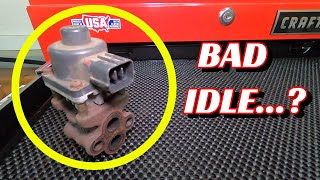
- Rough Idle or Stalling — A stuck-open EGR valve creates a constant vacuum leak at idle, allowing exhaust gases to enter prematurely. This disrupts the air-fuel mixture, causing the engine to run rough, shake, or stall.
- Reduced Engine Power and Acceleration — A malfunctioning EGR system disrupts the optimal air-fuel mixture, leading to a noticeable decrease in power, hesitation, and sluggish acceleration.
- Engine Knocking or Pinging — A stuck-closed EGR valve blocks exhaust gas flow, causing combustion chamber temperatures to spike during acceleration. This causes pre-detonation, resulting in a pinging or knocking sound.
- Smell of Fuel or Exhaust — A stuck-open EGR valve causes an incomplete burn, leading to a noticeable smell of unburnt fuel or raw exhaust fumes at idle.
- Failed Emissions Test (scan-tool only — no driver-felt sign) — The EGR system reduces NOx emissions. A non-functional system guarantees a failed smog inspection due to high NOx levels or the active Check Engine Light.
Diagnostic Flowchart
Tap your situation to follow the diagnostic path that matches what you're seeing on this code.
Common Fixes & Costs
- Replace the DPFE Sensor (Ford) — Parts: $40-$100, Labor: $50-$120, ~0.7 hr book time (DIY)
- Replace a Cracked Vacuum or PCV Hose — Parts: $5-$20, Labor: $0-$50, ~0.5 hr book time (DIY)
- Clean the EGR Valve and Passages — Parts: $10-$30, Labor: $100-$200, ~1.5 hr book time (DIY)
- Replace the EGR Control Solenoid/Regulator — Parts: $40-$120, Labor: $50-$100, ~0.8 hr book time (Intermediate)
- Replace the EGR Valve — Parts: $150-$400, Labor: $100-$300, ~1.8 hr book time (Intermediate)
DIY vs Professional
- Replace the DPFE Sensor (Ford) — Beginner: Yes
Tools: Ratchet with 8mm or 10mm socket, pliers for hose clamps, flashlight. - Replace a Cracked Vacuum Hose — Beginner: Yes
Tools: Pliers or a hose pick, new vacuum hose. - Clean the EGR Valve and Passages — Beginner: Maybe
Tools: Socket/wrench set, gasket scraper, wire brushes, torque wrench, EGR cleaner spray, new gasket. - Replace the EGR Control Solenoid — Beginner: Yes
Tools: Small wrench or socket set (often 10mm), pliers for hoses. - Replace the EGR Valve — Beginner: No
Tools: Extensive socket/wrench set, torque wrench, gasket scraper, new EGR valve and gaskets.
Used vs. New Parts: Buying Guide
When a used part is worth it: For purely mechanical components like a vacuum-operated EGR valve, a used part from a low-mileage vehicle is cost-effective. For electronic components like a DPFE sensor, the risk of premature failure is too high.
Donor-vehicle mileage cap: roughly under 60000 miles for the part to have meaningful remaining life.
Donor quality checklist:
- Verify the part number is an exact match for your vehicle.
- Inspect for heavy corrosion, damage to connectors, or signs of extreme heat.
- Avoid parts from vehicles in regions with heavy road salt usage.
Decision logic:
- If The part is electronic (e.g., DPFE sensor, EGR solenoid). → Buy new. Used electronic parts have an unknown history and high failure rate.
- If The part is a simple vacuum-operated EGR valve and the vehicle is high-mileage. → A low-mileage used part is a reasonable budget option, but new is preferred for longevity.
- If The cost savings for a used part are less than 50% of a new aftermarket part. → Buy new for the warranty and peace of mind.
Warranty tradeoff: Used parts from salvage yards typically offer a 30-90 day warranty covering only the part. New aftermarket parts come with a 1-year to limited lifetime warranty.
Worst-case if a used part fails: 200-500 if a used part fails shortly after installation, requiring repeat labor costs.
What Happens If You Wait — Timeline
- 0-1 month: Check Engine Light illuminates. Circuit faults show no symptoms. A slightly stuck valve causes a minor rough idle or hesitation. (MPG impact: 0-5%% · Added cost: $0-50 in wasted fuel)
- 1-4 months: Fuel economy decreases. A stuck-closed valve causes engine knocking during acceleration. A stuck-open valve causes frequent rough idling and stalling. (MPG impact: 5-10%% · Added cost: $50-200 in wasted fuel and fouled spark plugs)
- 4-8 months: Persistently high combustion temperatures damage the catalytic converter's precious metals. Excessive unburnt fuel contaminates oxygen sensors. (MPG impact: 10-15%% · Added cost: $300-900 (damage to O2 sensors and early catalytic converter degradation))
- 8+ months: Catastrophic failure of the catalytic converter due to thermal meltdown or complete clogging. Severe engine knocking causes internal engine damage. (MPG impact: 15-25%% · Added cost: $1,200-4,000 (full catalytic converter replacement and engine repairs))
Cost of Not Fixing It
- 0-1 month: Failed emissions test, 5-10% reduction in fuel economy, and potential for rough idle or stalling. (Added cost: 50-150)
- 1-6 months: High combustion temperatures damage the catalytic converter. Carbon buildup fouls spark plugs and O2 sensors. (Added cost: 200-500)
- 6+ months: Catastrophic failure of the catalytic converter due to prolonged high temperatures. Potential for internal engine damage from detonation. (Added cost: 1200-3500)
Diagnosis Steps

- Read the Trouble Codes & Freeze Frame Data
Use an OBD-II scanner to confirm P1400 is present and read its specific definition for your vehicle. Note codes like P0401 or P0300 for context. Review freeze frame data to see engine conditions when the code set.
Tools: OBD-II Scanner (Beginner) - Perform a Thorough Visual Inspection
Inspect all vacuum hoses connected to the EGR valve and solenoid for cracks, brittleness, or disconnection. Check electrical connectors for damage, corrosion, or loose pins. Ensure wiring isn't melted.
Tools: Flashlight (Beginner) - Pro Tip: Check EGR PIDs with a Scan Tool
Use a scan tool's live data to monitor 'EGR Commanded Position' versus 'EGR Actual Position'. Command the EGR valve open to 50% using bi-directional controls. The 'Actual' percentage must match the 'Commanded'. If stuck at 0%, the sensor or valve motor failed.
Tools: Bi-directional Scan Tool (Advanced) - Test the Ford DPFE Sensor Voltage
For Ford models, back-probe the DPFE sensor's signal wire with the key on, engine off (KOEO). A good sensor reads exactly 1.0V. Readings below 0.5V confirm the P1400 circuit low fault. Verify the reference wire has 5V.
Tools: Multimeter, Back-probe kit (Advanced) - Manually Test the EGR Valve
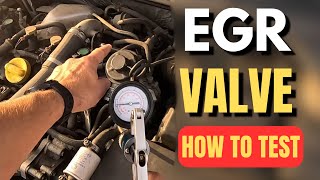
Attach a hand-held vacuum pump to the vacuum-operated EGR valve port with the engine idling. Apply vacuum; the engine must stumble or stall, proving the valve opened and passages are clear. The valve must hold vacuum without leaking down.
Tools: Hand-held Vacuum Pump (Intermediate) - Inspect the EGR Valve and Passages for Carbon
Remove the EGR valve. Look for heavy carbon buildup preventing the pintle from moving or sealing. Shine a light into the intake manifold port to check for complete carbon blockages.
Tools: Socket/Wrench Set, Gasket Scraper, Flashlight (Intermediate) - Test the EGR Control Solenoid
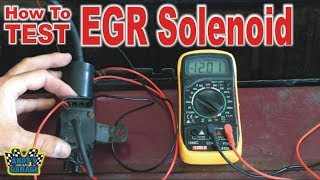
Disconnect the solenoid. With the ignition on, verify one pin has 12V battery voltage. Use jumper wires to apply power and ground directly to the solenoid pins. A healthy solenoid makes a sharp 'click'. No click means internal failure.
Tools: Multimeter, Jumper Wires (Intermediate) - Test EGR Position Sensor Voltage
For non-Ford vehicles with a 3-wire EGR position sensor, check for a 5V reference and ground. With the valve closed, the signal wire reads 0.7V to 1.5V. As the valve opens, voltage smoothly increases to 4.5V. Dropouts indicate a faulty sensor.
Tools: Multimeter, Back-probe kit (Advanced) - Check GM MAF Sensor Live Data
For GM P1400 cold start issues, check for a skewed MAF sensor. With a warm engine idling, the MAF reading in grams/second (g/s) must equal the engine's displacement in liters (e.g., 5.3L reads 5.3 g/s). Lower readings indicate a vacuum leak.
Tools: OBD-II Scanner with Live Data (Advanced) - Check for Clogged Catalytic Converter
Install a backpressure gauge in the upstream oxygen sensor port. At idle, pressure must be near 0 PSI. At a steady 2500 RPM, it must not exceed 1.5-2.0 PSI. Readings above 3 PSI confirm a restricted catalytic converter affecting EGR flow.
Tools: Wrench Set, Exhaust Backpressure Gauge (Advanced)
When This Code Triggers (Freeze-Frame Conditions)
- Engine Coolant Temp: 170-210°F (Fully warmed up, not during cold start (unless GM-specific))
- RPM: 1500-2500 (Light-throttle cruise or steady-state driving)
- Engine Load: 20-50% (Not at idle and not at wide-open throttle)
- Vehicle Speed: 40-60 mph (Steady highway or arterial road speed)
Related Codes
- P0401 — Indicates 'EGR Flow Insufficient.' P1400 is an electrical circuit code, while P0401 confirms a physical lack of flow caused by clogged passages or a stuck-closed valve.
- P0402 — Indicates 'EGR Flow Excessive.' Triggered if the EGR valve is stuck open, causing a constant flow of exhaust into the intake resulting in a rough idle.
- P1401 — On Ford vehicles, P1401 means 'DPFE Sensor Circuit High Voltage.' Seeing either P1400 or P1401 points exclusively to a failed DPFE sensor or wiring harness.
- P0300 — Indicates 'Random/Multiple Cylinder Misfire.' A stuck-open EGR valve leans out the air-fuel mixture enough to cause misfires, triggering P0300 alongside P1400.
Climate & Environmental Factors
- High Humidity / Moisture: Water is a combustion byproduct. Hot, moist exhaust gas condenses inside the cooler Ford DPFE sensor body, causing internal corrosion and electronic failure.
- Cold Climates / Short Trips: Frequent short trips prevent the engine from reaching full operating temperature, failing to burn off carbon and moisture deposits. This accelerates EGR valve and passage clogging.
- Cold Starts (GM Specific): GM vehicles run a 'Cold Start' emissions test for 15-70 seconds after startup. Placing a load on the engine during this window, such as turning on the A/C, disrupts the test and triggers P1400.
How to Talk to a Mechanic About This Code
Say this: "I have a P1400 code on my [Your Car's Make/Model]. Based on the make, I suspect it is the [DPFE sensor/EGR solenoid/a vacuum leak]. Please start by testing the specific component and checking for simple issues like hoses and wiring before quoting a full EGR valve replacement."
This signals you know P1400 is brand-specific and caused by cheap parts. It directs the mechanic to perform a proper diagnosis rather than jumping to the most expensive conclusion.
Avoid saying:
- 'Just fix whatever's wrong'
- 'My check engine light is on, can you look at it?' (too vague — invites upsell)
- 'I read online it's the EGR valve, just replace it.' (This prevents proper diagnosis)
Questions to ask before authorizing the repair:
- What specific component failed your test? (e.g., Did the DPFE sensor show low voltage?)
- Can you show me the failed part or a photo of the issue?
- Is this a safety-critical repair that must be done now, or can it wait?
- Does your estimate include a new gasket and cleaning of the surrounding passages?
- What is the warranty on this specific part and your labor?
Where to Take It: Dealer vs Independent vs Chain
- Dealer:
Recommended only for specific warranty/reflash cases. Otherwise, an independent shop is more cost-effective.
Best for: Vehicles under an emissions warranty (e.g., VW TDI)., Known manufacturer-specific quirks requiring a PCM reflash (e.g., Subaru or GM models)., Complex European brands requiring specialized tools.
Downsides: Highest labor rates ($150-$250 per hour)., Less willing to perform cheaper repairs like cleaning a valve versus replacing the entire assembly. (Typical cost: +50% vs. baseline) - Independent Shop:
Best overall fit for most P1400 scenarios, offering the best balance of expertise and value.
Best for: Most common P1400 fixes on out-of-warranty vehicles (Ford, GM, Nissan)., Diagnosing and repairing common failures like sensors, solenoids, vacuum leaks, and clogged valves.
Downsides: Quality and experience vary; check for ASE certification and good reviews., Lacks access to the latest manufacturer TSBs or reflash capabilities. (Typical cost: +0% vs. baseline) - Chain Shop:
High risk. AVOID for diagnosis. Only consider if you have already diagnosed a simple, accessible part failure yourself.
Best for: Simple, obvious part swaps like a very accessible DPFE sensor or EGR solenoid.
Downsides: Technician skill varies dramatically., High pressure to upsell; recommends expensive EGR valve replacements for simple vacuum leaks., Fails to perform thorough diagnosis of electrical circuits or clogged passages. (Typical cost: -10% vs. baseline)
When to Walk Away From the Repair
If the estimated repair cost exceeds 40% of your car's private-party value, evaluate your options.
- Car worth $4000, fix is $800: Fix it. The repair cost is well below the 40% threshold.
- Car worth $3000, fix is $1600: Walk away. The repair cost is over 50% of the car's value. It is not a sound investment.
What Scan Tool You Need for This Code

Minimum: A code reader displaying manufacturer-specific definitions and live data for sensor voltages and positions.
A basic $20 reader only shows 'P1400'. It won't tell you if it is a Ford DPFE sensor issue, a GM cold start problem, or a Subaru EVAP fault. Without live data to check sensor voltage, you are guessing.
Budget: BlueDriver Pro (~$100) — Connects to your smartphone to read manufacturer-specific codes and display live data for EGR position or DPFE sensor voltage.
Mid-range: Foxwell NT510 Elite (~$180) — Offers bi-directional control, allowing you to command the EGR valve to open and close from the tool to test if an electronic valve is stuck.
Professional: Autel MaxiCOM MK808 (~$500) — Provides full OE-level diagnostics with extensive bi-directional controls, special EGR tests, and detailed live data graphing.
Rent vs buy: AutoZone offers a free loaner tool program. You can borrow a scanner to read the code, but these are basic models. Buying a budget pick with live data is a smart investment for a P1400 diagnosis.
How to Clear the Code After You Fix It
- Use an OBD-II scan tool to clear the diagnostic trouble codes.
- Perform the specific EGR system drive cycle for the vehicle.
- Check readiness monitors to confirm the EGR monitor has completed.
Drive cycle (~20 minutes): A common drive cycle involves: a cold start, warm-up at idle for 2-3 minutes, moderate acceleration to 55 mph, hold a steady speed for 5-10 minutes, and then perform several cycles of deceleration and acceleration.
Readiness monitors affected: EGR System, Catalyst, O2 Sensor
Before emissions retest: drive at least 100 miles to fully set monitors.
Watch out for:
- Clearing the code with a scanner or disconnecting the battery resets all readiness monitors to 'incomplete'.
- The code returns if the underlying mechanical or electrical fault is not properly fixed.
- Failing to complete the precise drive cycle required by the manufacturer prevents the EGR self-test from running.
Will This Fail Emissions / State Inspection?
Yes — this code typically fails an OBD-II emissions inspection.
- California: An active P1400 code is an automatic failure. All readiness monitors must be 'complete' before a test can be passed.
- New York: The NYS DMV inspection includes an OBD-II scan. A P1400 code causes the vehicle to fail the emissions portion.
- Texas: In the 17 counties requiring emissions testing, a vehicle with an active P1400 code fails the OBD-II test portion.
Most Commonly Affected Vehicles
- Ford F-150, Explorer, Ranger, Focus (1996-2008) — Extremely common due to failure of the plastic DPFE sensor from heat and moisture. An updated metal-cased sensor is a durable replacement. The code is almost always P1400 for low circuit voltage.
- Chevrolet / GMC Silverado, Trailblazer, Colorado, Malibu (1998-2009) — On Vortec engines, a cracked PCV hose on the driver's side valve cover causes an unmetered air leak. On other models, P1400 refers to 'Cold Start Emission Reduction' caused by a dirty throttle body.
- Volkswagen / Audi Jetta, Golf, A4, A6 (2000-2015) — These models set P1400 for an electrical fault within the EGR valve assembly or a clogged EGR cooler. TDI models from 2009-2015 have extended emissions warranties covering the entire EGR system.
- Nissan Maxima, Altima, I30 (1995-2001) — P1400 specifically points to a malfunction of the EGRC (EGR Control) solenoid valve. Diagnosis involves checking for a 'click' from the solenoid when power is applied.
- Subaru Legacy, Outback, Impreza (2000-2005) — P1400 on Subarus indicates 'Fuel Tank Vent Valve Circuit Low,' pointing to an EVAP system problem, not the EGR. TSB #11-75-05 requires a PCM reflash for some 2005 Legacy models.
- BMW 3 Series (E46), 8 Series (E31) (1998-2006) — On some E46 models, P1400 is defined as 'Camshaft Position Actuator A Control Circuit Signal Low'. On others, it points to a failing pre-catalyst oxygen sensor.
- Honda Civic, Accord (1998-2005) — P1400 indicates a fault in the EGR valve lift sensor integrated into the valve itself. Clogged EGR ports in the intake manifold are also a frequent issue.
- Toyota Camry, Corolla (1997-2004) — Triggered by a faulty EGR valve position sensor failing to send correct position data back to the ECU, or a failed vacuum modulator controlling the valve.
Manufacturer-Specific Notes
- Ford: P1400 specifically means the DPFE sensor circuit has low voltage. Original plastic DPFE sensors fail constantly from heat and moisture. Always check the two small rubber hoses connected to it for cracks.
- Chevrolet/GMC: On 4.3L, 4.8L, and 5.3L Vortec engines, a hidden crack on the PCV vent hose triggers the code. On other models, engine load during the first 70 seconds of startup triggers this 'Cold Start' code.
- Nissan: P1400 specifically identifies a fault with the EGRC (EGR Control) solenoid valve. Replace this solenoid only after verifying the wiring and connector are undamaged.
- Subaru: P1400 indicates 'Fuel Tank Vent Valve Circuit Low,' pointing to an EVAP system problem. TSB #11-75-05 notes some 2005 Legacy models require a PCM reflash to fix this.
- Volkswagen: For TDI diesel models (2009-2015), the entire EGR system is covered by an extended emissions warranty. Check with a VW dealer about warranty coverage before attempting repairs.
Real Owner Stories
2000 Ford Ranger with P1400
Check Engine Light illuminated. Code scan revealed P1400, defined as DPFE Sensor Circuit Low Voltage.
What they tried:
- Visually inspected the DPFE sensor wiring and connector pins for obvious damage.
- Disconnected the two sensor hoses to allow the inside of the sensor to dry out overnight, then cleared the code. The code returned.
- Replaced the DPFE sensor located on the front of the intake manifold.
Outcome: Replacing the DPFE sensor resolved the issue permanently.
Lesson: On Ford vehicles from this era, P1400 almost always points to a faulty DPFE sensor. It is a highly likely culprit and a straightforward DIY replacement.
1996 Nissan Maxima with 185k miles and P1400
Check Engine Light appeared, and a scan showed code P1400, indicating an EGRC Solenoid issue.
What they tried:
- Checked for battery voltage at the solenoid's connector with the ignition on.
- Directly applied 12V power to the solenoid to listen for an audible 'click'.
- Re-secured the harness connector after finding both power and solenoid function were good.
Outcome: Re-securing the loose harness connector resolved the code without replacing parts.
Lesson: For electrical codes like Nissan's P1400, verify power reaches the component and test basic function before buying parts. The problem is often a loose connector or bad wire.
2007 Chevy Trailblazer at 140k miles with P1400
Check Engine Light on with code P1400, defined as 'Cold Start Emissions Reduction Control'.
What they tried:
- An auto parts store scan suggested a PCM reprogramming.
- Forum advice pointed towards a dirty electronic throttle body as the true cause.
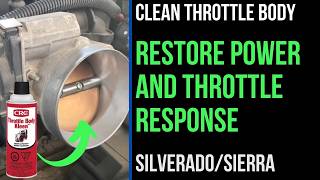
- Removed the air intake tubing and cleaned carbon out of the throttle body using carburetor cleaner.
Outcome: Cleaning the throttle body resolved the cold start performance mismatch and cleared the code.
Lesson: For GM's specific P1400 definition, the issue is a performance mismatch during a cold start test. Cleaning the throttle body is an effective solution before considering PCM reprogramming.
How to Prevent This Code From Triggering
- Perform periodic highway driving (Once every few weeks) — Sustained driving at higher RPMs and temperatures burns off soft carbon and moisture deposits accumulating in the EGR system during short trips.
- Use high-quality fuel with detergents (Every fill-up) — Top-tier gasolines contain additives promoting cleaner combustion, reducing soot that forms carbon deposits in the EGR valve and passages.
- Use a quality fuel system cleaner additive (Every 5,000-10,000 miles) — Cleaners with polyetheramine (PEA) reduce new carbon formation in the combustion chamber, lessening the load on the EGR system.
- Avoid prolonged idling (Daily habit) — Long periods of idling create lower combustion temperatures and incomplete fuel burn, significantly increasing soot production that clogs the EGR system.
- Clean EGR system components proactively (Every 50,000 miles) — Proactively removing and cleaning the EGR valve prevents it from becoming stuck or completely clogged, avoiding future drivability issues.
Frequently Asked Questions
Can I just clean my EGR valve instead of replacing it?
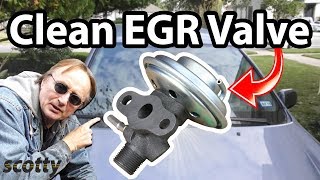
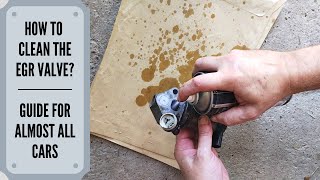
Yes, cleaning carbon buildup from the EGR valve and passages with a dedicated cleaner and wire brush solves the problem. This is a cost-effective first step. However, if the valve fails electrically or the diaphragm ruptures, you must replace it.
Will a P1400 code cause my car to fail an emissions test?
Yes, an active P1400 code guarantees an emissions test failure. The active Check Engine Light is an automatic failure in most regions. A non-functional EGR system also causes high NOx emissions, resulting in a failed tailpipe test.
What are the most common misdiagnosis mistakes for P1400?
Mechanics often mistakenly replace the expensive EGR valve before checking for simpler issues. The root cause is frequently a cheap cracked vacuum hose, a corroded connector, or a clogged EGR passage. On Ford vehicles, always test the DPFE sensor before replacing the valve.
What is a DPFE sensor and why does it fail so often?
The DPFE (Differential Pressure Feedback EGR) sensor measures EGR flow on Ford vehicles. It connects to the EGR tube via two rubber hoses. It fails frequently because constant exposure to hot, corrosive exhaust gases and moisture degrades its internal electronics.
How much does it cost to fix a P1400 code?
Costs range from $10 for a vacuum hose to $600+ for a full EGR valve replacement. Replacing a common Ford DPFE sensor or EGR solenoid typically costs $120 to $280 including parts and labor. Cleaning a clogged EGR valve averages $150 at an independent shop.
Can a bad EGR valve cause a catalytic converter to fail?
Yes, a stuck-closed EGR valve causes high combustion temperatures that overheat and destroy the catalytic converter's internal structure. A stuck-open valve causes an overly rich or lean condition that fouls the converter.
What is the difference between P1400 and P0401?
P1400 is a manufacturer-specific code pointing to an electrical circuit problem, like a bad sensor or solenoid. P0401 is a universal code for insufficient EGR flow, meaning the computer detected a physical blockage. A bad sensor causing P1400 often triggers a false P0401 code alongside it.
Key Takeaways
- P1400 is a manufacturer-specific code that almost universally indicates a failure within the Exhaust Gas Recirculation (EGR) system.
- Ford vehicles trigger P1400 for a failed DPFE sensor, GM uses it for cold-start emissions failures, and Subaru uses it for EVAP vent valve faults.
- The number one cause of P1400 on Ford models is a melted or moisture-corroded DPFE sensor requiring a $50 replacement.
- A stuck-open EGR valve causes an immediate rough idle and stalling, while a stuck-closed valve causes engine knocking under heavy acceleration.
- Always inspect the brittle plastic and rubber vacuum hoses connecting the EGR valve and sensors before buying replacement parts.
Helpful Videos


The information in this article is provided for general reference and educational purposes only. Vehicle specifications, procedures, and part compatibility can vary by production date, trim level, and region. Always consult your vehicle's factory service manual and verify part numbers before purchasing or performing repairs. Safety-critical components such as airbags, seat belts, and braking systems should be installed by a qualified professional.
- 🎬 Helpful Videos
- What Does P1400 Mean?
- Can I Drive With P1400?
- Common Causes
- Symptoms
- Diagnostic Flowchart
- Common Fixes & Costs
- DIY vs Professional
- Used vs. New Parts: Buying Guide
- What Happens If You Wait — Timeline
- Cost of Not Fixing It
- Diagnosis Steps
- When This Code Triggers (Freeze-Frame Conditions)
- Related Codes
- Climate & Environmental Factors
- How to Talk to a Mechanic About This Code
- Where to Take It: Dealer vs Independent vs Chain
- When to Walk Away From the Repair
- What Scan Tool You Need for This Code
- How to Clear the Code After You Fix It
- Will This Fail Emissions / State Inspection?
- Most Commonly Affected Vehicles
- Manufacturer-Specific Notes
- Real Owner Stories
- 2000 Ford Ranger with P1400
- 1996 Nissan Maxima with 185k miles and P1400
- 2007 Chevy Trailblazer at 140k miles with P1400
- How to Prevent This Code From Triggering
- Frequently Asked Questions
- Can I just clean my EGR valve instead of replacing it?
- Will a P1400 code cause my car to fail an emissions test?
- What are the most common misdiagnosis mistakes for P1400?
- What is a DPFE sensor and why does it fail so often?
- How much does it cost to fix a P1400 code?
- Can a bad EGR valve cause a catalytic converter to fail?
- What is the difference between P1400 and P0401?
- Key Takeaways
- 🎟️ Get 5% Off