

OBD-II Code P1382: The Ultimate Mechanic's Guide (2026 Update)
What P1382 means, why it triggers, and how to fix it for good on Honda, Ford, Mazda, and more.
- P1382 indicates a Cylinder Position Sensor failure requiring a $250-$600 distributor replacement on 1990s Hondas, or a Variable Cam Timing (VCT) solenoid circuit fault on Fords and Mazdas.
- Stop driving immediately; P1382 causes sudden engine stalling at highway speeds, creating a severe crash risk.
- On Ford and Mazda vehicles, check the engine oil first; low or sludgy oil starves the hydraulic VCT system and an $80 oil change often resolves the code.
- Before replacing a $300 Honda distributor, test the wiring harness for continuity; broken wires between the sensor and PCM cause the code to return immediately after repair.
- Use a $150+ bi-directional scan tool to command the Ford/Mazda VCT solenoid on and off; if it fails to click, the solenoid is mechanically stuck and requires replacement.
What Does P1382 Mean?

The P1382 code signals a failure in a critical engine timing circuit, varying entirely by manufacturer. On Honda and Acura vehicles, the Powertrain Control Module (PCM) lost the signal from the Cylinder Position (CYP) sensor. On Ford, Mazda, Jaguar, and Land Rover vehicles, it indicates an electrical circuit failure at the Variable Camshaft Timing (VCT) solenoid.
Technical definition: For Honda/Acura: 'Cylinder Position (CYP) Sensor No Signal'. For Ford/Mazda/Jaguar/Land Rover: 'Variable Cam Timing (VCT) Solenoid Circuit Malfunction'.
Can I Drive With P1382?
no_not_recommended. Driving with code P1382 is a significant safety risk. The most severe symptom is sudden, unexpected engine stalling, which causes a loss of control in traffic. For Ford and Mazda vehicles, continued driving starves the VCT system of oil, accelerating wear on critical timing components. Furthermore, associated engine misfires overheat and destroy the catalytic converter, a repair costing $800 to $2,500.
Common Causes

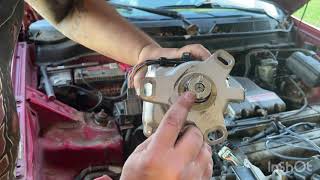
- Failed Distributor Assembly (Honda/Acura) (Very Common) — On 1990s and early 2000s Hondas, the Cylinder Position (CYP) sensor is permanently sealed inside the distributor. The internal windings break down from heat, requiring complete assembly replacement. 🎬 Watch: How to replace the distributor on a Honda CR-V.
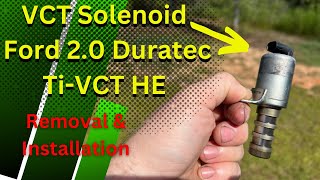
- Faulty Variable Camshaft Timing (VCT) Solenoid (Ford/Mazda/JLR) (Very Common) — The VCT solenoid controls oil flow to adjust camshaft timing. It fails electrically or sticks mechanically due to sludge buildup. 🎬 See this walkthrough for removing and installing a Ford VCT solenoid.
- Low or Dirty Engine Oil (Common) — VCT systems rely on clean, pressurized oil. Low levels, sludge, or incorrect viscosity clog the solenoid's micro-screens, triggering the code on Ford and Mazda vehicles.
- Damaged Wiring or Poor Electrical Connection (Common) — Wiring harnesses fray, melt, or saturate with oil. Pushed-out pins or corrosion at the distributor or VCT solenoid connector break the circuit.
- Defective Aftermarket Parts (Common) — Cheap aftermarket or remanufactured Honda distributors have high out-of-the-box failure rates, causing P1382 to return immediately after repair.
- Faulty Alternator Interference (Rare) — A failing alternator produces AC voltage ripple that disrupts the sensitive CYP sensor signal. Unplugging the alternator temporarily clears the code in these rare cases.
- Jumped Mechanical Timing (Rare) — A stretched timing chain or jumped belt throws camshaft and crankshaft signals out of sync, forcing the PCM to flag a sensor error.
- Faulty Powertrain Control Module (PCM) (Very Rare) — The PCM itself fails, misinterpreting good sensor data. Consider this only after verifying wiring continuity and replacing the sensor/solenoid.
Symptoms

- Engine Stalling or Shutting Off While Driving — The engine shuts off unexpectedly at highway speeds or when stopping. This is the most dangerous symptom.
- Check Engine Light is On — The Malfunction Indicator Lamp (MIL) illuminates immediately upon fault detection.
- Engine Will Not Start — The engine cranks but fails to start because the PCM lacks cylinder position data to time fuel injection.
- Rough Idle and Misfiring — The engine shakes at idle, stutters during acceleration, and exhibits a jumpy tachometer needle.
- Reduced Engine Power / Limp Mode — The vehicle enters 'limp mode,' capping engine RPM below 3,000 to prevent internal damage.
- Increased Emissions or Fuel Smell — Incorrect timing causes inefficient combustion, resulting in raw fuel smells from the exhaust and failed emissions tests.
Diagnostic Flowchart

Tap your situation to follow the diagnostic path that matches what you're seeing on this code.
Common Fixes & Costs
- Replace Distributor Assembly (Honda/Acura) — Parts: $150-$400, Labor: $100-$200, ~1.2 hr book time (Intermediate)
- Replace Variable Camshaft Timing (VCT) Solenoid (Ford/Mazda/JLR) — Parts: $50-$150, Labor: $75-$200, ~1.0 hr book time (DIY)
- Engine Oil and Filter Change — Parts: $40-$80, Labor: $20-$50, ~0.5 hr book time (DIY)
- Repair or Replace Damaged Wiring/Connector — Parts: $10-$60, Labor: $100-$350, ~2.0 hr book time (Intermediate)
- Replace Powertrain Control Module (PCM) — Parts: $200-$800, Labor: $100-$200, ~1.5 hr book time (Professional)
DIY vs Professional
- Engine Oil and Filter Change — Beginner: Yes
Tools: Wrench, oil filter wrench, drain pan, funnel. - Replace VCT Solenoid — Beginner: Yes, if easily accessible.
Tools: Socket set, torque wrench, rags. - Replace Distributor Assembly — Beginner: No, intermediate skill recommended.
Tools: Socket set, torque wrench, timing light, marker. - Repair Wiring/Connector — Beginner: No.
Tools: Multimeter, wire strippers, soldering iron, heat shrink. - Replace PCM — Beginner: No.
Tools: Socket set, specialized programming scan tool.
Used vs. New Parts: Buying Guide
When a used part is worth it: For a Honda distributor, a used OEM unit from a low-mileage vehicle (<80k miles) is often more reliable than a cheap new aftermarket part. For a Ford/Mazda VCT solenoid, always buy new OEM; they are wear items with high failure rates.
Donor-vehicle mileage cap: roughly under 80000 miles for the part to have meaningful remaining life.
Donor quality checklist:
- Verify the exact part number; small variations cause incompatibility.
- Ensure the donor vehicle wasn't scrapped for timing issues.
- Buy from salvage yards offering 30-90 day warranties.
- Reject parts with corrosion, heavy sludge, or damaged connector pins.
Decision logic:
- If The part is a VCT solenoid for a Ford/Mazda → Buy new OEM or top-tier aftermarket. Used solenoids fail rapidly.
- If The part is a distributor for a Honda → A used OEM part from a low-mileage donor beats a cheap, non-OEM aftermarket part.
- If The part is a PCM → Avoid used unless purchased from a specialist who programs it to your specific VIN.
Warranty tradeoff: Used parts carry 30-90 day warranties. New aftermarket parts offer 1-year to lifetime warranties. New OEM parts carry 1-year warranties.
Worst-case if a used part fails: $200-$500 for repeat labor and replacement parts if a used component fails.
What Happens If You Wait — Timeline
- 0-1 month: Check Engine Light illuminates. Fords exhibit slight rough idle. Hondas risk sudden stalling. (MPG impact: 0-5%% · Added cost: $0-$50 in wasted fuel)
- 1-3 months: Fords experience hesitation and noticeable MPG drops. Hondas stall frequently when stopping or hot. (MPG impact: 5-15%% · Added cost: $50-$150 in wasted fuel)
- 3-6 months: Stalling becomes unpredictable. Persistent misfires overheat the catalytic converter. Engine enters limp mode.
- 6+ months: Catastrophic damage. Oil starvation destroys Ford timing chains and phasers. Honda starters burn out from repeated cranking. (MPG impact: >25%% · Added cost: $1500-$4000+ for timing chain/phaser replacement)
Cost of Not Fixing It
- 0-1 month: Intermittent stalling, no-start conditions, and a 5-15% drop in fuel economy. The vehicle is unsafe to drive. (Added cost: $0-$50 in wasted fuel)
- 1-6 months: Persistent misfires dump raw fuel into the exhaust, overheating and melting the catalytic converter. (Added cost: $800-$2500)
- 6+ months: On VCT-equipped engines, oil starvation destroys camshafts and phasers, requiring major engine rebuilds. (Added cost: $1500-$4000+)
Diagnosis Steps
- Read Code and Review Freeze Frame Data
Use an OBD-II scanner to confirm P1382. Analyze freeze-frame data (RPM, temp, load) to replicate the conditions when the fault occurred.
Tools: OBD-II Scanner (Beginner) - Check Engine Oil Level and Condition (Ford/Mazda/JLR)
Ensure oil is full, clean, and the correct viscosity. If oil is low or sludgy, perform an oil change first. Clear the code and test drive.
Tools: Rag, Owner's Manual (Beginner) - Visual Inspection of Wiring and Connectors
Inspect the harness leading to the distributor or VCT solenoid. Look for chafing, melting, oil saturation, or pushed-out connector pins.
Tools: Flashlight (Beginner) - Test Sensor/Solenoid Resistance
For Hondas, measure resistance between the two CYP sensor terminals (typically 350-700 or 800-1500 ohms). For Fords/Mazdas, measure across the VCT solenoid pins (typically 7-14 ohms). Out-of-spec readings require part replacement.
Tools: Multimeter, Repair Manual (Intermediate) - Perform a Functional 'Click' Test (Ford/Mazda/JLR)
Remove the VCT solenoid. Apply 12V power and ground directly to the terminals. A healthy solenoid produces a sharp 'click'. No click means it is mechanically stuck.
Tools: Jumper Wires, 12V Power Source (Intermediate) - Check for 5V Reference and Ground (Honda/Acura)
Backprobe the distributor connector with the key on, engine off. Verify a stable 5-volt reference from the PCM and good continuity to ground. Missing voltage indicates a wiring or PCM fault.
Tools: Multimeter (Advanced) - Check for Shorts and Opens in the Wiring Harness
Disconnect the sensor and PCM. Test continuity on the signal and ground wires from end to end. Test for shorts to ground. High resistance or OL indicates a broken wire.
Tools: Multimeter, Repair Manual (Advanced) - Command the VCT Solenoid with a Scan Tool (Ford/Mazda/JLR)
Command the VCT solenoid on/off while idling. Observe the actual camshaft angle (CAM_WR) change relative to the desired angle (VCT_REQ). If CAM_ERR increases, the solenoid or phaser is faulty.
Tools: Bi-Directional Scan Tool (Professional) - Analyze the CYP Sensor Signal (Honda/Acura)
Backprobe the CYP signal wire. While cranking, verify a clean digital square wave pulsing between 0V and 5V. A noisy waveform confirms sensor failure or alternator interference.
Tools: Oscilloscope (Professional)
When This Code Triggers (Freeze-Frame Conditions)
- Engine Coolant Temp: 180-210°F (Fully warmed up)
- RPM: 1500-3000 (Cruise, light acceleration, or steady throttle)
- Engine Load: 25-70% (Maintaining speed on a flat road or slight incline)
- Vehicle Speed: 45-65 mph (Highway or arterial road driving)
Related Codes
- P1381 — Honda sister code. P1382 means 'No Signal' (dead sensor). P1381 means 'Intermittent Interruption' (loose wire). Seeing both confirms a wiring harness fault.
- P0335 / P0340 — Generic Crank/Cam sensor codes. On older Hondas, these sensors share the distributor housing with the CYP sensor. A fault in one requires replacing the whole assembly.
- P0011 / P0012 — Ford/Mazda mechanical timing codes (over-advanced/retarded). P1382 is the electrical fault causing the solenoid to stick, which then triggers these mechanical codes.
- P0325 — Knock Sensor code. Erratic timing from P1382 causes engine detonation, triggering P0325. Fixing P1382 resolves the knock code.
Climate & Environmental Factors
- Cold Weather: Thick, cold oil slows VCT solenoid response times on Fords and Mazdas, triggering codes on cold starts.
- High Humidity / Water Intrusion: Moisture accelerates corrosion on connector pins, increasing resistance and causing 'Circuit Malfunction' codes.
- Vibration and Heat Cycles: Engine heat breaks down internal sensor windings over time, causing the classic Honda heat-soak stalling issue.
How to Talk to a Mechanic About This Code
Say this: "I have a P1382 code. For my Honda, please test the wiring harness for continuity between the distributor and PCM before replacing the distributor. For my Ford, please check the oil condition and perform a resistance and 'click' test on the VCT solenoid."
Directs the mechanic to perform specific diagnostic steps, preventing the common mistake of replacing a Honda distributor when the wiring is faulty, or overlooking a simple oil issue on a Ford.
Avoid saying:
- 'Just fix whatever's wrong'
- 'My check engine light is on, can you look at it?'
- 'Whatever you recommend'
Questions to ask before authorizing the repair:
- For a Honda: Did you test the resistance of the CYP sensor at the PCM connector to confirm the wiring is good?
- For a Ford/Mazda: Did the VCT solenoid pass a functional click test?
- Can you show me the out-of-spec multimeter reading?
- What is the warranty on the replacement distributor or solenoid?
Where to Take It: Dealer vs Independent vs Chain
- Dealer:
Not recommended unless the vehicle is under warranty. This code is too common to justify dealer labor rates.
Best for: Vehicles under powertrain warranty., Complex electrical issues requiring PCM replacement.
Downsides: Charges 1.5-2x the labor rate of independent shops., Recommends replacing whole assemblies instead of repairing wiring. (Typical cost: +50% vs. baseline) - Independent Shop:
Best fit. Experienced independent mechanics have fixed this exact issue many times and charge significantly less than dealers.
Best for: Out-of-warranty vehicles requiring cost-effective repairs., Common codes like P1382 on older Hondas and Fords.
Downsides: Diagnostic capabilities vary; verify ASE certification. (Typical cost: +0% vs. baseline) - Chain Shop:
Avoid. They will likely replace the Honda distributor without testing the wiring, causing the problem to return.
Best for: Routine maintenance like oil changes.
Downsides: Technician skill is inconsistent., Lacks advanced diagnostic tools for electrical circuit testing. (Typical cost: -10% vs. baseline)
When to Walk Away From the Repair
If the estimated repair cost exceeds 40-50% of the car's Kelley Blue Book (KBB) private-party value, sell the car as-is.
- Car worth $2500, fix is $450: Fix it. A $450 distributor replacement restores a critical function and keeps the car on the road.
- Car worth $4000, fix is $2200: Walk away. If a Ford requires VCT solenoids, phasers, and timing chains, the cost exceeds half the car's value.
- Car worth $3000, fix is $1200: Borderline. Get a second opinion before authorizing a $1200 PCM replacement.
What Scan Tool You Need for This Code
Minimum: An OBD-II reader to clear codes, plus a multimeter to test resistance.
A $30 reader cannot test Honda wiring or command a Ford VCT solenoid. You need bi-directional control to definitively diagnose the solenoid.
Budget: BlueDriver Pro Scan Tool (~$100) — Reads codes and graphs live RPM data. Lacks bi-directional control for VCT testing.
Mid-range: Foxwell NT510 Elite / XTOOL D7 (~$150-350) — Offers bi-directional control. Commands the Ford/Mazda VCT solenoid on and off to verify mechanical operation.
Professional: Autel MaxiCOM MK808S (~$450-900) — Provides OE-level diagnostics and displays desired vs. actual cam angle PIDs.
Rent vs buy: Parts stores rent basic readers for free, but they lack bi-directional control. Buying a mid-range scanner is required to properly diagnose Ford/Mazda VCT systems.
How to Clear the Code After You Fix It
- Use an OBD-II scan tool to clear the P1382 code.
- Reconnect the battery if disconnected during repair.
- Perform a complete drive cycle to run readiness monitors.
Drive cycle (~30 minutes): Cold start (engine off 6+ hours), idle 3 minutes, drive steady at 55 mph for 5 minutes, coast to 20 mph without braking, accelerate to 55 mph, and perform 15 minutes of mixed city/highway driving.
Readiness monitors affected: Catalyst Monitor, EGR System, O2 Sensor Monitor, EVAP System
Before emissions retest: drive at least 100 miles to fully set monitors.
Watch out for:
- Disconnecting the battery clears the light but resets monitors to 'Not Ready', causing an automatic emissions failure.
- The code returns immediately if the root cause (broken wire, defective aftermarket part) remains unfixed.
Will This Fail Emissions / State Inspection?
Yes — this code typically fails an OBD-II emissions inspection.
- California: An active P1382 is an automatic failure. A full drive cycle must set all monitors to 'Ready' before a re-test passes.
- New York: Illuminated Check Engine Lights cause automatic failure. Clearing the code right before testing fails the vehicle for 'Not Ready' monitors.
- Texas: Active codes cause automatic failure. 2001+ vehicles allow only one 'Not Ready' monitor; clearing codes resets all of them.
Most Commonly Affected Vehicles

- Honda Accord / Prelude (1996-2002) — Extremely common failure of the internal CYP sensor. Requires complete distributor replacement.
- Honda / Acura Civic / Integra (1996-2001) — Shares the same distributor architecture; highly prone to CYP sensor failure.
- Honda CR-V (1997-2001) — Distributor failure frequently causes stalling when the engine reaches operating temperature.
- Ford Focus (2003-2011) — P1382 points to a faulty VCT solenoid or connector. Oil condition is the primary failure factor.
- Mazda 3, 6, CX-7 (2004-2013) — Indicates a VCT solenoid circuit fault caused by a stuck solenoid, dirty oil, or water intrusion in the harness.
- Jaguar S-Type, X-Type (2000-2008) — On 3.0L V6 engines, points to a VVT solenoid circuit malfunction causing rough idle.
Manufacturer-Specific Notes
- Honda / Acura: The CYP sensor is permanently integrated into the distributor. You cannot buy the sensor separately; you must replace the entire $300 distributor assembly.
- Ford / Mazda: The code strictly refers to an electrical fault in the VCT solenoid circuit, but low/dirty oil is the root cause of 80% of these failures. Always check oil first.
- Mazda (Warranty Extension): Mazda issued SSP 87 extending warranty coverage for VVT issues on 2007-2010 CX-7 and Mazdaspeed models, highlighting severe factory defects in this system.
Real Owner Stories
1998 Honda Accord (140k miles) - The Misdiagnosis Loop
Car experienced sudden stalling at stop lights and a check engine light with code P1382.
What they tried:
- Replaced the distributor with a remanufactured unit.
- Code P1382 returned after 500 miles.
- Owner tested wiring and found it to be within spec.
Outcome: The ultimate culprit was a faulty PCM, discovered only after replacing the distributor twice.
Lesson: If P1382 returns after replacing a Honda distributor, rigorously test the wiring harness. If wiring is perfect, suspect a defective aftermarket part or a failing PCM.
2007 Ford F-150 5.4L 3V - The Easy Fix
Truck had hesitation, poor fuel economy (13 MPG), a startup rattle, and a burning oil smell.
What they tried:
- Visual inspection revealed a massive oil leak and sludge buildup around the driver's side VCT solenoid.
Outcome: Replacing both VCT solenoids and seals resolved the startup rattle, hesitation, and restored MPG.
Lesson: Always perform a visual inspection first. An oil leak from a failed VCT solenoid seal causes drivability problems that mimic severe engine failure.
1999 Honda CR-V - The Heat-Soak Failure
Vehicle started fine cold but stalled and refused to run after reaching operating temperature.
What they tried:
- Diagnosed the CYP sensor inside the distributor.
Outcome: Replacing the distributor assembly resolved the issue, confirming the internal sensor failed only under heat.
Lesson: Intermittent stalling that occurs only when hot is a classic symptom of electronic component failure inside the distributor.
2000 Honda Civic Si - The Unusual Cause
Car hesitated between 2,000-3,000 RPM and threw P1381 and P1382 codes.
What they tried:
- Inspected the distributor and found a loose screw dropped by a prior owner.
Outcome: The screw physically destroyed the magnetic pickup for the CYP sensor. Replacing the distributor fixed it.
Lesson: Physical damage inside the distributor destroys sensitive timing sensors. Ensure no debris falls into the housing during service.
How to Prevent This Code From Triggering
- Perform regular oil changes with manufacturer-spec oil (Ford/Mazda) (Every 5,000 miles or 6 months) — Extending oil intervals allows sludge to clog the tiny passages in VCT solenoids, causing them to stick and fail.
- Replace the distributor O-ring and internal shaft seal (Honda) (When replacing the valve cover gasket or if an oil leak is noticed) — Leaking oil saturates wiring connectors and contaminates the sensitive internal CYP sensor.
- Use an engine flush product before an oil change (Ford/Mazda) (Once every 30,000-50,000 miles) — Dissolves accumulated sludge from the VCT system, restoring function to sticky solenoids.
- Apply dielectric grease to electrical connectors (Anytime a sensor connector is disconnected) — Seals out moisture, preventing pin corrosion that causes high resistance and 'Circuit Malfunction' codes.
Frequently Asked Questions
Can I just replace the sensor instead of the whole distributor on my Honda?
No. On affected Hondas, the CYP sensor is permanently integrated into the distributor housing. You must replace the entire distributor assembly.
I replaced the distributor but P1382 came back. What's wrong?
You likely have a broken wire between the distributor and the PCM, or the replacement aftermarket distributor was defective out of the box. Test the wiring harness for continuity before buying another part.
What is the most common misdiagnosis for a P1382 code?
Replacing the Honda distributor without testing the wiring harness first. Always verify continuity to the PCM to rule out a broken wire.
How can an oil change fix a P1382 code?
Ford and Mazda VCT systems use pressurized oil to adjust cam timing. Sludgy or low oil clogs the VCT solenoid's internal screens, triggering the code.
What's the difference between P1381 and P1382 on a Honda?
P1382 means 'No Signal' (a dead sensor or completely broken wire). P1381 means 'Intermittent Interruption' (a loose connection or chafed wire shorting out).
Can a bad alternator cause a P1382 code?
Yes. A failing alternator produces AC voltage ripple (electrical noise) that disrupts the sensitive CYP sensor signal.
What does the Cylinder Position (CYP) sensor do?
It identifies the #1 cylinder's Top Dead Center (TDC) position. The PCM uses this precise data to perfectly time sequential fuel injection.
My car runs fine, but the light is on. What should I do?
The fault is real and often intermittent. Ignoring it leads to sudden stalling at highway speeds or a complete no-start condition.
Key Takeaways
- P1382 indicates a Cylinder Position Sensor failure requiring a $250-$600 distributor replacement on 1990s Hondas, or a Variable Cam Timing (VCT) solenoid circuit fault on Fords and Mazdas.
- Stop driving immediately; P1382 causes sudden engine stalling at highway speeds, creating a severe crash risk.
- On Ford and Mazda vehicles, check the engine oil first; low or sludgy oil starves the hydraulic VCT system and an $80 oil change often resolves the code.
- Before replacing a $300 Honda distributor, test the wiring harness for continuity; broken wires between the sensor and PCM cause the code to return immediately after repair.
- Use a $150+ bi-directional scan tool to command the Ford/Mazda VCT solenoid on and off; if it fails to click, the solenoid is mechanically stuck and requires replacement.
Helpful Videos

The information in this article is provided for general reference and educational purposes only. Vehicle specifications, procedures, and part compatibility can vary by production date, trim level, and region. Always consult your vehicle's factory service manual and verify part numbers before purchasing or performing repairs. Safety-critical components such as airbags, seat belts, and braking systems should be installed by a qualified professional.
- 🎬 Helpful Videos
- What Does P1382 Mean?
- Can I Drive With P1382?
- Common Causes
- Symptoms
- Diagnostic Flowchart
- Common Fixes & Costs
- DIY vs Professional
- Used vs. New Parts: Buying Guide
- What Happens If You Wait — Timeline
- Cost of Not Fixing It
- Diagnosis Steps
- When This Code Triggers (Freeze-Frame Conditions)
- Related Codes
- Climate & Environmental Factors
- How to Talk to a Mechanic About This Code
- Where to Take It: Dealer vs Independent vs Chain
- When to Walk Away From the Repair
- What Scan Tool You Need for This Code
- How to Clear the Code After You Fix It
- Will This Fail Emissions / State Inspection?
- Most Commonly Affected Vehicles
- Manufacturer-Specific Notes
- Real Owner Stories
- 1998 Honda Accord (140k miles) - The Misdiagnosis Loop
- 2007 Ford F-150 5.4L 3V - The Easy Fix
- 1999 Honda CR-V - The Heat-Soak Failure
- 2000 Honda Civic Si - The Unusual Cause
- How to Prevent This Code From Triggering
- Frequently Asked Questions
- Can I just replace the sensor instead of the whole distributor on my Honda?
- I replaced the distributor but P1382 came back. What's wrong?
- What is the most common misdiagnosis for a P1382 code?
- How can an oil change fix a P1382 code?
- What's the difference between P1381 and P1382 on a Honda?
- Can a bad alternator cause a P1382 code?
- What does the Cylinder Position (CYP) sensor do?
- My car runs fine, but the light is on. What should I do?
- Key Takeaways
- 🎟️ Get 5% Off