

OBD-II Code P1381: A Manufacturer-Specific Timing Malfunction
The Ultimate Guide: What P1381 means, why it triggers, and how to fix it on your Honda, Ford, GM, and more.
- Check your engine oil first; low or dirty oil causes 80% of P1381 codes on VVT-equipped vehicles like Ford and Jaguar.
- On 1996-2002 Hondas, P1381 indicates a failing Cylinder Position (CYP) sensor inside the distributor, requiring a $250-$550 full distributor replacement.
- Do not replace a Honda distributor without first performing an AC ripple test on the alternator, as faulty diodes frequently create electrical noise that mimics a dead CYP sensor.
- For GM vehicles (1999-2009), P1381 is a communication error between the engine and brake control modules, meaning you must diagnose the ABS wheel speed sensors rather than engine timing.
What Does P1381 Mean?

P1381 is a manufacturer-specific code with entirely different meanings based on your car's make. For Ford and Jaguar, the engine's camshaft timing is stuck too far advanced. For Honda, the engine computer lost the signal from the Cylinder Position (CYP) sensor. For GM, the engine and brake control modules lost communication during a misfire. In all cases, the PCM detected a critical fault preventing safe engine timing or monitoring.
Technical definition: As a P1xxx code, there is no universal SAE/ISO definition. The most common manufacturer definitions are: Ford/Jaguar: 'Variable Cam Timing Over-Advanced (Bank 1)'. Honda/Acura: 'Cylinder Position (CYP) Sensor Intermittent Interruption'. Chevrolet/GM: 'Misfire Detected - No Communication With Brake Control Module'. BMW: 'ECM Bank 1 Knock Control Self-Test Malfunction'.
Can I Drive With P1381?
yes_but_not_recommended. You can drive temporarily, but it is a significant gamble. Expect stalling in traffic, rough idling, reduced power, and a 3,000 RPM 'limp mode' limit. For GM vehicles, this code disables advanced ABS features. Continuing to drive with severe timing issues risks jumped timing or piston-to-valve contact, causing catastrophic engine failure (a $3,000-$8,000 repair). Misfires also destroy the catalytic converter, adding $1,200 to the bill. Diagnose the issue immediately.
Common Causes

- Low or Dirty Engine Oil (Very Common) — VVT systems rely on clean, pressurized engine oil. Low fluid levels or thick sludge clog the tiny passages in the VVT solenoid and cam phaser, forcing the timing into an over-advanced state.
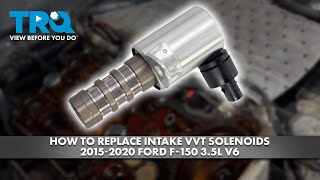
- Faulty Variable Valve Timing (VVT) Solenoid (Very Common) — The VVT solenoid (oil control valve) directs oil to adjust camshaft timing. When it sticks open or fails electronically, it locks the cam in an advanced position.
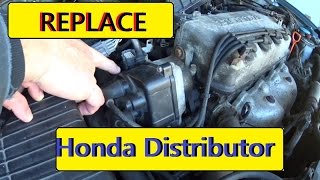
- Faulty Cylinder Position (CYP) Sensor (Honda) (Common) — On 1990s and early 2000s Hondas, this sensor sits inside the distributor. When it fails, the ECU loses cylinder #1's position reference. You must replace the entire distributor assembly. 🎬 Watch: How to replace the distributor on a Honda Civic.
- Stretched Timing Chain / Incorrect Mechanical Timing (Less Common) — Appears frequently after a botched timing belt replacement where the base timing is off. On high-mileage engines, a stretched timing chain pushes the camshaft out of sync with the crankshaft.
- Failing Alternator (Honda) (Less Common) — A failing alternator with bad diodes produces AC voltage spikes. This electrical interference disrupts the CYP sensor signal, falsely triggering P1381 even if the sensor is perfect.
- Damaged or Corroded Wiring (Rare) — Broken or oil-soaked wires leading to the VVT solenoid or distributor interrupt the signal. Honda wiring harnesses near the distributor frequently degrade from valve cover oil leaks.
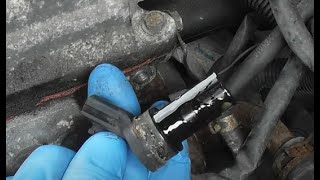
- Faulty Cam Phaser (Rare) — The mechanical gear on the camshaft fails internally and sticks advanced. This causes a loud, diesel-like clatter from the top of the engine on startup. 🎬 See how to identify Ford cam phaser noise.
Symptoms

- Check Engine Light is On — The Malfunction Indicator Lamp (MIL) illuminates immediately upon detecting the timing or communication fault.
- Rough Idle and Stalling — The engine shakes, runs unevenly, and stalls completely at low speeds or traffic lights.
- Engine Won't Rev Past 3,000 RPM — The ECU enters 'limp mode' to protect internal components, hard-limiting engine speed to 3,000-4,000 RPM.
- Poor Acceleration and Hesitation — The vehicle feels sluggish, hesitates when pressing the gas pedal, and suffers a 10-20% drop in fuel economy.
- Top-End Engine Rattle — A loud ticking or knocking sound comes from the valve cover on startup, indicating a failing cam phaser.
Diagnostic Flowchart

Tap your situation to follow the diagnostic path that matches what you're seeing on this code.
Common Fixes & Costs
- Engine Oil and Filter Change — Parts: $30-$60, Labor: $30-$60, ~0.5 hr book time (DIY)
- Replace VVT Solenoid / Oil Control Valve — Parts: $50-$150, Labor: $100-$200, ~1.0 hr book time (DIY)
- Replace Distributor Assembly (Honda) — Parts: $150-$350, Labor: $100-$200, ~1.5 hr book time (Intermediate)
- Replace Alternator — Parts: $200-$400, Labor: $150-$300, ~1.8 hr book time (Intermediate)
- Repair Wiring Harness — Parts: $10-$50, Labor: $200-$500, ~3.0 hr book time (Advanced)
- Replace Cam Phaser / VVT Actuator — Parts: $200-$600, Labor: $800-$2500, ~12.0 hr book time (Advanced)
DIY vs Professional
- Engine Oil and Filter Change — Beginner:
Tools: Wrench for drain plug, oil filter wrench, drain pan, funnel. - Replace VVT Solenoid — Beginner:
Tools: Basic socket set, ratchet, torque wrench, rags. - Replace Distributor (Honda) — Beginner:
Tools: Socket set, wrenches, marker/paint pen, timing light. - Replace Alternator — Beginner:
Tools: Socket set, serpentine belt tool. - Repair Wiring Harness — Beginner:
Tools: Multimeter, wire strippers, soldering iron, heat shrink tubing, wiring diagrams. - Replace Cam Phaser — Beginner:
Tools: Extensive mechanic's tools, torque-to-yield sockets, timing chain wedge tools.
Used vs. New Parts: Buying Guide
When a used part is worth it: For a Honda distributor, a used OEM (Hitachi) part from a low-mileage vehicle is a reliable alternative to a cheap aftermarket part. Never buy used VVT solenoids.
Donor-vehicle mileage cap: roughly under 80000 miles for the part to have meaningful remaining life.
Donor quality checklist:
- Verify the part number matches exactly.
- Check distributor housings for cracks and ensure connectors are not corroded.
- Avoid parts from engines with visible oil sludge.
Decision logic:
- If The part is a VVT solenoid and a new aftermarket version is under $100 → Buy new. The risk of a used electronic part failing is not worth the minimal savings.
- If The vehicle is over 15 years old and the budget is tight → A used OEM distributor from a reputable salvage yard is a reasonable choice.
- If The part is internal to the engine (e.g., cam phaser) → Never buy used. The labor cost is too high to risk installing a part with an unknown history.
Warranty tradeoff: Salvage yards offer a 30-day warranty on the part only. New OEM parts carry a 1-year/12,000-mile warranty.
Worst-case if a used part fails: $300-$600 if a used part fails, requiring you to pay labor a second time.
What Happens If You Wait — Timeline
- 0-1 month: Check Engine Light illuminates. Driver notices a slightly rough idle and a 3,000 RPM rev limit on Hondas. (MPG impact: 0-5%% · Added cost: $0-$50 in wasted fuel)
- 1-4 months: Engine performance noticeably degrades. Hesitation on acceleration and frequent stalling at stops become common. (MPG impact: 5-15%% · Added cost: $50-$200 in wasted fuel.)
- 4-8 months: Incorrect timing causes severe misfires. Raw fuel overheats and melts the internal structure of the catalytic converter. (MPG impact: 15-25%% · Added cost: $1,200-$2,800 for a catalytic converter replacement.)
- 8+ months: Catastrophic failure is imminent. The timing chain jumps teeth, causing pistons to hit valves and destroying the engine. (MPG impact: 25-50%% · Added cost: $3,000-$8,000 for a replacement engine.)
Cost of Not Fixing It
- 0-1 month: Noticeable drop in fuel economy, rough idle, and potential stalling in traffic. (Added cost: $50-$150 in wasted fuel.)
- 1-6 months: Continued misfires from incorrect timing overheat and destroy the catalytic converter. (Added cost: $1,200-$2,800 for catalytic converter replacement.)
- 6+ months: The timing chain jumps a tooth or breaks, causing pistons to collide with valves and destroying the engine. (Added cost: $3,000-$8,000 for an engine replacement.)
Diagnosis Steps
- Check Engine Oil Level and Condition
Check your oil dipstick. If the level is low, top it off. If the oil is dark, sludgy, or past its change interval, perform an oil and filter change. Incorrect viscosity causes VVT failures in cold weather.
Tools: Rag, new engine oil, funnel (Beginner) - Visual Inspection of Wiring and Connectors
Inspect the VVT solenoid or distributor electrical connector for looseness, corrosion, or bent pins. Follow the harness to check for melted insulation or oil contamination.
Tools: Flashlight (Beginner) - Test the VVT Solenoid's Resistance
Disconnect the VVT solenoid. Set your multimeter to Ohms (Ω). Touch the probes to the two pins. A functional solenoid reads between 5 and 14 Ohms. An 'OL' reading means the internal coil is broken.
Tools: Multimeter (Intermediate) - Test the VVT Solenoid's Function
Remove the solenoid. Apply 12V power from the car battery to the two pins using jumper wires. You must hear a distinct 'click' and see the plunger move. If it doesn't move, it is mechanically stuck.
Tools: Jumper wires, basic hand tools (Intermediate) - Advanced Alternator 'Noise' Test (Honda)
Unplug the 4-pin electrical connector from the alternator and briefly test drive the car. If the P1381 code does not return, the alternator has faulty diodes creating electrical interference and requires replacement.
Tools: Basic hand tools (Advanced) - Advanced CYP Sensor Resistance Test (Honda)
Unplug the distributor connector. Measure resistance between the specified pins (often Yellow and Black). F22B1 engines require 800-1,500 Ω. F22B2 engines require 350-700 Ω. Readings outside this range require distributor replacement.
Tools: Multimeter, Service Manual (Advanced) - Advanced Scan Tool Analysis (Ford VVT)
Monitor the 'VCTADV' (actual cam angle) and 'VCTADVERR' (cam angle error) PIDs at a hot idle. If VCTADV shows 20+ degrees and VCTADVERR shows a large negative value, the cam is stuck advanced.
Tools: Advanced bi-directional scan tool (Advanced) - Advanced Scan Tool Analysis (GM EBCM Comm)
Monitor all four wheel speed sensors simultaneously while driving slowly. An erratic signal prevents the EBCM from communicating 'rough road' data to the PCM, triggering P1381 during a misfire.
Tools: Advanced scan tool (Advanced)
When This Code Triggers (Freeze-Frame Conditions)
- Engine Coolant Temp: 180-210°F (The engine must be at full operating temperature for the VVT and sensor self-tests to run.)
- Engine RPM: 1500-3000 RPM (The code sets during steady-state cruising when the PCM actively commands VVT changes, not at idle.)
- Engine Load: 20-50% (Triggers under light to moderate load, consistent with highway cruising.)
- Vehicle Speed: 40-65 mph (Logged during steady highway driving when the VVT system makes fine efficiency adjustments.)
Related Codes
- P1383 — The sister code to P1381 on Ford vehicles, indicating 'Variable Cam Timing Over-Retarded'. P1381 means the cam is stuck advanced. A scan tool differentiates the mechanical failure direction.
- P0011 — The generic SAE equivalent of Ford's P1381 ('A' Camshaft Position - Timing Over-Advanced). They point to the exact same VVT system issue and follow identical diagnostic paths.
- P1382 — On Hondas, this means 'Cylinder Position Sensor No Signal,' whereas P1381 is an 'Intermittent Interruption.' P1382 shows a complete lack of voltage, while P1381 shows an erratic signal.
- P1380 — On Fords, this indicates a 'Variable Cam Timing Solenoid Circuit Malfunction'. It points to an electrical fault (open/short), while P1381 indicates the mechanical result (over-advanced). They frequently appear together.
Climate & Environmental Factors
- Cold Weather: Low temperatures thicken engine oil. This delays oil pressure buildup, preventing the VVT system from responding quickly and triggering timing codes on startup. Using the exact manufacturer-specified oil viscosity prevents this.
- High Humidity / Road Salt: Humid or salt-heavy environments accelerate corrosion on electrical connectors. This causes intermittent opens or shorts in sensor circuits, frequently triggering the Honda CYP sensor variant of P1381.
How to Talk to a Mechanic About This Code
Say this: "I have a P1381 code on my [Make/Model]. For Ford: 'Please check the oil and test the VVT solenoid before quoting a cam phaser.' For Honda: 'Before replacing the distributor, please perform an alternator ripple test to rule out electrical noise.' For GM: 'Please check the wheel speed sensors and EBCM communication before looking at the engine.'"
This signals you are an informed consumer. It directs the mechanic to perform high-probability, low-cost diagnostic steps first, preventing unnecessary expensive repairs.
Avoid saying:
- 'Just fix my check engine light.'
- 'My car is running rough, can you look at it?'
- 'Do whatever you think is best.'
Questions to ask before authorizing the repair:
- For Ford: What were the VCTADVERR PIDs at hot idle? Did you test the solenoid's resistance?
- For Honda: Did the alternator pass a ripple test? What was the resistance of the old CYP sensor?
- For GM: Which specific wheel speed sensor failed, or was the fault in the CAN bus wiring?
- Will you be using OEM or aftermarket parts, and what is the warranty?
Where to Take It: Dealer vs Independent vs Chain
- Dealer:
Recommended for the GM-specific communication fault. Otherwise, an independent shop is more cost-effective.
Best for: Vehicles under warranty, Complex manufacturer-specific quirks (GM communication fault), If an independent shop failed to diagnose the issue.
Downsides: Highest labor rates, Prefers replacing entire assemblies rather than performing deeper diagnosis. (Typical cost: +50% vs. baseline) - Independent Shop:
Best overall fit. Ensure they have advanced diagnostic tools for your specific vehicle's issue.
Best for: Out-of-warranty vehicles, Common P1381 causes like Ford's VVT solenoid or Honda's distributor., Owners seeking a balance of expertise and cost.
Downsides: Diagnostic capabilities vary. Vet shops by ASE certifications. (Typical cost: +0% vs. baseline) - Chain Shop:
AVOID for Honda or GM variants of this code. Only use for simple part swaps.
Best for: Simple, pre-diagnosed repairs like an oil change or a confirmed VVT solenoid swap.
Downsides: High risk of misdiagnosis on complex codes., Technicians lack experience with manufacturer-specific quirks., Pressure to upsell is common. (Typical cost: -10% vs. baseline)
When to Walk Away From the Repair
If the total estimated repair cost exceeds 50% of your car's private-party market value, seriously consider not fixing it.
- Car worth $3500, fix is $2500: Walk away. The repair cost is 70% of the car's value. Sell as a 'mechanic's special'.
- Car worth $8000, fix is $600: Fix it. A $600 repair for a new alternator or distributor is a good investment.
- Car worth $5000, fix is $2800: Borderline. This is likely a cam phaser and timing chain job. Get a second opinion before proceeding.
What Scan Tool You Need for This Code
Minimum: A scanner that reads manufacturer-specific live data PIDs and accesses ABS/EBCM modules.
A basic $20 code reader is useless for P1381. For Ford, you must see VVT PIDs. For GM, you must scan the EBCM, which standard readers cannot do.
Budget: Foxwell NT301 / Autel AutoLink AL519 (~$70) — Provides live engine data graphing to spot a failing Honda CYP sensor. Cannot access GM brake modules.
Mid-range: BlueDriver Pro / Innova 5610 (~$100-350) — Excellent for DIY diagnosis. Accesses manufacturer-specific codes, Ford VVT PIDs, and GM EBCM codes.
Professional: Autel MaxiCOM MK808S / Launch X431 Series (~$450-1200) — Professional tools with full bidirectional control. Commands a Ford VVT solenoid on/off and provides deep data analysis.
Rent vs buy: Auto parts stores offer free loaner scanners, but they are basic readers. For P1381, buying a mid-range scanner like BlueDriver is required.
How to Clear the Code After You Fix It
- Reconnect the battery if it was disconnected.
- Use an OBD-II scan tool to formally clear the P1381 code.
- Perform a complete OBD-II drive cycle to allow readiness monitors to run.
Drive cycle (~30 minutes): Start the engine cold. Idle for 3 minutes. Drive in mixed city traffic for 15 minutes. Drive at a steady 60 mph for 10 minutes. Let the vehicle cool down completely. This verifies the repair.
Readiness monitors affected: Comprehensive Component Monitor, Misfire Monitor, Catalyst Monitor
Before emissions retest: drive at least 100 miles to fully set monitors.
Watch out for:
- Disconnecting the battery clears the code but resets all emissions monitors to 'Not Ready', causing an automatic smog test failure.
- The code returns within two drive cycles if the underlying mechanical fault is not fixed.
Will This Fail Emissions / State Inspection?
Yes — this code typically fails an OBD-II emissions inspection.
- California: An active P1381 code is an automatic failure. After repair, all readiness monitors must be 'Ready' (for 1996-1999 models) or only one can be 'Incomplete' (for 2000+ models).
- New York: The NYS DMV inspection includes an OBD-II scan. An illuminated Check Engine Light results in an automatic failure.
- Texas: In emissions-testing counties (Harris, Dallas, Tarrant), an active P1381 code causes an automatic failure.
Most Commonly Affected Vehicles
- Honda Accord, Civic, Prelude, CR-V (1996-2002) — Caused by a faulty Cylinder Position Sensor (CYP) inside the distributor. A failing alternator with bad diodes causing electrical interference is a frequent, misdiagnosed secondary cause.
- Ford Focus, Escape, Contour, Escort ZX2 (1998-2019) — Triggered by VCT solenoid or phaser issues. Appears immediately after a timing belt change if the cam pulleys were not de-tensioned and re-timed correctly.
- Chevrolet / GM TrailBlazer, Silverado, Lumina (1999-2009) — Indicates the PCM detected a misfire but could not get rough road data from the Electronic Brake Control Module (EBCM). The fault is in the CAN bus wiring or a wheel speed sensor, not engine timing.
- Jaguar S-Type, XF, XJ (2000-2010) — Points to a VVT actuator problem caused by an oil supply issue, a stuck VVT unit, or clogged oil galleries.
- Land Rover LR3, Range Rover Sport (2005-2009) — Shares engine architecture with Jaguar. P1381 points to a 'Variable Camshaft Timing Over-Advanced' condition related to oil pressure or VVT solenoids.
- BMW 3-Series (F30), N20/N26 engines (2012-2018) — Defined as 'ECM Bank 1 Knock Control Self-Test Malfunction,' pointing to a fault within the DME's internal self-check procedures rather than a cam timing issue.
- Mazda Mazda3, Mazda6, CX-5 (2004-2015) — Relates to the variable valve timing system, mirroring Ford's definition due to shared engine technologies.
- Hyundai Sonata, Elantra (2006-2014) — Often mistakenly referenced. A similar code, P0381, points to issues with the Manifold Absolute Pressure (MAP) sensor, causing similar rough idle symptoms.
Manufacturer-Specific Notes

- Honda: The code means 'Cylinder Position Sensor Intermittent Interruption.' The sensor is permanently sealed inside the distributor. Per Honda TSB 07012004, check for a missing ignition coil shield inside the distributor which causes electrical interference.
- Ford: The code means 'Variable Cam Timing Over-Advanced.' It is a guaranteed code after an improperly performed timing belt service where the cam sprockets were not correctly de-tensioned and locked before tensioning the new belt.
- Chevrolet / GM: The code means 'Misfire Detected – No Communication with Brake Control Module.' The PCM uses ABS wheel speed sensors to detect rough roads. If it detects a misfire but can't reach the EBCM to confirm road conditions, it sets P1381.
- Jaguar / Land Rover: The code means 'Variable Cam Timing Over-Advanced.' The ECU detects the camshaft timing exceeded its target advance angle. This points to a stuck VVT unit or an oil flow problem within the cylinder head.
Real Owner Stories
2001 Honda Accord LX - The Misdiagnosis Merry-Go-Round
Check Engine Light illuminated with random, hard sputtering episodes where the car felt like it would stall.
What they tried:
- Inspected wiring and found no obvious damage.
- Considered replacing the distributor since the CYP sensor is internal.
Outcome: The issue was intermittent. The final resolution required a new OEM distributor, but the diagnostic process highlighted that a stretched timing belt causes identical symptoms, requiring an oscilloscope to definitively rule out.
Lesson: On older Hondas, P1381 is a classic sign of a failing distributor. However, never rule out a stretched timing belt or wiring issues if the problem is highly intermittent.
1998 Honda Civic LX - Aftermarket Parts Nightmare
Car was hard to start and threw code P1381. The owner replaced the distributor with a cheap aftermarket part.
What they tried:
- Replaced the distributor a second and third time with new aftermarket parts. Each time, the code returned after a few miles.
Outcome: The owner was stuck in a loop. The root cause was a failing alternator creating electrical noise that killed the cheap sensors. High-quality OEM parts are required to withstand normal electrical fluctuations.
Lesson: If replacing a sensor doesn't fix the code, the problem is upstream (wiring, alternator) or the replacement part is low quality. Avoid repeatedly replacing the same part.
2002 Ford Focus SVT - The Post-Repair Comeback
Immediately after a shop replaced the timing belt, the check engine light came on with code P1381 (VCT Over-Advanced).
What they tried:
- The shop scanned the codes and suspected an error during the timing belt installation.
Outcome: The cause was an improperly performed timing belt job. On Ford VVT engines, if the camshaft pulleys are not de-tensioned and re-timed after the new belt is tensioned, the base timing is permanently off.
Lesson: If P1381 appears on a Ford immediately after a timing belt change, it is a workmanship error. Return to the shop and have them re-verify the mechanical timing.
1999 Chevy Lumina 3.1L - The GM Communication Breakdown
Car triggered P0300 (Random Misfire) and P1381. The engine had an intermittent miss when cool.
What they tried:
- Technician performed a full tune-up (plugs and wires) due to high mileage.
Outcome: The P1381 on GM vehicles is not a timing fault. The PCM detected a misfire but couldn't verify it against rough road data from the EBCM. The actual fault was in the CAN bus wiring between the two modules.
Lesson: For GM vehicles, ignore engine timing components for P1381. Diagnose the wheel speed sensors and the wiring between the EBCM and PCM.
How to Prevent This Code From Triggering
- Perform regular oil changes with manufacturer-spec oil (Every 5,000-7,500 miles) — Prevents oil sludge, the primary enemy of VVT systems. Clean oil ensures the small passages in VVT solenoids and cam phasers do not clog.
- Use an engine flush additive before an oil change (Once every 30,000-50,000 miles) — Safely dissolves accumulated sludge in the oiling system, restoring flow to VVT components on high-mileage engines.
- Periodically clean VVT solenoids (Every 60,000 miles) — Varnish causes the solenoid's internal plunger to stick. Cleaning it with brake cleaner restores function and prevents it from locking open.
- Inspect and protect wiring harnesses (During any under-hood maintenance) — Heat and oil leaks degrade the wiring loom protecting sensor wires. Replacing brittle looms near the distributor prevents shorts and intermittent signals.
- Replace timing belt/chain on schedule (Per manufacturer interval (typically 90k-120k miles)) — A stretched timing chain forces the VVT system to operate at its limits, eventually triggering a code and risking catastrophic engine failure.
Frequently Asked Questions
Can I fix P1381 myself?
Yes, if the cause is simple like an oil change or a VVT solenoid replacement. Diagnosing wiring faults or replacing internal engine components requires advanced skills. Take the car to a shop if you lack a multimeter or experience setting mechanical engine timing.
What is the most common misdiagnosis for P1381?
On Hondas, mechanics frequently replace the distributor without testing the alternator. A failing alternator creates electrical noise that mimics a dead CYP sensor. The code will immediately return even with a brand-new distributor.
Why did P1381 appear right after a timing belt change?
The mechanic failed to correctly de-tension and lock the cam pulleys before tensioning the new belt. This throws off the base mechanical timing. Return to the shop and demand they re-verify the timing marks.
Do I have to use an OEM sensor to fix this?
Yes, highly recommended. Aftermarket distributors and VVT solenoids frequently fail out of the box or cause persistent intermittent codes. Spending extra on an OEM part prevents doing the job twice.
How can I tell if it's the VVT solenoid or the cam phaser?
A faulty VVT solenoid is an electronic issue that rarely makes noise. A bad cam phaser is a mechanical failure that causes a loud, metallic rattling from the top of the engine on startup. If the engine sounds like a diesel, suspect the phaser.
Can a bad battery or low voltage cause P1381?
Yes, particularly on Hondas. Low system voltage or electrical noise disrupts the sensitive CYP sensor signal. Always test your battery and alternator before replacing engine sensors.
Key Takeaways
- Check your engine oil first; low or dirty oil causes 80% of P1381 codes on VVT-equipped vehicles like Ford and Jaguar.
- On 1996-2002 Hondas, P1381 indicates a failing Cylinder Position (CYP) sensor inside the distributor, requiring a $250-$550 full distributor replacement.
- Do not replace a Honda distributor without first performing an AC ripple test on the alternator, as faulty diodes frequently create electrical noise that mimics a dead CYP sensor.
- For GM vehicles (1999-2009), P1381 is a communication error between the engine and brake control modules, meaning you must diagnose the ABS wheel speed sensors rather than engine timing.
Helpful Videos



The information in this article is provided for general reference and educational purposes only. Vehicle specifications, procedures, and part compatibility can vary by production date, trim level, and region. Always consult your vehicle's factory service manual and verify part numbers before purchasing or performing repairs. Safety-critical components such as airbags, seat belts, and braking systems should be installed by a qualified professional.
- 🎬 Helpful Videos
- What Does P1381 Mean?
- Can I Drive With P1381?
- Common Causes
- Symptoms
- Diagnostic Flowchart
- Common Fixes & Costs
- DIY vs Professional
- Used vs. New Parts: Buying Guide
- What Happens If You Wait — Timeline
- Cost of Not Fixing It
- Diagnosis Steps
- When This Code Triggers (Freeze-Frame Conditions)
- Related Codes
- Climate & Environmental Factors
- How to Talk to a Mechanic About This Code
- Where to Take It: Dealer vs Independent vs Chain
- When to Walk Away From the Repair
- What Scan Tool You Need for This Code
- How to Clear the Code After You Fix It
- Will This Fail Emissions / State Inspection?
- Most Commonly Affected Vehicles
- Manufacturer-Specific Notes
- Real Owner Stories
- 2001 Honda Accord LX - The Misdiagnosis Merry-Go-Round
- 1998 Honda Civic LX - Aftermarket Parts Nightmare
- 2002 Ford Focus SVT - The Post-Repair Comeback
- 1999 Chevy Lumina 3.1L - The GM Communication Breakdown
- How to Prevent This Code From Triggering
- Frequently Asked Questions
- Can I fix P1381 myself?
- What is the most common misdiagnosis for P1381?
- Why did P1381 appear right after a timing belt change?
- Do I have to use an OEM sensor to fix this?
- How can I tell if it's the VVT solenoid or the cam phaser?
- Can a bad battery or low voltage cause P1381?
- Key Takeaways
- 🎟️ Get 5% Off