

OBD-II Code P1362: A Manufacturer-Specific Fault Guide
Why P1362 means different things for Honda, Ford, and GM, and how to achieve a first-time fix
- P1362 is manufacturer-specific: it indicates a failed Top Dead Center (TDC) sensor on Hondas, and an ignition coil circuit fault on Ford and GM vehicles.
- Honda and Acura vehicles will experience sudden stalling at operating temperature or a complete no-start condition, creating an immediate safety hazard.
- Ford and GM vehicles will exhibit a severe engine misfire, causing a 5-15% drop in fuel economy and risking a $2,000 catalytic converter failure if ignored.
- Never replace parts without testing; verify the component's resistance with a multimeter to rule out a $15 wiring or fuse issue before buying a $150 sensor.
What Does P1362 Mean?

P1362 is a manufacturer-specific code with entirely different meanings based on the vehicle brand. For Honda and Acura, it indicates the Powertrain Control Module (PCM) receives no signal from the Top Dead Center (TDC) Sensor, which doubles as the Camshaft Position Sensor (CMP). The PCM requires this data to time fuel injection and spark; without it, the engine cannot run. For Ford and GM, this code points to an ignition system failure—specifically a primary or secondary circuit malfunction for a designated cylinder.
Technical definition: P1362 is defined by Honda/Acura as "Top Dead Center (TDC) Sensor No Signal." Ford defines it as "Ignition Coil C Secondary Circuit Malfunction," indicating a fault in the ignition coil for cylinder #3. General Motors (GM) translates it to "IC Cylinder 2 Not Toggling After Enable," pointing to an ignition control circuit issue for cylinder #2. Volkswagen defines it as "Lost Communication with ECM/PCM 'A'", and BMW defines it as "Misfire During Start Cylinder 11."
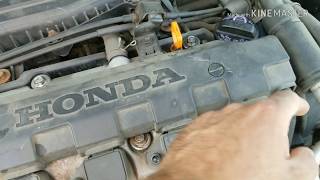
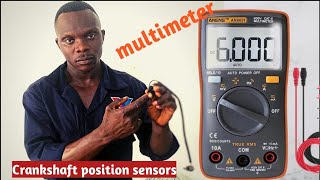
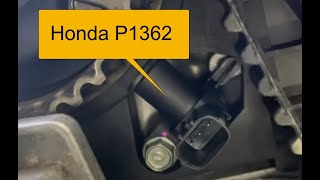
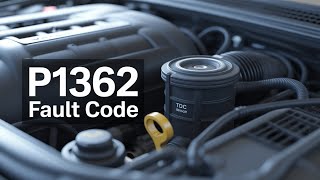
🎬 Watch: A quick breakdown of P1362 causes and meanings.Can I Drive With P1362?
No — Do Not Drive. Do not drive. For Honda/Acura, the engine stalls without warning, causing an immediate loss of power steering and brakes at speed. For Ford/GM, continued driving with a severe misfire destroys the catalytic converter, adding a $1,200-$2,500 repair. The vehicle also enters a low-power "limp mode" or fails to start entirely.
Common Causes

- Failed Top Dead Center (TDC) / Camshaft Position Sensor (Very Common) — This is the primary cause for P1362 on Hondas. Constant engine heat degrades the sensor's internal electronics. Replacing it with a cheap aftermarket part guarantees premature failure; always use an OEM replacement.
- Failed Ignition Coil (Common) — On Ford and GM, P1362 points directly to a faulty ignition coil or coil-on-plug (COP) unit for a specific cylinder (e.g., cylinder #3 on Fords).
- Damaged Wiring or Connectors (Common) — Heat, abrasion, or corrosion degrades the wiring harness leading to the sensor or coil. The pigtail connector itself frequently fails, creating an open or shorted circuit.
- Oil Contamination in Connector (Common) — A leaking valve cover gasket allows engine oil to seep directly into the TDC/CMP sensor's electrical connector, blocking the voltage signal.
- Failed Ignition Control Module (ICM) (Less Common) — On GM vehicles, a faulty ICM fails to properly control the ignition coil for the specified cylinder, triggering the circuit code.
- Skipped Timing Belt/Chain (Less Common) — If the timing belt jumps a tooth, camshaft and crankshaft signals desynchronize. The PCM interprets this mechanical failure as a sensor error.
- Blown Fuse or Faulty Relay (Less Common) — A blown fuse cuts power to the camshaft sensor or ignition coils, causing an immediate 'no signal' fault.
- Failed Powertrain Control Module (PCM) (Rare) — The PCM itself fails rarely. Consider this only after meticulously ruling out all wiring, fuse, and sensor faults.
Symptoms

- Engine cranks but will not start — The classic symptom for Hondas. The starter turns the engine, but the PCM disables spark and fuel because it lacks camshaft position data.
- Engine stalls unexpectedly while driving — The engine runs normally when cold but shuts off instantly at operating temperature due to heat-induced sensor failure.
- Rough Idle, Hesitation, or Misfire — On Ford and GM vehicles, this code signifies a dead cylinder. The engine shakes violently at idle and stumbles during acceleration.
- Reduced power / "Limp Mode" — The vehicle enters a protective mode, severely limiting acceleration and capping RPMs (often at 3,000 RPM) to prevent internal damage.
- Check Engine Light is on — The Malfunction Indicator Lamp (MIL) illuminates immediately to alert the driver of the critical fault.
- VTEC System Will Not Engage (Honda/Acura) — A missing TDC signal prevents the PCM from activating VTEC, causing a massive loss of power in the upper RPM range.
Diagnostic Flowchart
Tap your situation to follow the diagnostic path that matches what you're seeing on this code.
Common Fixes & Costs
- Replacing the Top Dead Center (TDC) / Camshaft Position Sensor
— Parts: $50-$150, Labor: $100-$200, ~1.1 hr book time
(DIY)
Honda Civic (2001-2005): OEM
Honda Accord V6 (1998-2002): OEM - Replacing the Ignition Coil and Spark Plug
— Parts: $50-$150, Labor: $75-$150, ~0.6 hr book time
(DIY)
Ford F-150 (2004-2008, 5.4L V8): OEM
Chevrolet/GMC (Various V8s): OEM - Repairing or Replacing Damaged Wiring/Connector — Parts: $15-$60, Labor: $150-$350, ~1.5 hr book time (Intermediate)
- Replacing the Ignition Control Module (ICM) — Parts: $100-$300, Labor: $80-$200, ~0.8 hr book time (Intermediate)
- Replacing a Blown Fuse — Parts: $1-$5, Labor: $0-$75, ~0.1 hr book time (Beginner)
- Replacing the Powertrain Control Module (PCM) — Parts: $600-$1,500, Labor: $150-$300, ~1.2 hr book time (Professional)
DIY vs Professional
- Replacing the Top Dead Center (TDC) / Camshaft Position Sensor (Honda) — Beginner: Yes, if mechanically inclined. On a 2001-2005 Civic, it requires removing the valve cover, which is straightforward.
Tools: Socket set, torque wrench, screwdrivers, Hondabond sealant. - Replacing the Ignition Coil (Ford/GM) — Beginner: Yes. This is one of the easiest repairs, involving unplugging a connector and removing a single bolt.
Tools: Socket set or nut driver (typically 7mm or 8mm). - Repairing Damaged Wiring/Connector — Beginner: Not recommended. A poor repair leads to intermittent issues that are incredibly difficult to diagnose.
Tools: Multimeter, wire strippers, soldering iron, heat shrink tubing, wiring diagrams.
Used vs. New Parts: Buying Guide
When a used part is worth it: Buying used electronic sensors or ignition coils is never recommended due to the high risk of premature failure. A used part is only viable as a last resort for a tight budget on a vehicle nearing the end of its life.
Donor-vehicle mileage cap: roughly under 60000 miles for the part to have meaningful remaining life.
Donor quality checklist:
- Verify the donor vehicle's mileage; lower is always better.
- Match the part number exactly; do not rely on visual similarity.
- Avoid parts from vehicles scrapped due to engine fires or floods.
- Demand a 90-day functional warranty from the salvage yard.
Decision logic:
- If The part is an electronic sensor or ignition coil → Buy a new OEM or top-tier aftermarket part. Factory original reliability is mandatory for these components.
- If Vehicle is >150K miles AND budget is the primary concern → A low-mileage used OEM part is an option, but acknowledge the high risk of repeat labor costs.
- If Cheap, no-name aftermarket parts are available online → Avoid them entirely. Counterfeit parts fail quickly and cost more in the long run.
Warranty tradeoff: Salvage yards offer a 30-90 day warranty on function only. New aftermarket parts offer 1-year warranties. New OEM parts carry a 1-year/12,000-mile warranty.
Worst-case if a used part fails: $200 - $500 if a used electronic part fails, requiring repeat labor and a second replacement part.
What Happens If You Wait — Timeline
- 0-4 weeks: For Honda: Intermittent limp mode or stalling when hot, but restarts after cooling. For Ford/GM: A slight rough idle or hesitation on acceleration. Check Engine Light illuminates. (MPG impact: 0-5%% · Added cost: $0)
- 1-3 months: For Honda: Stalling becomes frequent, making the vehicle unsafe to drive. Progresses to a complete no-start. For Ford/GM: Misfire becomes constant. Power drops significantly, and unburned fuel enters the exhaust. (MPG impact: 5-15%% · Added cost: $50-$150 in wasted fuel)
- 3-6 months: For Honda: Vehicle is undrivable due to a persistent no-start. For Ford/GM: Unburned fuel overheats the catalytic converter, melting the internal honeycomb substrate. A rattling noise emits from the exhaust. (MPG impact: 15-25%% · Added cost: $1200 - $2800 (catalytic converter replacement).)
- 6+ months: For Ford/GM: The melted catalytic converter completely blocks the exhaust, causing severe backpressure that destroys oxygen sensors and internal engine seals. The vehicle barely runs. (MPG impact: >25%% · Added cost: $2000 - $4500+ (converter, O2 sensors, and engine repairs).)
Cost of Not Fixing It
- Immediate: For Honda/Acura, the vehicle stalls while driving, creating a severe safety hazard. For Ford/GM, symptoms include rough idle, poor acceleration, and a 15% drop in fuel economy. (Added cost: $0 - $200 (for towing))
- 1-6 months: On Ford/GM vehicles, the constant misfire dumps unburned fuel into the exhaust, destroying the catalytic converter. This is a guaranteed secondary failure. (Added cost: $1200 - $2800)
- 6+ months: Continued operation with a severe misfire destroys oxygen sensors and internal engine seals due to extreme exhaust backpressure. The vehicle becomes completely undrivable. (Added cost: $3000 - $4500+)
Diagnosis Steps

- Verify Code Definition for Your Vehicle
Confirm what P1362 means for your specific Make, Model, and Year. Is it a Honda TDC sensor issue, a Ford coil issue, or a GM ignition circuit fault? This prevents hundreds of dollars in incorrect parts.
Tools: OBD-II scanner, service manual (Beginner) - Thorough Visual Inspection
Inspect the relevant component (TDC sensor or ignition coil) and its wiring harness. Look for melted plastic, frayed wires, oil contamination in the connector, or cracked coil housings. Ensure the connector is securely plugged in.
Tools: Flashlight, safety glasses (Beginner) - Test Component Resistance (Honda TDC / Ford-GM Coil)
For Hondas, unplug the TDC sensor and measure resistance across the pins. It must read 1,850-2,450 Ohms. For Ford/GM coils, test primary resistance (0.4-2.0 Ω) and secondary resistance (5,000-30,000 Ω). An open circuit (OL) confirms a dead component.
Tools: Multimeter, service manual (Intermediate) - Pro Tip: Swap Components (Ford/GM)
Swap the suspected bad coil (e.g., cylinder #3 on a Ford) with a known-good coil from an adjacent cylinder. Clear the codes. If the fault code changes to the new cylinder (e.g., P0351), the ignition coil is definitively faulty.
Tools: Socket/wrench set (Beginner) - Check for Power and Ground at the Connector (Honda)
Unplug the TDC sensor. With the key 'ON', test the connector. The Yellow/Black wire must have battery voltage (~12V), and the Brown/Yellow wire must show continuity to ground. Lack of voltage points to a broken wire, blown fuse, or faulty PCM.
Tools: Multimeter, vehicle wiring diagram (Intermediate) - Pro Tip: Perform a 'Wiggle Test'
While monitoring voltage at the connector, aggressively wiggle the wiring harness. If the voltage reading fluctuates or drops out, you have located an intermittent connection or a broken wire inside the insulation.
Tools: Hands, multimeter (Intermediate) - Advanced: Monitor Live Data with a Scan Tool
For Ford/GM, monitor the misfire counters for each cylinder to confirm the dead cylinder. For Hondas, check the status PID for the TDC/CMP sensor; it will read 'Off' or 'No Signal' while cranking if the sensor is dead.
Tools: Advanced OBD-II Scan Tool (Advanced) - Advanced: Check the Signal with an Oscilloscope
Connect an oscilloscope to the sensor's signal wire. While cranking, a healthy TDC sensor produces a clean square wave pattern. A flat line confirms 'No Signal'. For an ignition coil, verify the primary ignition waveform when commanded by the PCM.
Tools: Oscilloscope, wiring diagram, back-probe pins (Advanced) - Inspect Mechanical Timing
If all sensors and wiring pass, remove the timing cover to verify the timing marks on the camshaft and crankshaft pulleys align perfectly. If they do not, the timing belt jumped and requires a full replacement.
Tools: Socket/wrench set, service manual, jack and stands (Advanced)
When This Code Triggers (Freeze-Frame Conditions)
- Engine Coolant Temp: 180-200°F (82-93°C) (The fault triggers when the engine reaches full operating temperature, as heat causes failing internal sensor electronics to break down completely.)
- Engine RPM: 1500-2500 RPM (Sets during steady-state cruise or light acceleration when the PCM relies heavily on consistent timing signals.)
- Vehicle Speed: 45-65 mph (Occurs at highway cruising speeds when the engine bay is fully heat-soaked.)
- Engine Load: 25-50% (Represents the moderate load required to maintain cruising speed.)
Related Codes
- P1361 — P1361 means 'TDC Sensor Intermittent Interruption,' while P1362 means 'No Signal.' P1361 indicates the signal drops out when hot, while P1362 means the signal is completely dead. Diagnose P1362 first.
- P0335 — Generic code for 'Crankshaft Position Sensor 'A' Circuit Malfunction.' The PCM needs both crank and cam signals. If both codes are present, check live data to see which signal is truly absent before buying parts.
- P0300-P0306 — Misfire codes (e.g., P0302 is cylinder 2). A P1362 fault causes the engine to misfire, triggering these codes alongside it. Fixing the root cause of P1362 resolves the misfire codes.
- P1359 — On Hondas, this indicates a disconnect in the CKP/TDC sensor connector. If present alongside P1362, inspect the main engine harness connector for corrosion before testing individual sensors.
How to Talk to a Mechanic About This Code
Say this: "I have a P1362 code on my [Make, Model]. I'd like to schedule a diagnostic. I understand this is likely a TDC sensor on a Honda or an ignition coil issue on a Ford/GM. Please test the component and its circuit for power, ground, and signal before recommending a replacement part."
This signals you are an informed consumer. It directs the mechanic to perform a proper diagnosis (testing the circuit) rather than just replacing the most common part, saving you money if the problem is a simple wiring issue.
Avoid saying:
- 'Just fix whatever's wrong'
- 'My check engine light is on, can you look at it?' (this is too vague and invites upselling)
- 'Do whatever you think is best'
Questions to ask before authorizing the repair:
- What were the results of the circuit test for power, ground, and signal at the component's connector?
- Did you test the resistance of the sensor or coil, and was it within the manufacturer's specification?
- Did you perform a 'wiggle test' on the wiring harness to check for intermittent connections?
- What is the warranty on the proposed repair, including both the part and labor?
- Can you provide me with the old parts when the job is done?
Where to Take It: Dealer vs Independent vs Chain
- Dealer:
Best for: Vehicles still under a powertrain or extended warranty, Complex diagnostic issues where multiple codes are present or if an independent shop failed to find the fault
Downsides: Highest labor rates, typically $150-$250 per hour, May recommend replacing an entire assembly (like a distributor) when only a single sensor inside failed (Typical cost: +50% vs. baseline) - Independent Shop:
Best fit. P1362 is a bread-and-butter job for competent independent shops. They diagnose it efficiently without the high overhead of a dealership.
Best for: Out-of-warranty vehicles where cost is a factor, Common, well-documented problems like the P1362 code on a Honda or Ford
Downsides: Shop quality and technician skill vary greatly; choose a shop with strong reviews and ASE certifications (Typical cost: +0% vs. baseline) - Chain Shop:
Acceptable, but with caution. A chain shop handles a simple ignition coil swap easily, but may replace parts without proper diagnosis for an intermittent sensor issue on a Honda.
Best for: Simple, straightforward part replacements like an ignition coil on a Ford where diagnosis is not complex
Downsides: Technicians are often less experienced with in-depth electrical diagnostics, High pressure to upsell services like fluid flushes or unrelated maintenance items. (Typical cost: -10% vs. baseline)
When to Walk Away From the Repair
If the total estimated repair cost exceeds 40-50% of your car's private-party market value (e.g., from Kelley Blue Book), seriously consider selling the car as-is or trading it in.
- Car worth $3500, fix is $450: Fix it. This repair is well below the threshold and restores a critical function of the vehicle.
- Car worth $4000, fix is $2200: Walk away. This scenario involves a misfire that was ignored and destroyed the catalytic converter. The repair cost is over 50% of the car's value.
- Car worth $2500, fix is $1500: Walk away. A repair this expensive (likely a PCM failure) on a low-value car is a poor financial decision.
What Scan Tool You Need for This Code
Minimum: A code reader that displays live data streams. This is crucial to distinguish between a dead component and a wiring problem causing a lack of signal.
A $20 basic code reader only shows the code 'P1362'. It cannot show live data, such as the cam sensor signal PID or cylinder misfire counts. Without this, you are guessing at the cause.
Budget: BlueDriver Pro Scan Tool (~$99) — Connects to your smartphone via Bluetooth. It reads codes, views freeze-frame data, and graphs live data from the TDC/cam sensor to verify if a signal is generated.
Mid-range: Foxwell NT510 Elite / Innova 5610 (~$150-350) — These handheld scanners offer manufacturer-specific code reading and live data. The Innova 5610 provides bidirectional controls to command a GM ignition control module to check for a response.
Professional: Autel MaxiCOM MK808 / MK906BT (~$500-1200) — Provides full bidirectional control, allowing a technician to command individual coils to fire. It offers OEM-level diagnostics and data graphing essential for diagnosing complex wiring or PCM faults.
Rent vs buy: For a one-time fix, auto parts stores like AutoZone offer a 'Loan-A-Tool' program where you borrow a basic OBD-II scanner for free. If you do your own maintenance regularly, buying a budget or midrange scanner is a mandatory investment.
How to Clear the Code After You Fix It
- Use an OBD-II scan tool to clear the diagnostic trouble codes.
- Ensure the fuel tank is between 1/4 and 3/4 full.
- Perform a complete drive cycle to allow the vehicle's readiness monitors to run.
Drive cycle (~30 minutes): A typical drive cycle includes: 1) Cold start (engine off for at least 6 hours). 2) Idle for 3 minutes. 3) Drive at a steady 55 mph for 5 minutes. 4) Coast without braking for 30 seconds. 5) Perform 15 minutes of mixed city/highway driving.
Readiness monitors affected: Catalyst (CAT) monitor, Evaporative System (EVAP) monitor, Oxygen (O2) Sensor monitor, EGR System monitor
Before emissions retest: drive at least 100 miles to fully set monitors.
Watch out for:
- Clearing the code with a scanner does not set the readiness monitors required to pass an emissions test.
- The Check Engine Light returns immediately if the underlying mechanical or electrical fault was not repaired.
- Failing to start with a truly 'cold' engine prevents the EVAP and O2 monitors from running.
Will This Fail Emissions / State Inspection?
Yes — this code typically fails an OBD-II emissions inspection.
- California: An illuminated Check Engine Light from P1362 is an automatic smog check failure. You must drive 50-100 miles after the repair to set the readiness monitors before a retest.
- New York: The NYS DMV emissions inspection includes an OBD-II scan. An active P1362 code results in an automatic failure.
- Texas: In emissions-testing counties, a vehicle with an active P1362 code fails the OBD portion of the state inspection immediately.
Most Commonly Affected Vehicles

- Honda Civic (1996-2005) — Extremely common. On 2001-2005 models, the TDC sensor is under the valve cover. On 1996-2000 models, it is inside the distributor. Failure occurs when the engine gets hot.
- Honda Accord (1998-2002) — A frequent failure point. V6 models have two TDC sensors (TDC1 and TDC2), and codes P1366/P1367 may appear. The 4-cylinder sensor is near the timing belt cover.
- Honda CR-V (1997-2001) — Prone to TDC sensor failure. On these first-generation models, the sensor is located inside the distributor assembly.
- Acura TL (1999-2003) — Shares powertrain components with the Honda Accord V6, making it highly susceptible to TDC sensor failures.
- Honda Odyssey (1999-2004) — The V6 engines experience TDC sensor failure, leading to stalling and no-start problems identical to the Accord and TL.
- Chevrolet / GMC Camaro, Traverse, Acadia, Venture (1998-2018) — P1362 indicates an ignition control circuit fault for cylinder #2. Diagnosis focuses on the coil, wiring, or Ignition Control Module (ICM).
- Ford / Mercury Ranger, F-150, Mountaineer (1998-2008) — P1362 means 'Ignition Coil C Secondary Circuit Malfunction,' pointing to a problem with the ignition coil, wiring, or spark plug for cylinder #3.
- Volkswagen Various (2000-2010) — P1362 is defined as 'Lost Communication with ECM/PCM "A"', indicating a CAN bus communication failure between control modules, not a sensor fault.
- BMW Various (1998-2008) — P1362 translates to 'Misfire during Start Cylinder 11,' pointing to an ignition or fuel delivery issue on a specific cylinder for V12 engines.
Manufacturer-Specific Notes
- Honda / Acura: This code almost exclusively points to a failed Top Dead Center (TDC) sensor. Using a genuine OEM sensor is mandatory, as aftermarket sensors fail prematurely. The fault typically appears only when the engine warms up.
- Ford / Lincoln / Mercury: P1362 points to 'Ignition Coil C Secondary Circuit Malfunction.' 'C' corresponds to the third cylinder in the firing order, which is cylinder #3. Diagnosis must focus on the coil, plug, and wiring for that specific cylinder.
- General Motors (Chevy, GMC, Oldsmobile): P1362 indicates 'IC Cylinder 2 Not Toggling After Enable.' The PCM commanded the ignition circuit for cylinder #2 to fire but saw no electrical response. The issue is the coil, wiring, or the Ignition Control Module (ICM).
- Volkswagen / Audi: P1362 is a network code for 'Lost Communication with ECM/PCM.' This is a CAN bus wiring problem or a faulty control module, requiring advanced electrical diagnostics.
- BMW: P1362 means 'Misfire during Start Cylinder 11.' This directs diagnosis to the ignition and fuel systems for that specific cylinder on V12 engines.
Real Owner Stories
2001 Honda Civic EX at 123K miles
The car entered limp mode and stalled after 20 minutes of driving on hot days. It refused to restart until the engine cooled down for an hour.
What they tried:
- Cleared the code, but it returned during the next hot drive.
Outcome: The issue was a textbook heat-related failure of the TDC sensor. Replacing the sensor with an OEM unit permanently resolved the stalling.
Lesson: For Hondas, intermittent stalling that appears when the engine is hot and vanishes when cool is the definitive symptom of a failing TDC sensor.
2001 Honda Civic DX at 186K km
The car triggered P1362. The owner replaced the TDC sensor with a cheap aftermarket part from an auto parts store.
What they tried:
- Replaced TDC sensor with an aftermarket part; the code returned 30 days later.
- Replaced the radiator and thermostat suspecting an overheating issue.
Outcome: The low-quality aftermarket sensor failed prematurely. Installing a genuine OEM Denso sensor provided a permanent fix.
Lesson: Never use cheap, no-name electronic sensors. They fail quickly, cause the exact same code to return, and lead to hundreds of dollars in misdiagnosis.
1998 Honda Accord 2.3L
The vehicle died while driving. The scanner showed P1362 (TDC Sensor No Signal) and P1382 (CYP Sensor No Signal).
What they tried:
- Replaced the TDC sensor, crank sensor, and the entire distributor assembly.
- Verified fuel pressure and engine compression.
Outcome: Despite replacing all sensors, the car had no spark. The simultaneous failure of multiple sensors pointed to the root cause: a failed Engine Control Module (PCM).
Lesson: When multiple 'no signal' codes appear simultaneously and replacing the sensors fails, the root cause is the component that powers them: the PCM or its main wiring harness.
How to Prevent This Code From Triggering
- Use only OEM or high-quality aftermarket electronic sensors/coils (At time of replacement) — OEM (Honda, Motorcraft) and top-tier aftermarket (Denso, NGK) parts use high-grade materials that withstand extreme engine heat, preventing the premature failures common with cheap online parts.
- Fix oil leaks from the valve cover gasket promptly (As needed) — A leaking gasket saturates the TDC sensor's wiring connector with oil, shorting the electrical signal and triggering a P1362 fault.
- Apply dielectric grease to ignition coil boots (When replacing spark plugs or coils) — On Ford/GM systems, dielectric grease seals out moisture and prevents the boot from sticking to the spark plug, stopping misfires caused by water intrusion.
- Ensure spark plugs are gapped correctly and replaced on schedule (Every 60k-100k miles) — A worn spark plug with a wide gap forces the ignition coil to produce higher voltage. This strain overheats and destroys the coil, leading to a P1362 fault on Ford/GM vehicles.
- Address water leaks into the engine bay (Ford Trucks) (As needed) — On Ford trucks, water leaks from the cowl and pools in the spark plug wells. This shorts out the ignition coil. Repairing the cowl leak prevents repeat coil failures.
Frequently Asked Questions
What is the difference between P1361 and P1362 on a Honda?
P1361 signifies an intermittent TDC sensor signal, while P1362 means the signal is completely absent. P1361 often precedes a complete failure that triggers P1362. Diagnosis and repair are identical for both codes.
What are the most common mistakes when diagnosing P1362?
The biggest mistake is replacing parts without testing the circuit first. Another common error is installing a cheap aftermarket sensor that fails within weeks. Always verify the code definition for your specific vehicle make.
Is a 'relearn' procedure needed after replacing the TDC sensor?
For most 1996-2005 Hondas, no specific relearn is required beyond clearing the codes. However, disconnecting the battery to reset the PCM will require a standard idle relearn procedure.
Why won't my car start with a P1362 code?
The PCM requires the TDC sensor signal to time the spark plugs and fuel injectors. Without this data, the computer disables spark and fuel to prevent engine damage, resulting in a crank-no-start condition.
Can I replace the TDC sensor myself?
Yes, replacing the TDC sensor on popular Honda models is a manageable DIY repair. On a 2001-2005 Civic, it requires removing the valve cover, while older models house it inside the distributor. Always use a high-quality OEM part to prevent premature failure.
How much does it cost to fix P1362?
Costs depend heavily on the vehicle make and root cause. A Honda TDC sensor or Ford/GM ignition coil replacement typically costs $150 to $300 at an independent shop. Wiring repairs range from $150 to $350, while a rare PCM replacement exceeds $1,000.
What does 'Ignition Coil C' mean on a Ford?
The letter 'C' corresponds to the cylinder's position in the engine's firing order, not the physical cylinder number. 'A' is the first cylinder to fire, 'B' is the second, and 'C' is the third. On most Ford V8 and V6 engines, 'Coil C' refers to cylinder #3.
Can a bad battery cause a P1362 code?
A weak battery causes low system voltage during cranking, which disrupts sensitive sensor signals. This voltage drop triggers false codes like P1362, especially on GM ignition control circuits. Always verify your battery and charging system are healthy before replacing expensive sensors.
Key Takeaways
- P1362 is manufacturer-specific: it indicates a failed Top Dead Center (TDC) sensor on Hondas, and an ignition coil circuit fault on Ford and GM vehicles.
- Honda and Acura vehicles will experience sudden stalling at operating temperature or a complete no-start condition, creating an immediate safety hazard.
- Ford and GM vehicles will exhibit a severe engine misfire, causing a 5-15% drop in fuel economy and risking a $2,000 catalytic converter failure if ignored.
- Never replace parts without testing; verify the component's resistance with a multimeter to rule out a $15 wiring or fuse issue before buying a $150 sensor.
Helpful Videos

The information in this article is provided for general reference and educational purposes only. Vehicle specifications, procedures, and part compatibility can vary by production date, trim level, and region. Always consult your vehicle's factory service manual and verify part numbers before purchasing or performing repairs. Safety-critical components such as airbags, seat belts, and braking systems should be installed by a qualified professional.
- 🎬 Helpful Videos
- What Does P1362 Mean?
- Can I Drive With P1362?
- Common Causes
- Symptoms
- Diagnostic Flowchart
- Common Fixes & Costs
- DIY vs Professional
- Used vs. New Parts: Buying Guide
- What Happens If You Wait — Timeline
- Cost of Not Fixing It
- Diagnosis Steps
- When This Code Triggers (Freeze-Frame Conditions)
- Related Codes
- How to Talk to a Mechanic About This Code
- Where to Take It: Dealer vs Independent vs Chain
- When to Walk Away From the Repair
- What Scan Tool You Need for This Code
- How to Clear the Code After You Fix It
- Will This Fail Emissions / State Inspection?
- Most Commonly Affected Vehicles
- Manufacturer-Specific Notes
- Real Owner Stories
- 2001 Honda Civic EX at 123K miles
- 2001 Honda Civic DX at 186K km
- 1998 Honda Accord 2.3L
- How to Prevent This Code From Triggering
- Frequently Asked Questions
- What is the difference between P1361 and P1362 on a Honda?
- What are the most common mistakes when diagnosing P1362?
- Is a 'relearn' procedure needed after replacing the TDC sensor?
- Why won't my car start with a P1362 code?
- Can I replace the TDC sensor myself?
- How much does it cost to fix P1362?
- What does 'Ignition Coil C' mean on a Ford?
- Can a bad battery cause a P1362 code?
- Key Takeaways
- 🎟️ Get 5% Off