

OBD-II Code P1349: Variable Valve Timing (VVT) System Problem
What P1349 means, why it triggers, and how to fix it
- Low, dirty, or incorrect viscosity engine oil causes over 70% of P1349 codes on Toyota and Lexus vehicles.
- P1349 indicates a Bank 1 Variable Valve Timing (VVT) failure, immediately reducing fuel economy by 5-15% and causing rough idling.
- Symptoms typically appear only after the engine reaches operating temperature (175-210°F), triggering the Check Engine and VSC/TRAC lights alongside stalling.
- Always clean the $15 OCV filter screen and check oil levels before spending $150+ on a new VVT solenoid.
- Verify your manufacturer definition, as P1349 means a VVT fault for Toyota/Lexus but indicates a cylinder 4 misfire on BMWs or a fuel sensor issue on Fords.
What Does P1349 Mean?

P1349 means the Engine Control Module (ECM) detects a Variable Valve Timing (VVT) system failure on Bank 1. The hydraulic VVT system fails to adjust camshaft timing as commanded, locking timing in one position and destroying engine performance, fuel economy, and emissions.
Technical definition: Variable Valve Timing System Malfunction (Bank 1). This is the standard definition for Toyota and Lexus. 🎬 Watch: A complete diagnostic and repair walkthrough for Toyota and Lexus. This code number signifies entirely different issues for other brands (like BMW or Ford), so verifying your manufacturer definition is crucial.
Can I Drive With P1349?
Yes, But With Caution. You can physically drive, but it is strongly discouraged. The engine stalls, runs rough, and lacks power, creating safety hazards in traffic. Ignoring the code causes severe damage over time, including stretched timing chains, camshaft wear, or catalytic converter failure from unburnt fuel—a repair exceeding $1,500. Diagnose it promptly.
Common Causes

- Low, Dirty, or Incorrect Viscosity Engine Oil (Very Common) — The hydraulic VVT system requires clean oil at precise pressures. Sludge from overdue oil changes clogs passages and paralyzes the system. Check this first.
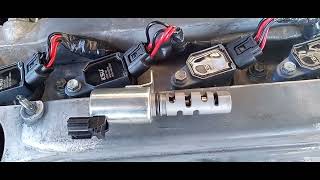
- Clogged Oil Control Valve (OCV) Filter Screen (Very Common) — A tiny mesh screen protects the OCV from debris. Sludge easily blocks this filter, starving the VVT system of oil. This is a primary, inexpensive failure point. 🎬 See how to clean your VVT solenoid and oil control valve.
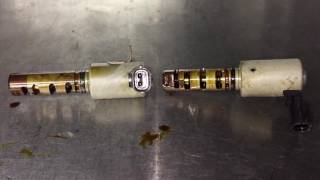
- Faulty Oil Control Valve (OCV) / VVT Solenoid (Very Common) — This electronic solenoid directs oil to the VVT actuator. It clogs with sludge, fails electronically, or sticks open/closed. Heat-related failures are common, 🎬 Watch: Step-by-step guide to replacing a faulty VVT solenoid. triggering symptoms only after the engine warms up.
- Incorrect Mechanical Engine Timing (Less Common) — A stretched timing chain, skipped tooth, or failed tensioner throws off base engine timing. The ECM triggers a VVT fault as it futilely attempts to compensate for the mechanical error.
- Damaged VVT Actuator (Cam Phaser) (Less Common) — The mechanical gear on the camshaft adjusting timing fails internally, sticks, or suffers improper installation during a timing belt job.
- Faulty Camshaft Position Sensor (Less Common) — The ECM relies on this sensor to monitor camshaft position. An incorrect, intermittent, or oil-fouled signal tricks the ECM into declaring a VVT malfunction.
- Wiring or Connector Issues (Rare) — Damaged, corroded, or loose wiring to the OCV or camshaft sensor creates an open circuit. Oil leaking from a faulty valve cover gasket onto connectors frequently causes this.
- Faulty Engine Control Module (ECM) (Very Rare) — ECM internal driver circuit failures are extremely rare. Rule out all mechanical, hydraulic, and wiring issues before condemning the computer.
Symptoms

- Check Engine Light and TRAC/VSC Light On — The ECM illuminates the Check Engine Light (CEL). Toyota and Lexus vehicles also disable traction control, illuminating the TRAC or VSC lights as a secondary warning.
- Rough Idle, Stalling, or Hard Starting — The engine shakes at stoplights or shuts off unexpectedly, particularly after warming up and thinning the oil. Incorrect timing also causes hard starts.
- Poor Acceleration and Loss of Power — The vehicle feels sluggish and weak during acceleration, merging, or hill climbing because valve timing cannot optimize for power.
- Decreased Fuel Economy — Fuel consumption increases by 5-15% because the engine operates outside peak efficiency.
- Rattling or Ticking Engine Noise — A failing VVT actuator or oil starvation causes distinct rattling or ticking from the top of the engine at startup or idle.
- Engine Misfires and Associated Codes (also visible on scanner) — Incorrect Bank 1 timing triggers misfires on that bank's cylinders (e.g., P0301, P0303, P0305), felt as shuddering during acceleration.
- Increased Emissions / Failed Smog Test (scan-tool only — no driver-felt sign) — Improper valve timing causes incomplete combustion, spiking hydrocarbon and NOx emissions and guaranteeing a failed smog test.
Diagnostic Flowchart
Tap your situation to follow the diagnostic path that matches what you're seeing on this code.
Common Fixes & Costs
- Engine Oil and Filter Change — Parts: $40-$90, Labor: $50-$100, ~0.5 hr book time (DIY)
- Clean or Replace OCV Filter Screen
— Parts: $10-$30, Labor: $80-$150, ~1.2 hr book time
(Intermediate)
Lexus ES300/RX300, Toyota Sienna/Avalon (1MZ-FE/3MZ-FE): OEM Toyota/Lexus: 15678-20010
Toyota Corolla/Echo/Yaris (1NZ-FE): OEM Toyota: 15678-21010 - Replace Oil Control Valve (VVT Solenoid) for Bank 1
— Parts: $60-$200 (OEM recommended), Labor: $80-$180, ~1 hr book time
(Intermediate)
Lexus ES300/RX300 (1999-2003, 1MZ-FE Engine, Bank 1/Rear): OEM Toyota/Lexus: 15330-0A010 (Alt: Dorman 917-214, Denso (OEM supplier)) - Replace Camshaft Position Sensor
— Parts: $50-$150, Labor: $50-$120, ~0.8 hr book time
(DIY)
Toyota Camry (2002-2006, 2AZ-FE Engine): OEM Toyota: 90919-05026 (Alt: Denso 196-1103) - Timing Belt/Chain and Component Replacement — Parts: $250-$700, Labor: $600-$1400+, ~8.5 hr book time (Advanced)
DIY vs Professional
- Engine Oil and Filter Change — Beginner: Yes
- Replace Oil Control Valve (VVT Solenoid) — Beginner: Yes, with caution.
- Clean or Replace OCV Filter Screen — Beginner: No, intermediate skill recommended.
- Replace Camshaft Position Sensor — Beginner: Yes.
- Timing Belt/Chain and Component Replacement — Beginner: No, professional or highly experienced DIYer only.
Used vs. New Parts: Buying Guide
When a used part is worth it: Buying a used VVT solenoid is never recommended. The risk of inheriting another sludged or worn part is too high. Used parts only make sense for purely diagnostic purposes (swapping a known-good part to confirm a diagnosis).
Donor-vehicle mileage cap: roughly under 50000 miles for the part to have meaningful remaining life.
Donor quality checklist:
- Verify the part number is an exact match.
- Avoid parts from engines known for sludge issues.
- Look for sellers offering a functional guarantee.
Decision logic:
- If The part is a VVT solenoid/OCV → Buy a new OEM or high-quality aftermarket (e.g., Denso) part. The cost savings of a used part do not justify the risk of repeat labor.
- If Vehicle is older and budget is extremely tight → A used part from a low-mileage, accident-damaged vehicle is a gamble but serves as a temporary solution. Test the part with a 12V source before installation.
- If The part is a simple mechanical component like a bracket → Used is perfectly acceptable.
Warranty tradeoff: Salvage yard parts typically carry a 30-90 day warranty. New aftermarket parts offer 1-year warranties. New OEM parts carry a 12-month/12,000-mile warranty.
Worst-case if a used part fails: 200-400 if a used VVT solenoid fails shortly after installation, requiring repeat labor and a new part.
What Happens If You Wait — Timeline
- 0-1 month: Check Engine Light illuminates with code P1349. A rough idle occurs when the engine warms up. Fuel economy drops slightly. (MPG impact: 3-8%% · Added cost: $0-50 in wasted fuel)
- 1-3 months: Engine stalling at low speeds becomes frequent. Noticeable loss of acceleration power. Misfires begin, sending unburnt fuel into the exhaust. (MPG impact: 8-15%% · Added cost: $50-150 in wasted fuel)
- 3-6 months: Continuous misfires and rich fuel mixtures overheat and melt the catalytic converter's internal structure. A rotten egg smell emits from the exhaust. (MPG impact: 15-20%% · Added cost: $1,200 - $2,800 for catalytic converter replacement.)
- 6+ months: Catastrophic damage risk peaks. A clogged catalytic converter creates severe backpressure. If caused by a stretched timing chain, it jumps time, destroying the engine. (MPG impact: 20-30%% · Added cost: $3,000 - $7,000+ for major engine repair or replacement.)
Cost of Not Fixing It
- 0-1 month: Noticeable decrease in fuel economy (5-15%), rough idle, and poor acceleration. Increased stress on the catalytic converter due to unburnt fuel. (Added cost: 50-100)
- 1-6 months: Risk of catalytic converter overheating and failing due to continuous rich exhaust from misfires. This creates a glowing red converter and a fire hazard. (Added cost: 1200-2800)
- 6+ months: Potential for severe engine damage. A stretched timing chain jumps time, causing pistons to hit valves and resulting in catastrophic engine failure. (Added cost: 3000-7000+)
Diagnosis Steps

- Check Engine Oil Level and Condition
Pull the dipstick. Black, sludgy oil or low levels are the primary suspects. Overdue oil changes cause over 70% of VVT issues.
Tools: Rag or paper towel (Beginner) - Scan for Additional Codes
Check for misfire codes (P030x), Bank 2 VVT codes (P1354), or OCV circuit codes (P1656) to pinpoint the root cause.
Tools: OBD-II Scanner (Beginner) - Clean or Replace the OCV Filter Screen
Locate the small filter inside the banjo bolt securing the oil line to the cylinder head, or directly below the OCV. Remove and clean the mesh screen with brake cleaner. Replace if torn.
Tools: Socket/wrench set, pliers, brake cleaner, new crush washers (Intermediate) - Test the Oil Control Valve (OCV)
With the engine warm and idling roughly, tap the OCV body with a screwdriver handle; if idle smooths, it's sticking. Remove the OCV and apply 12V. A healthy solenoid produces a sharp 'click'. No click means it's dead.
Tools: Screwdriver, socket/wrench set, jumper wires, 12V power source (Intermediate) - Measure OCV Resistance
Disconnect the OCV and measure resistance across its pins. Healthy Toyota/Lexus OCVs read 6.9-7.9 ohms at 68°F. Infinity (OL) means an open circuit; zero means a short.
Tools: Multimeter (Intermediate) - Inspect OCV Wiring and Connector
Visually inspect the Bank 1 OCV connector for secure fit, corrosion, bent pins, or oil saturation. Examine the harness for fraying or melting.
Tools: Flashlight (Beginner) - Verify ECM Command Signal with Live Data
Monitor 'VVT Target Angle' and 'VVT Actual Angle'. Command the VVT solenoid 'On'. If the target changes but the actual angle does not, suspect a mechanical/hydraulic fault (bad OCV, clog, phaser).
Tools: Advanced OBD-II Scan Tool (Advanced) - Analyze VVT Learning Values
View 'VVT Initial Position Learning Value' at idle. Healthy engines read between -5 and +5 degrees. Values outside this range strongly indicate a stretched timing chain or skipped tooth.
Tools: Professional Scan Tool (e.g., Techstream, Autel) (Advanced) - Check Mechanical Engine Timing
Remove engine covers to inspect timing marks on the belt/chain, crankshaft, and camshafts. Misaligned marks confirm a stretched chain or failed tensioner. Stop DIY here and consult a professional if unfamiliar with timing jobs.
Tools: Advanced mechanic's tool set (Advanced) - Check ECM Signal with an Oscilloscope
Connect an oscilloscope to the OCV signal and ground wires. A proper square wave (PWM signal) confirms the ECM and wiring are good. No signal indicates a wiring or ECM driver failure.
Tools: Oscilloscope, wiring diagram (Advanced)
When This Code Triggers (Freeze-Frame Conditions)
- Engine Coolant Temp: 175-210°F (The fault typically sets when the engine is fully warmed up and oil viscosity drops.)
- RPM: 400-4,000 (The ECU monitors the VVT system across a wide RPM range, but the fault is most noticeable during steady-state cruising or returning to idle.)
- Engine Load: 20-50% (Triggers under light to moderate load, such as maintaining speed on a level road, where the VVT system actively makes efficiency adjustments.)
- Vehicle Speed: 35-65 mph (Occurs during city or highway cruise conditions when the system is commanded to change cam phasing but fails to respond.)
Related Codes
- P1354 — This is the identical code for Bank 2. Having both P1349 and P1354 strongly suggests a systemic issue affecting the entire engine, such as low oil pressure, as both solenoids rarely fail simultaneously.
- P0300, P0301, P0303, P0305 — These are misfire codes. P1349 points to a timing malfunction on Bank 1, directly causing misfires on that bank's cylinders. Resolving P1349 clears these misfire codes.
- P0011 / P0012 — Generic OBD-II codes for 'Camshaft Position Timing Over-Advanced (P0011) or Over-Retarded (P0012)'. P1349 is the manufacturer-specific version. They point to the same system.
- P1656 — Indicates an 'OCV Circuit Malfunction' on Toyotas. Seeing P1656 alongside P1349 proves the problem is electrical, pointing directly to the OCV wiring or the solenoid itself.
Climate & Environmental Factors
- Engine Operating Temperature: The P1349 fault often appears only after the engine is fully warm. As the engine heats up, oil viscosity decreases (it thins out). If an OCV is internally worn or passages are clogged with sludge, the thinner hot oil cannot build sufficient pressure to actuate the VVT system. Extreme cold thickens oil, temporarily masking a failing component.
- High Altitude: High altitude reduces engine power. A malfunctioning VVT system already causing a loss of power makes the vehicle's performance feel significantly worse at altitude compared to sea level.
How to Talk to a Mechanic About This Code
Say this: "I have a P1349 code and the car experiences a rough idle when warm. I confirmed the oil level is correct. Can you please start by testing the Bank 1 Oil Control Valve and checking its filter screen for sludge before looking at mechanical timing?"
This guides the mechanic to the most common, least expensive fixes first. It prevents them from immediately quoting a costly timing belt job and shows you are an informed consumer.
Avoid saying:
- 'My check engine light is on.'
- 'The car is running rough, just fix it.'
- 'I think I need a new timing belt.'
Questions to ask before authorizing the repair:
- Did you test the OCV with 12V power, and did it click properly?
- Was the OCV filter screen clogged with sludge? Do you have a picture of it?
- If you recommend a timing job, what did the live data show for the VVT target vs. actual angles?
- What is the warranty on the recommended parts and labor?
Where to Take It: Dealer vs Independent vs Chain
- Dealer:
Best for: Vehicles under warranty., Cases where the code appeared immediately after a timing belt service was performed at that dealer., Complex diagnoses requiring proprietary scan tool data.
Downsides: Highest labor rates., May recommend a full timing job instead of starting with simpler component checks. (Typical cost: +50% vs. baseline) - Independent Shop:
Best fit. A trusted independent shop specializing in Japanese makes will have extensive experience with P1349 and its oil-related causes.
Best for: Out-of-warranty vehicles, especially Toyota/Lexus models., Cost-conscious owners who want a mechanic to start with the least expensive fixes (oil, filter screen, solenoid).
Downsides: Shop quality varies. Vet shops by looking for ASE certifications and positive reviews. (Typical cost: +0% vs. baseline) - Chain Shop:
Acceptable only for a simple oil change. AVOID for the actual P1349 diagnosis and repair.
Best for: An initial oil and filter change to see if that resolves the code.
Downsides: Technician skill varies dramatically., High pressure to upsell leads to misdiagnosis., May use low-quality aftermarket solenoids that fail prematurely. (Typical cost: -10% vs. baseline)
When to Walk Away From the Repair
If the estimated repair cost exceeds 40-50% of the car's private-party value, seriously consider selling or trading in the vehicle.
- Car worth $4000, fix is $350: Fix it. A new OCV solenoid and oil change is a minor repair well below the threshold.
- Car worth $4000, fix is $1800: Borderline. A full timing chain replacement is a major expense. Get a second opinion before authorizing.
- Car worth $2500, fix is $1800: Walk away. The repair cost is nearly 75% of the car's value. It is not economically sensible.
What Scan Tool You Need for This Code
Minimum: An OBD-II reader that displays Live Data PIDs.
A simple code reader only shows 'P1349'. To diagnose the issue, you need a scanner displaying live data to see what the VVT system is doing in real-time (e.g., 'VVT Target Angle' vs. 'VVT Actual Angle').
Budget: BlueDriver Pro (~$100) — Connects to your smartphone to read/clear codes and display live data for key VVT parameters to determine if the system responds to commands.
Mid-range: Foxwell NT510 Elite (~$180) — Offers bi-directional control. This allows you to actively command the VVT solenoid on and off from the scanner to test its functionality.
Professional: Autel MaxiCOM MK808S (~$450) — Provides comprehensive all-system diagnosis, extensive live data graphing, and powerful bi-directional controls for the VVT system.
Rent vs buy: For a one-time diagnosis, AutoZone offers a 'Loan-A-Tool' program where you pay a fully refundable deposit for a scanner. If you do your own maintenance, buying a budget live-data scanner is a worthwhile investment.
How to Clear the Code After You Fix It
- Use an OBD-II scan tool to clear the diagnostic trouble code (DTC).
- Perform a complete drive cycle to allow the ECU to run its self-tests and set the readiness monitors.
- Do not disconnect the battery, as this clears readiness monitors and fails to clear permanent memory codes.
Drive cycle (~30 minutes): A general Toyota drive cycle includes: 1) Cold start and idle for 5-10 minutes. 2) Drive at a steady 55-60 mph for 10-15 minutes. 3) Perform 5-10 cycles of slowing down to 25 mph and smoothly accelerating back to 45 mph. 4) Allow the vehicle to cool completely overnight.
Readiness monitors affected: Catalyst (CAT) monitor, Oxygen (O2) Sensor monitor, EVAP monitor
Before emissions retest: drive at least 100 miles to fully set monitors.
Watch out for:
- Clearing the code without performing a drive cycle results in a 'Not Ready' status, guaranteeing a failed smog test.
- The code returns immediately if the underlying sludge or mechanical issue remains unfixed.
Will This Fail Emissions / State Inspection?
Yes — this code typically fails an OBD-II emissions inspection.
- California: An illuminated Check Engine Light results in an automatic smog check failure. All readiness monitors must be 'Ready'. Clearing the code shows as 'Not Ready' and fails the test.
- New York: A vehicle with an illuminated Check Engine Light automatically fails the NYS inspection. For 2001 and newer vehicles, only one readiness monitor is allowed to be 'Not Ready'.
- Texas: In emissions-testing counties, an active P1349 code is an automatic failure. After repairs, readiness monitors must be set, though 2001+ vehicles pass with one monitor 'Not Ready'.
Most Commonly Affected Vehicles
- Lexus ES300 (1999-2003) — Extremely common on the 1MZ-FE V6 engine. This engine is highly susceptible to oil sludge buildup, which clogs the OCV filters and solenoids.
- Lexus RX300 (1999-2003) — Uses the same sludge-prone 1MZ-FE V6 as the ES300 and suffers from identical P1349 issues.
- Toyota Sienna (2000-2003) — The 1MZ-FE V6 in this minivan is prone to P1349. Extended oil change intervals exacerbate sludge issues.
- Toyota Avalon (2000-2004) — Frequently experiences P1349 due to sticking OCVs, often only after the engine is fully warmed up.
- Toyota Camry (2002-2006) — Both the 4-cylinder (2AZ-FE) and V6 (1MZ-FE/3MZ-FE) engines trigger this code, typically caused by a faulty OCV or a clogged OCV filter.
- Lexus IS300 / GS300 (2001-2005) — The 2JZ-GE engine is robust, but P1349 is a known issue, almost always traced to a failed OCV or its easily-clogged filter screen.
- Toyota Corolla / Echo / Yaris (2000-2005) — The 1NZ-FE engine triggers this code. Toyota issued TSB EG009-03 for some 2000-2002 models for a faulty VVTi actuator requiring replacement.
- Honda Accord / Civic / CR-V / Odyssey (1998-2012) — On Hondas, P1349 indicates a VTEC system fault. Causes are analogous: low oil, a bad VTEC solenoid, a clogged screen, or a faulty pressure switch.
Manufacturer-Specific Notes

- Toyota / Lexus: The primary user of code P1349. The issue is overwhelmingly linked to oil sludge clogging the tiny OCV filter screen. Many affected V6 engines (1MZ-FE) were part of a warranty enhancement program for oil gelling.
- Honda / Acura: P1349 indicates a fault in the VTEC system. The diagnostic process focuses on the VTEC solenoid, its filter screen, and the VTEC oil pressure switch.
- BMW: P1349 means 'Misfire on Cylinder 4 with Fuel Cut-Off'. This is a completely different issue related to the ignition or fuel system, not valve timing.
- Ford: P1349 typically indicates 'Fuel Level Sensor B Circuit High'. This relates to the fuel gauge and has nothing to do with engine performance.
- Volkswagen / Audi: P1349 translates to 'Ignition Coil Power Output Stage 2 Open Circuit', pointing to an ignition system problem, not valve timing.
Real Owner Stories
2001 Lexus IS300 with rough idle and stalling
After filling up with gas, the engine ran extremely rough and stalled. The Check Engine Light and blinking TRAC light illuminated with code P1349.
What they tried:
- Replaced the VVT solenoid with a $20 Amazon part and cleaned the filter screen. The code returned days later.
- Checked wiring continuity from the OCV connector to the ECU (perfect).
- Verified mechanical timing marks (correct).
Outcome: The owner replaced the cheap Amazon solenoid with an OEM Toyota part ($150). The code permanently cleared and the car ran perfectly.
Lesson: Cheap aftermarket VVT solenoids are a gamble. Defective new parts cause repeat codes and frustrating misdiagnoses. Always use OEM or Denso parts.
2000 Lexus GS300 with P1349, but OCV tested good
The Check Engine Light illuminated for P1349. The owner removed and tested the OCV with a 12V power source, and it functioned correctly.
What they tried:
- Tested the OCV (passed).
- Removed the 24mm union bolt below the OCV to access the VVT filter screen.
Outcome: The thimble-sized VVT filter screen was completely blocked with engine sludge. Cleaning and reinstalling the filter permanently resolved the P1349 code.
Lesson: Never replace the OCV without checking the inexpensive filter screen beneath it. A clogged screen is a primary cause of P1349 and costs nothing to clean.
2001 Lexus LS430 with P1349 and P1354 after timing belt replacement
Immediately after a dealership timing belt service, the Check Engine, VSC, and VSC OFF lights illuminated, storing codes P1349 (Bank 1) and P1354 (Bank 2).
What they tried:
- Resetting the codes (returned quickly).
- Checking electrical connectors.
- Returned the car to the dealership.
Outcome: The dealership discovered the timing was off by one tooth on both camshafts. Correcting the mechanical timing resolved the codes.
Lesson: If P1349 appears immediately after a timing belt job, especially alongside P1354, the mechanical timing is off. Return to the shop immediately.
How to Prevent This Code From Triggering
- Use high-quality full synthetic engine oil (Every oil change) — Synthetic oils resist thermal breakdown and sludge formation better than conventional oils. Since sludge kills VVT systems, synthetic oil is the best preventive measure.
- Follow a strict oil change interval of 5,000 miles (Every 5,000 miles or 6 months) — Short trips and excessive idling break down oil faster. Extending oil changes to 7,500+ miles on sludge-prone engines guarantees clogged VVT filters and solenoids.
- Use the manufacturer-specified oil viscosity (e.g., 5W-30) (Every oil change) — The VVT system calibrates to a specific oil viscosity. Using oil that is too thick or too thin paralyzes the system's ability to adjust timing correctly.
- Perform an engine oil flush before an oil change on neglected vehicles (Once, when acquiring a used car with unknown history) — Engine cleaning treatments dissolve existing sludge in the narrow oil passages feeding the VVT system, freeing sticking solenoids and partially clogged screens.
- For sludge-prone Toyota 1MZ-FE V6 engines, upgrade the rear valve cover (Once, during other maintenance) — The newer 3MZ-FE engine features a redesigned valve cover with a superior air-oil separator. It is a direct-fit upgrade that drastically reduces sludge formation.
Frequently Asked Questions
Can I fix P1349 just by changing the oil?
Yes, in some cases. If the code was triggered by low, old, or sludgy oil, performing an oil and filter change with the correct viscosity oil resolves the issue. Clear the codes afterward and drive to verify.
What is Bank 1?
On a V-style engine, Bank 1 is the side containing the #1 cylinder. On transverse V6 Toyotas, Bank 1 is the cylinder bank closer to the firewall. Inline engines only have one bank, which is Bank 1.
Is an Oil Control Valve the same as a VVT solenoid?
Yes, mechanics and manufacturers use the terms Oil Control Valve (OCV) and VVT solenoid interchangeably.
What is the most common misdiagnosis for P1349?
The most common mistake is replacing the OCV without checking the oil level or inspecting the small, inexpensive OCV filter screen. Using cheap aftermarket solenoids that fail quickly is another frequent error.
I replaced the OCV and the code came back. What's next?
If a new OEM OCV didn't fix it, clean the OCV filter screen, verify mechanical timing marks, and test the wiring from the ECM to the OCV for continuity.
Can I clean a VVT solenoid instead of replacing it?
Cleaning a sludge-stuck solenoid with brake cleaner works as a temporary fix. However, if the solenoid fails electrically or is internally worn, cleaning is useless and replacement is required.
Why does the P1349 code sometimes only appear when the engine is warm?
When cold, thick oil builds enough pressure to operate the system. As the engine warms, the oil thins out and leaks past worn seals or fails to bypass clogs, triggering the fault.
Key Takeaways
- Low, dirty, or incorrect viscosity engine oil causes over 70% of P1349 codes on Toyota and Lexus vehicles.
- P1349 indicates a Bank 1 Variable Valve Timing (VVT) failure, immediately reducing fuel economy by 5-15% and causing rough idling.
- Symptoms typically appear only after the engine reaches operating temperature (175-210°F), triggering the Check Engine and VSC/TRAC lights alongside stalling.
- Always clean the $15 OCV filter screen and check oil levels before spending $150+ on a new VVT solenoid.
- Verify your manufacturer definition, as P1349 means a VVT fault for Toyota/Lexus but indicates a cylinder 4 misfire on BMWs or a fuel sensor issue on Fords.
Helpful Videos

The information in this article is provided for general reference and educational purposes only. Vehicle specifications, procedures, and part compatibility can vary by production date, trim level, and region. Always consult your vehicle's factory service manual and verify part numbers before purchasing or performing repairs. Safety-critical components such as airbags, seat belts, and braking systems should be installed by a qualified professional.
- 🎬 Helpful Videos
- What Does P1349 Mean?
- Can I Drive With P1349?
- Common Causes
- Symptoms
- Diagnostic Flowchart
- Common Fixes & Costs
- DIY vs Professional
- Used vs. New Parts: Buying Guide
- What Happens If You Wait — Timeline
- Cost of Not Fixing It
- Diagnosis Steps
- When This Code Triggers (Freeze-Frame Conditions)
- Related Codes
- Climate & Environmental Factors
- How to Talk to a Mechanic About This Code
- Where to Take It: Dealer vs Independent vs Chain
- When to Walk Away From the Repair
- What Scan Tool You Need for This Code
- How to Clear the Code After You Fix It
- Will This Fail Emissions / State Inspection?
- Most Commonly Affected Vehicles
- Manufacturer-Specific Notes
- Real Owner Stories
- 2001 Lexus IS300 with rough idle and stalling
- 2000 Lexus GS300 with P1349, but OCV tested good
- 2001 Lexus LS430 with P1349 and P1354 after timing belt replacement
- How to Prevent This Code From Triggering
- Frequently Asked Questions
- Can I fix P1349 just by changing the oil?
- What is Bank 1?
- Is an Oil Control Valve the same as a VVT solenoid?
- What is the most common misdiagnosis for P1349?
- I replaced the OCV and the code came back. What's next?
- Can I clean a VVT solenoid instead of replacing it?
- Why does the P1349 code sometimes only appear when the engine is warm?
- Key Takeaways
- 🎟️ Get 5% Off