

P1340 on 2022-2026 Jeep Compass: Cylinder 4 Misfire Causes and Fixes
P1340 on a 2022-2026 Jeep Compass means there's a misfire in cylinder 4. The most common fix is replacing the ignition coil on that cylinder, a simple DIY job with a part cost of about $30-$80. It's also wise to replace the spark plug at the same time, as it is an inexpensive maintenance item.
- P1340 means your Jeep Compass has a potentially catalyst-damaging misfire on cylinder 4.
- The most probable cause is a bad ignition coil, followed by a worn spark plug.
- Diagnose the issue for free by swapping the cylinder 4 ignition coil with one from another cylinder to see if the fault code moves.
- This is a very DIY-friendly repair that requires basic tools and can be completed in under an hour.
- Do not ignore a flashing check engine light, as it can lead to a very expensive catalytic converter replacement.
What's Unique About the 2022-2026 Jeep COMPASS
For the 2022-2026 Jeep Compass, particularly models from 2023 onward equipped with the 2.0L Turbo GME-T4 engine, the ignition system is a common area for wear. While generally reliable, the coil-on-plug ignition system means that a single coil failure will affect only one cylinder. This makes diagnosis straightforward, as the problem is isolated to cylinder 4 components. The GME-T4 engine is a sophisticated, direct-injection, turbocharged engine, and while it doesn't have major design flaws, it can be sensitive to proper maintenance like using premium fuel and timely oil changes to ensure longevity.
Diagnostic Flowchart
Tap your situation to follow the diagnostic path that matches what you're seeing on this vehicle.
Generation note: The 2022-2026 range covers the facelifted second-generation (MP) Jeep Compass. A key difference is the engine: some 2022 models may have the older 2.4L engine, while 2023+ North American models feature the newer 2.0L Turbo GME-T4 engine. While the cause of a P1340 code is the same (cylinder 4 misfire), the specific part numbers for ignition components will differ between these engines. This article focuses on the 2.0L GME-T4.
Symptoms You May Notice
- Flashing or solid Check Engine Light
- Rough or shaking engine idle
- Engine hesitation or stumbling during acceleration
- Noticeable loss of power
- Potentially a loud engine noise, as noted in TSB #09-026-25
- Engine may be difficult to start or may stall
- An unpleasant odor of unburnt fuel from the exhaust
- Replacing the catalytic converter without addressing the root cause of the misfire. The converter fails because of the misfire, not the other way around.
- Replacing oxygen (O2) sensors. While a misfire can affect O2 sensor readings, the sensors are rarely the cause of a single-cylinder misfire code.
- Confusing P1340 (misfire) with P0340 (camshaft position sensor circuit malfunction). While both can cause rough running, P0340 points to a specific sensor circuit issue, not just a misfire on one cylinder.
Most Likely Causes
- Failed Ignition Coil on Cylinder 4 🔴 High Probability Coil-on-plug ignition systems are a common wear item on most modern engines. Constant exposure to high engine temperatures and vibration eventually leads to the failure of the coil's internal windings.
How to confirm: Swap the ignition coil from cylinder 4 with another cylinder (e.g., cylinder 3). Clear the codes and drive the vehicle. If the code changes to P1339 (Cylinder 3 Misfire), the coil is confirmed to be faulty. This is a standard and effective diagnostic technique.
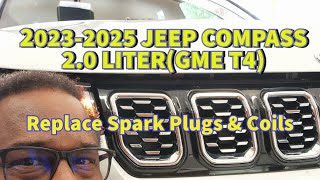
Typical fix: Replace the faulty ignition coil. It is often recommended to replace all four coils at the same time 🎬 Watch: Step-by-step guide to replacing Compass spark plugs and coils for preventative maintenance, especially on higher mileage vehicles.
Est. part cost: $30-$80 - Worn or Fouled Spark Plug on Cylinder 4 🔴 High Probability Spark plugs are a regular maintenance item with a finite lifespan, typically needing replacement at scheduled intervals. A worn electrode, carbon fouling, or damage from detonation can prevent a strong spark, causing a misfire.
How to confirm: After confirming the ignition coil is good, inspect the spark plug in cylinder 4. Look for a worn-down center electrode, heavy black carbon deposits, or oil/fuel fouling. You can also swap the spark plug with another cylinder to see if the misfire follows.
Typical fix: Replace the spark plug. It is best practice to replace all four spark plugs as a set to ensure even performance and avoid future misfires.
Est. part cost: $15-$30 per plug - Faulty Fuel Injector on Cylinder 4 ⚪ Low Probability Less common than ignition issues, but direct-injection fuel injectors can become clogged or fail electronically, preventing the correct amount of fuel from reaching cylinder 4.
How to confirm: This is more advanced. A mechanic can perform a fuel injector balance test or listen to the injector with a mechanic's stethoscope to check for a consistent clicking sound. The resistance of the injector can also be checked with a multimeter. Swapping injectors is possible but much more labor-intensive than swapping coils.
Typical fix: Replace the faulty fuel injector. This is a more involved job on a direct-injection engine like the GME-T4.
Est. part cost: $50-$150
Rare But Worth Checking
- Mechanical Engine Issue: In rare cases, a misfire can be caused by a loss of compression in the cylinder due to issues like a bad valve, worn piston rings, a damaged camshaft lobe, or a timing chain problem. This is unlikely on a newer vehicle but possible. A compression test and a cylinder leak-down test would be needed to diagnose this.
- Wiring Harness Issue: Damage to the wiring harness leading to the ignition coil or fuel injector for cylinder 4 can cause an intermittent or persistent misfire. Look for chafed, melted, or loose wires and connectors. 🎬 See how a misfire can be fixed without buying parts
Diagnosis Steps
- Read the trouble codes with an OBD-II scanner and confirm P1340 is present. 🎬 Watch: How to diagnose an engine misfire like a pro Note if the Check Engine Light is flashing, which indicates a more severe misfire.
- Locate cylinder 4 on the engine. On an inline-four engine like the GME-T4, cylinders are numbered 1-2-3-4 from front (accessory belt side) to back (transmission side). Cylinder 4 is the one closest to the driver's side firewall.
- Swap the ignition coil from cylinder 4 with the coil from cylinder 3. This is the easiest and most definitive test for a bad coil.
- Clear the fault codes using the scanner.
- Start the engine and let it idle or drive for a few minutes until the Check Engine Light returns.
- Re-scan the codes. If the code is now P1339 (Cylinder 3 Misfire), the ignition coil is bad and needs to be replaced.
- If the code remains P1340, the coil is likely good. The next step is to inspect the spark plug in cylinder 4.
- Remove and examine the spark plug for wear, damage, or fouling. If it looks worn or you are unsure, it's best to replace it. It's recommended to replace all four as a set.
- If the coil and spark plug are confirmed to be good and the problem persists, the issue may be with the fuel injector, wiring, or an internal mechanical problem, which may require professional diagnosis including a compression test.
Parts You'll Likely Need
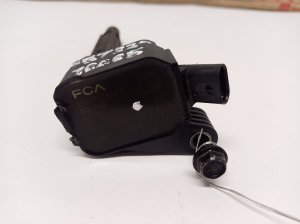
- Ignition Coil
(OEM #68436928AA)— This is the most frequent failure point for a single-cylinder misfire code on modern engines.
Trusted brands: Mopar, NGK, Delphi, Bosch
OEM price range: $50-$85
Aftermarket price range: $28-$75 - Spark Plug
(OEM #68292346AA)— A worn or fouled spark plug is the second most likely cause and is a standard maintenance item that should be replaced alongside a failed coil.
Trusted brands: NGK (ILZKR7G7G 90219), Mopar, Champion
OEM price range: $15-$30
Aftermarket price range: $8-$20
Related Codes That Often Appear With This One
- P0304 — This is the generic SAE code for 'Cylinder 4 Misfire.' P1340 is the more specific manufacturer code that often appears alongside it, indicating potential catalyst damage.
- P0300 — If the misfire is intermittent or starting to affect other cylinders, a 'Random/Multiple Cylinder Misfire' code may also be stored.
- P1336, P1337, P1338, P1339 — As seen in TSB #14-003-26, if there is a systemic issue causing misfires across multiple cylinders (like bad fuel or a major vacuum leak), you may see misfire codes for other cylinders as well.
Technical Service Bulletins (TSBs) & Recalls
- 14-003-26: Lists P1340-00 as 'Cylinder 4 Misfire' among a series of other misfire DTCs.
- 09-026-25: Defines P1340 as 'Combustion misfiring (impact on catalytic converter) : Cylinder 4' and notes customers may experience a loud engine noise.
Platform-Specific Known Issues
- TSB #14-003-26 and #09-026-25 from the manufacturer explicitly list P1340 as a code for 'Cylinder 4 Misfire' on Jeep platforms, confirming its meaning and association with other misfire codes.
- While no widespread forum discussions specifically for P1340 on the 2022+ Compass were found, misfires from coil and plug failure are a common topic across many Jeep forums for various models and engines, reinforcing the diagnostic path.
Mechanic-Grade Diagnostic Values
- Ignition Coil Primary Resistance — expected: 0.56 - 0.68 Ohms. Failure: A reading outside this range indicates a faulty primary winding in the coil.
- Ignition Coil Secondary Resistance — expected: 7.8 - 9.6 kOhms. Failure: A reading outside this range indicates a faulty secondary winding in the coil.
- Fuel Injector Resistance — expected: Approximately 12 Ohms. Failure: A reading significantly higher or lower than 12 Ohms suggests a failed injector coil.
- Low-Pressure Fuel Pump Pressure — expected: 58 - 64 PSI. Failure: Pressure below 58 PSI can indicate a weak in-tank fuel pump, leading to lean conditions and misfires.
- High-Pressure Fuel Pump (Direct Injection) — expected: Up to 2,900 PSI. Failure: This is an operational characteristic. Low pressure here would set other specific codes (e.g., P0087) but is not typically diagnosed with a simple pressure gauge.
- Spark Plug Gap — expected: 0.022 - 0.025 inches. Failure: An incorrect or widened gap can cause a weak spark and misfires, especially under boost.
- Spark Plug Torque — expected: 14 ft-lbs. Failure: Incorrect torque can lead to poor heat transfer or a loose plug, causing performance issues.
Hidden / Shadow Codes Worth Checking
- Mode $06, Test ID $0C: This function on an advanced scan tool does not show a 'code' but provides the raw misfire count for each cylinder during the current and previous drive cycles. A technician can view these counts to see if cylinder 4 has a significantly higher number of misfires than the others, even if the count is not yet high enough to trigger the Check Engine Light. (see via Requires an OBD-II scanner with Mode $06 capabilities. The data is often found under 'On-Board Monitoring' or a similar menu.)
Wiring & Ground Locations
- Engine and Battery Grounds — Check the main battery negative cable connection to the chassis and the engine ground strap, which connects the engine block to the vehicle's frame.. A poor or corroded ground connection can cause a weak spark by limiting the electrical current available to the ignition coils, leading to misfires that can be difficult to diagnose. The engine bay wiring harness (e.g., Mopar P/N 68417509AC) and battery ground cable are specific parts that can be inspected for damage.
Real Owner Repair Stories
- YouTube user 'Dbamax' via an Alfa Romeo Giulia forum (Alfa Romeo Giulia (2017-2018), 2.0L Turbo GME-T4 Engine) — Flashing check engine light, severe engine shaking, limp mode during acceleration.
❌ Tried (didn't work) Dealer suggested a software update, Applying a homemade conductive paste to contacts
✅ What actually fixed it The car had aftermarket Champion brand spark plugs installed. Replacing them with the correct OEM-specification NGK spark plugs completely resolved the severe misfire. - YouTube user 'Club Alfa' (Alfa Romeo Giulia, 2.0L Turbo GME-T4 Engine) — Persistent misfire codes, rough idle that would not clear even after resetting the ECU.
❌ Tried (didn't work) Replacing spark plugs, Cleaning ignition coil contacts with contact cleaner (which may have worsened the issue)
✅ What actually fixed it After trying other fixes, the owner replaced all four ignition coil packs, which finally resolved the persistent misfire and rough idle. The diagnostic path also included checking the battery and replacing a dry-rotted serpentine belt.
When the Usual Fixes Don't Work
- While a worn spark plug is a common cause, a real-world repair story on the same engine family showed that simply replacing the plug isn't enough if the wrong brand is used. An owner chased a severe misfire that was only resolved by swapping aftermarket Champion plugs for the OEM-recommended NGK plugs, highlighting the engine's sensitivity to specific ignition components.
OEM Part Supersession History
68298269AA→68436928AA— Standard part revision/update by the manufacturer.
Model Year Variations Within This Range
- 2023+: For the 2023 model year in North America, Jeep made the 2.0L Turbo GME-T4 engine standard, replacing the previous 2.4L Tigershark engine. This also involved a switch from a 9-speed to an 8-speed automatic transmission and making All-Wheel Drive (AWD) standard. Therefore, diagnostic information, parts (coils, plugs), and known issues for the 2.4L engine (like MultiAir system problems) do not apply to 2023 and newer models.
- 2022: The 2022 model year was a transition year. While it received a facelift, most 2022 Compasses were still equipped with the older 2.4L Tigershark engine. It is crucial to verify which engine is in the vehicle before ordering parts, as ignition and fuel components are not interchangeable between the 2.4L and the 2.0L Turbo.
Helpful Videos
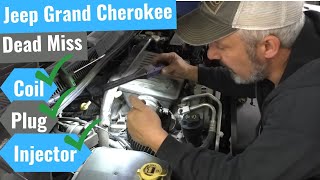
We Have This Part in Stock


The information in this article is provided for general reference and educational purposes only. Vehicle specifications, procedures, and part compatibility can vary by production date, trim level, and region. Always consult your vehicle's factory service manual and verify part numbers before purchasing or performing repairs. Safety-critical components such as airbags, seat belts, and braking systems should be installed by a qualified professional.
- Jeep COMPASS:
- 🎬 Helpful Videos
- 🛍️ Shop This Part
- What's Unique About the 2022-2026 Jeep COMPASS
- Diagnostic Flowchart
- Symptoms You May Notice
- Most Likely Causes
- Rare But Worth Checking
- Diagnosis Steps
- Parts You'll Likely Need
- Related Codes That Often Appear With This One
- Technical Service Bulletins (TSBs) & Recalls
- Platform-Specific Known Issues
- Mechanic-Grade Diagnostic Values
- Hidden / Shadow Codes Worth Checking
- Wiring & Ground Locations
- Real Owner Repair Stories
- When the Usual Fixes Don't Work
- OEM Part Supersession History
- Model Year Variations Within This Range
- 🎟️ Get 5% Off