

P1339 on 2022-2026 Jeep Compass: Cylinder 3 Misfire Causes and Fixes
P1339 on a Jeep Compass indicates a severe misfire on cylinder 3. The most common cause is a faulty ignition coil, a relatively inexpensive part that is easy to replace. Swapping the coil from cylinder 3 to another cylinder is the fastest way to confirm the diagnosis. This code is more serious than a generic P0303 as it signifies a catalyst-damaging event.
- P1339 is a serious code for a Jeep Compass, indicating a misfire on cylinder 3 that can damage the catalytic converter.
- Do not trust generic OBD-II websites for this code; their information is often incorrect for Jeeps, frequently misattributing it to a crankshaft sensor.
- The most likely cause is a bad ignition coil, which is a simple and affordable DIY fix.
- The easiest way to diagnose a bad coil is to swap it with one from a neighboring cylinder and see if the fault code follows the coil.
- Ensure you use the correct parts, as the 2022 (2.4L) and 2023+ (2.0L Turbo) models use different ignition components.
What's Unique About the 2022-2026 Jeep COMPASS
Unlike many other manufacturers (like Peugeot or BMW) where P1339 can point to crankshaft or camshaft sensors, on modern Jeeps (Stellantis platforms), this code is exclusively for a catalyst-damaging misfire on a specific cylinder. It serves as an escalated warning beyond the generic P0303 code. The engine change from the 2.4L 'Tigershark' in 2022 to the 2.0L Turbo 'GME-T4' in 2023+ means that while the problem is the same, the specific parts required for the fix are different.
Diagnostic Flowchart
Tap your situation to follow the diagnostic path that matches what you're seeing on this vehicle.
Generation note: The 2022-2026 year range covers two different engines for the Jeep Compass (MP generation). The 2022 model year primarily uses the 2.4L 'Tigershark' naturally aspirated four-cylinder. From 2023 onward, the Compass is equipped with a 2.0L turbocharged four-cylinder engine (GME-T4). While the diagnostic process is identical, ignition coils, spark plugs, and fuel injectors are not interchangeable between these two engines.
Symptoms You May Notice
- Flashing Check Engine Light (the most critical symptom)
- Rough or shaking idle, making the vehicle vibrate.
- Noticeable loss of engine power and hesitation during acceleration.
- Poor fuel economy.
- A smell of gasoline or rotten eggs from the exhaust, indicating unburned fuel.
- Replacing the crankshaft or camshaft position sensors. Many generic OBD-II websites and even some scanners incorrectly link P1339 to these sensors for other car brands (like VAG or BMW). For modern Jeep/Chrysler/Dodge vehicles, this is incorrect; the P13xx codes are reserved for catalyst-damaging misfires.
Most Likely Causes
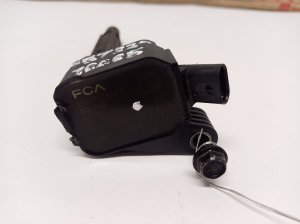
- Faulty Ignition Coil 🔴 High Probability Ignition coils are common wear-and-tear items that fail from constant heat cycles and vibration. They are the most frequent cause of a single-cylinder misfire on most modern engines, including the 2.4L and 2.0L in the Compass.
How to confirm: Swap the ignition coil from cylinder 3 with the coil from another cylinder (e.g., cylinder 2). Clear the codes with a scanner. Start the engine. If the misfire code changes to P1338 (Cylinder 2 Misfire), the coil is definitively faulty.
Typical fix: Replace the faulty ignition coil for cylinder 3. It is often recommended to replace the corresponding spark plug at the same time.
Est. part cost: $40-$90 - Worn or Fouled Spark Plug 🟡 Medium Probability Spark plugs have a finite service life (typically 30,000-100,000 miles depending on type). An old, worn, or oil-fouled spark plug can no longer create a strong enough spark to ignite the air-fuel mixture reliably under all conditions.
How to confirm: After ruling out the ignition coil, remove the spark plug from cylinder 3. Inspect it for a worn electrode, heavy carbon buildup, oil fouling, or cracks in the ceramic insulator. Compare it to a new plug. You can also swap it with another cylinder's plug to see if the misfire follows.
Typical fix: Replace the spark plug in cylinder 3. It is best practice to replace all spark plugs as a set to maintain even performance.
Est. part cost: $10-$25 per plug - Faulty Fuel Injector ⚪ Low Probability A fuel injector can become clogged with deposits or fail electrically, preventing the correct amount of fuel from being delivered to cylinder 3. While less common than ignition components, it's a known issue. TSB 14-009-25 (for older 2.4L engines) and TSB 14-003-22 (for other Stellantis engines) highlight that injector issues can cause misfires.
How to confirm: This is more difficult for a DIYer. A professional can perform a fuel injector balance test to measure flow rates. A simpler method is to listen to the injector with a mechanic's stethoscope; it should make a consistent, rapid clicking sound. An absence of clicking or a different sound from the others indicates a problem.
Typical fix: Replace the faulty fuel injector for cylinder 3. The fuel rail may need to be removed for access.
Est. part cost: $70-$150
Rare But Worth Checking
- Low Engine Compression: If ignition and fuel components are confirmed good, a compression test is the next step. Low compression in one cylinder points to serious mechanical engine problems like a leaking head gasket, worn piston rings, a burnt valve, or issues with the valvetrain, which are major and expensive repairs.
- Wiring Harness Damage: The wiring or connector to the ignition coil or fuel injector for cylinder 3 could be damaged, loose, or corroded. This can be caused by rodent damage, chafing against other components, or heat degradation, leading to an intermittent connection. A visual inspection of the harness leading to cylinder 3 is recommended.
- Ignition Coil Insulating Boot Failure: TSB #18-033-19, issued for some 2.4L engines, notes that the rubber insulating boot on the ignition coil can fail, causing a misfire even if the coil itself is still functional. The fix is to replace the boots, which are cheaper than the entire coil.
Diagnosis Steps
- Read the code with an OBD-II scanner to confirm P1339 and check for any other codes like P0303. 🎬 Watch: A helpful guide on diagnosing and fixing a P0303 misfire.
- Identify cylinder 3. On the inline 4-cylinder engines in the Compass (both 2.4L and 2.0L), the cylinders are numbered 1-2-3-4 from front (belt side) to back (transmission side). Cylinder 3 is the third one from the front.
- Swap the ignition coil from cylinder 3 with the coil from an adjacent, easily accessible cylinder (e.g., cylinder 2 or 4).
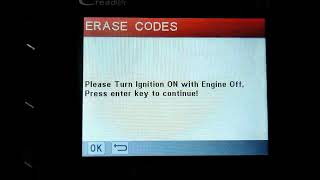
- Clear the fault codes using the scanner. This is a critical step.
- Start the engine and let it idle. You may need to drive it for a few minutes to trigger the code again.
- Re-scan for codes. If code P1338 (Cylinder 2 Misfire) or P1340 (Cylinder 4 Misfire) appears, the ignition coil you moved is bad and must be replaced.
- If P1339 returns, the coil is likely good. The next step is to swap the spark plug from cylinder 3 to the other cylinder and repeat the process.
- If P1339 still returns after swapping both the coil and plug, the issue is more likely with the fuel injector, wiring, or internal engine compression, which may require professional diagnosis with tools like a fuel pressure gauge or compression tester.
Parts You'll Likely Need
- Ignition Coil
(OEM #2.4L 'Tigershark' (2022): Mopar 4606824AC or 68242286AB. 2.0L Turbo 'GME-T4' (2023+): Mopar 68211953AA.)— This is the most common failure point for a cylinder-specific misfire on modern engines.
Trusted brands: Mopar, NGK, Delphi, Bosch
OEM price range: $70-$120
Aftermarket price range: $40-$90 - Spark Plug
(OEM #Part numbers vary by specific engine build. It's best to confirm with a dealer using your VIN. Common brands are NGK and Champion.)— A worn spark plug is the second most likely cause and is often replaced as preventative maintenance when replacing a coil.
Trusted brands: Mopar, NGK, Champion
OEM price range: $15-$30
Aftermarket price range: $10-$25
Related Codes That Often Appear With This One
- P0303 — P0303 is the generic SAE code for 'Cylinder 3 Misfire'. P1339 is the manufacturer-specific, more severe version indicating a catalyst-damaging event. They often appear together, with P1339 taking precedence in severity.
- P0300 — P0300 means 'Random/Multiple Cylinder Misfire'. If the underlying problem causing the P1339 (like a fuel delivery issue) is starting to affect other cylinders, P0300 may also be stored.
Technical Service Bulletins (TSBs) & Recalls
- Bulletin #14-003-26: Confirms P1339-00 as 'Cylinder 3 Misfire' alongside other misfire DTCs for 2024 engines.
- Bulletin #09-026-25: Defines P1339 as 'Combustion misfiring (impact on catalytic converter) : Cylinder 3', highlighting the severity of the code.
- Bulletin #14-009-25: Notes potential fuel injector leak issues on older (2015) 2.4L engines which could lead to misfire codes. While not directly for 2022+, it establishes a precedent for this failure mode.
- Bulletin #18-033-19: Issued for some 2.4L engines, this TSB addresses replacing the ignition coil insulating boots to resolve misfires, suggesting the boot can be a failure point separate from the coil.
Mechanic-Grade Diagnostic Values
- Ignition Coil Primary Resistance (2.4L 'Tigershark') — expected: 0.56 - 0.68 ohms. Failure: A reading of OL (Open Line) or significantly outside this range indicates a faulty coil winding.
- Ignition Coil Secondary Resistance (2.4L 'Tigershark') — expected: 7,800 - 9,600 ohms (7.8 - 9.6 kΩ). Failure: A reading significantly outside this range suggests the coil's secondary winding has failed.
- Fuel Injector Resistance (Both Engines) — expected: Approximately 12-16 ohms (High Impedance). The most critical factor is that all injectors should have nearly identical resistance readings (within 0.5 ohms of each other).. Failure: An injector with a significantly different resistance reading (e.g., over 20 ohms or under 10 ohms) is likely faulty.
- Low-Side Fuel Pressure (2.4L 'Tigershark') — expected: 58-64 PSI. Failure: Pressure below this range points to a weak in-tank fuel pump or a clogged filter.
- Spark Plug Tightening Torque (2.4L 'Tigershark') — expected: 20 lb-ft (27 N-m). Failure: Over-tightening can damage the plug or cylinder head; under-tightening can cause a poor seal and misfires.
- Engine Oil Viscosity (2.0L 'GME-T4') — expected: 5W-30 Full Synthetic. Failure: Using the wrong oil viscosity can lead to damage to the turbocharger bearings or the MultiAir valve system, potentially causing misfire-like symptoms.
Hidden / Shadow Codes Worth Checking
- P2302, P2305, P2308, P2311: Respectively for cylinders 1-4, these codes indicate 'Ignition Coil Secondary Circuit - Insufficient Ionization'. This is a more advanced code than a simple P030x. The PCM uses the ignition coil to detect if combustion actually occurred. A lack of ionization current means a definite misfire, pointing more strongly toward a coil, plug, or compression issue rather than fuel. (see via These may not be visible on basic OBD-II scanners but will appear on more advanced tools and dealer software like Witech.)
- Mode $06 Misfire Counters: This is not a trouble code but a function within the OBD-II system. A technician can view misfire counts for each individual cylinder in real-time or over the current/last 10 drive cycles. This is invaluable for diagnosing intermittent misfires that aren't yet severe enough to set a P1339 or flash the check engine light. (see via Requires a scan tool that can display Mode $06 data.)
Scan Tool Commands That Help
- Witech (Dealer Tool) or equivalent high-end scanner: View Misfire Counters — This is the first step after reading the primary code. Watching live misfire data while performing a 'wiggle test' on the coil and injector harness for cylinder 3 can instantly pinpoint a wiring issue. It also confirms the misfire is isolated to cylinder 3.
- Witech (Dealer Tool) or equivalent high-end scanner: Fuel Injector Balance Test — If the ignition system is confirmed to be working correctly, a balance test can be commanded. The tool will fire each injector for a set duration and measure the corresponding drop in fuel rail pressure. A smaller pressure drop for cylinder 3 indicates a clogged or failing injector.
Wiring & Ground Locations
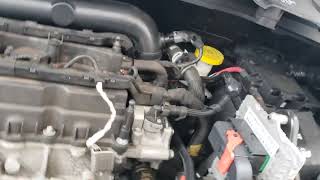
- Cylinder 3 Ignition Coil Connector — On top of the valve cover, third from the front (belt side) of the engine.. The wiring harness to the coil can become brittle from heat and vibration. A broken wire or poor terminal connection is a common cause of an intermittent misfire that part-swapping won't fix. The harness has been noted to be short from the factory on some models, putting stress on the wires.
- Ground G104 (Example from related platform) — On older models, located on the right front of the engine compartment. The exact location on 2022+ models should be verified with a service manual.. A single loose or corroded ground point can cause multiple, seemingly unrelated electrical faults. On a similar platform, a bad G104 caused open circuit codes for O2 sensors, cam actuators, and the intake manifold tuning valve simultaneously. A misfire code could be a symptom of a bad ground shared by multiple components.
Real Owner Repair Stories
- YouTube channel 'PineHollowAutoDiagnostics' (2007 Jeep Compass (older model, but demonstrates a key failure mode)) — Intermittent but severe misfire on cylinder 1 (P0301).
❌ Tried (didn't work) Replacing the ignition coil on cylinder 1., Swapping ignition coils between cylinders.
✅ What actually fixed it The green wire in the ignition coil harness was broken internally due to being too short from the factory, causing an intermittent connection when wiggled. The final fix was soldering in a small extension to relieve the stress and properly repair the wire. - YouTube short by a vehicle owner (Jeep Wrangler (demonstrates diagnostic process for P0303)) — Misfire on cylinder 3 (P0303).
❌ Tried (didn't work) Swapping ignition coil from cylinder 3 to another cylinder; misfire stayed on cylinder 3., Swapping spark plug from cylinder 3 to another cylinder; misfire stayed on cylinder 3.
✅ What actually fixed it An injector resistance test was performed. A good injector (cylinder 1) read 12.2 ohms. The faulty injector on cylinder 3 read 63.2 ohms, confirming it was electrically failed. Replacing the fuel injector for cylinder 3 resolved the issue.
"I Checked Everything" — The Actual Cause
- In cases where a smoke test for vacuum leaks comes back clean, the root cause is often electrical or mechanical. A common scenario is a hairline crack or break in the wiring harness to the ignition coil or fuel injector for cylinder 3. These issues won't be found with a smoke machine but can often be located by performing a 'wiggle test' on the harness while monitoring live misfire data on a scan tool.
Model Year Variations Within This Range
- 2023-2026: Models with the 2.0L Turbo 'GME-T4' engine are susceptible to intake valve carbon buildup, a problem not prevalent on the port-injected 2.4L 'Tigershark' engine from 2022. This requires a different diagnostic path (borescope inspection) and repair (walnut blasting or chemical cleaning).
- 2023-2026: The 2.0L Turbo engine has a known design issue where the coolant reservoir can crack due to its proximity to the turbocharger. This can lead to overheating and subsequent engine damage that may manifest as a misfire, a problem not associated with the 2.4L engine's layout.
Helpful Videos
We Have This Part in Stock


The information in this article is provided for general reference and educational purposes only. Vehicle specifications, procedures, and part compatibility can vary by production date, trim level, and region. Always consult your vehicle's factory service manual and verify part numbers before purchasing or performing repairs. Safety-critical components such as airbags, seat belts, and braking systems should be installed by a qualified professional.
- Jeep COMPASS:
- 🎬 Helpful Videos
- 🛍️ Shop This Part
- What's Unique About the 2022-2026 Jeep COMPASS
- Diagnostic Flowchart
- Symptoms You May Notice
- Most Likely Causes
- Rare But Worth Checking
- Diagnosis Steps
- Parts You'll Likely Need
- Related Codes That Often Appear With This One
- Technical Service Bulletins (TSBs) & Recalls
- Mechanic-Grade Diagnostic Values
- Hidden / Shadow Codes Worth Checking
- Scan Tool Commands That Help
- Wiring & Ground Locations
- Real Owner Repair Stories
- "I Checked Everything" — The Actual Cause
- Model Year Variations Within This Range
- 🎟️ Get 5% Off