

Ultimate P1339 Guide: Misfire, Sensor & Timing Faults by Manufacturer
An expert-level breakdown of what P1339 means and how to fix it on Peugeot, Citroën, BMW, VW, GM, Jeep, and Honda vehicles.
- P1339 is manufacturer-specific: it means a cylinder 3 misfire on Peugeot/Citroën/Jeep, an exhaust cam sensor fault on BMW, and swapped sensor wires on VW/Audi.
- On Peugeot and Citroën vehicles, diagnose P1339 by swapping the cylinder 3 ignition coil to cylinder 2; if the code changes to P1338, replace the $40-$100 coil.
- For Peugeot 1.2L PureTech engines, P1339 is a critical warning sign of a degrading wet timing belt that requires immediate $800-$1,200 replacement to prevent total engine failure.
- Never drive with a flashing check engine light, as raw fuel from the misfire will destroy your catalytic converter within 10 miles, turning a simple fix into a $2,000 repair.
What Does P1339 Mean?

P1339 is a manufacturer-specific code. On Peugeot, Citroën, and Jeep, it indicates a severe misfire on cylinder 3. On BMW, it points to a faulty exhaust camshaft position sensor ('B'). On VW and Audi, it means the crankshaft and engine speed sensor connectors were accidentally swapped during a repair. On GM Duramax diesels, it flags a glow plug control module software anomaly for cylinder 2.
Technical definition: The SAE/OBD-II definition varies by brand: 'Cylinder 3 Misfire Detected' (Peugeot/Citroën/Jeep), 'Camshaft Position Sensor B Faulty Phase Position' (BMW), 'Crankshaft Position/Engine Speed Sensor Cross Connected' (VW/Audi), or 'Cylinder 2 Glow Plug Offset Exceeded Learning Limit' (GM).
Can I Drive With P1339?

Yes, But With Caution. You can drive short distances, but continued operation destroys components. Expect rough running, reduced power, and a 15-25% drop in fuel economy. A flashing check engine light signifies a severe misfire dumping unburned fuel into the exhaust, which melts the catalytic converter within miles and turns a $100 fix into a $2,500 repair. Stop driving immediately if the light flashes.
Common Causes

- Faulty Ignition Coil (Very Common) — The ignition coil provides high voltage to the spark plug. A failing coil on cylinder 3 is the most frequent cause for this code on Peugeot, Citroën, and Jeep.
- Worn or Fouled Spark Plugs (Common) — Spark plugs wear out or become fouled with oil from a leaking valve cover gasket, leading to a weak or nonexistent spark.
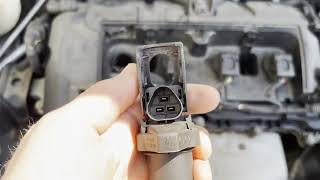
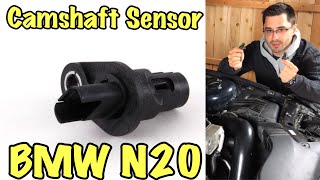
- Faulty Camshaft Position Sensor (BMW) (Common) — On BMWs, this code points directly to a faulty exhaust-side ('B') camshaft position sensor, 🎬 See this walkthrough on replacing the BMW camshaft position sensor. which dictates engine timing and fuel injection.
- Degrading 'Wet' Timing Belt (Peugeot/Citroën 1.2 PureTech) (Common) — On 1.2L PureTech engines, the timing belt runs in oil. As it degrades, belt particles clog the oil system, causing timing to jump and triggering misfire codes. Ignoring this causes catastrophic engine failure. 🎬 Watch: See how a degrading wet timing belt destroys these engines.
- Cross-Connected Sensors (VW/Audi) (Less Common) — This occurs exclusively after a repair where the identical electrical connectors for the Crankshaft Position Sensor and the Engine Speed Sensor are accidentally swapped.
- Faulty Fuel Injector (Less Common) — A clogged or failing fuel injector on cylinder 3 prevents the correct amount of fuel from entering the combustion chamber, causing a lean misfire.
- GPCM Software Anomaly (GM Duramax) (Less Common) — On L5P Duramax engines, this code is triggered by a software glitch within the Glow Plug Control Module (GPCM) requiring a dealer-level reprogram, not a hardware replacement.
- Stretched Timing Chain or VANOS Fault (BMW) (Rare) — On BMW N20/N26 engines, P1339 acts as an early warning for a stretched timing chain or a failing VANOS solenoid, causing camshaft/crankshaft correlation errors.
- Low Engine Compression (Rare) — Internal engine damage like a burnt valve, worn piston rings, or a blown head gasket causes a loss of compression in cylinder 3, leading to a persistent misfire.
Symptoms

- Check Engine Light On (or Flashing) — The Malfunction Indicator Lamp illuminates. A flashing light indicates a severe, catalyst-damaging misfire requiring immediate engine shutdown.
- Rough Idle and Engine Vibration — The engine shakes or runs unevenly, especially noticeable when stopped at a red light.
- Reduced Engine Power and Hesitation — The vehicle feels sluggish and stumbles during acceleration due to the non-firing cylinder.
- Smell of Unburnt Fuel — A strong gasoline smell from the exhaust confirms unburnt fuel is passing through the misfiring cylinder.
- Loud Engine Cooling Fan — On Peugeot and Citroën vehicles, the ECU runs the cooling fan at maximum speed as a fail-safe measure when P1339 is detected.
- Engine Won't Start — In cases of a critical sensor failure on a BMW or a cross-connection on a VW/Audi, the engine cranks but fails to start.
Diagnostic Flowchart
Tap your situation to follow the diagnostic path that matches what you're seeing on this code.
Common Fixes & Costs
- Replace Ignition Coil — Parts: $40-$100, Labor: $60-$120, ~0.5 hr book time (DIY)
- Replace Spark Plugs (Set) — Parts: $30-$80, Labor: $80-$150, ~1.0 hr book time (DIY)
- Replace Camshaft Position Sensor (BMW) — Parts: $60-$150, Labor: $100-$200, ~0.8 hr book time (Intermediate)
- GPCM Reprogramming (GM Duramax) — Parts: $0, Labor: $150-$250, ~1.0 hr book time (Professional)
- Wet Timing Belt Replacement (Peugeot 1.2) — Parts: $250-$450, Labor: $800-$1200, ~8.0 hr book time (Professional)
- Timing Chain Replacement (BMW) — Parts: $600-$1300, Labor: $1500-$3000, ~12.0 hr book time (Professional)
DIY vs Professional
- Replace Ignition Coil — Beginner:
Tools: 10mm socket, ratchet, flathead screwdriver. - Replace Spark Plugs — Beginner:
Tools: Spark plug socket, extension, torque wrench. - Replace Camshaft Position Sensor — Beginner:
Tools: E-Torx socket set, ratchet, flashlight. - Wet Timing Belt / Timing Chain Replacement — Beginner:
Tools: Specialized engine timing locking tools, engine hoist.
Used vs. New Parts: Buying Guide
When a used part is worth it: Never buy used ignition coils or electronic sensors. Their remaining lifespan is impossible to verify, and premature failure costs more in repeat labor.
Donor-vehicle mileage cap: roughly under 40000 miles for the part to have meaningful remaining life.
Donor quality checklist:
- Source from a low-mileage, accident-damaged vehicle.
- Match the part number exactly to ensure compatibility.
Decision logic:
- If The part is an ignition coil, spark plug, or electronic sensor. → Buy a new OEM or high-quality aftermarket part (Bosch, Delphi, NGK).
- If The part is a mechanical component like a valve cover. → Used is acceptable if visually verified to be crack-free.
Warranty tradeoff: Used parts carry a 30-day warranty. New OEM or premium aftermarket parts carry 12-24 month warranties.
Worst-case if a used part fails: $150-$400 in repeat diagnostic and labor fees when the used electronic part fails.
What Happens If You Wait — Timeline
- 0-100 miles: Code P1339 triggers and the Check Engine Light turns on. Minor misfires present no noticeable symptoms. (MPG impact: 0-5%% · Added cost: $0)
- 100-500 miles: The engine develops a rough idle, vibrates, and hesitates. Fuel economy drops as the ECU injects extra fuel. (MPG impact: 5-15%% · Added cost: $20-$80 in wasted fuel)
- 500-1,000 miles (or minutes if MIL is flashing): Unburnt fuel ignites inside the catalytic converter, melting the internal ceramic substrate. (MPG impact: 15-25%% · Added cost: $800-$2,500 for catalytic converter replacement)
- 1,000+ miles: The catalytic converter becomes completely blocked, causing extreme backpressure that burns exhaust valves. The car stalls and fails to run. (MPG impact: 25-50%+% · Added cost: $2,500-$5,000+ for engine and exhaust repair)
Cost of Not Fixing It
- Immediate (if Check Engine Light is flashing): A flashing light means raw fuel is dumping into the exhaust, destroying the catalytic converter in minutes. (Added cost: $1200-$2800)
- 1-3 months: Continued driving with a steady misfire causes a 15-25% drop in fuel economy and destroys downstream oxygen sensors. (Added cost: $200-$600)
- 6+ months: Ignoring the code leads to a completely clogged catalytic converter, excessive engine vibration that destroys motor mounts, or catastrophic engine failure on Peugeot 1.2 PureTech engines. (Added cost: $2000-$5000+)
Diagnosis Steps
- Confirm P1339 Definition for Your Vehicle
Use an online search to confirm what P1339 means for your exact make and model. Misinterpreting the code (e.g., assuming a Peugeot misfire is a BMW sensor fault) guarantees a misdiagnosis.
Tools: Internet access (Beginner) - The Ignition Coil Swap Test (Peugeot/Citroën/Jeep)
Move the ignition coil from cylinder 3 to cylinder 2. Clear the codes and drive. If the code changes to P1338 (misfire on cylinder 2), the ignition coil is faulty and requires replacement.
Tools: OBD-II scanner, 10mm socket, ratchet (Beginner) - Inspect Spark Plug
If the coil swap didn't move the fault, remove the spark plug from cylinder 3. Inspect it for excessive wear, cracked ceramic, or oil fouling. Replace all plugs if one is damaged.
Tools: Spark plug socket, ratchet, extension (Beginner) - Diagnosis for Camshaft Sensor (BMW)
Visually inspect the exhaust camshaft position sensor and wiring. Test the sensor's 5V reference and ground. If wiring is intact, replace the sensor. If the code returns, the issue is mechanical timing.
Tools: Multimeter, E-Torx socket set (Intermediate) - Check for Wet Timing Belt Degradation (Peugeot 1.2 PureTech)
Remove the oil filler cap and shine a light inside. Look for cracking on the belt or black, rubbery debris in the oil. If found, tow the vehicle to a specialist immediately.
Tools: Flashlight (Intermediate) - Diagnosis for Crossed Wires (VW/Audi)
Locate the Crankshaft Position Sensor (G28) and Engine Speed Sensor (G4). Verify their identical electrical connectors have not been plugged into the wrong harnesses following a recent repair.
Tools: Flashlight (Beginner) - Test Fuel Injector Pulse
If ignition components are good, disconnect the cylinder 3 fuel injector and attach a noid light to the harness. Crank the engine. A flashing light confirms the ECU is commanding fuel delivery.
Tools: Noid light set (Advanced) - Perform Compression Test
If spark and fuel are confirmed, perform a mechanical compression test on cylinder 3. Low compression indicates burnt valves, worn rings, or a blown head gasket requiring major engine repair.
Tools: Compression tester kit (Advanced) - Live Data Analysis
Use an advanced scanner to monitor 'Misfire Count' for cylinder 3. For BMWs, monitor 'Camshaft Position' PIDs to check for erratic readings confirming a sensor or VANOS timing issue.
Tools: Advanced OBD-II Scan Tool (Advanced)
When This Code Triggers (Freeze-Frame Conditions)
- Engine Coolant Temp: 180-210°F (82-99°C) (The engine is at normal operating temperature when the misfire is consistently detected.)
- Engine RPM: 1500-3000 RPM (The code triggers under light to moderate acceleration or steady-state cruising, rarely at idle.)
- Engine Load: 25-60% (The misfire becomes apparent when the engine is under moderate load, such as climbing a slight incline.)
Related Codes
- P0303 — The generic OBD-II code for 'Cylinder 3 Misfire'. P1339 is the manufacturer's escalated version, indicating the misfire is severe enough to damage the catalytic converter.
- P1337, P1338, P1340 — On Peugeot/Citroën, these correspond to misfires on cylinders 1, 2, and 4. Swapping the coil from cylinder 3 to 2 changes the code from P1339 to P1338, confirming a bad coil.
- P0340 — The generic code for 'Camshaft Position Sensor A' (intake). Seeing this alongside BMW's P1339 (exhaust) points to a mechanical timing problem affecting both camshafts.
Climate & Environmental Factors
- Cold Weather: Low temperatures expose weaknesses in aging ignition coils, causing them to fail to produce a strong spark for cold-start combustion.
- High Humidity / Moisture: Moisture from humid climates or high-pressure engine washing penetrates ignition coil housings, causing electrical shorts and misfires.
How to Talk to a Mechanic About This Code
Say this: "I have a P1339 code on my [Car Make]. I understand this code means different things for different brands. For my vehicle, it points to [a cylinder 3 misfire / an exhaust cam sensor fault]. I'd like to schedule a diagnostic to confirm the root cause, starting with the most common tests."
This guides the technician toward the correct diagnostic path for your specific vehicle, preventing common misdiagnoses like replacing a crankshaft sensor on a Peugeot.
Avoid saying:
- 'Just fix whatever's wrong'
- 'My check engine light is on, can you look at it?'
- 'My friend said it's probably the O2 sensor'
Questions to ask before authorizing the repair:
- For a Peugeot/Jeep: Did you perform a coil swap, and did the fault code move to the other cylinder?
- For a BMW: Before replacing the timing chain, can you confirm you've ruled out the VANOS solenoids?
- Will I get a detailed invoice with all part numbers and labor charges broken down?
Where to Take It: Dealer vs Independent vs Chain
- Dealer:
Best for: Vehicles under warranty., GM Duramax P1339, which requires a dealer-level GPCM software update., Peugeot 1.2L PureTech wet timing belt diagnosis.
Downsides: Highest labor rates., May recommend expensive assemblies instead of component repairs. (Typical cost: +50% vs. baseline) - Independent Shop:
Best for most P1339 scenarios if the shop is a trusted European specialist.
Best for: Out-of-warranty vehicles., Common P1339 fixes like ignition coil or cam sensor replacement.
Downsides: Quality varies. Ensure they specialize in European brands and have appropriate diagnostic software. (Typical cost: +0% vs. baseline) - Chain Shop:
AVOID for diagnosis. The brand-specific nature of P1339 makes it highly likely to be misdiagnosed here.
Best for: Simple maintenance like tire rotations.
Downsides: High risk of misdiagnosing a manufacturer-specific code like P1339., Lack specific software to correctly interpret European codes. (Typical cost: -10% vs. baseline)
When to Walk Away From the Repair
If the estimated repair cost exceeds 50% of the car's private-party value, consider selling or trading in the vehicle instead of repairing it.
- Car worth $4500, fix is $2800: Walk away. A $2,800 timing chain repair on a car worth $4,500 is over the 50% threshold.
- Car worth $12000, fix is $1500: Fix it. A $1,500 repair for a Peugeot wet timing belt is significant, but well below the 50% threshold.
- Car worth $3000, fix is $250: Fix it. A $250 repair for an ignition coil makes economic sense.
What Scan Tool You Need for This Code
Minimum: A scanner that reads manufacturer-specific fault codes and displays live data. Basic readers misinterpret P1339.
A generic $20 reader gives wrong definitions (e.g., crank sensor for a Peugeot). To perform the coil swap test, you must see if the code changes from P1339 to P1338.
Budget: BlueDriver Pro (~$100) — Reads manufacturer-specific codes for BMW and Peugeot. Shows live data and Mode 6 misfire counts to diagnose a bad coil.
Mid-range: Foxwell NT510 Elite (~$180) — Offers OE-level diagnostics and bi-directional controls to command components like VANOS solenoids or fuel injectors.
Professional: Autel MaxiCOM MK808S (~$450) — Provides full bi-directional control and advanced service functions essential for diagnosing complex timing issues or performing a GPCM relearn.
Rent vs buy: Buying a midrange scanner is a wise investment for European car owners, quickly paying for itself by avoiding a single misdiagnosis.
How to Clear the Code After You Fix It
- Use an OBD-II scan tool to clear the diagnostic trouble codes (DTCs).
- Do not disconnect the battery, as this clears readiness monitors and learned transmission values.
- Perform a complete drive cycle to allow the ECU to run its self-tests.
Drive cycle (~30 minutes): Start the engine cold (after sitting 8+ hours), idle for 3 minutes, drive 15 minutes in mixed city/highway conditions including steady speeds of 55 mph, and perform several coasting decelerations without braking.
Readiness monitors affected: Misfire Monitor, Catalyst Monitor, Fuel System Monitor
Before emissions retest: drive at least 100 miles to fully set monitors.
Watch out for:
- Clearing the code without fixing the root cause guarantees the code returns within 10 miles.
- Clearing the code resets readiness monitors to 'Not Ready', causing an automatic emissions test failure.
Will This Fail Emissions / State Inspection?
Yes — this code typically fails an OBD-II emissions inspection.
- California: An active P1339 is an automatic smog check failure. A full drive cycle must be completed to set all monitors to 'Ready' before a retest.
- Texas: In emissions-testing counties, an illuminated check engine light is an automatic failure. The fault must be repaired and cleared.
Most Commonly Affected Vehicles
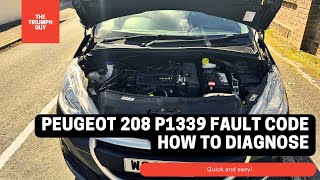
- Peugeot 208 (2012-2019) — P1339 means cylinder 3 misfire. On 1.2L PureTech engines, this is a critical warning for a degrading wet timing belt.
- Peugeot 308 (2007-2014) — On the 1.6 VTi (EP6 engine), if coils and plugs are good, suspect low compression from valve seat issues.
- Citroën C3 (2009-2016) — P1339 points to a cylinder 3 misfire, often from a bad coil. Cylinder 3 is typically closest to the gearbox.
- BMW 328i, 528i (2011-2016) — Triggers P1339 for a camshaft position sensor fault. In N20 engines, this is an early warning for stretched timing chains.
- Chevrolet Silverado 2500HD/3500HD (2017-2022) — On L5P Duramax engines, P1339 requires a GPCM software update per TSB, not a new glow plug.
- Jeep Compass (2022-2026) — Defined by TSB #09-026-25 as a catalyst-damaging misfire on cylinder 3, treated with higher urgency than a generic P0303.
- Honda Accord, Civic (1998-2005) — Older Hondas use P1339 for 'Random Misfire', caused by faulty ignition components or incorrect valve clearance.
Manufacturer-Specific Notes

- Peugeot/Citroën: Generic scanners misidentify P1339 as a crankshaft sensor fault. It actually means 'Cylinder 3 Misfire'. On 1.2 PureTech engines, it is a red flag for wet timing belt failure.
- BMW: P1339 points to the exhaust camshaft sensor, but the root cause is often a failing VANOS solenoid or a stretched timing chain on N20/N26 engines.
- Volkswagen/Audi: This code exclusively means the Crankshaft Position Sensor and Engine Speed Sensor connectors were swapped during a recent repair. Swap them back; do not replace parts.
- General Motors (Duramax): The fix for P1339 is a software update of the Glow Plug Control Module (GPCM), not replacing the glow plug itself.
Real Owner Stories
Peugeot 208 with P1339 - Simple Coil Fix
Owner experienced sudden rough running, shaking, and a loud cooling fan. A generic scanner suggested a crankshaft sensor fault.
What they tried:
- Correctly identified P1339 as a cylinder 3 misfire for Peugeot.
- Performed the coil swap test, moving the coil from cylinder 3 to cylinder 2.
- The diagnostic code changed to P1338, confirming the coil was faulty.
Outcome: Replaced the single faulty ignition coil on cylinder 3. The car ran perfectly, and the code cleared.
Lesson: Always suspect a cylinder 3 misfire for P1339 on a Peugeot. The coil swap test is a fast, free way to confirm a bad coil before buying parts.
2013 BMW 328i (N20 Engine) - P1339 as a Symptom of Major Failure
Car had a 'Drivetrain Malfunction' warning and codes P1338 and P1339 (camshaft position faults).
What they tried:
- Replaced both camshaft position sensors.
- Replaced both VANOS solenoid actuators.
- Double-checked mechanical engine timing with specialty tools.
Outcome: The codes persisted, pointing to a deeper issue like a damaged VANOS gear or clogged oil passages from a previous timing chain failure.
Lesson: On a BMW N20/N26 engine, P1339 is rarely just a bad sensor. If a new sensor doesn't fix it, a deeper mechanical investigation is required.
Peugeot 1.2 PureTech - P1339 as a Warning for Wet Belt Failure
Owner experienced a low oil pressure warning alongside P1339. Inspection revealed black, chunky bits of rubber on the oil dipstick.
What they tried:
- Identified symptoms as signs of the 'wet' timing belt degrading and contaminating the oil system.
Outcome: The oil pump pickup strainer was clogged with belt debris. The vehicle required immediate timing belt replacement and sump cleaning.
Lesson: A P1339 misfire code on a 1.2 PureTech engine, especially with visible belt debris, is a catastrophic engine failure in progress. Stop driving immediately.
How to Prevent This Code From Triggering
- Replace Spark Plugs at Recommended Intervals (Every 30,000-60,000 miles) — Worn spark plugs force the ignition coil to generate higher voltage, causing it to overheat and fail prematurely.
- Use Correct Specification Engine Oil (Every oil change) — On Peugeot 1.2L PureTech engines, incorrect oil viscosity accelerates the degradation of the wet timing belt, leading to engine failure.
- Address Valve Cover Oil Leaks Promptly (During regular checks) — Leaking oil seeps into spark plug tubes, submerging the ignition coil boot and causing it to short out.
- Perform Shorter Oil Change Intervals (Every 5,000 miles) — Removes contaminants and fuel dilution that harm sensitive components like BMW timing chains and Peugeot wet belts.
Frequently Asked Questions
My scanner says P1339 is a crankshaft sensor, but my car is a Peugeot. Is my scanner wrong?
Yes, generic scanners provide incorrect definitions for Peugeot vehicles. P1339 specifically indicates a misfire on cylinder 3. Do not replace the crankshaft sensor; start by testing the ignition coil.
I replaced the camshaft sensor on my BMW but P1339 came back. What now?
If a new sensor fails to clear the code, inspect and clean the VANOS solenoids. If the code persists, the problem is a stretched timing chain or failing timing guides. Tow the vehicle to a BMW specialist to check mechanical timing.
What are the most common misdiagnosis mistakes for P1339?
On Peugeot/Citroën, replacing the crankshaft sensor instead of diagnosing a cylinder 3 misfire. On BMW, replacing the camshaft sensor without investigating a stretched timing chain. On GM Duramax, replacing the glow plug instead of updating the GPCM software.
I swapped the coil and spark plug on my Peugeot and still have a P1339. What's next?
If ignition components are good, inspect the wiring and test the cylinder 3 fuel injector with a noid light. If fuel delivery is confirmed, perform a compression test to check for internal engine damage. On 1.2L PureTech engines, this also signals a failing timing belt requiring immediate professional inspection.
What does P1339 mean on a Peugeot 1.2 PureTech engine?
It is a critical warning that the 'wet' timing belt is degrading. Belt particles contaminate the oil, clog passages, and cause timing to jump. This requires immediate professional diagnosis to prevent total engine failure.
How much will it cost to fix a P1339 code?
A simple ignition coil replacement costs $100-$200. A BMW camshaft sensor replacement costs $160-$350. However, if the cause is a Peugeot wet timing belt or BMW timing chain, repairs escalate to $1,200-$3,000.
Will clearing the code make the problem go away?
No. The ECU will detect the persistent fault and re-trigger the code, usually within 10 miles of driving.
Key Takeaways
- P1339 is manufacturer-specific: it means a cylinder 3 misfire on Peugeot/Citroën/Jeep, an exhaust cam sensor fault on BMW, and swapped sensor wires on VW/Audi.
- On Peugeot and Citroën vehicles, diagnose P1339 by swapping the cylinder 3 ignition coil to cylinder 2; if the code changes to P1338, replace the $40-$100 coil.
- For Peugeot 1.2L PureTech engines, P1339 is a critical warning sign of a degrading wet timing belt that requires immediate $800-$1,200 replacement to prevent total engine failure.
- Never drive with a flashing check engine light, as raw fuel from the misfire will destroy your catalytic converter within 10 miles, turning a simple fix into a $2,000 repair.
Helpful Videos



The information in this article is provided for general reference and educational purposes only. Vehicle specifications, procedures, and part compatibility can vary by production date, trim level, and region. Always consult your vehicle's factory service manual and verify part numbers before purchasing or performing repairs. Safety-critical components such as airbags, seat belts, and braking systems should be installed by a qualified professional.
- 🎬 Helpful Videos
- What Does P1339 Mean?
- Can I Drive With P1339?
- Common Causes
- Symptoms
- Diagnostic Flowchart
- Common Fixes & Costs
- DIY vs Professional
- Used vs. New Parts: Buying Guide
- What Happens If You Wait — Timeline
- Cost of Not Fixing It
- Diagnosis Steps
- When This Code Triggers (Freeze-Frame Conditions)
- Related Codes
- Climate & Environmental Factors
- How to Talk to a Mechanic About This Code
- Where to Take It: Dealer vs Independent vs Chain
- When to Walk Away From the Repair
- What Scan Tool You Need for This Code
- How to Clear the Code After You Fix It
- Will This Fail Emissions / State Inspection?
- Most Commonly Affected Vehicles
- Manufacturer-Specific Notes
- Real Owner Stories
- Peugeot 208 with P1339 - Simple Coil Fix
- 2013 BMW 328i (N20 Engine) - P1339 as a Symptom of Major Failure
- Peugeot 1.2 PureTech - P1339 as a Warning for Wet Belt Failure
- How to Prevent This Code From Triggering
- Frequently Asked Questions
- My scanner says P1339 is a crankshaft sensor, but my car is a Peugeot. Is my scanner wrong?
- I replaced the camshaft sensor on my BMW but P1339 came back. What now?
- What are the most common misdiagnosis mistakes for P1339?
- I swapped the coil and spark plug on my Peugeot and still have a P1339. What's next?
- What does P1339 mean on a Peugeot 1.2 PureTech engine?
- How much will it cost to fix a P1339 code?
- Will clearing the code make the problem go away?
- Key Takeaways
- 🎟️ Get 5% Off