

OBD-II Code P1338: Comprehensive Guide to Diagnosis and Repair
What P1338 means, why it triggers, and how to fix it for your specific vehicle
- P1338 means a Cylinder 2 Misfire on Peugeot/Citroën, a Camshaft Sensor fault on VW/Audi/BMW, or a Glow Plug fault on GM Duramax diesels—always verify your manufacturer's definition first.
- For Peugeot and Citroën vehicles, fix the P1338 misfire by swapping the cylinder #2 ignition coil with cylinder #1 to see if the fault code changes to P1337.
- For VW, Audi, and BMW models, do not replace ignition parts; test the Bank 1 Camshaft Position Sensor's 3-wire circuit for a 5V reference and replace the sensor if it fails.
- Never drive with an active misfire flashing the check engine light, as unburnt fuel will destroy a $1,500+ catalytic converter in under 50 miles.
- On 2017 and newer GM Duramax diesels, clearing a P1338 code requires performing a specific 'Glow Plug Learn' procedure using a bidirectional scan tool.
What Does P1338 Mean?

Code P1338 is a manufacturer-specific code with drastically different meanings depending on your vehicle. For French cars (Peugeot, Citroën), it signifies a combustion misfire in cylinder #2. For German and British brands (VW, Audi, BMW, Jaguar), it indicates an electrical fault in the Bank 1 Camshaft Position Sensor circuit. For modern GM Duramax diesels, it points to a glow plug control system error requiring a relearn procedure. Correctly identifying your car's definition is the critical first step.
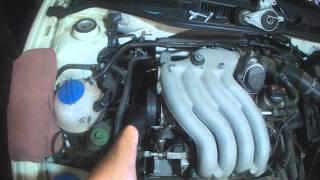
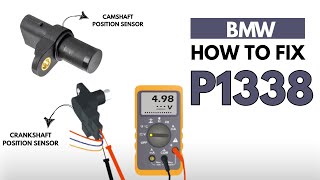
Technical definition: For Peugeot and Citroën vehicles, P1338 is defined as 'Combustion Misfire on Cylinder 2'. For Volkswagen, Audi, BMW, and Jaguar, it means 'Camshaft Position Sensor Bank 1 Open Circuit Or Short To Positive', indicating an electrical fault with the sensor or its wiring. 🎬 Watch: Diagnosing a faulty VW camshaft position sensor. On Chevrolet/GMC Duramax diesel engines, it means 'Glow Plug Offset Exceeded Learning Limit'. P1338 almost always pertains to the Camshaft Position Sensor when it is a sensor-related code, despite some generic scanners incorrectly labeling it a Crankshaft Position Sensor fault.
Can I Drive With P1338?
No — Do Not Drive. Driving is not recommended. A persistent misfire (on Peugeot/Citroën) sends unburnt fuel into the exhaust, rapidly destroying the catalytic converter—a repair costing $1,200-$3,000. For brands where this indicates a sensor fault (VW/Audi/BMW), the engine stalls or refuses to start, posing an immediate safety risk. Continued driving for more than a few miles is a significant financial and safety gamble.
Common Causes

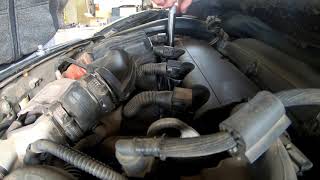
- Faulty Ignition Coil (Peugeot/Citroën) (Very Common) — The ignition coil provides the high voltage needed to create a spark. If the coil on cylinder #2 fails, it cannot fire the spark plug, causing a misfire. This is the most frequent cause on misfire-related variants 🎬 See how to replace Peugeot ignition coils and plugs. of this code.
- Faulty Camshaft Position Sensor (VW/Audi/BMW) (Very Common) — For German brands, the sensor itself fails due to heat and age, providing no signal or an incorrect one to the ECU, triggering the open/short circuit code.
- Worn or Fouled Spark Plug (Peugeot/Citroën) (Very Common) — A worn electrode, carbon fouling, or damage prevents a strong spark, leading to incomplete combustion. Coolant or oil leaks also foul the plug.
- Damaged Wiring or Connectors (Common) — The wiring harness for the camshaft position sensor (VW/Audi) or the ignition coil/injector (Peugeot/Citroën) frays, corrodes, or loosens, causing an open or shorted circuit.
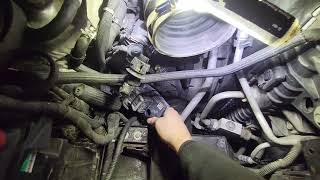
- Glow Plug Control Module Relearn Needed (Duramax) (Common) — On modern Duramax diesel engines (L5P), replacing a ceramic glow plug requires an electronic 'relearn' procedure. 🎬 Watch: Replacing the glow plug module on a Duramax. Without it, the GPCM does not recognize the new plug's resistance, logging a P1338 fault.
- Faulty Fuel Injector (Common) — A clogged or failing fuel injector on cylinder #2 fails to deliver the correct amount of fuel, disrupting the air/fuel ratio and causing a misfire.
- Carbon Buildup on Intake Valves (Less Common) — On direct-injection engines (like the PSA 'THP' engine), carbon builds up on the intake valves, restricting airflow into the cylinder and causing misfires under load.
- Poor Engine Mechanical Condition (Rare) — Serious internal engine problems like a leaking head gasket, low compression from worn piston rings, or incorrect timing cause this code.
- Leaking Intake Manifold Gasket at Cylinder 2 (Rare) — A leak at the specific intake manifold runner gasket for cylinder #2 introduces unmetered air into only that cylinder, causing a localized lean misfire.
- Low or Unstable Battery Voltage (Rare) — Significant voltage drops from a failing battery or during a jump-start are misinterpreted by the ECU, falsely triggering a misfire or sensor circuit code.
Symptoms

- Check Engine Light On — The Malfunction Indicator Lamp (MIL) illuminates. It flashes during an active misfire, indicating a severe, catalyst-damaging event.
- Rough Idle and Engine Shaking — The engine runs unevenly and vibrates heavily when stopped. This is a primary symptom for both misfire and sensor fault variants.
- Engine Stalls or Will Not Start — In cases of a complete camshaft position sensor failure (VW/BMW), the engine cranks but fails to start because the ECU lacks timing information.
- Loss of Power and Hesitation — The car feels sluggish and hesitates or stumbles when pressing the gas pedal.
- Engine in 'Limp Mode' — The ECU limits engine power to prevent further damage, resulting in very slow acceleration.
- High-Speed Radiator Fan — On Citroën and Peugeot vehicles, the ECU runs the radiator fan at full speed as a precaution when a serious misfire is detected, even if the engine is cold.
Diagnostic Flowchart
Tap your situation to follow the diagnostic path that matches what you're seeing on this code.
Common Fixes & Costs
- Replace Ignition Coil(s)
— Parts: $35-$150, Labor: $75-$150, ~0.8 hr book time
(DIY)
Peugeot 208/Citroën C3 (1.2 PureTech): OEM 9671214580, 9807841880 (Alt: Bosch (0986221057), Delphi (GN10713)) - Replace Camshaft Position Sensor
— Parts: $50-$150, Labor: $80-$200, ~1.1 hr book time
(Intermediate)
VW/Audi (2.0T FSI/TFSI): OEM 07K907601A, 06H905163B (Alt: Bosch (0232103052), Denso (196-4003))
BMW (N13/N20 Engine): OEM 13627588095 (Alt: VDO (S119901001Z), Delphi (SS11003)) - Replace Spark Plugs
— Parts: $20-$100, Labor: $80-$200, ~1.2 hr book time
(DIY)
Peugeot 208/Citroën C3 (1.2 PureTech): OEM NGK (ILZKBR7B8DG) (Alt: Denso (IXEH20TT)) - Replace Fuel Injector — Parts: $80-$400, Labor: $100-$250, ~2.5 hr book time (Intermediate)
- Clean Intake Valves (Walnut Blasting) — Parts: $20-$50, Labor: $400-$800, ~4.5 hr book time (Professional)
DIY vs Professional
- Replace Ignition Coil / Spark Plugs — Beginner:
Tools: Socket set with extension, spark plug socket, Torx driver. - Replace Camshaft Position Sensor — Beginner:
Tools: Basic socket/Torx set. - Replace Fuel Injector — Beginner:
Tools: Fuel line disconnect tools, socket set, torque wrench, bidirectional scan tool. - Clean Intake Valves (Walnut Blasting) — Beginner:
Tools: Media blasting equipment, walnut shell media, air compressor, engine disassembly tools.
Used vs. New Parts: Buying Guide
When a used part is worth it: For electronic parts like ignition coils and camshaft sensors, buying new is mandatory. Used electronics offer minimal savings and carry a high risk of premature failure, forcing you to pay for labor twice.
Donor-vehicle mileage cap: roughly under 40000 miles for the part to have meaningful remaining life.
Donor quality checklist:
- Match the OEM part number exactly.
- Avoid parts from vehicles scrapped due to engine failure or high mileage.
Decision logic:
- If Part is an ignition coil or camshaft position sensor → Buy new. The risk of premature failure outweighs the small cost savings.
- If Vehicle is >150K miles and budget is extremely tight → A used part is a last resort; expect a very short service life.
Warranty tradeoff: Used parts offer a 30-90 day warranty covering only the part, not the labor. New aftermarket parts include a 1-year to limited lifetime warranty.
Worst-case if a used part fails: $200-$500 if a used electronic part fails, requiring repeat labor and a new part.
What Happens If You Wait — Timeline
- 0-1 week (0-200 miles): Check Engine Light illuminates. Engine has a rough idle. Radiator fan runs at high speed on Peugeot/Citroën. (MPG impact: 0-5%% · Added cost: $0)
- 1-4 weeks (200-500 miles): Misfire becomes consistent, causing heavy engine shaking. Unburnt fuel begins overheating the catalytic converter. (MPG impact: 5-15%% · Added cost: $20-$80 in wasted fuel)
- 1-3 months (500-1,500 miles): Catalytic converter substrate melts from raw fuel exposure. A sulfur smell is noticeable. Severe power loss occurs. (MPG impact: 15-25%% · Added cost: $1200-$3000 (catalytic converter replacement required))
- 3+ months (1,500+ miles): Catalytic converter completely clogs. Extreme exhaust backpressure causes severe engine damage (burnt valves, damaged rings). Engine stalls frequently. (MPG impact: 25-50%+% · Added cost: $2500-$5000+)
Cost of Not Fixing It
- Immediate (0-100 miles): For misfires, raw fuel washes oil from cylinder walls, increasing wear. For sensor faults, the engine stalls in traffic or refuses to start. (Added cost: $0)
- Short-Term (100-500 miles): The catalytic converter overheats from unburnt fuel, causing irreversible damage to the precious metal substrate. Fuel economy drops by 20%. (Added cost: $1200-$3000)
- Long-Term (6+ months): Complete catalytic converter meltdown guarantees a failed emissions test and creates extreme exhaust backpressure, potentially destroying the engine. (Added cost: $2500+)
Diagnosis Steps

- Read Codes & Verify Definition
Use an OBD-II scanner to confirm P1338. Critically, verify the code's definition for your specific vehicle make. For Peugeot/Citroën it is a misfire; for VW/Audi/BMW it is a Camshaft Sensor circuit fault. Misdiagnosing at this stage guarantees wasted money.
Tools: OBD-II Scanner (Beginner) - Swap Ignition Coils (PSA Misfire Path)
Swap the ignition coil from cylinder #2 with cylinder #1. Clear the codes and drive the car. If the fault code changes to P1337 (Misfire Cylinder 1), the ignition coil is definitively bad.
Tools: Socket set or Torx driver (Beginner) - Test Camshaft Sensor Circuit (VW/BMW Path)
Disconnect the Bank 1 camshaft sensor. Turn the ignition on (engine off). Using a multimeter, probe the connector for a 5V/12V reference and a ground (<1 Ohm). Reconnect and back-probe the signal wire. While cranking, voltage must fluctuate rapidly between 0V and 5V. No fluctuation means a dead sensor.
Tools: Multimeter, back-probe kit (Advanced) - Inspect the Spark Plug (PSA Misfire Path)
Remove the spark plug from cylinder #2. Look for worn electrodes, carbon fouling, oil, or coolant. A wet or contaminated plug points to leaking gaskets. Replace if fouled.
Tools: Socket wrench, spark plug socket (Beginner) - Inspect Wiring and Connectors
Check the electrical connector and wiring going to the relevant component (ignition coil #2 or Bank 1 camshaft sensor). Look for corrosion, breaks, or loose connections.
Tools: Flashlight (Beginner) - Swap Fuel Injectors (PSA Misfire Path)
If the coil and plug are good, swap the fuel injector from cylinder #2 with another cylinder. If the misfire code follows the injector, replace the injector.
Tools: Fuel line disconnect tools, socket set (Intermediate) - Perform a Compression Test
Measure the pressure in each cylinder. A healthy gasoline engine shows 125-160 PSI. Variance between cylinders must not exceed 15%. A reading below 100 PSI on cylinder #2 confirms a mechanical failure (bad valve, rings, or head gasket).
Tools: Compression tester kit (Advanced) - Check Fuel Trims
Observe Short-Term (STFT) and Long-Term (LTFT) fuel trims via live data. Normal LTFT is between -10% and +10%. A high positive value (+25%) indicates a vacuum leak; a high negative value points to a leaking injector.
Tools: OBD-II Scanner with Live Data (Advanced) - Test Ignition Coil Resistance
Test primary and secondary coil resistance with a multimeter. Primary resistance is typically 0.4-2.0 Ohms. Secondary resistance is 4,000-10,000 Ohms. Readings outside these ranges confirm a faulty coil.
Tools: Multimeter (Advanced) - Advanced Misfire Investigation
Introduce smoke into the intake manifold with a smoke machine to find localized vacuum leaks near the cylinder #2 intake runner. Perform a cylinder pressure test to check for head gasket leaks.
Tools: Smoke machine, Cylinder pressure tester (Professional)
When This Code Triggers (Freeze-Frame Conditions)
- Engine Coolant Temp: 175-210°F (80-99°C) (Misfires are typically detected once the engine is fully warmed up and in closed-loop fuel control.)
- Engine RPM: 1200-3000 RPM (The code triggers under light to moderate acceleration or steady-state cruising, rarely at idle.)
- Engine Load: 25-70% (The ECU actively monitors for catalyst-damaging misfires during normal driving loads.)
- Fuel System Status: Closed Loop (The fault sets when the ECU actively manages the air-fuel ratio based on O2 sensor feedback.)
Related Codes
- P0302 — The generic OBD-II code for 'Cylinder 2 Misfire'. It appears alongside P1338 on Peugeot/Citroën vehicles. The diagnosis is identical: find the cause of the misfire in cylinder 2.
- P0300 — Means 'Random/Multiple Cylinder Misfire'. If seen with P1338, other cylinders are misfiring, pointing to a systemic issue like a failing fuel pump or major vacuum leak rather than a single bad coil.
- P1337, P1339, P1340 — On Peugeot/Citroën, these are the misfire codes for cylinders 1, 3, and 4. If you swap the cylinder 2 coil with cylinder 1 and the code changes from P1338 to P1337, the coil is definitively faulty.
- P0340 / P0341 — Generic codes for 'Camshaft Position Sensor Circuit Malfunction'. On VW/Audi/BMW, these appear alongside P1338, confirming the fault is in the camshaft position sensor or its wiring.
Climate & Environmental Factors
- Cold Weather: Cold temperatures weaken failing batteries, causing low voltage during startup. This voltage drop triggers spurious sensor circuit codes like P1338. It also exacerbates misfires caused by carbon buildup.
- High Humidity: Moisture accelerates corrosion on electrical connectors and wiring harnesses for ignition coils and camshaft sensors, leading to intermittent signals and P1338 faults.
- High Altitude: Thinner air affects the air-fuel ratio, exacerbating underlying issues like a weak spark or minor vacuum leak, triggering a misfire code that remains dormant at sea level.
How to Talk to a Mechanic About This Code
Say this: "My vehicle is showing a P1338 code. For my car, I know this means a [cylinder 2 misfire / camshaft sensor circuit fault / glow plug relearn issue]. Please start by [swapping the cylinder 2 ignition coil / testing the camshaft sensor's wiring] before recommending part replacements."
This proves you understand the code is brand-specific and directs the mechanic to the correct diagnostic path, preventing them from chasing a misfire on a VW or replacing sensors on a Peugeot.
Avoid saying:
- 'Just fix whatever's wrong'
- 'My check engine light is on, can you look at it?'
- 'Whatever you recommend'
Questions to ask before authorizing the repair:
- For a misfire: Did you confirm the bad part by swapping it to another cylinder and seeing the fault code change?
- For a sensor fault: What were the voltage, ground, and signal readings at the sensor connector?
- For a Duramax: Does your scan tool support the GPCM relearn procedure?
- What is the warranty on this specific repair?
Where to Take It: Dealer vs Independent vs Chain
- Dealer:
Best for: Vehicles under warranty., Complex manufacturer-specific issues like the Duramax glow plug relearn.
Downsides: Labor rates are 1.5x to 2x higher than independent shops., Tendency to replace entire assemblies rather than individual components. (Typical cost: +50% vs. baseline) - Independent Shop:
Best overall fit for most P1338 scenarios. A reputable independent shop provides the best balance of expertise and value.
Best for: Out-of-warranty vehicles., Common repairs like the Peugeot/Citroën misfire or VW sensor replacement.
Downsides: May lack the advanced bidirectional scanners required for modern diesel relearn procedures. (Typical cost: +0% vs. baseline) - Chain Shop:
Avoid for initial diagnosis. Acceptable only if you have already definitively proven a coil or plug is bad.
Best for: Simple, confirmed ignition coil or spark plug replacements.
Downsides: High pressure to upsell unnecessary fluid flushes., Lacks advanced diagnostic equipment for German or Diesel variants. (Typical cost: -10% vs. baseline)
When to Walk Away From the Repair
If the estimated repair cost exceeds 50% of your car's current private-party value, seriously consider selling or trading it in.
- Car worth $4000, fix is $2200: Walk away. The repair cost is over half the car's value.
- Car worth $12000, fix is $800: Fix it. This repair is well below the threshold.
What Scan Tool You Need for This Code
Minimum: A code reader that displays live data for misfire counts or a bidirectional tool for the Duramax glow plug relearn.
A $20 reader cannot show live misfire data to confirm a fix, nor can it perform the critical 'relearn' function required for a GM Duramax diesel.
Budget: BlueDriver Pro (~$100) — Reads codes, provides freeze-frame data, and graphs live data to diagnose the misfire variant.
Mid-range: Foxwell NT510 Elite / XTOOL D7 (~$180-400) — Offers manufacturer-specific software for accurate definitions. The XTOOL D7 provides bidirectional control for the Duramax relearn.
Professional: Autel MaxiCOM MK808BT Pro (~$450-1200) — Provides full bidirectional control and component activation, essential for deeply diagnosing sensor-circuit versions and performing all relearns.
Rent vs buy: For a one-time fix, auto parts stores offer free code reading. If you perform regular maintenance, buying a midrange scanner is a mandatory investment.
How to Clear the Code After You Fix It
- Fix the underlying mechanical or electrical problem.
- Use an OBD-II scan tool to select 'Clear/Erase Codes'.
- Perform a drive cycle to allow readiness monitors to run self-tests.
Drive cycle (~30 minutes): Start cold (engine below 122°F), idle for 3 minutes, drive steadily at 55 mph for 10 minutes, coast down to 20 mph without braking, and perform 15 minutes of stop-and-go city driving.
Readiness monitors affected: Misfire Monitor, Catalyst Monitor, Oxygen (O2) Sensor Monitor
Before emissions retest: drive at least 100 miles to fully set monitors.
Watch out for:
- Clearing the code without fixing the root cause guarantees it will return immediately.
- Disconnecting the battery resets all readiness monitors to 'Not Ready', causing an automatic emissions test failure.
- Failing to drive through varied conditions prevents monitors from completing self-checks.
Will This Fail Emissions / State Inspection?
Yes — this code typically fails an OBD-II emissions inspection.
- California: An illuminated Check Engine Light is an automatic failure. After repair, you must complete a drive cycle to set the readiness monitors before passing.
- New York: An active P1338 code causes an automatic failure. All required readiness monitors must be 'Ready'.
- Texas: An illuminated Check Engine Light results in an automatic inspection failure during the mandatory OBD-II scan.
Most Commonly Affected Vehicles
- Peugeot 207, 208, 308, RCZ (2007-2018) — Extremely common on 1.2L PureTech/VTi and 1.6L THP engines due to ignition coil and spark plug failures.
- Citroën C1, C3, C4, Berlingo (2009-2020) — Shares engines with Peugeot; suffers from identical ignition coil and spark plug failures.
- Volkswagen/Audi A4, A6, Jetta, Passat (1998-2015) — P1338 points directly to a fault in the camshaft position sensor circuit ('Open Circuit Or Short To Positive'), not a misfire.
- BMW 1 Series, 3 Series (N13/N20 engines) (2011-2019) — Indicates a fault with the Camshaft Position Sensor circuit or a synchronization error.
- Chevrolet/GMC Silverado/Sierra with Duramax L5P Diesel (2017-2024) — A glow plug circuit code appearing after a glow plug replacement without performing the required ECU 'relearn' procedure.
- Mini Cooper, Clubman, Countryman (2007-2015) — Models using the 'Prince' engine show this code for camshaft/crankshaft sensor or VANOS system faults.
- Ford Various Models (1996-2014) — Indicates a loss of synchronization or a signal error between the camshaft and crankshaft position sensors.
- Jaguar XJ, XK, S-Type (1997-2015) — Indicates a camshaft position sensor fault, typically an open or shorted circuit.
Manufacturer-Specific Notes

- Peugeot / Citroën: This code strictly means a combustion misfire on cylinder #2. It frequently causes the radiator fan to run at full speed as a precaution. 1.2 PureTech engines have a known issue with premature timing belt degradation causing this; check for extended warranty coverage (10 years/112,000 miles).
- Volkswagen / Audi: P1338 is not a misfire code. It means 'Camshaft Position Sensor Bank 1 Open Circuit Or Short To Positive'. Diagnosis focuses entirely on testing the sensor and its wiring.
- Chevrolet / GMC (Duramax): On L5P Duramax engines, P1338 is a glow plug circuit fault. TSB 20-NA-176 requires reprogramming the Glow Plug Control Module (GPCM) after replacing a glow plug.
- BMW / Mini: This code relates to the camshaft/crankshaft position sensors or the variable valve timing (VANOS) system. It is not a primary misfire code.
Real Owner Stories
Peugeot RCZ (1.6L THP) with intermittent misfire
Car ran lumpy with an 'Engine Fault' message and P1338 code. The radiator fan ran at full speed for five minutes after shutting off the cool engine.
What they tried:
- Mechanic cleared the code, but it returned.
- Owner suspected a timing chain issue based on internet forums.
- Swapped the ignition coil based on better advice.
Outcome: The initial timing chain diagnosis was wrong. Swapping the coil proved it was an ignition failure, saving the owner thousands in unnecessary mechanical repairs.
Lesson: Never assume the worst-case scenario. Always perform the simple ignition coil swap test first before committing to expensive mechanical repairs.
2017 GMC Sierra 3500 (L5P Duramax) with P1338 after DIY repair
Owner replaced a failed glow plug on cylinder #1. The check engine light returned the next day with code P1338.
What they tried:
- Cleared the code multiple times, but it always returned.
Outcome: The owner learned L5P Duramax engines require a 'glow plug learn' procedure after replacement. Without it, the GPCM logs a P1338 'Offset Exceeded Learning Limit' fault. A shop performed the relearn with a bidirectional scanner, fixing the issue.
Lesson: On modern diesels, replacing a component is not the final step. Always check for required electronic 'relearn' procedures to avoid chasing false fault codes.
1998 Audi A6 (2.8L V6) with P1338 after timing belt replacement
Immediately after a DIY timing belt replacement, the car threw a P1338 code (Camshaft position sensor open circuit).
What they tried:
- Swapped the camshaft position sensor, O2 sensors, and fuel injectors.
- Performed a compression test (results were good).
Outcome: The owner eventually found a damaged wire near the camshaft sensor connector. The code appearing immediately after a major repair strongly suggested an issue introduced during reassembly.
Lesson: If an electrical fault code appears immediately after a mechanical repair, meticulously re-inspect all wiring and connectors disturbed during the job before replacing parts.
How to Prevent This Code From Triggering
- Use Top Tier certified gasoline (Every fill-up) — High detergent levels prevent deposits on fuel injectors and intake valves, critical for preventing misfires on direct-injection engines.
- Replace spark plugs on schedule (Every 60,000-100,000 miles) — Fresh plugs ensure a strong spark, reducing electrical load on ignition coils and preventing incomplete combustion.
- Check and clean engine electrical ground connections (Every 30,000 miles) — Clean grounds prevent unstable voltages that trigger false sensor circuit codes like the VW/Audi variant of P1338.
- Inspect timing belt condition (Peugeot 1.2 PureTech) (During every oil change) — These 'wet' belts degrade prematurely, clogging the oil system and causing misfires. Inspect for cracking through the oil filler cap.
Frequently Asked Questions
What is the difference between code P1338 and P0302?
P0302 is the universal code for a cylinder 2 misfire, while P1338 is manufacturer-specific. On Peugeot and Citroën, P1338 also means a cylinder 2 misfire, so both codes often appear together. However, on VW, Audi, or BMW, P1338 points to a camshaft sensor circuit fault, requiring a completely different diagnostic approach.
I replaced the spark plug and ignition coil, but the code came back. What's next?
If you replaced the ignition components, check the fuel injector on cylinder #2 by swapping it with another cylinder. Next, inspect the wiring harness for damage and check for localized intake gasket leaks or carbon buildup. Finally, perform a compression test to rule out internal engine damage.
My car is a VW/Audi and the mechanic wants to change the spark plugs for a P1338. Is this correct?
This is an incorrect diagnosis for a German vehicle. On a VW or Audi, P1338 specifically indicates an electrical fault with the Bank 1 Camshaft Position Sensor circuit. Replacing ignition components will not fix this issue; the mechanic must test the sensor and its wiring.
How do I find cylinder #2 on my engine?
For most inline-4 engines, cylinder #1 is at the front of the engine on the side with the accessory or timing belts. Cylinders are numbered sequentially from there, making cylinder #2 the second one from the belt side. For V-shaped engines, numbering varies by manufacturer, requiring a specific repair manual.
Can a vacuum leak cause a P1338 misfire?
A vacuum leak typically causes a lean condition and random misfires across multiple cylinders (P0300). However, a leak isolated to the cylinder #2 intake manifold runner gasket introduces unmetered air into only that cylinder. This creates a localized lean misfire, triggering a P1338 code on PSA vehicles.
Could a bad battery cause a P1338 code?
Yes, sensitive vehicle ECUs log false error codes when exposed to significant voltage drops. A failing battery or a sudden voltage spike from a jump-start triggers spurious misfire or sensor circuit faults. If the code appeared immediately after a battery issue, test the battery and charging system first.
I fixed the problem, how long until I can trust the car again?
After a successful repair, the check engine light remains off. Drive the car for 50-70 miles through varied city and highway conditions to allow the ECU to run its self-tests. If the light does not reappear and the readiness monitors read 'Complete', the issue is resolved.
Key Takeaways
- P1338 means a Cylinder 2 Misfire on Peugeot/Citroën, a Camshaft Sensor fault on VW/Audi/BMW, or a Glow Plug fault on GM Duramax diesels—always verify your manufacturer's definition first.
- For Peugeot and Citroën vehicles, fix the P1338 misfire by swapping the cylinder #2 ignition coil with cylinder #1 to see if the fault code changes to P1337.
- For VW, Audi, and BMW models, do not replace ignition parts; test the Bank 1 Camshaft Position Sensor's 3-wire circuit for a 5V reference and replace the sensor if it fails.
- Never drive with an active misfire flashing the check engine light, as unburnt fuel will destroy a $1,500+ catalytic converter in under 50 miles.
- On 2017 and newer GM Duramax diesels, clearing a P1338 code requires performing a specific 'Glow Plug Learn' procedure using a bidirectional scan tool.
Helpful Videos

The information in this article is provided for general reference and educational purposes only. Vehicle specifications, procedures, and part compatibility can vary by production date, trim level, and region. Always consult your vehicle's factory service manual and verify part numbers before purchasing or performing repairs. Safety-critical components such as airbags, seat belts, and braking systems should be installed by a qualified professional.
- 🎬 Helpful Videos
- What Does P1338 Mean?
- Can I Drive With P1338?
- Common Causes
- Symptoms
- Diagnostic Flowchart
- Common Fixes & Costs
- DIY vs Professional
- Used vs. New Parts: Buying Guide
- What Happens If You Wait — Timeline
- Cost of Not Fixing It
- Diagnosis Steps
- When This Code Triggers (Freeze-Frame Conditions)
- Related Codes
- Climate & Environmental Factors
- How to Talk to a Mechanic About This Code
- Where to Take It: Dealer vs Independent vs Chain
- When to Walk Away From the Repair
- What Scan Tool You Need for This Code
- How to Clear the Code After You Fix It
- Will This Fail Emissions / State Inspection?
- Most Commonly Affected Vehicles
- Manufacturer-Specific Notes
- Real Owner Stories
- Peugeot RCZ (1.6L THP) with intermittent misfire
- 2017 GMC Sierra 3500 (L5P Duramax) with P1338 after DIY repair
- 1998 Audi A6 (2.8L V6) with P1338 after timing belt replacement
- How to Prevent This Code From Triggering
- Frequently Asked Questions
- What is the difference between code P1338 and P0302?
- I replaced the spark plug and ignition coil, but the code came back. What's next?
- My car is a VW/Audi and the mechanic wants to change the spark plugs for a P1338. Is this correct?
- How do I find cylinder #2 on my engine?
- Can a vacuum leak cause a P1338 misfire?
- Could a bad battery cause a P1338 code?
- I fixed the problem, how long until I can trust the car again?
- Key Takeaways
- 🎟️ Get 5% Off