

P1337 on 2022-2026 Jeep Compass: Cylinder 1 Misfire Causes and Fixes
On a 2022-2026 Jeep Compass with the 2.0L Turbo engine, code P1337 indicates a misfire in cylinder 1. The most common causes are a faulty ignition coil or a worn spark plug, which are relatively inexpensive and simple to replace for a DIYer. Swapping the coil from cylinder 1 to another cylinder is the fastest way to confirm the cause.
- P1337 on a 2022-2026 Jeep Compass means cylinder 1 is misfiring.
- The most likely cause is a bad ignition coil or spark plug.
- A simple diagnostic test is to swap the ignition coil from cylinder 1 to cylinder 2 and see if the misfire code follows the coil.
- Do not drive for extended periods if the check engine light is flashing, as you risk damaging your catalytic converter.
- Always check for oil in the spark plug tube, as a leaking valve cover gasket can be the underlying cause of the failure.
What's Unique About the 2022-2026 Jeep COMPASS
For the second-generation Jeep Compass (MP/552), specifically models from 2023-onward equipped with the 2.0L Turbo GME-T4 engine, the P1337 code is a direct pointer to an ignition event issue in the cylinder closest to the passenger side of the vehicle. While the causes are typical for most four-cylinder engines, some owners have noted that oil leaks from the valve cover gasket can foul the spark plug and ignition coil in that specific cylinder, making it a root cause to check for. The diagnostic process is straightforward and relies on swapping components between cylinders to isolate the fault.
Diagnostic Flowchart
Tap your situation to follow the diagnostic path that matches what you're seeing on this vehicle.
Symptoms You May Notice
- Rough or shaky idle
- Hesitation or stumbling during acceleration
- Noticeable loss of engine power
- Flashing or solid Check Engine Light
- Reduced fuel economy
- Engine knocking sounds.
- Strong smell of gasoline from the exhaust
- Replacing the crankshaft position sensor. While a faulty crankshaft sensor can cause misfires, it typically affects multiple cylinders and sets codes like P0335, not a single-cylinder code like P1337.
- Replacing oxygen sensors. O2 sensors monitor the exhaust for efficiency but do not cause a misfire in a single, specific cylinder.
Most Likely Causes
- Faulty Ignition Coil 🔴 High Probability Ignition coils are common wear-and-tear items that fail from constant heat cycles and vibration. On some Jeep engines, oil leaking from the valve cover gasket can seep into the spark plug tube and damage the coil boot or the coil itself, causing a misfire.
How to confirm: Swap the ignition coil from cylinder 1 with the coil from another cylinder (e.g., cylinder 2). Clear the codes and run the engine. If the misfire code changes to P1338 (Cylinder 2 Misfire), the ignition coil is the faulty part. This is the most definitive DIY diagnostic step.
Typical fix: Replace the failed ignition coil. It is only necessary to replace the one that has failed, though many owners and mechanics recommend replacing them as a set, especially on higher mileage vehicles, for preventative maintenance. Applying a small amount of dielectric grease to the inside of the new coil boot can help with sealing and future removal.
Est. part cost: $40-$90 - Worn or Fouled Spark Plug 🔴 High Probability Spark plugs have a finite service life and can become worn or fouled with carbon or oil deposits, preventing a strong spark. The 2.0L Turbo engine uses iridium-tipped plugs, which are long-lasting but can still fail.
How to confirm: After confirming the ignition coil is good, remove the spark plug from cylinder 1. Inspect it for excessive wear on the electrode, cracks in the porcelain insulator, or heavy deposits of oil or carbon. Compare it to a new plug or a plug from a healthy cylinder.
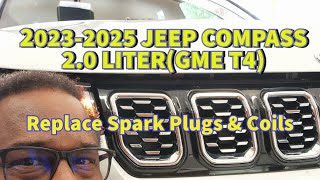
Typical fix: Replace the spark plug. It is best practice to replace all four spark plugs at the same time 🎬 Watch: Step-by-step spark plug and coil replacement for the 2.0L engine. to ensure consistent performance and avoid future misfires. Modern iridium plugs often come pre-gapped and should not be adjusted.
Est. part cost: $15-$30 per plug - Faulty Fuel Injector 🟡 Medium Probability Fuel injectors can become clogged with deposits over time or fail electrically, preventing the correct amount of fuel from being delivered to the cylinder. A leaking injector can also cause misfires and hard starting.
How to confirm: Use a mechanic's stethoscope or a long screwdriver to listen to the injector; it should make a steady, audible clicking sound. If the sound is absent or irregular, it may be faulty. A more definitive test is to swap the injector with another cylinder, but this is a more involved job that requires depressurizing the fuel rail.
Typical fix: Replace the faulty fuel injector. Sometimes a professional fuel system cleaning can resolve a minor clog. A TSB for a similar engine noted that leaking injectors should be replaced as a set along with the high-pressure fuel tube.
Est. part cost: $50-$150
Rare But Worth Checking
- Damaged Ignition Coil Wiring or Connector: The wiring harness or the plastic connector for the ignition coil can become brittle from engine heat and break, causing an intermittent connection. Wiggling the harness while the engine is running may induce the misfire, confirming a wiring issue.
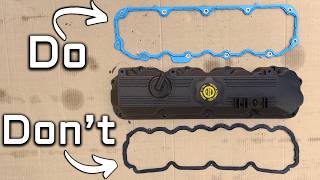
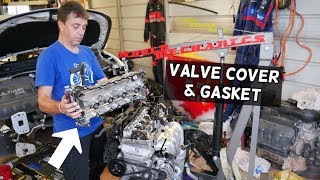
- Leaking Valve Cover Gasket: While not a direct cause, a common issue is the valve cover gasket leaking oil into the spark plug tubes. This oil can saturate the ignition coil boot and the spark plug, causing a misfire. If you find oil in the spark plug well when replacing the coil or plug, the valve cover gasket must also be replaced to permanently fix the issue. 🎬 See this helpful guide on replacing a leaking valve cover gasket.
- Low Compression / Mechanical Engine Issue: Though rare on newer vehicles, a mechanical problem like a burnt valve, worn piston rings, or a timing issue can cause a persistent misfire that isn't resolved by replacing ignition or fuel parts. This requires a compression test to diagnose and is a job for a professional.
Diagnosis Steps
- Read the trouble codes with an OBD-II scanner to confirm P1337 and any other related codes.
- Check for a flashing check engine light, which indicates a severe, catalyst-damaging misfire.
- Locate cylinder 1, which is the cylinder on the passenger side of the engine.
- Swap the ignition coil from cylinder 1 to cylinder 2. This involves unplugging the electrical connector (which may have a red locking tab) and removing a single 10mm or Torx bolt. Clear the codes, start the engine, and see if the misfire code moves to cylinder 2 (P1338). If it does, the ignition coil is bad.
- If the code remains P1337, inspect the spark plug. Remove the coil again and use a 5/8" spark plug socket to remove the plug. Check for oil in the spark plug well. If oil is present, the valve cover gasket is likely leaking and needs replacement. Inspect the plug for wear, damage, or fouling.
- If the spark plug looks worn or fouled, replace it. It's best to replace all four at once.
- If the code still remains on cylinder 1 after replacing the coil and plug, the problem is likely with the fuel injector or the cylinder's mechanical compression.
- Inspect the fuel injector wiring and listen for its operation with a stethoscope. If it's silent, it may not be firing.
- If all else fails, a compression test should be performed on all cylinders to check for mechanical engine problems. This is typically a job for a professional.
Parts You'll Likely Need
- Ignition Coil
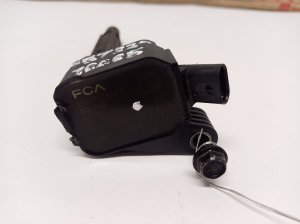
(OEM #68211953AA)— This is one of the most common failure points for a single-cylinder misfire. Heat and vibration cause them to fail over time.
Trusted brands: Mopar, NGK, Delphi, Bosch
OEM price range: $60-$110
Aftermarket price range: $40-$90 - Spark Plug
(OEM #68292346AA)— As a routine maintenance item, spark plugs wear out and are a very common cause of misfires. It's recommended to replace them as a full set. These are typically Iridium plugs.
Trusted brands: Mopar, NGK, Champion, Denso
OEM price range: $15-$30
Aftermarket price range: $10-$25
Related Codes That Often Appear With This One
- P0301 — This is the generic SAE equivalent of P1337, also meaning 'Cylinder 1 Misfire'. They often appear together.
- P0300 — If the misfire is severe or intermittent, the computer may also log a 'Multiple Cylinder Misfire' code alongside the specific cylinder code.
- P1336, P1338, P1339, P1340 — These are the corresponding manufacturer-specific codes for misfires in other cylinders. Seeing them indicates a wider problem than just cylinder 1. [TSB #14-003-26]
Technical Service Bulletins (TSBs) & Recalls
- 14-003-26: Defines P1337-00 as 'Cylinder 1 Misfire' among other misfire codes.
- 09-026-25: Defines P1337 as 'Combustion misfiring (impact on catalytic converter) : Cylinder 1'.
Platform-Specific Known Issues
- NHTSA Technical Service Bulletin #14-003-26 and #09-026-25 explicitly list P1337 as a diagnostic trouble code for a cylinder 1 misfire on Jeep engines. [TSB #14-003-26, TSB #09-026-25]
- A TSB for the similar 1.3L Turbo engine (TSB 14-009-25) details a procedure for diagnosing leaking fuel injectors that cause misfire codes (including P0301), which could be a relevant diagnostic path if ignition components are confirmed good.
Mechanic-Grade Diagnostic Values
- Ignition Coil Primary Resistance — expected: 0.56 - 0.68 Ohms. Failure: A reading outside this range indicates a faulty internal winding.
- Ignition Coil Secondary Resistance — expected: 7.8 - 9.6 kOhms. Failure: A reading outside this range points to a failure in the secondary coil winding.
- Fuel Injector Resistance — expected: Approximately 12 Ohms. Failure: A reading significantly higher or lower suggests a failed injector coil.
- Low-Pressure Fuel Pump (In-Tank) — expected: 58 - 64 PSI (Key On, Engine Off). Failure: Pressure below this range can indicate a weak fuel pump, causing lean conditions and misfires.
- High-Pressure Fuel System — expected: Up to 2,900 PSI. Failure: This is a system capability, not a single test value. Low pressure would indicate a failing high-pressure fuel pump (HPFP) and likely set other codes like P0087.
- Engine Oil Pressure (Normal Fluctuation) — expected: 17 - 50 PSI (at cruise). Failure: This is not a failure indicator but a normal characteristic of the two-stage oil pump on the 2.0L Turbo engine. Technicians should not mistake this fluctuation for a problem.
Hidden / Shadow Codes Worth Checking
- Misfire Counters: While not a specific DTC, dealer-level scan tools can access live data showing the number of misfire events per cylinder over specific engine cycles. A high count on cylinder 1, even without setting a code immediately, can confirm an intermittent issue. (see via Using a Mopar-specific scan tool like wiTECH 2.0.)
Scan Tool Commands That Help
- wiTECH 2.0: Power Balance Test / Injector Kill — This function allows a technician to disable one cylinder at a time while the engine is running. When cylinder 1 is disabled, if there is no change in engine RPM or smoothness, it confirms that cylinder 1 was not contributing power, isolating the misfire without swapping parts.
- wiTECH 2.0: ECU Flash — If a Technical Service Bulletin (TSB) indicates a software update is available to address misfire logic or performance, this function is used to load the new software onto the Powertrain Control Module (PCM).
Wiring & Ground Locations
- G9006A — Passenger side front frame rail.. A manufacturer communication identified this specific ground point as a potential source of electrical issues. If loose or corroded, it can cause voltage drops that affect various electronic modules, potentially including the ignition system, leading to misfire codes.
- Ignition Coil Control Circuit — Wiring between the Powertrain Control Module (PCM) and the ignition coil on cylinder 1.. A technician would use a multimeter or oscilloscope to test this circuit. Based on similar models, the PCM sends a control signal via a dedicated wire (e.g., 'COIL CONTROL 1') to fire the coil. A break or short in this wire will prevent the coil from creating a spark, causing a P1337.
Model Year Variations Within This Range
- 2023-2026 vs pre-2023: The primary engine changed from the 2.4L Tigershark to the 2.0L Turbo GME-T4 in model year 2023. Key components like ignition coils (Part No. 68211953AA for the 2.0L) and spark plugs are not interchangeable between these two engines.
Helpful Videos
We Have This Part in Stock


The information in this article is provided for general reference and educational purposes only. Vehicle specifications, procedures, and part compatibility can vary by production date, trim level, and region. Always consult your vehicle's factory service manual and verify part numbers before purchasing or performing repairs. Safety-critical components such as airbags, seat belts, and braking systems should be installed by a qualified professional.
- Jeep COMPASS:
- 🎬 Helpful Videos
- 🛍️ Shop This Part
- What's Unique About the 2022-2026 Jeep COMPASS
- Diagnostic Flowchart
- Symptoms You May Notice
- Most Likely Causes
- Rare But Worth Checking
- Diagnosis Steps
- Parts You'll Likely Need
- Related Codes That Often Appear With This One
- Technical Service Bulletins (TSBs) & Recalls
- Platform-Specific Known Issues
- Mechanic-Grade Diagnostic Values
- Hidden / Shadow Codes Worth Checking
- Scan Tool Commands That Help
- Wiring & Ground Locations
- Model Year Variations Within This Range
- 🎟️ Get 5% Off