

OBD-II Code P1337: Crankshaft or Misfire Fluctuation Detected
What P1337 means, why it triggers, and how to fix it
- Code P1337 is manufacturer-specific, meaning a failed crankshaft sensor on a 1996-2005 Honda, a cylinder 1 misfire on a Peugeot, or a camshaft sensor short on an Audi.
- Replacing a faulty crankshaft position sensor resolves this code in most Hondas, costing between $200 and $500 for parts and labor.
- Stop driving immediately if the check engine light flashes, as this indicates a severe misfire actively destroying the catalytic converter.
- Ignoring a P1337 misfire code for more than a month guarantees catalytic converter damage, turning a $150 ignition coil repair into a $2,000 exhaust replacement.
What Does P1337 Mean?

The P1337 code indicates your car's Engine Control Unit (ECU) detected a severe rotational anomaly or misfire. This code is manufacturer-specific. On Hondas, it points to a missing or faulty Crankshaft Speed Fluctuation sensor. On Peugeot and Citroën vehicles, it signals a critical engine misfire in cylinder 1. On Fords, it indicates a complete loss of the crankshaft position signal.
Technical definition: The official definition of P1337 varies by manufacturer. Honda/Acura defines it as 'Crankshaft Speed Fluctuation (CKF) Sensor No Signal'. European brands like Peugeot and Citroën define it as 'Cylinder 1 Misfire Detected'. Audi/Volkswagen defines it as 'Camshaft Position Sensor Short to Ground'. Ford defines it as 'Crankshaft Position Sensor No Signal' or 'Throttle Position Output Circuit'.
Can I Drive With P1337?
Yes, But With Caution. You can drive short distances, but expect rough running, poor fuel economy, and stalling. Get the vehicle diagnosed within 48 hours. Continuing to drive with an active misfire overheats the catalytic converter, causing permanent damage that costs $800 to $2,500 to replace.
Common Causes

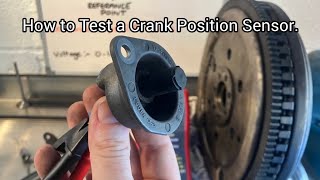
- Faulty Crankshaft Position Sensor (CKP) (Very Common) — This sensor monitors engine rotational speed. When it fails, the ECU loses timing data for spark and fuel delivery, making it the most frequent cause of P1337 across most brands. 🎬 See this guide on how to test a crankshaft sensor.
- Defective Ignition Coil(s) (Common) — An ignition coil converts low battery voltage into the high voltage required by the spark plug. A failed coil prevents the spark plug from firing, causing an immediate misfire.
- Worn or Faulty Spark Plugs (Common) — Old, dirty, or improperly gapped spark plugs fail to ignite fuel efficiently. Using incorrect or non-OEM spec plugs directly triggers misfire codes.
- Damaged Wiring or Connectors (Common) — Heat-damaged, corroded, or loose wiring interrupts the signal between the crankshaft sensor, ignition coils, and the ECU. Always verify wiring integrity before replacing parts.
- Faulty Fuel Injector (Less Common) — A clogged or failing fuel injector starves a specific cylinder of fuel, resulting in a lean misfire.
- Carbon Buildup on Intake Valves (Less Common) — On direct-injection engines (like the Peugeot/Citroën 1.6 THP), carbon accumulates on intake valves, restricting airflow and causing misfires.
- Engine Timing Issues (Rare) — A stretched timing chain or a skipped timing belt tooth throws the crankshaft and camshaft out of sync, triggering rotational fault codes.
- Faulty Engine Control Unit (ECU) (Rare) — Internal ECU failure causes misinterpretation of sensor signals. Consider this only after eliminating all mechanical and wiring faults.
Symptoms

- Check Engine Light is On — The check engine light illuminates immediately. On Peugeots, it often pairs with an 'Engine Fault: Repair Needed' dashboard message.
- Engine Hesitation, Stalling, or Limp Mode — The vehicle struggles to accelerate, loses power, enters a reduced-power 'limp mode', or shuts off entirely while driving.
- Rough Engine Idle — The engine shakes or vibrates noticeably when the vehicle is stopped.
- Difficulty Starting or No-Start Condition — The engine cranks excessively before starting, or fails to start entirely (especially common on Fords).
- Reduced Fuel Economy — Fuel efficiency drops significantly due to incomplete combustion.
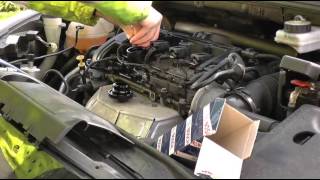
- Cooling Fan Runs Constantly — On Peugeot/Citroën models, the ECU runs the radiator fan at maximum speed as a precaution when severe misfires are detected. 🎬 Watch: Replacing coils and spark plugs on a Peugeot.
Diagnostic Flowchart

Tap your situation to follow the diagnostic path that matches what you're seeing on this code.
Common Fixes & Costs
- Replace Crankshaft Position Sensor — Parts: $50-$150, Labor: $150-$350, ~1.5 hr book time (Intermediate)
- Replace Ignition Coil(s) — Parts: $40-$200 per coil, Labor: $75-$150, ~0.8 hr book time (DIY)
- Replace Spark Plugs — Parts: $30-$120, Labor: $100-$250, ~1 hr book time (DIY)
- Repair Wiring or Connectors — Parts: $10-$50, Labor: $100-$300, ~1.5 hr book time (Intermediate)
- Replace Fuel Injector — Parts: $50-$150 per injector, Labor: $150-$300, ~2 hr book time (Intermediate)
- Replace Camshaft Position Sensor — Parts: $40-$120, Labor: $100-$300, ~1.2 hr book time (Intermediate)
Used vs. New Parts: Buying Guide
When a used part is worth it: Never buy used electronic parts like ignition coils or crankshaft sensors due to their high failure rates. Used parts only make sense for expensive, durable mechanical components like an engine block or a catalytic converter.
Donor-vehicle mileage cap: roughly under 40000 miles for the part to have meaningful remaining life.
Donor quality checklist:
- Verify the donor vehicle's mileage and ensure it was scrapped for collision damage, not engine failure.
- Match the part number exactly, as minor revisions render sensors incompatible.
- Reject parts with visible corrosion, cracked plastic, or brittle wiring.
Decision logic:
- If The part is an ignition coil, spark plug, or sensor. → Buy new. The minimal cost savings aren't worth the risk of premature failure and paying for labor twice.
- If The vehicle has over 150k miles and you are performing the labor yourself. → A used part from a reputable salvage yard is an acceptable budget option, though new is still preferred.
- If The part is a high-cost item like a catalytic converter. → A used OEM converter from a low-mileage vehicle is a great value, provided local laws permit its installation.
Warranty tradeoff: Used parts typically carry a 30-90 day warranty. New aftermarket parts offer 1-year to lifetime warranties. New OEM parts carry a 1-year/12,000-mile warranty.
Worst-case if a used part fails: $200-$500, representing the cost of repeat labor to replace a faulty used part.
What Happens If You Wait — Timeline
- 0-1 month: Check Engine Light illuminates. You notice a slight rough idle or brief hesitation on cold starts. The misfire is intermittent. (MPG impact: 0-5%% · Added cost: $0-$50 in wasted fuel.)
- 1-3 months: Misfire becomes consistent. Rough idle is noticeable when warm, acceleration is sluggish, and unburnt fuel enters the exhaust. (MPG impact: 5-15%% · Added cost: $50-$150 in wasted fuel.)
- 3-6 months: Unburnt fuel overheats the catalytic converter, cracking or melting the internal ceramic honeycomb. You smell rotten eggs or hear exhaust rattling. (MPG impact: 15-25%% · Added cost: $900-$2,500 (Catalytic converter replacement required).)
- 6+ months: Catalyst melts completely, creating a severe exhaust blockage. Extreme backpressure causes internal engine damage like burnt valves or piston ring wear. (MPG impact: 25-50%% · Added cost: $2,500-$7,000+ (Engine repairs required alongside exhaust replacement).)
Cost of Not Fixing It
- Short-Term (0-1 month): Noticeable drop in fuel economy (5-15%), rough idle, poor acceleration, and failed emissions tests. (Added cost: $50-$150 in wasted fuel.)
- Medium-Term (1-6 months): Unburnt fuel enters the exhaust, overheating and melting the catalytic converter. (Added cost: $945-$2,500 for catalytic converter replacement.)
- Long-Term (6+ months): Unburnt fuel washes oil from cylinder walls, causing accelerated wear on piston rings and loss of compression. (Added cost: $2,500-$7,000+ for major engine repairs or replacement.)
Diagnosis Steps
- Read the Code and Note Freeze Frame Data
Use an OBD-II scanner to confirm P1337. Review the freeze frame data to identify engine conditions when the fault occurred. Note any companion codes (e.g., P0301) to pinpoint specific cylinder misfires.
Tools: OBD-II Scanner (Beginner) - Perform a Visual Inspection
Inspect the engine bay for disconnected electrical connectors, damaged wires near the crankshaft sensor and ignition coils, cracked vacuum hoses, or fluid leaks.
Tools: Flashlight (Beginner) - Inspect Spark Plugs and Ignition Coils
If the code indicates a specific cylinder misfire, swap that cylinder's ignition coil with a neighboring one. Clear the codes and drive. If the misfire code moves to the new cylinder (e.g., P1337 becomes P1338), the ignition coil is faulty.
Tools: Socket set, spark plug socket (Intermediate) - Test the Crankshaft Position Sensor (CKP) with a Multimeter
For 2-wire inductive sensors, measure resistance (typically 200-1,200 Ω). Switch to AC Volts and crank the engine; look for a fluctuating voltage of ~200mV. For 3-wire Hall-effect sensors, verify the 5V/12V reference and ground, then check the signal wire for a fluctuating 0V-5V DC signal while cranking.
Tools: Multimeter, vehicle-specific repair manual (Advanced) - Check Fuel Injectors
Listen to the suspected injector with a mechanic's stethoscope for a steady clicking sound. Test its resistance with a multimeter or swap it with another cylinder to see if the misfire follows.
Tools: Mechanic's stethoscope, multimeter (Intermediate) - Analyze Live Misfire Data with a Scan Tool
Access the live data stream on an advanced scanner. Monitor misfire counts per cylinder. A rapidly increasing number on a specific cylinder pinpoints the exact location of the failure.
Tools: Advanced OBD-II Scanner (Advanced) - Perform an Engine Compression Test
If ignition and fuel systems pass inspection, perform a compression test to rule out internal engine damage like worn piston rings, burnt valves, or a blown head gasket.
Tools: Compression tester kit (Advanced) - Pro Tip: Analyze the CKP Sensor with an Oscilloscope
Connect an oscilloscope to the CKP signal and ground wires. Inductive sensors produce an AC sine wave; Hall-effect sensors produce a 0V-5V square wave. Gaps, missing peaks, or static indicate a failing sensor or damaged reluctor wheel.
Tools: Oscilloscope (Professional) - Pro Tip: Check Fuel Pressure and Delivery
Connect a fuel pressure gauge to the service port. Compare idle and under-load readings to manufacturer specs. Low fuel pressure causes lean misfires across multiple cylinders, sometimes triggering a single-cylinder code first.
Tools: Fuel pressure gauge kit (Advanced)
When This Code Triggers (Freeze-Frame Conditions)
- Engine Coolant Temp: 170-220°F (77-104°C) (The engine has reached normal operating temperature. The misfire monitor typically runs only during closed-loop operation.)
- Engine RPM: 1,500-3,000 RPM (The code sets during steady-state cruising or light acceleration, rarely at idle or heavy acceleration.)
- Engine Load: 20-60% (The engine is working under a moderate load, such as maintaining speed on a level road or climbing a slight incline.)
- Vehicle Speed: 30-60 mph (48-97 kph) (The fault registers during city or highway driving conditions where engine speed and load remain relatively constant.)
Related Codes
- P1336 — A close relative with varying definitions. On Hondas, it means 'CSF Sensor Intermittent Interruption'. On GM, it requires a Crankshaft Position System Variation relearn.
- P0335 — The generic code for 'Crankshaft Position Sensor A Circuit Malfunction'. If present alongside P1337, the fault is definitively the CKP sensor or its wiring.
- P0300 — 'Random/Multiple Cylinder Misfire Detected'. Severe CKP sensor issues disrupt timing for all cylinders, triggering P0300 alongside P1337.
- P0301-P0308 — Indicates a misfire on a specific cylinder. On Peugeots, P1337 directly corresponds to a misfire in cylinder 1 and often pairs with P0301.
Climate & Environmental Factors
- High Humidity / Heavy Rain: Moisture penetrates cracked ignition coils or damaged wiring, providing an alternate path for the spark to ground out. This causes misfires that only appear in damp conditions.
- Extreme Cold: Freezing temperatures cause aging plastic sensors and wiring harnesses to become brittle. A marginal crankshaft sensor fails to send a proper signal when cold, leading to a no-start condition.
- High Altitude: Less dense air at high altitudes exacerbates pre-existing weak spark or minor fuel delivery issues, triggering misfires that remain hidden at sea level.
How to Talk to a Mechanic About This Code
Say this: "I have an engine code P1337 and the car is running rough. I know this code is manufacturer-specific, so I'd like to schedule a diagnostic. Please check live misfire data, test the relevant crank or cam sensor, and inspect the ignition wiring before recommending a repair."
This proves you understand the code has multiple causes. It forces the mechanic to perform a thorough diagnosis rather than blindly replacing the most common part.
Avoid saying:
- 'Just fix whatever's wrong.'
- 'My check engine light is on, can you look at it?'
- 'My car is shaking, I think it needs a tune-up.'
Questions to ask before authorizing the repair:
- What specific test confirmed this part failed? (e.g., 'Did the misfire move when you swapped coils?')
- Did you inspect the wiring and connector for damage before deciding to replace the sensor?
- Can you show me the old part?
- What is the warranty on the new part and the labor?
Where to Take It: Dealer vs Independent vs Chain
- Dealer:
Best for: Vehicles under powertrain or emissions warranty., Complex manufacturer quirks (e.g., Peugeot PureTech timing belt issues, GM crank variation relearn)., When independent shops fail to fix the issue.
Downsides: Labor rates are significantly higher than independent shops., Tendency to recommend replacing entire assemblies rather than individual components. (Typical cost: +50% vs. baseline) - Independent Shop:
Best fit for most situations. A competent independent shop handles P1337 effectively at a lower cost than the dealer.
Best for: Out-of-warranty vehicles where cost is a major factor., Diagnosing common causes like bad coils, plugs, or standard CKP sensors., Building a long-term relationship with a trusted mechanic.
Downsides: Diagnostic capabilities vary widely; vet shops by reviews and ASE certifications., May lack access to the latest manufacturer software updates. (Typical cost: +0% vs. baseline) - Chain Shop:
Avoid for initial diagnosis. Acceptable only for simple spark plug jobs if you are certain that is the root cause.
Best for: Simple parts replacement like spark plugs, but ONLY if the diagnosis is already 100% certain.
Downsides: High pressure to upsell unnecessary fluid flushes., Technicians often lack the diagnostic experience required for nuanced codes like P1337., Heavy reliance on 'parts swapping' instead of accurate diagnosis. (Typical cost: -10% vs. baseline)
When to Walk Away From the Repair
If the estimated repair cost exceeds 50% of the car's private-party value, seriously consider selling or trading it in.
- Car worth $4000, fix is $2200: Walk away. The repair cost is over 50% of the car's value.
- Car worth $12000, fix is $1800: Fix it. The repair cost is only 15% of the vehicle's value.
- Car worth $3000, fix is $800: Borderline. Get a second opinion to confirm the diagnosis. If other major repairs are looming, trade it in.
What Scan Tool You Need for This Code
Minimum: A scanner capable of reading manufacturer-specific P-codes and displaying live misfire counts per cylinder.
A $20 reader only shows the generic code. You need live misfire data to confirm if a spark plug replacement worked or if the misfire persists.
Budget: BlueDriver Pro (~$100) — Connects to your smartphone to read manufacturer-specific codes, view freeze frame data, and graph live misfire counts.
Mid-range: Foxwell NT510 Elite or Innova 5610 (~$180) — Offers deep manufacturer-specific diagnostics and bidirectional controls to perform special functions like a crank variation relearn.
Professional: Autel MaxiCOM MK808Z (~$450) — Provides full bidirectional control, service functions, and OEM-level diagnostics for all vehicle systems.
Rent vs buy: For a one-time repair, use a free loaner tool from an auto parts store. Buy a scanner only if you perform your own diagnostics regularly.
How to Clear the Code After You Fix It
- Fix the underlying mechanical or electrical fault.
- Use an OBD-II scan tool to select the 'Clear/Erase Codes' function.
- Perform a complete drive cycle to allow the ECU to run its readiness monitors.
Drive cycle (~20 minutes): A complete drive cycle requires a cold start, a 3-minute idle, 15 minutes of mixed city/highway driving at steady speeds, and several decelerations without braking. This forces the misfire and catalyst monitors to run.
Readiness monitors affected: Misfire Monitor, Catalyst Monitor, Oxygen (O2) Sensor Monitor
Before emissions retest: drive at least 50 miles to fully set monitors.
Watch out for:
- Disconnecting the battery clears the code but erases all readiness monitors, guaranteeing an automatic emissions test failure.
- The code returns immediately if the root cause of the misfire or sensor fault was not repaired.
- Failing to drive the car under the specific conditions required to set the readiness monitors before an inspection.
Will This Fail Emissions / State Inspection?
Yes — this code typically fails an OBD-II emissions inspection.
- California: An illuminated Check Engine Light is an automatic failure. A full drive cycle must be completed to set all readiness monitors before a re-test.
- New York: An active P1337 code causes an automatic failure. You must complete a drive cycle after clearing the code, as too many 'Not Ready' monitors results in rejection.
- Texas: In emissions-testing counties, an active P1337 code is an automatic failure. You must drive 50-100 miles post-repair to set readiness monitors before re-inspection.
Most Commonly Affected Vehicles
- Honda Civic, Accord, CR-V (1996-2005) — Caused by a failed Crankshaft Speed Fluctuation (CKF) sensor located behind the lower timing belt cover.
- Peugeot 208, 308, 2008, RCZ (2010-2020) — Indicates a cylinder 1 misfire due to bad ignition coils, spark plugs, or timing belt degradation. Cylinder 1 is at the gearbox end.
- Citroën C3, C4, DS3 (2010-2020) — Shares engines with Peugeot. P1337-P1340 correspond to misfires in cylinders 1-4, usually caused by faulty coils or carbon buildup.
- Audi/Volkswagen A4, TT, Golf, Jetta (1998-2006) — Points to the Camshaft Position Sensor being shorted to ground, particularly on the 1.8T engine.
- Ford Focus, Fiesta, Ranger (2000-2018) — Indicates 'Throttle Position Output Circuit' or a manufacturer-specific crankshaft sensor issue leading to a no-start condition.
- General Motors (GM) Chevrolet, Buick, Saturn (1998-2015) — Indicates a correlation issue between the crankshaft and camshaft sensors, often requiring a 'Crankshaft Position System Variation Not Learned' procedure.
Manufacturer-Specific Notes
- Honda/Acura: Points specifically to the secondary Crankshaft Speed Fluctuation (CKF) sensor. Swapping a JDM engine into a US-market car triggers this code because JDM engines lack this sensor mount, requiring an ECU wiring bypass.
- Peugeot/Citroën: Acts as a critical misfire warning to prevent catalytic converter damage. On 1.2L PureTech engines, it serves as an early warning for timing belt degradation, where belt particles clog oil passages.
- Audi/Volkswagen: Defined as 'Camshaft Position Sensor Short to Ground'. Mechanics frequently misdiagnose this by replacing the sensor when the actual issue is a missing hall sender interrupter on the camshaft.
- Ford: Defined as 'Throttle Position Output Circuit' on certain models. This requires diagnosing the Throttle Position Sensor (TPS) and its wiring, not the crankshaft sensor.
Real Owner Stories
1999 Honda Civic with JDM B16B engine swap
Check Engine Light with code P1337 appeared immediately after swapping a Japanese Domestic Market (JDM) engine into a US-market car.
What they tried:
- Replaced the crankshaft position sensor multiple times.
- Verified the USDM ECU was properly connected.
Outcome: Performed the 'CKF bypass trick' by splicing wires at the ECU to feed the Camshaft Position sensor signal into the missing Crankshaft Fluctuation sensor input. The code cleared permanently.
Lesson: Replacing the sensor fails on JDM-swapped Hondas because the engine lacks the physical sensor mount. The ECU must be bypassed via wiring modifications.
2014 Peugeot 108 with 1.2L PureTech engine
Car entered limp mode with a flashing check engine light and code P1337, accompanied by rough idle and power loss.
What they tried:
- Replaced the ignition coil on cylinder 1.
- Replaced all spark plugs and remaining ignition coils.
Outcome: Replacing all coils and plugs simultaneously resolved the misfire. The owner noted a single failing coil quickly cascades into multiple failures on this engine.
Lesson: For Peugeot/Citroën misfire codes, replace all spark plugs and ignition coils as a complete set to prevent recurring breakdowns.
1997 Honda CR-V with no-start condition
Vehicle refused to start (no crank, no spark) and displayed codes P1337 and P1336.
What they tried:
- Tested the battery, alternator, and distributor.
- Removed the timing belt cover for visual inspection.
Outcome: Found a shredded accessory belt wrapped around the crankshaft pulley, physically blocking the sensor signal. Removing the debris fixed the issue.
Lesson: A 'no signal' code does not guarantee a dead sensor. Physical obstructions or severe wiring damage block the signal entirely.
Audi A4 with 1.8T engine
Car ran rough and triggered P1337, which on Audis points to the camshaft sensor.
What they tried:
- Replaced the camshaft position sensor.
Outcome: Diagnosis revealed a short in the wiring harness leading to the sensor connector. Repairing the wires provided a permanent fix.
Lesson: Always inspect the wiring harness for damage or shorts before replacing the sensor. Wiring faults perfectly mimic sensor failures.
How to Prevent This Code From Triggering
- Use Top-Tier Certified Gasoline (Every fill-up) — Detergent additives in Top-Tier gas prevent carbon deposits on fuel injectors and intake valves, preventing lean misfires.
- Replace Spark Plugs at Recommended Intervals (Every 30,000 to 100,000 miles) — Worn spark plugs create weak sparks and incomplete combustion. Timely replacement is cheap insurance against misfire codes and catalytic converter damage.
- Perform Intake Valve Cleaning on GDI Engines (Every 10,000-30,000 miles) — Direct injection engines accumulate carbon on intake valves, restricting airflow. Aerosol intake cleaners dissolve these deposits and restore proper combustion.
- Inspect Ignition Coils and Wires (Annually or every 15,000 miles) — Visual inspections catch heat cracks and corrosion early, preventing spark leakage and sudden misfires during damp weather.
Frequently Asked Questions
What does P1337 mean in simple terms?
It means your car's computer detected a severe hiccup in the engine's rotation. This is caused by a bad engine speed sensor or a cylinder failing to fire correctly.
Is it safe to drive with code P1337?
You can drive short distances, but it is not recommended. The engine will run poorly, and you risk destroying your catalytic converter. A damaged catalytic converter costs $800 to $2,500 to replace.
How much does it cost to fix P1337?
The cost depends entirely on the cause. A simple spark plug change costs $120-$370, while replacing a bad ignition coil runs $112-$350. A crankshaft position sensor replacement typically costs between $200 and $500.
Can I fix P1337 myself?
Yes, if the cause is a bad spark plug or an easily accessible ignition coil. Replacing a crankshaft position sensor is more difficult, often requiring the removal of wheels and splash shields.
Why did the code come back after I replaced the part?
You likely replaced the wrong part, used a low-quality aftermarket sensor, or failed to fix a damaged wire. It also happens if you replace an ignition coil when the real issue is a clogged fuel injector.
What is a common misdiagnosis for P1337?
A common mistake on Peugeot/Citroën is incorrectly identifying cylinder number 1, which is at the gearbox end, not the belt end. Technicians often replace the coil on the wrong cylinder, causing the code to return immediately. Another pitfall is replacing sensors without checking for corroded connectors first.
My car has a JDM engine swap and now shows P1337. Why?
US-market engines from the late 90s have a Crankshaft Fluctuation sensor that Japanese-market engines lack. When you run the JDM engine with the original US computer, it looks for a signal that isn't there. You must bypass the sensor wiring at the ECU to fix this.
Can low oil affect the P1337 code?
Yes. On engines with Variable Valve Timing (VVT), low oil pressure causes the VVT system to malfunction. This de-synchronizes the camshaft and crankshaft, triggering timing-related codes like P1337.
Key Takeaways
- Code P1337 is manufacturer-specific, meaning a failed crankshaft sensor on a 1996-2005 Honda, a cylinder 1 misfire on a Peugeot, or a camshaft sensor short on an Audi.
- Replacing a faulty crankshaft position sensor resolves this code in most Hondas, costing between $200 and $500 for parts and labor.
- Stop driving immediately if the check engine light flashes, as this indicates a severe misfire actively destroying the catalytic converter.
- Ignoring a P1337 misfire code for more than a month guarantees catalytic converter damage, turning a $150 ignition coil repair into a $2,000 exhaust replacement.
Helpful Videos

The information in this article is provided for general reference and educational purposes only. Vehicle specifications, procedures, and part compatibility can vary by production date, trim level, and region. Always consult your vehicle's factory service manual and verify part numbers before purchasing or performing repairs. Safety-critical components such as airbags, seat belts, and braking systems should be installed by a qualified professional.
- 🎬 Helpful Videos
- What Does P1337 Mean?
- Can I Drive With P1337?
- Common Causes
- Symptoms
- Diagnostic Flowchart
- Common Fixes & Costs
- Used vs. New Parts: Buying Guide
- What Happens If You Wait — Timeline
- Cost of Not Fixing It
- Diagnosis Steps
- When This Code Triggers (Freeze-Frame Conditions)
- Related Codes
- Climate & Environmental Factors
- How to Talk to a Mechanic About This Code
- Where to Take It: Dealer vs Independent vs Chain
- When to Walk Away From the Repair
- What Scan Tool You Need for This Code
- How to Clear the Code After You Fix It
- Will This Fail Emissions / State Inspection?
- Most Commonly Affected Vehicles
- Manufacturer-Specific Notes
- Real Owner Stories
- 1999 Honda Civic with JDM B16B engine swap
- 2014 Peugeot 108 with 1.2L PureTech engine
- 1997 Honda CR-V with no-start condition
- Audi A4 with 1.8T engine
- How to Prevent This Code From Triggering
- Frequently Asked Questions
- What does P1337 mean in simple terms?
- Is it safe to drive with code P1337?
- How much does it cost to fix P1337?
- Can I fix P1337 myself?
- Why did the code come back after I replaced the part?
- What is a common misdiagnosis for P1337?
- My car has a JDM engine swap and now shows P1337. Why?
- Can low oil affect the P1337 code?
- Key Takeaways
- 🎟️ Get 5% Off