

P1336 on 2022-2026 Jeep Compass: Causes and Fixes for Multiple Cylinder Misfire
On a 2022-2026 Jeep Compass with the 2.0L Turbo engine, code P1336 indicates a multiple or random cylinder misfire severe enough to potentially damage the catalytic converter. The most common causes are failing ignition coils or worn/fouled spark plugs. A DIY fix with a full set of plugs and coils typically costs $100-$250, with a difficulty of 2/5.
- P1336 on your Jeep Compass means the engine is misfiring, but the computer can't identify which cylinder is the problem.
- The most likely culprits are worn-out spark plugs or failing ignition coils, which are standard maintenance items.
- If your check engine light is flashing, drive as little as possible to avoid damaging your catalytic converter, which is an expensive repair.
- Start your diagnosis with the cheapest and easiest fixes: inspect and replace the spark plugs and ignition coils before moving to more complex components like fuel injectors or sensors.
- Always use high-quality, OEM-spec parts for ignition components, as turbocharged engines are sensitive to part quality.
What's Unique About the 2022-2026 Jeep COMPASS
For the 2022-2026 Jeep Compass, particularly models with the 2.0L Turbo GME-T4 engine, P1336 is most often a straightforward ignition system issue. Unlike some other manufacturers where P1336 can point to complex crankshaft sensor relearn procedures, on this Stellantis platform, it typically signals a need for basic maintenance items like spark plugs or ignition coils. The direct injection system is sensitive to fuel and ignition quality, making timely tune-ups with correct parts critical to prevent this code. While a CKP sensor *can* be a cause, it's far less common than basic ignition components.
Diagnostic Flowchart
Tap your situation to follow the diagnostic path that matches what you're seeing on this vehicle.
Symptoms You May Notice
- Flashing or solid Check Engine Light
- Rough or unstable idle, sometimes with fluctuating RPMs.
- Engine hesitation or stumbling during acceleration.
- Noticeable loss of engine power.
- Reduced fuel economy
- Engine shaking or vibrating more than usual.
- Hard starting, where the engine cranks longer than usual before firing.
- Popping or backfiring sounds from the exhaust.
- Replacing only the spark plugs when the ignition coils are the actual cause (or vice-versa). It's often best to replace both if they are of similar age.
- Replacing oxygen sensors, which are more likely to set their own specific codes and are usually a symptom of a misfire (due to unburnt fuel), not the cause.
- Assuming a major engine mechanical failure without first thoroughly checking the more common and less expensive ignition and fuel system components.
- Performing a crankshaft position sensor 'relearn' procedure, which is often required on other makes (like GM or Nissan) for a P1336 code, but is not typically necessary on modern Jeep/Stellantis platforms. 🎬 See how crankshaft relearn procedures work on other vehicle makes.
Most Likely Causes
- Worn or Defective Ignition Coils 🔴 High Probability Coil-on-plug systems are a common failure point on modern turbocharged engines due to high heat and vibration, leading to internal winding failure and a weak spark.
How to confirm: If a specific cylinder code (e.g., P0301) is also present, swap the ignition coil from that cylinder with a coil from a non-misfiring cylinder. Clear the codes and drive. If the misfire code follows the coil (e.g., now shows P0302), the coil is bad. If only P1336 is present, inspect all coils for visible damage (cracks, burn marks) or test their resistance if you have a multimeter and specifications.
Typical fix: Replace the faulty ignition coil(s). It is best practice to replace all four coils as a set if they are original and have high mileage, as others are likely to fail soon.
Est. part cost: $40-$80 per coil - Worn or Fouled Spark Plugs 🔴 High Probability Turbocharged, direct-injection engines like the GME-T4 are harder on spark plugs, leading to shorter service intervals (typically 60,000 miles). Incorrectly gapped, non-OEM, or low-quality plugs can cause immediate misfires. Oil consumption issues, though less common on the 2.0T than the older 2.4L, can also foul plugs.
How to confirm: Remove and inspect the spark plugs. Look for worn or rounded electrodes, heavy black carbon deposits, wet oil fouling, or cracks in the white ceramic insulator. Check the spark plug gap; for the OEM NGK plugs in the 2.0L Turbo, the gap should be approximately 0.026 inches (0.66mm).
Typical fix: Replace all four spark plugs as a set with OEM-spec plugs (e.g., NGK Iridium). Ensure they are gapped correctly before installation, though many modern plugs come pre-gapped.
Est. part cost: $40-$100 for a set of four - Faulty Fuel Injectors 🟡 Medium Probability Direct injection (GDI) fuel injectors operate under extremely high pressure and can become clogged with carbon deposits or fail electronically over time, leading to poor fuel atomization and misfires.
How to confirm: This is a more advanced diagnosis. A professional mechanic can perform a fuel injector balance test to check flow rates. A capable scan tool can also be used to monitor fuel trims per cylinder, where a significant deviation can point to a faulty injector.
Typical fix: Replace the faulty fuel injector(s). Professional cleaning is sometimes an option, but replacement is often more reliable for GDI injectors.
Est. part cost: $70-$150 per injector - Faulty Crankshaft Position Sensor (CKP) ⚪ Low Probability While not as common as ignition issues for this code on this platform, a failing CKP sensor can send erratic signals to the PCM. This prevents the PCM from accurately determining engine speed and position, which can be misinterpreted as a random misfire. Unlike many other vehicles, a specific 'relearn' procedure is not typically required for this platform after replacement; the ECU adapts automatically.
How to confirm: Use a scan tool with live data capability to monitor the CKP sensor's output (RPM signal) while the engine is running. Any dropouts, erratic readings, or a signal that doesn't correspond to engine speed indicates a problem.
Typical fix: Replace the crankshaft position sensor.
Est. part cost: $50-$120
Rare But Worth Checking
- Vacuum Leak: A significant vacuum leak from a cracked hose (e.g., PCV hose) or a failed intake manifold gasket can introduce unmetered air, leaning out the air-fuel mixture and causing random misfires across all cylinders, especially at idle.
- Low Fuel Pressure: A weak in-tank fuel pump or a clogged fuel filter can starve the high-pressure fuel pump, leading to lean conditions and misfires, particularly under heavy acceleration or load.
- Internal PCM Fault: In very rare cases, the Powertrain Control Module itself can fail, causing a variety of phantom codes and drivability issues. This should only be considered after all other possibilities have been exhaustively ruled out by a professional.
- Mechanical Engine Failure: Extremely rare on a newer vehicle, but issues like a stretched timing chain, low compression from worn piston rings, or a leaking head gasket can cause persistent misfires that won't be fixed by ignition or fuel parts. A compression test and cylinder leak-down test would be needed to confirm.
Diagnosis Steps
- Read all fault codes from the PCM using an OBD-II scanner. Note any other codes present, especially specific cylinder misfire codes (P0301-P0304) or fuel system codes.
- Check if the check engine light is flashing. If it is, avoid high RPMs and heavy loads to protect the catalytic converter.
- Perform a visual inspection of the engine bay. Look for any disconnected vacuum hoses, loose electrical connectors, signs of oil leaks around the valve cover, or obvious damage.
- Inspect the spark plugs. The service interval is 60,000 miles. Remove them and check for wear, damage, or fouling. The correct gap for the OEM NGK plugs is ~0.026". Replace if they are in poor condition or past their service interval.
- Inspect and test the ignition coils. If a specific cylinder misfire code is present, swap the coil with a known good cylinder to see if the fault moves. If only P1336 is present, inspect all coils for cracks or signs of arcing. Consider replacing them as a set if they are original.
- If ignition components are good, the next step is to investigate the fuel system. This may involve checking fuel pressure and testing fuel injectors, which may require professional tools and knowledge.
- If fuel and ignition systems check out, use a scan tool to monitor the live data from the Crankshaft Position Sensor (CKP) for any dropouts or erratic RPM readings while the engine is running.
- If all else fails, the issue could be a more complex vacuum leak or, rarely, a mechanical engine problem (timing, compression) or PCM fault, which should be diagnosed by a professional.
Parts You'll Likely Need
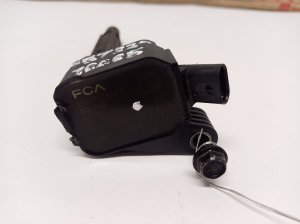
- Ignition Coil
Related Codes That Often Appear With This One
- P0300 — P0300 is the generic SAE code for 'Random/Multiple Cylinder Misfire Detected'. P1336 is the manufacturer-specific equivalent that often indicates the misfire is severe enough to threaten the catalytic converter. [Bulletin #09-026-25]
- P0301, P0302, P0303, P0304 — These codes indicate a misfire on a specific cylinder (1, 2, 3, or 4). They often appear alongside P1336 as the PCM attempts to isolate the problem but ultimately determines the issue is affecting multiple cylinders. [Bulletin #14-003-26, Bulletin #09-026-25]
- P1337, P1338, P1339, P1340 — These are manufacturer-specific codes for misfires on cylinders 1, 2, 3, and 4, respectively, that are severe enough to impact the catalytic converter. [Bulletin #14-003-26, Bulletin #09-026-25] Seeing one of these along with P1336 can help pinpoint a failing component (like a coil or injector) on a specific cylinder.
Technical Service Bulletins (TSBs) & Recalls
- Bulletin #14-003-26
- Bulletin #09-026-25
Platform-Specific Known Issues
- The 2.0L GME-T4 engine, while generally reliable, is sensitive to proper maintenance. Using the correct OEM-spec Iridium spark plugs and quality oil is critical for preventing misfires and other issues.
- Some early versions of the GME-T4 engine in other platforms (like the Jeep Wrangler JL) had reports of oil separator leaks or timing chain tensioner wear, which could theoretically contribute to drivability problems, though this is not a widespread cause of P1336.
Mechanic-Grade Diagnostic Values
- High-Pressure Direct Injection Fuel Pressure — expected: Up to 2,900 psi (200 bar). Failure: Significantly lower pressure, especially under load, indicates a failing high-pressure fuel pump (HPFP).
- Engine Oil Pressure (Normal Operation) — expected: Fluctuates between approximately 17-50 psi.. Failure: This fluctuation is normal. The 2.0L GME-T4 engine uses a two-stage variable displacement oil pump that switches between low and high pressure modes to improve efficiency. Do not misdiagnose this as a fault.
- Long-Term Fuel Trim (LTFT) — expected: Within +/- 5%. Failure: Consistent values above +10% to +12.5% indicate the PCM is adding significant fuel to compensate for a lean condition (unmetered air or lack of fuel), which can cause misfires.
- Engine Compression Test — expected: Approximately 160 psi per cylinder, with minimal variation between cylinders.. Failure: Low compression in one or more cylinders (e.g., below 130 psi) or a variation of more than 15-20% between cylinders points to a mechanical engine problem like worn piston rings, bad valves, or a head gasket leak.
Scan Tool Commands That Help
- wiTECH (Dealer Scan Tool): Monitors -> OBD II Monitors -> 'Which cylinder is misfiring' — When a generic P1336 or P0300 code is present without specific cylinder codes (P0301-P0304). This function provides live misfire counts for each individual cylinder, allowing a technician to identify the offending cylinder(s) even if the fault isn't severe enough to set a dedicated code for it.
Wiring & Ground Locations
- PCM Connectors C1 & C2 — On the Powertrain Control Module (PCM), which is a GPEC (Global Powertrain Engine Controller) type.. Connector C1 (58-pin) handles body and vehicle circuits, while C2 (96-pin) is dedicated to engine circuits like sensors, ignition coils, and fuel injectors. A poor connection or corrosion at the C2 connector could cause random misfires.
- Engine Bay Wiring Harness — Routed throughout the engine bay, connecting the PCM to all engine components.. The OEM part number for the 2.0L engine harness is 68417509AC. Damage or chafing to this harness, especially where it passes near hot exhaust components or vibrating parts, can cause intermittent shorts or opens in the ignition coil or injector circuits, leading to misfires.
- Battery Negative Ground Cable — Connects the negative battery terminal to the vehicle's chassis and engine block.. A loose or corroded main engine ground can create a high-resistance path for the ignition system, resulting in a weak spark across all cylinders and causing random misfires. Ensure all ground connections are clean and tight.
Real Owner Repair Stories
- jeepjl.com forum user (Jeep Wrangler with 2.0L Turbo engine (same as Compass)) — Rough running and popping noises for 1-2 minutes on cold start only. Check engine light with a misfire code for cylinder 1.
❌ Tried (didn't work) Replaced spark plugs, Replaced ignition coil on cylinder 1, Professional electrical diagnosis found no issues, Compression test was good (160 psi on all cylinders), Borescope showed no initial scoring, Coolant leak-down test passed
✅ What actually fixed it The root cause was a scored cylinder wall from the piston rings. Despite passing initial tests, the problem was mechanical and required a complete engine replacement.
"I Checked Everything" — The Actual Cause
- In a documented case on the same 2.0L Turbo engine, a persistent cold-start misfire was not resolved by replacing ignition parts. All standard diagnostic tests, including compression and leak-down tests, initially came back as good. The ultimate cause was found to be a scored cylinder wall, a severe mechanical failure that standard procedures and tests for vacuum leaks or ignition faults would completely miss.
When the Usual Fixes Don't Work
- While the most common fixes for P1336 are spark plugs and ignition coils, there are documented cases where these do not solve the problem. In one instance involving the 2.0L Turbo engine, a persistent cold-start misfire that passed all initial electrical, compression, and leak-down tests was ultimately caused by a scored cylinder wall. This required a complete engine replacement, highlighting that a severe mechanical issue can mimic a simple ignition fault, making it critical not to rule out major problems if basic fixes fail.
Model Year Variations Within This Range
- 2023-2026: For the 2023 model year in North America, the 2.0L Turbo I4 GME-T4 engine became the standard and only powertrain, replacing the previous 2.4L engine.
- 2026 (projected): Stellantis has announced a new, heavily redesigned 2.0L Turbo engine (GME-T4 Evo or 'Hurricane4') planned for 2026 models. It features Turbulent Jet Ignition (TJI) from Maserati and is not directly compatible with the earlier GME-T4 in terms of many components.
Helpful Videos
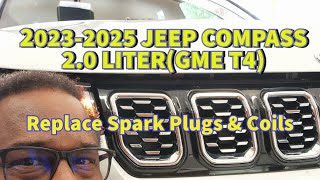
We Have This Part in Stock


The information in this article is provided for general reference and educational purposes only. Vehicle specifications, procedures, and part compatibility can vary by production date, trim level, and region. Always consult your vehicle's factory service manual and verify part numbers before purchasing or performing repairs. Safety-critical components such as airbags, seat belts, and braking systems should be installed by a qualified professional.
- Jeep COMPASS:
- 🎬 Helpful Videos
- 🛍️ Shop This Part
- What's Unique About the 2022-2026 Jeep COMPASS
- Diagnostic Flowchart
- Symptoms You May Notice
- Most Likely Causes
- Rare But Worth Checking
- Diagnosis Steps
- Parts You'll Likely Need
- Related Codes That Often Appear With This One
- Technical Service Bulletins (TSBs) & Recalls
- Platform-Specific Known Issues
- Mechanic-Grade Diagnostic Values
- Scan Tool Commands That Help
- Wiring & Ground Locations
- Real Owner Repair Stories
- "I Checked Everything" — The Actual Cause
- When the Usual Fixes Don't Work
- Model Year Variations Within This Range
- 🎟️ Get 5% Off