

OBD-II Code P1336: Crankshaft Position System Variation Not Learned
What P1336 means, why it triggers, and how to fix it
- On GM vehicles (1999+), P1336 almost always requires a 15-minute 'CASE Relearn' procedure using a bidirectional scan tool after a battery disconnect or sensor replacement.
- For Peugeot and Citroën vehicles, P1336 indicates a severe engine misfire that will destroy a $1,500 catalytic converter if driven continuously.
- Never replace a GM crankshaft position sensor for a P1336 code without first attempting the CASE Relearn procedure, which costs $120-$200 at an independent shop.
- If codes P0335 (CKP Circuit) or P0300 (Random Misfire) are present alongside P1336, diagnose and fix those primary electrical or ignition faults first.
- A basic $20 code reader cannot fix a GM P1336 code; you must use a mid-range bidirectional scanner (like a $350 Autel) or visit a professional.
What Does P1336 Mean?

P1336 is a manufacturer-specific code. On General Motors (GM) vehicles, the engine computer (PCM) has not completed the 'CASE Relearn' procedure to recognize the crankshaft's exact position. This calibration is vital for detecting engine misfires. On other makes, it signifies a general misfire (Peugeot), a sensor circuit issue (Honda), or an engine torque adaptation problem (Volkswagen).
Technical definition: The SAE/OBD-II definition for P1336 varies by manufacturer. The most common definition (GM) is 'Crankshaft Position (CKP) System Variation Not Learned'. For Peugeot/Citroën, it indicates a catalyst-damaging misfire. For Honda, it specifies an intermittent interruption from the Crankshaft Fluctuation (CKF) sensor. For Volkswagen, it means 'Engine Torque Adaptation at Limit'. For Nissan, it indicates the CKP signal was not detected during initial cranking.
Can I Drive With P1336?
Yes, But With Caution. You can drive temporarily, but expect rough running, poor acceleration, and stalling. Driving with this code on non-GM vehicles (where it indicates a misfire) destroys the catalytic converter, an $800-$2,500 repair. If the root cause is a failing CKP sensor, the engine will eventually stall and fail to restart, leaving you stranded.
Common Causes

- CKP System Variation Relearn Not Performed (Very Common) — This is the most frequent cause on GM vehicles. After replacing the engine, PCM, crankshaft position sensor, or disconnecting the battery, the computer's memory of the crankshaft's unique signal is lost and must be relearned. Skipping this procedure immediately triggers P1336.
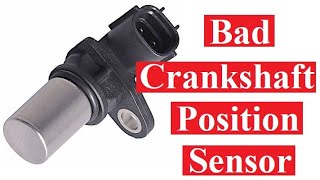
- Faulty Crankshaft Position (CKP) Sensor (Common) — The sensor fails internally due to heat, age, or oil contamination. This prevents it from sending a clear and consistent signal to the computer.
- Wiring or Connector Issue at the CKP Sensor (Common) — The wires leading to the sensor fray, melt, corrode, or short out near hot exhaust components. The connector pins become loose, corroded, or contaminated with oil, disrupting the signal.
- Faulty Variable Valve Timing (VVT) Solenoid (Less Common) — A clogged or failing VVT solenoid disrupts the correlation between the camshaft and crankshaft, triggering a P1336 code. Old or contaminated engine oil often causes this.
- Damaged or Dirty CKP Sensor Reluctor Wheel (Less Common) — The CKP sensor reads a toothed wheel (reluctor ring) on the crankshaft. If this wheel is damaged, has chipped teeth, is warped, or is covered in metallic debris, the sensor's readings are incorrect and prevent a successful relearn.
- Weak Starter Motor or Low Battery Voltage (Rare) — On Nissan and Infiniti models, the ECM checks the CKP signal within the first few seconds of cranking. If a weak battery or a failing starter motor cannot spin the engine fast enough, the ECM does not receive a clear signal, logging a P1336 fault.
- Poor Electrical Ground (Rare) — A corroded, loose, or broken engine ground strap introduces electrical noise or causes voltage drops in the sensor circuits. The sensitive CKP sensor requires a clean ground to send an accurate signal.
- Faulty Powertrain Control Module (PCM) (Very Rare) — The engine computer itself fails to process the signal from a good sensor or perform the relearn procedure even when commanded by a scan tool.
Symptoms
- Check Engine Light is On — The computer turns on the Malfunction Indicator Lamp (MIL) as soon as the fault is detected. On GM vehicles with this code, the misfire monitor is disabled, meaning the light will not flash even if a severe misfire occurs.
- Engine Misfires or Runs Rough — Without accurate crankshaft data, the engine's timing for spark and fuel is off, causing the engine to shake, stumble, or run unevenly at idle.
- Reduced Engine Power and Poor Acceleration — The vehicle feels sluggish and struggles to accelerate because the engine runs inefficiently or enters a reduced power 'limp home' mode.
- Difficulty Starting or Stalling — A faulty or unlearned CKP sensor signal prevents the engine from starting, causes extended cranking time, or causes it to stall unexpectedly while driving.
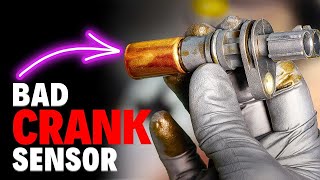
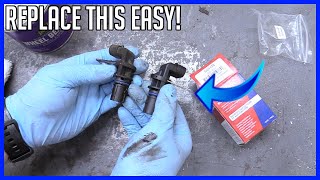
- Increased Fuel Consumption — With the engine running inefficiently due to incorrect timing or misfires, your vehicle's fuel economy drops noticeably, sometimes by 15-25%. 🎬 See more common symptoms of a failing crankshaft position sensor.
Diagnostic Flowchart
Tap your situation to follow the diagnostic path that matches what you're seeing on this code.
Common Fixes & Costs
- Perform CKP System Variation (CASE) Relearn — Parts: $0, Labor: $120-$200, ~1.2 hr book time (Professional)
- Replace Crankshaft Position (CKP) Sensor
— Parts: $50-$150, Labor: $150-$300, ~1.8 hr book time
(Intermediate)
Chevrolet Silverado (2005, 5.3L): OEM GM: 19236392, 12560228, 213-354, 12703627 (Alt: ACDelco: 213-4761, Duralast: CPSA622, Dorman: 917-754, Carquest: CSC1052)
Ford Mustang GT (2012, 5.0L): OEM Ford: BR3Z-6C315-A, BR3Z-6C315-B (DY-1293) (Alt: Motorcraft: W0133-2026100, Walker: 235-1627, Hitachi: CPS0024)
Honda Civic (2000, 1.6L): OEM Honda: 37501-P2J-J01 (Denso), 37500-P2F-A01 (Texas Instruments) (Alt: Dorman: 907-908, Walker: 235-1146, SKP: SK907911) - Repair Wiring or Connector to CKP Sensor — Parts: $10-$50, Labor: $100-$250, ~1.5 hr book time (Intermediate)
- Replace Spark Plugs and/or Ignition Coils — Parts: $50-$250, Labor: $100-$300, ~1.5 hr book time (DIY)
- Replace VVT Solenoid
— Parts: $40-$150, Labor: $75-$200, ~0.8 hr book time
(DIY)
Chevrolet Silverado (2005, 5.3L): OEM GM: 12682000, 12731637 (Alt: ACDelco: 12679099, Dorman, ISA)
Used vs. New Parts: Buying Guide
When a used part is worth it: For a low-cost electronic part like a crankshaft position sensor, buying used rarely makes sense. The risk of premature failure is high, and the labor cost to replace it again negates any initial savings.
Donor-vehicle mileage cap: roughly under 40000 miles for the part to have meaningful remaining life.
Donor quality checklist:
- Ensure the part number matches exactly, including any superseded numbers.
- Visually inspect the connector for corrosion and the wiring pigtail for brittleness or damage.
- Avoid parts from vehicles with high mileage or known oil leak issues.
Decision logic:
- If The cost of a new OEM or reputable aftermarket sensor is under $150. → Always buy new. The warranty and reliability are worth the small additional cost over a used part.
- If The vehicle is very old (>20 years) and the part is no longer available new. → A used part from a low-mileage, accident-damaged donor is an acceptable last resort.
- If The labor to access the sensor is high (e.g., requires removing the transmission). → Absolutely buy a new OEM part to minimize the chance of having to do the job twice.
Warranty tradeoff: Used parts from a salvage yard typically have a 30-90 day warranty. New aftermarket sensors often come with a 1-year to limited lifetime warranty. A new OEM part usually carries a 1-year warranty.
Worst-case if a used part fails: $250-$500 if a used sensor fails shortly after installation, primarily due to the repeated labor cost.
What Happens If You Wait — Timeline
- 0-2 weeks: Code sets and Check Engine Light turns on. On GM, the misfire monitor is disabled. On other makes, a slightly rough idle occurs. No other major symptoms. (MPG impact: 0-5%% · Added cost: $0)
- 2 weeks - 3 months: Engine performance degrades. Noticeable rough idle, hesitation on acceleration, and difficulty starting occur. Fuel economy drops. (MPG impact: 5-15%% · Added cost: $50-$150 in wasted fuel)
- 3-6 months: If caused by an undetected misfire, unburnt fuel overheats the catalytic converter. The internal substrate melts, creating a partial exhaust restriction. If caused by a failing CKP sensor, intermittent stalling becomes frequent. (MPG impact: 15-25%% · Added cost: $800-$2,500 (catalytic converter replacement))
- 6+ months: Catastrophic failure occurs. A completely melted catalytic converter chokes the engine, preventing it from running. A failing CKP sensor causes the engine to stall on the highway and not restart, requiring a tow. (MPG impact: 25%+% · Added cost: $2,500-$5,000+ (towing, catalytic converter replacement, and potential engine repair))
Cost of Not Fixing It
- 0-1 month: Noticeable decrease in fuel economy (5-15%), rough idle, and poor acceleration. The vehicle is difficult to start. (Added cost: $50-$100 in wasted fuel.)
- 1-6 months: Risk of catalytic converter damage from undetected misfires. The converter overheats and melts internally, causing a major exhaust restriction and requiring replacement. (Added cost: $800-$2500)
- 6+ months: If caused by a failing CKP sensor, the engine stalls while driving and fails to restart, requiring a tow. If caused by a stretched timing chain, the chain fails, leading to catastrophic internal engine damage. (Added cost: $200 (tow) to $4000+ (engine repair))
Diagnosis Steps

- Check for Recent Repairs
Determine if the code appeared immediately after a major repair, such as replacing the engine, transmission, PCM, timing chain, or the CKP sensor itself. If so, a 'CASE Relearn' is the solution on GM vehicles.
Tools: None (Beginner) - Scan for Other Trouble Codes
Use an OBD-II scanner to check for other codes. Codes like P0335 (CKP Circuit Malfunction) point directly to a sensor circuit problem. On VWs, look for vacuum leak codes. On many makes, VVT codes like P0011 appear alongside P1336.
Tools: OBD-II Scanner (Beginner) - Perform a CASE Relearn Procedure (GM)
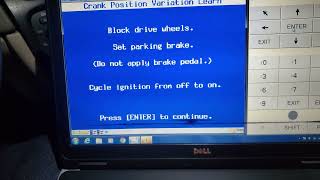
If you have a compatible bidirectional scan tool, follow the tool's instructions to perform the Crankshaft Position System Variation Learn procedure. The engine must be at operating temperature (above 150°F). The procedure involves applying the brake and revving the engine to the fuel cut-off point, typically around 4,000 RPM.
Tools: Bidirectional Scan Tool (e.g., GM Tech2, Autel MaxiSYS, HP Tuners) (Advanced) - Visually Inspect the CKP Sensor and Wiring
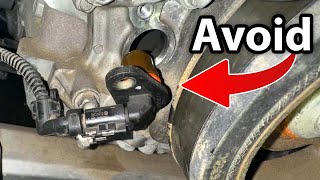
Locate the crankshaft position sensor near the crankshaft pulley or transmission bell housing. Check its wiring harness for melting, chafing, or corrosion. Ensure the connector is plugged in securely and free of oil.
Tools: Flashlight (Beginner) - Test the CKP Sensor Circuit (Voltage)
Using a digital multimeter with the key on, engine off, back-probe the CKP sensor connector. For a typical 3-wire Hall-effect sensor, check for a reference voltage (5V or 12V) from the PCM on one wire, and verify a good ground on another by checking for continuity to the battery negative terminal (less than 0.1 ohms). A reading of 0L on the ground wire test indicates a broken ground connection.
Tools: Digital Multimeter, Back-probe Kit (Intermediate) - Analyze Live Data PIDs
Using a scan tool, monitor live data related to engine timing. Check for 'CKP Sensor Signal' to ensure a consistent signal registers. On VWs with P1336, monitor fuel trims and MAF sensor readings for signs of a vacuum leak. On VVT-equipped cars, watch the 'VVT Solenoid Position' or 'Cam Angle' PIDs; they must adjust smoothly with RPM changes. Low engine oil pressure (below 20 PSI at idle) is also a clue.
Tools: Advanced OBD-II Scan Tool (Advanced) - Test the CKP Sensor (Resistance)
For 2-wire magnetic types or specific Honda CKF sensors, test internal resistance. On a 1996-2000 Honda Civic CKF sensor, disconnect the sensor and measure the resistance between the two outer terminals. The reading must be between 1.6 and 3.2 kOhms. A reading outside this range indicates a faulty sensor.
Tools: Digital Multimeter (Advanced) - Analyze the CKP Sensor Waveform
Use an oscilloscope to view the CKP sensor's output signal while the engine runs. A good digital (Hall-effect) sensor produces a clean, square wave pattern that switches between 0V and 5V and increases in frequency with RPM. A bad sensor shows dropouts, 'hashy' patterns, or a complete lack of signal.
Tools: Oscilloscope (Advanced) - Inspect the Reluctor Wheel
Remove the crankshaft pulley or separate the transmission from the engine. Visually inspect the toothed reluctor wheel for broken teeth, warping, or heavy contamination that interferes with the sensor's reading.
Tools: Mechanic's tools to access crankshaft pulley or transmission bell housing (Advanced) - Check for Mechanical Timing Issues
If cam and crank correlation codes are present (like P0341), verify the engine's mechanical timing. Remove the timing cover to inspect the timing chain or belt for stretching, slack, or jumped teeth by aligning the timing marks on the crank and cam gears.
Tools: Engine timing tools, socket set (Advanced)
When This Code Triggers (Freeze-Frame Conditions)
- Engine Coolant Temp: 150-210°F (The engine is fully warmed up. A CASE relearn procedure requires the engine to be at operating temperature.)
- RPM: Idle, then ramped to 4000 RPM (The code sets during steady state driving, but the related relearn procedure involves revving the engine significantly.)
- Engine Load: 20-50% (Occurs under light to moderate load during city or highway cruise conditions as the PCM actively monitors for misfires.)
- Vehicle Speed: 0 mph (Relearn) or 40-65 mph (Driving) (The fault is identified while stationary during a relearn procedure or during steady-speed driving.)
Related Codes
- P0335 — This code means 'Crankshaft Position Sensor 'A' Circuit Malfunction.' It indicates a direct electrical fault (open, short, or no signal). P0335 means the sensor is electrically dead, while P1336 (on GM) means the sensor is working but its specific profile hasn't been learned by the PCM. You fix P0335 first by repairing the circuit or sensor.
- P0300 — This code for 'Random/Multiple Cylinder Misfire' has a complex relationship with P1336. On GM vehicles, a P1336 disables the misfire monitor, meaning you will not get a P0300 code. On other makes like Peugeot, P1336 is a misfire code itself and is often triggered with P0300.
- P0341 — This code, 'Camshaft Position Sensor 'A' Circuit Range/Performance,' appears with P1336 if the root cause is a physical timing issue, like a stretched timing chain or belt. The PCM sees a mismatch between the crank and cam signals. To differentiate, a technician must verify the physical timing marks.
- P1340 — This manufacturer-specific code translates to 'Camshaft Position Sensor 'B' Circuit Malfunction' or a Cam/Crank correlation error. It is a strong indicator that the P1336 code is related to a mechanical timing issue (stretched chain/belt) or a problem with the VVT system, rather than just a CKP sensor that needs a relearn.
Climate & Environmental Factors
- Heat Soak: High engine temperatures, especially after shutting off a hot engine, cause an aging crankshaft position sensor to fail intermittently. The sensor works when cold but fails once it heats up, leading to a no-start condition until the engine cools down.
- Cold Weather: Extremely cold temperatures weaken a battery's cranking power. On some vehicles (like Nissan), this prevents the ECM from getting a clear CKP signal during startup, triggering a P1336. On GM vehicles, disconnecting a battery that died in the cold erases the CASE relearn memory, causing the code to appear on restart.
- High Humidity / Moisture: Moisture penetrates worn wiring insulation or non-sealed connectors, causing shorts or corrosion that disrupt the CKP sensor signal and trigger the code.
How to Talk to a Mechanic About This Code
Say this: "I have a P1336 code. If it's a GM vehicle, I'd say: 'My car has a P1336 code after a recent repair/battery disconnect. I believe it needs a Crankshaft Position Variation Learn procedure. Can you confirm you have a scan tool that can perform a CASE relearn and provide a quote for that specific service?' For other makes, I'd say: 'My car has a P1336 and is running rough. I'd like a diagnostic to determine the root cause of the misfire, focusing on the crank sensor, wiring, and ignition system.'"
This specific language shows you've done your research. For GM, it directs the shop to the exact, required procedure and prevents them from charging for unnecessary diagnosis or replacing a perfectly good sensor. For other makes, it focuses the technician on proper diagnosis rather than just guessing.
Avoid saying:
- 'Just fix whatever's wrong'
- 'My check engine light is on, can you look at it?' (too vague — invites upsell)
- 'Whatever you recommend'
Questions to ask before authorizing the repair:
- For a GM vehicle: If the CASE relearn fails, what is your diagnostic process to find out why?
- For a non-GM misfire: How did you test the crankshaft sensor and its circuit to confirm it's the problem?
- Will you provide a printout of the freeze-frame data and any other relevant codes?
- What is the warranty on this specific repair, covering both parts and labor?
Where to Take It: Dealer vs Independent vs Chain
- Dealer:
Best for: Vehicles under warranty (especially Hyundai/Kia with potential CKP sensor recalls)., Complex manufacturer-specific versions of the code (like VW's 'Torque Adaptation' issue)., If you cannot find an independent shop confident in performing a GM CASE relearn.
Downsides: Highest labor rates, typically 1.5-2x more than an independent shop., May recommend more extensive repairs when a simpler fix is possible. (Typical cost: +50% vs. baseline) - Independent Shop:
Best overall fit. A good independent shop with a bidirectional scanner is the most cost-effective choice. For GM vehicles, call ahead and specifically ask, 'Can you perform a GM CASE relearn?' If they sound hesitant, call another shop or the dealer.
Best for: Out-of-warranty vehicles where cost is a factor., Both GM CASE relearns and standard misfire diagnosis (for other makes).
Downsides: Quality and equipment vary; you must verify they have a modern bidirectional scan tool., Vet the shop's reputation through online reviews and ask about their experience with your specific vehicle make. (Typical cost: +0% vs. baseline) - Chain Shop:
Avoid for this code. The specialized nature of the GM CASE relearn and the diagnostic complexity on other makes are beyond the scope of most chain shops, increasing the risk of an incorrect and costly repair.
Best for: Simple, unrelated maintenance like oil changes or tire rotations.
Downsides: Technician skill varies widely, and they are less likely to own the expensive bidirectional tools needed for a CASE relearn., High risk of misdiagnosis, such as unnecessarily replacing a crank sensor on a GM vehicle without performing the relearn. (Typical cost: -10% vs. baseline)
When to Walk Away From the Repair
If the total estimated repair cost exceeds 40-50% of your car's private-party market value (e.g., from Kelley Blue Book), it's time to seriously consider selling or trading it in rather than fixing it.
- Car worth $4000, fix is $2000: Walk away. This repair cost represents a timing chain replacement or potential catalytic converter failure. The cost is too high relative to the car's value.
- Car worth $8000, fix is $350: Fix it. This cost is typical for a crankshaft sensor replacement and is well below the walk-away threshold.
- Car worth $3000, fix is $150: Fix it. This likely represents a shop's fee for a CASE relearn procedure, which is a great value to get the car running properly again.
What Scan Tool You Need for This Code

Minimum: A basic OBD-II code reader to confirm P1336 and check for other codes. For the actual fix on many vehicles, especially GM, a bidirectional scan tool is required.
A basic $20 code reader is useful only for the first step. It cannot command the 'CASE Relearn' procedure required for the most common cause of P1336 on GM vehicles. You will read the code but be unable to perform the fix.
Budget: BlueDriver Pro (~$90) — Excellent for reading the code, viewing live data, and checking freeze-frame data. However, it lacks the bidirectional control to command a CASE relearn.
Mid-range: Autel MaxiCOM MK808S / Foxwell NT510 Elite (~$350) — This is the sweet spot for a serious DIYer. These tools offer bidirectional control, which is necessary to initiate the GM CASE relearn procedure. They can also perform other resets and special functions.
Professional: Autel MaxiSYS Series (e.g., MS906BT) (~$1200+) — Provides full, OEM-level bidirectional functionality, advanced coding, and access to all modules. This is professional-grade equipment, overkill for most DIY users but essential for a repair shop.
Rent vs buy: Auto parts stores like AutoZone and O'Reilly read your code for free with a basic scanner. However, they do not rent the more advanced bidirectional tools needed for a CASE relearn. If your diagnosis points to needing a relearn, you must either buy a mid-range scanner or pay a shop for the service.
How to Clear the Code After You Fix It
- For GM vehicles, perform the CASE relearn procedure using a bidirectional scan tool.
- For all other makes, complete the physical repair (e.g., replace sensor).
- Shut off the vehicle for at least 30 seconds.
- Use a standard OBD-II scan tool to clear the diagnostic trouble codes.
- Perform a drive cycle to ensure the code does not return and to set readiness monitors.
Drive cycle (~30 minutes): After clearing the code, perform a 20-30 mile drive cycle that includes a cold start, a few minutes of idling, mixed city driving with stop-and-go traffic, and at least 10 minutes of steady-state highway speed (55-65 mph).
Readiness monitors affected: Misfire Monitor (often disabled by P1336 on GM), Comprehensive Component Monitor, Catalyst Monitor
Before emissions retest: drive at least 100 miles to fully set monitors.
Watch out for:
- On GM vehicles, the code cannot be cleared until the CASE relearn is successfully completed.
- Clearing the code without fixing the root cause (bad sensor, wiring, etc.) results in the code returning almost immediately.
- Disconnecting the battery erases the learned crankshaft variation on applicable vehicles, causing the P1336 code to appear.
Will This Fail Emissions / State Inspection?
Yes — this code typically fails an OBD-II emissions inspection.
- California: An active P1336 code causes an automatic failure of the Smog Check. After repairs, all required readiness monitors must be set to 'Ready', requiring driving 100-200 miles over several drive cycles before a retest.
- New York: The NYS vehicle inspection includes an OBD-II scan. An illuminated Check Engine Light and an active P1336 code result in an immediate failure. Clearing the code just before the test also fails because the readiness monitors show as 'Not Ready'.
- Texas: In the 17 counties requiring emissions testing, a vehicle with an active P1336 code fails the inspection. While safety inspections were eliminated for non-commercial vehicles in 2025, the OBD-II emissions test remains, and a Check Engine Light is an automatic fail.
Most Commonly Affected Vehicles

- Chevrolet Silverado / Tahoe (1999-2007) — Very common on Gen III LS engines (4.8L, 5.3L, 6.0L) after a PCM or engine replacement, requiring a CASE relearn. On later models, a cammed engine makes the relearn procedure difficult to complete.
- GMC Sierra / Yukon (1999-2007) — Shares the same Gen III LS engine platform as Chevrolet trucks, making the P1336 code for a required CASE relearn very frequent.
- Ford Mustang GT (5.0L) (2011-2014) — On these models, P1336 relates to misfire detection issues. TSB 13-6-15 suggests installing a supporting O-ring on the CKP sensor and performing a Misfire Monitor Neutral Profile Correction to resolve related codes like P0300.
- Honda Civic / CR-V (1996-2000) — For these vehicles, P1336 indicates an intermittent signal from the Crankshaft Fluctuation (CKF) sensor. The cause is often a faulty sensor or damaged wiring near the alternator belt that has rubbed through the insulation.
- Nissan Maxima / Altima / Infiniti QX4 (1997-2005) — Code P1336 points to a Crankshaft Position Sensor circuit malfunction. Real-world reports indicate this is sometimes caused by a weak starter or battery that fails to provide a clean signal during cranking.
- Peugeot 206 / 307 (2000-2010) — On these vehicles, P1336 relates to misfire detection that risks damaging the catalytic converter. It is commonly caused by a failing crankshaft sensor, ignition components, or a stretched timing belt, especially after a recent timing belt service.
- Volkswagen Golf / Jetta (2.0T & 2.5L) (2005-2012) — Uniquely, P1336 on VWs means 'Engine Torque Adaptation At Limit'. This is often caused by vacuum leaks from cracked hoses or a failed PCV valve, a faulty Mass Airflow (MAF) sensor, or a leaking vacuum pump on the 2.5L engine.
- Hyundai / Kia Sonata / Santa Fe / Optima (2006-2013) — This code frequently points to an intermittent signal from the crankshaft position sensor, often due to internal sensor failure or wiring issues. Some models were subject to recalls or warranty extensions for CKP sensor issues.
Manufacturer-Specific Notes
- General Motors (Chevrolet, GMC, Cadillac, Buick): The code almost always means 'Crankshaft Position System Variation Not Learned' and requires a specific 'CASE Relearn' procedure with a bidirectional scan tool. You cannot clear the code with a standard reader; it returns instantly until the relearn is done.
- Peugeot / Citroën: For these French brands, P1336 is a generic misfire code that indicates a misfire severe enough to risk catalyst damage. It points to issues with the crankshaft sensor, but also commonly relates to bad spark plugs, ignition coils, or a stretched timing belt.
- Volkswagen / Audi: P1336 means 'Engine Torque Adaptation at Limit.' It is not a direct sensor fault but indicates the ECU has reached its maximum adjustment trying to correct a mismatch between expected and actual engine torque. It is usually caused by vacuum leaks or faulty MAF, IAT, or ECT sensors.
- Ford: On Ford vehicles, P1336 points to a range or performance problem with the crankshaft or camshaft sensor circuit. A 'Misfire Monitor Neutral Profile Correction' is needed, similar to GM's relearn. TSB 13-6-15 for the 5.0L Mustang addresses related misfire issues by adding an O-ring to the CKP sensor to improve signal stability.
- Hyundai / Kia: On many Hyundai and Kia models, P1336 indicates an 'intermittent' fault with the crankshaft position sensor, suggesting the sensor is failing or has a poor electrical connection. Several models have been subject to recalls (e.g., NHTSA Campaign 20V746000) and warranty extensions for failing crankshaft position sensors.
- Toyota / Lexus: P1336 is extremely rare on Toyota/Lexus vehicles. It is often confused with C1336, which is a common code for the ABS/VSC system meaning 'Zero Point Calibration of Deceleration Sensor Undone.' This requires a specific calibration procedure and is completely unrelated to the engine's crankshaft sensor.
- Mazda: On some SKYACTIV-D engines, P1336 appears after a timing chain replacement. It doesn't indicate a fault but means a 'Timing Chain Reset Procedure' must be performed, which is sometimes done without a scan tool by grounding a specific pin in the fuse box and pressing the brake pedal five times.
Real Owner Stories
2001 GMC Sierra 5.3L after PCM tune
Owner performed a tune and full rewrite of the PCM, and the P1336 code appeared immediately. The truck ran fine otherwise.
What they tried:
- Attempted to clear the code with a standard scanner, but it returned instantly.
- Tried performing the CASE relearn multiple times with a scan tool, but it kept failing to complete.
Outcome: After several failed attempts, the CASE relearn procedure finally completed successfully. The code was cleared and did not return. The scan tool procedure requires exact conditions to complete.
Lesson: On GM trucks, a PCM flash or replacement always triggers P1336. The fix is the CASE relearn, but the procedure is finicky and requires multiple attempts to register.
2005 Peugeot 206 1.4L with P1336 and P0300
Car experienced poor acceleration, exhaust popping, and a feeling of running on 3 cylinders, especially once warm. Codes P1336 (catalyst-damaging misfire) and P0300 (random misfire) were present.
What they tried:
- Replaced spark plugs and ignition coil.
- Cleaned the throttle body and MAP sensor.
- Checked timing and compression, which were okay.
Outcome: A faulty fuel injector caused the misfire. After replacing the single bad injector for £10 (plus labor), the misfires stopped and the codes resolved.
Lesson: On Peugeot, P1336 points to a misfire, not a relearn issue. Do not assume it is plugs or coils; a single bad fuel injector causes the random misfire and triggers the P1336 warning.
1997 Nissan Maxima with P1336 and no-start
The car became very difficult to start, sometimes requiring 5-10 minutes of cranking. It occasionally stalled at traffic lights. Codes P0335 and P1336 were present.
What they tried:
- Installed a cheap aftermarket crankshaft position sensor from eBay.
- The problem persisted. The car ran briefly, but the hard-starting issue returned when the engine was hot.
Outcome: An OEM Nissan sensor resolved the issue. The aftermarket sensor was physically too long and suffered damage from the crankshaft.
Lesson: For critical sensors like the crankshaft position sensor, using a cheap aftermarket part is a false economy. An out-of-spec part fails to work correctly and suffers physical damage, leading to misdiagnosis.
How to Prevent This Code From Triggering
- Change engine oil every 5,000 miles (Every 5,000 miles) — Clean, correct-viscosity oil is critical for the Variable Valve Timing (VVT) system. Sludge and low oil levels clog VVT solenoids, causing cam/crank correlation issues that trigger P1336.
- Install OEM crankshaft position sensors (When replacement is needed) — Cheap, poorly-made crankshaft position sensors have incorrect resistance, poor heat tolerance, or improper physical dimensions, leading to persistent codes or failure.
- Maintain a healthy battery and charging system (Ongoing) — On GM vehicles, disconnecting a dead battery erases the CASE relearn memory. On Nissan, low voltage during cranking causes a weak CKP signal, triggering the code.
- Secure wiring harnesses away from heat sources (During any under-hood work) — The CKP sensor wiring routes near hot exhaust or moving belts. Vibration and heat cause wires to chafe, melt, or break. Securing loose harnesses prevents electrical faults.
Frequently Asked Questions
What is a 'CASE Relearn' and why do I need it?
A CASE (Crank Angle Sensor Error) Relearn is a software procedure that teaches your car's computer the tiny imperfections on your specific crankshaft's reluctor wheel. This baseline allows the computer to accurately detect misfires. It is mandatory on many GM vehicles after replacing the engine, computer, or crankshaft sensor.
Can I perform the CASE Relearn procedure myself without a scan tool?
Generally, no. For most vehicles, especially GM, a bidirectional scan tool is required to initiate the relearn command. Attempting to bypass the proper procedure with online 'pedal dance' hacks is unreliable and leaves the system uncalibrated.
What are the most common mistakes when diagnosing P1336?
The biggest mistake is replacing parts unnecessarily. On GM vehicles, technicians often replace a perfectly good CKP sensor when all that is needed is a CASE Relearn. On VWs, mechanics might chase sensor issues when the root cause is actually a vacuum leak.
Will a P1336 code leave me stranded on the side of the road?
Yes, it is possible. If the root cause is a crankshaft sensor that is actively failing, it will eventually stop sending a signal. When the computer loses the crank signal, the engine stalls immediately and will not restart, leaving you stranded.
Will just clearing the P1336 code make it go away?
No. On a GM vehicle, the code returns immediately upon the next engine start if the relearn procedure has not been completed. On any vehicle, you must fix the underlying cause (bad sensor, wiring issue, vacuum leak) before the code clears permanently.
Can a bad battery cause a P1336 code?
Yes. On vehicles that require a relearn procedure like GM, disconnecting or replacing a dead battery erases the ECU's stored crankshaft variation data. This triggers the P1336 code upon restart, requiring a scan tool relearn to fix.
What if P1336 appears after a timing chain replacement?
If P1336 appears immediately after a timing chain or belt job, the mechanical timing is likely set incorrectly by one or more teeth. Alternatively, on makes like Mazda, a specific 'Timing Chain Reset' procedure is required after the job is complete to clear the code.
Key Takeaways
- On GM vehicles (1999+), P1336 almost always requires a 15-minute 'CASE Relearn' procedure using a bidirectional scan tool after a battery disconnect or sensor replacement.
- For Peugeot and Citroën vehicles, P1336 indicates a severe engine misfire that will destroy a $1,500 catalytic converter if driven continuously.
- Never replace a GM crankshaft position sensor for a P1336 code without first attempting the CASE Relearn procedure, which costs $120-$200 at an independent shop.
- If codes P0335 (CKP Circuit) or P0300 (Random Misfire) are present alongside P1336, diagnose and fix those primary electrical or ignition faults first.
- A basic $20 code reader cannot fix a GM P1336 code; you must use a mid-range bidirectional scanner (like a $350 Autel) or visit a professional.
Helpful Videos


The information in this article is provided for general reference and educational purposes only. Vehicle specifications, procedures, and part compatibility can vary by production date, trim level, and region. Always consult your vehicle's factory service manual and verify part numbers before purchasing or performing repairs. Safety-critical components such as airbags, seat belts, and braking systems should be installed by a qualified professional.
- 🎬 Helpful Videos
- What Does P1336 Mean?
- Can I Drive With P1336?
- Common Causes
- Symptoms
- Diagnostic Flowchart
- Common Fixes & Costs
- Used vs. New Parts: Buying Guide
- What Happens If You Wait — Timeline
- Cost of Not Fixing It
- Diagnosis Steps
- When This Code Triggers (Freeze-Frame Conditions)
- Related Codes
- Climate & Environmental Factors
- How to Talk to a Mechanic About This Code
- Where to Take It: Dealer vs Independent vs Chain
- When to Walk Away From the Repair
- What Scan Tool You Need for This Code
- How to Clear the Code After You Fix It
- Will This Fail Emissions / State Inspection?
- Most Commonly Affected Vehicles
- Manufacturer-Specific Notes
- Real Owner Stories
- 2001 GMC Sierra 5.3L after PCM tune
- 2005 Peugeot 206 1.4L with P1336 and P0300
- 1997 Nissan Maxima with P1336 and no-start
- How to Prevent This Code From Triggering
- Frequently Asked Questions
- What is a 'CASE Relearn' and why do I need it?
- Can I perform the CASE Relearn procedure myself without a scan tool?
- What are the most common mistakes when diagnosing P1336?
- Will a P1336 code leave me stranded on the side of the road?
- Will just clearing the P1336 code make it go away?
- Can a bad battery cause a P1336 code?
- What if P1336 appears after a timing chain replacement?
- Key Takeaways
- 🎟️ Get 5% Off