

OBD-II Code P1327: Knock Sensor Detection System (KSDS) Fault
What P1327 means, why it triggers, and how to fix it
- On Hyundai and Kia vehicles, code P1327 indicates imminent, non-repairable internal engine failure requiring a complete engine replacement.
- Immediately pull over and tow the vehicle to a dealership; driving in limp mode causes catalytic converter destruction costing over $1,500.
- Do not clear the P1327 code with a scanner, as dealerships require the active code and freeze-frame data to approve the 15-year/150,000-mile warranty claim.
- For BMW, Audi, and Peugeot vehicles, P1327 is an electrical or combustion fault (like a bad knock sensor or ignition coil) costing $150 to $740 to repair.
What Does P1327 Mean?

P1327 is a manufacturer-specific code, predominantly used by Hyundai and Kia, indicating the engine's computer has detected abnormal vibrations consistent with imminent internal engine failure. The Knock Sensor Detection System (KSDS) listens for specific vibration patterns caused by excessive connecting rod bearing wear or cylinder wall scuffing. The system warns the driver and limits engine power to protect the engine before it seizes completely.
Technical definition: The Knock Sensor Detection System (KSDS) analyzed the knock sensor signal and identified a vibration frequency indicative of excessive connecting rod bearing wear, cylinder wall scuffing, or piston noise. The Engine Control Module (ECM) records fault code P1327, flashes the Check Engine Light, and activates a protective limp mode, limiting RPM to 2,000 and drastically reducing power output.
Can I Drive With P1327?

No — Do Not Drive. Do not drive. Your vehicle is in a protective 'limp mode' with severely reduced power to prevent catastrophic engine failure. Continuing to drive risks complete engine seizure, causes a loss of control, increases crash or fire risks, and destroys the catalytic converter—a secondary repair costing up to $2,500. Pull over safely and tow the vehicle to a dealership.
Common Causes

- Internal Engine Bearing or Piston Ring Failure (Very Common) — This is the primary cause in Hyundai and Kia vehicles. Manufacturing defects, such as improperly heat-treated piston rings or oiling issues, cause premature wear of connecting rod bearings and cylinder walls. Manufacturer technical service bulletins (TSBs) confirm P1327 is definitive proof of this mechanical failure.
- Severe Oil Starvation or Sludge (Common) — Operating the engine with very low oil, incorrect viscosity, or degraded sludge accelerates internal bearing wear. This extreme lack of lubrication causes the exact damage the KSDS detects, triggering P1327.
- Faulty Knock Sensor (Rare) — In BMW or Audi vehicles, P1327 indicates a circuit fault with the knock sensor itself. In Hyundai/Kia vehicles, it is extremely rare for the sensor to be the cause; replacing it is a common misdiagnosis and will not fix the underlying mechanical issue.
- Damaged Knock Sensor Wiring or Connection (Very Rare) — A corroded or damaged wire in the knock sensor circuit corrupts the signal sent to the ECM. While common in European makes displaying this code, the KSDS software in Korean makes looks for a highly specific noise signature, making random electrical interference an unlikely root cause.
Symptoms

- Flashing Check Engine Light — The Check Engine Light (CEL) blinks continuously, signaling a severe fault requiring immediate engine shutdown to prevent destruction.
- Vehicle Enters 'Limp Mode' — Engine power is drastically reduced, acceleration is sluggish, and the engine's RPM is hard-limited to 1,800-2,000 RPM.
- Audible Engine Knocking or Rattling — A distinct metallic knocking or tapping sound emits from the engine block, increasing in frequency with engine RPM. 🎬 Watch: Hear what a Kia engine knock sounds like
- Engine Stalling or Seizure — In the final stages of failure, the engine stalls during operation or seizes completely, resulting in a total loss of power.
- Excessive Oil Consumption — Prior to the code appearing, the vehicle consumes oil at an accelerated rate, an early indicator of piston ring and cylinder wall damage.
Diagnostic Flowchart

Tap your situation to follow the diagnostic path that matches what you're seeing on this code.
Common Fixes & Costs
- Engine Replacement (Hyundai/Kia) — Parts: $0 (under warranty) or $3,500-$5,500 for a remanufactured long block., Labor: $0 (under warranty) or $2,000-$3,000. Total out-of-pocket costs range from $5,500 to $8,500., ~7.2 hr book time (Professional)
- Knock Sensor Replacement (BMW/Audi) — Parts: $115-$211, Labor: $211-$740, depending on location (e.g., under intake manifold)., ~2.5 hr book time (Intermediate)
- Ignition Coil Replacement (Peugeot) — Parts: $50-$150, Labor: $75-$150, ~0.8 hr book time (Intermediate)
- Wiring Harness or Connector Repair — Parts: $20-$100, Labor: $150-$500, ~2.0 hr book time (Intermediate)
Used vs. New Parts: Buying Guide
When a used part is worth it: For a Hyundai/Kia with code P1327, buying a used engine is EXTREMELY RISKY. The failure is due to a widespread manufacturing defect, and a used engine will likely have the same defect. The only sensible option is a new or certified remanufactured long block from the manufacturer.
Donor-vehicle mileage cap: roughly under 10000 miles for the part to have meaningful remaining life.
Donor quality checklist:
- Verify the engine is a certified remanufactured unit from Hyundai/Kia, not a salvage part.
- Ensure it comes with a comprehensive parts and labor warranty.
- Match the part number exactly as specified by the dealership for your VIN.
Decision logic:
- If Vehicle is a Hyundai/Kia with P1327 → Do NOT buy a used engine. Pursue the warranty claim for a new/remanufactured engine from the dealer.
- If Repair is out-of-pocket and a remanufactured engine is the only option → Prioritize a unit from a reputable rebuilder with a multi-year, unlimited mileage warranty.
- If The vehicle is another make (e.g., BMW, Audi) where P1327 is an electrical fault → Buying a used knock sensor is not recommended due to the low cost of a new OEM-quality part.
Warranty tradeoff: Used salvage engines often have a 30-90 day parts-only warranty, leaving you liable for thousands in labor if it fails. A new or remanufactured engine from the dealer installed under warranty costs $0.
Worst-case if a used part fails: $5,500-$8,500 if a used engine fails after installation, requiring you to pay for the replacement engine and labor costs again.
What Happens If You Wait — Timeline
- 0 Hours (Immediate): Code P1327 is triggered. The Check Engine Light begins flashing, and the vehicle immediately enters 'limp mode,' limiting RPM to ~2000. (MPG impact: N/A (Driving is not recommended)% · Added cost: $100-$300 for a mandatory tow to the dealership.)
- 1-10 Miles (If driving continues): Driving in limp mode causes inefficient combustion, dumping raw fuel into the exhaust. This rapidly overheats and melts the catalytic converter. (MPG impact: N/A% · Added cost: $1,500-$2,500 to replace a destroyed catalytic converter, which is not covered by the engine warranty.)
- 10-50 Miles (If driving continues): Internal mechanical damage rapidly worsens. Audible knocking becomes severe, and the engine begins to stall intermittently. (MPG impact: N/A% · Added cost: $0 (The engine is already condemned, but crash risk increases significantly.))
- Potentially at any moment: The damaged connecting rod breaks, causing the engine to seize. This results in a sudden loss of power and a high risk of engine fire. (MPG impact: N/A% · Added cost: $5,500-$8,500 for an out-of-pocket engine replacement if the warranty claim is denied.)
Cost of Not Fixing It
- Immediate: Vehicle enters 'limp mode' with severely reduced power and speed. This is a critical safety hazard in traffic. (Added cost: Towing cost ($100-$300))
- 0-1 Month (if driving continues): Continued driving in limp mode dumps unburnt fuel into the exhaust, overheating and destroying the catalytic converter. (Added cost: $1,500-$2,500 for catalytic converter replacement.)
- 1-3 Months (if driving continues): The engine catastrophically fails and seizes. This results in a total loss of power, causing a loss of vehicle control and increasing crash risk. (Added cost: $5,500-$8,500 for an out-of-warranty engine replacement.)
Diagnosis Steps
- Confirm Critical Symptoms & Park Safely
Acknowledge the flashing check engine light and reduced power. Do not continue driving. Pull over to a safe location and arrange for the vehicle to be towed to an authorized Hyundai or Kia dealership.
Tools: None (Beginner) - Verify Code P1327 is Active (Do NOT Clear)
Using an OBD-II scanner, confirm P1327 is the active code. Crucially, do NOT clear the code. The dealership requires the active code and its associated freeze-frame data to process the warranty claim. Clearing it jeopardizes a no-cost repair.
Tools: OBD-II Scanner (Beginner) - Check for Recalls and Warranty Extensions
Contact a Hyundai or Kia dealership with your Vehicle Identification Number (VIN). This code is directly linked to major powertrain warranty extensions (often to 15 years/150,000 miles). The necessary repair is typically a full engine replacement.
Tools: VIN, Phone (Beginner) - Document and Prepare for Warranty Claim
Gather all vehicle maintenance records, especially proof of regular oil changes. Presenting organized digital copies of receipts to the claims adjuster proves adherence to the maintenance schedule and prevents claim denial.
Tools: Service Records (Beginner) - Dealership Diagnostic Procedure (Hyundai/Kia)
The dealer follows a specific TSB (e.g., Hyundai 22-EM-008H). This involves verifying the code, checking that the KSDS software update was previously performed, and creating a Vehicle Diagnosis Number (VDN) to authorize engine replacement.
Tools: Dealership Diagnostic Tools (Professional) - Advanced Diagnosis (Non-Hyundai/Kia): Multimeter Electrical Checks
For BMW or Audi, where P1327 indicates a sensor circuit issue, disconnect the sensor and check the harness connector for a 5V reference signal and good continuity to ground. Tapping the engine block near the sensor should produce a small AC voltage spike (>100mV AC) on the signal wire.
Tools: Multimeter, Vehicle-Specific Wiring Diagram (Advanced) - Advanced Diagnosis (Non-Hyundai/Kia): Oscilloscope Pattern Analysis
Use an oscilloscope to view the knock sensor's waveform. A healthy sensor produces a consistent, low-amplitude 'hash' pattern at idle that spikes sharply in response to induced knock. An open circuit shows a flat 0V line.
Tools: Oscilloscope (Advanced)
When This Code Triggers (Freeze-Frame Conditions)
- Engine Coolant Temp: 185-210°F (85-99°C) (The engine must be at full operating temperature for the KSDS logic to actively monitor for bearing failure.)
- Engine RPM: 1,500-3,000 RPM (The fault is detected during steady-state cruising or light acceleration, not typically at idle.)
- Engine Load: 30-70% (The system is most sensitive under a moderate engine load, where forces on the connecting rods produce the specific vibration signature.)
- Vehicle Speed: 40-65 mph (65-105 kph) (Consistent with highway cruising speeds where engine RPM and load are stable.)
Related Codes
- P1326 — This code is the direct companion to P1327 for Hyundai and Kia vehicles. Both codes are treated as identical confirmation of internal engine failure requiring engine replacement.
- P0325 — This is a generic code for 'Knock Sensor 1 Circuit Malfunction'. Unlike P1327, P0325 indicates an electrical problem with the sensor's circuit itself, pointing to an electrical diagnosis rather than engine replacement.
- P0011 / P0014 — These codes indicate 'Camshaft Position Timing - Over-Advanced'. Severe oil sludging, which causes the engine wear that triggers P1327, also clogs the variable valve timing (VVT) system.
- P0420 — This code means 'Catalyst System Efficiency Below Threshold'. Driving in limp mode with P1327 dumps unburnt fuel into the exhaust, destroying the catalytic converter and triggering P0420.
Climate & Environmental Factors
- Temperature, Altitude, Humidity: Environmental factors are not a direct cause for the P1327 trigger in Hyundai and Kia vehicles. The root cause is a mechanical manufacturing defect. Extreme temperatures can exacerbate pre-existing engine wear.
How to Talk to a Mechanic About This Code
Say this: "Hello, my [Year, Make, Model] has a flashing check engine light and is in limp mode. I've scanned it and it shows code P1327. I am having it towed to you. I understand this code is related to the engine warranty extension and requires an engine replacement according to TSB [e.g., 22-EM-008H]. Please open a case with Hyundai/Kia corporate to begin the warranty approval process."
This language signals that you are an informed consumer. It establishes that you know this is a specific, well-documented failure with a prescribed remedy under warranty. It directs the service advisor to the correct procedure and discourages unnecessary diagnostic steps.
Avoid saying:
- 'My check engine light is on, can you look at it?' (This is too vague and invites unnecessary diagnostic charges).
- 'I think it might be a bad sensor.' (This is incorrect and leads them down the wrong path of replacing the knock sensor at your expense).
- 'Just fix whatever is wrong.' (This gives them a blank check to perform services that are not relevant to the P1327 TSB).
Questions to ask before authorizing the repair:
- Can you confirm you will be following the procedure outlined in the TSB for P1327?
- Since this is a warranty-covered repair, will all diagnostic fees be covered by the manufacturer once the claim is approved?
- What is the estimated timeline for the warranty approval process?
- Once the repair is approved, will a loaner vehicle be provided at no cost, as stated in the warranty extension terms?
Where to Take It: Dealer vs Independent vs Chain
- Dealer:
MANDATORY. The authorized Hyundai or Kia dealership is the ONLY place that can perform the engine replacement under the extended warranty or recall. Going to an independent shop results in paying out-of-pocket for a multi-thousand dollar repair.
Best for: This specific code (P1327) on a Hyundai or Kia., Processing warranty claims and recalls., Accessing manufacturer-specific TSBs and repair procedures.
Downsides: Can be more expensive for out-of-warranty work., Service quality varies between dealerships. (Typical cost: +50% vs. baseline) - Independent Shop:
STRONGLY AVOID. An independent shop cannot get you a free engine from Hyundai/Kia. Taking your vehicle anywhere other than a dealer for this code is a major financial mistake.
Best for: General maintenance and out-of-warranty repairs for non-critical codes.
Downsides: Cannot process manufacturer warranty claims., May misdiagnose P1327 as a simple sensor issue, costing you time and money., Cannot perform the required KSDS software update. (Typical cost: +0% vs. baseline) - Chain Shop:
DO NOT USE. This is the worst possible choice for a P1327 code. There is a very high risk of them misdiagnosing the problem and charging you for a useless repair like a knock sensor replacement.
Best for: Tires, batteries, and oil changes.
Downsides: High pressure to upsell unnecessary services., Technician skill and diagnostic capability are highly variable., Least likely to understand the gravity and specific nature of code P1327. (Typical cost: -10% vs. baseline)
When to Walk Away From the Repair
If the engine replacement is covered under warranty (costing you $0), always proceed with the repair. If the warranty claim is denied, compare the out-of-pocket repair cost (typically $5,500-$8,500) to the vehicle's private-party value. If the repair cost exceeds 50-60% of the car's value, it is usually best to walk away.
- Car worth $8500, fix is $0: Fix it. The repair is covered by warranty and restores the vehicle's primary function at no cost to you.
- Car worth $8500, fix is $7500: Walk away. The out-of-pocket repair cost exceeds the vehicle's current market value.
- Car worth $12000, fix is $7500: Borderline. The repair cost is very high relative to the car's value. Consider if the rest of the car is in excellent condition before investing this much.
What Scan Tool You Need for This Code
Minimum: Any basic OBD-II code reader that can read and display powertrain codes (P-codes).
For P1327 on a Hyundai/Kia, a basic scanner IS enough. The only job of the scanner here is to confirm the code's presence before towing the vehicle to the dealer. Advanced features like live data or Mode $06 are not necessary for the owner in this specific case.
Budget: Foxwell NT301 (~$70) — Reliably reads the P1327 code and displays its definition. It shows the freeze-frame data, which you should photograph for your records before towing the car to the dealer.
Mid-range: BlueDriver Pro (~$100) — Connects to your smartphone via Bluetooth and provides a user-friendly way to read the P1327 code and save a formal PDF report with the freeze-frame data.
Professional: Autel MaxiCOM MK808S (~$400) — This is a professional-level tool. For P1327, it is complete overkill. It confirms the code instantly, but its advanced bidirectional controls and service functions are not needed for this specific user task.
Rent vs buy: Rent or borrow. Most auto parts stores will let you use a scanner for free to read the code. Since the only goal is to confirm P1327 before towing to the dealer, there is no need to buy a scanner for this specific issue.
How to Clear the Code After You Fix It
- For Hyundai/Kia: This step is performed by the dealership after engine replacement. DO NOT attempt to clear this code yourself.
- For other makes: Use a professional OBD-II scan tool to clear the code after the repair is complete.
- Perform a complete drive cycle to allow all readiness monitors to run.
Drive cycle (~30 minutes): A general drive cycle includes a cold start (engine off for 8+ hours), 5 minutes of idling, 15-20 minutes of mixed city and highway driving (including steady speeds between 40-60 mph), and a cool-down period.
Readiness monitors affected: Catalyst (CAT) Monitor, Evaporative System (EVAP) Monitor, Oxygen (O2) Sensor Monitor, EGR System Monitor
Before emissions retest: drive at least 100 miles to fully set monitors.
Watch out for:
- For Hyundai/Kia, clearing the code yourself erases the freeze-frame data needed for the warranty claim, resulting in an automatic denial.
- Disconnecting the battery does not reliably clear codes on modern vehicles and resets all readiness monitors to 'Not Ready'.
- The code returns immediately if the underlying mechanical failure is not properly repaired.
Will This Fail Emissions / State Inspection?
Yes — this code typically fails an OBD-II emissions inspection.
- California: An illuminated Check Engine Light is an automatic failure of the smog inspection. After repair, a full drive cycle must be completed to set all readiness monitors.
- New York: An active P1327 code causes an immediate failure. The vehicle cannot be registered or have its registration renewed until the issue is repaired and the code is cleared.
- Texas: An illuminated Check Engine Light is an automatic failure. Even if the light is cleared without a proper repair, the test fails if the OBD-II readiness monitors are not set to 'Ready'.
Most Commonly Affected Vehicles
- Hyundai Sonata (2011-2019) — Primarily models with 2.0L and 2.4L Theta II GDI engines. Subject to the KSDS software update and extended warranty.
- Hyundai Santa Fe / Santa Fe Sport (2013-2018) — Primarily 2.4L and 2.0L Turbo Theta II engines. Covered by the KSDS update and associated warranty extensions.
- Hyundai Elantra (2019-2020) — Specifically models with the 2.0L Nu MPI engine. Covered under TSB 22-EM-008H, which mandates engine replacement if P1327 is present.
- Hyundai Veloster (2019-2021) — Affects non-N models with the 2.0L Nu MPI engine. Included in Service Campaign 974 and TSB 22-EM-008H.
- Hyundai Kona (2019-2021) — Models with the 2.0L Nu MPI engine are subject to NHTSA recall 21V301000 for improperly heat-treated piston rings.
- Kia Optima (2011-2020) — Shares the Theta II engine platform with the Sonata and is subject to the same KSDS update and warranty extensions.
- Kia Soul (2020-2023) — Models with the 2.0L Nu MPI engine are covered by recalls like SC209Y and SC336YZ, which explicitly state to replace the engine if P1327 is found.
- Kia Seltos (2021-2023) — Models with the 2.0L Nu MPI engine are part of service campaigns requiring engine replacement when P1327 is confirmed.
- BMW 3-Series (E90, etc.) & others (2006-2013) — On BMWs, P1327 means 'Knock Sensor 2 Bank 1 Low Input'. This is an electrical fault, often caused by a bad sensor or damaged wiring, not a mechanical failure.
- Volkswagen / Audi A4, Golf, & others (2008-2015) — On VW/Audi vehicles, P1327 means 'Knock control, cylinder 3 - control limit reached'. This indicates a combustion issue on cylinder 3, not a sensor fault.
Manufacturer-Specific Notes
- Hyundai / Kia: This code is a unique output of the KSDS software, not a standard hardware fault. TSBs like 22-EM-008H explicitly state that the presence of P1327 mandates engine replacement.
- BMW: For BMW, P1327 is 'Knock Sensor 2 Bank 1 Low Input'. This is a purely electrical fault code requiring diagnosis of the sensor's wiring harness and is unrelated to mechanical failure.
- Volkswagen / Audi: For VW and Audi, P1327 is 'Knock control, cylinder 3 - control limit reached'. The root cause is typically a combustion issue (bad plug, coil, injector, or low-octane fuel), not a sensor fault.
- Peugeot / Citroen: On Peugeot and Citroen models, P1327 indicates 'Ignition phase detect malfunction'. This fault is traced back to a faulty ignition coil pack or related wiring.
Real Owner Stories
2020 Hyundai Kona at 99K miles - Successful Warranty Claim
A blinking check engine light appeared. An auto parts store scan revealed code P1327. The owner had the vehicle towed to the dealership.
Outcome: The engine replacement was approved under the 100,000-mile warranty. The dealership replaced the engine with a new one in about a week, and the owner paid nothing.
Lesson: If P1327 appears, do not delay. Get the vehicle to an authorized dealer immediately to secure a no-cost engine replacement.
2019 Hyundai Kona at 89K miles - The Importance of Maintenance Records
The check engine light started blinking, and a P1327 code was found. The owner had the car towed to the dealership.
Outcome: The owner provided their maintenance history. After review, the engine replacement was approved under the extended warranty. The process took nearly a month.
Lesson: Keep meticulous records of all maintenance, especially oil changes. A claims adjuster requires them to approve a warranty engine replacement.
2019 Hyundai Elantra - Attempted Misdiagnosis with a Sensor Replacement
The check engine light came on, and the code was P1327. The dealership service department seemed unsure of the cause.
Outcome: The sensor replacement did not fix the issue. The underlying problem was the engine itself. The owner had to return to the dealer to pursue the correct fix.
Lesson: Do not let a mechanic replace the knock sensor for a P1327 code on a Hyundai/Kia. The code means the sensor is working correctly and has detected a fatal engine flaw.
How to Prevent This Code From Triggering
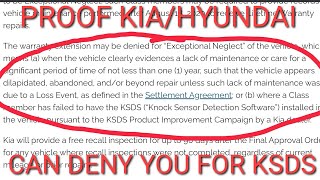
- Get the KSDS Software Update (Once, immediately) — The KSDS update is required to be eligible for the 15-year/150,000-mile extended warranty. Without it, a claim for a free engine replacement is automatically denied.
- Strict Oil Change Intervals with Quality Parts (Every 3,000-5,000 miles) — The primary engine failure is due to bearing wear, accelerated by oil breakdown. Using the specified OEM oil filter and high-quality synthetic oil at shorter intervals is the best defense.
- Check Oil Level Frequently (At every other fuel fill-up) — These engines consume excessive oil as they begin to fail. Running the engine low on oil dramatically increases stress on the connecting rod bearings.
- Keep All Maintenance Records (Always) — If you file a warranty claim, the manufacturer requests proof of regular maintenance. A complete file of receipts combats a potential claim denial.
Frequently Asked Questions
Does P1327 always mean I need a new engine?
For a Hyundai or Kia, yes, almost without exception. The manufacturer's own technical service bulletins state that if code P1327 is present, the engine must be replaced. The KSDS system was specifically designed to identify this non-repairable internal failure.
Is the engine replacement for P1327 covered by warranty?
Very frequently, yes. Hyundai and Kia extended the powertrain warranty for this specific failure on many affected vehicles, often to 15 years or 150,000 miles. You must contact a dealership with your VIN to confirm coverage.
What if the dealer denies my P1327 warranty claim?
If your claim is denied, calmly request the specific reason in writing. Denials are often due to a lack of maintenance history or a missing KSDS software update. If you have proof of regular oil changes, present it clearly and escalate to corporate if necessary.
Can I just replace the knock sensor to fix P1327?
No. The P1327 code on a Hyundai/Kia means the knock sensor is working correctly and has detected the signature of a catastrophic mechanical failure. Replacing the sensor will not solve the problem and wastes money.
What happens if I ignore code P1327?
Ignoring P1327 leads to catastrophic engine failure. The engine eventually seizes, causing a sudden loss of power and control, which dramatically increases the risk of a crash or engine fire.
Should I clear the P1327 code?
Absolutely not. Do not clear the code or disconnect the battery. The dealership service department needs the active code and the associated freeze-frame data stored in the ECU to process the warranty claim for the engine replacement.
Why did the dealer install a software update instead of fixing my engine?
The software update (KSDS) is the initial part of the recall and acts as an early warning system. It actively listens for the failure. Once that system detects the problem, it triggers code P1327, which then authorizes the engine replacement.
The dealer cleared the code and sent me home, but it came back. What now?
This is improper procedure by the dealer. According to manufacturer TSBs, P1327 should not be cleared; it should trigger the engine replacement process. Go back to the dealer immediately or contact corporate affairs.
Key Takeaways
- On Hyundai and Kia vehicles, code P1327 indicates imminent, non-repairable internal engine failure requiring a complete engine replacement.
- Immediately pull over and tow the vehicle to a dealership; driving in limp mode causes catalytic converter destruction costing over $1,500.
- Do not clear the P1327 code with a scanner, as dealerships require the active code and freeze-frame data to approve the 15-year/150,000-mile warranty claim.
- For BMW, Audi, and Peugeot vehicles, P1327 is an electrical or combustion fault (like a bad knock sensor or ignition coil) costing $150 to $740 to repair.
Helpful Videos


The information in this article is provided for general reference and educational purposes only. Vehicle specifications, procedures, and part compatibility can vary by production date, trim level, and region. Always consult your vehicle's factory service manual and verify part numbers before purchasing or performing repairs. Safety-critical components such as airbags, seat belts, and braking systems should be installed by a qualified professional.
- 🎬 Helpful Videos
- What Does P1327 Mean?
- Can I Drive With P1327?
- Common Causes
- Symptoms
- Diagnostic Flowchart
- Common Fixes & Costs
- Used vs. New Parts: Buying Guide
- What Happens If You Wait — Timeline
- Cost of Not Fixing It
- Diagnosis Steps
- When This Code Triggers (Freeze-Frame Conditions)
- Related Codes
- Climate & Environmental Factors
- How to Talk to a Mechanic About This Code
- Where to Take It: Dealer vs Independent vs Chain
- When to Walk Away From the Repair
- What Scan Tool You Need for This Code
- How to Clear the Code After You Fix It
- Will This Fail Emissions / State Inspection?
- Most Commonly Affected Vehicles
- Manufacturer-Specific Notes
- Real Owner Stories
- 2020 Hyundai Kona at 99K miles - Successful Warranty Claim
- 2019 Hyundai Kona at 89K miles - The Importance of Maintenance Records
- 2019 Hyundai Elantra - Attempted Misdiagnosis with a Sensor Replacement
- How to Prevent This Code From Triggering
- Frequently Asked Questions
- Does P1327 always mean I need a new engine?
- Is the engine replacement for P1327 covered by warranty?
- What if the dealer denies my P1327 warranty claim?
- Can I just replace the knock sensor to fix P1327?
- What happens if I ignore code P1327?
- Should I clear the P1327 code?
- Why did the dealer install a software update instead of fixing my engine?
- The dealer cleared the code and sent me home, but it came back. What now?
- Key Takeaways
- 🎟️ Get 5% Off