

P1326 on 2018-2023 Kia Stinger 3.3L: Knock Sensor, Limp Mode, and Engine Failure Explained
P1326 on your Stinger is a critical code from the Knock Sensor Detection System (KSDS) suggesting potential engine bearing failure, which immediately triggers a protective 'limp mode'. While the worst-case scenario is a new engine, the cause can also be a faulty sensor, wiring, or outdated software. A trip to the dealer is mandatory for proper diagnosis and to check for warranty coverage under programs like Kia's Product Improvement Campaign SC200.
- P1326 is a critical code on your Stinger that requires an immediate trip to a Kia dealer.
- The code means the engine's self-preservation system (KSDS) has detected a serious problem, likely related to internal bearing wear, and has put the car in limp mode to prevent a catastrophic failure.
- Do NOT clear the code; its presence is necessary for the dealer to begin the diagnostic and potential warranty process.
- While the worst-case scenario is a new engine, the fault could also be less severe, such as faulty wiring or a bad sensor. Only a dealer can make the correct diagnosis following Kia's specific procedures.
What's Unique About the 2018-2023 Kia Stinger
While the P1326 code is infamous on Kia's 2.0L and 2.4L Theta II four-cylinder engines, leading to widespread engine replacements, it is less common but equally serious on the Stinger's Lambda II 3.3L V6. The Lambda II engine is generally considered more robust. However, the meaning of the code is identical. Real-world owner experiences on forums confirm that 3.3T Stinger and Genesis G70 owners have experienced code P1326, leading to the same dealer diagnostic path: a software update, wiring check, bearing clearance test, and in some cases, a warranty-covered engine replacement.
Symptoms You May Notice
- Flashing or solid Check Engine Light
- Vehicle enters 'limp mode' (engine power is severely restricted, RPM will not exceed ~2,000-2,500)
- Inability to accelerate properly
- Audible engine knocking, ticking, or rattling noise may be present, especially on startup or under load
- Rough idle or stalling
- Forced engine shut-off after a short period of driving in limp mode
- Replacing spark plugs or ignition coils, assuming the limp mode is from a misfire.
- Replacing the throttle body or accelerator pedal sensor because of the lack of acceleration.
- Assuming any rattling noise is from the turbo wastegates without first addressing the P1326 code.
Most Likely Causes
- Internal Engine Failure (Connecting Rod Bearing Wear) 🟡 Medium Probability This is the primary failure the KSDS is designed to detect. While less common on the Lambda V6 than other Kia engines, manufacturing defects or oil lubrication issues can cause premature bearing wear. A thrown rod can even puncture the engine block, causing a massive and sudden oil leak.
How to confirm: A Kia dealer must perform a bearing clearance test (BCT) using a special service tool (SST KQ231-2T110QQK) that applies air and vacuum to the cylinders to measure clearance. An oil sample analysis showing high levels of copper, lead, and tin would also confirm bearing failure. Metal contamination found in the engine oil during inspection is a strong indicator. [NHTSA ODI #11709712]
Typical fix: Engine long block replacement. This is often covered under Kia's lifetime warranty extension for this issue or a product improvement campaign if the vehicle qualifies and has had the KSDS software update (Campaign SC200) performed.
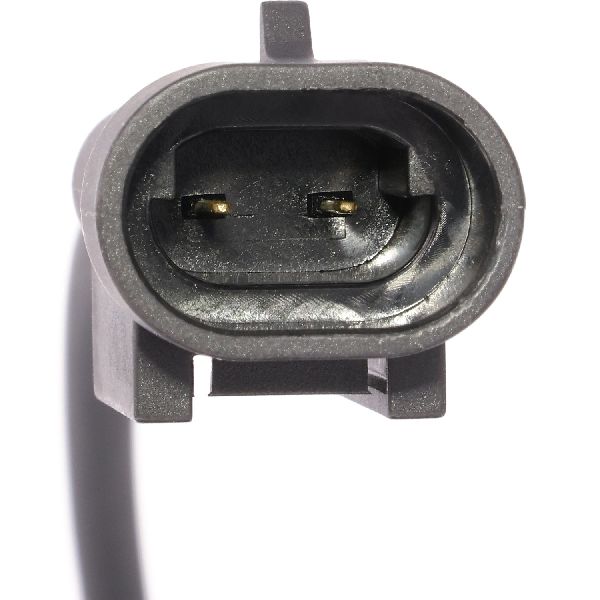
Est. part cost: $5000-$10000+ - Faulty Knock Sensor Wiring Harness 🟡 Medium Probability The wiring harness or its connector can become damaged, corroded, or suffer from signal interference from other components like fuel injectors or ignition coils. A Stinger owner on stingerforum.org reported their dealer found a loose connection at the knock sensor, which resolved the P1326 code after being secured.
How to confirm: Visually inspect the harness for chafing, melting, or corrosion where it runs through the engine valley. A technician will use a multimeter to check for continuity, shorts to ground, and proper resistance per the service manual. The dealer procedure is specifically outlined in TSBs like PI1802. Crucially, the knock sensor harness must be routed away from the fuel injector harness to prevent electrical interference that can trigger a false code.
Typical fix: Repair the damaged section of the wiring harness or replace the harness sub-assembly. Sometimes simply re-securing a loose connector is all that is needed.
Est. part cost: $50-$300 - Outdated ECU Software ⚪ Low Probability The KSDS is a software-based system. The logic for detecting vibrations can be overly sensitive in early versions, leading to false positives. Kia released Product Improvement Campaign SC200 specifically to update the KSDS ECU logic on 2018-2021 Stinger 3.3T models to improve accuracy.
How to confirm: A Kia dealer can check the vehicle's current software (ROM ID) against their database to see if Campaign SC200 or another update is available and has been performed.
Typical fix: Update the Engine Control Module (ECM) software to the latest version. This is the first step a dealer will often take if the update has not been performed.
Est. part cost: $0-$150 - Failed Knock Sensor ⚪ Low Probability The sensor itself can fail internally, sending an incorrect signal to the ECM. An owner of a Kia Optima reported the code being triggered by rain or a car wash, suggesting a sensor or wiring issue where moisture caused a short. [NHTSA ODI #11639763]
How to confirm: After confirming the wiring and software are good, the sensor itself is the next logical point of failure. A technician may test it by tapping it while monitoring for a small AC voltage signal. However, if the Bearing Clearance Test passes, replacement is often the next step to confirm the sensor is the fault.
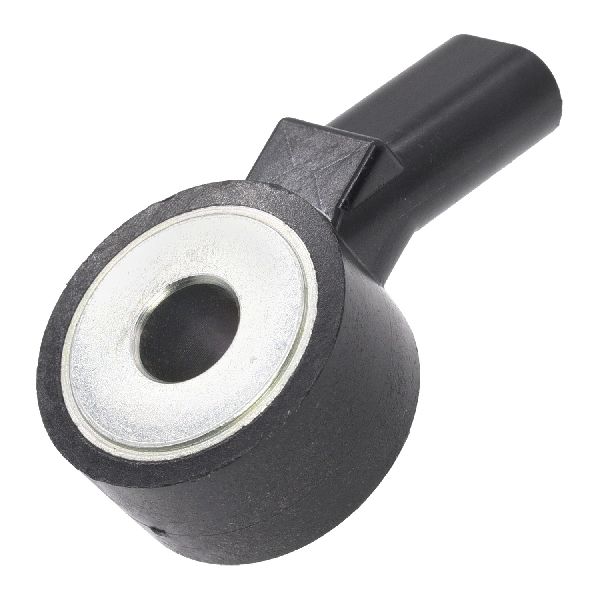
Typical fix: Replace the knock sensor. On the 3.3T engine, this is a labor-intensive job as the sensor is located in the engine valley, underneath the intake manifold, requiring removal of the manifold and associated gaskets.
Est. part cost: $80-$200
Rare But Worth Checking
- Moisture Intrusion:
Diagnosis Steps
- DO NOT clear the trouble code. The active P1326 code is often required for the dealer to begin the warranty or product improvement campaign process.
- Check engine oil level and condition immediately. Note if the level is low or if the oil appears dark, sludgy, or has metallic particles in it.
- Schedule service with a Kia dealership immediately. Inform them the car has code P1326 and is in limp mode.
- The dealer will confirm the code and check the vehicle's VIN for any open recalls or service campaigns, specifically the KSDS software update (Campaign SC200 for the Stinger).
- If the KSDS software is not current, they will update it first.
- Following Kia's procedure (as outlined in TSBs PI1802/PI1803/PI2102), they will perform a wiring signal interference check.
- If wiring and software are not the issue, they will proceed to the physical Bearing Clearance Test (BCT) using the SST KQ231-2T110QQK.
- If the bearing test fails, the dealer will submit a Prior Warranty Approval (PWA) request to Kia for an engine replacement. If the test passes, they will proceed with diagnosing the knock sensor circuit or replacing the sensor itself.
Parts You'll Likely Need
- Engine Long Block Assembly — This is the required fix if the KSDS has correctly identified fatal connecting rod bearing wear.
Trusted brands: Kia (OEM)
OEM price range: $7000-$10000+
Aftermarket price range: N/A - Knock Sensor
(OEM #39250-3L100 (Verify with VIN))— If the sensor itself has failed or is sending erroneous signals, it must be replaced. This is a potential cause if the engine bearings and wiring are confirmed to be good.
Trusted brands: Kia (OEM), Bosch
OEM price range: $150-$250
Aftermarket price range: $80-$150 - Intake Manifold Gasket Kit
(OEM #29215-3L100 (Surge Tank Gasket), 28411-3L100 (Intake Gaskets))— These gaskets are required when replacing the knock sensor, as the intake manifold must be removed to access it.
Trusted brands: Kia (OEM)
OEM price range: $50-$100
Aftermarket price range: $30-$60
Related Codes That Often Appear With This One
- P000B —
Technical Service Bulletins (TSBs) & Recalls
- PI1802Y/Z, PI1803W/X, PI2102Y/Z - These are examples of Kia Technical Service Bulletins for various models that detail the official dealer procedure for diagnosing P1326. They instruct technicians to check wiring, perform bearing clearance tests with SST KQ231-2T110QQK, and replace the engine if necessary.
- SC200 - This is a 'Product Improvement Campaign' specifically for updating the Knock Sensor Detection System (KSDS) ECU logic on vehicles including the 2018-2021 Kia Stinger 3.3T to prevent false positives and ensure accurate detection.
- SST067 - This TSB provides detailed procedures for using and calibrating the Bearing Clearance Tester (BCT) special service tool, which is the definitive test for confirming internal engine damage related to P1326.
Platform-Specific Known Issues
- The P1326 code is part of a larger issue for Hyundai and Kia, primarily affecting their Theta II engines but also applicable to others. The system was implemented as a 'Product Improvement Campaign' to detect engine failures before they become catastrophic.
- A Stinger 3.3T owner on stingerforum.org (thread 'P1326 Knock sensor') described getting the code, going into limp mode, and taking it to the dealer. The dealer first checked for wiring faults before proceeding with further diagnostics, confirming the standard procedure is followed for the Stinger platform.
- Owners of the platform-mate Genesis G70 3.3T report identical P1326 issues, with one Reddit user describing how the dealer performed the software update and bearing test, which passed, leaving them in a state of uncertainty about future engine health.
Mechanic-Grade Diagnostic Values
- Knock Sensor Mounting Bolt Torque — expected: 15 ft-lbs (20.3 Nm). Failure: Incorrect torque can affect the sensor's ability to properly detect vibrations. Over-torquing can damage the sensor; under-torquing can lead to inaccurate readings.
- Engine Seizure Check (Crankshaft Rotational Torque) — expected: Should rotate with less than 94 lb-ft of torque.. Failure: If the crankshaft requires more than 94 lb-ft to rotate, the engine is considered seized or has severe internal binding, triggering an engine replacement procedure.
- Knock Sensor Signal Generation (Qualitative Test) — expected: A small AC voltage should be generated when the sensor body is lightly tapped.. Failure: No voltage signal when tapped suggests the sensor's piezoelectric element is dead. Resistance checks are often inconclusive on these sensors.
Scan Tool Commands That Help
- Kia GDS/KDS: Bearing Clearance Test (BCT) — This is the mandatory first physical test after confirming the P1326 code is active. It uses a special tool (SST KQ231-2T110QQK) to apply pressure and vacuum to each cylinder at TDC to definitively measure connecting rod bearing clearance and determine if the engine has failed internally.
- Kia GDS/KDS: Reset Adaptive Values — This is a required final step after replacing the knock sensor. It clears the learned values in the ECM to ensure it correctly interprets signals from the new sensor.
- Kia GDS/KDS: ECU Upgrade (Software Update) — This is used to load the latest KSDS logic (e.g., Campaign SC200) onto the vehicle's ECU. It is often the first step a dealer performs to rule out false positives from outdated software.
Wiring & Ground Locations
- Knock Sensor Harness Routing — The knock sensor is located in the engine valley under the intake manifold. Its wiring harness runs through the valley alongside other component wiring.. The knock sensor harness must be routed away from the fuel injector harness. If they touch, the electrical pulses from the injectors can induce a signal in the knock sensor wire, which the ECU may misinterpret as engine knock, triggering a false P1326 code.
Real Owner Repair Stories
- Reddit user in r/kia (2016 Kia Optima, 76k miles) — Vehicle went into limp mode with a flashing check engine light and code P1326. No audible engine knock was present.
❌ Tried (didn't work) Initial diagnosis pointed towards potential engine failure.
✅ What actually fixed it The dealer performed the Bearing Clearance Test (BCT), which the engine passed. Further diagnosis found the knock sensor itself was 'operating out of specification'. Replacing only the knock sensor resolved the code and limp mode.
OEM Part Supersession History
39250-3L100→39320-3L000 (Possible)— Part number variations exist. 39250-3L100 is listed in the Pass 2 data. Other sources show 39320-3L000 for the same application.
Heads up: It is critical to verify the correct part number with the vehicle's VIN at a dealership parts counter before ordering. Using the wrong sensor can lead to persistent false codes.
Model Year Variations Within This Range
- 2022-2023: For the 2022 model year facelift, the 3.3L Twin-Turbo V6 received a new variable exhaust system. This resulted in a slight power increase from 365 hp to 368 hp. While this doesn't fundamentally change the P1326 issue, it is a notable powertrain change within the generation.
Diagnostic Flowchart
Other Known Issues on This Vehicle
Issues unrelated to this code that are worth knowing about as an owner of this generation:
- Electronic Wastegate Actuator (EWGA) Rattle 🟠 Medium — Common, especially on 2018-2021 models. Often noticeable at startup or low RPMs. Tends to be more of an annoyance than a critical failure. (Ref: Multiple TSBs exist, including ENG219, which provides procedures for inspection and replacement of the actuator rod or entire turbocharger assembly.)
- Left Turbocharger Oil Feed Pipe Leak 🔴 High — Sufficiently common to trigger a recall (NHTSA Campaign Number: 23V592000). Affects 2018-2023 models. (Ref: Recall 23V592000; Kia SC278. The oil feed pipe and hose assembly can deteriorate, leading to an oil leak, which increases the risk of an engine compartment fire.)
- High-Pressure Fuel Pump (HPFP) Failure (2.0T Engine) 🔴 High — This is a recall-level issue primarily for the 2.0T Theta II engine, not the 3.3T V6. However, it's a significant platform issue worth noting for general Stinger owners. It can cause stalling and loss of power. (Ref: Recall 23V-634 for 2018-2021 2.0T models.)
- Tailgate/Hatch Rattle 🟡 Low — Very common on early (2018) models. Caused by misaligned bump stops or latch components. (Ref: TSB SA322 provides a procedure to adjust bumpers and install a new guide kit to resolve the noise.)
- Intake Valve Carbon Buildup 🟠 Medium — A common long-term issue for all Gasoline Direct Injection (GDI) engines, including the Lambda II 3.3T. Can cause reduced performance and misfires over 60,000+ miles.
Used vs. New Parts: Buying Guide for This Vehicle
When a used part is the smart pick: A used engine is a practical, cost-effective option if the Bearing Clearance Test (BCT) fails and the vehicle is outside of its warranty or campaign coverage. Given the high cost of a new OEM long block, a low-mileage used engine can save thousands of dollars.
Donor-vehicle mileage cap: roughly under 80000 miles for the part to have meaningful remaining life.
What to inspect on the donor part:
- Verify the engine code (G6DP for the 3.3T) matches the original.
- Obtain vehicle history if possible, prioritizing donors from rear-end collisions over ones with unknown history.
- Remove and inspect the oil filter for excessive metallic particles (glitter), a sign of bearing failure.
- Check the oil for a milky appearance, which indicates a head gasket failure and coolant mixing.
- Look down the intake ports for heavy, thick carbon buildup, which can indicate poor maintenance or oil consumption issues.
- Ensure the seller provides a warranty (even 30-90 days) to protect against a dead-on-arrival unit.
OEM-only on this vehicle (don't cheap out):
- Knock Sensor: Due to the sensitivity of the KSDS and the risk of signal interference causing false P1326 codes, only an OEM Kia/Hyundai sensor should be used.
- Engine Control Module (ECM): Must be OEM.
Aftermarket brands forum-validated for this vehicle:
- For this specific P1326 repair, no aftermarket brands for the critical sensors are consistently recommended over OEM.
Brands owners have reported issues with on this vehicle:
- Avoid generic, unbranded knock sensors from online marketplaces. The risk of poor signal quality leading to a repeat of the P1326 code is very high.
Real Owner Stories
Aggregated from forums and TSBs cited above. Mileages and costs reflect what owners reported in those sources.
2019 Kia Stinger GT2 3.3T
Symptoms: The vehicle threw a P1326 code and immediately entered limp mode. The owner took it to the dealer where they followed a diagnostic path starting with wiring fault checks.
What fixed it: The dealer checked for wiring faults and followed the standard diagnostic procedure outlined for the Stinger platform.
Source hint: stingerforum.org - Thread: 'P1326 Knock sensor'
2018-2023 Genesis G70 3.3T
Symptoms: The owner experienced the P1326 code and limp mode. The dealer performed a software update and a bearing clearance test.
What fixed it: The bearing test passed, but the owner remained in a state of uncertainty regarding future engine health after the software update.
Source hint: Reddit user mentioned in vehicle_specific_issues
2018-2023 Kia Stinger 3.3T
Symptoms: The owner reported a P1326 code which was found to be caused by a connection issue rather than internal engine damage.
What fixed it: The dealer found a loose connection at the knock sensor and secured it, which resolved the code.
Source hint: stingerforum.org report cited in common_causes
Related OBD-II Codes
Frequently Asked Questions
Which specific software update should I ask the dealer about for my 2018-2021 Stinger 3.3T?
What special tool does the dealer use to confirm if my Stinger's 3.3L engine needs replacement?
Is there a specific wiring issue on the Stinger 3.3T that causes a false P1326?
What happens if my Stinger fails the Bearing Clearance Test (BCT)?
Can a car wash or rain trigger the P1326 code on my Kia?
Does the P1326 issue also affect the Genesis G70 with the same 3.3T engine?
Helpful Videos


Used OEM Parts in Stock


New Aftermarket Parts Available

The information in this article is provided for general reference and educational purposes only. Vehicle specifications, procedures, and part compatibility can vary by production date, trim level, and region. Always consult your vehicle's factory service manual and verify part numbers before purchasing or performing repairs. Safety-critical components such as airbags, seat belts, and braking systems should be installed by a qualified professional.
- Kia Stinger:
- 🎬 Helpful Videos
- 🛍️ Shop This Part
- What's Unique About the 2018-2023 Kia Stinger
- Symptoms You May Notice
- Most Likely Causes
- Rare But Worth Checking
- Diagnosis Steps
- Parts You'll Likely Need
- Related Codes That Often Appear With This One
- Technical Service Bulletins (TSBs) & Recalls
- Platform-Specific Known Issues
- Mechanic-Grade Diagnostic Values
- Scan Tool Commands That Help
- Wiring & Ground Locations
- Real Owner Repair Stories
- OEM Part Supersession History
- Model Year Variations Within This Range
- Diagnostic Flowchart
- Other Known Issues on This Vehicle
- Used vs. New Parts: Buying Guide for This Vehicle
- Real Owner Stories
- 2019 Kia Stinger GT2 3.3T
- 2018-2023 Genesis G70 3.3T
- 2018-2023 Kia Stinger 3.3T
- Related OBD-II Codes
- Frequently Asked Questions
- 🎟️ Get 5% Off