

P1326 on 2012-2019 Kia Soul: KSDS Warning, Limp Mode, and Engine Failure Guide
P1326 on a Kia Soul is a critical alert from the Knock Sensor Detection System (KSDS) indicating it has detected vibrations consistent with internal engine bearing failure. This will trigger a flashing check engine light and force the vehicle into 'limp mode.' The repair is almost always an engine inspection and potential replacement at a Kia dealership, which may be covered under a class-action lawsuit warranty extension known as the 'In re: Hyundai and Kia Engine Litigation II' settlement.
- P1326 is a critical code indicating a high probability of severe internal engine wear.
- Do not drive the vehicle. A flashing check engine light and limp mode are designed to prevent a dangerous engine seizure. Have it towed to a Kia dealer.
- Do not clear the code. The dealer needs it for diagnosis and warranty processing.
- The repair may be fully covered by Kia's lifetime engine warranty extension, provided the KSDS software update was previously installed.
- Simply replacing the knock sensor is almost never the correct fix and will not resolve the underlying mechanical problem.
What's Unique About the 2012-2019 Kia SOUL

The 2012-2019 Kia Soul, particularly models with the 1.6L and 2.0L GDI engines, is part of a widespread issue concerning premature engine bearing failure across the Kia and Hyundai lineup. This was allegedly caused by manufacturing debris left in the engine. This led to class-action lawsuits and a massive recall campaign where Kia implemented the KSDS software update. Therefore, P1326 on a Soul is not just a standard sensor code; it's a specific, intentional warning system directly related to this known engine defect. 🎬 Watch: Understanding the P1326 code and flashing light symptoms. The diagnostic and repair path is unique, often leading to a warranty engine replacement if specific criteria are met under the settlement terms.
Diagnostic Flowchart
Tap your situation to follow the diagnostic path that matches what you're seeing on this vehicle.
Generation note: This issue affects both the first generation (2012-2013) and second generation (2014-2019) of the Kia Soul, specifically those equipped with the Gamma 1.6L GDI and Nu 2.0L GDI engines, which were subject to the KSDS update and related engine concerns.
Symptoms You May Notice

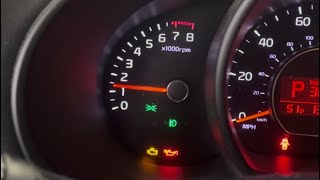
- Flashing Check Engine Light (MIL).
- Vehicle enters 'limp home mode,' with RPMs limited to approximately 1800-2000. [ODI #11447800]
- Drastic loss of engine power and acceleration.
- Engine knocking, ticking, or rattling noises that may increase with RPM.
- Excessive oil consumption, sometimes leading to no oil on the dipstick. [ODI #11590718, 24]
- In some cases, the code may appear without the vehicle entering limp mode, especially if the KSDS update has not been performed.
- In some cases, smoke from the engine bay.
- Replacing the knock sensor without performing a bearing clearance test. As one owner reported to the NHTSA, a new sensor was installed, but the P1326 code returned shortly after because the underlying mechanical engine problem (rod bearing issue) was not addressed. [ODI #11575205] Another owner on Reddit had a dealer replace the knock sensor, only for the P1326 code and limp mode to return, requiring a tow back to the dealer.
Most Likely Causes

- Excessive Connecting Rod Bearing Wear 🔴 High Probability Manufacturing defects in certain Kia GDI engines, allegedly from metal debris left during production, can lead to premature bearing failure. The KSDS software was specifically designed to detect this condition. An owner complaint to the NHTSA noted finding metal particles in the oil filter, a direct sign of this wear. [ODI #11636376]
How to confirm: This must be confirmed by a Kia dealership. They will use a special tool, the Engine Bearing Clearance Tester (SST KQ231-2T110QQK), which applies air and vacuum to the cylinders to measure clearances without full engine disassembly. They will also follow specific diagnostic flowcharts outlined in Technical Service Bulletins like PI2107Y/Z. Photo evidence of the oil dipstick, filler cap, and oil filter opening is often required for the warranty claim.
Typical fix: If bearing wear is confirmed to be out of spec, the fix is a complete engine long-block replacement, often covered under Kia's extended lifetime warranty program resulting from the class-action settlement.
Est. part cost: $0 (if under warranty) - $7000+ - Faulty Knock Sensor or Wiring ⚪ Low Probability While less common, the sensor itself or its wiring harness can fail or have a poor connection, sending a false signal to the ECU. This can result in a P1326 code even if the engine bearings are healthy.
How to confirm: If the bearing clearance test passes, the dealer will then inspect the knock sensor and its wiring for shorts, open circuits, or damage, as outlined in TSBs like PI1803W/X. In some cases, a knock sensor extension harness was installed to prevent signal interference.
Typical fix: Replacement of the knock sensor and/or repair of the wiring harness. The intake manifold must be removed to access the sensor. If the bearing test passes, this is the most likely repair.
Est. part cost: $50 - $150
Rare But Worth Checking
- Knock Sensor Wiring Signal Interference:
Diagnosis Steps
- Confirm the presence of code P1326 using an OBD-II scanner. Note if the check engine light is flashing.
- DO NOT CLEAR THE CODE. The dealership needs to see the active code for warranty processing.
- Check engine oil level and condition. Look for metallic particles on the dipstick or in the oil filter, which indicates internal engine damage. [ODI #11636376, 5]
- Listen for any audible engine knocking or rattling.
- Immediately contact a Kia dealership. Do not drive the vehicle; have it towed.
- Inform the service advisor that the vehicle has code P1326 and is in limp mode. Mention the engine class-action settlement.
- The dealer will verify that the KSDS software update (e.g., Campaign 966, PI2002B) has been performed. This is a prerequisite for the extended warranty.
- The dealer will then follow the official TSB procedure, which starts with the bearing clearance test using the specialized tool (SST KQ231-2T110QQK).
- If the test fails, the engine will be flagged for replacement under the extended warranty. If the test passes, they will proceed to diagnose the knock sensor circuit, which may include a wiring interference check per TSB PI1802W/X.
Parts You'll Likely Need

- Engine Long Block Assembly
(OEM #e.g., G4NC for 2.0L Nu GDI)— This is the required repair if the KSDS has correctly identified excessive connecting rod bearing wear, which is the most common reason for code P1326.
Trusted brands: Kia (OEM)
OEM price range: $5000 - $8000+
Aftermarket price range: N/A - Knock Sensor
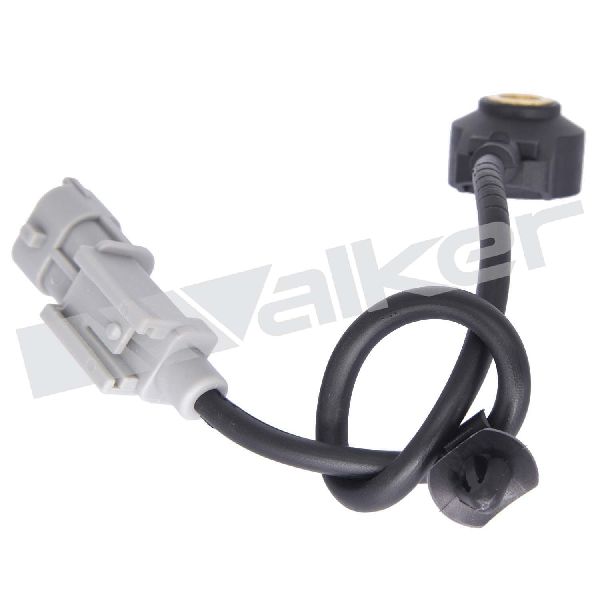
(OEM #39250-2B000)— In the less common scenario that the engine bearings are healthy and the sensor itself has failed, this part will be replaced. However, this is often misdiagnosed as the primary fix. [ODI #11575205, 9, 12, 15]
Trusted brands: Kia (OEM), Bosch
OEM price range: $70 - $100
Aftermarket price range: $40 - $90
Related Codes That Often Appear With This One
- P0420 — The same engine issue causing P1326 often leads to excessive oil consumption. This unburned oil can exit the engine and contaminate the catalytic converter, destroying its effectiveness and triggering the P0420 code. [ODI #11634251, 16]
Technical Service Bulletins (TSBs) & Recalls
- PI2002Y/Z: Provides engine replacement instructions for 2012-2016 Souls with 1.6L and 2.0L GDI engines that return with DTC P1326 after the KSDS update.
- PI2107Y/Z: Provides subsequent repair instructions and flowcharts for diagnosing P1326, engine noise, or no-crank conditions on 2017-2019 second-gen Souls with the Nu 2.0L GDI engine.
- PI1802W/X: A TSB for other Kia models that outlines checking for wiring signal interference by installing an extension harness before condemning the engine for a P1326 code.
- PI2107: The original product improvement campaign to install the KSDS ECU software on 2017-2019 Souls with the Nu 2.0L GDI engine.
Platform-Specific Known Issues
- Class Action Lawsuit & Lifetime Warranty Extension: Many 2012-2019 Kia Souls are covered by the 'In re: Hyundai and Kia Engine Litigation II' class-action settlement regarding engine failures. This resulted in Kia extending the engine warranty to a lifetime warranty for qualifying failures caused by connecting rod bearing wear, provided the KSDS software update was performed. The settlement also provides reimbursement for past repairs, towing, and rental cars.
- KSDS Update Requirement: To be eligible for the warranty extension, the vehicle must have had the Knock Sensor Detection System (KSDS) software installed. This was done under campaigns like PI2002B or PI2107. A dealer can check a vehicle's VIN to see if the update was performed. Failure to have the update installed can be grounds for warranty denial.
- Dealer-Specific Diagnosis: The diagnostic procedure for P1326 is highly specific and must be performed by a Kia dealer to qualify for warranty coverage. It involves using a proprietary bearing clearance tester (SST KQ231-2T110QQK) and following strict TSB guidelines. Going to an independent shop first may complicate the warranty claim.
Mechanic-Grade Diagnostic Values
- Knock Sensor Mounting Bolt Torque — expected: 18.6 ~ 24.5 N.m (13.7 ~ 18.1 lb-ft). Failure: Improper torque can affect the sensor's ability to detect vibrations correctly.
- Knock Sensor AC Voltage Output (Tapping Test) — expected: A small AC voltage (millivolts) should be generated when the sensor body is tapped with a metal tool.. Failure: No voltage generated when tapped indicates a dead sensor.
Scan Tool Commands That Help
- Kia KDS (Kia Diagnostic System): Wiring Signal Interference Check — This is a specific test run via the KDS software as part of TSB PI1802W/X or SA379. It is used after a P1326 code is present but before determining if an engine replacement is needed, to rule out electrical noise causing a false positive from the knock sensor.
- Kia KDS (Kia Diagnostic System): Engine Bearing Clearance Test — This is the primary diagnostic function used with the special service tool (SST KQ231-2T110QQK) to definitively test for connecting rod bearing wear after a P1326 code is triggered. The KDS software analyzes the pressure/vacuum readings and returns a PASS or NO PASS result.
Wiring & Ground Locations
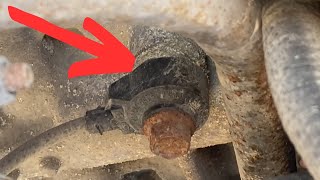
- Knock Sensor Connector — On the back of the engine block, underneath the intake manifold.. This is the primary connection point for the sensor. It is a 2-pin connector. Damage, corrosion, or oil saturation at this connector can cause a faulty signal and trigger P1326.
- ECM Pin 37 & 38 (Example) — At the Engine Control Module (ECM) connector.. On some schematics, Pin 37 is the Knock Sensor signal input and Pin 38 is the sensor ground. A technician would test for continuity and voltage at these pins to diagnose a circuit fault between the sensor and the ECM.
- Engine Block Ground (GF04 Example) — A common grounding point bolted directly to the engine block.. A poor engine ground can introduce electrical noise into the entire engine management system, potentially interfering with the sensitive knock sensor signal and causing a false P1326 code.
Real Owner Repair Stories
- Reddit user in r/kia (2016 Kia Optima, 165,000 miles) — Heard a knock accelerating uphill, followed by flashing check engine light and limp mode (RPM limited to 1,750). Code P1326 was stored.
❌ Tried (didn't work) The initial diagnosis at the dealer.
✅ What actually fixed it The dealer found code P1326 but the engine passed the 'bearing clearance test.' They performed a software update which cleared the code. The user picked up the car and drove 350 miles with no return of the knock or code. This represents a scenario where the KSDS logic was potentially too sensitive and an update resolved the false positive, though the user remained concerned about future failure. - Reddit user in r/Hyundai (2016 Hyundai Sonata Hybrid, 147,000 miles) — Audible engine knock when warm and driving (not at idle). Eventually, the car threw code P1326.
❌ Tried (didn't work) The dealer performed the bearing clearance test, which passed. They then replaced the knock sensor and returned the car.
✅ What actually fixed it The story is unresolved but highlights a critical failure pattern. The knock sensor was replaced, but the audible knocking sound was still present, indicating the underlying mechanical issue was not fixed. The owner was concerned the code would return after the 150,000-mile warranty extension expired. This demonstrates a common misdiagnosis where the sensor is replaced but the mechanical fault remains.
"I Checked Everything" — The Actual Cause
- A smoke test is not applicable for P1326. The equivalent scenario is 'Bearing Clearance Test Passed, but the code returns.' This happens when the root cause is not the bearings themselves but either a faulty knock sensor circuit or, in some documented cases, another mechanical noise like piston slap that is severe enough to trick the KSDS. One user reported their 2.0L Nu engine passed the bearing test twice, but the code persisted. An engine replacement was eventually approved, and inspection of the old engine revealed significant cylinder wall scoring and piston slap, which was likely the true source of the vibration.
OEM Part Supersession History
91400 2T000QQK→91400 2T100QQK— Updated part for the knock sensor extension harness.
Heads up: This is the extension harness used to fix signal interference issues as per TSB PI1802W/X, not the sensor itself.N/A→39250-2B000— This is the common OEM part number for the knock sensor itself for the 1.6L Gamma engine in the specified year range.
Heads up: The 2.0L Nu engine uses a different part number, such as 39250-2E000. It is critical to verify the correct sensor for the specific engine.
Model Year Variations Within This Range
- 2012-2013 (First Gen) vs 2014-2019 (Second Gen): The primary difference is the engine offerings and physical access. First-generation Souls often used a 2.0L Beta II engine before the widespread use of the 2.0L Nu GDI. The procedure to access the knock sensor involves removing the intake manifold, but the manifold design and surrounding components differ between generations, affecting labor time.
Helpful Videos
We Have This Part in Stock


The information in this article is provided for general reference and educational purposes only. Vehicle specifications, procedures, and part compatibility can vary by production date, trim level, and region. Always consult your vehicle's factory service manual and verify part numbers before purchasing or performing repairs. Safety-critical components such as airbags, seat belts, and braking systems should be installed by a qualified professional.
- Kia SOUL:
- 🎬 Helpful Videos
- 🛍️ Shop This Part
- What's Unique About the 2012-2019 Kia SOUL
- Diagnostic Flowchart
- Symptoms You May Notice
- Most Likely Causes
- Rare But Worth Checking
- Diagnosis Steps
- Parts You'll Likely Need
- Related Codes That Often Appear With This One
- Technical Service Bulletins (TSBs) & Recalls
- Platform-Specific Known Issues
- Mechanic-Grade Diagnostic Values
- Scan Tool Commands That Help
- Wiring & Ground Locations
- Real Owner Repair Stories
- "I Checked Everything" — The Actual Cause
- OEM Part Supersession History
- Model Year Variations Within This Range
- 🎟️ Get 5% Off