

P1326 on 2010-2017 Hyundai Tucson: Knock Sensor Detection System Warning and Fixes
P1326 on a Hyundai Tucson indicates the Knock Sensor Detection System (KSDS) has detected abnormal engine vibrations, often due to internal engine bearing wear. This is a critical warning that puts the vehicle into limp mode. The fix is often not the sensor itself but requires a dealer diagnosis that may lead to an engine replacement, which could be covered under an extended warranty resulting from a class-action lawsuit.
- P1326 is a critical alert from a special monitoring system (KSDS) warning of potential engine failure, not just a bad sensor.
- Do not clear the code. Take the vehicle to a Hyundai dealer immediately for diagnosis.
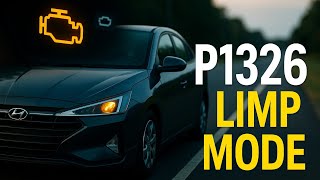
- The vehicle will enter a protective 'limp mode' with severely limited speed and power.
- The root cause is often premature connecting rod bearing wear, which may require a full engine replacement.
- Check if your vehicle had the Campaign 966 software update, as you may be eligible for an extended warranty (15 years/150,000 miles) covering the engine replacement.
What's Unique About the 2010-2017 Hyundai TUCSON

This code is unique to Hyundai and Kia vehicles and is directly tied to a known defect with connecting rod bearings in certain engines, stemming from manufacturing debris left in the engine. Hyundai implemented the KSDS as a 'product improvement campaign' to detect the failure early as part of a larger class-action lawsuit settlement. Therefore, P1326 is not a typical knock sensor fault but a specific alert from this protective software. 🎬 Watch: Understanding the Theta II bearing failure and P1326 code. Its presence is the first step in a diagnostic process that can lead to engine replacement under Hyundai's extended warranty (15 years/150,000 miles), provided the KSDS 🎬 See how the KSDS update helps you get a new engine. software update was previously completed.
Diagnostic Flowchart

Tap your situation to follow the diagnostic path that matches what you're seeing on this vehicle.
Generation note: The 2010-2017 range covers the second generation (LM, 2010-2015) and the start of the third generation (TL, 2016-2017) Tucson. Both generations are affected by the KSDS update and potential engine issues. Service Campaign 966 specifically lists the 2010-2013 Tucson with the 2.4L Theta II MPI engine and the 2014-2017 Tucson with the 2.0L Nu GDI engine.
Symptoms You May Notice

- Flashing Check Engine Light.
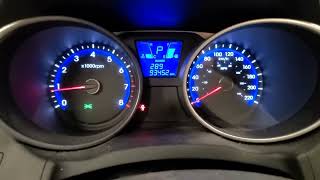
- Vehicle enters 'limp mode' (Engine Protection Mode).
- Severely reduced engine power and acceleration.
- Engine RPM limited to approximately 1800-2000 RPM.
- Audible engine knocking or rattling sounds.
- Difficulty starting the engine or stalling.
- Engine shaking while running.
- Oil smells like gasoline.
- Replacing only the knock sensor without diagnosing the engine. The P1326 code is a signal from a system, not necessarily a failure of the sensor itself. If the engine has excessive vibration, a new knock sensor will detect the same condition and the code will return.
- Misinterpreting the code as a 'glow relay' issue. Some generic OBD-II scanners may provide an incorrect definition for this manufacturer-specific code. [ODI #11568599]
Most Likely Causes

- Excessive Connecting Rod Bearing Wear 🔴 High Probability Certain Hyundai engines, including the Theta II and Nu series, have a known manufacturing defect where metal debris was left behind during production, leading to blocked oil passages and premature bearing failure. The KSDS was specifically designed to detect this condition.
How to confirm: A Hyundai dealer must perform a Bearing Clearance Test (BCT) as specified in their technical service bulletins (e.g., TSB 22-01-023H-1). The presence of metal shavings in the engine oil is also a strong indicator. [ODI #11477265] A borescope inspection may also reveal scored cylinder walls.
Typical fix: Engine replacement (short block or long block assembly). This is often covered under Hyundai's extended warranty (15yr/150k miles) if all conditions are met, including prior completion of the KSDS update and adherence to maintenance schedules.
Est. part cost: $4000-$8000+ - Faulty Knock Sensor or Wiring Harness ⚪ Low Probability While less common for this specific code, a malfunctioning sensor or a damaged/corroded wire can send an erroneous signal to the ECU, falsely triggering the P1326 code. TSB 24-EM-010H notes that water intrusion into the connector after a car wash or heavy rain can also cause a false P1326. In some cases, the knock sensor harness is routed too close to a fuel injector wire, causing electromagnetic interference (EMI) that the KSDS software misinterprets as engine knock.
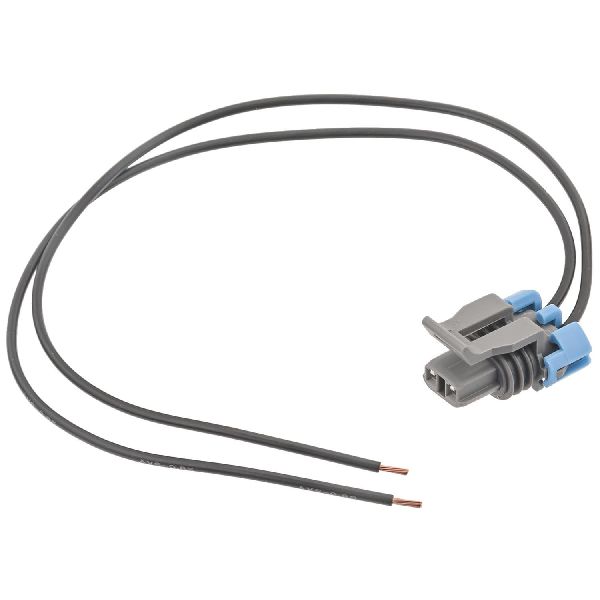
How to confirm: After ruling out mechanical engine failure via a passed Bearing Clearance Test, a technician can test the knock sensor's resistance and inspect the wiring harness for continuity, shorts, or physical damage, such as chafing against a fuel injector wire. A specific TSB recommends installing a wiring harness extension kit to reroute the wiring away from the interference source.
Typical fix: Replacement of the knock sensor or repair/replacement of the wiring harness. A specific knock sensor wiring kit (P/N 91400-C2000QQH) is listed in some TSBs.
Est. part cost: $50-$250
Rare But Worth Checking
- ECU Software Glitch: In some cases, the P1326 code may appear immediately or persistently after the KSDS software update (Campaign 966) is performed, even without an underlying mechanical issue. TSB #24-EM-002H specifically addresses vehicles that experience continued DTC P1326 after the update and provides a procedure for a manual ECU update after checking for other factors like oil condition and knock sensor connection quality.
Diagnosis Steps
- Confirm the P1326 code is active using an OBD-II scanner. Do NOT clear the code, as the dealer needs to see it to initiate the warranty process.
- Check the vehicle's VIN for open recalls or service campaigns, specifically Campaign 966 (KSDS update), on the Hyundai recall website.
- Gather all oil change and maintenance records. These will be required by the dealer to process the warranty claim.
- Contact a Hyundai dealership immediately. Inform them of the P1326 code and the associated symptoms. Be prepared for potentially long wait times for an appointment.
- The dealer will verify the KSDS update status and perform a series of tests as outlined in TSBs like 22-01-023H-1, which includes a Bearing Clearance Test (BCT), to determine if the cause is internal engine wear.
- Inspect the engine oil and oil filter for metallic particles, which indicates internal engine damage. [ODI #11477265]
- If the engine passes the mechanical tests, the technician will then inspect the knock sensor, its wiring, and connections for faults, per TSB 24-EM-002H.
Parts You'll Likely Need
- Engine Assembly (Short Block or Long Block) — This is the most common definitive fix, as the P1326 code is designed to detect irreversible internal engine wear (rod bearings). Replacement may be with an OE or remanufactured engine.
Trusted brands: Hyundai OE, Hyundai Remanufactured
OEM price range: $4000-$8000+
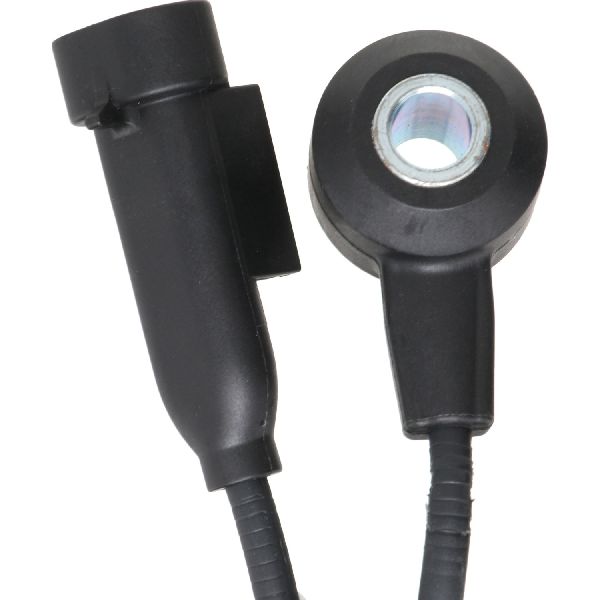
Aftermarket price range: $3500-$6000 - Knock Sensor
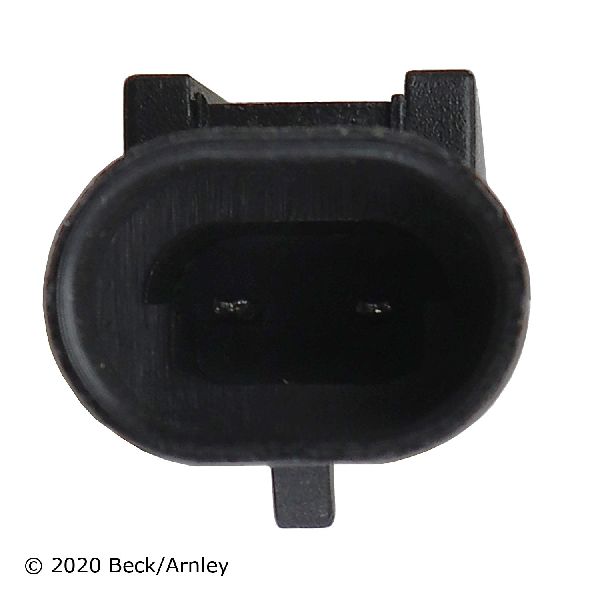
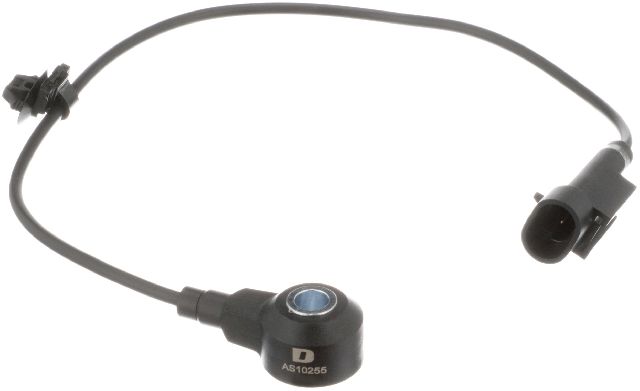
(OEM #39250-2G100 (For 2.4L Theta II))— This is often replaced as a diagnostic step or if it is found to be faulty after mechanical issues are ruled out. However, it is rarely the root cause.
Trusted brands: Bosch, Delphi, Hyundai OE
OEM price range: $120-$200
Aftermarket price range: $40-$90
Technical Service Bulletins (TSBs) & Recalls
- TSB #24-EM-002H: Addresses vehicles that experience continued DTC P1326 after the ECU update from Service Campaign 966 has been performed. Outlines steps to check for software glitches, oil condition, and knock sensor connection issues before attempting another ECU update.
- Service Campaign 966 (related to TSB #21-01-023H-3 and others): A product improvement campaign to install the KSDS software to detect abnormal engine bearing noise and trigger DTC P1326.
- TSB #22-01-023H-1 (Service Campaign T6G): Details the dealer procedure for inspecting vehicles that present with DTC P1326, including performing the Bearing Clearance Test and determining if an engine replacement is warranted.
- TSB #20-01-024H-1 (Service Campaign T3G): Provides inspection and repair/replacement procedures for various models with Theta GDI engines exhibiting code P1326.
Platform-Specific Known Issues
- This code is directly related to Hyundai's response to widespread connecting rod bearing failures in their Theta II and Nu GDI engines, which led to a major class-action lawsuit.
- Hyundai initiated Service Campaign 966 to install the Knock Sensor Detection System (KSDS) software as a protective measure.
- As part of the lawsuit settlement, Hyundai extended the powertrain warranty to 15 years/150,000 miles for connecting rod bearing failure for eligible vehicles that have had the KSDS update performed.
- An owner complaint noted that after a knock sensor update, their car would enter limp mode with a P1326 code during moderate-to-hard acceleration. [ODI #11711654]
- Another owner reported finding metal on the rag when checking the oil after a P1326 code appeared. [ODI #11477265]
- Some owners report warranty claims being denied if the dealer's Bearing Clearance Test (BCT) passes, even if other signs of engine damage like scored cylinders are present.
Mechanic-Grade Diagnostic Values
- Knock Sensor AC Voltage Output — expected: Small AC millivolt signal generated when the engine block near the sensor is tapped with a metal tool (engine off).. Failure: No voltage signal produced when tapped indicates a dead sensor.
- Knock Sensor Resistance — expected: There is conflicting information. Some general sources suggest a resistance value (e.g., 93-110 ohms), but other sources focused on Hyundai/Kia state that a resistance test is not reliable and a good sensor may show an open circuit.. Failure: Due to conflicting data, resistance testing is not a reliable method for confirming a bad sensor on these vehicles. The AC voltage output test is preferred.
Hidden / Shadow Codes Worth Checking
- P1326 (Permanent): Some scanners may report the P1326 code as 'permanent'. This type of code cannot be cleared by a standard OBD-II clear command and requires a specific procedure. (see via Standard OBD-II scanner with the ability to read permanent diagnostic trouble codes (PDTCs).)
Scan Tool Commands That Help
- Hyundai GDS (Global Diagnostic System): Reset Engine Adaptive Values — This is a mandatory final step after replacing a knock sensor or performing any repair that could affect engine operation. Failure to reset adaptations can cause the code to return or result in poor performance.
- Hyundai GDS (Global Diagnostic System): Clear DTC P1326 — According to TSB 22-01-023H-1, the P1326 code must be cleared with the engine running. Attempting to clear it with the engine off may result in the code immediately resetting.
- Hyundai GDS (Global Diagnostic System): STUI (Smart Triage User Interface) — This is not a command, but a function within the GDS used by dealers to take and submit required photos and videos (e.g., of the oil dipstick, BCT results) directly with the warranty Prior Approval (PA) request.
Wiring & Ground Locations
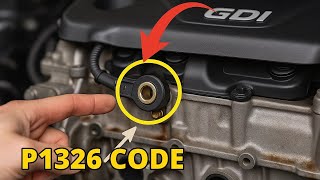
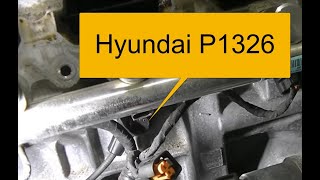
- Knock Sensor Location — On the engine block, under the intake manifold. On the 2.4L GDI engine, it is located near the #3 fuel injector.. Its location under the intake manifold makes replacement labor-intensive. Proximity to fuel injector wiring is a known cause of electromagnetic interference (EMI) that can falsely trigger P1326.
- ECM Connector Pins (for harness reroute) — On a related platform (Sonata), a technician de-pinned wires at ECM connector pins 62 (sensor ground) and 63 (sensor signal) to install a new, rerouted harness extension away from the injector wiring.. This identifies the specific pins at the main computer that carry the knock sensor signal, which is critical information for diagnosing a wiring fault or performing a harness reroute as prescribed by some TSBs.
- Component B69 — A wiring diagram for a Tucson 2.0 (G4GC engine) identifies the knock sensor with the designator 'B69'.. This provides the official component identifier used in factory wiring diagrams, aiding in precise diagnosis.
Real Owner Repair Stories
- YouTube channel 'S&E's Garage' (2017 Hyundai Sonata 2.4L (platform mate with same engine/issue)) — Flashing check engine light, vehicle in limp mode, P1326 stored.
❌ Tried (didn't work) Initial assumption was engine failure.
✅ What actually fixed it The technician performed the official dealer Bearing Clearance Test (BCT), and the engine PASSED. Because the mechanical test passed, the fault was isolated to the knock sensor circuit. The knock sensor was replaced, and the engine adaptive values were reset using a scan tool, which resolved the issue. - YouTube channel 'Dallas Auto Diag' (2016 Hyundai Sonata 2.4L (platform mate with same engine/issue)) — Active P1326 code, limp mode.
❌ Tried (didn't work) The owner was told they might need an engine.
✅ What actually fixed it The technician identified TSB 19-01-006H-3, which described a fix for false P1326 codes caused by electromagnetic interference from an injector wire. Instead of performing the full engine bearing test, the technician installed the Hyundai wiring harness extension kit (P/N 91400-C2100QQH) to reroute the knock sensor wire away from the injector. This fixed the problem without engine replacement.
OEM Part Supersession History
39250-2G000→39250-2G100— Standard part revision/improvement.
Model Year Variations Within This Range
- 2014-2015 (LM), 2018 (TL): Tucson models with the 2.4L engine are covered under Service Campaign T3G (TSB 19-01-006H-2), which details the wiring inspection and potential engine replacement procedure.
- 2016-2017 (TL): Tucson models with the 2.0L Nu GDI engine are specifically addressed in TSB 24-EM-002H for cases where P1326 continues to appear after the initial KSDS update (Campaign 966).
Helpful Videos

Used OEM Parts in Stock

New Aftermarket Parts Available


The information in this article is provided for general reference and educational purposes only. Vehicle specifications, procedures, and part compatibility can vary by production date, trim level, and region. Always consult your vehicle's factory service manual and verify part numbers before purchasing or performing repairs. Safety-critical components such as airbags, seat belts, and braking systems should be installed by a qualified professional.
- Hyundai TUCSON:
- 🎬 Helpful Videos
- 🛍️ Shop This Part
- What's Unique About the 2010-2017 Hyundai TUCSON
- Diagnostic Flowchart
- Symptoms You May Notice
- Most Likely Causes
- Rare But Worth Checking
- Diagnosis Steps
- Parts You'll Likely Need
- Technical Service Bulletins (TSBs) & Recalls
- Platform-Specific Known Issues
- Mechanic-Grade Diagnostic Values
- Hidden / Shadow Codes Worth Checking
- Scan Tool Commands That Help
- Wiring & Ground Locations
- Real Owner Repair Stories
- OEM Part Supersession History
- Model Year Variations Within This Range
- 🎟️ Get 5% Off