

P1326 on 2014-2016 Hyundai Elantra: Knock Sensor Warning, Limp Mode, and Engine Failure Risk
P1326 on a 2014-2016 Elantra indicates the Knock Sensor Detection System (KSDS) has detected vibrations consistent with serious engine bearing wear. This triggers a protective 'limp mode'. The only proper fix is a dealer inspection; it could be a faulty knock sensor (~$250-$450) but often requires an engine replacement, which may be covered by Hyundai's extended 'Lifetime Warranty' program for this specific issue.
- P1326 is a critical code indicating a high probability of engine-destroying bearing failure. Stop driving immediately and have the vehicle towed.
- Do not clear the code. It is essential evidence for the dealership to begin the warranty process.
- The fix must be performed by a Hyundai dealer, as it requires a proprietary bearing clearance test.
- Your vehicle may be covered by a lifetime engine warranty for this specific issue. The dealer will verify coverage using your VIN.
- The two outcomes are a full engine replacement (if bearings have failed) or a much cheaper knock sensor/wiring repair (if the engine is healthy).
What's Unique About the 2014-2016 Hyundai ELANTRA

This code is not a simple sensor fault; it's a direct consequence of widespread, documented issues with connecting rod bearing failures in certain Hyundai engine families, including the Nu engines in the Elantra. In response to these issues and subsequent class-action lawsuits, Hyundai implemented the KSDS via a software update (Service Campaign 966) to provide an early warning. Therefore, P1326 on this Elantra is treated with extreme seriousness by dealerships and is the primary trigger for warranty-covered engine inspections and potential replacements under programs like Warranty Extension TXXI.
Diagnostic Flowchart

Tap your situation to follow the diagnostic path that matches what you're seeing on this vehicle.
Symptoms You May Notice

- Flashing Check Engine Light
- Vehicle enters 'limp mode' with drastically reduced power and acceleration. 🎬 Watch: Understanding limp mode and the P1326 fix
- Engine RPM limited (typically to around 1800-2000 RPM).
- Vehicle speed limited (may struggle to exceed 40-60 mph).
- Abnormal engine noise (knocking, ticking, or rattling), though sometimes no abnormal noise is audible to the driver.
- Difficulty starting or engine stalling.
- Sputtering or rough idle.
- Replacing the knock sensor without first having a dealer perform the mandatory bearing clearance test. If the engine bearings are the true cause, a new sensor will not fix the problem and the code will return, potentially after the engine has already suffered catastrophic failure.
- Mistaking the code for a 'Glow Relay' issue. Some generic OBD-II scanners may provide this incorrect definition, which applies to diesel models, not the gasoline Elantra.
- An independent shop diagnosing it as a simple sensor issue. Many owners report being told by local garages to go to a dealer because they are aware the code is tied to a major warranty campaign.
Most Likely Causes

- Excessive Connecting Rod Bearing Wear 🔴 High Probability This is a well-documented manufacturing defect with this engine family, which prompted Hyundai to create the KSDS detection system and offer extended warranties as part of a class-action lawsuit settlement.
How to confirm: The vehicle must be taken to a Hyundai dealer. They will perform a bearing clearance test as outlined in TSB 22-01-023H-2. This test uses a special tool to measure play in the bearings and is not something independent shops can perform. The results are often sent directly to Hyundai for verification.
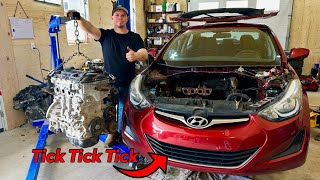
Typical fix: If the bearing clearance test fails, the engine assembly must be replaced. This repair is often covered under Hyundai's 'Lifetime Warranty' for this specific issue, provided the KSDS software update was performed. One owner on Reddit confirmed their 2014 Elantra GT engine was replaced under warranty after metal flakes were found in the oil.
Est. part cost: $3000-$8000+ - Faulty Knock Sensor or Wiring Harness 🟡 Medium Probability The knock sensor or its wiring can fail, sending an erroneous signal to the computer that mimics the vibration of a failing bearing. The wiring harness can also become damaged, corroded, or suffer from water intrusion.
How to confirm: This is diagnosed only *after* a dealer has performed the bearing clearance test and the engine has passed. If the engine is confirmed to be healthy, the technician will then test the knock sensor's resistance and check the wiring harness for continuity and damage, per TSB guidelines.
Typical fix: Replace the knock sensor and/or repair the damaged section of the wiring harness. 🎬 Watch: How to diagnose P1326 and replace the knock sensor In some cases, a specific wiring kit is used to resolve the issue.
Est. part cost: $100-$150 - Outdated Engine Control Module (ECM) Software ⚪ Low Probability The KSDS logic was deployed via a software update (Service Campaign 966). If a vehicle never received this update, or if a newer, revised version is available, an update may be required to improve detection accuracy and reduce false positives.
How to confirm: A Hyundai dealer can check the vehicle's VIN to see which software version is installed and if any campaigns (like 966 or T3G) are outstanding.
Typical fix: Update the ECM software to the latest version. This is often the first step a dealer takes and is required for warranty coverage.
Est. part cost: $0
Rare But Worth Checking
- Water Intrusion in Knock Sensor Connector:
Diagnosis Steps
- DO NOT CLEAR THE CODE. The active P1326 code is required for the dealer to initiate the warranty/TSB process.
- Safely pull over and shut off the engine as soon as possible. Do not continue driving.
- Have the vehicle towed to a Hyundai dealership.
- Inform the service advisor that the vehicle has code P1326 and is in limp mode.
- The dealer will verify the code and check the vehicle's VIN for eligibility under extended warranties or service campaigns (like Campaign 966, T3G, and Warranty Extension TXXI).
- Following Hyundai's procedure outlined in TSB 22-01-023H-2, the dealer will perform a bearing clearance test to determine the health of the engine's connecting rod bearings.
- If the test fails, the dealer will submit a Prior Authorization (PA) claim to Hyundai for engine replacement.
- If the test passes, the dealer will then proceed to diagnose the knock sensor, wiring, and software as the likely cause.
Parts You'll Likely Need
- Engine Assembly — This is the required fix if the dealer's bearing clearance test confirms internal engine damage, which is the primary cause this code detects.
Trusted brands: Hyundai OE
OEM price range: $4000-$8000+
Aftermarket price range: $3000-$5000 - Knock Sensor
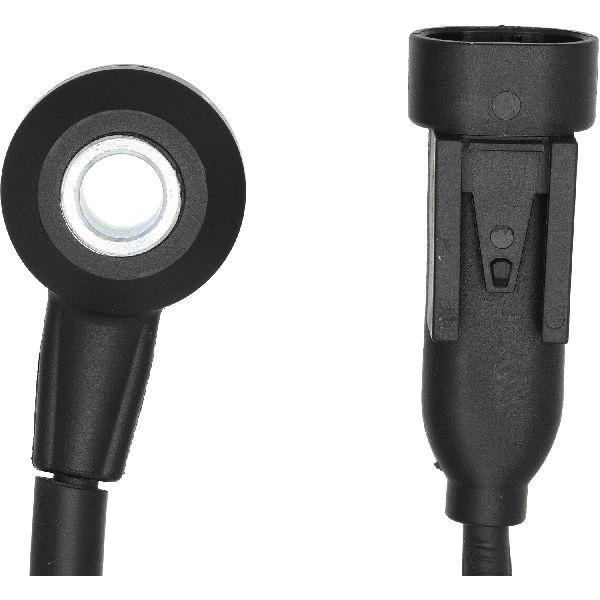
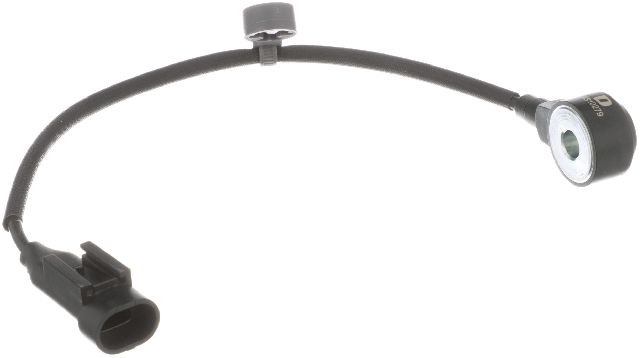
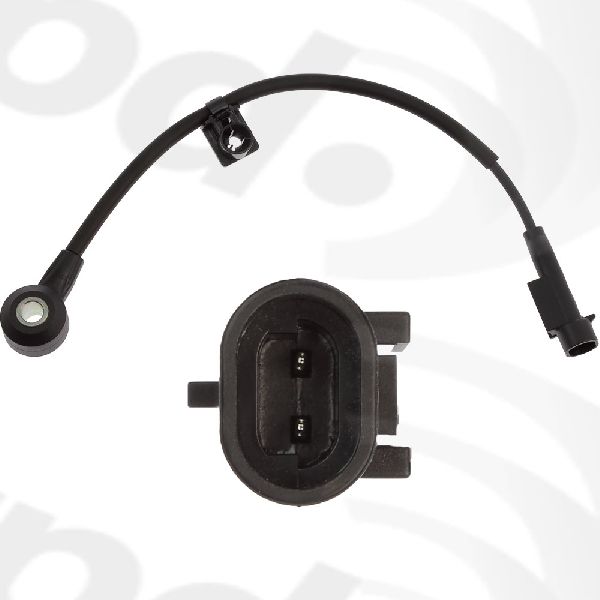
(OEM #39250-2E000)— If the engine passes the bearing clearance test, the sensor itself or its wiring is the next most likely culprit, having sent a false signal.
Trusted brands: Hyundai OE, Bosch, NGK/NTK
OEM price range: $50-$140
Aftermarket price range: $40-$90
Technical Service Bulletins (TSBs) & Recalls
- TSB #22-01-023H-2: Describes the dealer procedure for vehicles presenting with DTC P1326, including the full inspection flowchart, from checking oil level to performing the bearing clearance test and what to do if it passes or fails.
- TSB #22-01-024H-2: A reference guide for the above TSB, it lists the specific operation codes and part numbers dealers must use to submit warranty claims for inspection or engine replacement related to P1326.
- Service Campaign T6G (related to TSB 22-01-023H-1): An earlier campaign that outlines the inspection and replacement process for vehicles that have already had the initial KSDS update (Campaign 966) but still trigger P1326.
- Product Improvement Campaign PI1802W/X: Provides instructions for Kia dealers on how to proceed when a vehicle returns with P1326 after the KSDS update, including a 'Wiring Signal Interference Check' before engine replacement.
Platform-Specific Known Issues
- This code is directly related to a class-action lawsuit settlement concerning premature engine failures in various Hyundai and Kia vehicles. As a result, many affected vehicles, including the 2014-2016 Elantra, received a lifetime warranty for this specific failure, contingent on the completion of the KSDS software update (Campaign 966).
- Warranty terms may differ by country. Forum users have noted the US extension is for 15 years/150,000 miles, while in Canada it was reported as 10 years/200,000 km.
Mechanic-Grade Diagnostic Values
- Knock Sensor Wiring Harness Resistance — expected: ~0.1 ohms. Failure: A significant deviation from 0.1 ohms suggests a fault in the wiring harness between the sensor and the ECU.
Hidden / Shadow Codes Worth Checking
- P132600: This is the standard P1326 code with a two-digit Failure Type Code (FTC) of '00', which means 'No Sub Type Information'. It is not a hidden code but the format that may be displayed on more advanced scan tools. (see via Hyundai GDS or other professional scan tools.)
Scan Tool Commands That Help
- Hyundai GDS (Global Diagnostic System): Resetting Adaptive Values — This function is found under 'Vehicle S/W Management' and is used to reset the engine control module's learned values. This may be required after a repair, such as replacing a component or updating software, to ensure the ECU relearns parameters with the new parts or logic.
Wiring & Ground Locations
- Knock Sensor ECU Pin — Pin 70 on the Engine Control Unit (E1) connector. The wire is typically Brown.. This is the specific pin where the knock sensor signal wire terminates at the ECU. It is the end-point for continuity and voltage checks when diagnosing a faulty sensor circuit.
- GE01, GE03 — Left front corner of the vehicle, near the engine bay.. These are primary grounding points for various engine electrical systems. A poor or corroded ground at these locations can introduce electrical noise or voltage drops, potentially affecting sensor readings and causing false codes.
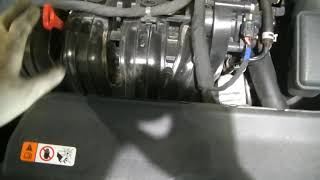
- Knock Sensor Connector — On the engine block, often under the intake manifold. The harness-side connector is at the front of the intake manifold.. This connector is a known weak point, particularly for water intrusion after car washes or heavy rain, which can short the circuit and trigger a false P1326 code.
Real Owner Repair Stories
- Reddit user on r/Hyundai (2014 Hyundai Elantra GT) — Flashing check engine light, P1326 code, vehicle forced into limp mode (limited to 2000 RPM and ~70km/h).
❌ Tried (didn't work) Dealer initially blamed an aftermarket oil filter, claiming it caused oil pressure dips that triggered the sensor. This was incorrect.
✅ What actually fixed it A second, dangerous limp mode event occurred on the highway. The car was towed back to the dealer. The final diagnosis found excessive clearance between the crankshaft and connecting rod bearing, with metal flakes in the oil. The engine was replaced under warranty. - Reddit user on r/ElantraN (Hyundai Elantra N (demonstrates a common issue across models with this system)) — Flashing check engine light, P1326 code, and limp mode immediately after exiting a car wash.
❌ Tried (didn't work) Towing to the dealer was the first response for one user.
✅ What actually fixed it The owner purchased an OBD-II reader, waited for the car to dry, and cleared the code. The car then ran normally. The root cause was identified as water getting into the knock sensor connector. The permanent fix is a new harness-side connector, as outlined in a TSB.
"I Checked Everything" — The Actual Cause
- The equivalent for this code is 'Bearing Clearance Test Passed, But Code Persists'. In these cases, the root cause is almost always in the knock sensor's electrical circuit. A common scenario is that water intrusion from a car wash or heavy rain shorts the connector, triggering a false P1326. Once the connector dries out, the code may be clearable and not return until the next water exposure. The permanent fix is often a new, better-sealed harness connector per TSB 24-EM-010H.
OEM Part Supersession History
39250-2E000 (Knock Sensor)→N/A (Part number is current)— While the sensor part number itself has not been superseded, Hyundai has issued separate 'knock sensor kits' or wiring harnesses to address circuit-related issues.
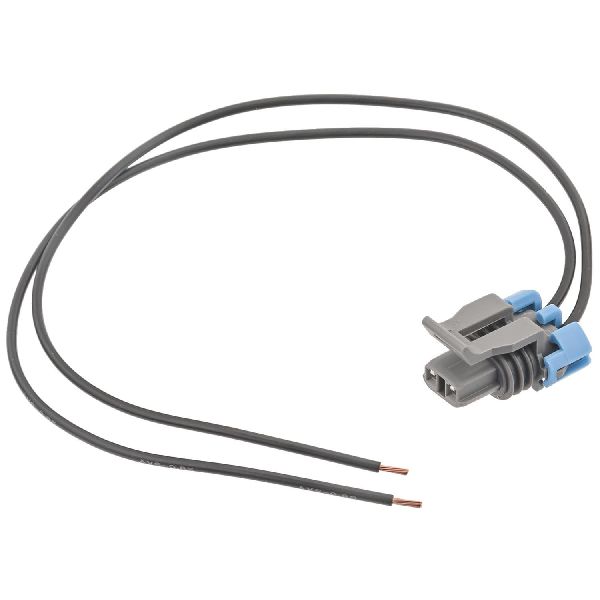
Heads up: For certain repairs where the engine passes the bearing test but the code persists, TSBs may call for a specific wiring harness kit (like 91400-C2000QQH for some models) instead of just replacing the sensor. Using only a new sensor may not resolve issues related to connector integrity or water intrusion.
Model Year Variations Within This Range
- 2014-2016: The KSDS software update performed under Service Campaign 966 uses a specific software package for each vehicle. For the 2014-2016 Elantra (MD) with the Nu 2.0L GDI engine, the correct GDS update is Event #715, titled 'MD Nu 2.0 GDI - IMPROVED KSDS LOGIC APPLICATION (BASE)'. Using the wrong event would fail.
Helpful Videos
We Have This Part in Stock


The information in this article is provided for general reference and educational purposes only. Vehicle specifications, procedures, and part compatibility can vary by production date, trim level, and region. Always consult your vehicle's factory service manual and verify part numbers before purchasing or performing repairs. Safety-critical components such as airbags, seat belts, and braking systems should be installed by a qualified professional.
- Hyundai ELANTRA:
- 🎬 Helpful Videos
- 🛍️ Shop This Part
- What's Unique About the 2014-2016 Hyundai ELANTRA
- Diagnostic Flowchart
- Symptoms You May Notice
- Most Likely Causes
- Rare But Worth Checking
- Diagnosis Steps
- Parts You'll Likely Need
- Technical Service Bulletins (TSBs) & Recalls
- Platform-Specific Known Issues
- Mechanic-Grade Diagnostic Values
- Hidden / Shadow Codes Worth Checking
- Scan Tool Commands That Help
- Wiring & Ground Locations
- Real Owner Repair Stories
- "I Checked Everything" — The Actual Cause
- OEM Part Supersession History
- Model Year Variations Within This Range
- 🎟️ Get 5% Off