

OBD-II Code P1317: Comprehensive Diagnosis & Repair Guide
The Ultimate Guide to P1317: What It Means, Why It Triggers, and How to Fix It for Good
- P1317 is a manufacturer-specific code that means an ABS fault on Land Rovers, an ignition failure on Acura/Porsche, or an injector circuit issue on Ford 7.3L diesels.
- On Land Rovers, a faulty ABS wheel speed sensor causes over 80% of P1317 codes, requiring a multimeter resistance test to confirm it falls outside the normal 1,000-1,100 Ohm range.
- On Acura, Honda, and Porsche vehicles, P1317 indicates a severe engine misfire that destroys a $1,500 catalytic converter within 2 to 4 weeks if left unaddressed.
- Never diagnose P1317 with a basic $20 code reader; you must use an advanced scanner capable of reading manufacturer-specific ABS or Injector Driver Module (IDM) codes to pinpoint the exact failing component.
What Does P1317 Mean?
P1317 is a manufacturer-specific OBD-II code with drastically different definitions based on your vehicle's make. For Land Rover, the Engine Control Module (ECM) lost the 'rough road' signal from the Anti-lock Brake System (ABS) module, preventing the ECM from misinterpreting bumpy roads as engine misfires. For Acura, Honda, Chevrolet, and Porsche, P1317 points to an ignition system fault, such as a bad coil pack or spark plug. For Ford 7.3L diesels, it flags an Injector Driver Module (IDM) error.
Technical definition: The SAE/OBD-II definition for P1317 varies by manufacturer. Land Rover: 'ABS Rough Road Line Low Fault'. Acura/Honda: 'Spark Plug Detection Module Circuit Fault (Bank 1)'. Ford/Jaguar: 'Injector Circuit / IDM Codes Not Updated'. Chevrolet: 'Ignition Coil G Primary/Secondary Circuit'. Porsche: 'Misfire, Emission Related'.
Can I Drive With P1317?
Yes, But With Caution. You can drive with this code, but it is not recommended for long. On Land Rovers, your Anti-lock Braking System (ABS) is disabled, increasing stopping distances and skidding risks. On Porsche or Acura, the code signifies an engine misfire. A flashing Check Engine Light indicates a severe misfire that quickly destroys catalytic converters, a repair costing $800-$2,500. Ignoring the code guarantees failed emissions tests and expensive collateral damage.
Common Causes
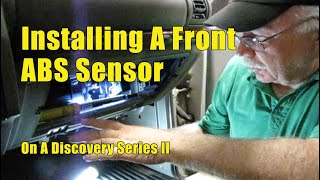
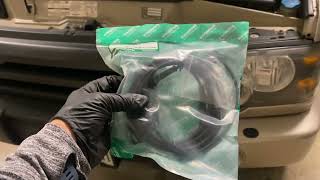
- Faulty or Dirty ABS Wheel Speed Sensor (Land Rover) (Very Common) — This is the most frequent cause on Land Rovers. The ABS sensors at each wheel hub become contaminated with brake dust or fail internally, preventing them from sending a clean speed signal to the ABS module. 🎬 Watch: How to install a new front wheel speed sensor.
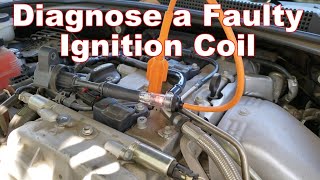
- Faulty Ignition Coil or Spark Plug (Acura, Honda, Porsche) (Very Common) — On makes like Acura, Honda, Hyundai, and Chevrolet, this code points directly to the ignition system. A failing ignition coil, a worn-out spark plug, or a bad coil boot causes the misfires that trigger this code.
- Faulty Injector Driver Module (IDM) or UVCH Wiring (Ford 7.3L) (Common) — On Ford 7.3L Power Stroke diesels, P1317 indicates a problem with the Injector Driver Module (IDM) or the Under Valve Cover Harness (UVCH) that connects the IDM to the injectors.
- Damaged or Corroded ABS Wiring/Connectors (Common) — Wheel speed sensor wiring harnesses endure harsh conditions, leading to frayed wires, corrosion in the connectors, or breaks in the circuit that interrupt the ABS signal.
- Damaged or Debris-Covered ABS Reluctor Ring (Common) — Each wheel hub has a toothed reluctor ring read by the ABS sensor. If this ring is cracked, missing teeth, or obscured by heavy rust, the sensor cannot generate a proper signal.
- Blown ABS Fuse or Improperly Disabled ABS (Less Common) — A blown fuse disables the ABS module. On Land Rovers, owners sometimes pull the ABS pump fuse to silence a noisy pump but leave the module fuse in, powering the module without sensor data and directly causing a P1317 code.
- Failing ABS Control Module (Rare) — The ABS computer itself occasionally fails. This expensive fault occurs when the module stops processing sensor data or fails to communicate with the ECM.
Symptoms
- Check Engine Light is On — The P1317 code is stored in the Engine Control Module (ECM), illuminating the primary warning light on your dashboard.
- ABS Warning Light is On (Land Rover) — For Land Rover and other ABS-related P1317 faults, the ABS warning light illuminates because the root cause lies within the anti-lock brake system.
- ABS System is Disabled — When the ABS light illuminates, the anti-lock braking function deactivates. Standard hydraulic brakes still work, but wheels lock up during hard stops, reducing steering control.
- Engine Misfire, Rough Idle, or Lack of Power — For vehicles where P1317 indicates an ignition fault (Acura, Porsche, Chevy), you experience noticeable performance issues like a shaking idle, hesitation during acceleration, and reduced power.
- Flashing Check Engine Light — On Porsche and Acura, a severe, catalyst-damaging misfire associated with P1317 causes the Check Engine Light to flash. Stop driving immediately to prevent expensive damage.
- Failed Emissions Test — An active Check Engine Light from P1317 causes an automatic failure of state emissions or smog inspections.
Diagnostic Flowchart
Tap your situation to follow the diagnostic path that matches what you're seeing on this code.
Common Fixes & Costs
- Replace ABS Wheel Speed Sensor(s) — Parts: $40-$450, Labor: $150-$225, ~1.5 hr book time (DIY)
- Replace Ignition Coil(s) and/or Spark Plugs — Parts: $50-$250, Labor: $75-$150, ~1.2 hr book time (DIY)
- Replace Under Valve Cover Harness (UVCH) (Ford 7.3L) — Parts: $85-$150, Labor: $200-$400, ~3 hr book time (Intermediate)
- Repair or Replace Damaged Wiring — Parts: $10-$100, Labor: $100-$400, ~2.5 hr book time (Intermediate)
- Clean or Replace ABS Reluctor Ring — Parts: $15-$150, Labor: $150-$300, ~2 hr book time (Intermediate)
- Replace the ABS Control Module — Parts: $600-$900, Labor: $100-$150, ~1.5 hr book time (Professional)
Used vs. New Parts: Buying Guide
When a used part is worth it: Used parts are not recommended for ABS sensors or ignition coils due to high failure rates. A used part is only viable for a high-cost ABS module from a reputable seller with a warranty, provided the VIN can be reprogrammed.
Donor-vehicle mileage cap: roughly under 50000 miles for the part to have meaningful remaining life.
Donor quality checklist:
- Avoid ignition coils with cracks, discoloration, or swollen boots.
- Ensure ABS sensor wiring is intact with no cuts or brittle insulation.
- Match part numbers exactly; 'will fit' does not guarantee correct electronic function.
Decision logic:
- If Part is an ABS sensor or ignition coil → Buy new. Quality aftermarket parts from known brands offer the best balance of cost and reliability.
- If Vehicle is older (>15 years) and budget is the primary concern → A new, budget aftermarket part is preferable to a used one due to the warranty protection.
- If Part is a complex electronic module (ABS Control Module) → A professionally rebuilt unit with a warranty is the best compromise. A used module requires professional programming.
Warranty tradeoff: Used parts have a 30-90 day warranty. New aftermarket parts carry a 1-year to limited lifetime warranty. OEM parts have a 1-2 year warranty at a premium price.
Worst-case if a used part fails: 200-500. If a used sensor fails, you pay repeat diagnostic fees, the cost of a better part, and repeat labor charges.
What Happens If You Wait — Timeline
- 0-2 weeks: Code sets, Check Engine Light and/or ABS light on. On Land Rovers, ABS is disabled. On misfire vehicles, a slight rough idle is noticeable when cold. (MPG impact: 0-3%% · Added cost: $0)
- 2 weeks - 3 months: On misfire vehicles, unburnt fuel intermittently enters the exhaust, increasing catalytic converter temperatures. Fuel economy drops. On Land Rovers, the safety risk of no ABS remains. (MPG impact: 3-8%% · Added cost: $50-150 in wasted fuel)
- 3-6 months: On misfire vehicles, sustained exposure to raw fuel damages the catalytic converter. The Check Engine Light flashes during heavy acceleration, and a P0420/P0430 code triggers. (MPG impact: 8-15%% · Added cost: $800-2000 (Catalytic converter replacement is required).)
- 6+ months: Catastrophic failure of the catalytic converter occurs. The internal substrate melts, blocking the exhaust and causing severe power loss. On Land Rovers, continued driving with false misfire detection fouls O2 sensors. (MPG impact: 15-25%% · Added cost: $1500-3500 (OEM catalytic converter and O2 sensor replacement).)
Cost of Not Fixing It
- Immediate: On Land Rovers, the ABS is disabled, increasing stopping distances. On misfire-related vehicles, fuel economy drops 5-15%. (Added cost: 0)
- 1-6 months: On misfire-related vehicles, a persistent misfire causes raw fuel to enter the exhaust, destroying the catalytic converter. (Added cost: 1200-3500)
- 6+ months: Continued driving with disabled ABS leads to loss of control in an emergency stop. False misfire detection fouls spark plugs and O2 sensors. (Added cost: 200-600)
Diagnosis Steps
- Read All Fault Codes from All Modules
Use an advanced OBD-II scanner capable of communicating with the Engine Control Module (ECM), ABS module, and IDM. A basic reader only shows P1317. An advanced tool reveals specific ABS codes (e.g., 'Front Right Wheel Speed Sensor Circuit Fault') that pinpoint the exact location.
Tools: Advanced OBD-II Scanner (Beginner) - Check for Technical Service Bulletins (TSBs)
Search online for TSBs related to P1317 for your specific vehicle year, make, and model. Manufacturers release bulletins with known issues and updated repair procedures that prevent misdiagnosis.
Tools: Smartphone or Computer (Beginner) - Inspect All ABS-Related Fuses
Consult your owner's manual to find and check all fuses related to the ABS. On Land Rovers, pulling the ABS pump fuse but leaving the ABS module fuse is a direct cause of this code.
Tools: Owner's Manual, Fuse Puller or Pliers (Beginner) - Visually Inspect Wheel Hub Assemblies
Safely raise the vehicle and inspect the wheel speed sensor for physical damage. Check its wiring for cuts, chafing, or corrosion. Examine the toothed reluctor ring for heavy rust buildup, debris, or broken teeth.
Tools: Flashlight, Jack and Jack Stands (Intermediate) - Test Wheel Speed Sensor Resistance (Pro Tip)
For passive ABS sensors (Land Rover Discovery I), unplug the sensor and use a multimeter set to Ohms (Ω). A good sensor reads between 1,000 and 1,100 Ohms. A reading of infinity (OL) indicates an open circuit, while near zero indicates a short. Both mean the sensor failed.
Tools: Multimeter, Jack and Jack Stands (Intermediate) - Inspect Ignition System (for Non-ABS Faults)
For Acura, Honda, or Porsche, focus on the ignition system. Inspect spark plugs for wear or fouling. Check ignition coil boots for cracks or carbon tracking. Ensure electrical connectors to the coils are clean and secure.
Tools: Socket Set, Spark Plug Socket (Intermediate) - Test IDM Circuits (Ford 7.3L Power Stroke)
With the key off, disconnect the IDM harness. Use a multimeter to test resistance between the power feed and ground circuit pins for each injector. A healthy circuit reads between 2.8 and 3.6 Ohms. An open circuit indicates a wiring fault in the Under Valve Cover Harness (UVCH).
Tools: Multimeter, IDM Connector Pinout Diagram (Advanced) - Test Passive Wheel Speed Sensor AC Voltage Output
With the sensor connected, back-probe the two wires with a multimeter set to AC Volts. Spin the wheel by hand at one revolution per second. A healthy passive sensor generates between 0.2V and 1.0V. No voltage points to a failed sensor or reluctor ring issue.
Tools: Multimeter with back-probe pins, Jack and Jack Stands (Advanced) - Analyze Fuel Trim Data for Misfire Diagnosis (Porsche, Acura)
Use a scan tool to monitor Short-Term Fuel Trim (STFT) and Long-Term Fuel Trim (LTFT). Normal total fuel trim is within +/- 10%. Values above +10% indicate a lean condition (vacuum leak), while values below -10% suggest a rich condition (leaking injector).
Tools: Advanced OBD-II Scanner (Advanced) - Test Fuel Pressure (Porsche)
Connect a fuel pressure gauge to the service port on the fuel rail. With the key on, engine off, pressure should be 55 PSI +/- 3 PSI. At idle, it should be 48 PSI +/- 3 PSI. Low pressure indicates a failing fuel pump causing lean misfires.
Tools: Fuel Pressure Gauge Kit (Advanced) - Test Wheel Speed Sensor Signal with an Oscilloscope
Connect an oscilloscope to the sensor's signal and ground wires. As you spin the wheel, you should see a clean, consistent AC sine wave. A noisy or missing waveform confirms a fault in the sensor or reluctor ring.
Tools: Oscilloscope, Jack and Jack Stands (Advanced) - Inspect the ABS Module and Connectors
Locate the ABS control module. Disconnect its main electrical harness and inspect the pins for corrosion, moisture, or damage. A poor connection at the module causes a communication fault and triggers P1317.
Tools: Socket Set, Flashlight (Advanced)
When This Code Triggers (Freeze-Frame Conditions)
- Engine Coolant Temp: 175-210°F (80-99°C) (The fault logs when the engine is fully warmed up and operating in closed-loop fuel control.)
- Engine RPM: 1200-3000 RPM (ABS-related faults set at steady cruise. Misfire-related faults trigger under light to moderate acceleration.)
- Engine Load: 20-70% (The code sets during part-load driving conditions where the system actively monitors for misfires or rough road conditions.)
- Vehicle Speed: 25-65 mph (40-105 kph) (The fault sets while the vehicle is in motion, as wheel speed sensor data is a key component of the diagnostic.)
Related Codes
- P1318 — The direct companion code to P1317 on Land Rovers. P1317 means the signal line is low (open/grounded), while P1318 means the signal line is high (shorted to power).
- P1313 / P1314 — On Land Rovers, these are 'Misfire Catalyst Damage' codes. The engine computer misinterprets road vibrations as severe misfires because it lacks the rough road signal. Diagnose P1317 first.
- P0420 / P0430 — These indicate 'Catalyst System Efficiency Below Threshold.' P1317 causes false misfire detection, making the engine run rich and eventually destroying the catalytic converters.
- P0300-P0308 — Generic misfire codes. On vehicles where P1317 is an ignition fault (Acura/Porsche), these codes appear alongside it to specify which cylinder is misfiring.
Climate & Environmental Factors
- Road Salt / Humidity: Saltwater wicks into wiring connectors for wheel speed sensors, causing corrosion that disrupts the signal and triggers P1317 on Land Rovers.
- High Altitude: Lower air density makes it easier for a high-voltage spark to arc inside a weak ignition wire rather than jumping the spark plug gap, exposing borderline ignition weaknesses on Porsches.
- Extreme Cold: Cold temperatures make plastic and rubber brittle. Wiring insulation cracks, and old plastic connectors on ignition coils break when disturbed.
How to Talk to a Mechanic About This Code
Say this: "I have a P1317 code on my [Your Vehicle Make]. For my Land Rover, please diagnose the ABS system for a wheel speed sensor fault. For my Acura, please check the ignition system misfire detection module. For my Ford Power Stroke, please pull the codes stored in the IDM."
This signals to the mechanic that you understand the specific nature of the code for your vehicle, preventing them from wasting time on common misdiagnoses.
Avoid saying:
- 'Just fix whatever's wrong'
- 'My check engine light is on, can you look at it?'
- 'My car is acting funny, I think it's the spark plugs.'
Questions to ask before authorizing the repair:
- Can you explain what tests you performed to arrive at this diagnosis?
- For a Land Rover: Which wheel sensor failed, and did it fail a resistance test or a voltage test?
- For a Ford 7.3L: What were the specific codes stored in the Injector Driver Module?
- Can you provide a detailed breakdown of the parts and labor costs?
- What is the warranty on the recommended parts and the labor?
Where to Take It: Dealer vs Independent vs Chain
- Dealer:
Best for: Vehicles still under warranty, Complex electronic issues requiring proprietary software (e.g., ABS module programming), When a trusted independent specialist is unavailable
Downsides: Highest labor rates, Favors replacing entire modules over repairing simpler wiring faults (Typical cost: +50% vs. baseline) - Independent Shop:
Best fit for most P1317 scenarios. You must confirm they have a scanner that reads manufacturer-specific modules (ABS, IDM) before committing to a diagnosis.
Best for: Out-of-warranty vehicles, Common P1317 causes like wheel speed sensors or ignition coils, Shops specializing in your vehicle's brand
Downsides: Quality varies; must vet shops based on reviews, May lack dealer-level tools for programming new modules (Typical cost: +0% vs. baseline) - Chain Shop:
AVOID for diagnosing P1317. The make-specific nature of this code makes it highly probable that a chain shop will misdiagnose the root cause.
Best for: Simple, unrelated maintenance like oil changes or tires.
Downsides: High risk of misdiagnosis due to the code's complexity, Technicians default to generic 'tune-up' solutions, High pressure to upsell unnecessary services (Typical cost: -10% vs. baseline)
When to Walk Away From the Repair
If the total estimated repair cost exceeds 40-50% of your car's private-party value, consider selling or trading it in instead of repairing it.
- Car worth $4500, fix is $450: Fix it. A common repair like a wheel speed sensor on an older Land Rover is well below the threshold.
- Car worth $4500, fix is $1800: Borderline. If the diagnosis is a failed ABS module, the cost approaches 40% of the car's value. Get a second opinion.
- Car worth $2500, fix is $1500: Walk away. The repair cost is over 50% of the vehicle's value. It is not economically sensible to proceed.
What Scan Tool You Need for This Code
Minimum: A scanner that reads manufacturer-specific codes from modules beyond the engine, such as the ABS, SRS, and Transmission control modules.
A basic $20 code reader only shows the 'P1317' code from the engine module. It CANNOT read the specific ABS fault on a Land Rover or the injector codes from the IDM on a Ford 7.3L.
Budget: BlueDriver Pro or Autel AP200 (~$60-100) — These Bluetooth dongles connect to your smartphone and read enhanced codes (ABS, SRS) for most major brands, which is the minimum needed to locate the right system.
Mid-range: iCarsoft LR V3.0 (for JLR) or Foxwell NT510/NT530 (~$180-250) — These handheld tools offer deep, dealer-level diagnostics for a specific brand. They reliably read and clear codes from all modules and view live data.
Professional: Autel MaxiCOM MK808BT or Launch X431 Series (~$450-900) — Provides full bidirectional control, allowing advanced functions like ABS pump actuation for bleeding brakes, injector coding, and module programming.
Rent vs buy: For P1317, renting is risky as most auto parts store loaner tools are basic readers. Buying a capable scanner is a wise investment that pays for itself by avoiding misdiagnosis.
How to Clear the Code After You Fix It
- Fix the underlying mechanical or electrical fault.
- Use an OBD-II scan tool to clear the Diagnostic Trouble Codes (DTCs) from both the ECM and ABS modules.
- Perform a complete OBD-II drive cycle to allow readiness monitors to run.
Drive cycle (~30 minutes): A drive cycle involves a cold start, 2-3 minutes of idling, mixed city driving, and 5-10 minutes of steady highway speed (55-60 mph).
Readiness monitors affected: Misfire Monitor, Catalyst Monitor, Oxygen (O2) Sensor Monitor, Evaporative System (EVAP) Monitor
Before emissions retest: drive at least 50 miles to fully set monitors.
Watch out for:
- Clearing the code without fixing the root cause results in the code returning immediately.
- Disconnecting the battery erases all readiness monitors, guaranteeing an emissions test failure.
- Forgetting to clear codes from the ABS module in addition to the engine module on Land Rovers.
Will This Fail Emissions / State Inspection?
Yes — this code typically fails an OBD-II emissions inspection.
- California: An active Check Engine Light is an automatic failure. A full drive cycle must be completed to set all readiness monitors before re-testing.
- New York: Vehicles model year 1996 and newer are subject to OBD-II inspection. An illuminated Check Engine Light results in an automatic failure.
- Texas: In the 17 Texas counties requiring emissions testing, an active P1317 code causes the vehicle to fail the OBD-II portion of the inspection.
Most Commonly Affected Vehicles
- Land Rover Discovery I (1996-1999) — Extremely common on models with the GEMS engine and Wabco ABS. P1317 is a classic symptom of a failed wheel speed sensor.
- Land Rover Discovery II (1999-2004) — Faults are commonly traced to wheel speed sensors or the ABS module itself.
- Land Rover Range Rover (P38) (1995-2001) — Shares a similar ABS and engine management philosophy with the Discovery I, making it susceptible to rough road signal faults.
- Acura / Honda RL, TL, Odyssey (1999-2004) — P1317 indicates a fault with the Spark Plug Detection Module or its circuit, an ignition system issue.
- Ford / Mercury Various models with 7.3L Power Stroke Diesel (1999-2003) — P1317 indicates the Injector Driver Module (IDM) has stored fault codes. A scanner capable of reading IDM codes is required.
- Jaguar Various (1997-2003) — Jaguar uses P1317 to indicate 'Injector Circuit / IDM Codes Not Updated', pointing to a fault in the injector control system.
- Porsche Boxster (986) (1997-2004) — P1317 indicates an 'emission relevant' misfire across multiple cylinders, pointing to bad coil packs or vacuum leaks.
- Chevrolet Optra (2004-2013) — P1317 points to a fault in the primary or secondary circuit of a specific ignition coil.
- Hyundai Various (2001-2010) — P1317 typically indicates an abnormal signal from ignition coil #3.
- BMW Various (2001-2008) — P1317 is defined as 'B Camshaft Position Actuator Plausibility', a fault related to the VANOS system.
- Volkswagen / Audi Various (2000-2010) — VAG vehicles log a distinct code, 01317, pointing to a communication problem with the Instrument Cluster (J285).
Manufacturer-Specific Notes
- Land Rover: The 'rough road signal' prevents false misfire detection during off-road driving. Pulling the 30A ABS pump fuse but leaving the 5A ABS module fuse powers the module, which reports a communication fault to the ECM.
- Acura: P1317 points to a fault in the Spark Plug Detection Module circuit for Bank 1. Replacing coil packs may not fix the issue; the problem often lies in the wiring harness to the module.
- Ford (7.3L Power Stroke): P1317 is an informational code meaning 'IDM Codes Detected.' You must use an advanced scanner to pull the actual fault code directly from the Injector Driver Module.
- Porsche: On 986 Boxsters, P1317 appears with a bank of other misfire codes. This rarely means all coil packs failed at once; the root cause is a system-wide issue like a major vacuum leak.
Real Owner Stories
1999 Land Rover Discovery I at 96K miles
Check Engine Light and ABS light came on. Failed state emissions test due to P1317 code, which the generic test station described as 'Manufacturer Controlled Ignition System or Misfire'.
What they tried:
- Owner was confused because the generic definition pointed to misfires, but forums defined it as 'ABS Rough Road Line Low Fault'.
- Used a Land Rover-specific scanner to properly diagnose the ABS system, as a generic OBD-II reader was useless.
Outcome: The issue traced to a faulty front-right wheel speed sensor. Replacing the sensor resolved the ABS fault, cleared the P1317 code, and allowed the vehicle to pass emissions.
Lesson: On a Land Rover, P1317 is a brake system problem, not an engine problem. Diagnose the ABS system first with a capable scanner before replacing ignition parts.
2003 Acura RL at 145K miles
Persistent P1316 and P1317 codes ('Spark Plug Detection Module Circuit Fault') even though the car ran smoothly.
What they tried:
- Replaced spark plugs and swapped all ignition coil packs.
- Replaced the Ignition Control Module (ICM).
- Cleaned connectors for the Misfire Detection Module (MDM).
Outcome: The codes returned despite replacing all logical ignition components. This indicated a complex wiring harness issue to the detection module, requiring professional electrical diagnosis.
Lesson: On Acuras/Hondas, if new plugs and coils fail to fix P1317, the problem lies in the control circuit or the Misfire Detection Module itself.
2001 Ford F-250 (7.3L Power Stroke) with 200K+ miles
P1317 code appeared, but the truck ran fine. Owner knew this code was an 'informational' flag from the Injector Driver Module (IDM).
What they tried:
- Used FORScan to read codes directly from the IDM.
- The IDM reported 'Injector Circuit High to Low Side Open' on multiple cylinders.
Outcome: The owner diagnosed a failing Under Valve Cover Harness (UVCH). The plastic harness became brittle with age, causing intermittent injector connections. Replacing both UVCHs resolved the IDM codes and P1317.
Lesson: For a 7.3L Power Stroke, P1317 means 'look deeper'. The UVCH is a highly common failure item and the most likely culprit when multiple injector circuit codes are present.
How to Prevent This Code From Triggering
- Apply dielectric grease to ABS sensor connectors (During any brake service or tire rotation) — Prevents moisture and road salt from causing corrosion inside the electrical connectors for the wheel speed sensors, a primary cause of signal failure.
- Clean ABS sensor mounting surfaces and reluctor rings (Whenever brake rotors are replaced) — Rust buildup on the hub pushes the sensor away from the reluctor ring, increasing the air gap and weakening the signal. Cleaning ensures the new sensor sits at the correct depth.
- Replace spark plugs at the recommended interval (Per manufacturer schedule (typically 60k-100k miles)) — For misfire-related P1317s, worn spark plugs force the ignition coil to produce higher voltage. This extra strain causes coils to overheat and fail prematurely.
- Address engine oil leaks promptly (As soon as they are noticed) — Leaking valve cover gaskets allow oil to seep into spark plug tubes, fouling the plug and damaging the ignition coil boot, causing misfires.
- Perform regular brake fluid flushes (Every 2-3 years, or as per owner's manual) — Old, water-contaminated brake fluid causes internal corrosion in the ABS module and pump, leading to expensive electronic failures.
Frequently Asked Questions
Can I just clear the P1317 code and keep driving?
You can clear the code, but it will return on the next drive cycle. Clearing the code does not fix the underlying electrical or mechanical problem causing the fault.
Why is my Check Engine Light on for a brake problem?
On a Land Rover, the engine computer relies on the ABS computer to know when the vehicle is on a rough road. When this communication fails, the engine computer logs P1317 because it cannot trust its misfire detection system. This triggers the Check Engine Light.
I replaced the wheel speed sensor, but the P1317 code came back. What now?
If a new sensor doesn't fix the code, the fault is elsewhere in the circuit. Inspect the wiring harness for breaks, check the reluctor ring for damage, and ensure the ABS module connector is clean.
What is the most common misdiagnosis for P1317?
On Land Rovers, the biggest mistake is replacing expensive ignition parts to fix misfire codes without diagnosing the P1317 ABS fault first. On Acuras, replacing only the coils without checking the Spark Plug Detection Module is a common error.
Will fixing the P1317 code also turn off my ABS light?
Yes. Because P1317 on a Land Rover is triggered by an ABS system fault, repairing the root cause resolves the ABS fault. This allows you to clear both the ABS light and the Check Engine Light.
My basic scanner only shows P1317. How do I know which wheel sensor is bad?
A basic OBD-II scanner cannot read manufacturer-specific ABS codes. You must use an advanced scanner that communicates with the ABS system to identify the specific faulting wheel. Otherwise, you must manually test the resistance of each sensor.
I just did a brake job and now I have a P1317 code. What happened?
During a brake job, it is easy to accidentally damage the ABS sensor, stretch its wire, or forget to plug it back in. You may have also knocked the sensor out of position or got debris on the reluctor ring.
Key Takeaways
- P1317 is a manufacturer-specific code that means an ABS fault on Land Rovers, an ignition failure on Acura/Porsche, or an injector circuit issue on Ford 7.3L diesels.
- On Land Rovers, a faulty ABS wheel speed sensor causes over 80% of P1317 codes, requiring a multimeter resistance test to confirm it falls outside the normal 1,000-1,100 Ohm range.
- On Acura, Honda, and Porsche vehicles, P1317 indicates a severe engine misfire that destroys a $1,500 catalytic converter within 2 to 4 weeks if left unaddressed.
- Never diagnose P1317 with a basic $20 code reader; you must use an advanced scanner capable of reading manufacturer-specific ABS or Injector Driver Module (IDM) codes to pinpoint the exact failing component.
Helpful Videos

The information in this article is provided for general reference and educational purposes only. Vehicle specifications, procedures, and part compatibility can vary by production date, trim level, and region. Always consult your vehicle's factory service manual and verify part numbers before purchasing or performing repairs. Safety-critical components such as airbags, seat belts, and braking systems should be installed by a qualified professional.
- 🎬 Helpful Videos
- What Does P1317 Mean?
- Can I Drive With P1317?
- Common Causes
- Symptoms
- Diagnostic Flowchart
- Common Fixes & Costs
- Used vs. New Parts: Buying Guide
- What Happens If You Wait — Timeline
- Cost of Not Fixing It
- Diagnosis Steps
- When This Code Triggers (Freeze-Frame Conditions)
- Related Codes
- Climate & Environmental Factors
- How to Talk to a Mechanic About This Code
- Where to Take It: Dealer vs Independent vs Chain
- When to Walk Away From the Repair
- What Scan Tool You Need for This Code
- How to Clear the Code After You Fix It
- Will This Fail Emissions / State Inspection?
- Most Commonly Affected Vehicles
- Manufacturer-Specific Notes
- Real Owner Stories
- 1999 Land Rover Discovery I at 96K miles
- 2003 Acura RL at 145K miles
- 2001 Ford F-250 (7.3L Power Stroke) with 200K+ miles
- How to Prevent This Code From Triggering
- Frequently Asked Questions
- Can I just clear the P1317 code and keep driving?
- Why is my Check Engine Light on for a brake problem?
- I replaced the wheel speed sensor, but the P1317 code came back. What now?
- What is the most common misdiagnosis for P1317?
- Will fixing the P1317 code also turn off my ABS light?
- My basic scanner only shows P1317. How do I know which wheel sensor is bad?
- I just did a brake job and now I have a P1317 code. What happened?
- Key Takeaways
- 🎟️ Get 5% Off