

P1315 on 2012-2015 Land Rover Range Rover Evoque: Persistent Misfire Causes and Fixes
P1315 on a 2012-2015 Evoque indicates a persistent, potentially catalyst-damaging misfire. A primary cause, documented in Land Rover TSBs, is a faulty high-pressure fuel pump. Other common causes include worn spark plugs, failing ignition coils, and on GDI engines like this, carbon buildup on intake valves.
- P1315 means your Evoque has a serious, ongoing misfire that needs prompt attention to avoid damaging the catalytic converter.
- While spark plugs and ignition coils are common culprits, a faulty high-pressure fuel pump is a very common cause for this specific code on this vehicle, as confirmed by a Land Rover TSB.
- Always check for specific cylinder misfire codes (P0301-P0304) to help isolate the problem.
- Do not replace oxygen sensors if P1315 is present; the misfire is almost certainly the true cause of any O2 sensor codes.
What's Unique About the 2012-2015 Land Rover RANGE ROVER EVOQUE

The 2012-2015 Range Rover Evoque uses a 2.0L turbocharged direct-injection petrol engine, which is a version of the Ford 2.0L EcoBoost. This engine's high-pressure fuel system is a known weak point across multiple vehicle brands that use it. Land Rover has issued a Technical Service Bulletin (LTB00730NAS1) specifically linking rough running, misfires, and code P1315 to an internal fault with the metering valve in the high-pressure fuel pump (HPFP). This makes the fuel pump a more likely primary culprit on this platform compared to other vehicles where misfires are almost always ignition-related.
Diagnostic Flowchart

Tap your situation to follow the diagnostic path that matches what you're seeing on this vehicle.
Symptoms You May Notice
- Check Engine Light (Malfunction Indicator Lamp) is on or flashing
- Engine shaking, vibrating, or running rough, especially at idle.
- Hard starting or long crank times.
- Reduced engine performance, hesitation, or entering 'limp mode'.
- Increased fuel consumption
- Engine stalling unexpectedly.
- A rattling or knocking sound from the top of the engine, where the HPFP is located.
- Replacing Oxygen Sensors: A persistent misfire can alter exhaust gas composition, sometimes triggering O2 sensor codes like P0142. As noted in Special Service Message SSM 75635, the root cause is the misfire (P1315), not the sensor itself. Replacing the O2 sensor will not fix the problem.
Most Likely Causes


- Faulty High-Pressure Fuel Pump (HPFP) 🔴 High Probability As identified in Land Rover TSB #LTB00730NAS1, the metering valve within the high-pressure fuel pump is a known failure point on this engine, leading directly to misfires and the P1315 code. This is a well-documented issue on the 2.0L EcoBoost engine family.
How to confirm: A technician will test fuel pressure on the high-pressure rail using a capable scan tool, comparing requested vs. actual pressure. A significant drop in actual pressure under load points to a failing HPFP. TSB #LTB00730NAS1 also notes that a faulty pump may not produce the normal metallic 'chatter' during operation.
Typical fix: Replacement of the high-pressure fuel pump and sometimes the associated fuel line, as recommended by the service manual. It is also highly recommended to replace the cam follower (tappet) at the same time.
Est. part cost: $250-$550 - Worn or Faulty Spark Plugs 🟡 Medium Probability Turbocharged, direct-injection engines are harder on spark plugs. An incorrect spark plug gap or worn electrodes can cause misfires under boost.
How to confirm: Remove and inspect the spark plugs. Look for signs of wear (worn electrodes), carbon fouling, or oil contamination. If other codes like P0301-P0304 are present, start with the plug from the indicated cylinder. The recommended gap is often smaller for tuned engines, around 0.026 inches.
Typical fix: Replace all four spark plugs as a set. It is critical to use OEM-spec plugs, such as NGK Iridium plugs.
Est. part cost: $60-$120 - Failing Ignition Coil(s) 🟡 Medium Probability
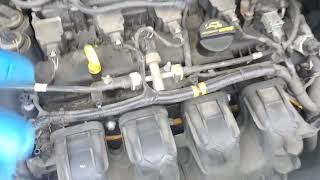
How to confirm: If a specific cylinder misfire code (e.g., P0302) is present, swap the ignition coil from that cylinder with one from another cylinder (e.g., cylinder 1). Clear the codes and drive the vehicle. If the code changes to P0301, the coil is bad. 🎬 See how to diagnose misfires and replace coils and plugs. A user on landroverforums.com fixed a P0303/P1315 issue by replacing the coil on cylinder 3.
Typical fix: Replace the faulty ignition coil. Many owners choose to replace all coils at once as a preventative measure, especially on higher-mileage vehicles.
Est. part cost: $50-$100 per coil - PCM Software Calibration Error ⚪ Low Probability TSB #LTB00799NAS2 notes that on 2014-2015 models, an OBD calibration error can cause P1315 and other codes to be stored without any actual hardware fault.
How to confirm: This must be confirmed by a Land Rover dealer or a qualified shop with access to Land Rover's diagnostic software (SDD). They will check the current software version against available updates as per the TSB.
Typical fix: Update the Powertrain Control Module (PCM) software to the latest version.
Est. part cost: $0 (if covered under a service action), otherwise 1-2 hours of labor cost for programming ($150-$350).
Rare But Worth Checking
- Carbon Buildup on Intake Valves: Direct injection (GDI) engines spray fuel directly into the cylinder, so fuel detergents don't clean the back of the intake valves. Oil vapor from the PCV system can bake onto the valves, restricting airflow and causing rough idle and misfires, especially on cold starts. The fix is typically a manual cleaning process like walnut blasting.
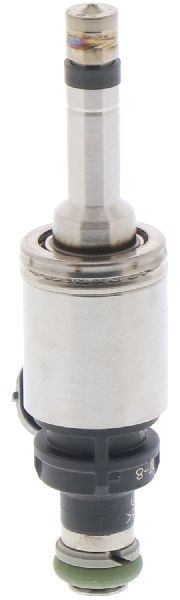
- Clogged or Faulty Fuel Injectors: While less common than the HPFP, a fuel injector can become clogged or fail electronically. TSB #SSM71894 was issued to investigate injector failures causing misfires on these engines.
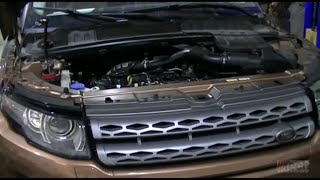
- Low Engine Compression: Internal engine issues like a burnt valve, damaged piston, or timing chain problems can cause a persistent misfire. TSB #LTB01101NAS4 specifically mentions that P1315 can be caused by internal engine damage leading to a loss of compression. 🎬 Watch this diagnostic walkthrough for an Evoque misfire and overheat. This is a last resort after fuel and ignition systems are confirmed to be working correctly.
Diagnosis Steps
- Read all stored DTCs with an OBD-II scanner. Note any codes accompanying P1315, especially P030x and P0087.
- If a P0087 code is present, focus diagnosis on the high-pressure fuel system. Use a scan tool to monitor requested vs. actual fuel rail pressure. A significant lag or inability to meet pressure targets strongly suggests a failing HPFP, as detailed in TSB #LTB00730NAS1.
- If only misfire codes (P030x) are present, start with the ignition system. Inspect the spark plugs for wear, damage, or fouling. The recommended service interval can be as low as 30,000-40,000 miles on turbocharged engines.
- If a specific cylinder misfire code is present, swap the ignition coil from the misfiring cylinder to a known good cylinder. Clear codes and see if the misfire code follows the coil.
- If ignition components are good and fuel pressure seems stable, consider the possibility of clogged fuel injectors or carbon buildup on the intake valves, a common issue for GDI engines.
- For 2014-2015 models, if no hardware fault is found, consult a dealer to check for a PCM software update as per TSB #LTB00799NAS2.
- As a final step, if all else fails, perform a compression test to rule out internal engine damage, as mentioned in TSB #LTB01101NAS4.
Parts You'll Likely Need
- High Pressure Fuel Pump
(OEM #LR025599)— This is a known failure item on the 2.0L engine and is directly cited in a manufacturer TSB as a cause for misfires and code P1315.
Trusted brands: Bosch (OEM supplier), Genuine Land Rover
OEM price range: $400-$550
Aftermarket price range: $250-$400 - Ignition Coil
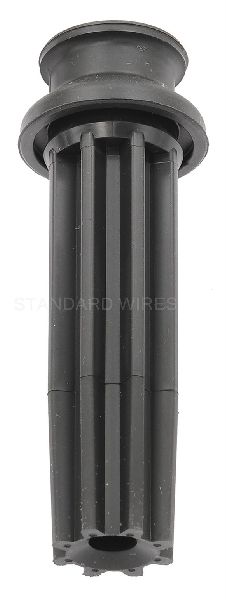
(OEM #LR078726 (Note: This part number is for a door lock, not an ignition coil. Correct numbers are often shared with Ford parts like 9L8Z-12029-A, but verification is needed))— Ignition coils are a common failure point on most modern engines and a primary cause of misfires. A user on a Land Rover forum reported fixing P1315 by replacing a single coil.
Trusted brands: Bosch, Delphi, NGK
OEM price range: $80-$120
Aftermarket price range: $50-$80 - Spark Plugs
(OEM #LR025605 (NGK ILTR6G8G))— As a routine maintenance item, worn spark plugs are a frequent and simple cause for misfires. Turbocharged engines require regular changes for optimal performance.
Trusted brands: NGK (OEM), Bosch, Denso
OEM price range: $80-$120 (set of 4)
Aftermarket price range: $60-$90 (set of 4)
Related Codes That Often Appear With This One
- P0300 — Indicates a random misfire across multiple cylinders, which aligns with a systemic issue like fuel delivery from a failing HPFP or a vacuum leak.
- P0301, P0302, P0303, P0304 — These codes pinpoint the specific cylinder(s) that are misfiring, helping to narrow down the diagnosis to a specific coil, plug, or injector. P1315 is often set alongside these codes to indicate the severity.
- P0087 — Means 'Fuel Rail/System Pressure - Too Low'. This code is a strong indicator that the high-pressure fuel pump is failing and cannot meet the pressure demanded by the PCM, a common issue on this engine.
Technical Service Bulletins (TSBs) & Recalls
- LTB00730NAS1: Links rough running, hard starting, and misfire codes (including P1315) to an internal fault with the metering valve in the high-pressure fuel pump.
- LTB01101NAS4: Notes that the engine MIL may be illuminated with DTC P1315 stored alongside cylinder-specific misfire codes (P0300-P0304), and that the cause can be internal engine damage leading to compression loss.
- LTB00799NAS2: States that for 2014-2015 models, P1315 can be stored due to a PCM calibration error, which can be fixed with a software update.
- SSM71894: An internal message for technicians indicating JLR was investigating the root cause of fuel injector failures leading to various misfire codes, including P1315.
- SSM 75635: Warns technicians not to replace O2 sensors for code P0142 if P1315 is also present, as the misfire is the root cause.
Platform-Specific Known Issues
- High-Pressure Fuel Pump Failure: As detailed in TSB #LTB00730NAS1, the 2.0L petrol engine in the Evoque is susceptible to an internal fault in the high-pressure fuel pump, causing rough running, hard starts, and misfire codes including P1315.
Mechanic-Grade Diagnostic Values
- Ignition Coil Resistance (Generic) — expected: Primary Winding: 0.49 - 0.57 Ohms; Secondary Winding: 9.5 - 11.1 kOhms. Failure: Readings outside of these ranges indicate a faulty coil.
- Manifold Absolute Pressure (MAP) Sensor Voltage — expected: 0.25 VDC to 4.75 VDC. Failure: Voltage that is stuck high, low, or does not change with engine vacuum may indicate a faulty sensor, which can affect fuel and timing calculations, contributing to misfires.
- High-Pressure Fuel Pump Flow Rate (Delphi Aftermarket) — expected: 31.0 (Units not specified, likely L/hr). Failure: This is a manufacturer's specification for a new part; a significantly lower flow rate during a bench test would indicate failure.
Hidden / Shadow Codes Worth Checking
- P1315-00: This is the most common format for this DTC found on dealer-level scanners. The '-00' suffix indicates 'No sub type information' is available for the persistent misfire fault. It confirms the general nature of the code without pointing to a specific component. (see via Land Rover SDD (Symptom Driven Diagnostics) or a professional scan tool with manufacturer-specific capabilities.)
Scan Tool Commands That Help
- Land Rover SDD (Symptom Driven Diagnostics): Configure existing module - Powertrain Control Module — This specific function is required to resolve the OBD calibration error that causes false P1315 codes on 2014-2015 models, as detailed in TSB LTB00799NAS2. It should be performed after confirming no physical hardware faults exist.
- Land Rover SDD (Symptom Driven Diagnostics): Datalogger / Live Data — To diagnose a failing high-pressure fuel pump by monitoring 'Fuel Rail Pressure - Requested' vs. 'Fuel Rail Pressure - Actual' under various engine loads. A significant deviation where actual pressure cannot keep up with requested pressure points to a fuel delivery issue.
Wiring & Ground Locations
- G1d130a — Located at the left front of the engine compartment.. This is a primary ground point for the Engine Control Module (ECM). A poor connection here can cause erratic ECM behavior, leading to miscalculations for fuel and spark, potentially triggering misfire codes like P1315.
- G1d132a — Located at the right front of the engine compartment.. This is another key ground point in the engine bay. Verifying all engine and ECM grounds are clean and tight is a crucial step in diagnosing electronic faults.
- G1d108 — Located near the battery.. This ground serves the battery junction box and is a main grounding point for the vehicle's electrical system, including the ECM.
OEM Part Supersession History
LR030860→LR025599— This is the supersession for the High-Pressure Fuel Pump (HPFP). The newer part number likely contains design or material improvements to address the known failure modes.LR078726 (Incorrect)→LR084889 (Correct OEM)— The part number LR078726, noted in a previous pass, is incorrect for an ignition coil. The correct OEM part number for the 2.0L GTDi engine in this vehicle is LR084889. Aftermarket interchanges include UF678 and C1816.
Heads up: Using the incorrect part number will result in sourcing the wrong component (a door lock instead of an ignition coil).
Model Year Variations Within This Range
- 2014-2015: Models within VIN range 856580-065800 may store P1315 and other codes due to an On-Board Diagnostics (OBD) calibration error, with no actual hardware fault present. The fix is a PCM software update using the SDD tool, as per TSB #LTB00799NAS2.
Helpful Videos


Used OEM Parts in Stock


New Aftermarket Parts Available


The information in this article is provided for general reference and educational purposes only. Vehicle specifications, procedures, and part compatibility can vary by production date, trim level, and region. Always consult your vehicle's factory service manual and verify part numbers before purchasing or performing repairs. Safety-critical components such as airbags, seat belts, and braking systems should be installed by a qualified professional.
- Land Rover RANGE ROVER EVOQUE:
- 🎬 Helpful Videos
- 🛍️ Shop This Part
- What's Unique About the 2012-2015 Land Rover RANGE ROVER EVOQUE
- Diagnostic Flowchart
- Symptoms You May Notice
- Most Likely Causes
- Rare But Worth Checking
- Diagnosis Steps
- Parts You'll Likely Need
- Related Codes That Often Appear With This One
- Technical Service Bulletins (TSBs) & Recalls
- Platform-Specific Known Issues
- Mechanic-Grade Diagnostic Values
- Hidden / Shadow Codes Worth Checking
- Scan Tool Commands That Help
- Wiring & Ground Locations
- OEM Part Supersession History
- Model Year Variations Within This Range
- 🎟️ Get 5% Off