

P1297 on 2014-2015 Ram 1500 EcoDiesel: EGR Slow Response Causes and Fixes
On the 3.0L EcoDiesel, P1297 almost always means the EGR system is clogged with soot. The most common fix is removing and cleaning the EGR diffuser tube and MAP sensor. This is a relatively easy DIY job (2/5 difficulty) that often resolves the code without replacing parts.
- P1297 on your EcoDiesel means your EGR system is clogged with soot.
- The easiest and most likely fix is to clean the MAP sensor and the EGR diffuser tube.
- Always replace gaskets when removing EGR components to prevent leaks.
- This is a very common issue on the 3.0L EcoDiesel engine due to the way EGR soot and CCV oil vapor mix in the intake.
- If cleaning the simple parts doesn't work, the EGR cooler assembly likely needs to be replaced.
What's Unique About the 2014-2015 Ram 1500

The 3.0L V6 EcoDiesel engine, made by VM Motori, has a specific design characteristic that makes it prone to this issue. The engine's Crankcase Ventilation (CCV) system releases oil mist into the air intake. This oil mist combines with the hot, soot-filled exhaust gas from the EGR system, creating a thick, tar-like sludge. This sludge builds up over time, clogging narrow passages in the EGR diffuser tube, MAP sensor, EGR cooler, and intake manifold, directly causing the flow restriction that triggers code P1297. This issue is so common that cleaning the EGR system is considered routine maintenance by many owners.
Diagnostic Flowchart
Tap your situation to follow the diagnostic path that matches what you're seeing on this vehicle.
Symptoms You May Notice
- Check Engine Light is on
- "Service Electronic Throttle Control" message on the dashboard
- Engine goes into limp mode (reduced power), with very slow acceleration
- Rough or unstable idle
- Hesitation or chugging during acceleration, especially when cold
- In some cases, no noticeable symptoms other than the Check Engine Light
- Replacing the MAP sensor without cleaning the EGR tube. A clogged MAP sensor is almost always a symptom of a clogged EGR system on this engine. The new sensor will just get clogged again if the root cause isn't addressed.
- Clearing the code without cleaning the components. Some owners report temporarily fixing the limp mode by clearing the code with a handheld scanner, but the code and symptoms will quickly return if the underlying blockage is not addressed.
Most Likely Causes

- Clogged EGR Diffuser Tube 🔴 High Probability This tube has a relatively small diameter and is a primary collection point for soot and oil sludge, creating a bottleneck.
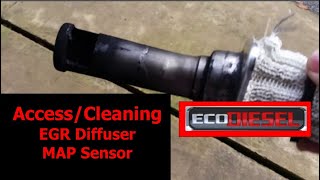
How to confirm: Remove the tube (held by two 10mm and two 8mm bolts) and visually inspect for heavy carbon buildup. 🎬 Watch: How to locate and clean the EGR diffuser tube. Often, the opening will be reduced to a tiny hole.
Typical fix: Remove the tube and thoroughly clean it with a wire brush and a solvent like diesel fuel or brake cleaner. Soaking in diesel fuel can help soften the deposits. Ensure it is completely dry before reinstalling.
Est. part cost: $0 if cleaned, $50-$100 for a new tube. - Clogged Manifold Absolute Pressure (MAP) Sensor 🔴 High Probability The MAP sensor is directly in the path of the sludgy air/exhaust mixture and its sensing port gets easily caked with soot, preventing it from reading pressure correctly.
How to confirm: Remove the sensor (held by a single T40 Torx bolt located on the intake manifold, near the firewall) and inspect the tip. It will likely be covered in a thick layer of black soot.
Typical fix: Carefully clean the sensor tip with electronics cleaner or MAF sensor cleaner. Do not scrape the sensing element. A user on EcoDieselRam.com showed a before-and-after of a heavily caked sensor brought back to life with cleaning. Replace if cleaning is ineffective or the sensor is damaged.
Est. part cost: $0 if cleaned, $40-$80 for a new sensor. - Clogged EGR Cooler 🟡 Medium Probability Soot can build up inside the small passages of the cooler, insulating them and preventing them from cooling the exhaust gas effectively. This can lead to hotter intake temperatures and eventual failure. Microscopic cracks can also form, leading to coolant leaks, which was the subject of a major recall.
How to confirm: This is harder to confirm without removal. If the EGR tube is heavily clogged, it's likely the cooler is as well. A borescope can be used to inspect the cooler's internals through the EGR tube port.
Typical fix: The cooler assembly is removed from the vehicle. It can be professionally cleaned or replaced. Some aftermarket coolers (like from Bullet Proof Diesel) have improved designs to reduce soot buildup and resist cracking.
Est. part cost: $400-$800 for a new EGR cooler assembly. - Sticking or Failed EGR Valve 🟡 Medium Probability The same soot and sludge that clogs the passages can cause the mechanical EGR valve to stick, preventing it from opening or closing properly.
How to confirm: When removed, the valve's movement will feel gritty or it may be stuck in one position. A scan tool with bidirectional controls (like wiTECH) can command the valve to open and close to test its function.
Typical fix: The EGR valve is typically part of the cooler assembly and is replaced as a unit.
Est. part cost: $400-$800 as part of the cooler assembly.
Rare But Worth Checking
- Heavily Clogged Intake Manifold:
Diagnosis Steps

- Confirm the P1297 code is present using an OBD-II scanner.
- Turn off the engine and allow it to cool.
- Start with the easiest component: Locate and remove the MAP sensor (held by one T40 Torx bolt on the intake manifold). Visually inspect for soot buildup and clean it carefully with electronics cleaner. 🎬 See this quick walkthrough on cleaning the MAP sensor.
- Next, locate and remove the EGR diffuser tube, which connects the EGR cooler to the intake manifold (held by two 10mm and two 8mm bolts).
- Visually inspect the inside of the EGR tube for heavy restrictions. If clogged, clean it thoroughly with solvents and a wire brush.
- While the tube is off, inspect the ports on the EGR cooler and intake manifold for visible soot buildup. Use a mirror or borescope if necessary.
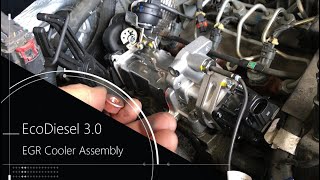
- If cleaning the MAP sensor and EGR tube does not resolve the issue, the problem likely lies in a more heavily clogged EGR cooler or a failing EGR valve, which are typically replaced as an assembly. 🎬 Watch: Step-by-step guide to replacing the EGR cooler assembly.
- After cleaning or replacing parts, clear the trouble codes with the scanner and perform a drive cycle to see if the code returns. Disconnecting the battery for 30 minutes may also clear the code.
Parts You'll Likely Need
- EGR Gaskets — Should always be replaced anytime EGR components are removed to prevent exhaust and coolant leaks.
Trusted brands: Mopar, Fel-Pro
OEM price range: $20-$40
Aftermarket price range: $10-$25 - EGR Cooler and Valve Assembly
(OEM #68445601AA, 68211312AA, 68239570AC)— This is the complete fix if the cooler is internally clogged or the valve has failed. It is the most common major part replaced for this issue. Part numbers have been superseded multiple times.
Trusted brands: Mopar, Dorman OE FIX, Bullet Proof Diesel
OEM price range: $600-$800
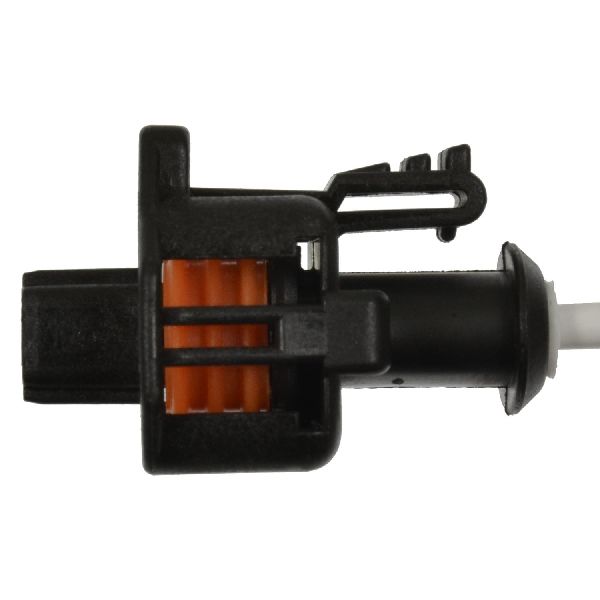
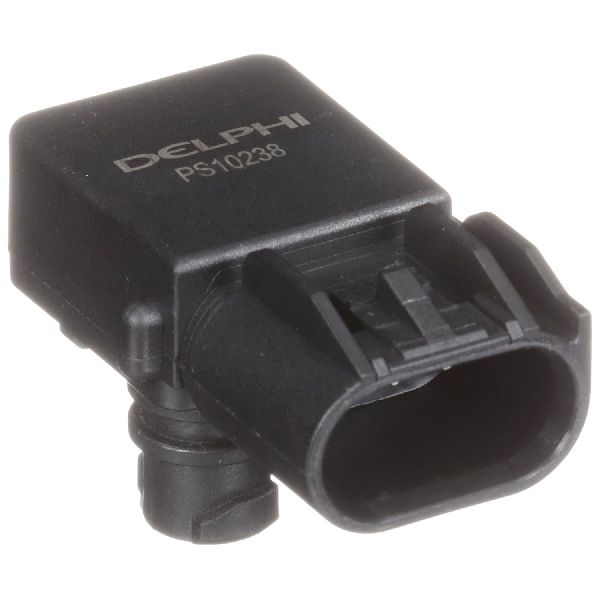
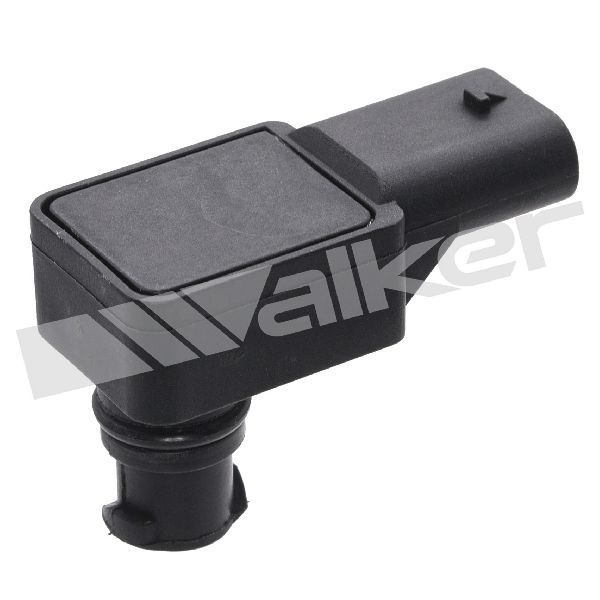
Aftermarket price range: $400-$600 - Manifold Absolute Pressure (MAP) Sensor
(OEM #68218615AA (Mopar), 0281006244 (Bosch))— Often gets irreversibly clogged with soot. It's a common replacement part, though cleaning should be attempted first.
Trusted brands: Mopar, Bosch
OEM price range: $60-$90
Aftermarket price range: $30-$50
Related Codes That Often Appear With This One
- P0420 — Catalyst Efficiency (Bank 1) - This code is listed alongside P1297 in manufacturer TSBs, indicating that issues in the EGR system can affect the overall performance of the emissions system downstream.
- P2196 — O2 Sensor 1/1 Stuck Rich - Also listed in TSBs with P1297. Incorrect EGR flow can alter the air/fuel mixture, leading to erroneous readings from the oxygen sensors.
Technical Service Bulletins (TSBs) & Recalls

- 18-019-15 REV C: Mentions P1297-00 - EGR Slow Response - Decreasing Flow for 2015 models as part of a software update.
- 18-021-15 REV F: Mentions P1297-00 - EGR Slow Response - Decreasing Flow for 2014 models as part of a software update.
- 18-017-16: For 2014 models, this TSB addresses an intermittent engine shudder and lists P1296-00 (EGR Slow Response - Increasing Flow), the opposite but related code to P1297.
- 18-012-16 / 18-095-15: For the Jeep Grand Cherokee with the same engine, these TSBs also list P1297-00 as a code addressed by a PCM software update.
Platform-Specific Known Issues
- There was a manufacturer recall (NHTSA Campaign 19V758000, FCA recall V08/W08) on 2014-2019 EcoDiesel EGR coolers due to a risk of internal coolant leaks from microscopic cracks, which could lead to a manifold fire. While P1297 is a flow code, not a leak code, it points to the same problematic and failure-prone component.
- Due to the CCV system design, cleaning only the EGR components is sometimes a temporary fix. For a long-term solution, some owners install an oil catch can to reduce the amount of oil entering the intake, while others perform a more intensive cleaning of the entire intake manifold using walnut blasting or solvents.
Mechanic-Grade Diagnostic Values
- MAP Sensor Supply Voltage — expected: 5 Volts. Failure: A reading of 0 volts would indicate an open circuit and may set a P1296 code ('No 5 Volts to MAP sensor').
Scan Tool Commands That Help
- wiTECH (Dealer Tool) or advanced aftermarket (e.g., AlfaOBD): EGR Valve Actuator Test — To command the EGR valve to open and close while monitoring engine RPM or MAP sensor data. A lack of change in engine idle or pressure indicates a stuck valve or a completely clogged passage.
- wiTECH (Dealer Tool) or advanced aftermarket (e.g., AlfaOBD): EGR System Routine / Reset — After cleaning or replacing EGR components, this function may be required to clear adaptations and force the PCM to relearn the new flow characteristics of the clean system.
Wiring & Ground Locations
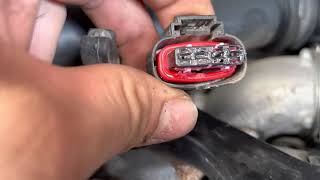
- E-15 EGR Valve Connector — Located at the left rear of the engine, behind the intake air flow valve.. This 8-pin connector provides power and control signals to the EGR valve and sends position data back to the PCM. A poor connection or damaged wire here can cause the valve to become unresponsive, mimicking a mechanical failure. Pin 1 is the 5V reference, Pin 5 is the low reference (ground), and Pins 6, 7, and 8 are the solenoid controls.
Real Owner Repair Stories
- EcoDieselRam.com user 'mharvan' (Ram 1500 EcoDiesel with 50,000 miles) — Check Engine Light with code P1297. The truck never ran poorly or seemed 'off'.
❌ Tried (didn't work) Checking the wiring harness for a recently installed tuner., Waiting for the code to clear on its own (it did, but returned).
✅ What actually fixed it The user removed the MAP sensor, found it was 'caked with soot,' cleaned it with electronic parts cleaner, and reinstalled it. This resolved the Check Engine Light. - EcoDieselRam.com user 'ac/250' (Ram 1500 EcoDiesel with 80,000 miles) — A weird rough idle or misfire feeling when the engine was warming up (between 130°F and 175°F), which disappeared when at full operating temperature. No check engine light was present at the time of cleaning.
✅ What actually fixed it The user pulled and cleaned the heavily sooted EGR tube and MAP sensor. After cleaning and a battery disconnect, the truck had more 'snap' in around-town driving and the idle issue was rectified.
When the Usual Fixes Don't Work
- While cleaning the MAP sensor and EGR tube is the most common fix, it is not always a permanent solution and may not work for everyone. One owner on an EcoDiesel forum reported that after cleaning the MAP and EGR tube, their truck began to misfire, suggesting a new problem was introduced or an underlying issue was unmasked. In such cases, the problem may be more severe, such as a heavily caked intake manifold or a failed EGR valve that was not resolved by cleaning the adjacent components.
OEM Part Supersession History
68211312AA→68239570AA, 68239570AB, 68239570AC, 68445601AA— Part has been updated multiple times by the manufacturer, likely to improve durability and address failures related to internal clogging and cracking.
Heads up: While the parts are generally interchangeable, it is critical to use the latest available revision to benefit from design improvements. Aftermarket options from Dorman and Bullet Proof Diesel also exist, claiming superior internal designs to reduce soot buildup and resist failure.
Model Year Variations Within This Range
- Early 2014 models: Early versions of the OEM EGR cooler reportedly had delicate O-rings on the coolant ports that were easily crushed or damaged during installation, leading to coolant leaks. Later versions incorporated a revised gland design to better protect these O-rings.
Helpful Videos
We Have This Part in Stock


The information in this article is provided for general reference and educational purposes only. Vehicle specifications, procedures, and part compatibility can vary by production date, trim level, and region. Always consult your vehicle's factory service manual and verify part numbers before purchasing or performing repairs. Safety-critical components such as airbags, seat belts, and braking systems should be installed by a qualified professional.
- Ram 1500:
- 🎬 Helpful Videos
- 🛍️ Shop This Part
- What's Unique About the 2014-2015 Ram 1500
- Diagnostic Flowchart
- Symptoms You May Notice
- Most Likely Causes
- Rare But Worth Checking
- Diagnosis Steps
- Parts You'll Likely Need
- Related Codes That Often Appear With This One
- Technical Service Bulletins (TSBs) & Recalls
- Platform-Specific Known Issues
- Mechanic-Grade Diagnostic Values
- Scan Tool Commands That Help
- Wiring & Ground Locations
- Real Owner Repair Stories
- When the Usual Fixes Don't Work
- OEM Part Supersession History
- Model Year Variations Within This Range
- 🎟️ Get 5% Off