

P1296 on 2014-2016 Ram 1500 EcoDiesel: EGR Slow Response Causes and Fixes
On a 2014-2016 Ram 1500 EcoDiesel, P1296 is typically caused by either outdated powertrain software or heavy soot buildup in the EGR system. Always check for a software update first, as multiple Technical Service Bulletins (TSBs) address this code. If software is current, the EGR valve or cooler likely needs cleaning or replacement due to thick, tar-like sludge created from soot and oil vapor. This issue is also common on the 2014-2016 Jeep Grand Cherokee with the same engine.
- P1296 on a Ram EcoDiesel means the EGR flow is too slow to respond, which is different from its meaning on other vehicles.
- **Always check for a PCM software update first.** Multiple TSBs were released for this exact issue, and a reflash may be the only fix needed.
- If software is current, the cause is almost certainly heavy soot buildup clogging the EGR valve and/or EGR cooler.
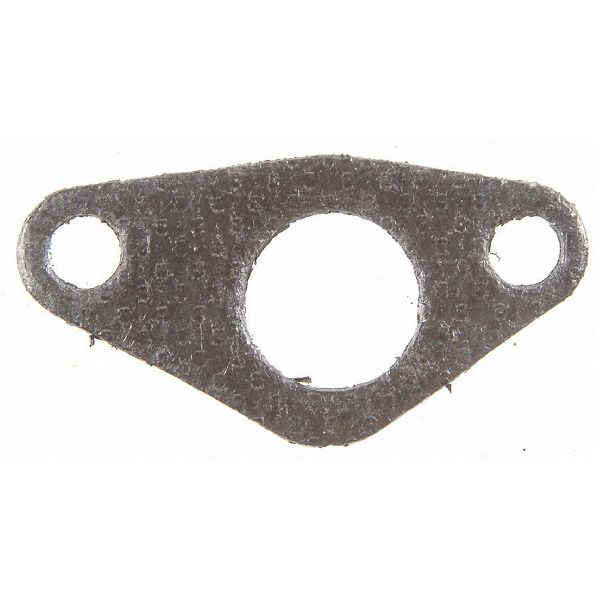
- Cleaning the EGR components is an option, but replacing the EGR valve and gaskets is a more reliable long-term solution.
- This code is often seen with other emissions codes like P249C and P20C2, which are also addressed by the same software updates.
What's Unique About the 2014-2016 Ram 1500
It is critical to know that P1296 is a manufacturer-specific code. On older gasoline Ram trucks, it can mean "No 5 Volts to MAP Sensor," and on a Volkswagen, it relates to the cooling system. On the 3.0L EcoDiesel, this code is almost exclusively tied to the engine's well-documented tendency to produce heavy soot, which mixes with oil vapor from the crankcase ventilation system to form a thick sludge that clogs the EGR valve and cooler. The issue was so common that Ram released multiple software updates (TSBs) to adjust the system's sensitivity, control logic, and even enable more effective EGR cleaning routines. This exact problem also affects the 2014-2016 Jeep Grand Cherokee, which uses the same VM Motori 3.0L EcoDiesel engine.
Diagnostic Flowchart
Tap your situation to follow the diagnostic path that matches what you're seeing on this vehicle.
Symptoms You May Notice
- Check Engine Light (Malfunction Indicator Lamp) is on
- Reduced engine performance or sluggish acceleration, sometimes described as 'throttle lag' or a 'dead pedal'.
- Decreased fuel economy.
- Rough or unstable idle
- Engine shudder or bucking under hard acceleration.
- Excessive downshifting on the highway, especially while towing.
- Replacing the EGR valve without first checking for required software updates. A simple reflash is often the correct fix and much cheaper than replacing hardware.
- Cleaning or replacing only the EGR valve when the EGR cooler is also heavily clogged, leading to a quick return of the code.
Most Likely Causes
- Outdated Powertrain Control Module (PCM) Software 🔴 High Probability Ram released multiple TSBs to update the PCM software to address this specific code, indicating the original factory calibration was overly sensitive or had flawed logic. [Bulletin #18-021-15 REV F, Bulletin #18-001-16 REV B] These updates were intended to improve powertrain diagnostics and enable better EGR cleaning routines.
How to confirm: A Ram dealership or a qualified independent shop with access to OEM software (like wiTECH) can check your vehicle's current software version against the latest available version referenced in the TSBs.
Typical fix: Update the PCM software to the latest calibration. This is often the first and only step needed. After the flash, the technician should perform an SCR DEF Tank Fluid Level Reset and let the vehicle sit with the ignition off for 35 seconds to complete the process.
Est. part cost: $0 - Heavy Soot/Carbon Buildup in EGR System 🔴 High Probability The 3.0L EcoDiesel engine is known for producing significant amounts of soot that accumulate in the EGR valve, EGR cooler, and connecting passages, physically restricting movement and flow. This soot mixes with oil vapor, creating a thick, tar-like sludge.
How to confirm: Remove the EGR valve and/or EGR cooler for visual inspection. The presence of thick, caked-on black soot confirms the issue. Sticking your finger into the intake manifold port after removing the EGR tube can also reveal heavy buildup.
Typical fix: Thoroughly clean the EGR valve and cooler. However, due to the difficulty of complete cleaning and the high labor involved, replacement of the EGR valve and associated gaskets is often the more reliable, long-term repair. Some owners opt for an EGR delete kit, though this is for off-road use only and has legal implications.
Est. part cost: $250-$600 - Failing EGR Valve 🟡 Medium Probability Beyond just soot, the electronic motor or internal position sensor of the EGR valve can fail from heat cycles and constant use, causing it to stick or respond slowly to the PCM's commands.
How to confirm: After confirming the system is clean and software is updated, a diagnostic scan tool can be used to command the EGR valve open and closed while monitoring its position sensor to see if it responds correctly and in a timely manner.
Typical fix: Replace the EGR valve assembly and gaskets. The Mopar EGR Valve Cooler Kit often includes the valve, cooler, and temperature sensor as a complete assembly.
Est. part cost: $250-$500
Rare But Worth Checking
- Clogged or Leaking EGR Cooler:
Diagnosis Steps
- Connect an OBD-II scanner and confirm P1296 is present. Check for any other codes, especially P249C, P20C2, P026A, P1297, and P0401 as they are commonly related.
- Check for Software Updates: This is the most critical first step. Contact a Ram dealer or use a professional-grade scan tool (wiTECH) to check if your PCM software is up to date per TSBs #18-001-16, #18-019-15, #18-021-15, or #18-098-15. If an update is available, perform the reflash before proceeding. Ensure a battery charger is connected during the flash to maintain stable voltage.
- Clear Codes and Test Drive: After a software update, clear all codes and perform a thorough test drive to see if P1296 returns. Some owners report that a second, corrective software update was later released to fix performance issues caused by the first AEM (Approved Emissions Modification) update.
- Inspect EGR System for Soot: If the code returns, the next step is a physical inspection. Disconnect the battery. Remove the EGR valve and inspect it and the port for heavy carbon buildup. Also inspect the EGR cooler if accessible. The buildup is often a thick, tar-like sludge.
- Clean or Replace: If significant soot is found, you can attempt to clean the components with a carbon deposit cleaner. However, for a lasting repair, replacing the EGR valve and cooler assembly is recommended. Many owners report that cleaning is only a temporary fix.
- Test EGR Valve Actuator: If the valve appears clean but the code persists, use a bidirectional scan tool to command the EGR valve to open and close. Monitor the EGR position sensor data to ensure it moves smoothly and accurately reflects the commanded position.
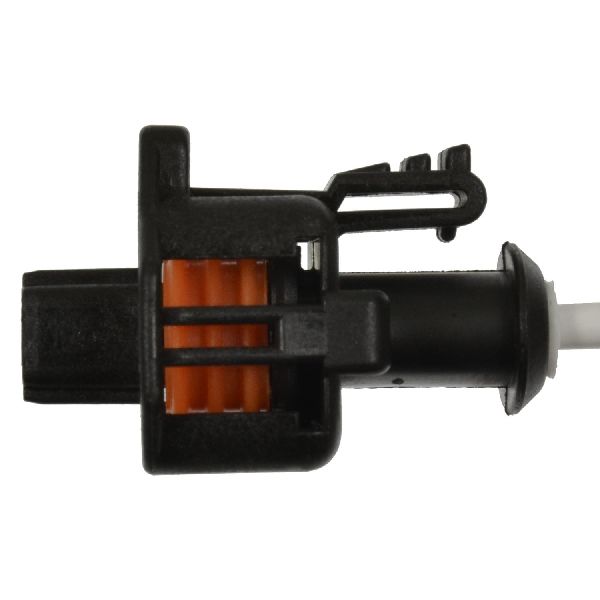
- Inspect Wiring: Check the wiring harness and connector to the EGR valve for any signs of damage, corrosion, or loose pins.
Parts You'll Likely Need
- EGR Valve Cooler Kit
(OEM #68445601AA (supersedes 68211312AA, 68239570AA, 68239570AB, 68239570AC))— This is the component that gets clogged with soot or fails electronically, causing the slow response time. Replacement as a complete kit including the cooler is the most robust repair.
Trusted brands: Mopar
OEM price range: $500-$800
Aftermarket price range: $350-$600 - EGR Valve
(OEM #68211310AA)— If replacing the valve alone, this is the core component that gets clogged with soot or fails electronically.
Trusted brands: Mopar, Standard Motor Products (SMP)
OEM price range: $350-$500
Aftermarket price range: $250-$400 - EGR Cooler
(OEM #68239570AB)— The cooler is also highly susceptible to clogging with soot and can develop internal coolant leaks, as addressed by NHTSA recall 19V-757.
Related Codes That Often Appear With This One
- P249C-00 — This code for "Excessive Time To Enter Closed Loop Reductant Injection Timing Control" is listed in the same TSBs, indicating a related emissions system logic fault. [Bulletin #18-019-15 REV C, 2]
- P20C2-00 — This code for "Reductant Heater 3 Control Circuit Performance" is also frequently cited in the same manufacturer TSBs as P1296. [Bulletin #18-098-15, 2]
- P026A-00 — This code for "Charge Air Cooler Efficiency Below Threshold" is mentioned alongside P1296 in TSBs, suggesting a broader issue with the engine's air management system, possibly affected by EGR problems or software calibration. [Bulletin #18-001-16 REV. C]
- P1297 — This code is for "EGR Slow Response - Decreasing Flow." Seeing both P1296 and P1297 can indicate an EGR valve that is erratically sticking in both directions.
- P0401 — This code for "EGR Flow Insufficient" often appears with P1296, as a slow-responding valve that is also clogged will ultimately lead to insufficient flow.
Technical Service Bulletins (TSBs) & Recalls
- 18-001-16 REV. C: Mentions P1296-00 as one of several codes addressed by a PCM software update.
- 18-019-15 REV C: Lists P1296-00 as a potential DTC that can be set, addressed by a software update.
- 18-021-15 REV F: Cites P1296-00 as a code that may be found when a Malfunction Indicator Lamp is on.
- 18-001-16 REV B: Includes P1296-00 in a list of DTCs that can be set in the PCM memory.
- 18-098-15: Lists P1296-00 as a code that may be set, related to a PCM software update.
- 18-017-16: Supersedes 18-021-15 REV. F and lists P1296-00 as a primary code related to intermittent engine shudder and MIL illumination, fixed by a PCM reflash.
- 18-012-16: A TSB for the Jeep Grand Cherokee EcoDiesel that also lists P1296-00 as a key code fixed by a PCM software update, showing the cross-platform nature of the issue.
Platform-Specific Known Issues
- Multiple Technical Service Bulletins (TSBs) were issued by Ram to update the PCM software specifically to address P1296 and other related emissions codes, indicating a widespread issue with the original engine calibration. [Bulletin #18-001-16 REV. C, Bulletin #18-019-15 REV C, Bulletin #18-021-15 REV F, Bulletin #18-098-15]
- Owner experiences after the AEM (Approved Emissions Modification) software updates are mixed. While intended to fix codes like P1296, many owners reported new issues like severe throttle lag, poor fuel economy, and excessive transmission shifting. A subsequent update was reportedly released to address these complaints.
- There was also a recall for the EGR cooler (NHTSA #19V-757) on some EcoDiesel models due to a risk of thermal fatigue, which could lead to cracking and coolant leaks.
Mechanic-Grade Diagnostic Values
- EGR Valve 5V Reference Voltage — expected: ~5 V. Failure: Significantly lower or no voltage indicates an open or short in the supply circuit from the PCM.
- EGR Position Sensor Signal Voltage (General) — expected: 0.7V - 1.5V (Valve Closed). Failure: Voltage that is stuck, does not change when the valve is commanded open, or is outside the expected range.
Scan Tool Commands That Help
- wiTECH or AlfaOBD: EGR Valve Actuator Test — This is a primary diagnostic step to verify a sticking valve. The command cycles the valve from fully closed to fully open while the technician monitors live data (EGR position sensor %) to see if it moves slowly, gets stuck, or fails to achieve the commanded range.
- wiTECH or AlfaOBD: EGR System Routine / Adaptation Reset — This function should be performed after cleaning or replacing EGR components. It clears the PCM's learned compensation values, forcing it to relearn the flow characteristics of the new or clean parts, which can prevent the code from returning.
- wiTECH: SCR DEF Tank Fluid Level Reset — This procedure is specified in service bulletins to be performed after reprogramming the PCM.
Wiring & Ground Locations
- Powertrain Control Module (PCM) — Located at the right rear of the engine bay.. The PCM controls the EGR valve and monitors its performance. All related wiring terminates here.
- EGR Valve Electrical Connector — Directly on the EGR valve assembly, which sits on top of the engine toward the passenger side.. This is the primary connection point to check for damage, corrosion, or loose pins. On similar Ram diesel engines (6.7L), this is an 8-pin connector containing a 5V supply, ground, multiple signal wires, and multiple control wires, indicating a complex connection that should be inspected carefully.
- G301 / G302 — Listed as 'Left Front Body' grounds for the DS platform.. Poor body or engine grounds can cause erratic behavior in electronic components, including sensors and actuators like the EGR valve. Verifying major engine bay grounds are clean and tight is a valid diagnostic step for persistent electronic faults.
Real Owner Repair Stories
- Go-Parts, citing an EcoDieselRam.com forum user (Ram 1500 EcoDiesel (year not specified, but same engine/system)) — Check Engine Light with code P1296.
❌ Tried (didn't work) Owner cleaned the EGR valve themselves., Dealer performed two forced DPF regenerations.
✅ What actually fixed it The final diagnosis revealed the EGR cooler was completely full of soot, restricting airflow. The dealer identified the clogged cooler, not the valve, as the root cause. The repair was quoted at $1,100 to clean the cooler or $4,100 to replace it.
When the Usual Fixes Don't Work
- While the most common fixes for P1296 are a software update or cleaning/replacing the EGR valve, a significant number of cases are ultimately caused by a completely clogged EGR cooler. In these instances, cleaning only the valve will not resolve the code because the actual flow restriction remains within the cooler passages. If the code returns quickly after cleaning the valve, a clogged cooler should be the primary suspect. One owner reported that after cleaning the valve and performing forced regens failed to fix the issue, the final diagnosis was a cooler completely impacted with soot.
OEM Part Supersession History
68211312AA, 68239570AA, 68239570AB, 68239570AC→68445601AA— This is the complete EGR Valve and Cooler Kit, which has been updated over time. The latest kit is the most common and robust repair.N/A→68483334AA— This specific part number is identified in NHTSA recall 19V-757 as the improved EGR cooler designed to not be susceptible to the thermal fatigue that caused internal cracking in the original units.
Heads up: This is the specific remedy component for the safety recall.
Model Year Variations Within This Range
- 2014-2016: Following the initial Approved Emissions Modification (AEM) software update related to the EcoDiesel settlement, many owners experienced poor performance (turbo lag, reduced MPG). A subsequent corrective software update was released by dealers to fix these drivability issues. Owners should ensure they have the latest version, not just the initial AEM flash.
- 2014-2015: According to forum discussions regarding the EGR cooler recall, the redesigned replacement coolers were made available for the 2014-2015 models first before availability expanded to later model years.
Helpful Videos
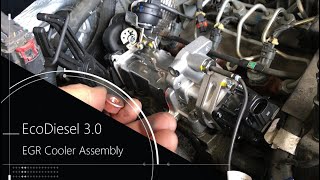
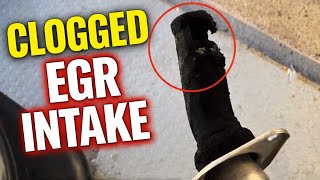
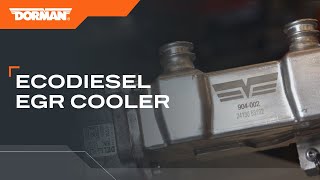
We Have This Part in Stock


The information in this article is provided for general reference and educational purposes only. Vehicle specifications, procedures, and part compatibility can vary by production date, trim level, and region. Always consult your vehicle's factory service manual and verify part numbers before purchasing or performing repairs. Safety-critical components such as airbags, seat belts, and braking systems should be installed by a qualified professional.
- Ram 1500:
- 🎬 Helpful Videos
- 🛍️ Shop This Part
- What's Unique About the 2014-2016 Ram 1500
- Diagnostic Flowchart
- Symptoms You May Notice
- Most Likely Causes
- Rare But Worth Checking
- Diagnosis Steps
- Parts You'll Likely Need
- Related Codes That Often Appear With This One
- Technical Service Bulletins (TSBs) & Recalls
- Platform-Specific Known Issues
- Mechanic-Grade Diagnostic Values
- Scan Tool Commands That Help
- Wiring & Ground Locations
- Real Owner Repair Stories
- When the Usual Fixes Don't Work
- OEM Part Supersession History
- Model Year Variations Within This Range
- 🎟️ Get 5% Off