

OBD-II Code P1295: A Multi-System Fault Guide for Turbo, Throttle, and Injector Control
What P1295 means, why it triggers, and how to fix it on your specific vehicle
- P1295 carries three distinct manufacturer definitions: turbo underboost for VW/Audi, electronic throttle failure for Hyundai/Kia, and injector control faults for Chevy/Ford diesels.
- Scan your vehicle to confirm the exact manufacturer definition before buying parts, as misdiagnosing a $30 VW vacuum leak as a $400 throttle body wastes time and money.
- On VW and Audi 1.8T/2.0T engines, fix P1295 by locating and replacing cracked $30-$50 rubber or plastic boost hoses before replacing expensive turbo components.
- Hyundai and Kia models trigger P1295 alongside P2106 to indicate a failed electronic throttle body, forcing the vehicle into a 20-mph limp mode until replaced.
- For 2004.5-2005 Chevy LLY Duramax trucks, P1295 guarantees a failing Fuel Injector Control Module (FICM) that drops below its required 48-volt output.
What Does P1295 Mean?

P1295 is a manufacturer-specific code with three distinct meanings. For Volkswagen and Audi, it indicates a turbocharger boost pressure deviation, where actual pressure is lower than requested. For Asian and domestic makes like Hyundai, Kia, and Honda, it signifies a malfunction in the Electronic Throttle Control (ETC) system's power management. For specific diesel engines, like the Chevrolet Duramax, it points to a fault with the fuel injectors or their control module.
Technical definition: The official definition varies by manufacturer. For Volkswagen/Audi, it is 'Boost Pressure Control: Lower Limit Not Reached'. For Hyundai, Kia, and Honda, it is 'Electronic Throttle Control System Malfunction - Power Management'. For Chevrolet Duramax diesel engines, it is 'Injector Circuit High to Low Current Transition Time - Bank 1', indicating a Fuel Injector Control Module (FICM) failure.
Can I Drive With P1295?
Yes, But With Caution. Yes, but it is strongly discouraged for more than a few miles. Your vehicle enters a reduced power state ('limp mode'), making it dangerously slow for traffic. Continuing to drive with a boost leak causes the turbo to over-speed and fail, a $1,500-$3,000 repair. An incorrect air-fuel ratio damages the catalytic converter over time, adding $800-$2,500 to potential costs. For diesel models with injector faults, you risk incomplete combustion and severe engine damage.
Common Causes

- Leaking or cracked boost/vacuum hoses (VW/Audi) (Very Common) — Aging rubber and plastic hoses become brittle and fail, causing pressurized boost to leak before reaching the engine.
- Faulty Electronic Throttle Body Assembly (Hyundai/Kia/Honda) (Very Common) — The internal motor and integrated throttle position sensors (TPS) wear out, triggering the ECU's power management limp mode.
- Failing Fuel Injector Control Module (FICM) (Duramax) (Common) — The FICM fails internally and stops providing the 48V required to fire one bank of injectors.
- Failed Diverter Valve (DV) or Bypass Valve (VW/Audi) (Common) — The internal diaphragm tears or sticks open, allowing boost pressure to escape instead of entering the engine.
- Failed Wastegate Control Solenoid (N75 Valve) (VW/Audi) (Common) — This electronic solenoid fails and cannot command the turbo to build the correct amount of pressure.
- Chafed or shorted wiring harness (Less Common) — Wiring to the throttle body or FICM rubs through against metal brackets, causing intermittent shorts.
- Sticking or seized turbocharger wastegate actuator (Less Common) — The wastegate flap actuator arm corrodes or sticks open, physically preventing the turbo from building pressure.
- Faulty Manifold Absolute Pressure (MAP) Sensor (Rare) — A failing MAP sensor sends incorrect low-pressure readings to the ECU, falsely triggering a mechanical boost leak code.
- Faulty Brake Light Switch (Hyundai/Kia) (Rare) — A faulty brake light switch sends conflicting signals to the ECU, forcing limp mode and setting ETC-related codes.
Symptoms

- Major loss of engine power (Limp Mode) — The vehicle feels extremely sluggish and refuses to accelerate. The ECU intentionally limits engine power to prevent unintended acceleration or engine damage.
- Check Engine Light is on — The ECU detects a fault and illuminates the Malfunction Indicator Lamp (MIL) on your dashboard.
- Flashing ESC or EPC Light — On models with throttle-related faults, the Electronic Stability Control (ESC) or Electronic Power Control (EPC) light illuminates or flashes.
- Whistling or 'hissing' noises from the engine bay — A classic sign of a boost leak on turbocharged vehicles, caused by pressurized air escaping from a cracked hose.
- Poor, erratic idle or stalling — The engine idles roughly, surges, or stalls completely due to electronic throttle control issues or large vacuum leaks.
- Excessive black or white smoke from exhaust — On diesel models with a FICM or injector issue, incomplete combustion leads to visible smoke from the tailpipe.
Diagnostic Flowchart
Tap your situation to follow the diagnostic path that matches what you're seeing on this code.
Common Fixes & Costs
- Replace cracked or leaking boost/vacuum hose(s) — Parts: $30-$200, Labor: $120-$250, ~1.5 hr book time (DIY)
- Replace the Electronic Throttle Body — Parts: $180-$450, Labor: $150-$300, ~1.2 hr book time (Intermediate)
- Replace or Repair Fuel Injector Control Module (FICM) — Parts: $200-$700, Labor: $150-$300, ~1.3 hr book time (Professional)
- Replace the Diverter Valve (DV) — Parts: $50-$160, Labor: $80-$175, ~0.8 hr book time (DIY)
- Replace the N75 Wastegate Control Solenoid — Parts: $40-$90, Labor: $60-$120, ~0.5 hr book time (DIY)
- Repair or replace damaged wiring harness — Parts: $20-$100, Labor: $200-$800, ~4 hr book time (Professional)
Used vs. New Parts: Buying Guide
When a used part is worth it: For high-cost electronic modules on older vehicles where budget is the primary constraint. However, remanufactured units with a warranty are a much safer alternative.
Donor-vehicle mileage cap: roughly under 80000 miles for the part to have meaningful remaining life.
Donor quality checklist:
- Match the OEM part number exactly, as superseded numbers may not be compatible.
- Avoid used electronic parts like throttle bodies and FICMs, as they have internal wear components.
- For mechanical parts, verify the donor vehicle was not scrapped for a related failure.
Decision logic:
- If Part is electronic with a known wear-out failure (Throttle Body, FICM) → Buy new or a quality remanufactured unit with a warranty. The risk of a used part failing is too high.
- If Vehicle is > 150K miles AND part is > $500 new → A remanufactured part is the best value. A used part is a high-risk gamble.
- If Part is a simple mechanical item like a hose or valve → New aftermarket is inexpensive and more reliable than used.
Warranty tradeoff: Used parts typically offer a 30-90 day warranty. Aftermarket new parts come with a 1-year to limited lifetime warranty. Remanufactured electronics carry a 1-year or better warranty.
Worst-case if a used part fails: $400-$1500 if a used electronic module fails after installation, including repeat labor and replacement parts.
What Happens If You Wait — Timeline
- 0-1 month: Code sets and Check Engine Light appears. VW/Audi exhibits a small hiss. Hyundai/Kia experiences a rare limp mode. Duramax has a slightly longer crank time in cold weather. (MPG impact: 0-5%% · Added cost: $0)
- 1-3 months: The fault becomes consistent. VW/Audi shows a noticeable lack of power. Hyundai/Kia enters limp mode frequently. Duramax exhibits rough idling and white smoke on startup. (MPG impact: 5-15%% · Added cost: $50-$150 in wasted fuel.)
- 3-6 months: Vehicle is unreliable. VW/Audi boost leak causes the turbo to over-speed. Hyundai/Kia is stuck in limp mode. Duramax FICM voltage drops further, leading to no-start situations. (MPG impact: 15-25%% · Added cost: $500-$1500)
- 6+ months: Catastrophic failure. A neglected boost leak destroys the turbocharger. A failed FICM leaves the truck stranded. An ignored throttle body fault destroys the catalytic converter. (MPG impact: 25%+% · Added cost: $1500-$5000+)
Cost of Not Fixing It
- Immediate (0-1 month): Vehicle enters 'limp mode' with severely reduced power. Fuel economy drops by 5-15% due to incorrect air-fuel ratios or boost leaks. (Added cost: Negligible, but high safety risk.)
- 1-6 months: Driving with a boost leak causes the turbocharger to over-speed, leading to bearing failure. An incorrect air-fuel mixture destroys the catalytic converter. (Added cost: $1200-$3500)
- 6+ months: Catastrophic turbo failure sends metal fragments into the engine. A persistently failing FICM leaves you stranded and causes downstream engine damage from poor combustion. (Added cost: $2000-$5000+)
Diagnosis Steps

- Verify Code Definition with a Quality Scanner
Use an OBD-II scanner to read the code and its specific manufacturer definition. Note all other codes present, as P1295 is often a response to another fault (e.g., P0299, P2106). Repairing other codes first is essential.
Tools: OBD-II Scanner (Beginner) - Perform a Thorough Visual Inspection
For turbo models, inspect all boost hoses for cracks or loose clamps. For throttle control models, inspect the wiring harness to the throttle body for chafing. For diesel models, check the FICM and injector wiring connectors for security and corrosion.
Tools: Flashlight, Mirror (Beginner) - Test FICM Voltage (LLY Duramax)
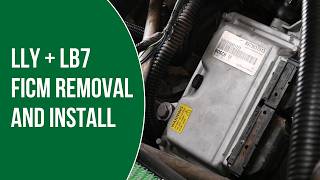
With the key on, engine off, use a multimeter to check the voltage at the FICM test port. It must read a stable 48 volts. If the voltage is below 45V or drops significantly during cranking, the FICM has failed.
Tools: Multimeter (Advanced) - Analyze Throttle Position Sensor (TPS) Voltages
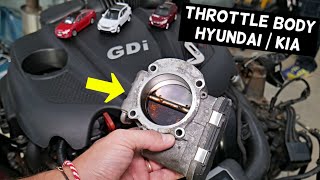
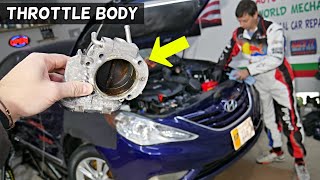
For ETC-related faults, use an advanced scan tool to view live data for TPS1 and TPS2. With the key on and engine off, slowly press the gas pedal. The voltage readings must be smooth and inverse. A jumpy or flat-lined reading indicates a faulty throttle body. 🎬 Watch: Diagnosing P1295 and replacing the throttle position sensor
Tools: Advanced scan tool (Advanced) - Perform a Diagnostic Smoke Test (Turbo Models)
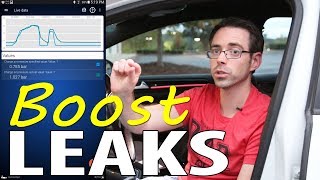
An automotive smoke machine fills the intake and charge pipe system with visible smoke. Any leak, no matter how small, is immediately revealed by a stream of smoke. 🎬 Watch: How to find boost leaks on VW and Audi models
Tools: Automotive Smoke Machine (Intermediate) - Test the Diverter Valve (DV) / Bypass Valve
Remove the diverter valve. Check older diaphragm-style valves for tears. Apply vacuum to the control port with a hand pump. A healthy valve holds vacuum indefinitely.
Tools: Basic hand tools, Hand vacuum pump (Intermediate) - Test the N75 Wastegate Control Solenoid
Disconnect the valve and measure across its two pins; a typical reading for a VW/Audi 1.8T N75 valve is between 25-35 Ohms. An open circuit or short circuit indicates a failed solenoid.
Tools: Multimeter, Advanced scan tool (optional) (Intermediate) - Check Wastegate Actuator Arm Movement
When the engine is cool, locate the actuator arm on the turbocharger. It must move smoothly with some spring resistance when pushed by hand or with a vacuum pump applied to its port.
Tools: Basic hand tools, Hand vacuum pump (Advanced) - Analyze Injector Balance Rates (LLY Duramax)
Observe the injector balance rates at idle with the engine at operating temperature. The spec is typically within +/- 4.0 mm³/sec in Park. Readings consistently outside this range indicate weak or leaking injectors.
Tools: Advanced scan tool (Advanced) - Test TPS Resistance (Hyundai/Kia)
Disconnect the throttle body connector. Measure resistance between the power and ground terminals (typically 3.5 - 6.5 kΩ). As you manually open the throttle plate, the resistance on the signal wire must change smoothly without dropouts.
Tools: Multimeter, Service manual (Advanced)
When This Code Triggers (Freeze-Frame Conditions)
- Engine Coolant Temp: 180-210°F (82-99°C) (The fault is typically detected once the engine reaches full operating temperature.)
- RPM: 1500-3000 (For turbo faults, this occurs when the ECU requests boost during acceleration, but the target is not met.)
- Engine Load: 30-60% (The code sets under moderate load when the engine is expected to produce power, revealing the performance shortfall.)
- Vehicle Speed: 45-65 mph (Steady highway driving is a common condition for the ECU to run the diagnostic monitors that detect boost leaks or throttle performance issues.)
Related Codes
- P0299 — A generic code for 'Turbo/Supercharger Underboost'. If present with P1295 on a VW/Audi, it confirms a mechanical boost leak.
- P2106 — Means 'Throttle Actuator Control System - Forced Limited Power'. This code is the direct result of the fault detected by P1295 in Hyundai/Kia vehicles.
- P0638 — Generic code for 'Throttle Actuator Control Range/Performance'. It is often stored with P1295 and P2106 on Hyundai/Kia models, pointing directly to the electronic throttle body.
- U0105 — Means 'Lost Communication With Fuel Injector Control Module'. On an LLY Duramax, this confirms the FICM has an internal failure and is unresponsive.
Climate & Environmental Factors
- Cold Weather: Extremely cold temperatures cause aged plastic and rubber hoses on VW/Audi models to crack. On LLY Duramax engines, cold starts drop system voltage, preventing a weak FICM from reaching its required 48V output.
- Heat Cycles: Repetitive engine bay heat cycles degrade hoses and plastic components. For the LLY Duramax, heat breaks down internal electronic components and solder joints within the FICM.
- High Altitude: At higher altitudes, the turbocharger spins faster to produce boost, making existing small leaks more apparent and triggering P1295 sooner.
How to Talk to a Mechanic About This Code
Say this: "{'vw_audi': "I have a P1295 code on my [Year, Make, Model] and I suspect a boost leak. I'd like to schedule a diagnostic that includes a smoke test to pinpoint the source.", 'hyundai_kia': 'My [Year, Make, Model] has codes P1295 and P2106 and keeps going into limp mode. I need a diagnostic to check the electronic throttle body, including live data for the TPS sensors.', 'duramax': "I have a P1295 on my LLY Duramax. The first thing I'd like you to do is test the FICM voltage with the key on, engine off, to confirm it's holding a steady 48 volts."}"
This vehicle-specific language shows you've done your research and directs the mechanic to the most likely cause. It prevents broad, expensive diagnostic processes and protects you from unnecessary parts.
Avoid saying:
- 'My check engine light is on.' (Too vague)
- 'The car is running rough and has no power.' (Symptom, not a starting point)
- 'Just fix whatever is wrong with it.' (Invites a massive bill)
Questions to ask before authorizing the repair:
- For VW/Audi: Did the smoke test reveal the exact location of the leak? Can you show me the failed part?
- For Hyundai/Kia: What did the live data for the throttle position sensors show? Did you check the wiring harness and connector?
- For Duramax: What was the exact voltage reading from the FICM, both key-on and during cranking? Did you inspect the wiring harness for chafing?
- Is the proposed replacement part OEM, aftermarket, or remanufactured?
- What is the warranty on the parts and the labor for this specific repair?
Where to Take It: Dealer vs Independent vs Chain
- Dealer:
A safe but expensive option. Necessary if a warranty applies. For out-of-warranty vehicles, a specialist is better.
Best for: Vehicles still under powertrain or emissions warranty., Complex electrical issues or when a specific manufacturer software update (TSB) is required.
Downsides: Highest labor rates., Defaults to replacing whole assemblies rather than repairing wiring. (Typical cost: +40% vs. baseline) - Chain Shop:
AVOID for P1295. High risk of misdiagnosis due to the code's multiple, manufacturer-specific meanings.
Best for: Simple, unrelated maintenance like oil changes or tires.
Downsides: Technician skill and diagnostic equipment are inconsistent., High pressure to upsell services. (Typical cost: -10% vs. baseline)
When to Walk Away From the Repair
If the estimated repair cost exceeds 40-50% of the car's private-party value, seriously consider selling or trading in the vehicle instead of repairing it.
- Car worth $4000, fix is $800: Fix it. This repair is well within a reasonable cost for the vehicle's value.
- Car worth $5000, fix is $2200: Borderline. The repair cost is approaching 50% of the car's value. Get a second opinion and consider the car's overall health.
- Car worth $3000, fix is $2500: Walk away. The repair cost is nearly the entire value of the car. It is not economically viable.
What Scan Tool You Need for This Code
Minimum: A code reader that displays manufacturer-specific definitions and shows live data PIDs (Parameter IDs). A generic $20 reader is not sufficient.
A basic reader only shows 'P1295'. You must see live data: requested vs. actual boost (VW), TPS1/TPS2 voltages (Hyundai), or injector balance rates (Duramax).
Budget: Veepeak OBDCheck BLE+ with Torque Pro / OBDLink CX with BimmerCode (~$40) — Provides live data streaming to your smartphone. Allows you to graph sensor readings like throttle position and boost pressure to spot inconsistencies.
Mid-range: Foxwell NT510 Elite / Innova 5610 (~$180) — Offers brand-specific software and bi-directional control. Allows you to perform active tests on components and initiate a throttle body relearn procedure.
Professional: Autel MaxiCOM MK808S / XTOOL D7 (~$500) — Provides full bi-directional control, all system diagnostics, and advanced service functions like ECU coding and injector balance rate analysis.
Rent vs buy: For a one-time diagnosis, auto parts stores rent basic scanners. However, for P1295, the live data and relearn functions of a mid-range tool are necessary. Buying a mid-range tool is a wise investment.
How to Clear the Code After You Fix It
- Use an OBD-II scan tool to clear the diagnostic trouble codes.
- For throttle body replacement, perform a throttle relearn procedure (Key On, Engine Off for 10 min, or specific scan tool sequences).
- Perform a complete OBD-II drive cycle to ensure all readiness monitors run.
Drive cycle (~30 minutes): From a cold start, idle for 2-3 minutes. Drive for 5-7 minutes at a steady 45-55 mph. Accelerate to 60-65 mph and hold for 5 minutes. Gradually coast down to 20 mph without braking, then idle for another 2-3 minutes before shutting down.
Readiness monitors affected: Catalyst (CAT) monitor, Oxygen (O2) Sensor monitor, Evaporative (EVAP) System monitor, Fuel System monitor
Before emissions retest: drive at least 100 miles to fully set monitors.
Watch out for:
- Disconnecting the battery clears the code but resets all readiness monitors, causing an immediate emissions test failure.
- The code returns immediately if the underlying mechanical or electrical fault is not repaired.
- Not allowing the vehicle to cool down completely before starting a drive cycle prevents the EVAP monitor from running.
Will This Fail Emissions / State Inspection?
Yes — this code typically fails an OBD-II emissions inspection.
- California: An illuminated Check Engine Light results in an automatic smog check failure. After repairs, a full drive cycle must be completed.
- New York: The NYS DMV emissions inspection includes an OBD-II scan. An active P1295 code is an automatic failure.
- Texas: An illuminated Check Engine Light is an automatic failure. After clearing the code, you can only have one monitor 'Not Ready' to pass.
Most Commonly Affected Vehicles

- Volkswagen Jetta / GTI / Golf (1999-2005) — The 1.8T engine is notorious for boost leaks from the PCV system hoses, intake manifold gaskets, and diverter valve.
- Audi A4 / TT (1998-2006) — Shares the 1.8T and 2.7T engines with VW. The 2.7T has a more complex hose network, increasing failure points.
- Hyundai Santa Fe / Sonata (2006-2012) — P1295 is almost always related to a failed Electronic Throttle Body. TSB 09-FL-003-2 notes a faulty EVAP Canister Purge Valve also sets P1295.
- Kia Sedona / Borrego / Sorento (2006-2012) — Shares powertrains with Hyundai; P1295 indicates an Electronic Throttle Control system failure, requiring throttle body replacement.
- Chevrolet / GMC Silverado / Sierra 2500/3500 (Duramax Diesel) (2004-2005) — On LLY Duramax engines, P1295 specifically points to a fault in the Fuel Injector Control Module (FICM), disabling injector bank 1.
- Ford Transit (Diesel) (2012-2016) — P1295 indicates 'Injector Multiple Faults - Bank 1', pointing to an issue with the fuel injectors or wiring.
- Honda Passport / Accord (2000-2004) — P1295 indicates an issue with the Electronic Throttle Control Power Management. Severely low engine oil levels trigger this code due to erratic sensor operation.
- Audi S4 / Allroad (2000-2004) — The 2.7T twin-turbo engine has two diverter valves and a vast network of vacuum and boost hoses, doubling the potential for leaks.
- Seat / Skoda Leon, Octavia, Ibiza, Fabia (2000-2010) — These models use the same 1.8T engines as VW/Audi and suffer from identical boost leak issues.
- Isuzu Rodeo (2004) — On the 3.5L V6 engine, P1295 is defined as 'Electronic Throttle Control Power Management Mode', similar to Honda.
Manufacturer-Specific Notes
- Volkswagen / Audi / Seat / Skoda: P1295 means 'Boost Pressure Control: Lower Limit Not Reached'. The problem is almost always a physical air leak from aged plastic or rubber hoses in the PCV and charge pipe systems.
- Hyundai / Kia: P1295 means 'Throttle Actuator Control System - Power Management'. It is triggered by a fault in the electronic throttle body and is almost always accompanied by P2106 (Forced Limited Power).
- Chevrolet / GMC (LLY Duramax): On 2004.5-2005 LLY Duramax engines, P1295 indicates the Fuel Injector Control Module (FICM) has an internal fault and has shut down Bank 1 injectors.
- Ford (Diesel): On certain diesel engines like the 2.2L TDCi in the Ford Transit, P1295 means 'Injector Multiple Faults - Bank 1', completely unrelated to the turbo or throttle.
- Honda / Isuzu: P1295 relates to the Electronic Throttle Control system's 'Power Management Mode'. Severely low engine oil levels have been linked to setting this code due to erratic sensor behavior.
Real Owner Stories
2003 VW Jetta 1.8T at 145K miles - The Simple Fix
Car suddenly lost power on the highway, felt very sluggish, with a loud hissing sound from the engine bay under acceleration.
What they tried:
- Pulled over and visually inspected the engine bay.
- Noticed a large, obvious tear in the rubber hose coming from the fuel pressure regulator.
Outcome: Replaced the cracked fuel pressure regulator vacuum hose (a $15 part) in the parking lot. The car immediately regained full power and the P1295 code cleared.
Lesson: For the VW/Audi P1295 fault, always start with a thorough visual inspection of all vacuum and boost hoses. The cause is often a simple, visible, and inexpensive leak.
2008 Hyundai Santa Fe 3.3L at 144K miles - The Misdiagnosis Chase
Car intermittently went into limp mode (P1295, P2106) during medium acceleration. Restarting the car temporarily fixed it.
What they tried:
- Replaced the Throttle Position Sensor (TPS) - no change.
- Flashed the ECM - no change.
- Replaced the entire Electronic Throttle Body - no change.
- Replaced the ECM - no change.
Outcome: Another owner with identical codes reported a complete fix after a mechanic cleaned a dirty throttle body for $100. The original owner's outcome highlights the cost of replacing parts without proper diagnosis.
Lesson: On Hyundai/Kia, P1295 is almost always throttle-related, but don't replace expensive parts without confirming the diagnosis. A simple cleaning or wiring check resolves the issue for far less money.
2005 GMC Sierra 2500 LLY Duramax - The Inevitable FICM Failure
Truck suddenly lost power, idled very roughly, and produced extra engine noise. The check engine light came on with code P1295.
What they tried:
- Owner correctly identified P1295 on an LLY Duramax as a FICM fault disabling Bank 1 injectors.
- Tested FICM voltage, which was found to be below the required 48V.
- Removed the FICM and sent it to a specialized repair service.
Outcome: A repaired and upgraded FICM was installed, and the truck returned to normal operation. The repair service cost was significantly less than a new module from the dealer.
Lesson: On an LLY Duramax, P1295 points directly to the FICM. Don't waste time on injector diagnosis until you confirm the FICM has stable 48V power.
2004.5 Chevy Silverado LLY Duramax - The Wiring Gremlin
Truck experienced a crank, no-start condition and blew the 'EDU' fuse whenever the key turned on. Code U0105 was present.
What they tried:
- Replaced the FICM with a used unit, but the problem persisted.
- Checked batteries and charging system, which were healthy.
- Inspected the main wiring harness near the FICM and alternator.
Outcome: The owner found a known chafe point where the wiring harness rubbed against a bracket near the alternator. Repairing the shorted wires resolved the fuse and communication issue.
Lesson: While the FICM is a common failure, the wiring harness is also a major culprit on LLY Duramax trucks. Inspect the harness for rub points before condemning the module.
How to Prevent This Code From Triggering
- Periodically clean the Electronic Throttle Body (ETB) (Every 30,000-50,000 miles) — On Hyundai/Kia models, carbon buildup causes the throttle plate to stick, leading to erratic sensor readings. Regular cleaning prolongs its life.
- Upgrade the stock Diverter Valve (DV) on tuned VW/Audi 1.8T engines (When increasing boost pressure via tuning) — The stock diaphragm-style DV tears under higher-than-stock boost. Upgrading to a robust piston-style valve prevents this failure.
- Protect the LLY Duramax FICM wiring harness (Once, as a proactive measure) — The factory wiring harness rubs against a metal bracket near the alternator, causing a short. Add protective loom to prevent contact.
- Ensure vehicle batteries are healthy (LLY Duramax) (Annual battery testing) — A weak battery forces the FICM to work harder to step up voltage to 48V, accelerating internal failure.
- Perform a proactive boost leak test on VW/Audi models (Every 50,000 miles or when performance feels off) — Fixing small air leaks from aging hoses prevents the turbo from over-speeding to compensate, extending turbo life.
Frequently Asked Questions
Can I fix P1295 myself?
Yes, for many common causes. Replacing a cracked VW hose or a Hyundai throttle body is a manageable DIY task. Diagnosing intermittent wiring faults or a bad Duramax FICM requires professional tools.
What is the absolute first thing I should check for P1295?
Use a scanner to confirm the code's definition for your specific car. If it's a VW/Audi, visually inspect all air hoses for cracks. For Hyundai/Kia, check the throttle body wiring, and for a Duramax, test the FICM voltage.
What happens when a car is in 'limp mode'?
Limp mode is a safety feature where the ECU drastically reduces engine power and throttle response. This prevents engine damage or unsafe conditions like unintended acceleration. The car feels very slow and refuses to shift properly.
Can a bad MAP sensor cause P1295?
Yes. If the Manifold Absolute Pressure (MAP) sensor fails and incorrectly reports low pressure, the ECU assumes a boost leak exists. This triggers a P1295 code even if there are no mechanical leaks.
Can I just clean my electronic throttle body to fix P1295?
Sometimes, but it rarely provides a permanent fix for P1295. On a Hyundai/Kia, this code indicates an electrical failure within the integrated position sensors, not a mechanical blockage. Cleaning is worth trying, but replacement is the standard solution.
What is a FICM and why does it fail on a Duramax?
The Fuel Injector Control Module (FICM) boosts your truck's 12V power to 48V to operate the fuel injectors. On LLY Duramax engines, vibration and heat destroy the internal solder joints over time. This causes a voltage drop and disables the injectors.
I cleared the P1295 code but it came back immediately. What now?
An immediate return of the code indicates a hard fault, meaning a component has completely failed or a wiring short exists. You must perform a proper diagnosis. Simply clearing the code never fixes the underlying issue.
How much does a shop charge to diagnose P1295?
Expect a standard diagnostic fee of $100-$200, covering an hour of labor for reading codes and performing a visual inspection. If a smoke test for a boost leak is required, shops often include it in this initial fee. Complex electrical diagnosis costs extra.
Key Takeaways
- P1295 carries three distinct manufacturer definitions: turbo underboost for VW/Audi, electronic throttle failure for Hyundai/Kia, and injector control faults for Chevy/Ford diesels.
- Scan your vehicle to confirm the exact manufacturer definition before buying parts, as misdiagnosing a $30 VW vacuum leak as a $400 throttle body wastes time and money.
- On VW and Audi 1.8T/2.0T engines, fix P1295 by locating and replacing cracked $30-$50 rubber or plastic boost hoses before replacing expensive turbo components.
- Hyundai and Kia models trigger P1295 alongside P2106 to indicate a failed electronic throttle body, forcing the vehicle into a 20-mph limp mode until replaced.
- For 2004.5-2005 Chevy LLY Duramax trucks, P1295 guarantees a failing Fuel Injector Control Module (FICM) that drops below its required 48-volt output.
Helpful Videos

The information in this article is provided for general reference and educational purposes only. Vehicle specifications, procedures, and part compatibility can vary by production date, trim level, and region. Always consult your vehicle's factory service manual and verify part numbers before purchasing or performing repairs. Safety-critical components such as airbags, seat belts, and braking systems should be installed by a qualified professional.
- 🎬 Helpful Videos
- What Does P1295 Mean?
- Can I Drive With P1295?
- Common Causes
- Symptoms
- Diagnostic Flowchart
- Common Fixes & Costs
- Used vs. New Parts: Buying Guide
- What Happens If You Wait — Timeline
- Cost of Not Fixing It
- Diagnosis Steps
- When This Code Triggers (Freeze-Frame Conditions)
- Related Codes
- Climate & Environmental Factors
- How to Talk to a Mechanic About This Code
- Where to Take It: Dealer vs Independent vs Chain
- When to Walk Away From the Repair
- What Scan Tool You Need for This Code
- How to Clear the Code After You Fix It
- Will This Fail Emissions / State Inspection?
- Most Commonly Affected Vehicles
- Manufacturer-Specific Notes
- Real Owner Stories
- 2003 VW Jetta 1.8T at 145K miles - The Simple Fix
- 2008 Hyundai Santa Fe 3.3L at 144K miles - The Misdiagnosis Chase
- 2005 GMC Sierra 2500 LLY Duramax - The Inevitable FICM Failure
- 2004.5 Chevy Silverado LLY Duramax - The Wiring Gremlin
- How to Prevent This Code From Triggering
- Frequently Asked Questions
- Can I fix P1295 myself?
- What is the absolute first thing I should check for P1295?
- What happens when a car is in 'limp mode'?
- Can a bad MAP sensor cause P1295?
- Can I just clean my electronic throttle body to fix P1295?
- What is a FICM and why does it fail on a Duramax?
- I cleared the P1295 code but it came back immediately. What now?
- How much does a shop charge to diagnose P1295?
- Key Takeaways
- 🎟️ Get 5% Off