

OBD-II Code P1294: Target Idle Not Reached
The Ultimate Guide to Understanding, Diagnosing, and Fixing P1294
- P1294 means 'Target Idle Not Reached' on Chrysler, Dodge, and Jeep vehicles, indicating the engine RPM is at least 100-200 RPM off the commanded speed.
- Fix 80% of Chrysler/Jeep P1294 codes by repairing cracked vacuum hoses or cleaning carbon buildup from the Idle Air Control (IAC) valve and throttle body.
- On Ford 7.3L Power Stroke diesels, P1294 means 'Injector High Side Open - Bank 2', requiring a $250-$450 replacement of the Under Valve Cover Harness (UVCH).
- Volkswagen and Audi vehicles use P1294 to indicate an electrical short in the engine coolant thermostat circuit, completely unrelated to idle speed.
- Never replace the IAC valve without first performing a $50-$100 smoke test to rule out hidden vacuum leaks, which are the true root cause over 50% of the time.
What Does P1294 Mean?

P1294 means the Powertrain Control Module (PCM) detected a discrepancy between the target idle speed and actual engine RPM. For 14 to 20 seconds, the engine's idle deviated significantly from the commanded speed—usually 200 RPM above or 100 RPM below the target. This points directly to an air intake management problem at idle.
Technical definition: Target Idle Not Reached. The PCM detects that the engine idle speed is not within a specified range of the target idle speed for a calibrated amount of time. For many Chrysler, Dodge, and Jeep vehicles, this triggers when the engine idle deviates 200 RPM above or 100 RPM below the target for 14-20 seconds. The fault must occur on two consecutive drive cycles to illuminate the Malfunction Indicator Lamp (MIL).
Can I Drive With P1294?
Yes, But With Caution. You can drive, but avoid extended trips. A high or unstable idle makes the vehicle difficult to control in stop-and-go traffic and causes harsh shifting in automatic transmissions. Prolonged high idle increases fuel consumption, accelerates engine wear, and eventually destroys the catalytic converter due to incomplete combustion—a repair costing over $1,500. Address the issue within a week.
Common Causes


- Vacuum Leaks (Very Common) — Cracked, disconnected, or leaking vacuum hoses are the most frequent cause. These leaks introduce unmetered air into the engine, disrupting the air-fuel mixture and causing an erratic or high idle. A common source is a disconnected main vacuum fitting on the intake manifold or a deteriorated PCV hose.
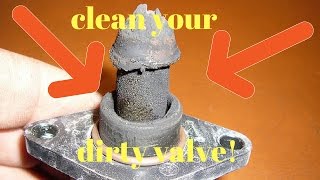
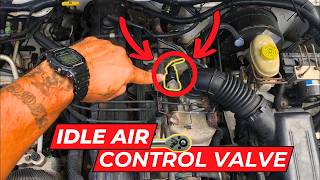
- Dirty or Failing Idle Air Control (IAC) Valve (Very Common) — The IAC valve is a stepper motor that precisely controls airflow into the engine at idle. Carbon buildup causes the valve's pintle to stick, or the motor's coils fail, preventing it from adjusting the idle speed correctly.
- Faulty Under Valve Cover Harness (Ford 7.3L Power Stroke) (Very Common For Ford Diesel) — On Ford 7.3L diesel engines, P1294 means 'Injector High Side Open - Bank 2'. This is almost always caused by a faulty Under Valve Cover Harness (UVCH) or its connector, which becomes brittle and fails from heat and oil exposure. 🎬 Watch: How to replace the 7.3L valve cover harness and gasket.
- Dirty Throttle Body (Common) — Carbon and oil residue accumulate in the throttle body bore and on the throttle plate. This buildup restricts airflow or prevents the plate from closing completely, leading to an incorrect idle speed.
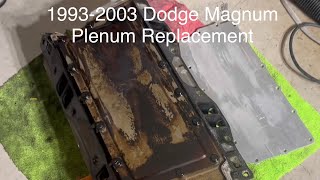
- Leaking Intake Manifold Plenum Gasket (Dodge Magnum V6/V8) (Common) — On Dodge 3.9L, 5.2L, and 5.9L Magnum engines, the steel plate on the bottom of the intake manifold is sealed with a gasket that notoriously fails. This creates a large internal vacuum leak, pulling oil into the intake, causing a high idle, oil consumption, and eventual catalytic converter failure.
- Faulty Positive Crankcase Ventilation (PCV) System (Less Common) — A PCV valve stuck open acts as a constant vacuum leak. Similarly, a cracked or disconnected PCV hose disrupts the engine's idle and triggers code P1294.
- Poor Electrical Grounds or Connections (Less Common) — A corroded main engine ground strap or a loose connector, particularly on the alternator, causes system-wide voltage fluctuations. This confuses the PCM and impairs its ability to accurately control the IAC valve.
- Faulty Engine Coolant Temperature (ECT) Sensor (Less Common) — The PCM relies on the ECT sensor to determine if the engine is cold or at operating temperature. A faulty sensor that incorrectly reports a cold engine causes the PCM to command a high idle even when the engine is warm.
- Cracked or Worn Throttle Body (Rare) — The throttle body itself develops hairline cracks, creating a hard-to-diagnose vacuum leak. Additionally, the shaft of the throttle plate wears down its bore in the housing, allowing unmetered air to seep past.
Symptoms
- High or Unstable Idle — The engine's RPM is noticeably high (e.g., 1500-2000 RPM) when stopped, or it surges up and down erratically.
- Check Engine Light is On — The Malfunction Indicator Lamp (MIL) illuminates on your dashboard after the fault is detected on consecutive trips.
- Audible Hissing or Whistling Sound — A significant vacuum leak produces a distinct hissing or whistling noise from the engine bay, most apparent at idle.
- Engine Stalling — The engine stalls when coming to a stop or while idling. This occurs if the IAC valve sticks closed or the PCM cannot maintain the minimum required airflow.
- Difficulty Starting — If the IAC valve is stuck in the closed position, the engine does not get enough air to start without pressing the accelerator pedal.
- Rough Running or Misfiring (Ford 7.3L) — On a 7.3L Power Stroke diesel, a P1294 code is accompanied by a severe engine misfire or the engine running on only one bank of cylinders, resulting in a significant loss of power.
Diagnostic Flowchart
Tap your situation to follow the diagnostic path that matches what you're seeing on this code.
Common Fixes & Costs
- Repair Vacuum Leak (Hose Replacement) — Parts: $10-$60, Labor: $100-$300, ~1.2 hr book time (DIY)
- Clean Throttle Body and IAC Valve — Parts: $10-$20, Labor: $100-$225, ~0.8 hr book time (DIY)
- Replace Idle Air Control (IAC) Valve — Parts: $40-$150, Labor: $75-$175, ~0.7 hr book time (Intermediate)
- Replace Under Valve Cover Harness (Ford 7.3L) — Parts: $85-$150 per side, Labor: $250-$450, ~3.5 hr book time (Intermediate)
- Replace Intake Manifold Plenum Gasket (Dodge Magnum) — Parts: $50-$250 (kit), Labor: $400-$800, ~5.5 hr book time (Professional)
- Replace PCV Valve — Parts: $15-$75, Labor: $80-$150, ~0.6 hr book time (DIY)
Used vs. New Parts: Buying Guide
When a used part is worth it: For an Idle Air Control (IAC) valve, a used OEM part from a low-mileage vehicle is a reliable and cost-effective alternative to a new aftermarket part, which have a higher failure rate. Avoid used parts if the failure is due to simple wear and tear.
Donor-vehicle mileage cap: roughly under 60000 miles for the part to have meaningful remaining life.
Donor quality checklist:
- Verify the part number matches your original exactly.
- Source from a reputable salvage yard that offers a short-term warranty (30-90 days).
- Inspect the part for physical damage, corrosion, or excessive carbon buildup before purchasing.
Decision logic:
- If A new OEM part is available and affordable → Buy new OEM for maximum reliability and longevity.
- If Budget is the primary concern and the vehicle is older → A used OEM part is often a better bet than a cheap, new aftermarket part.
- If The part is a known high-failure item with poor aftermarket support → Prioritize new OEM or a warrantied, remanufactured unit.
Warranty tradeoff: Used parts typically offer a 30-90 day warranty. Aftermarket parts range from 1 year to a limited lifetime warranty, but quality is inconsistent. New OEM parts carry the manufacturer's standard parts warranty, typically 1-2 years.
Worst-case if a used part fails: $200-$400 if a used or cheap aftermarket IAC valve fails shortly after installation, requiring repeat labor costs and the purchase of another part.
What Happens If You Wait — Timeline
- 0-1 month: Check Engine Light illuminates with P1294. A high or surging idle is noticeable when stopped. Annoying but seems minor. (MPG impact: 5-10%% · Added cost: $20-$50 in wasted fuel.)
- 1-3 months: The high idle becomes more persistent. Automatic transmissions shift harshly from Park to Drive. In Dodge Magnum engines, oil consumption begins to increase due to the plenum leak. (MPG impact: 10-15%% · Added cost: $50-$150 in wasted fuel and top-off oil.)
- 3-6 months: A continuous vacuum leak or high idle forces the engine to run rich, which starts to overheat and damage the catalytic converter's internal structure. You notice a rotten egg smell from the exhaust. (MPG impact: 15-20%% · Added cost: $300-$800 (Early catalytic converter damage is likely setting in).)
- 6+ months: The catalytic converter substrate melts down and clogs, causing severe power loss. On Magnum engines, the plenum leak has consumed significant oil, fouling spark plugs and O2 sensors, guaranteeing cat failure. (MPG impact: 20-30%+% · Added cost: $1500-$3000 (Full replacement of catalytic converter, O2 sensors, and spark plugs is now required).)
Cost of Not Fixing It
- 0-1 month: Reduced fuel economy (5-15% drop) due to high idle, difficult low-speed driving, and harsh transmission engagement. (Added cost: $20-$60 in wasted fuel.)
- 1-6 months: A persistent high idle from a vacuum leak or bad IAC causes the engine to run rich, overheating the catalytic converter. This leads to substrate meltdown and complete failure. (Added cost: $1200-$2800 for catalytic converter replacement.)
- 6+ months: Sustained high idle puts extra wear on engine components. On Dodge Magnum engines, a failed plenum gasket leads to significant oil consumption, fouling spark plugs and O2 sensors, and guaranteeing catalytic converter destruction. (Added cost: $2500+ for catalytic converter, O2 sensors, and potential engine repairs.)
Diagnosis Steps

- Scan for Codes and Review Freeze Frame Data
Use an OBD-II scanner to confirm P1294 is present and check for related codes (e.g., P0505, P0171). Review the freeze frame data to see the engine conditions (RPM, temperature) when the code was set to provide crucial context.
Tools: OBD-II Scanner (Beginner) - Visually Inspect for Obvious Vacuum Leaks
With the engine running, listen carefully for hissing sounds around the intake manifold, throttle body, and all connected vacuum lines. Visually inspect all rubber hoses and fittings for cracks, disconnection, or deterioration, especially the PCV and brake booster lines.
Tools: Flashlight (Beginner) - Remove and Clean the Throttle Body and IAC Valve
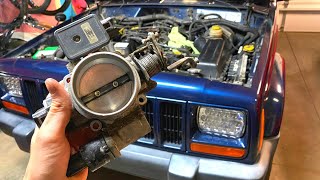
Remove the air intake hose and unplug the IAC valve. Use a dedicated throttle body cleaner and a soft brush to thoroughly clean the inside of the throttle body, the throttle plate edges, and the IAC air passages. Spray the IAC pintle liberally and wipe it clean. Do not use excessive force on the pintle.
Tools: Screwdriver/socket set, Torx set, throttle body cleaner, rags, brush (Intermediate) - Perform a Smoke Test for Hidden Leaks
If cleaning doesn't resolve the issue, a smoke test is the most effective way to find hidden vacuum leaks. An automotive smoke machine forces low-pressure smoke into the intake system, billowing from hard-to-see cracks in hoses, leaking gaskets, or a cracked throttle body.
Tools: Automotive smoke machine (Intermediate) - Pro Tip: Analyze IAC Counts and TPS Voltage with a Scan Tool
A professional scan tool displays live data for IAC 'counts' and Throttle Position Sensor (TPS) voltage. At warm idle, IAC counts should be low and stable (10-50 counts). If counts are maxed out (e.g., 255), the PCM is trying to lower the idle but can't, indicating a large vacuum leak. Check that the TPS voltage reads low (0.4-0.8V) at closed throttle.
Tools: Advanced OBD-II Scan Tool (Advanced) - Pro Tip: Test the IAC Valve Coils (Chrysler/Dodge/Jeep)
Set a multimeter to Ohms (Ω). On a 4-pin Chrysler IAC valve, test the resistance between the two outer pins and then between the two inner pins. A good IAC valve has a resistance between 40 and 80 Ohms on each coil. Readings outside this range indicate a failed motor.
Tools: Multimeter (Advanced) - Pro Tip: Check for Power at the IAC Connector
Turn the ignition key to the 'On' position (engine off). Set your multimeter to DC Volts. Connect the black probe to the battery negative terminal. Probe the pins on the IAC electrical connector. You should find at least one pin with 12V power from the PCM. If there is no voltage, there is a wiring issue or a problem with the PCM.
Tools: Multimeter (Advanced) - Pro Tip: Perform an Injector 'Buzz Test' (Ford 7.3L)
For a 7.3L Power Stroke with P1294, use a capable scanner to perform a 'buzz test'. This test commands the Injector Driver Module (IDM) to fire each injector sequentially. If Bank 2 injectors (driver's side) do not buzz, it confirms the 'High Side Open' fault. The issue is the UVCH, its connector, or the IDM.
Tools: Ford-specific Diagnostic Scanner (Advanced) - Advanced Test: Check TPS Voltage Signal (Jeep 4.0L)
Back-probe the center wire on the Throttle Position Sensor (TPS) connector with the ignition on, engine off. At closed throttle, the voltage should be between 0.25V and 0.8V. As you slowly open the throttle, the voltage should increase smoothly to approximately 4.5V at wide-open throttle. A voltage that is too high at idle (>1.0V) or has dropouts indicates a faulty TPS.
Tools: Multimeter, T-pins or back-probe kit (Advanced) - Advanced Test: UVCH Resistance Check (Ford 7.3L)
Disconnect the 9-pin connector at the valve cover. Using a multimeter, check the resistance between the two large outer pins for the glow plugs (should be 0.1 to 2.0 Ohms) and between the center pin (injector common) and each of the four injector signal pins. A healthy injector solenoid reads between 2.6 and 3.2 Ohms. Readings that are OL (Open Loop) or significantly higher indicate a failed UVCH or injector solenoid.
Tools: Multimeter (Advanced) - Advanced Test: Check IDM Output Voltage (Ford 7.3L)
This is a dangerous test and should only be performed by professionals. The Injector Driver Module (IDM) outputs ~115 Volts DC to the injectors. Specialized tools are required to safely test this output. A failure of the IDM to provide sufficient voltage to Bank 2 sets a P1294. Using an oscilloscope is the proper way to check the peak and hold voltage pattern sent to the injectors.
Tools: Oscilloscope, High-Voltage Probes, breakout harness (Professional)
When This Code Triggers (Freeze-Frame Conditions)
- Engine RPM: 900-1500 RPM (Engine at idle, in gear (for automatics). The RPM is elevated or fluctuating outside the target range (e.g. 650-750 RPM).)
- Engine Coolant Temp: 185-210°F (Engine is fully warmed up. This rules out normal high idle during a cold start.)
- Vehicle Speed: 0 mph (Vehicle is stationary. The code is set when an incorrect idle is detected while stopped.)
- Throttle Position: 0-1% (Throttle is closed. This confirms the driver is not pressing the accelerator and the engine should be idling.)
Related Codes
- P0505 — This code points directly to a fault in the Idle Air Control (IAC) system circuit. If you have P0505 alongside P1294, the IAC valve, its wiring, or the PCM driver is the culprit. P1294 alone is usually mechanical (vacuum leak).
- P0171 / P0174 — These codes for 'System Too Lean' are often triggered by the same vacuum leaks that cause P1294. The vacuum leak allows unmetered air in, and the PCM sets a P0171/P0174 when it has to add more than 25% extra fuel to compensate.
- P030x (e.g., P0300, P0301) — These are cylinder misfire codes. A large vacuum leak leans out the air-fuel mixture so much that it fails to ignite properly, causing a misfire. Fixing the root cause of P1294 typically resolves the misfire codes.
- P0506 / P0507 — These codes are more specific versions of P1294. P0506 means 'Idle Air Control System RPM Lower Than Expected', while P0507 means 'Idle Air Control System RPM Higher Than Expected'. P1294 is a more general 'Target Idle Not Reached' used frequently by Chrysler/Dodge/Jeep.
Climate & Environmental Factors
- Cold Weather: Cold temperatures cause plastic and rubber components, like vacuum hoses and intake gaskets, to contract and become brittle. This worsens existing small cracks or causes new ones to form, leading to vacuum leaks that trigger P1294.
- High Altitude: At higher altitudes, the air is less dense. A vehicle's PCM commands a slightly higher idle RPM to maintain smooth operation and prevent stalling. While normal, it narrows the margin for error, making the engine more susceptible to setting a P1294 code if another minor issue is present.
- Heat Cycles: Frequent and extreme engine heat cycles accelerate the degradation of plastic connectors and rubber hoses. This is a primary cause of failure for the Ford 7.3L UVCH and vacuum lines on all affected vehicles.
How to Talk to a Mechanic About This Code
Say this: "I have a P1294 code and a high idle. I'd like to schedule a diagnostic, and I'd prefer if you start by checking for vacuum leaks, possibly with a smoke test, before quoting a replacement for the Idle Air Control valve."
This signals to the shop that you understand the most common causes and want a proper diagnosis instead of just replacing the most obvious part. It prioritizes the cheapest and most likely fix (vacuum leak) and prevents you from paying for an IAC valve you may not need.
Avoid saying:
- 'Just fix whatever's wrong'
- 'My check engine light is on, can you look at it?' (too vague — invites upsell)
- 'Whatever you recommend'
Questions to ask before authorizing the repair:
- Did you perform a smoke test to check for vacuum leaks? If so, did you find any?
- If you are recommending an IAC valve replacement, did you test the resistance of the old valve's motor coils?
- Can I see the old part that you are replacing?
- What is the warranty on the parts and labor for this repair?
Where to Take It: Dealer vs Independent vs Chain
- Dealer:
Best for: Vehicles still under an emissions or powertrain warranty, Complex, manufacturer-specific versions of the code (e.g., Ford 7.3L diesel, VW/Audi)
Downsides: Highest labor rates, typically $150-$250 per hour, which is 1.5x to 2x more than independent shops., Recommends more expensive, wholesale repairs instead of targeted fixes. (Typical cost: +50% vs. baseline) - Independent Shop:
Best fit for the most common 'Target Idle Not Reached' variant of P1294. A good independent shop easily diagnoses vacuum leaks and IAC issues. For the Ford 7.3L, a diesel specialist independent shop is the top choice.
Best for: Out-of-warranty vehicles, especially common Chrysler, Dodge, and Jeep models., Cost-conscious owners who have a trusted local mechanic.
Downsides: Quality and diagnostic capabilities vary widely. Vet shops based on reviews, ASE certifications, and word-of-mouth. (Typical cost: +0% vs. baseline) - Chain Shop:
Use with caution. Acceptable for a simple, confirmed parts replacement, but AVOID for initial diagnosis of a P1294 code, which requires more nuanced troubleshooting.
Best for: Simple, clear-cut repairs like replacing an easily accessible PCV valve or a single vacuum hose.
Downsides: High pressure to upsell; technicians lack the experience for in-depth diagnosis., Less likely to perform a thorough smoke test; defaults to replacing parts unnecessarily. (Typical cost: -10% vs. baseline)
When to Walk Away From the Repair
If the estimated repair cost exceeds 40-50% of your car's private-party value (according to Kelley Blue Book), you should pause and consider if the investment is worthwhile.
- Car worth $4000, fix is $450: Fix it. The repair cost for a common vacuum leak or IAC valve is a small fraction of the car's value.
- Car worth $3500, fix is $1200: Borderline. A $1200 quote for a Dodge Magnum plenum gasket is a significant part of the car's value. Get a second opinion before proceeding.
- Car worth $2500, fix is $1500: Walk away. The repair cost is over half the car's value, and it's likely other age-related issues will appear soon.
What Scan Tool You Need for This Code
Minimum: An OBD-II scanner that reads and displays live data streams, specifically Engine RPM, TPS Voltage, and IAC position/counts.
A basic $20 code reader only gives you the P1294 code. It can't show you if the computer is trying to lower the idle but can't (indicating a vacuum leak) or if the IAC valve isn't responding to commands (bad IAC). Live data is essential for a correct diagnosis.
Budget: BlueDriver Pro or Ancel BD310 (~$100) — These Bluetooth scanners connect to your phone and provide live data graphing for RPM, TPS, and IAC position, which is enough to diagnose most vacuum leak vs. IAC valve issues on Chrysler/Dodge/Jeep vehicles.
Mid-range: Foxwell NT510 Elite or Innova 5610 (~$180) — These scanners offer bidirectional controls. This is critical for the Ford 7.3L Power Stroke, as it allows you to command the injector 'buzz test' to confirm a UVCH fault. It also cycles the IAC valve on other vehicles to test its operation.
Professional: Autel MaxiCOM MK808S or Launch X431 series (~$500-1200) — Provides full bidirectional control, OEM-level diagnostics, and advanced functions. For a Ford 7.3L, it runs the buzz test and retrieves all manufacturer-specific codes. For Chrysler products, it performs specific idle relearn procedures after a part replacement.
Rent vs buy: If this is a one-time diagnosis, many AutoZone locations lend you an OBD-II scanner for free with a refundable deposit. This is a great way to read the code and check live data. However, you need to buy a scanner if you require advanced functions like a buzz test.
How to Clear the Code After You Fix It
- Fix the root cause (e.g., replace IAC, repair vacuum leak).
- Use an OBD-II scan tool to erase the P1294 code.
- Perform a specific drive cycle to allow the ECU to relearn idle trims and run its self-tests (readiness monitors).
Drive cycle (~20 minutes): A common Chrysler drive cycle involves: 1) Cold start and idle for 5 minutes to enter closed loop. 2) Drive at a steady 40-60 mph for 8 minutes. 3) Stop and idle for 3 minutes. 4) Turn the ignition off and leave it off for 10 minutes.
Readiness monitors affected: Catalyst Monitor, Evaporative System Monitor, O2 Sensor Monitor
Before emissions retest: drive at least 50 miles to fully set monitors.
Watch out for:
- Simply disconnecting the battery clears the code, but it also resets all readiness monitors to 'Not Ready', causing an automatic emissions test failure.
- The check engine light turns off, but the underlying code remains in a 'pending' state if the drive cycle is not completed correctly.
- If the root cause is not fixed, the code returns, usually within two drive cycles.
Will This Fail Emissions / State Inspection?
Yes — this code typically fails an OBD-II emissions inspection.
- California: An illuminated Check Engine Light from a P1294 code is an automatic failure. After repair, a specific drive cycle must be completed to set all readiness monitors to 'Ready' before a re-test is possible.
- New York: A vehicle automatically fails the NYS inspection if the Check Engine Light is on. Clearing the code without a proper repair results in a failure due to readiness monitors being 'Not Ready'.
- Texas: In counties requiring emissions testing, an active P1294 code causes an automatic failure of the OBD-II test. For 2001 and newer vehicles, only one monitor is allowed to be 'Not Ready' to pass.
Most Commonly Affected Vehicles

- Jeep Cherokee (XJ) (1998-2001) — Extremely common on the 4.0L engine. Usually caused by a dirty/failed IAC, a dirty throttle body, or vacuum leaks from cracked elbow fittings on the intake manifold.
- Jeep Wrangler (TJ) (1997-2004) — The 4.0L engine in the TJ suffers from the same P1294 causes as the Cherokee: vacuum leaks and faulty idle control components.
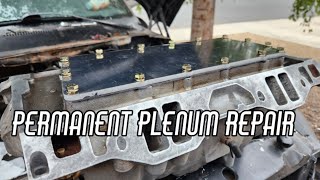
- Dodge Ram 1500 (1994-2002) — The Magnum V6 and V8 engines are famous for the intake plenum gasket failing, creating a massive vacuum leak that is a primary cause of P1294. An aftermarket aluminum plenum plate is the permanent fix.
- Chrysler Town & Country / Dodge Grand Caravan (1996-2007) — On the 3.3L and 3.8L V6 engines, this code is frequently triggered by a failing IAC valve or vacuum leaks around the intake.
- Ford F-250 / F-350 Super Duty (1999-2003) — On trucks with the 7.3L Power Stroke diesel, P1294 means 'Injector High Side Open - Bank 2'. The root cause is almost always a failed Under Valve Cover Harness (UVCH) or a poor connection at the 42-pin connector.
- Chrysler Sebring (1998-2005) — Owners frequently report this code, often after a frustrating diagnosis. The cause is commonly a hard-to-find vacuum leak or a hairline crack in the plastic throttle body housing.
- Mitsubishi Eclipse (1995-1999) — On models with the 420A engine, P1294 means 'Target Idle Not Reached'. Owners report that a failing ignition coil pack causes this code along with misfires, even if the IAC appears to be the issue.
- Chrysler PT Cruiser (2001-2010) — This code is a frequent complaint, typically caused by a faulty idle air control motor or vacuum leaks, similar to other Chrysler products of the era.
Manufacturer-Specific Notes
- Chrysler/Dodge/Jeep: This is the most common group for the 'Target Idle Not Reached' definition. The cause is almost always unmetered air (vacuum leak) or a faulty IAC. The intake manifold plenum gasket on Magnum engines (1994-2002) is a well-documented, common failure point causing this code.
- Ford: P1294 has multiple, distinct meanings. On 7.3L Power Stroke diesel trucks, it means 'Injector High Side Open - Bank 2', pointing to a wiring (UVCH) or Injector Driver Module (IDM) issue. On other models, it refers to an invalid signal from the front propshaft speed sensor.
- Volkswagen/Audi: On VW and Audi vehicles, P1294 indicates 'Engine Coolant Thermostat - Short to Ground'. This is an electrical circuit fault related to the cooling system and has nothing to do with engine idle speed.
- Chevrolet/GMC: For some GM vehicles, particularly diesel trucks, P1294 indicates an injector circuit fault, such as 'Injector Circuit Low to High Current Transition Time Bank 2', which is functionally similar to the Ford Power Stroke definition.
Real Owner Stories
2001 Jeep Cherokee Sport (XJ) at 117K miles
After cleaning the throttle body as preventative maintenance, the engine developed a fluctuating idle between 800-1000 RPM and soon threw code P1294. The engine would sometimes stall after a hot restart.
What they tried:
- Cleaned the Idle Air Control (IAC) valve and its port, with no change.
- Took it to a shop which claimed to find an intake manifold gasket leak but couldn't replicate the stalling.
- Owner noted a high-pitched whistle during acceleration and known cracks in CCV hoses.
Outcome: The owner planned to replace the IAC, TPS, and cracked CCV hoses as the next logical steps. The whistling sound and known cracked hoses strongly pointed to a significant vacuum leak being the root cause, exacerbated by the recent throttle body cleaning.
Lesson: A high-pitched whistle is a classic sign of a vacuum leak. Always replace known bad hoses and fittings first. Cleaning a throttle body sometimes worsens the symptoms of an existing vacuum leak as the computer can no longer compensate for it.
1999 Dodge Durango 5.9L Magnum
Vehicle had a high idle of 1000-1200 RPM after warmup, accompanied by code P1294.
What they tried:
- Replaced PCV valve, which had no effect.
- Cleaned the heavily carbon-caked IAC valve and its port.
- Discovered a broken vacuum hose for the brake booster and a broken cap on another manifold vacuum port.
Outcome: After replacing the broken vacuum hose and cap, and cleaning the IAC, the idle returned to a solid 650 RPM and the problem was resolved.
Lesson: On older vehicles, plastic vacuum lines and rubber caps become extremely brittle. Start by carefully inspecting all vacuum connections on the intake manifold. What seems like a complex sensor issue is often a simple, cheap vacuum leak.
2001 Ford F-250 7.3L Power Stroke
Truck suddenly started running very rough with no power and set a P1294 code, which on a 7.3L means 'Injector High Side Open - Bank 2'.
What they tried:
- Owner suspected the Under Valve Cover Harness (UVCH) and performed an ohm test, which showed slightly high but consistent readings.
- A buzz test only actuated the passenger side (Bank 1) injectors, confirming the fault on the driver's side (Bank 2).
- Pulled the driver's side valve cover and found the UVCH was bad. Replaced both harnesses and valve cover gaskets.
Outcome: After replacing the harnesses, the truck ran again but had a new stuttering issue at full throttle. The final problem was discovered to be a bad Camshaft Position Sensor (CPS) that was faulty right out of the box. Replacing it with the old one fixed all issues.
Lesson: For a 7.3L Power Stroke, P1294 almost always points to the UVCH or its external connector. However, this case shows that a recent, unrelated repair (a new CPS) can fail and create confusing symptoms. If a new problem appears after a fix, always suspect the new part first.
1999 Chrysler Sebring
Owner was trying to pass an emissions test but kept failing due to a persistent P1294 code and a high idle of around 1800 RPM.
What they tried:
- Replaced spark plugs, wires, distributor, cap, EGR valve, and IAC valve.
- Checked for vacuum leaks using carb cleaner but could not find any.
Outcome: After exhausting all common options, the owner finally discovered a tiny, hard-to-see crack in the plastic throttle body itself. Replacing the throttle body fixed the high idle and cleared the code.
Lesson: If you have replaced all common culprits (IAC, vacuum hoses) and the high idle persists, a smoke test is the next logical step. It reveals hairline cracks in plastic components like the throttle body or intake manifold that are otherwise impossible to find.
How to Prevent This Code From Triggering
- Clean the Throttle Body (Every 50,000-75,000 miles) — Removes carbon and oil buildup that causes the throttle plate to stick or restrict airflow to the IAC passages, preventing the computer from accurately controlling idle.
- Clean the Idle Air Control (IAC) Valve (Every 50,000 miles or when cleaning throttle body) — Carbon deposits cause the IAC's pintle to stick, preventing it from making the fine adjustments needed to maintain target idle. Regular cleaning ensures it moves freely.
- Replace the PCV Valve (Every 30,000-50,000 miles) — A PCV valve stuck open acts as a constant vacuum leak. Replacing it proactively is a cheap and easy way to prevent idle issues and oil leaks.
- Periodically Inspect Vacuum Hoses (Every oil change) — Visually checking for cracks, swelling, or soft spots on vacuum lines, especially at connection elbows, helps you catch potential leaks before they become large enough to trigger a code.
- Apply Dielectric Grease to Connectors (Ford 7.3L) (When replacing UVCH or as needed) — Applying dielectric grease to the main 42-pin engine connector and the valve cover connectors helps prevent moisture intrusion and corrosion, which causes the 'High Side Open' fault that triggers P1294 on these engines.
Frequently Asked Questions
Can a bad gas cap cause a P1294 code?
No. A loose or faulty gas cap triggers codes related to the evaporative emission (EVAP) system, such as P0455 or P0457. It does not affect the engine's idle control and will not cause a P1294 code.
I cleaned the IAC and throttle body, but the P1294 code came back. What's next?
The next most probable cause is a hidden vacuum leak. Instead of replacing parts, the most effective next step is a diagnostic smoke test. This reveals tiny, invisible cracks in hoses or leaking gaskets that are impossible to find visually.
Why does my idle surge after cleaning the throttle body or replacing the IAC?
The PCM learns and adapts to a dirty throttle body or failing IAC over time. When you install a clean or new part, the old learned values are no longer correct, causing a temporary high or surging idle. The computer needs to perform an 'idle relearn' procedure to adapt to the new airflow.
Could a bad O2 sensor cause a P1294 code?
While not a direct cause, a faulty oxygen sensor contributes to idle problems. If the O2 sensor provides incorrect data, the computer alters the fuel mixture in a way that makes it difficult to maintain a stable idle, potentially leading to a P1294 code as a secondary fault.
Why did P1294 appear after I replaced my battery?
Disconnecting the battery erases the PCM's volatile memory, which includes the learned idle position for the IAC valve. When you reconnect the battery, the PCM must start from scratch and relearn the proper idle strategy. It struggles to find the correct idle for the first few drive cycles, triggering a P1294 code until the relearn process is complete.
How do I perform an idle relearn procedure?
Disconnect the negative battery terminal for 15 minutes to clear the PCM memory. Reconnect it, start the engine, and let it idle for 10 minutes to warm up, then turn on the A/C for 5 minutes. Finally, drive the vehicle normally for 15 minutes to allow the computer to relearn the correct idle strategy.
My idle is high but the check engine light is off. Could it still be a P1294 issue?
Yes. Most manufacturers require the PCM to detect the fault on two separate 'trips' before illuminating the check engine light. Your vehicle likely has a 'pending' P1294 code stored in memory, which you can read with most modern OBD-II scanners.
Key Takeaways
- P1294 means 'Target Idle Not Reached' on Chrysler, Dodge, and Jeep vehicles, indicating the engine RPM is at least 100-200 RPM off the commanded speed.
- Fix 80% of Chrysler/Jeep P1294 codes by repairing cracked vacuum hoses or cleaning carbon buildup from the Idle Air Control (IAC) valve and throttle body.
- On Ford 7.3L Power Stroke diesels, P1294 means 'Injector High Side Open - Bank 2', requiring a $250-$450 replacement of the Under Valve Cover Harness (UVCH).
- Volkswagen and Audi vehicles use P1294 to indicate an electrical short in the engine coolant thermostat circuit, completely unrelated to idle speed.
- Never replace the IAC valve without first performing a $50-$100 smoke test to rule out hidden vacuum leaks, which are the true root cause over 50% of the time.
Helpful Videos


The information in this article is provided for general reference and educational purposes only. Vehicle specifications, procedures, and part compatibility can vary by production date, trim level, and region. Always consult your vehicle's factory service manual and verify part numbers before purchasing or performing repairs. Safety-critical components such as airbags, seat belts, and braking systems should be installed by a qualified professional.
- 🎬 Helpful Videos
- What Does P1294 Mean?
- Can I Drive With P1294?
- Common Causes
- Symptoms
- Diagnostic Flowchart
- Common Fixes & Costs
- Used vs. New Parts: Buying Guide
- What Happens If You Wait — Timeline
- Cost of Not Fixing It
- Diagnosis Steps
- When This Code Triggers (Freeze-Frame Conditions)
- Related Codes
- Climate & Environmental Factors
- How to Talk to a Mechanic About This Code
- Where to Take It: Dealer vs Independent vs Chain
- When to Walk Away From the Repair
- What Scan Tool You Need for This Code
- How to Clear the Code After You Fix It
- Will This Fail Emissions / State Inspection?
- Most Commonly Affected Vehicles
- Manufacturer-Specific Notes
- Real Owner Stories
- 2001 Jeep Cherokee Sport (XJ) at 117K miles
- 1999 Dodge Durango 5.9L Magnum
- 2001 Ford F-250 7.3L Power Stroke
- 1999 Chrysler Sebring
- How to Prevent This Code From Triggering
- Frequently Asked Questions
- Can a bad gas cap cause a P1294 code?
- I cleaned the IAC and throttle body, but the P1294 code came back. What's next?
- Why does my idle surge after cleaning the throttle body or replacing the IAC?
- Could a bad O2 sensor cause a P1294 code?
- Why did P1294 appear after I replaced my battery?
- How do I perform an idle relearn procedure?
- My idle is high but the check engine light is off. Could it still be a P1294 issue?
- Key Takeaways
- 🎟️ Get 5% Off