

OBD-II Code P1290: Comprehensive Diagnosis & Repair Guide
The Ultimate Guide to P1290: What It Means, Manufacturer Variations, and Pro-Level Fixes
- Verify your vehicle's specific P1290 definition before buying parts, as it means a Cylinder Head Temperature (CHT) short on Fords, an Engine Coolant Temperature (ECT) fault on VW/Audi, and a turbo wastegate failure on BMWs.
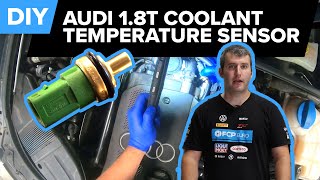
- Replace the original black-top ECT sensor with the updated green-top version (part 059919501A) on 2001-2010 VW and Audi models to resolve the most common cause of this code.
- Check your BMW's VIN with a dealership before paying for a turbo wastegate repair, as BMW extended the warranty on this specific actuator to 15 years or 150,000 miles for many N20 engines.
- Stop driving immediately if your Ford displays P1290 alongside code P1299, as this confirms the engine computer has entered limp mode to prevent catastrophic overheating damage.
What Does P1290 Mean?

P1290 is a manufacturer-specific code with vastly different definitions. For Ford, Lincoln, and Mercury, it indicates a low voltage or short in the Cylinder Head Temperature (CHT) sensor circuit. For Volkswagen and Audi, it flags a high voltage signal from the Engine Coolant Temperature (ECT) sensor. For modern BMWs, it points to a completely different system: a faulty turbocharger wastegate actuator. In all cases, the engine computer receives an impossible signal and triggers a fail-safe mode.
Technical definition: The official SAE/OBD-II definition for P1290 varies by manufacturer. Ford/Lincoln/Mercury: 'Cylinder Head Temperature (CHT) Sensor Circuit Low Input'. Volkswagen/Audi: 'Engine Coolant Temperature (ECT) Sensor, ECM Controlled Cooling System - High Input'. BMW: Generic code pointing to 'Turbocharger Wastegate Solenoid Stop Not Learned' or similar wastegate faults. Nissan: 'Throttle Control Motor Relay Circuit Open'. Chrysler/Dodge (CNG): 'CNG Fuel System Pressure Too High'.
Can I Drive With P1290?

Yes, But With Caution. You can drive short distances, but extended driving risks severe damage. Lacking accurate temperature data, the computer enables 'limp mode,' reducing power and running cooling fans constantly. Driving with the resulting rich fuel mixture destroys the catalytic converter, a repair costing $800 to $2,500.
Common Causes

- Faulty CHT or ECT Sensor (Very Common) — The sensor itself is the most frequent point of failure. It degrades from heat cycles, develops internal shorts, or wears out. On Audi/VW models, a failed O-ring on the ECT sensor allows moisture inside, destroying the electronics.
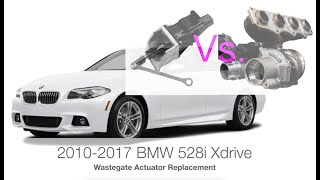
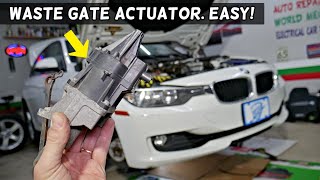
- Faulty Turbocharger Wastegate Actuator or Solenoid (BMW) (Very Common) — On modern turbocharged BMWs (especially the N20 engine), P1290 flags a failing electronic wastegate actuator or pneumatic boost solenoid. The actuator gets stuck, its internal motor fails, or the computer loses its learned position.
- Wiring or Connector Issues (Common) — Wires leading to the temperature sensor fray, corrode, melt from engine heat, or short to ground. The electrical connector gets damaged or contaminated with oil. On Fords, shoddy previous repairs using uncased butt connectors frequently cause this short.
- Low Engine Coolant Level or Leaks (Common) — If a leak drops the coolant level, the sensor is exposed to air instead of liquid. This provides an inaccurate, implausible reading that triggers the code and risks severe engine overheating.
- Faulty Thermostat (Less Common) — A thermostat stuck open prevents the engine from reaching operating temperature. This triggers a P1290 on VW and Audi models, almost always in conjunction with code P1296 (Cooling System Malfunction).
- Faulty Constant Control Relay Module (CCRM - Ford) (Rare) — On 1999-2004 Ford Mustangs, the CHT sensor circuit runs through the CCRM. An internal failure in this module causes a P1290 code, accompanied by a radiator fan that refuses to turn on.
- Damaged Powertrain Control Module (PCM) (Very Rare) — The vehicle's main computer fails in rare instances. Suspect this only after exhaustively ruling out all sensor and wiring faults.
Symptoms

- Check Engine Light is On — The Malfunction Indicator Lamp (MIL) illuminates immediately upon detecting the circuit fault.
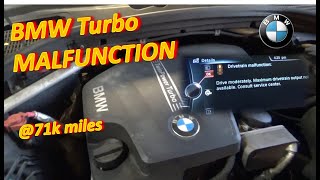
- Reduced Engine Power or 'Limp Mode' — The computer intentionally limits engine power to prevent overheating damage. On BMWs, a 'Drivetrain Malfunction' message appears on the iDrive screen.
- Incorrect Temperature Gauge Reading or Constant Fan Operation — The dashboard temperature gauge reads fully hot, fully cold, or fluctuates wildly. The cooling fans run at maximum speed constantly as a fail-safe.
- Poor Fuel Economy and Black Smoke — The computer defaults to a rich fuel mixture (injecting extra fuel) when it cannot verify engine temperature, dropping gas mileage and emitting black exhaust smoke.
- Difficulty Starting the Engine — The computer uses temperature data to manage the fuel mixture for starting. An incorrect signal forces the engine to crank longer before firing, especially in cold weather.
Diagnostic Flowchart
Tap your situation to follow the diagnostic path that matches what you're seeing on this code.
Common Fixes & Costs
- Replace Engine Coolant Temperature (ECT) Sensor — Parts: $20-$60, Labor: $75-$150, ~0.8 hr book time (DIY)
- Replace Cylinder Head Temperature (CHT) Sensor — Parts: $30-$60, Labor: $150-$400, ~2.5 hr book time (Intermediate)
- Replace Turbocharger Wastegate Actuator — Parts: $250-$450, Labor: $300-$800, ~3.5 hr book time (Advanced)
- Repair Damaged Wiring or Connector — Parts: $5-$30, Labor: $100-$400, ~1.5 hr book time (Intermediate)
- Replace Constant Control Relay Module (CCRM) — Parts: $85-$200, Labor: $50-$100, ~0.8 hr book time (DIY)
Used vs. New Parts: Buying Guide
When a used part is worth it: For a BMW wastegate actuator, a used part from a low-mileage vehicle is a budget option, but carries risk. For inexpensive ECT/CHT sensors, always buy new.
Donor-vehicle mileage cap: roughly under 60000 miles for the part to have meaningful remaining life.
Donor quality checklist:
- Verify the part number exactly.
- Ensure no visible corrosion exists on electronic actuator connectors.
- Check the donor car's VIN to confirm it wasn't scrapped for a related engine failure.
Decision logic:
- If Part is an ECT or CHT sensor → Always buy new. The cost is low and new sensors are infinitely more reliable.
- If Part is a BMW wastegate actuator and budget is the primary concern → A used part is an option, but understand it has no warranty and requires software calibration.
- If Long-term reliability is most important → Buy a new OEM or high-quality aftermarket part with a warranty.
Warranty tradeoff: Used parts offer a 30-day warranty at best. New aftermarket parts include a 1-year to limited lifetime warranty. New OEM parts offer a 1-2 year warranty.
Worst-case if a used part fails: 600-1500 if a used electronic actuator fails after installation, requiring repeat labor and a second part.
What Happens If You Wait — Timeline
- 0-1 week: Check Engine Light illuminates. The temperature gauge reads incorrectly. Cooling fans run constantly. No major drivability symptoms are perceived yet. (MPG impact: 0-5%% · Added cost: $0)
- 1 week - 2 months: The PCM operates in fail-safe mode, running a rich fuel mixture to keep the engine cool. Fuel economy drops noticeably, and the car experiences hard starts. (MPG impact: 10-20%% · Added cost: $50-$150 in wasted fuel.)
- 2-6 months: Sustained driving with a rich fuel mixture coats the catalytic converter's honeycomb structure in soot, destroying its efficiency and triggering a P0420 code. (MPG impact: 15-25%% · Added cost: $1,200-$2,800)
- 6+ months: Catastrophic failure occurs. If the fault masks a real coolant leak, severe overheating warps the cylinder heads or seizes the engine. (MPG impact: >25%% · Added cost: $3,000-$8,000+)
Cost of Not Fixing It
- 0-1 month: Reduced fuel economy, failed emissions tests, and premature wear on cooling fan motors from constant operation. (Added cost: 50-150)
- 1-6 months: Driving with the engine running rich destroys the catalytic converter, requiring a costly replacement. (Added cost: 1200-2800)
- 6+ months: Catastrophic engine damage from an unmanaged overheating event, risking warped cylinder heads or a seized engine block. (Added cost: 3000-8000+)
Diagnosis Steps
- Scan for All Trouble Codes (Generic and Manufacturer-Specific)
Use an OBD-II scanner to read all codes. A generic P1290 on a BMW is meaningless without underlying manufacturer codes. Note accompanying codes like P0117, P1299, or P1296 to provide critical context.
Tools: OBD-II Scanner (Manufacturer-Specific Scanner for BMW) (Beginner) - Check Engine Coolant Level and Condition
Ensure the engine is completely cool. Check the coolant reservoir. If low, top it off with the correct coolant and inspect for leaks around hoses or the water pump.
Tools: Flashlight (Beginner) - Visually Inspect the Sensor and Wiring Harness
Locate the CHT (Ford) or ECT (VW/Audi) sensor. Inspect the electrical connector and wires for melted plastic, green corrosion, oil contamination, or fraying.
Tools: Flashlight (Beginner) - Inspect Turbo Wastegate Actuator (BMW Specific)
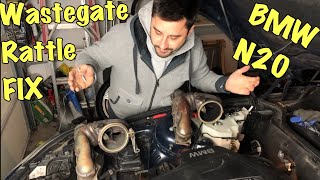
If diagnosing a BMW with a 'Drivetrain Malfunction' light, inspect the electronic wastegate actuator and its wiring. With the engine off, wiggle the wastegate arm on the turbo. Significant play or rattling indicates a worn wastegate bushing.
Tools: Flashlight, Basic hand tools (Intermediate) - Monitor Live Sensor Voltage Data (Ford/VW/Audi)
Use a scan tool to monitor the CHT or ECT sensor voltage PID. For Ford (Circuit Low), a reading below 0.2V with key-on-engine-off confirms a hard short to ground. For VW/Audi (High Input), a reading above 4.5V indicates an open circuit or bad ground.
Tools: Advanced OBD-II Scanner with Live Data (Advanced) - Test the Sensor's Resistance and Wiring (CHT/ECT)
Disconnect the sensor. Measure resistance across the sensor pins with a multimeter; zero (short) or infinite (open) means a bad sensor. Next, turn the ignition 'On' and test the harness connector: one pin must show a 5V reference voltage, and the other must be a clean ground (below 100mV).
Tools: Multimeter (Advanced) - Test the Constant Control Relay Module (Ford Mustang Specific)
On 1999-2004 V6 Mustangs, turn the engine on and activate the A/C. If the radiator fan fails to turn on immediately, the CCRM (which houses the CHT circuit relay) is faulty and requires replacement.
Tools: None (Intermediate)
When This Code Triggers (Freeze-Frame Conditions)
- Engine Coolant Temp: -40°F or 280°F (An implausible value indicating a circuit short (Ford) or open (VW/Audi).)
- RPM: 1500-3000 (Triggers during steady-state cruise when the signal is expected to be stable.)
- Engine Load: 25-70% (Normal driving or light acceleration when the ECU actively monitors sensor inputs.)
- Vehicle Speed: 40-65 mph (Highway driving is the most common condition for the monitor to run and detect a fault.)
Related Codes
- P0117 — This generic code means 'ECT Sensor Circuit Low Input'. Diagnosing P0117 involves looking for the exact same short to ground that causes a Ford P1290.
- P1299 — For Ford, this means 'Cylinder Head Overtemperature Protection Active.' Seeing both codes confirms the PCM acted on a signal from the CHT circuit and entered limp mode.
- P1296 — For VW/Audi, this means 'Cooling System Malfunction' and often appears with P1290. P1296 points to a stuck-open thermostat, while P1290 points to the ECT sensor.
- P1285 — On Fords, this indicates the sensor sent a valid, dangerously high temperature reading. P1290 indicates a circuit short, meaning the wire failed, not necessarily that the engine is hot.
Climate & Environmental Factors
- High Humidity / Heavy Rain: On VW and Audi models, the ECT sensor O-ring degrades and allows moisture into the electrical connector, causing a short. Failure is highly likely in wet climates.
- Extreme Cold: A failing temperature sensor develops a 'bad spot' in its resistance range exposed only at sub-zero temperatures, triggering a P1290 code during a cold snap.
How to Talk to a Mechanic About This Code
Say this: "I have a P1290 code. For my [Ford/VW/BMW], I understand this points to a [CHT circuit short/ECT sensor failure/turbo wastegate actuator]. I'd like to book a diagnostic appointment to confirm the cause. Can you check the [live CHT voltage/ECT sensor readings/BMW-specific fault codes] before recommending a repair?"
This signals you are an informed consumer, directs the technician to the most probable cause, and requests specific, data-driven diagnostic steps.
Avoid saying:
- 'My check engine light is on, can you just fix it?'
- 'I think I need a new temperature sensor.'
- 'Do whatever you think is best.'
Questions to ask before authorizing the repair:
- Can you show me the failed reading on the scan tool (e.g., the low CHT voltage, the high ECT voltage, or the specific BMW wastegate fault)?
- If it's a wiring issue, how do you plan to repair it (e.g., solder and heat shrink vs. butt connectors)?
- For a BMW wastegate, does the repair include the necessary software calibration procedure?
- What is the warranty on the parts and labor for this specific repair?
Where to Take It: Dealer vs Independent vs Chain
- Dealer:
Best for: BMW wastegate actuator issues, especially for warranty claims or required software calibration (ISTA)., Vehicles still under a powertrain or emissions warranty.
Downsides: Highest labor rates, often 1.5-2x more than an independent shop., May default to replacing an entire assembly (like a full turbo) when only the actuator failed. (Typical cost: +50% vs. baseline) - Independent Shop:
Best fit for Ford and VW/Audi repairs. For BMW, an independent specialist is required.
Best for: VW/Audi ECT sensor replacement and Ford CHT sensor/wiring repairs., Finding a German car specialist who has seen the BMW P1290 issue many times.
Downsides: A general mechanic lacks the expensive, manufacturer-specific scan tools needed for BMW wastegate calibration. (Typical cost: +0% vs. baseline) - Chain Shop:
Acceptable for a simple VW ECT sensor swap, but AVOID for Ford CHT access issues and all BMW diagnostics.
Best for: Simple, straightforward part swaps like a VW/Audi ECT sensor.
Downsides: Not equipped for complex diagnostics or wiring repairs., Will misdiagnose a BMW wastegate issue as a coolant problem., Lacks the specific tools for a difficult Ford CHT sensor replacement. (Typical cost: -10% vs. baseline)
When to Walk Away From the Repair
If the estimated repair cost exceeds 50% of your car's private-party value, seriously consider selling or trading it in.
- Car worth $4000, fix is $2200: Walk away. The repair cost is over 50% of the car's value.
- Car worth $15000, fix is $1500: Fix it. This repair is well below the threshold.
- Car worth $3000, fix is $2800: Walk away. The repair cost is nearly the entire value of the car.
What Scan Tool You Need for This Code
Minimum: A scanner that reads manufacturer-specific codes and displays live sensor data (PID). A basic code reader is useless for P1290.
A cheap reader only shows 'P1290'. You must see if it's a Ford CHT 'Circuit Low', a VW 'High Input', or a BMW 'Wastegate' fault, and view live voltage to confirm.
Budget: BlueDriver Pro (~$90) — Reads enhanced codes for Ford, VW, and BMW. Graphs live CHT/ECT voltage to see if it's stuck high or low.
Mid-range: Foxwell NT510 Elite (~$200) — Offers dealer-level diagnostics for a specific brand. For BMW, it reads proprietary wastegate codes and performs the required calibration procedure.
Professional: Autel MaxiCOM MK808S (~$450) — Provides full-system, bidirectional diagnostics. Performs active tests, codes new components, and runs wastegate relearn functions.
How to Clear the Code After You Fix It
- Use an OBD-II scan tool to clear all fault codes.
- Ensure the fuel tank is between 1/4 and 3/4 full.
- Perform a complete drive cycle to run the onboard readiness monitors.
Drive cycle (~30 minutes): Start the engine cold and idle for 3 minutes. Drive for 20 minutes with a mix of stop-and-go and highway speeds. Include steady driving at 55 mph for 5 minutes. Allow the vehicle to cool down completely.
Readiness monitors affected: Catalyst Monitor, Oxygen (O2) Sensor Monitor, Evaporative System Monitor
Before emissions retest: drive at least 100 miles to fully set monitors.
Watch out for:
- Disconnecting the battery clears the code but resets all readiness monitors to 'Not Ready', causing an automatic emissions test failure.
- The code returns immediately if the underlying electrical short or mechanical fault remains.
- BMW wastegate replacements require a software calibration before the code will permanently clear.
Will This Fail Emissions / State Inspection?
Yes — this code typically fails an OBD-II emissions inspection.
- California: An illuminated Check Engine Light is an automatic failure. All required readiness monitors must be 'Ready'.
- New York: An active P1290 code causes an automatic failure. For 2001+ vehicles, only one non-continuous monitor can be 'Not Ready'.
- Texas: An active Check Engine Light is an automatic failure. You are allowed one 'Not Ready' monitor to pass.
Most Commonly Affected Vehicles
- BMW 3-Series (F30), X1 (E84), X3 (F25) (2012-2018) — Extremely common on N20 engines. The code points to a faulty electronic wastegate actuator or its wiring, not the coolant sensor.
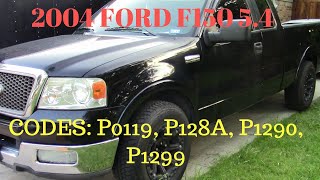
- Ford F-150 (2001-2014) — Prone to CHT sensor and wiring shorts. On the 5.4L V8, the sensor is buried behind the cylinder head.
- Ford Mustang (1999-2010) — Commonly affected by CHT sensor failure. On 1999-2004 V6 models, a faulty Constant Control Relay Module (CCRM) is the primary cause.
- Volkswagen Jetta / Golf (2001-2010) — The original black or blue top ECT sensor fails constantly. Upgrade to the green top version.
- Audi A4 (2002-2009) — Shares the faulty ECT sensor design with VW. Moisture ingress past the O-ring is a known defect.
- Ford Focus (2005-2011) — The CHT sensor and its wiring harness are known failure points.
- Toyota Various (2000-2010) — Indicates a fault in the engine coolant temperature sensor circuit or 'Cylinder head temp below expected value'.
Manufacturer-Specific Notes
- BMW: P1290 is a generic code pointing to a fault with the turbocharger wastegate actuator, triggering a 'Drivetrain Malfunction' warning. Replacing the coolant sensor will not fix the issue.
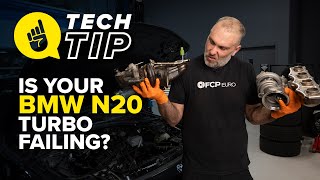
- BMW: WARRANTY NOTE: BMW issued an extended warranty for the turbocharger wastegate actuator to 15 years or 150,000 miles (SI B01 07 21). Check with a dealer before paying for repairs.
- Ford / Lincoln / Mercury: The code means 'Cylinder Head Temperature (CHT) Sensor Circuit Low Input,' indicating a direct short to ground in the wiring or a failed sensor.
- Volkswagen / Audi: The code means 'Engine Coolant Temperature (ECT) Sensor - High Input,' indicating the sensor signal voltage is too high due to an open circuit.
- Nissan: P1290 means 'Throttle Control Motor Relay Circuit Open,' a fault in the electronic throttle control system, entirely unrelated to cooling.
- Chrysler / Dodge / Ram: On Compressed Natural Gas (CNG) vehicles, P1290 means 'CNG Fuel System Pressure Too High,' unrelated to engine temperature.
Real Owner Stories
2013 BMW 328i with 88k miles
Check Engine Light and 'Drivetrain Malfunction' message on startup. A slight rattling noise was heard from the engine bay that went away after driving.
What they tried:
- Owner scanned the car at an auto parts store, receiving a generic P1290 code.
Outcome: A BMW specialist identified a faulty electronic turbo wastegate actuator. The fix required replacing the actuator and performing a software calibration procedure with ISTA.
Lesson: On a modern BMW, P1290 is a turbo wastegate issue, not a coolant sensor. A generic scanner is insufficient. Check for extended warranty coverage (TSB SI B01 07 21), which covers this part for 15 years/150,000 miles on many models.
2001 Ford F-150 5.4L with 155k miles
Persistent P1290 code, weak throttle response, and 10 MPG fuel economy after a previous owner replaced the engine.
What they tried:
- Owner replaced the CHT sensor (requiring intake manifold removal), spark plugs, and coil packs.
- The code returned. Tracing the wiring revealed the previous shop used uncased butt connectors on the CHT circuit, which shorted to ground.
- Owner repaired the harness with solder and heat shrink.
Outcome: The initial short in the wiring harness damaged the Powertrain Control Module (PCM). The owner had to replace the PCM to permanently clear the code.
Lesson: A P1290 on a Ford is a 'Circuit Low Input' code indicating a short. Inspect the entire wiring harness from the sensor to the PCM for melted sections or shoddy repairs before replacing the difficult-to-reach sensor.
2002 VW Jetta 1.8T
Check Engine Light with codes P1296 and P1290. The temperature gauge sat at zero despite the engine being warm.
What they tried:
- The owner noted the car still had the factory-original 'black top' Engine Coolant Temperature (ECT) sensor.
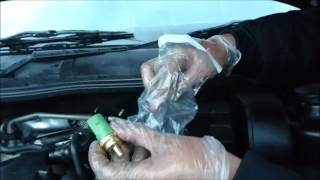
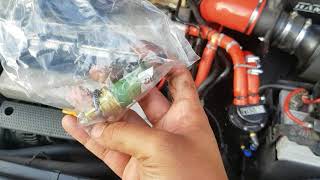
Outcome: The owner replaced the old black sensor with the updated 'green top' ECT sensor (Part No. 059919501A), a new O-ring, and a clip. The $40 DIY repair resolved both codes.
Lesson: For early 2000s VW/Audi vehicles, P1290 is almost always the ECT sensor. If your car has the original black or blue top sensor, replace it with the revised green top version immediately.
How to Prevent This Code From Triggering
- Perform regular cooling system flushes. (Every 30,000 to 50,000 miles.) — Old coolant becomes acidic and degrades sensors, hoses, and seals from the inside out. Flushing removes contaminants and protects the ECT/CHT sensor.
- Use the correct, high-quality coolant and distilled water. (Whenever topping off or refilling the system.) — Mixing incompatible coolants causes gelling and blockages. Distilled water prevents mineral scaling that fouls sensors.
- Inspect cooling system hoses and the radiator cap. (Annually or every 15,000 miles.) — A failing radiator cap lowers the coolant boiling point, creating air pockets and hot spots that provide false readings to the temperature sensor.
- Check for extended warranties on BMW turbo components. (Before any symptoms appear.) — BMW extended the warranty (15 years/150,000 miles) for the turbo wastegate actuator on many models, turning a $1,000 repair into a free dealer visit.
Frequently Asked Questions
Can I drive my car with a P1290 code?
You can drive short distances, but extended driving risks severe engine damage. The computer limits engine power ('limp mode') and runs cooling fans constantly to prevent overheating. Long-term driving with the resulting rich fuel mixture destroys the catalytic converter.
I replaced the temperature sensor on my BMW, but P1290 came back. What's wrong?
On turbocharged BMWs, P1290 usually flags a faulty turbocharger wastegate actuator, not the coolant sensor. You must use a BMW-specific scan tool to read the underlying manufacturer codes and confirm the true cause. Check with a dealer before paying, as BMW extended the warranty for this part on many vehicles.
What happens if you don't replace a bad ECT or CHT sensor?
Ignoring a bad temperature sensor causes poor fuel economy, hard starting, and failed emissions tests. The most significant risk is catastrophic engine overheating. Because the computer receives false data, it cannot properly regulate cooling fans or warn you of a boiling engine.
Can low coolant cause a P1290 code?
Yes, low coolant exposes the sensor to air or steam instead of liquid. This provides an implausible temperature reading to the computer, triggering a P1290 code. Always verify your coolant level and check for leaks before replacing electronic parts.
What's the difference between a CHT sensor and an ECT sensor?
An ECT (Engine Coolant Temperature) sensor is submerged in coolant and measures fluid temperature directly. A CHT (Cylinder Head Temperature) sensor, used primarily by Ford, bolts directly to the cylinder head metal. The CHT infers engine temperature and provides a reading even if all coolant leaks out.
Why do my cooling fans run all the time with a P1290 code?
When the engine computer loses a reliable temperature signal, it enters a fail-safe mode. To prevent any possibility of the engine overheating, it commands the cooling fans to run at maximum speed continuously. This is a protective measure until the sensor circuit is repaired.
I replaced the temperature sensor, but the P1290 code came back. What now?
If a new sensor does not fix the problem, the fault is almost certainly a short or break in the wiring harness. You must test the circuit for shorts to ground or open wires using a multimeter. On some older Ford Mustangs, a failing Constant Control Relay Module (CCRM) also causes this.
Is fixing a P1290 code expensive?
A bad sensor is inexpensive ($20-$60) with labor ranging from $75 to $350 depending on access difficulty. Wiring repairs typically cost $100-$400. BMW wastegate actuator replacements range from $500 at an independent shop to over $1,500 at a dealership, though extended warranties often cover it.
Key Takeaways
- Verify your vehicle's specific P1290 definition before buying parts, as it means a Cylinder Head Temperature (CHT) short on Fords, an Engine Coolant Temperature (ECT) fault on VW/Audi, and a turbo wastegate failure on BMWs.
- Replace the original black-top ECT sensor with the updated green-top version (part 059919501A) on 2001-2010 VW and Audi models to resolve the most common cause of this code.
- Check your BMW's VIN with a dealership before paying for a turbo wastegate repair, as BMW extended the warranty on this specific actuator to 15 years or 150,000 miles for many N20 engines.
- Stop driving immediately if your Ford displays P1290 alongside code P1299, as this confirms the engine computer has entered limp mode to prevent catastrophic overheating damage.
Helpful Videos

The information in this article is provided for general reference and educational purposes only. Vehicle specifications, procedures, and part compatibility can vary by production date, trim level, and region. Always consult your vehicle's factory service manual and verify part numbers before purchasing or performing repairs. Safety-critical components such as airbags, seat belts, and braking systems should be installed by a qualified professional.
- 🎬 Helpful Videos
- What Does P1290 Mean?
- Can I Drive With P1290?
- Common Causes
- Symptoms
- Diagnostic Flowchart
- Common Fixes & Costs
- Used vs. New Parts: Buying Guide
- What Happens If You Wait — Timeline
- Cost of Not Fixing It
- Diagnosis Steps
- When This Code Triggers (Freeze-Frame Conditions)
- Related Codes
- Climate & Environmental Factors
- How to Talk to a Mechanic About This Code
- Where to Take It: Dealer vs Independent vs Chain
- When to Walk Away From the Repair
- What Scan Tool You Need for This Code
- How to Clear the Code After You Fix It
- Will This Fail Emissions / State Inspection?
- Most Commonly Affected Vehicles
- Manufacturer-Specific Notes
- Real Owner Stories
- 2013 BMW 328i with 88k miles
- 2001 Ford F-150 5.4L with 155k miles
- 2002 VW Jetta 1.8T
- How to Prevent This Code From Triggering
- Frequently Asked Questions
- Can I drive my car with a P1290 code?
- I replaced the temperature sensor on my BMW, but P1290 came back. What's wrong?
- What happens if you don't replace a bad ECT or CHT sensor?
- Can low coolant cause a P1290 code?
- What's the difference between a CHT sensor and an ECT sensor?
- Why do my cooling fans run all the time with a P1290 code?
- I replaced the temperature sensor, but the P1290 code came back. What now?
- Is fixing a P1290 code expensive?
- Key Takeaways
- 🎟️ Get 5% Off