

P1285 on 2013-2019 Ford Escape: Cylinder Head Over Temperature Causes and Fixes
P1285 means the cylinder head is dangerously hot. On these Escapes, it's a strong warning sign of coolant leaking into the engine cylinders due to a known engine block design flaw. The fix is often a very expensive engine replacement.
- P1285 on a 2013-2019 EcoBoost Escape is a critical warning that should be addressed immediately.
- Do not assume it's a simple sensor fault. The overwhelming cause is a known engine defect causing coolant to leak into the cylinders.
- Diagnosis must include a test for combustion gases in the coolant (block test) or a borescope inspection before any parts are replaced.
- Ford issued TSBs and a warranty extension (Customer Satisfaction Program 21N12) for this issue, so check with a dealer to see if your vehicle is covered, even if it's out of the standard warranty period.
- The correct repair is a new short block or long block engine, a job that costs thousands of dollars.
What's Unique About the 2013-2019 Ford Escape
On the 2013-2019 Ford Escape with 1.5L and 2.0L EcoBoost engines, P1285 is not just a random overheat code; it is strongly associated with a serious, well-documented design flaw. The open-deck engine block has a weakness between the cylinders where a coolant passage is cut, creating a thin wall that can crack over time, allowing coolant to leak directly into the combustion chamber. This issue is so prevalent that Ford has issued multiple Technical Service Bulletins (TSBs), including the superseding TSB 22-2322 for the 1.5L and TSB 22-2229 for the 2.0L, and a Customer Satisfaction Program (21N12) for the 1.5L. These documents acknowledge the problem and outline the official repair, which involves replacing the engine's short block with a redesigned part.
Symptoms You May Notice
- Check Engine Light is on
- Engine temperature gauge reading very high or maxed out
- "Engine Coolant Over-Temperature" warning message on the dashboard
- Noticeable loss of engine coolant without any visible external leaks
- White, sweet-smelling smoke from the exhaust, especially on a cold start
- Engine running rough, misfiring, or stalling
- Engine goes into a reduced power "limp mode"
- Bubbling in the coolant overflow/degas bottle
- Replacing only the Cylinder Head Temperature (CHT) sensor without first ruling out the common coolant intrusion issue.
- Replacing spark plugs and ignition coils to fix misfire codes (like P0301-P0304) without addressing the underlying overheating problem causing the misfires.
- Adding stop-leak products to the cooling system. This will not fix a cracked block and can clog the radiator, heater core, and small coolant passages, creating more expensive problems.
Most Likely Causes
- Coolant Intrusion into Cylinders (Cracked Engine Block) 🔴 High Probability A design flaw in the open-deck engine block creates a thin wall between coolant passages and cylinders, which can crack over time. This is a widely documented failure on 1.5L and 2.0L EcoBoost engines in this year range, acknowledged by Ford in TSBs like 22-2322 (1.5L) and 22-2229 (2.0L).
How to confirm: Perform a cooling system pressure test; if it fails with no external leaks, it points to an internal leak. A chemical combustion leak test (using blue fluid that turns yellow/green) can detect exhaust gases in the coolant. The definitive test is using a borescope to visually inspect the cylinders (with spark plugs removed) for coolant, which may look like liquid, unusual green/orange residue, or unusually clean, steam-cleaned piston tops.
Typical fix: Replacement of the engine short block with a redesigned part that has revised coolant passages. This is the official Ford-recommended repair.
Est. part cost: $3000-$5000 - Failed Cylinder Head Temperature (CHT) Sensor ⚪ Low Probability
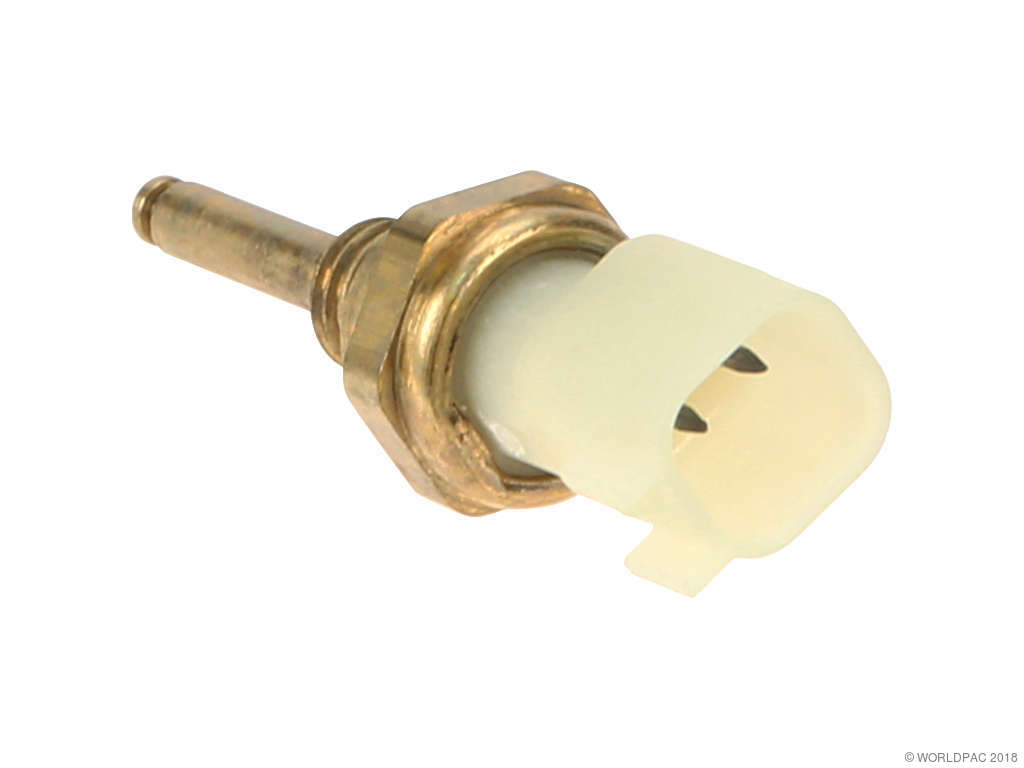
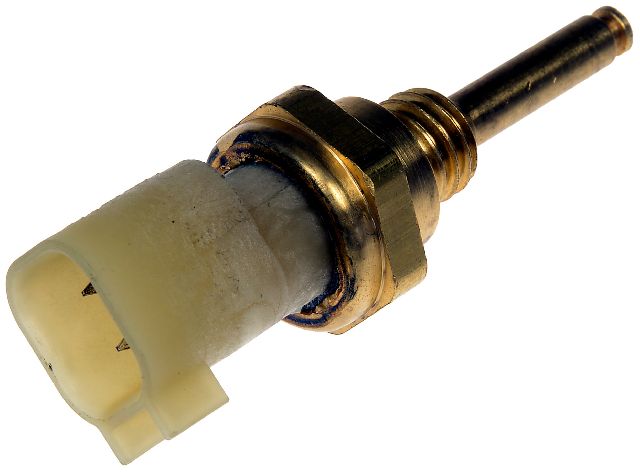
How to confirm: If all tests for coolant intrusion are negative, the sensor itself may be faulty. A technician can check the sensor's resistance and voltage readings against the manufacturer's specifications. The CHT sensor is typically located on the cylinder head, between two spark plugs. A faulty sensor may give erratic readings or a constant high-temp signal.
Typical fix: Replace the CHT sensor. The OEM part number is often 8S4Z-6G004-A or similar.
Est. part cost: $25-$80 - Low Engine Coolant Level (from an external leak) ⚪ Low Probability While less common than internal leaks on this platform, external leaks can still occur from typical failure points like the radiator, coolant hoses, water pump, and the coolant expansion tank, which is known to crack.
How to confirm: Visually inspect the radiator, coolant hoses, water pump, and thermostat housing for signs of leaks (stains, drips, crusty residue). Perform a cooling system pressure test to identify the source of any external leaks.
Typical fix: Repair the source of the leak (e.g., replace a hose, radiator, or water pump) and refill the cooling system.
Est. part cost: $50-$500 - Wiring Harness Issue ⚪ Low Probability
How to confirm: Inspect the wiring and connector for the CHT sensor for any signs of damage, corrosion, or loose connections. Check for continuity and proper voltage at the connector. The connector part number is often Motorcraft WPT-984.
Typical fix: Repair or replace the damaged section of the wiring harness or the connector.
Est. part cost: $20-$100
Rare But Worth Checking
- Stuck Thermostat: A thermostat stuck in the closed position will prevent coolant from circulating to the radiator, causing a rapid overheat condition.
- Failing Water Pump: A water pump with a broken impeller or a slipping belt will not circulate coolant effectively, leading to overheating.
- Leaking EGR Cooler (2.0L specific): On some 2.0L EcoBoost engines, particularly later models (around 2019), the EGR cooler can leak coolant internally into the exhaust system, causing coolant loss and overheating symptoms that can be mistaken for the block defect.
Diagnosis Steps
- Verify the presence of P1285 and note any other codes, especially P1299 and misfire codes (P030x).
- Check the engine coolant level in the reservoir. If it is low, this is a key symptom.
- Visually inspect for external coolant leaks from hoses, the radiator, and the water pump.
- If no external leaks are found, perform a cooling system pressure test. If the pressure drops over time with no visible leak, it confirms an internal leak.
- Perform a chemical combustion leak test (block tester) to check for exhaust gases in the coolant. A positive test (fluid changes color) confirms a breach between the combustion chamber and coolant passages.
- For definitive proof, remove the spark plugs and use a borescope to inspect the inside of each cylinder. Look for standing coolant, excessive moisture, or piston tops that are steam-cleaned shiny. This is the procedure outlined by Ford in TSB 22-2322.
- If all the above tests for coolant intrusion are negative, then proceed with diagnosing the CHT sensor and its electrical circuit for faults.
Parts You'll Likely Need
- Engine Short Block Assembly
(OEM #1.5L: DS7Z-6009-J / 2.0L: CJ5Z-6009-H)— This is the official Ford-recommended repair for the common coolant intrusion issue, as it replaces the defective engine block with a redesigned part.
Trusted brands: Motorcraft
OEM price range: $3000-$4500
Aftermarket price range: $2500-$4000 - Cylinder Head Temperature (CHT) Sensor
(OEM #8S4Z-6G004-A (Motorcraft DY1145))— In the rare case that coolant intrusion is not the cause, a faulty sensor can trigger this code.
Trusted brands: Motorcraft, NTK, Standard Motor Products
OEM price range: $50-$80
Aftermarket price range: $25-$50 - Engine Gasket Kit — A full set of gaskets (head gasket, intake, exhaust, etc.) is required when replacing the short block.
Trusted brands: Motorcraft, Fel-Pro
OEM price range: $300-$500
Aftermarket price range: $200-$400
Related Codes That Often Appear With This One
- P1299 — This code means 'Cylinder Head Over-Temperature Protection Active'. It is the second stage of Ford's protection strategy, where the PCM begins shutting off fuel injectors to air-cool the engine. It almost always appears with P1285.
- P0300, P0301, P0302, P0303, P0304 — These are misfire codes. When coolant leaks into a cylinder, it prevents proper combustion, causing a misfire on that cylinder. TSBs for coolant intrusion list these codes as primary symptoms.
- P0316 — This code indicates a misfire detected within the first 1,000 engine revolutions on startup, which is common when coolant has pooled in a cylinder overnight.
- P0217 — This is a generic code for 'Engine Coolant Over-Temperature Condition', which often accompanies the more specific P1285 code.
Technical Service Bulletins (TSBs) & Recalls
- TSB 22-2322: Notes that P1285 and other codes may be due to coolant intrusion into the cylinder.
- TSB 22-2229: Similar to TSB 22-2322, linking P1285 to coolant intrusion.
- TSB 19-2375 / 20-2100: Superseding bulletins for the 1.5L EcoBoost that specify replacing the short block to fix coolant intrusion.
Platform-Specific Known Issues
- Coolant Intrusion Defect: The primary issue for these vehicles is the engine block design. Ford acknowledged this and issued TSBs like 22-2322 (1.5L) and 22-2229 (2.0L), which supersede older bulletins.
- Warranty Extension (1.5L only): Customer Satisfaction Program 21N12 extended the warranty for the short block repair due to coolant intrusion to 7 years or 84,000 miles. For vehicles already past those limits, a one-time repair was offered through November 30, 2022.
- Owner Experiences: Owners frequently report the issue appearing between 40,000 and 80,000 miles. Many who were outside the warranty extension period faced repair bills of $7,000-$9,000 for a full engine replacement.
- 2.0L Block Heater Recall: A recall was issued for 2013-2019 Escapes with the 2.0L engine for a block heater that could crack, leak coolant, and cause a short circuit or fire when plugged in.
Mechanic-Grade Diagnostic Values
- Cylinder Head Temperature (CHT) Sensor Resistance — expected: Approximately 37,000 Ohms at 68°F (20°C), 9,500 Ohms at 122°F (50°C), and 1,180 Ohms at 212°F (100°C).. Failure: Readings that are infinite (open circuit) or near zero (short circuit), or values that do not correspond with the approximate engine temperature.
- CHT Sensor Voltage (Signal Return) — expected: Approximately 3.16V at 68°F (20°C), 1.78V at 122°F (50°C), and 0.45V at 212°F (100°C) with the sensor connected and key on, engine off.. Failure: Voltage reading near 5V (indicating an open circuit) or 0V (indicating a short to ground).
Scan Tool Commands That Help
- Ford IDS (Integrated Diagnostic System): Powertrain > Self-Test > Key On Engine Off (KOEO) and Key On Engine Running (KOER) — To retrieve manufacturer-specific DTCs and run automated tests on sensors like the CHT. This is more comprehensive than a standard OBD-II reader.
- Ford IDS (Integrated Diagnostic System): Datalogger > PCM > PID: CHT_V, CHT_F, ECT_V — To monitor the live voltage (CHT_V) and inferred temperature (CHT_F) from the CHT sensor. This allows a technician to see if the sensor is providing a rational reading as the engine warms up, or if it is stuck at a high-temperature reading.
Wiring & Ground Locations
- CHT Sensor Location (1.5L) — At the rear of the cylinder head, towards the passenger side, underneath the plastic cowl panel near the firewall. Requires removal of the cowl panel for access.. This is the physical location of the sensor that triggers the P1285 code. Access is difficult and often requires significant disassembly.
- CHT Sensor Location (2.0L) — On the back side of the engine, but may require removal of the intake manifold components to access.. Knowing the location is critical for testing or replacement if the sensor is suspected to be faulty after ruling out coolant intrusion.
- G104 / G105 — Typically located at the left front corner of the engine compartment, near the battery junction box (BJB) or behind cooling fan relays.. These are primary engine compartment grounds. A corroded or loose ground at these points can cause erratic sensor readings and phantom electrical issues, including false overheat signals.
Real Owner Repair Stories
- Reddit user nvaus in r/fordescape (2019 Ford Escape 1.5L, 94,000 miles) — Coolant intrusion confirmed by the dealer in cylinder 4.
❌ Tried (didn't work) Vehicle was outside of the warranty/recall period.
✅ What actually fixed it Owner was quoted nearly $9,000 by Ford for a short block replacement. An independent shop offered a Ford remanufactured motor (made after mid-2019 to avoid the defect) for $9,500 or a used engine with 52k miles for $7,500. The owner was leaning towards repair since the car was otherwise in excellent shape.
OEM Part Supersession History
CJ5Z-6009-C→CJ5Z-6009-H— Superseded part for the 2.0L EcoBoost Short Block. The newer part is the revised design intended to correct the coolant intrusion flaw.
Heads up: Using an older revision short block (new-old-stock or used) will re-introduce the original coolant intrusion defect. Only the latest revision should be used for replacement.
Model Year Variations Within This Range
- 2013-2016: These years used the 1.6L EcoBoost engine, which had a very similar coolant intrusion problem. The 1.5L EcoBoost replaced the 1.6L starting in the 2017 model year.
- 2017-2019: These model years use the 1.5L EcoBoost engine, which is the primary focus of TSBs like 22-2322 and Customer Satisfaction Program 21N12 for coolant intrusion.
- 2020+: Starting in the 2020 model year, the Escape was redesigned. The 1.5L engine is now a 3-cylinder, and the 2.0L 4-cylinder block was updated. These newer engines do not have the same coolant intrusion design flaw.
Diagnostic Flowchart
Other Known Issues on This Vehicle
Issues unrelated to this code that are worth knowing about as an owner of this generation:
- Transmission Failure / Shifting Problems 🔴 High — Commonly reported, especially in 2013-2017 models. Can manifest as rough shifting, slipping, or complete failure, sometimes before 100,000 miles.
- Faulty Door Latches 🔴 High — Widespread issue where a broken component can prevent doors from latching securely, potentially allowing them to open while driving. (Ref: NHTSA Recall 16V643 / Ford Recall 16S30)
- Power Steering Failure 🟠 Medium — Reports of sudden loss of power steering assist, making the vehicle difficult to steer, particularly affecting 2013-2014 models. (Ref: A recall was issued but some owners report issues outside the covered VIN range.)
- Fuel Tank Deformation 🟠 Medium — A stuck canister purge valve (CPV) can create excessive vacuum, deforming the fuel tank. This can lead to inaccurate fuel gauge readings and potential engine stalling. (Ref: NHTSA Recall 18V735 / Ford Recall 18S32)
Used vs. New Parts: Buying Guide for This Vehicle
When a used part is the smart pick: For this specific repair (coolant intrusion), a used part ONLY makes sense for external components like sensors, wiring harnesses, or coolant hoses. A used engine assembly is an extremely high-risk purchase.
Donor-vehicle mileage cap: roughly under 70000 miles for the part to have meaningful remaining life.
What to inspect on the donor part:
- For a complete engine: MUST have documentation proving it is a Ford-remanufactured unit or a new short block manufactured after mid-2019.
- AVOID any used engine from a 2013-2019 Escape, Fusion, or Edge with the original 1.5L, 1.6L, or 2.0L EcoBoost unless its history is known and it has already had the short block replaced with the revised part.
- Check the VIN of the donor vehicle to confirm its build date; later build dates are slightly less risky but not immune.
- Inspect for external oil leaks, heavy corrosion, and signs of overheating (discolored plastic, melted connectors).
OEM-only on this vehicle (don't cheap out):
- Engine Short Block
- Engine Long Block
- Cylinder Head Gasket
Aftermarket brands forum-validated for this vehicle:
- For remanufactured engines, brands like Jasper or ATK (NuTech) have a reputation for addressing original design flaws, but verify their specific solution for this coolant intrusion issue.
- Fel-Pro for gasket sets if not buying an OEM kit.
Brands owners have reported issues with on this vehicle:
- Unknown or unbranded 'rebuilt' engines from online marketplaces without a comprehensive warranty and explicit confirmation that the block defect has been corrected with a revised design.
Real Owner Stories
Aggregated from forums and TSBs cited above. Mileages and costs reflect what owners reported in those sources.
2017 Ford Escape 1.5L EcoBoost
Symptoms: Coolant intrusion into the cylinders.
What fixed it: Replacement of the short block with a redesigned part.
Source hint: Reddit r/Justrolledintotheshop/comments/13p7y0p/2017_ford_escape_15l_ecoboost_coolant_intrusion/
2018 Ford Escape 1.5L EcoBoost — ~60000 miles
Symptoms: Owners frequently report the issue appearing between 40,000 and 80,000 miles; symptoms include white smoke from exhaust and low coolant.
What fixed it: Full engine replacement.
Cost: $7,000-$9,000
Source hint: Vehicle_specific_issues: Owner Experiences
2014-2019 Ford Fusion 1.5L EcoBoost
Symptoms: Coolant intrusion due to the same engine block design flaw found in the Escape.
What fixed it: Short block repair under Customer Satisfaction Program 21N12.
Source hint: https://www.fordfusionforum.com/topic/21171-customer-satisfaction-program-21n12-15l-coolant-intrusion/
Related OBD-II Codes
Frequently Asked Questions
Is there a warranty extension for the coolant intrusion issue on my 2017 Ford Escape 1.5L?
Which TSBs cover the P1285 code and coolant loss for the 2.0L EcoBoost engine?
My 2015 Escape 2.0L has a P1285 code and I smell coolant; is there a recall I should know about?
What is the official Ford-recommended fix for P1285 caused by internal coolant leaks?
Can a faulty sensor cause P1285 even if my coolant levels are fine?
How can a technician definitively prove my P1285 code is caused by a cracked block?
Helpful Videos

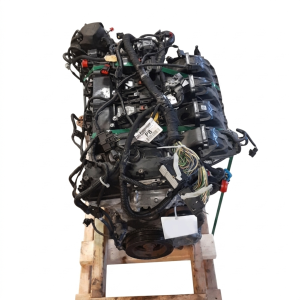
Used OEM Parts in Stock


New Aftermarket Parts Available


The information in this article is provided for general reference and educational purposes only. Vehicle specifications, procedures, and part compatibility can vary by production date, trim level, and region. Always consult your vehicle's factory service manual and verify part numbers before purchasing or performing repairs. Safety-critical components such as airbags, seat belts, and braking systems should be installed by a qualified professional.
- Ford Escape:
- 🎬 Helpful Videos
- 🛍️ Shop This Part
- What's Unique About the 2013-2019 Ford Escape
- Symptoms You May Notice
- Most Likely Causes
- Rare But Worth Checking
- Diagnosis Steps
- Parts You'll Likely Need
- Related Codes That Often Appear With This One
- Technical Service Bulletins (TSBs) & Recalls
- Platform-Specific Known Issues
- Mechanic-Grade Diagnostic Values
- Scan Tool Commands That Help
- Wiring & Ground Locations
- Real Owner Repair Stories
- OEM Part Supersession History
- Model Year Variations Within This Range
- Diagnostic Flowchart
- Other Known Issues on This Vehicle
- Used vs. New Parts: Buying Guide for This Vehicle
- Real Owner Stories
- 2017 Ford Escape 1.5L EcoBoost
- 2018 Ford Escape 1.5L EcoBoost — ~60000 miles
- 2014-2019 Ford Fusion 1.5L EcoBoost
- Related OBD-II Codes
- Frequently Asked Questions
- 🎟️ Get 5% Off