

OBD-II Code P1278: Manufacturer-Specific Fault
What P1278 means, why it triggers, and how to fix it across different brands
What Does P1278 Mean?

P1278 is a manufacturer-specific code with entirely different definitions depending on the brand. For Nissan and Infiniti, the Engine Control Unit (ECU) detects a lean air-fuel mixture and a slow-responding Bank 1 front air/fuel ratio sensor. For Ford, Toyota, and GM, it points to electrical failures in fuel injector circuits or the accelerator pedal position sensor.
Technical definition: There is no universal SAE/ISO definition for P1278. Its meaning is assigned by the manufacturer. - **For Nissan/Infiniti:** 'Air Fuel Ratio (A/F) Sensor 1 Lean Shift Monitoring Bank 1' or 'Air Fuel Ratio Sensor 1 Bank 1 Circuit Slow Response'. - **For Ford:** 'Cylinder #8 High To Low Side Open' on 7.3L Powerstroke diesel engines. - **For Toyota/Lexus:** 'Port Injector Circuit #3 Malfunction'. - **For GM (Chevrolet/GMC/Cadillac):** 'Accelerator Pedal Position (APP) Sensor 1 Circuit High Voltage'.
Can I Drive With P1278?
Yes, But With Caution. Yes, but only to a repair shop. Ignoring P1278 causes poor fuel economy, stalling, and reduced engine power. On Nissan models, driving lean overheats the catalytic converter, causing irreversible damage ($800-$2500). Prolonged lean conditions also increase combustion temperatures, risking piston and valve damage.
Common Causes

- Failing Air/Fuel (A/F) Ratio Sensor (Nissan/Infiniti) (Very Common) — The sensor measuring oxygen in the exhaust becomes contaminated or slow to respond, sending incorrect lean data to the ECU.
- Exhaust System Leak (Nissan/Infiniti) (Common) — A crack in the exhaust manifold before the A/F sensor introduces outside oxygen. This tricks the sensor into reading a false lean condition.
- Under Valve Cover Harness (UVCH) Failure (Ford 7.3L) (Common) — The wiring harness running under the valve covers to the injectors melts or disconnects, causing an open circuit on cylinder #8.
- Faulty Injector Driver Module (IDM) (Ford 7.3L) (Common) — The module controlling the diesel injectors fails due to internal solder joint cracks or water intrusion, triggering P1271-P1278 codes.
- Faulty Accelerator Pedal Position (APP) Sensor (GM) (Common) — The internal potentiometers in the accelerator pedal assembly fail, sending a high-voltage signal to the ECU and triggering limp mode.
- Damaged Fuel Injector Wiring/Connector (Toyota/Lexus) (Less Common) — A wire pulls out of the cylinder #3 injector connector or corrodes, causing a complete loss of signal to that injector.
- Intake Air (Vacuum) Leak (Less Common) — A leak in a vacuum hose or intake manifold gasket allows unmeasured air into the engine, creating a genuine lean condition.
- Low Fuel Pressure or Dirty MAF Sensor (Rare) — A weak fuel pump or dirty Mass Airflow sensor starves the engine of fuel or miscalculates incoming air, resulting in a lean mixture.
Symptoms

- Check Engine Light is On — The Malfunction Indicator Lamp (MIL) illuminates immediately upon the ECU detecting the fault.
- Reduced Engine Power (Limp Mode) — The vehicle severely limits throttle response. This is the primary symptom for GM vehicles with the APP sensor definition.
- Rough Idle, Stalling, or Misfiring — The engine shakes or runs unevenly. On Ford 7.3L engines, a dead injector circuit causes a severe, violent misfire.
- Engine Bogging on Acceleration — The engine stumbles or hesitates when pressing the gas pedal, common on Nissan models running excessively lean.
- Poor Fuel Economy — The ECU dumps extra fuel to compensate for a perceived lean condition, drastically lowering MPG.
- Rotten Egg Smell from Exhaust — A sulfur smell indicates the catalytic converter is overheating while trying to process the incorrect air-fuel mixture.
Common Fixes & Costs

- Replace Air/Fuel Ratio Sensor (Bank 1, Sensor 1)
— Parts: $100-$250, Labor: $80-$150, ~1.2 hr book time
(DIY)
2002-2006 Nissan Altima (2.5L): OEM - Repair Exhaust Leak — Parts: $20-$150, Labor: $150-$400, ~2.5 hr book time (Intermediate)
- Replace Under Valve Cover Harness (UVCH)
— Parts: $50-$150, Labor: $250-$450, ~3.5 hr book time
(Professional)
1999-2003 Ford F-250/F-350 (7.3L): OEM - Replace Injector Driver Module (IDM)
— Parts: $300-$800, Labor: $100-$200, ~1 hr book time
(Intermediate)
1999-2003 Ford F-250/F-350 (7.3L): OEM - Replace Accelerator Pedal Assembly (GM) — Parts: $70-$250, Labor: $50-$100, ~0.8 hr book time (DIY)
- Repair or Replace Fuel Injector/Connector (Toyota) — Parts: $5-$250, Labor: $150-$500, ~3 hr book time (Professional)
Used vs. New Parts: Buying Guide
When a used part is worth it: For expensive electronic modules on older vehicles (like a Ford 7.3L IDM), a used part from a reputable salvage yard offers significant savings. For wear items like A/F sensors, new is mandatory.
Donor-vehicle mileage cap: roughly under 100000 miles for the part to have meaningful remaining life.
Donor quality checklist:
- Verify the exact part number matches your original part.
- Avoid parts from flood-damaged or fire-damaged cars.
- Prefer sellers offering a 90-day or longer warranty.
Decision logic:
- If The part is a sensor or known wear item (e.g., A/F sensor) → Always buy new. A used sensor has unknown remaining life.
- If The part is an expensive electronic module (e.g., IDM) on a vehicle >15 years old → A warrantied used part is a reasonable, budget-conscious choice.
- If The part is wiring (e.g., UVCH) → Buy new. Old wiring harnesses have brittle insulation, which is the original failure mode.
Warranty tradeoff: Used parts typically have a 30-90 day parts-only warranty. New OEM parts offer a 1-2 year warranty.
Worst-case if a used part fails: $300-$600 if a used part fails after the warranty period, requiring repeat labor and a second replacement part.
What Happens If You Wait — Timeline
- 0-1 month: Check Engine Light illuminates. Nissan models experience a slight MPG drop. Ford/GM models exhibit intermittent rough idle or hesitation. (MPG impact: 0-5%% · Added cost: $0-$40 in wasted fuel.)
- 1-4 months: MPG loss worsens. Nissan lean conditions stress the catalytic converter. Ford misfires become constant. GM 'Reduced Power' mode triggers frequently. (MPG impact: 5-10%% · Added cost: $50-$150 in wasted fuel.)
- 4-8 months: Nissan catalytic converter substrates melt or crack from sustained overheating. A 'rotten egg' smell appears. This damage is irreversible. (MPG impact: 10-15%% · Added cost: $1200-$2800 for catalytic converter replacement.)
- 8+ months: A clogged catalytic converter creates severe exhaust backpressure, causing stalling. Prolonged extreme lean conditions burn exhaust valves. (MPG impact: 15-25%+% · Added cost: $3000-$8000+ for major internal engine repair.)
Cost of Not Fixing It
- 0-1 Month: A noticeable 5-15% drop in fuel economy and sluggish engine performance. (Added cost: $20-$60 per month in extra fuel costs.)
- 1-6 Months: For lean conditions (Nissan), the catalytic converter overheats and suffers internal damage. (Added cost: $1200-$2800 for catalytic converter replacement.)
- 6+ Months: Prolonged driving with a severe lean condition increases combustion temperatures, burning exhaust valves or damaging pistons. (Added cost: $3000-$8000+ for major engine repair or replacement.)
Diagnosis Steps
- Verify Code Definition and Check for Other Codes
Confirm what P1278 means for your specific make and year. Check for context codes like P0171 (System Too Lean), P1273 (Bank 2 Lean), or P0300-P0308 (Misfires).
Tools: OBD-II Scanner (Beginner) - Perform a Thorough Visual Inspection
For Nissan, look for soot marks on the exhaust manifold indicating a crack. For Ford 7.3L, check valve cover connectors for melting. For GM/Toyota, inspect pedal or injector wiring.
Tools: Flashlight, Safety Glasses (Beginner) - Perform a Smoke Test for Leaks (Nissan/Infiniti)
Fill the exhaust and intake systems with smoke to reveal hard-to-see cracks or vacuum leaks. Do this before replacing any A/F sensors.
Tools: Smoke Machine (Intermediate) - [PRO TIP] Graph the A/F Sensor Live Data (Nissan/Infiniti)
Graph Bank 1 Sensor 1 voltage. It should hold steady (~2.3-2.5V), drop quickly when propane is added (rich), and rise quickly when a vacuum line is pulled (lean). Slow reactions confirm a bad sensor.
Tools: Advanced OBD-II Scanner (Graphing) (Advanced) - [PRO TIP] Perform an Injector Buzz Test (Ford 7.3L)
Command an injector buzz test. If cylinder #8 sounds significantly quieter or absent compared to the others, an electrical fault exists in that specific circuit.
Tools: Ford-Specific Scan Tool (e.g., FORScan) (Advanced) - Test the Accelerator Pedal Position Sensor (GM)
Backprobe the APP sensor connector. Verify a stable 5V reference and ground. The signal wire should read ~0.5V at rest and sweep smoothly to ~4.5V at wide-open throttle. Signals exceeding 4.8V trigger the P1278 fault.
Tools: Multimeter, Backprobe Pins (Intermediate) - Test the Injector Circuit (Toyota/Lexus)
Disconnect injector #3. Check for 11-14V at one pin with the key on. Connect a noid light across the terminals; it must flash while cranking. No flash indicates a wiring or ECM failure.
Tools: Multimeter, Noid Light or Test Light (Intermediate) - [PRO TIP] Isolate the Fault by Swapping Components (Ford 7.3L)
Swap the UVCH wiring for cylinder #8 with a known good cylinder (like #6). Rerun the buzz test. If the fault moves to #6, the injector is bad. If it stays on #8, the wiring or IDM is faulty.
Tools: Basic Hand Tools (Advanced) - Test Fuel Pressure
Connect a gauge to the fuel rail. Low pressure points to a failing fuel pump or clogged filter, causing lean conditions on Nissan models.
Tools: Fuel Pressure Gauge, Service Manual (Intermediate) - [PRO TIP] Test A/F Sensor Heater Resistance (Nissan/Infiniti)
Measure resistance between the two heater pins on the sensor connector. A healthy sensor reads 2-5 ohms at room temperature. An infinite reading (OL) means the internal heater is broken.
Tools: Multimeter (Advanced) - [PRO TIP] Measure Ford 7.3L Injector Coil Resistance
Measure resistance between the two pins for cylinder #8 on the injector side of the UVCH. A healthy coil reads 3.1-3.2 ohms. An open circuit (OL) confirms a failed injector coil.
Tools: Multimeter (Advanced)
When This Code Triggers (Freeze-Frame Conditions)
- Engine Coolant Temp: 185-205°F (85-96°C) (The engine has reached full operating temperature.)
- Fuel System Status: Closed Loop (The ECU is actively using the A/F sensor data to control fueling.)
- Engine RPM: 1500-2500 RPM (The code often sets during steady-state cruising, not just at idle.)
- Vehicle Speed: 35-55 mph (56-88 km/h) (The fault is detected during light-throttle highway or city driving.)
Related Codes
- P0171 — P0171 means 'System Too Lean'. P1278 (Nissan) specifically indicates the A/F sensor is slow to respond. If you have P0171 without P1278, suspect a vacuum leak rather than a bad sensor.
- P1273 — The equivalent code for Bank 2 on a Nissan. Seeing both P1278 and P1273 means a common component failed (like a MAF sensor or major vacuum leak), not both A/F sensors simultaneously.
- P030X — Misfire codes (e.g., P0308 for cylinder 8) are symptoms of the P1278 fault. A dead injector (Ford) or incorrect throttle commands (GM) cause misfires. Fixing P1278 resolves the misfire.
- P1271-P1277 (Ford) — On a Ford 7.3L, these codes are identical to P1278 but point to cylinders 1 through 7. Multiple codes on the same bank indicate a bad UVCH connector or failing IDM.
Climate & Environmental Factors
- High Humidity / Heavy Rain: On Ford 7.3L engines, the IDM case vent allows moisture to enter during heavy rain or engine washing, causing internal corrosion and violent misfires.
- Cold Weather: Cold temperatures exacerbate underlying issues. Nissan exhaust manifold cracks tick loudly on cold starts before the metal expands and seals the gap.
- Thermal Cycling: Extreme temperature swings between hot and cold put immense stress on exhaust components, serving as the primary cause of cracked Nissan manifolds.
How to Clear the Code After You Fix It
- Use an OBD-II scan tool to clear the fault code.
- Perform a complete drive cycle to allow the ECU to run its self-tests.
- Check for pending codes and ensure readiness monitors have set before an emissions test.
Drive cycle (~20 minutes): Cold start and idle for 3 minutes. Drive in stop-and-go traffic with several accelerations. Drive for 10 minutes at a steady 55 mph. Allow the vehicle to cool down completely.
Readiness monitors affected: Catalyst (CAT) monitor, Oxygen (O2) Sensor monitor, O2 Sensor Heater monitor
Before emissions retest: drive at least 50 miles to fully set monitors.
Watch out for:
- Clearing the code resets readiness monitors to 'Not Ready', causing an automatic emissions test failure.
- The code will return immediately if the underlying mechanical or electrical fault was not repaired.
Will This Fail Emissions / State Inspection?
Yes — this code typically fails an OBD-II emissions inspection.
- California: An active Check Engine Light is an automatic failure. All OBD readiness monitors must be set to 'Ready' to pass.
- New York: A vehicle automatically fails the emissions portion of the NYS inspection if the Check Engine Light is on.
- Texas: An active P1278 causes an automatic failure. After repair, the vehicle can pass with at most one monitor 'Not Ready' (for 2001+ models).
Most Commonly Affected Vehicles
- Nissan Altima (2002-2012) — Extremely common code due to failing A/F sensors or cracked exhaust manifolds.
- Nissan Sentra (2001-2012) — Frequently associated with A/F sensor failure. The sensor is highly accessible on the 1.8L engine.
- Nissan Maxima (2000-2008) — The A/F sensor on the VQ-series V6 engine is a common failure point, often accompanied by P1279.
- Ford F-250 / F-350 Super Duty (1994-2003) — On 7.3L Powerstroke diesels, P1278 indicates a 'Cylinder High to Low Side Open' fault for injector #8, usually caused by the UVCH or IDM.
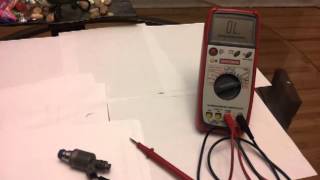
- Toyota Camry / Avalon / Sienna (2005-2015) — P1278 indicates a 'Port Injector Circuit #3' problem, pointing to an electrical issue with that specific fuel injector. 🎬 See this simple guide on how to test fuel injectors.
- Lexus ES350 / RX350 / IS350 (2006-2015) — Denotes a 'Port Injector Circuit #3' fault, typically caused by a wiring issue or a failed injector coil.
- Chevrolet / GMC Silverado / Sierra / Impala (2007-2018) — Defined as 'Accelerator Pedal Position (APP) Sensor 1 Circuit High Voltage', triggering 'Reduced Engine Power' mode.
- BMW Various Models (2006-2013) — Points to fuel system faults, including A/F ratio sensors or fuel pressure sensor issues depending on the engine.
Manufacturer-Specific Notes
- Nissan / Infiniti: These ECUs are notoriously sensitive to aftermarket sensors. Using an OEM (Denso/NGK) A/F sensor is mandatory. After replacement, you must perform a 'Self-Learning Control' reset via a scan tool so the ECU recognizes the new sensor.
- Ford: On the 7.3L Powerstroke, P1278 means 'Cylinder #8 High To Low Side Open'. The issue is almost always electrical (wiring, UVCH, IDM) rather than a mechanical injector failure.
- Toyota / Lexus: P1278 indicates a 'Port Injector Circuit #3' problem. This is strictly an electrical fault (broken wire or failed coil), not a fuel flow or lean condition issue.
- Chevrolet / GMC: P1278 is defined as 'Accelerator Pedal Position Sensor 1 Circuit High Voltage', triggering limp mode. GM has issued Special Coverage Adjustments (e.g., #14636, #N182188250) extending warranties for this exact failure up to 10 years/150k miles.
Real Owner Stories
2005 Nissan Altima (2.5L) with 150K miles
Check Engine Light illuminated with P1278. The owner replaced both O2 sensors, but the code returned immediately.
What they tried:
- Replaced upstream and downstream O2 sensors.
- Cleared ECU codes.
Outcome: A forum suggested checking for an exhaust leak. A smoke test revealed a hairline crack in the exhaust manifold. The leak introduced oxygen, tricking the new sensor into reading lean. Replacing the manifold permanently fixed the code.
Lesson: For Nissan/Infiniti, always perform a smoke test to rule out exhaust leaks before replacing an expensive A/F sensor.
2002 Ford F-250 (7.3L Powerstroke) with 210K miles
Truck misfired violently when warm and barely ran. Scan showed P1316 and P1278.
What they tried:
- Ran an injector buzz test, which failed for cylinder #8.
- Visually inspected wiring harnesses.
Outcome: The owner pulled the valve cover and found the Under Valve Cover Harness (UVCH) connector had partially melted and backed out, breaking the circuit to injector #8. Replacing the $60 harness restored full power.
Lesson: On a 7.3L Powerstroke, P1278 is almost always an electrical disconnect at the UVCH or IDM, not a mechanically failed injector.
2011 Lexus IS350 with 73K miles
Car shuddered randomly, triggering Check Engine and ABS lights with code P1278 (Port Injector Circuit #3).
What they tried:
- Inspected spark plug #3.
- Listened for valve train noise.
Outcome: A visual inspection revealed a single wire had pulled out of the plastic connector for the #3 fuel injector. The owner re-pinned and soldered the wire for $0, permanently clearing the code.
Lesson: For Toyota/Lexus injector circuit codes, meticulously inspect the wiring at the injector plug before buying replacement parts.
2009 Chevy Impala
Vehicle entered 'Reduced Engine Power' mode with zero throttle response and code P1278.
What they tried:
- Scanned codes, suspecting a bad throttle body.
Outcome: The owner discovered GM Special Coverage Adjustment #14636 for faulty Accelerator Pedal Position (APP) sensors. The dealership replaced the entire pedal assembly for free under the extended warranty.
Lesson: If a GM vehicle enters limp mode with P1278, check your VIN for active Special Coverage Adjustments regarding the accelerator pedal before paying out of pocket.
How to Prevent This Code From Triggering
- Use Top Tier certified gasoline (Every fill-up) — High detergent levels prevent carbon buildup on injectors, ensuring proper spray patterns and preventing lean conditions on Nissan models.
- Avoid high-pressure washing in the engine bay (During vehicle cleaning) — On Ford 7.3L engines, the fender-mounted Injector Driver Module (IDM) is highly susceptible to water intrusion through its case vent, causing P1271-P1278 codes.
- Avoid frequent short trips (Daily habit) — Short trips prevent the exhaust from reaching temperatures high enough to burn off condensation, shortening A/F sensor life on Nissans.
- Inspect wiring harnesses during routine service (During any under-hood service) — Catching brittle insulation or chafed wires early prevents the open-circuit faults that trigger P1278 on Ford, Toyota, and GM vehicles.
Frequently Asked Questions
What is Bank 1, Sensor 1?
Bank 1 is the side of the engine containing cylinder #1. Sensor 1 is the 'upstream' sensor, located in the exhaust manifold before the catalytic converter.
What are common misdiagnosis mistakes for P1278?
The biggest mistake is ignoring the manufacturer-specific definition. Mechanics often replace an O2 sensor on a GM when the real problem is the gas pedal. For Nissans, failing to perform a smoke test before replacing the A/F sensor leads to wasted money on parts.
I replaced my A/F sensor on my Nissan but the P1278 code came back. What now?
Confirm you used an OEM Denso/NGK sensor, as aftermarket brands fail instantly. Next, perform a smoke test to find the exhaust leak that is tricking the new sensor. Finally, ensure you performed a 'Self-Learning Control' reset with a scan tool.
What's the difference between an A/F sensor and an O2 sensor?
An Air/Fuel (A/F) sensor is a wideband sensor providing precise, variable air-fuel ratio readings for fine engine adjustments. A standard O2 sensor is a narrowband sensor that simply switches between 'rich' and 'lean'.
Can I just clear the P1278 code and keep driving?
You can clear it, but it will return within a few drive cycles. Continuously driving with the fault causes expensive catalytic converter damage and guarantees an emissions test failure.
Will using a fuel injector cleaner fix code P1278?
It is extremely unlikely. For Nissan, the code points to a failing sensor or exhaust leak, while Toyota, Ford, and GM definitions indicate electrical circuit failures. A fuel additive cannot fix broken wires, cracked manifolds, or failed sensors.
How do I find the exhaust leak causing P1278 on my Nissan?
A professional smoke test is the most effective method. Visually, look for black soot trails around the exhaust manifold and listen for a 'ticking' sound on cold starts.
What does 'High to Low Side Open' mean for a Ford 7.3L Powerstroke?
It means there is an open circuit between the Injector Driver Module (IDM) and the fuel injector. A broken wire, bad UVCH connection, or internal IDM fault prevents the circuit from completing.
Helpful Videos

The information in this article is provided for general reference and educational purposes only. Vehicle specifications, procedures, and part compatibility can vary by production date, trim level, and region. Always consult your vehicle's factory service manual and verify part numbers before purchasing or performing repairs. Safety-critical components such as airbags, seat belts, and braking systems should be installed by a qualified professional.
- 🎬 Helpful Videos
- What Does P1278 Mean?
- Can I Drive With P1278?
- Common Causes
- Symptoms
- Common Fixes & Costs
- Used vs. New Parts: Buying Guide
- What Happens If You Wait — Timeline
- Cost of Not Fixing It
- Diagnosis Steps
- When This Code Triggers (Freeze-Frame Conditions)
- Related Codes
- Climate & Environmental Factors
- How to Clear the Code After You Fix It
- Will This Fail Emissions / State Inspection?
- Most Commonly Affected Vehicles
- Manufacturer-Specific Notes
- Real Owner Stories
- 2005 Nissan Altima (2.5L) with 150K miles
- 2002 Ford F-250 (7.3L Powerstroke) with 210K miles
- 2011 Lexus IS350 with 73K miles
- 2009 Chevy Impala
- How to Prevent This Code From Triggering
- Frequently Asked Questions
- What is Bank 1, Sensor 1?
- What are common misdiagnosis mistakes for P1278?
- I replaced my A/F sensor on my Nissan but the P1278 code came back. What now?
- What's the difference between an A/F sensor and an O2 sensor?
- Can I just clear the P1278 code and keep driving?
- Will using a fuel injector cleaner fix code P1278?
- How do I find the exhaust leak causing P1278 on my Nissan?
- What does 'High to Low Side Open' mean for a Ford 7.3L Powerstroke?
- 🎟️ Get 5% Off