

OBD-II Code P1274: A Comprehensive Diagnostic Guide
What P1274 means, why it triggers, and how to fix it on Nissan, Ford, and more
What Does P1274 Mean?

P1274 is a manufacturer-specific code, meaning its definition changes depending on your vehicle. For Nissan and Infiniti, it means the Engine Control Module (ECM) detects a persistently rich fuel mixture from the Air/Fuel Ratio Sensor on Bank 1. The sensor reports too much gasoline and not enough air, and the ECM's attempts to lean out the mixture have failed. For Ford diesels, this code points to a completely different electrical fault in the fuel injector circuit.
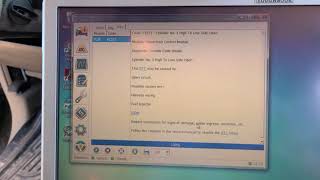
Technical definition: For Nissan and Infiniti, the definition is 'Air Fuel Ratio Sensor 1 Bank 1 Rich Shift Monitoring'. This means the ECM determines the feedback from the primary air-fuel sensor has remained on the rich side of the optimal ratio for a specified duration. For Ford 7.3L Power Stroke engines, the definition is 'Cylinder #4 High To Low Side Open', indicating an electrical circuit fault for that specific injector.
Can I Drive With P1274?
Yes, But With Caution. You can drive short distances, but extended driving will destroy your catalytic converter. Continuously exposing the converter to unburned fuel causes it to overheat and melt, turning a minor repair into a $2,500 replacement. Drive no more than 50 miles before diagnosing.
Common Causes

- Faulty Air/Fuel (A/F) Ratio Sensor (Very Common) — This is the most frequent cause for Nissan/Infiniti. The sensor's internal components degrade over time, causing it to become slow or biased. It sends a fixed-rich signal to the computer, forcing an incorrect fuel trim.
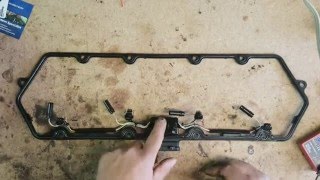
- Faulty Under Valve Cover Harness (UVCH) - Ford 7.3L Only (Very Common) — For the Ford Power Stroke diesel, this is the primary cause. The wiring harness under the valve cover becomes brittle from heat and oil exposure, breaking the circuit for the #4 injector.
- Exhaust System Leak (before the A/F Sensor) (Common) — A crack or gasket leak before the A/F sensor sucks in ambient air. The extra oxygen tricks the sensor into reporting a false lean condition, prompting the ECM to dump excess fuel and trigger P1274.
- Leaking Fuel Injector (Common) — An injector stuck partially open continuously drips excess fuel into a cylinder, creating a true rich condition that the A/F sensor correctly detects.
- High Fuel Pressure (Less Common) — A failing fuel pressure regulator causes system-wide fuel pressure to be higher than specified. This forces more fuel through the injectors than the ECM intends, leading to a rich condition across all cylinders on that bank.
- Damaged Wiring or Connectors (Less Common) — Frayed wires or corroded terminals on the A/F sensor connector alter the voltage signal returning to the ECM. Wires melted on the hot exhaust pipe are a common culprit.
- Dirty or Faulty Mass Airflow (MAF) Sensor (Rare) — A contaminated MAF sensor under-reports the amount of air entering the engine. The ECM calculates fuel delivery based on this incorrect low airflow data, resulting in a rich mixture. This typically sets codes on both banks (P1274 and P1284).
- Incorrectly Installed/Swapped O2 Sensors (Rare) — On vehicles with aftermarket exhausts, if the downstream Bank 1 and Bank 2 sensors are accidentally swapped into the wrong positions, it confuses the ECM's fuel trim strategy and leads to P1274 and P1283 codes.
Symptoms

- Check Engine Light is On — This is the primary indicator. The light illuminates as soon as the ECM confirms the fault condition.
- Drastically Reduced Fuel Economy — A rich condition means the engine is wasting significant amounts of fuel, leading to more frequent trips to the gas station.
- Rough or Unstable Idle — The engine shakes, sputters, or has fluctuating RPMs at a stop due to an incorrect air-fuel mixture that hampers stable combustion.
- Engine Hesitation or Loss of Power — The vehicle feels sluggish, bogs down, or responds slowly during acceleration because the engine is not operating efficiently.
- Smell of Gasoline or Black Smoke from Exhaust — A strong smell of raw fuel from the exhaust is a clear sign of unburned gasoline passing through the engine. In severe cases, this manifests as black smoke during acceleration.
- Failed Emissions Test (also visible on scanner) — A rich-running engine produces high levels of hydrocarbons (HC) and carbon monoxide (CO), causing an automatic failure of a smog check.
Common Fixes & Costs
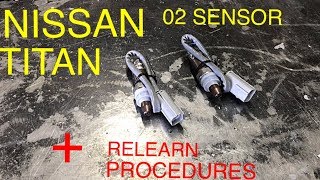
- Replace Air/Fuel Ratio Sensor 1, Bank 1 🎬 Watch: Step-by-step Nissan air/fuel ratio sensor replacement guide.
— Parts: $150 - $300, Labor: $100 - $200, ~1 hr book time
(DIY)
Nissan Altima (2002-2006, 2.5L/3.5L): OEM 22693-1NA0A (Alt: Denso 234-9072)
Infiniti G35 (2003-2007): OEM 22693-AM601 (Alt: Denso 234-9036) - Replace Under Valve Cover Harness (UVCH) - Ford 7.3L
— Parts: $100 - $200, Labor: $400 - $600, ~3.5 hr book time
(Professional)
Ford F-250/F-350 (1999-2003, 7.3L): OEM F81Z-9D930-AB (Alt: Dorman 615-201) - Repair Exhaust Leak (e.g., Manifold Gasket, Flex Pipe)
— Parts: $50 - $150, Labor: $250 - $600, ~2.8 hr book time
(Intermediate)
Infiniti G35 (2003-2007): OEM 14036-AM600 (Alt: Fel-Pro MS 96946) - Replace a Single Leaking Fuel Injector — Parts: $150 - $600, Labor: $200 - $400, ~3 hr book time (Professional)
- Replace Fuel Pressure Regulator 🎬 Watch: Diagnosing a bad fuel pressure regulator on Infiniti models.
— Parts: $100 - $300, Labor: $150 - $300, ~1.2 hr book time
(Intermediate)
Nissan Altima (2004-2006): OEM 17040-7Y000 (Alt: Carter P76169M) - Clean or Replace Mass Airflow (MAF) Sensor — Parts: $15 - $300, Labor: $50 - $100, ~0.5 hr book time (Beginner)
Used vs. New Parts: Buying Guide
When a used part is worth it: For the most common fix (Air/Fuel sensor), buying used is NEVER recommended. A/F sensors are sensitive electronic parts with a finite lifespan. For a consequential repair like a catalytic converter damaged by P1274, a used OEM part from a low-mileage vehicle (<60k miles) is a cost-effective option, but it is a gamble.
Donor-vehicle mileage cap: roughly under 60000 miles for the part to have meaningful remaining life.
Donor quality checklist:
- Verify the donor vehicle was not scrapped due to engine or emissions problems.
- For catalytic converters, avoid parts from the rust belt as the housing may be compromised.
- Match the part number exactly. Do not rely on visual similarity.
- Check the warranty; most salvage yard parts have a 30-90 day exchange-only policy.
Decision logic:
- If The required part is an electronic sensor (A/F, MAF). → Always buy new from an OEM or reputable OEM-supplier (e.g., Denso, NTK). The risk of a faulty used part and repeat labor costs is too high.
- If The part is a catalytic converter and the vehicle is over 150K miles. → A low-mileage used OEM converter is a reasonable choice if the budget is tight, but a new aftermarket unit with a warranty is safer.
- If The vehicle is in a CARB-regulated state (e.g., California). → You must buy a new CARB-compliant catalytic converter. Used converters are not legal for sale or installation in these states.
Warranty tradeoff: Used parts typically offer a 30-day exchange warranty at best, with no coverage for labor costs. New aftermarket parts offer 1-5 year warranties. New OEM parts offer a 1-year/12,000-mile warranty.
Worst-case if a used part fails: $300-600. This represents the cost of repeat labor to install another part after a used one fails shortly after installation.
What Happens If You Wait — Timeline
- 0-1 week: Check Engine Light illuminates with code P1274. Often no other noticeable symptoms. The car passes the 'smell test' from the exhaust. (MPG impact: 0-5%% · Added cost: $0)
- 1 week - 2 months (0-2,000 miles): Long-term fuel trims become very negative as the ECM tries to compensate. A noticeable drop in fuel economy occurs. A faint smell of gasoline is present at the exhaust after a cold start. (MPG impact: 10-20%% · Added cost: $50 - $200 in wasted fuel.)
- 2 - 6 months (2,000-6,000 miles): The catalytic converter consistently overheats from burning raw fuel. The internal ceramic substrate begins to crack or melt. A P0420 (Catalyst Efficiency) code appears alongside P1274. You hear a rattling from the exhaust at idle. (MPG impact: 15-30%% · Added cost: $1,200 - $2,800 (Catalytic converter replacement is now required in addition to fixing the original P1274 cause).)
- 6+ months (6,000+ miles): The catalytic converter substrate completely melts, creating a major exhaust blockage. The engine feels sluggish, hesitates severely, and stalls. In a worst-case scenario, the engine will not start. Backpressure causes further damage to exhaust valves or manifold gaskets. (MPG impact: 30-50%+% · Added cost: $2,500 - $4,000+ (Converter, fouled O2 sensors, and engine damage from excessive backpressure).)
Cost of Not Fixing It

- 0-1 Month (0-1,000 miles): Noticeable decrease in fuel economy (15-30% drop is common). The vehicle fails an emissions test. You notice a fuel smell from the exhaust. (Added cost: $50 - $150 in wasted fuel.)
- 1-6 Months (1,000-5,000 miles): The catalytic converter begins to overheat from burning excess fuel. This causes the internal ceramic monolith to melt, leading to a P0420 code and a permanent failure of the converter. (Added cost: $1,200 - $2,800 for catalytic converter replacement.)
- 6+ Months (5,000+ miles): Complete blockage of the catalytic converter causes severe loss of power, stalling, and potentially no-start conditions. Prolonged rich conditions lead to fuel washing cylinder walls, causing premature piston ring and cylinder wear. (Added cost: $2,500+ for converter and potential engine repairs.)
Diagnosis Steps
- Verify Code and Review Freeze Frame Data
Use an OBD-II scanner to confirm P1274. Check freeze-frame data for engine RPM, load, and temperature when the code triggered to replicate the conditions during testing.
Tools: OBD-II Scanner (Beginner) - Analyze Live Fuel Trim Data
Observe Short-Term (STFT) and Long-Term (LTFT) fuel trims for Bank 1. LTFT readings more negative than -10% confirm the ECM is actively removing fuel to fight a rich condition.
Tools: Advanced OBD-II Scanner (Intermediate) - Analyze A/F Sensor Voltage (Nissan/Infiniti)
Watch the live voltage of the Bank 1 A/F Sensor. A healthy sensor idles steadily around 2.2V. If it is stuck above 3.0V and ignores induced vacuum leaks, the sensor is dead.
Tools: Advanced OBD-II Scanner (Advanced) - Inspect the Exhaust System for Leaks
Pump smoke into the exhaust system to locate leaks at the manifold, gaskets, or piping before the A/F sensor. Black soot trails also indicate escaping exhaust.
Tools: Flashlight, Safety Glasses, Smoke Machine (Intermediate) - Perform an Injector Buzz Test (Ford 7.3L)
Use a bi-directional scan tool to pulse each injector. A silent or weak-sounding #4 injector confirms an open circuit in the UVCH.
Tools: Bi-directional Scan Tool (Intermediate) - Ohm Test the Injector Circuit (Ford 7.3L)
Disconnect the battery and unplug the valve cover connector. Check the resistance across the pins for the #4 injector. An open circuit (infinite resistance) confirms a break in the wiring.
Tools: Multimeter, Pinout Diagram (Advanced) - Test Fuel Pressure
Connect a fuel pressure gauge to the fuel rail's service port. For many Nissan V6 engines, the specification is approximately 51 PSI at idle. Pressure significantly higher points to a faulty fuel pressure regulator.
Tools: Fuel Pressure Gauge, Service Manual (Intermediate) - Check for Leaking Fuel Injectors
Perform a fuel pressure leak-down test. Pressurize the fuel system, turn the engine off, and monitor the gauge. A rapid drop suggests one or more injectors are leaking.
Tools: Fuel Pressure Gauge (Advanced) - Test A/F Sensor Heater Resistance (Nissan/Infiniti)
Disconnect the A/F sensor connector. Measure the resistance between the two heater terminals. A reading of infinite resistance (OL) or zero indicates a failed heater element, requiring sensor replacement.
Tools: Multimeter, Service Manual/Pinout Diagram (Advanced) - Inspect the Air Intake and MAF Sensor
Visually inspect the air intake tube for cracks after the MAF sensor. Remove and inspect the MAF sensor; if the sensing wire is dirty, clean it carefully with dedicated MAF sensor cleaner.
Tools: Basic Hand Tools, MAF Sensor Cleaner (Beginner)
When This Code Triggers (Freeze-Frame Conditions)
- Engine Coolant Temp: 180-200°F (82-93°C) (The engine must be fully warmed up and operating in closed-loop fuel control.)
- RPM: 1500-2500 RPM (The code typically sets during steady-state cruising, not during idle or heavy acceleration.)
- Engine Load: 25-60% (A moderate, consistent engine load, as seen in light acceleration or maintaining speed on a flat road.)
- Vehicle Speed: 40-65 mph (65-105 km/h) (Often triggered during constant highway or city cruising speeds.)
Related Codes
- P1284 — This is the identical 'Rich Shift' code but for Bank 2. If you have both P1274 and P1284, the cause is something affecting both banks equally. Suspect a faulty fuel pressure regulator, a dirty MAF sensor, or significant fuel contamination.
- P0172 — This is the generic OBD-II code for 'System Too Rich (Bank 1)'. P1274 is the manufacturer-specific code that provides more precise information from the A/F sensor itself. Prioritize diagnosing P1274 as it is the root cause.
- P0420 — This code means 'Catalyst System Efficiency Below Threshold (Bank 1)'. P0420 is a direct and expensive consequence of ignoring P1274. The chronic rich condition dumps raw fuel into the exhaust, which overheats and destroys the catalytic converter.
- P1273 — This is the direct opposite code, indicating a LEAN condition on Bank 1. Seeing P1273 and P1274 appear intermittently suggests a faulty, erratic A/F sensor sending fluctuating signals. It is also caused by a large exhaust leak before the sensor.
- P0304 (Ford) — On a 7.3L Power Stroke, P1274 is an electrical fault for the #4 injector. It is often accompanied by P0304, the generic code for 'Cylinder 4 Misfire Detected', confirming a performance issue in that specific cylinder.
Climate & Environmental Factors
- Cold Weather: In extreme cold (below 14°F / -10°C), moisture in the PCV system freezes, altering crankcase pressure and affecting the air-fuel mixture. Engines naturally run richer during cold starts until they enter closed loop, and short trips in cold weather exacerbate carbon buildup on sensors.
- High Humidity / Road Salt: Regions with high humidity or that use road salt in winter see accelerated corrosion of exhaust components. This significantly increases the likelihood of developing cracks or gasket leaks in the exhaust manifold, a primary cause of a false P1274 code on Nissan/Infiniti vehicles.
- High Altitude: At higher altitudes, the air is less dense, meaning there is less oxygen available for combustion. A vehicle's ECM compensates for this, but older vehicles or those with existing minor sensor issues overcompensate with fuel, leading to a rich condition.
How to Clear the Code After You Fix It
- Perform the physical repair (e.g., replace the A/F sensor).
- Reconnect any disconnected components, including the battery if it was removed.
- Use an OBD-II scan tool to select the 'Clear/Erase Codes' function. This turns off the Check Engine Light.
- For Nissan/Infiniti, perform a 'Fuel Trim Reset' to force the ECU to relearn with the new part.
- Complete a full OBD-II drive cycle to allow readiness monitors to run.
Drive cycle (~30 minutes): A generic drive cycle includes a cold start (engine off for 8+ hours), a 2-3 minute idle, 10 minutes of city driving with stops, and 15 minutes of steady highway driving (55-60 mph). This allows the O2 sensor, heater, and catalyst monitors to run their self-tests.
Readiness monitors affected: Catalyst (CAT) Monitor, Oxygen (O2) Sensor Monitor, Oxygen Sensor Heater Monitor
Before emissions retest: drive at least 100 miles to fully set monitors.
Watch out for:
- Taking the car for an emissions test immediately after clearing the code results in a 'Not Ready' failure. You must complete the drive cycle.
- Simply disconnecting the battery does not guarantee that long-term fuel trims or all trouble codes are cleared on modern vehicles.
- If the root cause of the rich condition was not fixed, the P1274 code returns after a few drive cycles.
Will This Fail Emissions / State Inspection?
Yes — this code typically fails an OBD-II emissions inspection.
- California: An illuminated Check Engine Light is an automatic failure. All OBD readiness monitors must be set to 'Ready'. After a repair, you need to complete a full drive cycle (often 100+ miles) before the vehicle passes a smog check.
- New York: A vehicle automatically fails the NYS inspection if the Check Engine Light is on. If codes are cleared, the vehicle fails for having 'Not Ready' monitors until a drive cycle is completed.
- Texas: In counties requiring emissions testing, an active P1274 code and illuminated Check Engine Light is an automatic failure. After clearing the code, the vehicle must be driven 50-100 miles to set the readiness monitors before re-inspection.
Most Commonly Affected Vehicles

- Nissan Altima (2002-2012) — Extremely common on models with 2.5L and 3.5L engines. The primary cause is almost always the front A/F sensor (Bank 1). The issue leads to a P0420 code if not addressed promptly.
- Ford F-250 / F-350 with 7.3L Power Stroke (1994-2003) — On these trucks, P1274 means 'Cylinder #4 High To Low Side Open'. This is an electrical fault, not a fuel mixture problem. It is almost always caused by a failed Under Valve Cover Harness (UVCH) or the external connector.
- Nissan Sentra (2002-2006) — Frequently reported on Sentra models with the 1.8L and 2.5L engines. The cause is typically a failing front A/F sensor.
- Infiniti G35 (2003-2007) — Commonly appears, often with P1283 (Bank 2). Causes include failed A/F sensors, but also exhaust leaks from the flex pipes or catalytic converters, which are a known failure point on these cars.
- Nissan Xterra / Pathfinder (2005-2012) — A known issue on models with the VQ40DE 4.0L V6 engine. The code almost always points to the Bank 1 A/F sensor, located on the rear cylinder bank near the firewall.
- Nissan 350Z (2003-2008) — Often triggered by failing A/F sensors. On modified cars with aftermarket test pipes or exhausts, the code is caused by exhaust leaks or by swapping the downstream O2 sensors into the wrong banks.
- Subaru Forester, Impreza, Legacy, Outback (2005-2014) — While less common, some Subaru models define P1274 as 'Injectors Wired Incorrectly', pointing to an electrical issue. Rich conditions from faulty front A/F sensors are a common problem, though they more frequently set the generic P0172 code.
- Dodge / Chrysler / Jeep Various Models (2005-2015) — On many vehicles from these brands, P1274 is 'A/C Clutch Control Circuit 2 Open'. This is an air conditioning electrical fault and is completely unrelated to the engine's fuel system. Diagnosis focuses on the A/C clutch relay and wiring.
Manufacturer-Specific Notes
- Nissan / Infiniti: After replacing an A/F sensor, it is critical to perform a 'Fuel Trim Reset' or 'Clear Self-Learning Control' procedure. This forces the ECM to relearn fuel strategies with the new sensor. Checking for an available ECM software update via TSBs is also worthwhile.
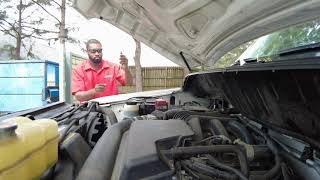
- Ford: On 7.3L Power Stroke diesel engines, P1274 means 'Cylinder #4 High To Low Side Open'. It is an electrical fault, not a fuel mixture issue. Diagnosis involves an injector buzz test and ohm-testing the Under Valve Cover Harness (UVCH).
- Dodge / Chrysler / Ram / Jeep: On these vehicles, P1274 is typically defined as 'A/C Clutch Control Circuit 2 Open'. This code is completely unrelated to the engine and points to a fault in the air conditioning system's electrical circuit.
- General Motors (GM): For some GM vehicles, P1274 means 'Injectors Wired Incorrectly' or points to a cylinder-specific injector circuit fault similar to the Ford definition. It indicates an electrical problem, not a fuel mixture problem.
Real Owner Stories
2005 Nissan Xterra, 98K miles - Intermittent Code & No-Start
Check Engine Light came on with code P1274. The light turned off by itself, but then the truck intermittently failed to start. The code eventually returned and stayed on.
What they tried:
- Retightened the gas cap, which did not solve the issue.
- Scanned the vehicle, confirming the P1274 code pointing to the A/F sensor.
Outcome: The combination of the rich code and the intermittent no-start pointed to a failing Air/Fuel Ratio sensor providing erratic readings. Replacing the Bank 1 A/F sensor resolved both the code and the starting issue.
Lesson: An intermittent Check Engine Light should never be ignored. A failing sensor goes from providing faulty data to providing no data at all, causing severe drivability issues like stalling or failure to start.
1997 Ford F-250 7.3L Power Stroke - A Deceptive Electrical Fault
The Check Engine Light appeared with code P1274, defined for this truck as 'Cylinder #4 High To Low Side Open'. The truck had a slight hiccup at idle but otherwise drove fine.
What they tried:
- Replaced the #4 fuel injector, but the code returned the next day.
- Performed an injector buzz test; all injectors sounded the same.
- Replaced the Under Valve Cover Harness (UVCH) and valve cover gasket, but the code persisted.
Outcome: The owner replaced multiple correct parts without a fix. The root cause was an intermittent open circuit in the main engine harness running over the driver's side valve cover. The issue was electrical and external to the valve cover.
Lesson: On a Ford 7.3L, P1274 is purely an electrical code. Even if a buzz test sounds normal, it does not rule out an intermittent open. Always test the circuit's resistance from the IDM connector and wiggle the harness to find hidden breaks before replacing expensive components.
2004 Infiniti G35 - P1274 & P1283 After New Exhaust
Immediately after having aftermarket headers installed by a dealership, the Check Engine Light came on for P1274 and P1283 (Bank 2).
What they tried:
- Reset the ECU by disconnecting the battery; the code returned.
- Checked for vacuum leaks and replaced the MAF sensor, with no change.
Outcome: The code appearing immediately after exhaust work is a massive clue. The root cause was an exhaust leak at the new header flange. The leak drew in outside air, tricking the A/F sensors into reporting a false rich condition. Fixing the exhaust leak resolved the codes.
Lesson: If a code appears right after a repair, the cause is almost always related to the work just done. Suspect an installation error, like an exhaust leak or a damaged sensor connector, before assuming a new part has failed.
2004 Infiniti G35 - Chasing Rich & Lean Codes (P1274/P1283)
Car had a rough idle with one bank running rich (negative fuel trim) and the other running lean (positive fuel trim), setting P1274 and P1283.
What they tried:
- Replaced intake manifold, all fuel injectors, ignition coils, and spark plugs.
- Performed the ECU fuel trim reset procedure multiple times.
Outcome: After replacing many common parts, the owner replaced the fuel pulsation damper on one bank and the cam position sensor. This resulted in balanced fuel trims and a smoother idle.
Lesson: Opposing rich/lean codes on different banks point to an unusual mechanical or fuel delivery issue, not just sensors. A leaking fuel damper affects pressure on one fuel rail, causing the ECM to make confusing adjustments.
How to Prevent This Code From Triggering
- Use Top Tier certified gasoline. (Every fill-up.) — Gasoline with higher levels of detergents helps prevent and clean carbon deposits from fuel injectors. This prevents injectors from sticking or developing poor spray patterns that lead to a rich condition.
- Address engine misfires immediately. (As soon as they occur.) — A misfiring cylinder dumps unburned fuel directly into the exhaust. This mixture superheats the catalytic converter, causing it to melt and fail in a very short time. Fixing a misfire is the primary way to prevent catastrophic converter damage.
- Perform a periodic fuel system cleaning. (Once every 30,000 miles.) — Using a high-quality fuel system cleaner with Polyetheramine (PEA) dissolves carbon buildup on injector tips and intake valves, maintaining proper fuel atomization and preventing rich/lean imbalances.
- Inspect exhaust manifold and gaskets. (Every 60,000 miles or if you hear a ticking noise on startup.) — Exhaust manifolds crack and gaskets fail due to constant thermal stress. A leak before the A/F sensor is a very common cause of a false P1274 code. Catching a leak early prevents misdiagnosis and wasted money on unneeded sensors.
- Avoid using silicone sealants (RTV) near the air intake. (During any engine repairs.) — Vapors from certain types of RTV silicone are drawn into the engine and contaminate the A/F sensor, causing it to fail prematurely. Always use sealants specifically rated as 'sensor-safe'.
Helpful Videos

The information in this article is provided for general reference and educational purposes only. Vehicle specifications, procedures, and part compatibility can vary by production date, trim level, and region. Always consult your vehicle's factory service manual and verify part numbers before purchasing or performing repairs. Safety-critical components such as airbags, seat belts, and braking systems should be installed by a qualified professional.
- 🎬 Helpful Videos
- What Does P1274 Mean?
- Can I Drive With P1274?
- Common Causes
- Symptoms
- Common Fixes & Costs
- Used vs. New Parts: Buying Guide
- What Happens If You Wait — Timeline
- Cost of Not Fixing It
- Diagnosis Steps
- When This Code Triggers (Freeze-Frame Conditions)
- Related Codes
- Climate & Environmental Factors
- How to Clear the Code After You Fix It
- Will This Fail Emissions / State Inspection?
- Most Commonly Affected Vehicles
- Manufacturer-Specific Notes
- Real Owner Stories
- 2005 Nissan Xterra, 98K miles - Intermittent Code & No-Start
- 1997 Ford F-250 7.3L Power Stroke - A Deceptive Electrical Fault
- 2004 Infiniti G35 - P1274 & P1283 After New Exhaust
- 2004 Infiniti G35 - Chasing Rich & Lean Codes (P1274/P1283)
- How to Prevent This Code From Triggering
- 🎟️ Get 5% Off