

OBD-II Code P1267: Comprehensive Guide to Cylinder #7 Injector Circuit Short
The Ultimate P1267 Resource: What it means, why it triggers, and exactly how to fix it on your vehicle.
- Verify your vehicle's specific P1267 definition before buying parts; it means a Cylinder #7 Injector Short on Ford Powerstrokes, but indicates a Cylinder #3 Injector fault on VW TDIs and a Cylinder #4 Glow Plug issue on Jeep Liberty CRDs.
- Test the injector resistance with a multimeter before replacing it; a healthy 7.3L Powerstroke injector reads 2.5-3.5 Ohms, while a reading below 1.0 Ohm confirms a fatal internal short.
- Inspect the engine wiring harness immediately, as melted or oil-soaked wires cause over 40% of P1267 codes and cost hundreds of dollars less to fix than replacing a $300 fuel injector.
- Stop driving the vehicle immediately to prevent unburnt fuel from destroying your Diesel Particulate Filter (DPF) or catalytic converter, which adds $1,500 to $3,000 to your final repair bill.
What Does P1267 Mean?

P1267 is a manufacturer-specific diagnostic trouble code (DTC), meaning its definition varies significantly depending on your vehicle. For the vast majority of Ford, Lincoln, and Mercury vehicles, particularly those with Powerstroke diesel engines, it signifies that the Powertrain Control Module (PCM) or Injector Driver Module (IDM) has detected a short circuit in the fuel injector for cylinder #7. For some Chrysler, Dodge, and Jeep models (especially the Liberty CRD), this code points to a problem with the glow plug in cylinder #4. For Volkswagen or Audi TDI models, it indicates an issue with the injector in cylinder #3, often displayed with the code 17675. For some Nissan diesel models, it points to a signal high fault for injector #4.
Technical definition: The most common official SAE/OBD-II definition is "Cylinder #7 High To Low Side Short." This means the Powertrain Control Module (PCM) or Injector Driver Module (IDM) has detected an improper electrical connection between the high-voltage supply wire (high side) and the low-side control wire for the fuel injector in cylinder #7. Other key manufacturer-specific definitions include "Glow Plug 4 Control Circuit Low" (Chrysler/Dodge/Jeep), "Injector 3 - control limit exceeded" (Volkswagen/Audi), and "A fault is detected by the fuel injector interface module in the secondary fuel injector circuit" (some Ford applications).
Can I Drive With P1267?
No — Do Not Drive. Do not drive the vehicle. You will experience a rough running engine, significant power loss, and potential stalling. Continuing to drive forces unburnt fuel into the exhaust, which quickly overheats and destroys the catalytic converter or Diesel Particulate Filter (DPF), adding $1,500 to $3,000 to the final repair bill. Tow the vehicle to a diesel specialist immediately to prevent catastrophic engine or exhaust system damage.
Common Causes

- Faulty Fuel Injector #7 (Very Common) — The internal electronic solenoid coil of the fuel injector for cylinder #7 has shorted out. This is the most frequent cause for this code on Ford Powerstroke engines. A resistance test showing below 1.0 Ohm confirms the failure.
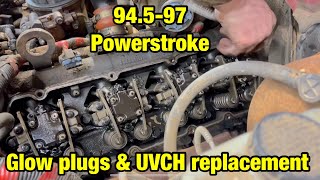
- Damaged Injector Wiring Harness or UVCH (Common) — Wires leading to the injector degrade from engine heat, vibration, or oil exposure, creating a short circuit. On Ford 7.3L engines, the Under Valve Cover Harness (UVCH) frequently melts, while VW TDI models suffer from oil-saturated internal valve cover looms.
- Faulty Glow Plug #4 (Chrysler/Dodge/Jeep) (Common For Make) — On specific 2.8L CRD diesel models, this code explicitly points to a failed glow plug in cylinder #4 or a shorted glow plug control module harness.
- Failed Injector Driver Module (IDM) or PCM (Less Common) — The control module sending high-voltage signals to the injector suffers an internal fault. Suspect this only after definitively proving the injector and wiring harness are fully functional.
- Low System Voltage or Poor Grounds (Rare) — A weak battery, failing alternator, or corroded ground straps cause erratic voltage drops. Sensitive control modules misinterpret these fluctuations and falsely report an injector circuit short.
- Aftermarket Performance Tuner Issues (Rare) — Aggressive aftermarket engine tunes that alter injector timing push the injector's electrical feedback outside of the parameters the PCM expects, triggering a false code even when no hardware fault exists.
Symptoms
- Engine Misfire and Rough Idle — The engine shakes, stumbles, or vibrates heavily at idle because one cylinder is completely dead.
- Significant Loss of Power and Poor Acceleration — With one cylinder offline, the vehicle feels sluggish, accelerates slowly, and struggles to maintain highway speeds or tow loads.
- Check Engine Light On — The Powertrain Control Module illuminates the Malfunction Indicator Lamp immediately upon detecting the short circuit.
- Hard Starting in Cold Weather — If the code stems from a glow plug failure (like on Jeep CRD models), the engine cranks excessively or fails to start in freezing temperatures.
- White or Black Smoke from Exhaust — Unburnt fuel from the dead cylinder exits through the exhaust, appearing as thick white or black smoke during cold starts or heavy acceleration.
- Increased Fuel Consumption (also visible on scanner) — The engine runs inefficiently as the computer overcompensates for the dead cylinder, dropping fuel economy by 15-30%.
Diagnostic Flowchart
Tap your situation to follow the diagnostic path that matches what you're seeing on this code.
Common Fixes & Costs
- Replace Fuel Injector #7
— Parts: $250-$600, Labor: $300-$800, ~4.5 hr book time
(Professional)
Ford 7.3L Powerstroke (1999-2003): OEM
Ford 6.7L Powerstroke (2011-2014): OEM
Ford 6.7L Powerstroke (2015-2019): OEM - Replace Ford 7.3L Under Valve Cover Harness (UVCH) and Gasket
— Parts: $50-$120, Labor: $250-$450, ~3 hr book time
(Intermediate)
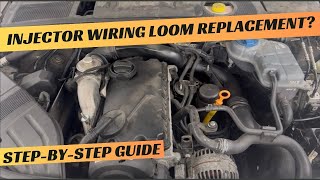
Ford 7.3L Powerstroke (1999-2003): OEM - Replace VW TDI Injector Wiring Harness (in valve cover)
— Parts: $75-$150, Labor: $200-$400, ~2.5 hr book time
(Intermediate)
VW 1.9L/2.0L TDI (BEW, BRM, BHW): OEM - Replace Glow Plug #4 (Jeep Liberty CRD)
— Parts: $20-$50, Labor: $100-$200, ~2.5 hr book time
(DIY)
Jeep Liberty 2.8L CRD (2005-2006): OEM - Replace Injector Driver Module (IDM)
— Parts: $300-$750, Labor: $100-$250, ~1 hr book time
(Intermediate)
Ford 7.3L Powerstroke (1999.5-2003): OEM - Replace All 8 Fuel Injectors (Recommended on high-mileage vehicles) — Parts: $1800-$3000, Labor: $800-$1500, ~9 hr book time (Professional)
- Replace Fuel Injector #3 (Chevy Traverse 3.6L) — Parts: $150-$300, Labor: $900-$1200, ~4.5 hr book time (Professional)
Used vs. New Parts: Buying Guide
When a used part is worth it: For a complex electronic part like a fuel injector, buying used is very risky and generally not recommended. A 'used' or 'refurbished' injector is often just a cleaned part from a high-mileage salvage engine with an unknown history. A professionally 'remanufactured' injector, which has been disassembled, inspected, and rebuilt with new internal components, is a cost-effective alternative to new.
Donor-vehicle mileage cap: roughly under 50000 miles for the part to have meaningful remaining life.
Donor quality checklist:
- Verify the seller is reputable and offers a warranty.
- Ask if the part is 'used' (pulled from a wreck) or truly 'remanufactured' (rebuilt to OEM specs).
- Match the part number exactly, as injectors are specific to engine models and years.
Decision logic:
- If The part is a simple wiring harness like the VW TDI or Ford UVCH → Buy new. The cost savings for used are minimal and the failure is due to age and heat, so a used part is already degraded.
- If The part is a fuel injector and budget is the primary concern → Choose a professionally remanufactured injector from a reputable supplier over a 'used' one.
- If Reliability and longevity are the top priorities → Buy a new OEM or high-quality aftermarket new injector. The higher initial cost is offset by a longer lifespan and better warranty.
Warranty tradeoff: Used parts often have a 30-90 day warranty at best. Remanufactured parts typically come with a 1-year warranty. New OEM or premium aftermarket parts have warranties ranging from 1 year to limited lifetime.
Worst-case if a used part fails: $500-$1500 if a used or poorly remanufactured injector fails shortly after installation, requiring repeat labor costs plus the price of another part.
What Happens If You Wait — Timeline
- 0-2 weeks: Check Engine Light illuminates with P1267. Engine runs rough, especially when cold. Noticeable shaking at idle and sluggish acceleration. (MPG impact: 5-15%% · Added cost: $0-$50 in wasted fuel)
- 2 weeks - 2 months: Engine performance degrades further, with significant power loss and a potential 20-30% drop in MPG. Unburnt fuel begins to clog the Diesel Particulate Filter (DPF) or overheat the catalytic converter. You see white or black smoke from the exhaust. (MPG impact: 15-30%% · Added cost: $50-$200 in wasted fuel)
- 2-4 months: The DPF or catalytic converter becomes saturated with raw fuel and melts down internally, causing a major exhaust restriction. The engine has extreme power loss and enters 'limp mode'. (MPG impact: 30-50%% · Added cost: $1,500 - $3,000 for DPF/catalytic converter replacement)
- 4+ months: Catastrophic engine damage occurs. The faulty injector leaks raw fuel into the cylinder, washing lubricating oil off the cylinder walls, causing piston ring and cylinder scoring. In a worst-case scenario, the cylinder fills with fuel, causing a 'hydrolock' on startup, which bends connecting rods or cracks pistons, requiring a complete engine rebuild or replacement. (MPG impact: N/A (vehicle likely undrivable)% · Added cost: $5,000 - $15,000+ for major engine repair or replacement.)
Cost of Not Fixing It
- 0-1 month: Significant drop in fuel economy (15-30%), very poor engine performance, and potential stalling. Unburnt fuel begins to enter the exhaust system. (Added cost: Negligible)
- 1-3 months: The catalytic converter or Diesel Particulate Filter (DPF) becomes saturated with raw fuel, causing it to overheat and melt internally, leading to a complete blockage. (Added cost: $1500-$3000)
- 3+ months: Catastrophic engine damage. A severely leaking injector causes 'hydro-locking,' where liquid fuel fills the cylinder, bending connecting rods or cracking pistons upon attempted compression. (Added cost: $5000-$15000+)
Diagnosis Steps

- Verify the Code and Check System Voltage
Use an OBD-II scanner to confirm P1267 is active. Use a multimeter to verify the battery reads ~12.6V off and ~13.7-14.7V running. Low voltage causes false electronic codes. Clear the codes and see if P1267 immediately returns.
Tools: OBD-II Scanner, Multimeter (Beginner) - Perform an Injector Buzz Test
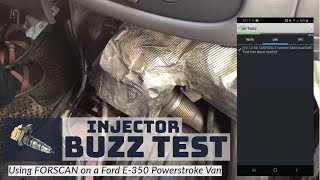
Using a bidirectional scanner, run an injector 'buzz' test to command the IDM to actuate each solenoid. A weak, muffled, or absent buzz from cylinder #7 confirms a fault in that injector or its wiring.
Tools: Advanced Bidirectional Scanner (Intermediate) - Inspect the Wiring Harness and Connectors
Visually inspect the engine wiring harness routing to the #7 fuel injector. Look for melted insulation, chafing against metal brackets, or oil saturation at the valve cover pass-through. On Ford 7.3L engines, unplug the main connector at the valve cover and check for burnt pins.
Tools: Flashlight, Inspection Mirror (Beginner) - Check Injector Resistance
Disconnect the #7 injector harness. Measure resistance across the injector pins with a multimeter. A 7.3L Powerstroke injector must read 2.5-3.5 Ohms (below 1.0 Ohm is a short). A 6.7L piezoelectric injector must read 150-210 kΩ. An infinite reading (OL) means the circuit is open.
Tools: Multimeter (Intermediate) - Perform a Cylinder Contribution Test
Use a bidirectional scanner to disable one cylinder at a time and measure the RPM drop. If disabling cylinder #7 causes zero change in RPM, the cylinder is completely dead.
Tools: Advanced Bidirectional Scanner (Intermediate) - Swap Injector Connectors (Diagnostic Trick)
Carefully swap the electrical connector from injector #7 with an adjacent working injector (e.g., #5). If the code follows the swap to cylinder #5, the injector is dead; if it stays P1267, the wiring is bad.
Tools: Small pick tools (for connector clips) (Advanced) - [ADVANCED] Test IDM/FICM Voltage (Ford)
Verify the output voltage of the control module using a multimeter on the specific test pin. With the key on, voltage must be a stable 47-49V, and never drop below 45V during engine cranking. A reading below 45V indicates a failing module power supply.
Tools: Multimeter, Torx T-20 driver (Advanced) - [PRO TIP] Test the Circuit at the Control Module
Disconnect the IDM/PCM and injector connectors. Check for continuity (less than 1 Ohm) and shorts to ground (OL) on the high and low side wires. This definitively proves if the wiring harness is intact, preventing the costly misdiagnosis of replacing a good control module.
Tools: Multimeter, Vehicle-specific wiring diagram (Professional) - [PRO TIP] Analyze Injector Waveform with a Lab Scope
Connect an oscilloscope and current clamp around the injector's control wire. A shorted injector shows an excessively high, uncontrolled current draw without the distinct 'pintle hump' of a healthy injector, confirming an internal electrical failure.
Tools: Oscilloscope (Lab Scope), Current Clamp (Professional)
When This Code Triggers (Freeze-Frame Conditions)
- Engine Coolant Temp: 180-205°F (Fully warmed up, often after 10-15 minutes of driving.)
- RPM: 1200-2200 (Under light to moderate acceleration or steady cruise.)
- Engine Load: 25-55% (The fault is often triggered when the engine is asked to produce moderate power, not at idle or full throttle.)
- Vehicle Speed: 30-60 mph (Often occurs during city or highway cruise conditions, not necessarily from a stop.)
Related Codes
- P1261 - P1268 — This is a sequence of manufacturer-specific codes where each corresponds to a cylinder's injector circuit short (e.g., P1261 for cylinder #1). Seeing P1267 isolates the electrical short fault to the #7 cylinder circuit.
- P0307 — P0307 is a generic code for 'Cylinder 7 Misfire Detected.' This code identifies the symptom (the misfire), while P1267 identifies the specific electrical cause. You will often see both codes together.
- P0207 — This code means 'Injector Circuit/Open - Cylinder 7.' P1267 indicates a 'short' (low resistance), while P0207 indicates an 'open' (infinite resistance or a break in the wire). The diagnostic approach is similar, but the specific electrical failure is different.
- P0674 — On a Chrysler or Jeep diesel where P1267 means a glow plug issue, you will almost always see P0674, the generic code for 'Cylinder 4 Glow Plug Circuit/Open.' They point to the exact same fault and must be diagnosed together.
Climate & Environmental Factors
- Cold Weather: Cold temperatures amplify the symptoms of a failing injector or glow plug. A weak injector causes a no-start in the cold but allows the engine to run roughly when warm. For glow plug related faults on Jeep CRDs, a no-start in cold weather is the primary symptom.
- Humidity / Water: High humidity and water ingress are detrimental to diesel fuel systems. Water enters through condensation in the fuel tank, leading to corrosion of sensitive injector components from the inside out. Externally, moisture accelerates corrosion at wiring harness connectors.
- Engine Bay Heat: Prolonged exposure to high heat cycles in the engine bay is a primary cause of wiring harness failure. It makes wire insulation brittle and causes plastic connectors to degrade and melt, especially on components mounted directly to the engine.
How to Talk to a Mechanic About This Code
Say this: "I have a P1267 code on my [Ford Powerstroke/VW TDI/Jeep CRD]. I'd like to schedule a diagnostic. Before replacing any major components, please perform and document a few specific tests. For a Ford, I'd like a buzz test, injector resistance check, and a close inspection of the UVCH. For a VW, please inspect the injector harness under the valve cover first. For a Jeep, please test the resistance of the #4 glow plug."
This signals to the shop that you are an informed customer. It directs them to perform specific, low-cost diagnostic steps to prove the failure before recommending an expensive part replacement, saving you from paying for a misdiagnosis.
Avoid saying:
- 'My check engine light is on, can you just fix it?'
- 'My truck is running rough, do whatever you think is best.'
- 'I think I need a new injector, can you give me a price?'
Questions to ask before authorizing the repair:
- What were the specific Ohm readings from the injector/glow plug resistance test?
- Can you describe the condition of the wiring harness and connectors (e.g., UVCH on a 7.3L, injector harness on a TDI)?
- Did the injector buzz test show a silent, weak, or normal buzz on the affected cylinder?
- Have you confirmed with a multimeter that the wiring between the control module and the component is good?
- What is the warranty on the recommended parts and your labor?
Where to Take It: Dealer vs Independent vs Chain
- Dealer:
Recommended only for warranty work or as a last resort if a specialist is unavailable.
Best for: Vehicles still under powertrain or emissions warranty., Extremely complex, model-specific issues like the Jeep CRD glow plug system conversion that requires a PCM flash.
Downsides: Significantly higher labor rates (1.5-2x vs. independent)., Often defaults to replacing expensive assemblies rather than diagnosing smaller components. (Typical cost: +75% vs. baseline) - Independent Shop:
Best fit. Seek out an independent shop that specializes in diesel repair or your specific brand (Ford, VW). They have likely seen and fixed this exact code hundreds of times.
Best for: Out-of-warranty diesel trucks and cars., Finding a shop that specializes in your specific vehicle (e.g., Powerstroke, TDI, Cummins)., Building a long-term relationship with a mechanic who knows your vehicle's history.
Downsides: Quality and expertise vary widely; you must vet the shop through reviews and certifications., A general auto shop lacks the specific tools (e.g., FORScan, VCDS) for deep diesel diagnostics. (Typical cost: +0% vs. baseline) - Chain Shop:
AVOID. This is not a job for a general-service chain shop. The likelihood of a misdiagnosis is extremely high.
Best for: Simple, non-diagnostic work like tires, brakes, and oil changes.
Downsides: Technician skill and experience with complex diesel electronics are often very low., High pressure to upsell and a tendency to 'throw parts' at a problem rather than diagnose it properly. (Typical cost: -10% vs. baseline)
When to Walk Away From the Repair
If the estimated repair cost exceeds 40-50% of the vehicle's current private-party value, you should pause and seriously consider selling or trading it in as-is.
- Car worth $11000, fix is $4500: Borderline. This is for a full set of 8 injectors on a 2003 Ford F-350 7.3L. If the truck is otherwise in great shape, it might be worth it. If it has other pending issues, it is time to walk away.
- Car worth $3000, fix is $500: Fix it. This represents replacing the injector harness on a 2006 VW Jetta TDI. The repair cost is well below the threshold and is a common, well-understood fix.
- Car worth $8000, fix is $5000: Walk away. This repair cost is over 60% of the vehicle's value. Unless the vehicle has significant sentimental or specialized value (e.g., a fully built-out work truck), this is not a sound financial decision.
What Scan Tool You Need for This Code
Minimum: Manufacturer-specific bidirectional control. A generic code reader is insufficient for this DTC.
A basic $20 reader only shows 'P1267'. It cannot perform the essential diagnostic commands needed to find the root cause, such as an injector buzz test (Ford), cylinder contribution test, or glow plug test (Jeep). You will be guessing and likely replacing the wrong, expensive parts.
Budget: FORScan with OBDLink EX Adapter (Ford); VCDS Lite with 3rd-party cable (VW) (~$60) — FORScan provides dealer-level diagnostics for Ford vehicles, including the critical injector buzz test and cylinder contribution test. The OBDLink EX is a recommended reliable adapter. VCDS for VW provides similar deep-level access.
Mid-range: Autel MaxiCOM MK808S / ANCEL V6 Pro+ (~$350) — These tablet-based tools offer bidirectional control for multiple brands. They perform active tests like buzz tests and read manufacturer-specific data streams, making them a versatile choice for a serious DIYer who works on more than one brand.
Professional: Autel MaxiSys MS906 Pro / Launch X431 Series (~$1200+) — Provides full professional-level, all-system bidirectional diagnostics, advanced ECU coding, and potentially oscilloscope functions for waveform analysis. This is overkill for a single DIY repair but is standard equipment in professional diesel shops.
Rent vs buy: Rent is not a viable option. The free loaner tools from auto parts stores are basic code readers that cannot perform the necessary bidirectional tests for P1267. For a proper diagnosis, you must either buy a capable scanner (like FORScan for a Ford) or pay a professional for their diagnostic time.
How to Clear the Code After You Fix It
- Reconnect the battery if it was disconnected for the repair.
- Use a quality OBD-II scan tool to erase the stored fault codes.
- Perform a complete drive cycle to allow the vehicle's readiness monitors to run.
Drive cycle (~30 minutes): Start the vehicle from a cold start (sitting overnight). Let it idle for 2-3 minutes. Drive in mixed city conditions (stop-and-go) for 10-15 minutes. Drive at a steady highway speed (55-65 mph) for 5-10 minutes. Allow the vehicle to cool down completely.
Readiness monitors affected: Misfire Monitor, Fuel System Monitor, Comprehensive Component Monitor
Before emissions retest: drive at least 100 miles to fully set monitors.
Watch out for:
- Simply disconnecting the battery clears the code, but it also resets all the readiness monitors to 'Not Ready', which causes an automatic emissions test failure.
- If the underlying electrical short is not properly fixed, the code returns almost immediately after clearing it.
- Not driving the vehicle through a complete and varied drive cycle prevents readiness monitors from setting, delaying a successful emissions test.
Will This Fail Emissions / State Inspection?
Yes — this code typically fails an OBD-II emissions inspection.
- California: An illuminated Check Engine Light results in an automatic smog test failure. After repairs, all required readiness monitors must be in a 'Ready' state to pass, which requires driving 100+ miles.
- New York: Vehicles subject to the NYVIP3 inspection automatically fail if the Malfunction Indicator Lamp (Check Engine Light) is on. For 2001 and newer vehicles, only one readiness monitor is allowed to be 'Not Ready' to pass.
- Texas: In counties requiring emissions testing, an illuminated Check Engine Light is an automatic failure. After clearing codes, you must complete a drive cycle, as the test fails if too many readiness monitors are 'Not Ready'.
Most Commonly Affected Vehicles

- Ford F-250/F-350 Super Duty (1999-2019) — Extremely common on 7.3L, 6.0L, and 6.7L Powerstroke engines. On the 7.3L, it is often the UVCH. On 6.0L and 6.7L, it is most often the injector itself. For 6.7L models, injectors #7 and #8 are under the turbo pedestal, drastically increasing labor time.
- Ford Excursion (2000-2005) — Equipped with the 7.3L Powerstroke, these are highly susceptible to melted Under Valve Cover Harnesses (UVCH) and injector failures.
- Volkswagen Jetta, Golf, Passat, Beetle (2004-2013) — On models with the 1.9L and 2.0L TDI Pumpe Düse (PD) engines, P1267 (or 17675) points to a problem with the #3 injector. The cause is almost always the oil-saturated injector wiring harness inside the valve cover failing.
- Chevrolet Traverse, Impala, Equinox (2009-2017) — On models with the 3.6L V6 engine (LLT/LFX), an equivalent code (P0267 for cylinder #3) is common. Cylinder 3 is on the rear bank, requiring intake manifold removal for access, making it a labor-intensive job.
- Jeep Liberty CRD (2005-2006) — On these 2.8L diesel models, the code indicates a fault in the #4 glow plug circuit. These models had multiple glow plug voltage systems (5V, 7V, 11V), and replacing them requires a controller and PCM flash.
- Ford E-Series Van (E-350/E-450) (2004-2010) — Vehicles with the 6.0L Powerstroke diesel are highly prone to this code, with injector replacement being more labor-intensive due to tighter access in the van's engine bay.
- Nissan Navara/Frontier (2005-2015) — On some diesel models (like the YD25DDTi), P1267 indicates a 'signal high' fault for the #4 injector circuit, often related to the fuel injection pump timing or the pump itself.
- BMW 3-Series (E46), 5-Series (E39) (1998-2006) — On diesel variants like the 320d and 330d, injector circuit codes including P1267 appear, typically pointing to a faulty injector or wiring harness issues common in aging high-pressure common-rail systems.
Manufacturer-Specific Notes
- Ford: On 6.7L Powerstroke engines (2011+), the #7 and #8 injectors are located under the turbocharger and its pedestal. This makes them significantly more difficult and labor-intensive to replace than the other six injectors, often doubling the labor time.
- Volkswagen/Audi: For TDI PD engines, the injector wiring harness is located inside the valve cover, where it is constantly submerged in hot engine oil. Over time, the wire insulation becomes brittle and flakes off, leading to inevitable short circuits that trigger injector codes.
- Jeep: On 2005-2006 Liberty CRD models, the factory wiring harness for the glow plugs was sometimes mis-wired. A code for cylinder #4 (P1267) is sometimes caused by a problem with the glow plug or wiring for a different cylinder (e.g., #1 or #2).
- Chevrolet/GM: On the 3.6L V6 engine (LLT), GM released Technical Service Bulletin (TSB) #PIP4924D regarding various injector circuit codes. The bulletin notes that the engine wiring harness chafes against engine brackets or the block itself, causing a short to ground.
Real Owner Stories
2000 Ford F-250 7.3L with 337k miles - The Intermittent Gremlin
Truck developed an intermittent severe shudder and power loss. The check engine light would come on and go off. A shop found history codes P1316, P1247, P1211, and a buzz test indicated issues on the driver's side bank.
Outcome: After weeks of troubleshooting, the final fix was replacing the fuel pump, the fuel pickup in the tank, and both valve cover gaskets/harnesses. This combination of fixes finally resolved the rough running.
Lesson: Intermittent electrical issues are caused by multiple compounding problems. A failing fuel pump mimics injector issues, and bad wiring (UVCH) causes unpredictable behavior that isn't always solved on the first try.
2005 Jeep Liberty CRD - A Simple Glow Plug, A Complicated Fix
Check engine light came on with code P1267. The vehicle started and ran fine in warmer weather but required a jump start in below-freezing temperatures.
Outcome: The initial glow plug replacement didn't solve the problem, pointing to a more complex issue, possibly with the glow plug controller, wiring, or the aftermarket remote start system interfering with the starting sequence.
Lesson: On a Jeep Liberty CRD, P1267 points to the glow plug system, but the fix isn't always just the plug. Be aware of the multiple voltage systems (5V, 7V, 11V) and the expensive dealer-recommended conversion to a 5V system which requires a new controller and PCM flash.
VW TDI - The Inevitable Oil-Soaked Harness
Owner of a VW TDI with a PD engine experienced rough running and reduced power, triggering code P1267 (VW code 17675), which points to an issue with the injector for cylinder 3.
Outcome: The owner replaced the injector wiring harness (Part No. 038971600), which was found to be saturated with oil and had brittle, cracking insulation. This is a common DIY repair that resolved the code and restored engine performance.
Lesson: For VW TDI PD engines, injector codes are almost always caused by the failure of the internal wiring harness. It is a known design flaw and must be the first part you inspect and likely replace, saving hours of unnecessary diagnostic time.
1999 Ford F-250 7.3L - Misleading Buzz Test
The truck had a cold misfire that would clear up as the engine warmed. A cold injector buzz test revealed injector #6 was much quieter than the others, but a warm buzz test showed all injectors sounding normal.
Outcome: The definitive fix is to replace the failing injector. The owner noted that simply hearing a faint buzz on a cylinder is misleading; if one injector is unplugged or has a circuit fault, you hear a faint buzz from the other seven injectors, leading to a misdiagnosis of a bad injector when the real problem is wiring.
Lesson: A 'buzz test' is a test of the electrical circuit. A quiet buzz, especially when cold, often points to a worn injector. An absent buzz or a very faint buzz points towards an open circuit, most likely the UVCH connector, not necessarily the injector itself.
How to Prevent This Code From Triggering
- Use High-Quality Diesel Fuel from Reputable Stations (Every fill-up) — Lower quality diesel contains contaminants and water that cause internal injector corrosion and wear. Reputable, high-volume stations have better filtration and fresher fuel.
- Change Fuel Filters Regularly (Per manufacturer's schedule (e.g., every 15,000-25,000 miles), or sooner in dusty conditions.) — Fuel filters are the primary defense against debris reaching the injectors. A clogged filter fails, allowing contaminants to pass through and damage the precise internal components of the injectors.
- Drain Water from the Fuel-Water Separator (Monthly or at every oil change.) — Water is a major cause of injector damage through corrosion. Regularly draining the separator prevents accumulated water from being sent through the fuel system.
- Use a Quality Diesel Fuel Additive/System Cleaner (Periodically, as directed by the product (e.g., every few thousand miles).) — Additives help clean out carbon deposits, improve lubricity (especially with ULSD fuel), and prevent gunk from building up inside the injectors, maintaining a proper spray pattern.
- Avoid Extended Idling (Daily habit) — Long periods of idling lead to incomplete combustion and carbon buildup on injector tips, which disrupts the spray pattern and accelerates wear.
- On 7.3L Powerstroke, Secure the UVCH connectors (Whenever the valve covers are off.) — The Under Valve Cover Harness connectors are notorious for vibrating loose. Using the 'quarter trick' or a similar shim ensures the connector stays tight, preventing intermittent open circuits that damage the IDM or injectors.
Frequently Asked Questions
Can I just add a fuel injector cleaner to fix P1267?
No. P1267 is an electrical fault code indicating a short circuit. Fuel system cleaners have no effect on electrical wiring or internal solenoid failures.
I replaced the #7 injector, but the P1267 code came back. What now?
If a new injector does not fix the code, the fault is in the wiring harness between the injector and the control module (IDM/PCM). You must perform continuity and short-to-ground tests on the injector circuit wires to find the break or short.
If one injector failed, should I replace all of them?
On high-mileage diesels over 150,000 miles, replacing all injectors is highly recommended. Since all injectors share the same wear cycles, one failure strongly indicates the others are nearing the end of their service life. Replacing them simultaneously saves hundreds in overlapping labor costs.
What is the most common misdiagnosis for P1267?
The most common and costly mistake is immediately replacing the fuel injector without testing the circuit first. The fault is often a much cheaper fix, such as a chafed wire, a loose connector, or a bad Under Valve Cover Harness (UVCH).
What does 'High To Low Side Short' actually mean?
Diesel injectors use a 'high side' wire that receives constant high voltage and a 'low side' wire that the computer pulses to ground to fire the injector. A 'high to low side short' means these two wires are touching, creating a direct short circuit.
My truck runs rough intermittently but the check engine light isn't always on. Could it still be P1267?
Yes. Sometimes the short in the wiring or injector is intermittent, only occurring when the engine reaches a certain temperature or vibrates at a specific frequency. The PCM logs a 'pending' code without illuminating the check engine light until the fault occurs multiple times.
Can a bad battery cause code P1267?
Yes. The Injector Driver Module (IDM) and PCM are highly sensitive to system voltage. A weak battery, poor connections, or a failing alternator causes low or unstable voltage, leading to erratic behavior and false electrical codes like P1267.
Key Takeaways
- Verify your vehicle's specific P1267 definition before buying parts; it means a Cylinder #7 Injector Short on Ford Powerstrokes, but indicates a Cylinder #3 Injector fault on VW TDIs and a Cylinder #4 Glow Plug issue on Jeep Liberty CRDs.
- Test the injector resistance with a multimeter before replacing it; a healthy 7.3L Powerstroke injector reads 2.5-3.5 Ohms, while a reading below 1.0 Ohm confirms a fatal internal short.
- Inspect the engine wiring harness immediately, as melted or oil-soaked wires cause over 40% of P1267 codes and cost hundreds of dollars less to fix than replacing a $300 fuel injector.
- Stop driving the vehicle immediately to prevent unburnt fuel from destroying your Diesel Particulate Filter (DPF) or catalytic converter, which adds $1,500 to $3,000 to your final repair bill.
Helpful Videos


The information in this article is provided for general reference and educational purposes only. Vehicle specifications, procedures, and part compatibility can vary by production date, trim level, and region. Always consult your vehicle's factory service manual and verify part numbers before purchasing or performing repairs. Safety-critical components such as airbags, seat belts, and braking systems should be installed by a qualified professional.
- 🎬 Helpful Videos
- What Does P1267 Mean?
- Can I Drive With P1267?
- Common Causes
- Symptoms
- Diagnostic Flowchart
- Common Fixes & Costs
- Used vs. New Parts: Buying Guide
- What Happens If You Wait — Timeline
- Cost of Not Fixing It
- Diagnosis Steps
- When This Code Triggers (Freeze-Frame Conditions)
- Related Codes
- Climate & Environmental Factors
- How to Talk to a Mechanic About This Code
- Where to Take It: Dealer vs Independent vs Chain
- When to Walk Away From the Repair
- What Scan Tool You Need for This Code
- How to Clear the Code After You Fix It
- Will This Fail Emissions / State Inspection?
- Most Commonly Affected Vehicles
- Manufacturer-Specific Notes
- Real Owner Stories
- 2000 Ford F-250 7.3L with 337k miles - The Intermittent Gremlin
- 2005 Jeep Liberty CRD - A Simple Glow Plug, A Complicated Fix
- VW TDI - The Inevitable Oil-Soaked Harness
- 1999 Ford F-250 7.3L - Misleading Buzz Test
- How to Prevent This Code From Triggering
- Frequently Asked Questions
- Can I just add a fuel injector cleaner to fix P1267?
- I replaced the #7 injector, but the P1267 code came back. What now?
- If one injector failed, should I replace all of them?
- What is the most common misdiagnosis for P1267?
- What does 'High To Low Side Short' actually mean?
- My truck runs rough intermittently but the check engine light isn't always on. Could it still be P1267?
- Can a bad battery cause code P1267?
- Key Takeaways
- 🎟️ Get 5% Off