

OBD-II Code P1264: Injector Circuit Fault (Cylinder 4)
What P1264 means, why it triggers, and how to fix it
- P1264 indicates a 'high to low side short' in the cylinder #4 fuel injector circuit, causing a severe misfire and a 15-25% drop in fuel economy.
- On 1999-2003 Ford 7.3L Power Stroke engines, a loose or brittle Under Valve Cover Harness (UVCH) causes over 80% of P1264 codes.
- Never replace a $250+ fuel injector without first performing an injector 'buzz test' and verifying 3.0 to 4.0 ohms of resistance at the valve cover connector.
- Driving with an active P1264 code for more than a few weeks dumps raw fuel into the exhaust, destroying the catalytic converter and causing a $1,200 to $4,000 repair.
What Does P1264 Mean?

P1264 indicates the Powertrain Control Module (PCM) detected a 'high to low side short' in the cylinder #4 fuel injector electrical circuit. This means electrical current is taking an unintended shortcut, preventing the injector from spraying fuel and causing the cylinder to misfire.
Technical definition: Cylinder #4 High To Low Side Short. This definition applies primarily to Ford and Mazda. However, definitions vary by manufacturer: on Toyota diesels, it indicates a 'VN Turbo Controller Malfunction'; on VW/Audi, it means 'Regulation Range Exceeded' for cylinder #2; and on Saab, it points to a throttle body fault.
Can I Drive With P1264?
Yes, But With Caution. You can drive a short distance, but we strongly advise against it. The engine runs rough, lacks power, and stalls frequently. 🎬 See how to diagnose a rough running 7.3 Powerstroke. Continuing to drive dumps unburnt fuel into the exhaust, which overheats and destroys the catalytic converter, turning a wiring issue into a $1,000 to $4,000 repair.
Common Causes

- Under Valve Cover Harness (UVCH) Failure (Very Common) — On Ford 7.3L Power Stroke engines, the wiring harness under the valve cover degrades from intense heat and vibration. The connector loosens or the wires become brittle and short out against the engine block.
- Damaged External Wiring or Connectors (Common) — Wiring between the Injector Driver Module (IDM) and the valve cover rubs against engine components, melts, or suffers from water intrusion. Corroded pins at the main connectors create high resistance or direct shorts.
- Failed Fuel Injector #4 (Common) — The electronic solenoid inside the fuel injector fails internally. The coil windings break down and short together, triggering the code and preventing the injector from opening.
- Failed Injector Driver Module (IDM) or PCM (Less Common) — The IDM (which sends 115V signals to the injectors) or the PCM fails internally, sending incorrect signals or generating false fault codes. Bent pins from previous repairs also cause this.
Symptoms
- Significant Loss of Power — The vehicle feels sluggish and struggles to reach highway speeds 🎬 Watch this walkthrough on fixing Powerstroke power loss issues. or pull a load.
- Hard Starting or Stalling — The engine cranks for extended periods before starting or shuts off unexpectedly when coming to a stop.
- RPM Limitation (Limp Mode) — Some vehicles, like the Ford Focus 1.6 TDCI, restrict engine speed to 2000 RPM to prevent catastrophic damage.
- Severe Engine Misfire and Rough Idle (also visible on scanner) — The engine shakes violently at idle and stumbles during acceleration because cylinder #4 is completely dead.
- Check Engine Light Illuminated (also visible on scanner) — The dashboard warning light turns on immediately when the PCM detects the short circuit.
Diagnostic Flowchart

Tap your situation to follow the diagnostic path that matches what you're seeing on this code.
Common Fixes & Costs
- Replace Under Valve Cover Harness (UVCH) — Parts: $80-$120, Labor: $200-$350, ~2.5 hr book time (Intermediate)
- Repair External Wiring or Clean Connectors — Parts: $10-$50, Labor: $100-$250, ~1.5 hr book time (Intermediate)
- Replace Fuel Injector #4 — Parts: $250-$500, Labor: $200-$400, ~3.5 hr book time (Professional)
- Replace Injector Driver Module (IDM) — Parts: $300-$600, Labor: $100-$200, ~0.8 hr book time (Intermediate)
Used vs. New Parts: Buying Guide
When a used part is worth it: Buying used electronic parts for P1264 is risky. A tested, used Injector Driver Module (IDM) is a cost-effective option, but used wiring harnesses and fuel injectors fail quickly due to existing wear.
Donor-vehicle mileage cap: roughly under 100000 miles for the part to have meaningful remaining life.
Donor quality checklist:
- Ensure the donor vehicle was not scrapped due to electrical or running issues.
- Avoid parts from rust-belt vehicles, as corrosion on connectors is a major failure point.
- Match part numbers exactly.
Decision logic:
- If The part is a wiring harness (UVCH) or a single fuel injector. → Buy new or high-quality remanufactured. Used versions carry a high risk of having the same age-related brittleness.
- If The part is an expensive electronic module like an IDM and budget is a primary concern. → A tested, used part with a 90-day warranty is viable, but remanufactured is safer.
Warranty tradeoff: Used parts typically offer a 30-90 day warranty. Remanufactured parts often come with a 1-year warranty. New OEM parts carry a 1-2 year warranty.
Worst-case if a used part fails: $500-$1000 if a used part fails, including repeat labor and sourcing another part.
What Happens If You Wait — Timeline
- 0-1 week: Code P1264 sets, Check Engine Light illuminates. The engine runs rough, shakes at idle, and loses significant power. (MPG impact: 15-25%% · Added cost: $20-$60 in wasted fuel)
- 1 week - 2 months: Unburnt fuel from the dead cylinder continuously enters the exhaust, beginning to coat the catalytic converter. (MPG impact: 15-25%% · Added cost: $50-$150 in wasted fuel)
- 2-4 months: The catalytic converter's internal temperature rises dramatically. The ceramic honeycomb substrate overheats, cracks, and melts, creating a partial exhaust blockage. (MPG impact: 25-40%% · Added cost: $1,200-$4,000 (catalytic converter replacement is now required))
- 4+ months: The catalytic converter melts completely, causing a severe exhaust blockage. Extreme backpressure builds, leading to burnt exhaust valves or head gasket failure. (MPG impact: 40-60%+% · Added cost: $4,000-$8,000+ (cost of catalytic converter plus major engine repair))
Cost of Not Fixing It
- 0-1 month: Significant decrease in fuel economy, poor performance, and potential for stalling in traffic. (Added cost: $50-$150 in wasted fuel)
- 1-6 months: Raw fuel from the dead cylinder overheats and destroys the catalytic converter, causing a major exhaust blockage. (Added cost: $1,200-$4,000 for catalytic converter replacement)
- 6+ months: Continued driving with a clogged catalytic converter puts extreme backpressure on the engine, leading to damaged exhaust valves or head gaskets. (Added cost: $4,000-$8,000+ for engine and exhaust system repairs)
Diagnosis Steps
- Read Freeze Frame Data
Review the freeze frame data to see the engine's operating conditions (temperature, RPM, load) at the exact moment the P1264 code triggered.
Tools: OBD-II Scanner (Beginner) - Perform an Injector Buzz Test
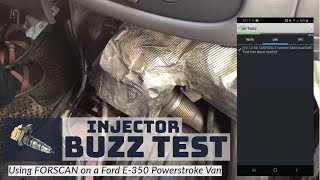
Command the IDM to actuate each injector solenoid. All injectors must produce a sharp, audible 'buzz'. A silent or noticeably weaker buzz on cylinder #4 confirms a fault in that specific circuit.
Tools: Advanced OBD-II Scanner (Beginner) - Check Injector Resistance
Unplug the main valve cover connector and measure the pins for the cylinder #4 injector. A normal reading is 3.0 to 4.0 ohms. A reading near zero indicates a short circuit; an 'OL' reading indicates an open circuit.
Tools: Multimeter (Intermediate) - Inspect the Under Valve Cover Harness (UVCH)
Remove the valve cover and meticulously check the UVCH connector. Look for signs of the connector backing out or burnt pins, which is the most common failure point on the 7.3L Power Stroke.
Tools: Socket Set, Screwdrivers (Intermediate) - Inspect External Wiring and Perform a Wiggle Test
Visually inspect the harness from the PCM/IDM to the valve cover for chafing or melting. While monitoring injector resistance with a multimeter, wiggle the wiring harness to locate intermittent shorts.
Tools: Multimeter, Flashlight (Intermediate) - Check IDM Output Voltage
Verify the Injector Driver Module (IDM) outputs approximately 110-115 volts DC to fire the injectors. Extreme caution is required due to the high voltage risk.
Tools: High Voltage DC Multimeter, Safety Gear (Advanced) - Check HEUI System Pressures
Monitor the Injection Control Pressure (ICP) via live data. You need a minimum of 500 PSI while cranking for the injectors to fire. Low ICP causes misfires but typically sets other codes alongside P1264.
Tools: Advanced OBD-II Scanner (Advanced) - Check for Short-to-Ground with an Oscilloscope
Connect an oscilloscope to the signal wire of the #4 injector. A distorted square wave or a voltage pulled constantly to ground confirms a short, differentiating between an internal injector short and a wiring short.
Tools: Oscilloscope (Advanced) - Test the Injector Driver Module (IDM) / PCM
If the injector and all wiring test good, swap the IDM or PCM with a known-good unit. Never replace the module before verifying the wiring, as a shorted harness instantly destroys a new module.
Tools: Socket Set, Known-Good IDM/PCM (Advanced)
When This Code Triggers (Freeze-Frame Conditions)
- Engine Coolant Temp: 180-200°F (82-93°C) (The fault often appears when the engine is fully warmed up. Heat causes failing electrical components to expand, creating or worsening a short circuit.)
- RPM: 1500-2500 (The code frequently sets during steady-state cruising or light acceleration, which is when the PCM actively monitors injector circuit performance.)
- Engine Load: 25-60% (Occurs under moderate load conditions, consistent with highway cruising or maintaining speed on a slight incline.)
- Vehicle Speed: 40-65 mph (Often triggered at cruising speeds. Combined with RPM and load, this points to a fault that becomes apparent during continuous operation rather than a transient event.)
Related Codes
- P1274 — Means 'Cylinder 4 High to Low Side Open'. It points to the same circuit as P1264 but indicates a break in the wire (open) instead of a short circuit.
- P0270 — The generic OBD-II code for 'Cylinder 4 Injector Circuit Low'. Seeing both codes together strongly confirms an electrical problem in the injector circuit.
- P1261 - P1268 — A family of codes for injector circuit shorts, where the last digit corresponds to the cylinder number.
- P1316 — On Ford 7.3L engines, P1316 indicates the IDM has stored faults. It signals you to perform an injector buzz test to reveal specific cylinder codes like P1264.
Climate & Environmental Factors
- Heat and Vibration: Engine heat causes wiring insulation and plastic connector clips to become brittle. Combined with constant engine vibration, this leads to cracked wires, loose connections, and short circuits.
- Humidity and Moisture: Moisture penetrates aging connector seals, leading to corrosion on the connector pins for the IDM and injectors. Corrosion creates high resistance or intermittent shorts.
- Extreme Cold: Brittle, cracked insulation contracts in the cold, causing an intermittent short to become permanent.
How to Talk to a Mechanic About This Code
Say this: "I have a P1264 code on my vehicle and it's running rough. Based on my research, the issue is often the wiring harness or connectors. Can you please start by checking the wiring and performing an injector buzz test before quoting a full injector replacement?"
This guides the technician toward the most likely and cheapest repairs first, preventing them from immediately quoting the most expensive part. Mentioning the 'buzz test' shows you know the proper diagnostic steps.
Avoid saying:
- 'My truck is shaking, just fix it.'
- 'My check engine light is on, can you look at it?'
- 'A friend said I need a new injector, can you replace it?'
Questions to ask before authorizing the repair:
- What was the resistance reading on the injector circuit at the valve cover connector?
- Did the injector buzz test show a fault on cylinder 4?
- Did you inspect the Under Valve Cover Harness (UVCH) and the external wiring for damage?
- If the injector needs to be replaced, does the new one need to be coded to the ECU?
- What is the warranty on the parts and labor for this repair?
Where to Take It: Dealer vs Independent vs Chain
- Dealer:
Recommended for newer vehicles or if the fault is on a non-Ford brand with a unique code definition.
Best for: Vehicles still under powertrain warranty., Complex, manufacturer-specific versions of the code (e.g., Toyota or newer Volvo/VW)., Repairs requiring proprietary software for coding new injectors.
Downsides: Typically the highest labor rate., May be less familiar with common failure patterns on older, out-of-warranty vehicles. (Typical cost: +50% vs. baseline) - Independent Shop:
Best fit, especially for Ford 7.3L trucks. A good diesel-focused independent shop is the ideal choice for expertise and value.
Best for: Out-of-warranty vehicles, especially common ones like the Ford 7.3L Power Stroke., Shops that specialize in diesel trucks., Better pricing on labor and parts.
Downsides: Quality varies greatly; you must find a shop with a good reputation for diesel electrical diagnostics., May not have the latest software for coding injectors on very new models. (Typical cost: +0% vs. baseline) - Chain Shop:
AVOID. This is not a simple code and is outside the typical expertise of a chain repair shop.
Best for: Simple, unrelated maintenance like tire rotations or oil changes.
Downsides: Technicians generally lack specialized diesel and electrical diagnostic experience., High pressure to sell parts leads to misdiagnosis., Unlikely to have bidirectional scanners capable of performing an injector buzz test. (Typical cost: -10% vs. baseline)
When to Walk Away From the Repair
If the total estimated repair cost exceeds 40-50% of your car's private-party value, seriously consider selling or trading it in instead of repairing it.
- Car worth $5000, fix is $2500: Walk away. A repair costing 50% of the vehicle's value is rarely a good investment on an older, high-mileage truck.
- Car worth $15000, fix is $900: Fix it. The repair cost is well under the threshold and is a reasonable expense to keep a valuable vehicle running.
- Car worth $3500, fix is $650: Borderline, but likely worth fixing. The cost is less than 20% of the vehicle's value. Get a firm quote before proceeding.
What Scan Tool You Need for This Code
Minimum: A bidirectional scan tool or software capable of performing a manufacturer-specific 'Injector Buzz Test'. A basic code reader is NOT sufficient.
A basic code reader only shows the P1264 code. It cannot command the vehicle's computer to perform the injector buzz test, which is critical for isolating the fault.
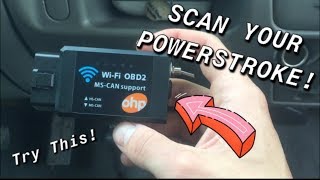
Budget: FORScan software with OBDLink EX or BAFX Adapter (~$50-80) — FORScan provides dealer-level diagnostics for Ford vehicles. It performs the crucial injector buzz test, reads codes from all modules, and monitors live data.
Mid-range: Foxwell NT710 or XTool A30M (~$150-250) — These scanners offer bidirectional controls for multiple vehicle brands. They command injector tests, read live data, and access codes from various modules.
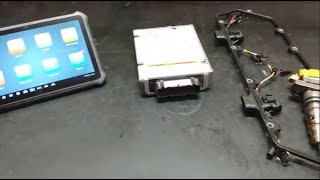
Professional: Autel MaxiCOM MK808 / MK906BT (~$500-1200) — These professional-grade tablets offer full bidirectional control, extensive live data graphing, and advanced functions like ECU coding for new injectors.
Rent vs buy: You generally cannot rent advanced bidirectional scanners from auto parts stores. For a one-time diagnosis on a Ford, purchasing a compatible adapter and using FORScan is the most cost-effective route.
How to Clear the Code After You Fix It
- Use an OBD-II scan tool to formally clear the P1264 code.
- Perform a complete OBD-II drive cycle to allow the vehicle's readiness monitors to run and confirm the fix.
Drive cycle (~20 minutes): Cold start the engine and idle for 3 minutes. Drive in stop-and-go city traffic for 10 minutes. Drive at a steady highway speed (55-60 mph) for 10 minutes. Allow the vehicle to cool down completely.
Readiness monitors affected: Misfire Monitor, Comprehensive Component Monitor (CCM), Catalyst Monitor
Before emissions retest: drive at least 50 miles to fully set monitors.
Watch out for:
- Clearing the code without performing a drive cycle leaves readiness monitors in a 'Not Ready' state, causing an automatic emissions test failure.
- On Ford 7.3L engines, it takes up to 50 miles of driving to purge all air from the high-pressure oil system after an injector replacement, causing rough running that mimics a failed repair.
Will This Fail Emissions / State Inspection?
Yes — this code typically fails an OBD-II emissions inspection.
- California: An active P1264 code automatically fails the OBD-II portion of the smog check. All readiness monitors must be set to 'Ready' before re-testing.
- New York: An illuminated Check Engine Light for P1264 results in an immediate inspection failure.
- Texas: In counties requiring emissions testing, a vehicle with an active Check Engine Light automatically fails the inspection.
Most Commonly Affected Vehicles
- Ford F-250 / F-350 Super Duty (1999-2003) — Extremely common due to the 7.3L Power Stroke diesel engine's Under Valve Cover Harness (UVCH) design. The connector clips become brittle and fail.
- Ford Excursion (2000-2003) — Features the same 7.3L Power Stroke engine and wiring design as the Super Duty trucks.
- Ford E-Series Van (E-350/E-450) (1999-2003) — These vans utilize the 7.3L Power Stroke and experience the same UVCH issues.
- Ford Focus (2011-2014) — The 1.6L TDCI diesel engine is known for injector wiring or internal injector faults that trigger P1264.
- Mazda 3 (2010-2013) — The 1.6L diesel models share engine architecture with Ford and exhibit P1264 due to injector or wiring harness shorts.
- Volkswagen Golf / Jetta / Passat (2004-2013) — Common on TDI models with Pumpe Düse (PD) engines. VW's definition for P1264 points to cylinder 2, not 4.
- Volvo S80 / V60 / V50 (2010-2014) — The cause is typically a failed injector or its associated wiring. Replacement requires coding the new injector to the car's ECU.
- Jaguar X-Type (2003-2009) — On diesel models, P1264 relates to injector faults or wiring harness issues.
Manufacturer-Specific Notes
- Ford: On 7.3L Power Stroke engines, the UVCH connector vibrates loose so often that a common DIY repair is wedging a quarter against it (the '50-cent fix'). The correct repair is replacing the harness.
- Toyota: On diesel models like the Hilux, P1264 stands for 'VN Turbo Controller Malfunction' and points to a communication error between the ECM and the turbo motor driver.
- Volkswagen/Audi: On PD diesel engines, P1264 is defined as 'PD Unit Injector: Cylinder 2 (N241): Regulation Range Exceeded', pointing to cylinder 2, not cylinder 4.
- Saab: For models with the Trionic T7 engine management system, P1264 indicates 'Throttle Open when Pedal is Released', a mechanical fault unrelated to fuel injectors.
Real Owner Stories
2002 Ford F-250 7.3L at 190K miles
Truck started running very rough and stumbling. A buzz test showed a weak buzz on cylinder #4 and code P1264.
What they tried:
- Pulled the driver's side valve cover and found the UVCH connector had vibrated partially loose.
- Replaced the UVCH with a new harness, but the truck still had a rough idle and the code returned.
Outcome: After re-testing the harness and swapping the #4 injector to another cylinder, the code did not follow the injector. The final culprit was a failed Injector Driver Module (IDM).
Lesson: A loose UVCH is a classic cause, but a methodical diagnosis of the external harness and IDM is necessary before condemning the expensive injector.
2012 Ford Focus 1.6 TDCI at 24K miles
After sitting for 9 months, the car went into limp mode with an EPS warning and a P1264 code for a short in the #4 injector.
What they tried:
- Owner asked if a diesel fuel additive would help.
- A mechanic advised that additives cannot fix an electrical short.
Outcome: The diagnosis confirmed an internal injector failure. The fix required replacing the injector and programming the new injector to the car's computer.
Lesson: On modern common-rail diesels, P1264 is often an internal injector fault. Replacing the injector requires a capable scan tool to code the new part to the ECU.
2000 VW Golf 1.9 TDI (AJM engine)
Car had a rough idle, hard starting when hot, and a flashing traction control light. VCDS scan tool showed code P1264 – 'PD Unit Injector: Cylinder 2 (N241): Regulation Range Exceeded'.
What they tried:
- Owner posted VCDS logs showing injector deviation values.
- Forum members suggested the issue was the injector pump or the wiring harness inside the cylinder head.
Outcome: The injector on cylinder #2 failed. The fix was replacing the #2 unit injector and the in-head wiring harness, which degrades from oil and heat.
Lesson: Always verify the code definition for your specific vehicle. On a VW, P1264 points to cylinder #2, not #4.
1999 Ford F-250 7.3L with multiple injector codes
Engine ran fine, but the Service Engine Soon light flashed randomly when cold. Codes P1316, P1264, and P1265 were present after an engine wash.
What they tried:
- Owner searched for a short in the harness with no luck.
- Forum members suggested checking the main IDM connector for water intrusion.
Outcome: The owner disconnected the IDM, cleaned the pins with electronic parts cleaner, and applied new dielectric grease. This resolved the intermittent codes.
Lesson: If multiple injector codes appear simultaneously after the engine bay gets wet, the problem is a central connection point (like the IDM connector) rather than multiple harness failures.
How to Prevent This Code From Triggering
- Periodically inspect and clean main electrical connectors (Every 30,000 miles or during other engine service) — Cleaning the IDM and valve cover pass-through connectors and applying dielectric grease prevents moisture intrusion and corrosion.
- Secure wiring harnesses with high-temperature loom or tape (During any repair that exposes engine wiring) — Using high-temp rated materials prevents chafing and insulation breakdown on wires routed near hot engine components.
- Install an updated UVCH (When a valve cover is removed on a Ford 7.3L) — Installing an updated harness with better clips is the proper long-term solution to prevent intermittent connection loss.
- Address oil and fuel leaks promptly (As soon as they are noticed) — Engine oil and diesel fuel degrade the plasticizers in wiring insulation, making them brittle and prone to cracking.
Frequently Asked Questions
Can I fix P1264 myself?
Yes, if the issue is a loose external connector. However, replacing the under-valve harness or the injector itself is an intermediate repair requiring specific tools. Stop DIY and consult a diesel specialist if you lack a bidirectional scanner for testing.
What is a 'high to low side short'?
The injector circuit has a 'high' side supplying power and a 'low' side controlling the ground. A short means electricity found an unintended direct path between these wires. This bypasses the injector solenoid, preventing it from firing.
Will a fuel additive fix P1264?
No. P1264 is a purely electrical fault indicating a short circuit. Additives clean mechanical deposits but cannot repair melted wiring, corroded connectors, or failed solenoids.
Why did the code appear after hitting a bump?
This is a classic symptom of a loose connection or chafed wire. The jolt shakes a loose plug or forces a bare wire against the engine block, creating an instant short circuit. Inspect the main harness connectors first.
My mechanic replaced the injector but the code came back. What now?
The fault is almost certainly in the wiring harness or the Injector Driver Module (IDM). A shorted wire can also instantly damage the driver circuit in a new control module. Have a specialist perform a continuity test on the entire harness.
What is a common misdiagnosis for P1264?
Mechanics frequently replace the #4 fuel injector without testing the electrical circuit first. The root cause is usually the wiring harness or a corroded connector. Always perform an injector buzz test and check resistance before buying expensive parts.
What does it mean to 'code' a new injector?
Modern common-rail diesel injectors have a unique calibration code printed on them. A diagnostic tool must program this code into the vehicle's ECU so it can precisely control fuel delivery. Failing to code the injector causes the engine to run rough.
Can a bad glow plug cause a P1264 code?
No. While glow plug and injector wires share the same harness on engines like the Ford 7.3L, they are separate circuits. A P1264 code strictly points to the fuel injector circuit.
Key Takeaways
- P1264 indicates a 'high to low side short' in the cylinder #4 fuel injector circuit, causing a severe misfire and a 15-25% drop in fuel economy.
- On 1999-2003 Ford 7.3L Power Stroke engines, a loose or brittle Under Valve Cover Harness (UVCH) causes over 80% of P1264 codes.
- Never replace a $250+ fuel injector without first performing an injector 'buzz test' and verifying 3.0 to 4.0 ohms of resistance at the valve cover connector.
- Driving with an active P1264 code for more than a few weeks dumps raw fuel into the exhaust, destroying the catalytic converter and causing a $1,200 to $4,000 repair.
Helpful Videos

The information in this article is provided for general reference and educational purposes only. Vehicle specifications, procedures, and part compatibility can vary by production date, trim level, and region. Always consult your vehicle's factory service manual and verify part numbers before purchasing or performing repairs. Safety-critical components such as airbags, seat belts, and braking systems should be installed by a qualified professional.
- 🎬 Helpful Videos
- What Does P1264 Mean?
- Can I Drive With P1264?
- Common Causes
- Symptoms
- Diagnostic Flowchart
- Common Fixes & Costs
- Used vs. New Parts: Buying Guide
- What Happens If You Wait — Timeline
- Cost of Not Fixing It
- Diagnosis Steps
- When This Code Triggers (Freeze-Frame Conditions)
- Related Codes
- Climate & Environmental Factors
- How to Talk to a Mechanic About This Code
- Where to Take It: Dealer vs Independent vs Chain
- When to Walk Away From the Repair
- What Scan Tool You Need for This Code
- How to Clear the Code After You Fix It
- Will This Fail Emissions / State Inspection?
- Most Commonly Affected Vehicles
- Manufacturer-Specific Notes
- Real Owner Stories
- 2002 Ford F-250 7.3L at 190K miles
- 2012 Ford Focus 1.6 TDCI at 24K miles
- 2000 VW Golf 1.9 TDI (AJM engine)
- 1999 Ford F-250 7.3L with multiple injector codes
- How to Prevent This Code From Triggering
- Frequently Asked Questions
- Can I fix P1264 myself?
- What is a 'high to low side short'?
- Will a fuel additive fix P1264?
- Why did the code appear after hitting a bump?
- My mechanic replaced the injector but the code came back. What now?
- What is a common misdiagnosis for P1264?
- What does it mean to 'code' a new injector?
- Can a bad glow plug cause a P1264 code?
- Key Takeaways
- 🎟️ Get 5% Off