

OBD-II Code P1263: Cylinder #3 Injector Circuit Short
What P1263 means, why it triggers, and how to fix it
- Code P1263 indicates an electrical short in the cylinder #3 fuel injector circuit, most commonly caused by an internal failure of the injector itself.
- Stop driving immediately; dumping unburnt fuel into the exhaust destroys catalytic converters, turning a $300 injector repair into a $2,500+ nightmare.
- Test the injector's resistance with a multimeter before buying parts; a reading near zero ohms confirms a dead short inside the injector.
- Verify your vehicle's specific code definition, as P1263 means 'Lateral-G Sensor Error' on Jaguars and 'Communication Lost' on Mercury models.
What Does P1263 Mean?

Code P1263 means the Powertrain Control Module (PCM) detected an electrical short in the cylinder #3 fuel injector circuit. This short prevents the injector from delivering fuel, causing severe engine performance issues. The PCM shuts down the affected injector to prevent electrical damage.
Technical definition: The standard definition for P1263 is 'Cylinder #3 High To Low Side Short'. This means the positive (high side) and negative (low side) wires in the fuel injector's circuit are touching, creating a direct path that bypasses the injector's internal coil.
Can I Drive With P1263?
Yes, But With Caution. You can drive short distances, but doing so risks severe damage. The engine runs rough, lacks power, and stalls unpredictably. Continuing to drive dumps unburnt fuel into the exhaust, destroying the catalytic converter and adding $1,000 to $2,500+ to your repair bill.
Common Causes

- Faulty Fuel Injector #3 (Very Common) — The fuel injector's internal electromagnetic coil degrades and shorts out. This is the most frequent cause of a P1263 code.
- Damaged Wiring Harness (Common) — Wires leading to the injector rub against engine brackets, melt from exhaust heat, or suffer damage during previous repairs, exposing copper and causing a short.
- Corroded or Melted Connector (Common) — The plastic connector plugging into the injector cracks, melts, or suffers water intrusion. This bridges the metal pins and creates a short circuit.
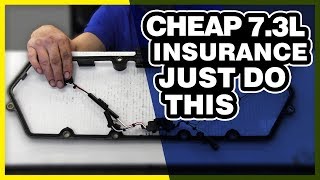
- Under-Valve-Cover (UVC) Harness Failure (Diesel specific) (Common) — On diesels like the Ford 7.3L Power Stroke, the wiring harness sits under the valve cover. Boiling engine oil degrades the insulation, causing shorts.
- Failed Injector Driver Module (IDM) or PCM (Rare) — The internal driver circuit inside the IDM (diesels) or PCM (gasoline) that controls the #3 injector fails and shorts internally. Test this only after ruling out the injector and wiring.
Symptoms

- Severe Rough Idle and Misfire — The engine shakes violently, especially at stops, because cylinder #3 provides no power.
- Drastic Power Loss — Acceleration is sluggish and highway speeds are difficult to maintain.
- Stalling at Low Speeds — The engine struggles to maintain idle and stalls when coming to a stop.
- Raw Fuel Smell — Unburnt fuel from the dead cylinder exits through the tailpipe.
- Flashing Traction Control Light — Severe engine vibrations trick wheel speed sensors into triggering stability control warnings.
- Check Engine Light On (also visible on scanner) — The Malfunction Indicator Lamp (MIL) illuminates immediately upon detecting the short.
Diagnostic Flowchart

Tap your situation to follow the diagnostic path that matches what you're seeing on this code.
Common Fixes & Costs
- Replace Fuel Injector #3 — Parts: $100-$450, Labor: $150-$400, ~2.5 hr book time (Intermediate)
- Repair Wiring Harness — Parts: $10-$50, Labor: $125-$350, ~2.0 hr book time (Intermediate)
- Replace Fuel Injector Connector — Parts: $15-$40, Labor: $75-$150, ~1.0 hr book time (DIY)
- Replace Under-Valve-Cover (UVC) Harness (7.3L Power Stroke) — Parts: $50-$100, Labor: $200-$400, ~2.5 hr book time (Intermediate)
- Replace Powertrain Control Module (PCM) — Parts: $500-$1200, Labor: $150-$300, ~1.5 hr book time (Professional)
Used vs. New Parts: Buying Guide
When a used part is worth it: Never buy a used fuel injector from a salvage yard. Purchase a high-quality remanufactured injector if you are on a strict budget.
Donor-vehicle mileage cap: roughly under 100000 miles for the part to have meaningful remaining life.
Donor quality checklist:
- Verify the remanufacturer uses OEM-quality internal parts and provides a flow-test report.
- Avoid 'refurbished' injectors, which are often just cleaned externally.
- Match part numbers exactly, especially on diesel engines with multiple non-interchangeable codes.
Decision logic:
- If Vehicle is a high-value daily driver → Buy new OEM or high-quality remanufactured injectors. The reliability is worth the cost.
- If Vehicle is older and budget is the primary concern → A quality remanufactured injector is acceptable. Avoid used salvage yard injectors.
Warranty tradeoff: Used parts offer a 30-day warranty. Quality remanufactured injectors offer a 1-year warranty. New OEM parts carry the manufacturer's warranty.
Worst-case if a used part fails: $500-$1000 if a faulty used injector fails, requiring repeat labor costs plus a new part.
What Happens If You Wait — Timeline
- Immediate (First 0-50 miles): Check Engine Light illuminates instantly. The engine runs rough with a dead miss, power drops significantly, and stalling occurs at idle. (MPG impact: 10-25%% · Added cost: $0-10 in wasted fuel)
- Short-Term (50-500 miles): Unburnt fuel saturates the catalytic converter, causing a raw fuel smell from the exhaust. Drivability becomes unsafe in traffic. (MPG impact: 15-30%% · Added cost: $50-100 in wasted fuel)
- Medium-Term (1-3 months): The catalytic converter's internal substrate melts from constant exposure to raw fuel, creating an exhaust restriction. (MPG impact: 20-40%% · Added cost: $1,200 - $2,800 (Catalytic converter replacement))
- Long-Term (3+ months): The catalytic converter completely clogs. A stuck-open injector washes oil from the cylinder walls, causing scoring and requiring an engine rebuild. (MPG impact: >40% (vehicle undrivable)% · Added cost: $3,000 - $8,000+ (Engine rebuild plus catalytic converter))
Cost of Not Fixing It
- Immediate: Severe engine misfire, poor drivability, and failed emissions test. Fuel economy drops by 10-20%. (Added cost: Negligible)
- 1-6 months: Catalytic converter damage due to overheating from unburnt fuel, leading to a complete exhaust blockage. (Added cost: $1200-$2800)
- 6+ months: A stuck-open injector washes oil from cylinder walls, causing accelerated wear or hydro-locking the engine. (Added cost: $3000-$8000+)
Diagnosis Steps
- Read the Codes
Use an OBD-II scanner to confirm P1263 is the active code. Look for P0303 (Cylinder 3 Misfire), which confirms the cylinder is dead due to the electrical short.
Tools: OBD-II Scanner (Beginner) - Visually Inspect the Wiring
Inspect the wiring harness and connector at the #3 fuel injector. Look for melted plastic, chafing, corrosion on the pins, or wires pinched against the engine block.
Tools: Flashlight (Beginner) - Test Injector Resistance
Disconnect the #3 injector and measure resistance across its pins. A reading near zero ohms confirms an internal short. Standard port injectors read 11-16 Ohms; GDI injectors read 2-5 Ohms; 7.3L diesels read under 5 Ohms.
Tools: Multimeter (Intermediate) - Perform an Injector Swap Test
Swap the #3 injector with cylinder #2. Clear codes and run the engine. If the code changes to P1262, the injector is bad. If it stays P1263, the wiring is bad.
Tools: Basic hand tools (socket set, wrenches) (Intermediate) - Check for a Harness Short
With the injector and PCM disconnected, check continuity between the two harness wires. A reading near zero means the wires are touching. Check continuity to the engine block to rule out a short to ground.
Tools: Multimeter (Advanced) - Perform a Noid Light Test
Plug a noid light into the injector connector and crank the engine. A flashing light confirms the PCM and wiring are sending the correct signal, isolating the fault to the injector itself.
Tools: Noid Light Set (Intermediate) - Analyze Scan Tool Live Data
Use an advanced scan tool to monitor 'Injector Pulse Width' for cylinder 3. It reads zero if the PCM shut it down to protect the circuit.
Tools: Advanced OBD-II Scan Tool (Advanced) - Lab Scope Analysis
View the voltage waveform of the injector circuit. A short shows a flat line or an immediate drop to zero with no inductive kick (voltage spike), confirming an electrical fault.
Tools: Automotive Oscilloscope (Professional) - Test the PCM/IDM
If the injector and wiring harness test perfectly, the internal driver inside the PCM or IDM failed. This requires specialized module testing.
Tools: Professional diagnostic tools (Professional)
When This Code Triggers (Freeze-Frame Conditions)
- Engine Coolant Temp: 180-200°F (Fully warmed up, during normal operation.)
- RPM: 750-2500 (The short is detected continuously, triggering at idle or during cruise.)
- Fault Trigger: Immediate (The PCM continuously monitors injector circuits and sets the code instantly upon detecting a short.)
Related Codes
- P0303 — Means 'Cylinder 3 Misfire Detected'. P1263 is the electrical cause, while P0303 is the resulting combustion effect. Always diagnose P1263 first.
- P0203 — Means 'Injector Circuit/Open - Cylinder 3'. P1263 means wires are shorted together, while P0203 means a wire is broken or disconnected.
- P1261, P1262, P1264... — These are the identical 'High to Low Side Short' faults for different cylinders. Seeing one of these after swapping injectors confirms the injector is bad.
- P1293 (Ford) — Means 'High Side Open - Bank 1'. Indicates an open circuit affecting an entire bank of injectors, pointing to a failing Injector Driver Module (IDM) rather than a single injector.
Climate & Environmental Factors
- High Humidity & Road Salt: Saltwater acts as an electrolyte, bridging connector pins and eating through wire insulation to cause direct shorts.
- Engine Bay Heat: Prolonged exposure to high engine temperatures degrades plastic insulation, especially on diesel Under-Valve-Cover harnesses.
- Rodent Damage: Rodents frequently nest under engine covers and chew on soy-based wiring insulation, exposing bare copper and causing direct shorts.
How to Talk to a Mechanic About This Code
Say this: "My scanner shows code P1263 for the cylinder 3 injector circuit. Please test the injector resistance and perform a continuity test on the wiring harness before recommending parts."
Directs the technician to perform logical electrical diagnostic steps rather than blindly replacing expensive parts.
Avoid saying:
- 'My check engine light is on, can you fix it?'
- 'I think I need a new injector.'
- 'Just do whatever it takes to fix it.'
Questions to ask before authorizing the repair:
- Did you test the resistance of the #3 fuel injector? What was the reading?
- Did you perform a continuity test on the wiring harness to check for shorts?
- What is the warranty on the replacement injector and your labor?
Where to Take It: Dealer vs Independent vs Chain
- Dealer:
Best for: Vehicles under powertrain or emissions warranty., Complex electrical issues on newer European cars.
Downsides: Highest labor rates., Inclined to replace entire wiring harnesses rather than repair a specific wire. (Typical cost: +50% vs. baseline) - Independent Shop:
Best fit for most cases. P1263 is a common electrical fault that a competent independent shop can handle efficiently.
Best for: Out-of-warranty vehicles where cost is a factor., Common vehicles like Ford, GM, and Subaru.
Downsides: Technician skill varies; look for ASE certifications in electrical systems. (Typical cost: +0% vs. baseline) - Chain Shop:
AVOID for diagnosis and repair. The risk of misdiagnosis or unnecessary parts replacement is extremely high.
Best for: Reading the initial code for free.
Downsides: High pressure to upsell services., Lacks the in-depth electrical diagnostic experience needed to trace a harness short. (Typical cost: -10% vs. baseline)
When to Walk Away From the Repair
If the estimated repair cost exceeds 40-50% of the car's private-party value, pause and consider your options.
- Car worth $5000, fix is $750: Fix it. This repair is well below the threshold and is a common maintenance issue.
- Car worth $4000, fix is $1800: Borderline. The repair is approaching 50% of the car's value. Get a second opinion.
- Car worth $2500, fix is $1500: Walk away. The repair cost is over 50% of the car's value.
What Scan Tool You Need for This Code
Minimum: A basic code reader reads the code, but a multimeter is mandatory for the actual electrical diagnosis.
A $20 reader only provides the code. You need bidirectional controls to command the injector on and off to isolate the fault without swapping parts.
Budget: BlueDriver Pro (~$100) — Reads codes, provides freeze-frame data, and shows live data PIDs to confirm the misfire.
Mid-range: Foxwell NT510 Elite (~$180) — Offers bidirectional control to command the injector, isolating whether the problem is in the wiring or the injector itself.
Professional: Autel MaxiCOM MK900 (~$450) — Provides full bidirectional control, live data graphing, and access to manufacturer-specific electrical tests.
Rent vs buy: Buy a midrange scanner. P1263 requires bidirectional testing to confirm the fix, making a $180 scanner a worthwhile investment.
How to Clear the Code After You Fix It
- Use an OBD-II scan tool to clear the code.
- Perform a drive cycle to allow readiness monitors to complete.
Drive cycle (~30 minutes): Start with a cold engine. Idle for 3 minutes. Drive for 10 minutes at a steady 55 mph. Drive for 15 minutes in stop-and-go traffic. Allow the vehicle to cool down.
Readiness monitors affected: Catalyst Monitor, Oxygen (O2) Sensor Monitor, Misfire Monitor
Before emissions retest: drive at least 50 miles to fully set monitors.
Watch out for:
- Disconnecting the battery clears the code but resets all readiness monitors, guaranteeing an emissions test failure.
- The P1263 code returns immediately upon starting the engine if the short was not repaired.
Will This Fail Emissions / State Inspection?
Yes — this code typically fails an OBD-II emissions inspection.
- California: An active Check Engine Light is an automatic failure. A full drive cycle must be completed after repair to set readiness monitors.
- New York: An illuminated MIL for code P1263 results in an automatic inspection failure.
- Texas: In emissions counties, an active P1263 code is an automatic failure. You cannot pass until the issue is repaired and cleared.
Most Commonly Affected Vehicles
- Ford F-250/F-350 Super Duty (with 7.3L Power Stroke diesel) (1999-2003) — Extremely prone to failure of the under-valve-cover (UVC) wiring harness and injector solenoid shorts. Always check the main external connector at the valve cover first.
- Ford Focus (with 1.6L TDCI diesel) (2011-2015) — Commonly experiences faulty fuel injectors. Confirm cylinder numbering conventions before replacing parts, as some tools count from the gearbox side.
- Ford F-Series (with 6.7L Power Stroke diesel) (2011-2016) — Injector failures are a known issue. Diagnosis requires checking injector resistance; a bad injector reads significantly lower than spec.
- Subaru WRX / BRZ / FR-S (2013-2021) — Injector failures are a known cause for this code on the FA20 engine platform, sometimes appearing alongside fuel pressure code P0087.
- BMW 3-Series / X5 (Diesel Models) (2008-2013) — Experiences injector activation faults due to wiring harness shorts, often caused by improper routing during previous engine repairs.
- Hyundai Santa Fe (with 3.3L GDI V6) (2013-2019) — Known for injector failures that cause severe misfires and trigger manufacturer-specific short circuit codes.
Manufacturer-Specific Notes
- Ford: The most common manufacturer to use P1263, almost exclusively meaning 'Cylinder #3 High To Low Side Short'.
- Saab: P1263 is an informational code meaning 'Throttle moved manually when engine was running'. It does not indicate a fault.
- Jaguar: P1263 refers to a 'Lateral-G Sensor Error' related to the stability control system, not the engine.
- Volkswagen/Audi: On PD engines, this code relates to 'PD Unit Injector: Cylinder 1 Regulation Range Exceeded', pointing to a different cylinder entirely.
- Mercury: P1263 means 'Lost Communication With RF Hub', a network issue unrelated to the fuel system.
Real Owner Stories
2002 Ford F-250 7.3L at 208K miles - The Easy Fix
While driving, the truck suddenly lost power, ran very rough, and stalled.
What they tried:
- Suspected the Under-Valve-Cover (UVC) harness based on forum advice.
- Inspected the main harness connector at the driver's side valve cover.
- Found the connector was slightly loose and firmly reseated it until it clicked.
Outcome: The truck started immediately and ran perfectly. The problem was solved with zero cost for parts.
Lesson: On Ford 7.3L engines, a loose UVC harness connector is a frequent cause of injector codes. Always check that this connector is fully seated before buying parts.
2012 Ford Focus 1.6 TDCI - The Misdiagnosis
Engine misfired badly with code P1263: Cylinder #3 High to Low Side Short.
What they tried:
- Visually inspected the wiring and saw no damage.
- Assumed cylinder #3 was the third from the timing belt and replaced that injector.
- The car ran perfectly, but the owner later learned his tool counted from the gearbox side, meaning he actually replaced injector #2.
Outcome: The car was fixed, but the owner got lucky. The new injector solved the problem, confirming the part was faulty.
Lesson: Cylinder numbering conventions vary. Perform an injector swap test to guarantee you are replacing the correct cylinder's injector.
2019+ GM Truck - The Unusual Cause
Check Engine Light on with intermittent rough running and injector circuit codes.
What they tried:
- Initial diagnosis found no faulty injectors or sensors.
- Inspected the main engine wiring harness based on a technical service bulletin.
- Found the harness chafing against a sharp metal bracket.
Outcome: Spliced the affected wires, wrapped the harness in protective sleeving, and rerouted it. The codes never returned.
Lesson: If the injector tests fine, meticulously trace the entire wiring path to the PCM for signs of chafing or pinching.
How to Prevent This Code From Triggering
- Use Top Tier certified gasoline or quality diesel fuel (Every fill-up) — High-quality fuels contain detergents that prevent carbon buildup on injector nozzles, reducing thermal stress that leads to internal coil failure.
- Protect vulnerable wiring harnesses (During any related maintenance) — Wrap wiring routed near hot or vibrating components in high-temperature cloth tape or split-loom sleeving to prevent chafing.
- Apply dielectric grease to connectors (When connectors are disconnected for service) — Dielectric grease blocks moisture and oxygen, preventing the corrosion of metal pins that causes short circuits.
Frequently Asked Questions
Is it safe to drive with a P1263 code?
It is highly discouraged. The engine lacks power and stalls unpredictably, making it dangerous in traffic. Driving dumps unburnt fuel into the exhaust, destroying your catalytic converter.
What is the most common cause of P1263?
The most common cause is a failed fuel injector for cylinder #3 that has shorted out internally.
Should I replace all fuel injectors if one fails?
If one injector fails from age or high mileage, the others usually follow shortly after. Replacing all injectors serves as excellent preventative maintenance if your budget allows. However, for a random defect on a lower-mileage car, replacing just the faulty injector is sufficient.
What are common mistakes when diagnosing P1263?
A major pitfall is failing to clear codes after testing, making it seem like a component swap didn't work. Always clear codes after swapping parts to see if the fault follows the part. Never blame aftermarket tunes or fuel before performing basic electrical checks.
Can a bad battery cause a P1263 code?
No. While a weak battery causes random electrical gremlins, P1263 points to a specific, hard fault in one cylinder's injector circuit. Always ensure your battery is healthy before diagnosing, but it won't fix this code.
How much does it cost to fix P1263?
A single fuel injector replacement costs between $250 and $850 at a repair shop, depending on if it's gas or diesel. A wiring repair costs between $135 and $400. A PCM replacement is the most expensive, often exceeding $1,200.
Will clearing the code fix the problem?
No. Because P1263 is a hard electrical fault, the code returns immediately upon starting the engine.
Key Takeaways
- Code P1263 indicates an electrical short in the cylinder #3 fuel injector circuit, most commonly caused by an internal failure of the injector itself.
- Stop driving immediately; dumping unburnt fuel into the exhaust destroys catalytic converters, turning a $300 injector repair into a $2,500+ nightmare.
- Test the injector's resistance with a multimeter before buying parts; a reading near zero ohms confirms a dead short inside the injector.
- Verify your vehicle's specific code definition, as P1263 means 'Lateral-G Sensor Error' on Jaguars and 'Communication Lost' on Mercury models.
Helpful Videos

The information in this article is provided for general reference and educational purposes only. Vehicle specifications, procedures, and part compatibility can vary by production date, trim level, and region. Always consult your vehicle's factory service manual and verify part numbers before purchasing or performing repairs. Safety-critical components such as airbags, seat belts, and braking systems should be installed by a qualified professional.
- 🎬 Helpful Videos
- What Does P1263 Mean?
- Can I Drive With P1263?
- Common Causes
- Symptoms
- Diagnostic Flowchart
- Common Fixes & Costs
- Used vs. New Parts: Buying Guide
- What Happens If You Wait — Timeline
- Cost of Not Fixing It
- Diagnosis Steps
- When This Code Triggers (Freeze-Frame Conditions)
- Related Codes
- Climate & Environmental Factors
- How to Talk to a Mechanic About This Code
- Where to Take It: Dealer vs Independent vs Chain
- When to Walk Away From the Repair
- What Scan Tool You Need for This Code
- How to Clear the Code After You Fix It
- Will This Fail Emissions / State Inspection?
- Most Commonly Affected Vehicles
- Manufacturer-Specific Notes
- Real Owner Stories
- 2002 Ford F-250 7.3L at 208K miles - The Easy Fix
- 2012 Ford Focus 1.6 TDCI - The Misdiagnosis
- 2019+ GM Truck - The Unusual Cause
- How to Prevent This Code From Triggering
- Frequently Asked Questions
- Is it safe to drive with a P1263 code?
- What is the most common cause of P1263?
- Should I replace all fuel injectors if one fails?
- What are common mistakes when diagnosing P1263?
- Can a bad battery cause a P1263 code?
- How much does it cost to fix P1263?
- Will clearing the code fix the problem?
- Key Takeaways
- 🎟️ Get 5% Off