

OBD-II Code P1259: A Comprehensive Guide to VTEC & Immobilizer System Failure
What P1259 means, why it triggers, and the definitive guide to fixing it
- Check your engine oil level and condition immediately, as low or dirty oil causes over 50% of P1259 codes on Honda and Acura vehicles.
- Clean or replace the VTEC solenoid filter screen (a $10-$30 part) before spending $150+ on a complete VTEC solenoid assembly.
- Avoid driving more than 50 miles in 'limp mode' (RPMs limited to 3,500), as the resulting rich fuel mixture destroys the catalytic converter, costing up to $2,800.
- If you drive a Ford, Hyundai, or VW, stop diagnosing the engine; P1259 indicates an anti-theft immobilizer fault that prevents the car from starting.
What Does P1259 Mean?

Code P1259 indicates a fault in the Variable Valve Timing and Lift Electronic Control (VTEC) system. The ECU commanded the switch to the high-performance camshaft profile but did not receive confirmation from the VTEC oil pressure switch. This triggers the Check Engine Light and forces the engine into a protective 'limp mode,' limiting RPMs to prevent internal damage.
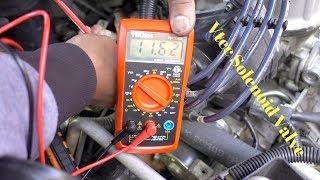
Technical definition: For Honda and Acura, the official definition is "VTEC System Malfunction". 🎬 Watch: A complete diagnostic walkthrough for Honda Accord owners. For Ford, Hyundai, and Kia, it signifies an "Immobilizer to PCM Signal Error". For Volkswagen and Audi, it points to an "Engine Coolant System Valve Short To Ground" or a fuel pump relay fault.
Can I Drive With P1259?
Yes, But With Caution. For Honda/Acura VTEC issues, you can drive short distances in 'limp mode' with reduced power. Continued driving forces the engine to run rich, dumping unburnt fuel into the exhaust. This overheats and destroys the catalytic converter, turning a minor fix into a $1,200-$2,800 repair. On makes like Ford or Hyundai, this code indicates an anti-theft issue that prevents the car from starting.
Common Causes

- Low or Dirty Engine Oil (Very Common) — The VTEC system is hydraulically operated by engine oil pressure. If the oil level is below the minimum requirement or the oil is old, sludgy, and degraded, there won't be sufficient pressure to activate the mechanism. This is the number one cause of P1259.
- Clogged VTEC Solenoid Screen (Common) — A small mesh filter screen, typically part of the solenoid gasket, protects the VTEC solenoid from debris. This screen becomes clogged with engine sludge, blocking oil flow and serving as a frequent point of failure.
- Faulty VTEC Oil Pressure Switch (Common) — This switch confirms whether the VTEC system achieved sufficient oil pressure. The switch fails internally, sending an incorrect signal to the ECU even when the pressure is adequate, triggering the code.
- Incorrect Oil Viscosity or Clogged Oil Filter (Common) — Using engine oil thicker or thinner than the manufacturer's recommendation alters the hydraulic properties of the system. A severely clogged or poor-quality oil filter restricts flow, preventing the VTEC assembly from receiving necessary pressure.
- Faulty VTEC Solenoid (Less Common) — The solenoid is an electronically controlled valve directing oil into the VTEC passages. It fails electrically (open or shorted coil) or mechanically (stuck plunger), preventing it from responding to the ECU's command.
- Damaged Wiring or Connectors (Less Common) — The electrical wires and connectors for the VTEC solenoid and oil pressure switch become corroded, frayed, or disconnected. This interrupts communication between the components and the ECU.
- Dented Oil Pan (Rare) — A significant dent in the bottom of the engine's oil pan pushes up against the oil pickup tube. This restricts the initial flow of oil from the pan to the oil pump, leading to low overall oil pressure that prevents VTEC activation.
- Low System Voltage (Immobilizer Variants) (Rare) — On vehicles where P1259 relates to the anti-theft system, a weak or failing car battery fails to supply enough voltage during startup for the key's transponder and the immobilizer module to communicate correctly, resulting in a signal error to the PCM.
- Faulty Powertrain Control Module (PCM) (Very Rare) — In rare cases, the internal driver circuit that sends the signal to the VTEC solenoid or receives the signal from the pressure switch fails. This is only considered after exhaustively ruling out all other possibilities.
Symptoms

- Engine Won't Rev Past 3,500-4,000 RPM (Limp Mode) — The most common symptom on Honda/Acura vehicles is the activation of 'limp mode,' which limits engine speed to protect it from damage.
- Noticeable Loss of Power — Since the engine cannot switch to its high-lift cam profile, the vehicle feels sluggish and accelerates poorly, especially at higher speeds.
- Poor Fuel Economy — An engine not operating in its intended range runs inefficiently, consuming more fuel than normal.
- Engine Cranks But Fails to Start — On makes like Ford, Hyundai, and Kia, this code signifies an anti-theft system failure. The immobilizer prevents the engine from starting, resulting in a crank-no-start condition. 🎬 See how to troubleshoot Ford immobilizer and no-start faults.
- Check Engine Light On (also visible on scanner) — The Malfunction Indicator Lamp (MIL) always illuminates when code P1259 is stored in the ECU.
- Engine Hesitation or Misfire (also visible on scanner) — As the engine approaches the VTEC engagement point, it hesitates, shudders, or triggers misfire codes as the system tries and fails to activate properly.
Diagnostic Flowchart
Tap your situation to follow the diagnostic path that matches what you're seeing on this code.
Common Fixes & Costs
- Engine Oil and Filter Change — Parts: $30-$80, Labor: $50-$100, ~0.5 hr book time (DIY)
- Replace VTEC Solenoid Gasket/Screen
— Parts: $10-$30, Labor: $75-$150, ~1 hr book time
(DIY)
Honda Accord (2003-2007, 2.4L K24): OEM 15815-RAA-A02 (Alt: Fel-Pro ES 73071, Dorman 917-171)
Honda Civic (2006-2011, 1.8L R18): OEM 15826-RNA-A01 (Alt: Dorman 917-174)
Honda CR-V (2002-2009, 2.4L K24): OEM 15815-RAA-A02 (Alt: Fel-Pro ES 73071, Dorman 917-171) - Replace VTEC Oil Pressure Switch
— Parts: $40-$100, Labor: $85-$170, ~1.2 hr book time
(Intermediate)
Honda Accord/CR-V/Element (Many 2000s models): OEM 37250-PNE-G01 (Alt: Standard Motor Products PS-290, Beck/Arnley 201-2693, Dorman 918-886)
Honda Civic/Accord (Many 1990s-early 2000s models): OEM 37250-PR3-003 (Alt: Walker 242-1005, NTK (NGK) OP0047) - Replace VTEC Solenoid Assembly
— Parts: $150-$300, Labor: $120-$200, ~1.5 hr book time
(Intermediate)
Honda Accord/CR-V/Element (2003-2011, 2.4L K24): OEM 15810-RAA-A03 (Alt: Dorman 917-224, Standard Motor Products VVT189)
Honda Civic Si (2006-2011, 2.0L K20Z3): OEM 15810-PRB-A03 (Alt: Various, often sold as complete kits)
Honda Civic (2006-2011, 1.8L R18): OEM 15810-RNA-A01 (Alt: Dorman 918-091) - Repair Immobilizer System (Non-Honda) — Parts: $200-$1,200, Labor: $150-$300, ~2 hr book time (Professional)
DIY vs Professional
- Engine Oil and Filter Change — Beginner:
- Replace VTEC Solenoid Gasket/Screen — Beginner:
- Replace VTEC Oil Pressure Switch — Beginner:
- Replace VTEC Solenoid Assembly — Beginner:
- Repair Immobilizer System — Beginner:
Used vs. New Parts: Buying Guide
When a used part is worth it: For a VTEC solenoid assembly, a used OEM part from a reputable salvage yard is a cost-effective alternative to a new aftermarket part, which often has questionable reliability. Avoid used electronic sensors like the oil pressure switch, as their failure mode is internal and invisible.
Donor-vehicle mileage cap: roughly under 80000 miles for the part to have meaningful remaining life.
Donor quality checklist:
- Verify the donor vehicle was not scrapped due to engine failure.
- Match the part number exactly; visual similarities do not guarantee compatibility.
- Ask for a photo of the part, specifically the filter screen, to check for heavy sludge or debris.
Decision logic:
- If The fix is a simple gasket/screen. → Always buy new; the part is inexpensive and critical for a good seal.
- If The fix is the oil pressure switch. → Strongly favor a new OEM part. Aftermarket switches have a higher failure rate, and the labor to replace it again is significant.
- If The fix is the complete solenoid assembly and budget is a primary concern. → A used, low-mileage OEM part is a better bet than a cheap, new aftermarket assembly.
Warranty tradeoff: Used parts typically come with a 30-90 day warranty. New aftermarket parts often have a 1-year to limited lifetime warranty. New OEM parts carry a 1-year warranty.
Worst-case if a used part fails: $200-$400 if a used or cheap aftermarket solenoid/switch fails shortly after installation, requiring repeat labor costs and the purchase of another part.
What Happens If You Wait — Timeline
- 0-1 month: Check Engine Light is on. Engine RPM is limited to ~3500-4000 ('limp mode'). Noticeable power loss during acceleration and merging. The issue is intermittent at first. (MPG impact: 5-10%% · Added cost: $20-50 in wasted fuel)
- 1-3 months: Driving continuously in limp mode causes the engine to operate inefficiently. The engine runs rich, sending excess unburnt fuel into the exhaust system. (MPG impact: 10-15%% · Added cost: $50-150 in wasted fuel. The catalytic converter begins to suffer from sustained high temperatures.)
- 3-6 months: The catalytic converter substrate begins to melt and clog from being constantly overheated by unburnt fuel. Exhaust flow becomes restricted, further reducing power and efficiency. (MPG impact: 15-25%% · Added cost: $1200-$2800 for a now-necessary catalytic converter replacement.)
- 6+ months: If the root cause was severe low oil pressure (not just a sensor), continued operation leads to widespread internal engine damage, including bearings and camshafts, resulting in catastrophic engine failure. (MPG impact: 25%+% · Added cost: $3000-$7000+ for major engine repairs or a complete engine replacement, in addition to the catalytic converter cost.)
Cost of Not Fixing It
- 0-1 month: Noticeable loss of power, poor acceleration, and a 5-10% reduction in fuel economy as the engine is stuck in 'limp mode'. (Added cost: $20-$50 per month in extra fuel costs, depending on mileage.)
- 1-6 months: Continued driving in limp mode causes the engine to run rich, sending unburnt fuel into the exhaust. This overheats and destroys the catalytic converter, a critical emissions component. (Added cost: $1200-$2800 for catalytic converter replacement.)
- 6+ months: Long-term engine wear due to suboptimal performance. If the root cause is low oil pressure, ignoring it leads to catastrophic engine failure. (Added cost: $3000-$7000+ for major engine repair or replacement.)
Diagnosis Steps

- Check Engine Oil Level, Condition, and Filter
Pull the dipstick, wipe it, reinsert, and check the level. If low, top it off with the manufacturer-specified viscosity. If the oil is dark, gritty, or past its service interval, perform a full oil and filter change. A cheap or clogged filter also causes this code.
Tools: Rag or paper towel, new engine oil and filter (if needed) (Beginner) - Inspect the VTEC Solenoid Gasket/Screen
Unbolt the VTEC solenoid assembly from the head. The gasket beneath it contains a small metal filter screen. Examine this screen for any blockage from sludge or debris. Clean thoroughly with brake cleaner or replace the gasket.
Tools: 10mm Socket set, ratchet, brake cleaner (Intermediate) - Test the VTEC Oil Pressure Switch
Disconnect the pressure switch connector. Set a multimeter to continuity (ohms). On most Honda/Acura systems, the switch is normally closed, meaning there should be continuity (near 0 ohms) between the two pins with the engine off. An open circuit (infinite resistance) or high resistance (over 1 ohm) indicates a faulty switch that must be replaced.
Tools: Multimeter (Intermediate) - Inspect VTEC System Wiring and Connectors
Locate the VTEC solenoid assembly on the cylinder head. Carefully inspect the electrical connectors and wiring going to both the VTEC solenoid and the VTEC oil pressure switch. Look for breaks, corrosion, oil saturation, or loose pins.
Tools: Flashlight (Beginner) - Test the VTEC Solenoid
Disconnect the solenoid connector. Use a multimeter to measure the resistance between the single terminal on the solenoid and a good engine ground. A healthy solenoid reads between 14 and 30 ohms. Briefly apply 12V power from the battery to the terminal; a functional solenoid produces an audible 'click'.
Tools: Multimeter, jumper wires (Intermediate) - Verify Voltage at the Harness Connectors
Turn the ignition key to the 'ON' position (engine off). At the VTEC oil pressure switch connector (typically a green connector), one of the wires should show battery voltage (approx. 12V) when tested against a ground. This confirms the ECU is supplying power to the circuit.
Tools: Multimeter (Advanced) - [PRO TIP] Live Data Scan Tool Diagnosis
Using an advanced scan tool, monitor the live data PIDs for 'VTEC Solenoid Command' and 'VTEC Pressure Switch Status'. Safely test drive the vehicle, accelerating through the VTEC engagement RPM (typically >4,000 RPM). You should see the command turn 'ON' and the switch status change. If the command activates but the switch status doesn't change, it confirms the fault lies within the hydraulic/mechanical system or the switch itself.
Tools: Advanced OBD-II Scan Tool (Advanced) - [PRO TIP] Mechanically Test Oil Pressure
For persistent issues, verify actual oil pressure. Remove the VTEC oil pressure switch and install a mechanical oil pressure gauge. Start the engine. At normal operating temperature, the pressure should meet the manufacturer's specification. For many Honda 4-cylinder engines, a common specification is a minimum of 57 psi (390 kPa) at 3,000 RPM with the VTEC solenoid manually activated.
Tools: Oil pressure gauge kit, socket set (Advanced)
When This Code Triggers (Freeze-Frame Conditions)
- Engine Coolant Temp: 190-200°F (The engine is fully warmed up to normal operating temperature.)
- Engine RPM: Above 4,000 RPM (The code sets during acceleration when the ECU commands the VTEC system to engage. If the code sets at a lower RPM (e.g., 1500-3000), it points toward an electrical circuit fault rather than a mechanical oil pressure issue.)
- Engine Load: 40-60% (The fault occurs under moderate to heavy engine load, such as accelerating up a hill or merging onto a highway.)
- Vehicle Speed: 40-60 mph (Triggered during highway driving or acceleration events where VTEC engagement is expected.)
Related Codes
- P2646 — '"A" Rocker Arm Actuator System Performance or Stuck Off'. This is a newer, more specific version of P1259 for Honda/Acura, directly indicating the VTEC system failed to engage. The diagnostic process is identical, focusing on oil pressure, the solenoid, and the pressure switch.
- P2647 — '"A" Rocker Arm Actuator System Stuck On'. This is the opposite of P2646, meaning the VTEC system failed to disengage. This points more strongly to a mechanically stuck solenoid or a faulty pressure switch that isn't resetting, but the same components are inspected.
- P1258 — 'VTEC System Malfunction Bank 2'. This is the companion code to P1259 for V6 engines (like in an Acura TL or Honda Accord V6). P1259 refers to Bank 1 (typically the rear cylinder bank), while P1258 indicates the identical fault on Bank 2 (the front bank).
- P1257 — 'VTEC System Malfunction'. This is another, less common, generic VTEC failure code used on some older Honda models. The causes and diagnostics are the same as for P1259.
Climate & Environmental Factors
- Cold Weather: In cold temperatures, engine oil has a higher viscosity (it's thicker). On a cold start, this thicker oil fails to flow properly or build pressure quickly enough to satisfy the VTEC system's requirements when commanded by the ECU. This causes P1259 to trigger, especially during the first few minutes of driving. The issue resolves itself once the engine reaches full operating temperature and the oil thins out. Using the manufacturer-specified oil viscosity is critical in colder climates to prevent this.
How to Talk to a Mechanic About This Code
Say this: "I have a P1259 VTEC system malfunction code on my Honda/Acura. I've already confirmed the engine oil is full and clean. I'd like to book a diagnostic appointment to test the VTEC oil pressure switch, the solenoid, and check the solenoid's filter screen."
This signals to the mechanic that you've already handled the most basic cause (low oil) and directs them to the specific components related to the code. It prevents them from starting from scratch and charging you for the simple oil check, focusing their diagnostic time on the likely electrical and mechanical culprits.
Avoid saying:
- 'My check engine light is on, can you look at it?' (This is too vague and invites a wide-ranging, expensive diagnostic process).
- 'Just fix whatever is wrong.' (This gives the shop a blank check to replace parts without detailed approval).
- 'A guy on the internet said it's the...' (While you should be informed, telling the mechanic how to do their job creates friction. Instead, state the symptoms and the code).
Questions to ask before authorizing the repair:
- Did you test the oil pressure switch for continuity and the solenoid for resistance? What were the readings?
- Was the VTEC solenoid filter screen clogged with debris?
- If you're recommending a full solenoid replacement, can we try replacing just the inexpensive gasket or pressure switch first?
- Can you show me the failed part after the repair is complete?
- What is the warranty on the parts and labor for this specific repair?
Where to Take It: Dealer vs Independent vs Chain
- Dealer:
Not recommended for most out-of-warranty Hondas. The issue is too common and well-understood by independent shops to justify the dealer's cost.
Best for: Vehicles still under powertrain warranty., Complex electrical issues that an independent shop has failed to diagnose., Non-Honda vehicles where P1259 indicates an immobilizer issue, which requires proprietary software.
Downsides: Highest labor rates, typically 1.5-2x more than independent shops., Defaults to replacing the entire VTEC solenoid assembly ($$$) when only a gasket or switch ($) is needed. (Typical cost: +50% vs. baseline) - Independent Shop:
Best fit. A competent independent mechanic is the most cost-effective and reliable choice for diagnosing and fixing a P1259 code on a Honda or Acura.
Best for: Out-of-warranty Honda/Acura vehicles., Owners who are cost-sensitive but want a professional diagnosis., Shops that specialize in Japanese brands will have seen this code hundreds of times.
Downsides: Quality and honesty vary greatly. Vet shops based on online reviews and ASE certifications. (Typical cost: +0% vs. baseline) - Chain Shop:
Acceptable for an oil change, but use caution for any further diagnostics. Avoid if they immediately recommend replacing expensive parts without testing the simpler components first.
Best for: The first step: getting an oil and filter change if it's overdue.
Downsides: Technician skill varies dramatically., High pressure to upsell. They push for a full VTEC solenoid replacement without proper diagnosis., Lacks the specific experience for this common Honda-specific code. (Typical cost: -10% vs. baseline)
When to Walk Away From the Repair
If the total estimated repair cost for the P1259 fault exceeds 40-50% of your car's private-party value (e.g., from Kelley Blue Book), it's time to seriously consider alternatives.
- Car worth $4000, fix is $450: Fix it. This is a standard repair cost and is well below the threshold for a $4000 car.
- Car worth $3000, fix is $1800: Walk away. If the diagnosis points to a major internal engine problem (like a bad oil pump) costing this much, the repair is not economical. The cost is over 50% of the car's value.
- Car worth $12000, fix is $500: Fix it. This is a minor cost relative to the vehicle's high value.
What Scan Tool You Need for This Code
Minimum: A scanner that can read and clear codes, and most importantly, display live data streams (PIDs).
A basic $20 code reader only shows you 'P1259'. It can't help you determine *why* the code is set. To properly diagnose it, you need to see live data for the 'VTEC Solenoid Command' and 'VTEC Pressure Switch' to see if the computer is sending the signal and if the switch is responding. Without this, you are just guessing at which parts to replace.
Budget: BlueDriver Pro or Ancel BD310 (~$100) — These Bluetooth scanners pair with your smartphone and display the essential live data PIDs needed to see if the VTEC system is being commanded on and if the pressure switch is reacting. This is enough for a skilled DIYer to confirm if the fault is electrical or hydraulic.
Mid-range: Foxwell NT510 Elite / NT710 or Innova 5610 (~$180) — These handheld units offer Honda-specific diagnostics, providing more detailed data and sometimes bi-directional controls. A key advantage is the ability to perform active tests, where you command the VTEC solenoid to turn on/off with the scanner to verify its mechanical function without having to drive the car.
Professional: Autel MaxiCOM MK808S / MX900 (~$450-600) — Provides full bi-directional control, allowing you to manually activate the VTEC solenoid to test the entire circuit and hydraulic system while the vehicle is stationary. It offers comprehensive data graphing and all OEM-level diagnostic functions, which is overkill for a single code but invaluable for a serious DIYer or professional.
Rent vs buy: For a one-time diagnosis, many auto parts stores like AutoZone have a Loan-A-Tool program where you borrow an OBD-II scanner. While their free scan service won't show live data, the loaner tool often will. This is a great way to access a better tool without purchasing one. Buy a scanner only if you plan to do your own car repairs more than once a year.
How to Clear the Code After You Fix It
- Use an OBD-II scan tool to clear the diagnostic trouble code.
- Perform a specific drive cycle to allow the vehicle's onboard computer to re-run its self-tests.
- Check readiness monitors with a scan tool to confirm the repair before an emissions test.
Drive cycle (~30 minutes): Start the engine from cold and let it idle for 2-3 minutes. Drive at a steady 20-30 mph for 3-5 minutes. Accelerate to a steady highway speed of 50-60 mph (do not use cruise control) and maintain for 15-20 minutes. During this time, safely coast (foot off the accelerator) for at least 90 seconds. Perform 10 minutes of mixed city driving. Let the vehicle cool down completely (6+ hours) before verifying readiness.
Readiness monitors affected: Catalyst (CAT) Monitor, Evaporative System (EVAP) Monitor, Oxygen (O2) Sensor Monitor
Before emissions retest: drive at least 100 miles to fully set monitors.
Watch out for:
- Disconnecting the battery clears the code but resets all emissions readiness monitors to 'Not Ready', which causes an automatic failure at a smog check station.
- The code returns immediately or after a short drive if the root cause remains unfixed.
- Failing to complete the full drive cycle leaves monitors in a 'Not Ready' state.
Will This Fail Emissions / State Inspection?
Yes — this code typically fails an OBD-II emissions inspection.
- California: An active Check Engine Light results in an automatic smog check failure. After repairs, a full drive cycle must be completed to set all readiness monitors before a retest is possible.
- New York: Any vehicle with an illuminated Check Engine Light automatically fails the emissions portion of the NYS inspection. Clearing the code right before the test is not enough; readiness monitors must be set.
- Texas: In the 17 counties requiring emissions testing, an active P1259 code causes an automatic failure. The vehicle's computer is scanned for Diagnostic Trouble Codes (DTCs), and any codes present result in a failed test.
Most Commonly Affected Vehicles
- Honda Accord (1998-2007) — Extremely common on 4-cylinder (F-series, K-series) and V6 (J-series) engines. For persistent issues on 1998-2002 models, some owners have resorted to bypassing the pressure switch, though this is not a recommended repair.
- Honda Civic (1996-2011) — Affects most VTEC-equipped trims like the EX and Si. On 2001-2005 models, it's crucial to distinguish from VTC system issues, though they are diagnosed separately.
- Honda CR-V (1997-2009) — Frequently seen in first and second-generation models with B-series and K-series engines. A clogged VTEC strainer gasket is a very common fix for these vehicles.
- Honda S2000 (2000-2009) — A well-documented code for the F20C and F22C1 engines. Aftermarket engine controllers (like a V-AFC) exacerbate the issue if not installed and soldered correctly. The OEM oil pressure switch part number is 37250-PCX-A02.
- Acura TL (1999-2003) — Common on J-series V6 engines. For this model, the code sets below 4,000 RPM if there's an electrical circuit issue, or above 4,000 RPM if it's a true oil pressure problem.
- Acura RSX (2002-2006) — Both the base and Type-S K-series engines are prone to this code. While the VTC (Variable Timing Control) system also has a filter, P1259 specifically relates to the VTEC (Variable Lift) components.
- Hyundai Various (2000-2010) — On many Hyundai models, P1259 means 'Immobilizer to PCM Signal Error', causing a no-start condition. This is an anti-theft fault and is not related to the engine's mechanical operation.
- Ford Various (1998-2010) — For Ford vehicles, P1259 is defined as 'Immobilizer to PCM Signal Error' related to the PATS (Passive Anti-Theft System). The engine is disabled by the security system.
- Volkswagen Various (1999-2010) — On VW/Audi models, P1259 indicates an 'Engine Coolant System Valve Short To Ground'. The VAG-specific code 01259 points to a 'Fuel Pump Relay (J17)' circuit fault, completely unrelated to VTEC.
Manufacturer-Specific Notes

- Honda / Acura: This is the code's primary meaning. It is almost always related to the VTEC system's oil pressure and is triggered when the ECU attempts to engage the high-lift cam profile, typically above 3,500 RPM. No widespread recalls exist for this code, as it's typically considered a maintenance or wear-and-tear issue.
- Hyundai / Kia: On these makes, P1259 signifies an 'Immobilizer to PCM Signal Error'. This is a failure in the anti-theft system communication. The primary symptom is the engine cranking but not starting, and it has no connection to the variable valve timing system.
- Ford: Similar to Hyundai/Kia, Ford uses P1259 for an 'Immobilizer to PCM Signal Error'. The issue lies within the Passive Anti-Theft System (PATS) and its handshake with the ECU, preventing the vehicle from starting.
- Audi / Volkswagen: For the VAG family, P1259 indicates an 'Engine Coolant System Valve Short To Ground'. The distinct VAG fault code 01259 points to a 'Fuel Pump Relay (J17)' circuit fault, neither of which are related to oil pressure or valve timing.
Real Owner Stories
2001 Honda Accord with 305k miles - The Easy Fix
Check Engine Light came on. Scanned the code and found P1259. The owner noticed the engine oil level was extremely low and had not been changed in two years.
What they tried:
- The first and only step was a complete engine oil and filter change.
Outcome: After changing the oil and clearing the code, the light did not return after a test drive that included revving past 4,000 RPM to engage the VTEC system. The problem was solved.
Lesson: Always check the engine oil level and condition first. It is the most common cause of P1259 and by far the cheapest and easiest fix.
2002 Honda CR-V with 229k miles - The Misdiagnosis
P1259 code appeared, causing the vehicle to enter limp mode, especially when accelerating up a hill.
What they tried:
- The owner replaced the VTEC solenoid assembly with a new $90 part. The code disappeared for a month but then returned under the same conditions.
Outcome: The issue persisted, indicating the problem was not the solenoid itself but likely the oil pressure switch, wiring, or a more fundamental oil pressure problem. The owner was left frustrated with a recurring code after spending money on a part that was not faulty.
Lesson: Don't immediately replace the entire VTEC solenoid assembly. It's often more cost-effective to first replace the inexpensive gasket/screen and test the oil pressure switch and wiring before buying the most expensive component.
Acura RSX - The Unusual Cause
The P1259 code kept returning despite multiple attempted fixes. The owner was methodically chasing the issue.
What they tried:
- Performed an oil and filter change.
- Replaced the VTEC solenoid gasket.
- Replaced the entire VTEC solenoid assembly.
- Replaced the VTC (Variable Timing Control) gasket.
- Swapped in a known-good oil pressure sensor.
Outcome: After all parts were replaced, the code still came back. Upon close inspection of the wiring, the owner discovered a small, almost invisible break in the wire leading to the pressure switch plug. After cutting the old plug and soldering on a new one, the code was permanently fixed.
Lesson: If replacing the common parts (solenoid, switch, gasket) doesn't solve the problem, carefully inspect the entire wiring harness for damage. A small break or corrosion in a connector mimics a failed part.
2003 Honda CR-V - The Last Resort
Persistent P1259 code that would cause the engine to shudder or enter limp mode between 2200-2400 RPM.
What they tried:
- Replaced the engine oil.
- Replaced the entire VTEC module.
- The problem was still not fixed.
Outcome: As a last resort, the owner performed a 'wiring hack' to bypass the VTEC oil pressure switch. This involved splicing a jumper wire from the VTEC solenoid's power wire to the signal wire of the pressure switch connector. This tricks the ECU into thinking the pressure is always adequate, which permanently kept the code off and prevented limp mode.
Lesson: Bypassing the pressure switch is not a true repair and should only be considered when all other diagnostic steps have failed. It defeats a safety feature, but for some older, high-mileage vehicles, it has been used as a pragmatic solution to keep the car drivable.
How to Prevent This Code From Triggering
- Perform regular oil changes with manufacturer-specified oil (Every 3,000-7,500 miles, per owner's manual) — Clean oil of the correct viscosity is essential for the hydraulic operation of the VTEC system. Old, sludgy oil is the primary cause of clogged solenoid screens and passages that trigger P1259.
- Use high-quality OEM or equivalent oil filters (With every oil change) — Cheap, poor-quality oil filters become clogged prematurely, restricting oil flow and pressure to the entire engine, including the VTEC system.
- Regularly check the engine oil level (Once a month or every other fuel fill-up) — The VTEC system is highly sensitive to low oil levels. Even if the oil is clean, if the level is below the minimum mark, the oil pump sucks in air, preventing the system from building the pressure needed to activate.
- Inspect and clean the VTEC solenoid screen (Every 60,000 miles or if performance feels sluggish) — Proactively cleaning or replacing the small filter gasket prevents sludge buildup from ever becoming dense enough to block oil flow and trigger a fault code.
Frequently Asked Questions
What is the #1 cause of a P1259 code on a Honda or Acura?
The most common and frequent cause is a low engine oil level or using old, sludgy oil. The VTEC system is entirely dependent on clean oil at the correct pressure to function.
Why did P1259 appear right after an oil change?
The oil level was filled incorrectly, the wrong viscosity oil was used, or the new oil filter is defective. In some cases, the fresh oil and its detergents dislodge sludge that then clogs the VTEC solenoid screen.
Can P1259 cause a misfire?
Yes, as the engine approaches the RPM for VTEC engagement, a failure in the system causes hesitation and erratic performance that the ECU interprets as a cylinder misfire, setting codes like P0300 alongside P1259.
I replaced the solenoid and switch, but the code came back. What's next?
Inspect the wiring harness for intermittent shorts or breaks, check for a dented oil pan restricting oil pickup, and perform a mechanical oil pressure test with a gauge to rule out a failing oil pump.
My car won't start and I have code P1259. Why?
If your car is a Ford, Hyundai, Kia, or VW, this code indicates an anti-theft immobilizer fault. The car's computer is not receiving the correct security signal from your key, intentionally preventing the engine from starting.
Can I just clean the VTEC solenoid screen to fix the problem?
Yes, cleaning a clogged solenoid screen with brake cleaner and a soft brush restores oil flow and fixes the code. However, the gasket itself is inexpensive, and replacing it ensures a good seal and prevents future leaks.
Is it okay to bypass the VTEC oil pressure switch?
Some online sources describe a 'wiring hack' to bypass the pressure switch. This is not a proper repair because it tricks the ECU and allows the engine to attempt VTEC engagement with insufficient oil pressure, causing severe valvetrain damage. Only consider this an absolute last resort on older, high-mileage vehicles where conventional repairs have failed.
Can a bad car battery cause a P1259 code?
On a Honda or Acura, it is highly unlikely, as the VTEC system fault is related to oil pressure. However, on a Ford or Hyundai where P1259 is an immobilizer code, a weak battery causes communication errors between the key and the security module, triggering the code.
Key Takeaways
- Check your engine oil level and condition immediately, as low or dirty oil causes over 50% of P1259 codes on Honda and Acura vehicles.
- Clean or replace the VTEC solenoid filter screen (a $10-$30 part) before spending $150+ on a complete VTEC solenoid assembly.
- Avoid driving more than 50 miles in 'limp mode' (RPMs limited to 3,500), as the resulting rich fuel mixture destroys the catalytic converter, costing up to $2,800.
- If you drive a Ford, Hyundai, or VW, stop diagnosing the engine; P1259 indicates an anti-theft immobilizer fault that prevents the car from starting.
Helpful Videos

The information in this article is provided for general reference and educational purposes only. Vehicle specifications, procedures, and part compatibility can vary by production date, trim level, and region. Always consult your vehicle's factory service manual and verify part numbers before purchasing or performing repairs. Safety-critical components such as airbags, seat belts, and braking systems should be installed by a qualified professional.
- 🎬 Helpful Videos
- What Does P1259 Mean?
- Can I Drive With P1259?
- Common Causes
- Symptoms
- Diagnostic Flowchart
- Common Fixes & Costs
- DIY vs Professional
- Used vs. New Parts: Buying Guide
- What Happens If You Wait — Timeline
- Cost of Not Fixing It
- Diagnosis Steps
- When This Code Triggers (Freeze-Frame Conditions)
- Related Codes
- Climate & Environmental Factors
- How to Talk to a Mechanic About This Code
- Where to Take It: Dealer vs Independent vs Chain
- When to Walk Away From the Repair
- What Scan Tool You Need for This Code
- How to Clear the Code After You Fix It
- Will This Fail Emissions / State Inspection?
- Most Commonly Affected Vehicles
- Manufacturer-Specific Notes
- Real Owner Stories
- 2001 Honda Accord with 305k miles - The Easy Fix
- 2002 Honda CR-V with 229k miles - The Misdiagnosis
- Acura RSX - The Unusual Cause
- 2003 Honda CR-V - The Last Resort
- How to Prevent This Code From Triggering
- Frequently Asked Questions
- What is the #1 cause of a P1259 code on a Honda or Acura?
- Why did P1259 appear right after an oil change?
- Can P1259 cause a misfire?
- I replaced the solenoid and switch, but the code came back. What's next?
- My car won't start and I have code P1259. Why?
- Can I just clean the VTEC solenoid screen to fix the problem?
- Is it okay to bypass the VTEC oil pressure switch?
- Can a bad car battery cause a P1259 code?
- Key Takeaways
- 🎟️ Get 5% Off