

OBD-II Code P1242: A Comprehensive Guide for Mechanics and DIYers
Why P1242 is the most misunderstood code, what it really means for your car, and how to fix it right the first time.
- Look up the exact P1242 definition for your specific vehicle make, as it means 'Injector 6 Open Circuit' on a VW but 'Manifold Pressure Issue' on a MINI.
- Perform a $100-$180 smoke test to find cracked vacuum hoses before spending money on replacement sensors.
- Test the MAP sensor voltage at idle; a healthy sensor drops from 5.0V (engine off) to 1.0-1.5V when running.
- Inspect the $10 vacuum hose directly under the MAP sensor on 2002-2006 MINI Cooper S models, as it is the number one cause of this code.
- Stop driving if P1242 is paired with a flashing check engine light or misfire code, as raw fuel destroys an $800+ catalytic converter within days.
What Does P1242 Mean?

P1242 is a manufacturer-specific code, meaning its definition changes entirely depending on your car's make. It most commonly indicates the Powertrain Control Module (PCM) detects an illogical signal from a Manifold Absolute Pressure (MAP) sensor. For example, the sensor reports high pressure when the engine is decelerating. This indicates a physical problem with the turbocharger/supercharger system, a vacuum leak, or a failed sensor.
Technical definition: There is no universal SAE/ISO definition. The most frequent interpretation is 'Manifold Absolute Pressure (MAP) Sensor Performance Issue.' Specific manufacturer definitions include 'Secondary Upstream Manifold Air Pressure Sensor Too High in Deceleration' (MINI), 'Injector 6 - Open Circuit' (Volkswagen/Audi), 'Throttle Vent Control Motor Circuit 2 Malfunction' (Honda), 'Needle Lift Sensor' (Nissan Diesel), and 'Sensor Power Supply High Input' (Jaguar).
Can I Drive With P1242?
Yes, But With Caution. You can drive the vehicle for short distances, but it is not recommended. The engine enters a reduced-power 'limp mode,' stalls unexpectedly, or experiences poor acceleration, making driving unsafe in traffic. Continuing to drive with a boost-related issue causes a lean fuel mixture, leading to a glowing red exhaust manifold and long-term damage to the catalytic converter (an $800-$2500+ repair). If the code is for a fuel injector fault, raw fuel washes oil from cylinder walls and destroys the catalytic converter, leading to catastrophic engine damage.
Common Causes

- Cracked, disconnected, or leaking vacuum lines (Very Common) — The small rubber hoses controlling the intake and turbo system become brittle and crack over time, causing air leaks that confuse pressure sensors. The vacuum line directly under the MAP sensor on first-generation MINIs is a notorious failure point.
- Sticking turbocharger wastegate or supercharger bypass valve (Common) — These components control boost pressure. If they stick open or closed, the intake manifold pressure is incorrect, triggering the code. This is a frequent failure on supercharged MINI Cooper S models. 🎬 See this walkthrough on repairing the MINI Cooper S bypass valve.
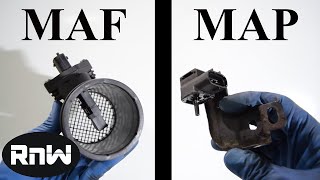
- Faulty Manifold Absolute Pressure (MAP) sensor (Common) — The sensor itself fails or degrades, sending incorrect pressure readings to the PCM. 🎬 Watch: How to test a MAP sensor at home using a multimeter. Cheap, non-OEM aftermarket sensors often fail out of the box, leading to frustrating misdiagnoses.
- Faulty Fuel Injector or Injector Circuit (Less Common) — On vehicles where P1242 indicates an injector fault (specifically Volkswagen and Audi 6-cylinder engines), the cylinder 6 injector is clogged or has an internal electrical open circuit.
- Damaged wiring or corroded electrical connectors (Less Common) — Frayed wires or green, corroded pins on the connectors for the MAP sensor, wastegate solenoid, or fuel injectors disrupt the electrical signal. Moisture frequently causes this on Ford Powerstroke injector wiring.
- Faulty Electronic Throttle Body (Less Common) — On many Honda models, P1242 points directly to a malfunction within the electronic throttle body assembly, specifically the throttle vent control motor.
- Faulty Powertrain Control Module (PCM) (Rare) — The vehicle's main computer fails and misinterprets sensor data. This is only considered after exhaustively eliminating all other mechanical and electrical causes.
Symptoms

- Check Engine Light is on — The Malfunction Indicator Lamp (MIL) illuminates. The light flashes if a severe, catalyst-damaging misfire is detected.
- Poor acceleration or loss of power — The vehicle feels sluggish, enters 'limp mode,' and fails to build boost if equipped with a turbocharger or supercharger.
- Engine hesitation or stalling — The engine stumbles during acceleration or stalls completely, especially when coming to a stop.
- Rough or erratic idle — The engine idles unevenly or hunts for a stable RPM. Affected MINIs frequently fluctuate between 1200-1600 RPM at idle.
- Hissing noise from engine bay — A sound of escaping air under acceleration points directly to a vacuum or boost leak from a cracked hose or loose intercooler boot.
- Reduced Fuel Economy — A boost leak causes an incorrect air-fuel mixture, dropping the engine's efficiency and leading to more frequent fill-ups.
- Abnormal Fuel Trim Values (scan-tool only — no driver-felt sign) — A scan tool shows long-term fuel trim (LTFT) values significantly positive (e.g., > +10%) as the PCM compensates for unmetered air from a vacuum leak.
Diagnostic Flowchart
Tap your situation to follow the diagnostic path that matches what you're seeing on this code.
Common Fixes & Costs
- Replace cracked or leaking vacuum hoses — Parts: $10-$50, Labor: $100-$200, ~1.5 hr book time (DIY)
- Replace the Turbocharger Boost/Wastegate Solenoid — Parts: $50-$150, Labor: $85-$150, ~1.0 hr book time (Intermediate)
- Replace the Manifold Absolute Pressure (MAP) Sensor — Parts: $75-$200, Labor: $55-$100, ~0.7 hr book time (DIY)
- Replace the Supercharger Bypass Valve — Parts: $75-$200, Labor: $100-$200, ~1.8 hr book time (Intermediate)
- Replace Fuel Injector — Parts: $150-$500, Labor: $150-$400, ~2.5 hr book time (Advanced)
Used vs. New Parts: Buying Guide
When a used part is worth it: For electronic parts like MAP sensors and wastegate solenoids, used parts from a reputable source with a warranty offer significant savings. Used fuel injectors are a bigger gamble and must be professionally cleaned and flow-tested before installation.
Donor-vehicle mileage cap: roughly under 100000 miles for the part to have meaningful remaining life.
Donor quality checklist:
- Verify the part number is an exact match for your vehicle.
- For electronic parts, avoid donors from flood-damaged or rust-belt vehicles.
- Ask about the mileage and history of the donor vehicle if possible.
Decision logic:
- If The part is a simple vacuum hose. → Always buy new; the cost is minimal and old rubber is unreliable.
- If The part is an electronic sensor (MAP, solenoid) and the new OEM part is over $200. → A used part from a low-mileage vehicle with a 90-day warranty is a reasonable choice.
- If The part is a fuel injector. → Favor new or professionally remanufactured units. A used injector is only viable if you have it tested and cleaned first, which adds cost.
Warranty tradeoff: Used parts typically come with a 30-90 day warranty. New aftermarket parts often have a 1-year to limited lifetime warranty. New OEM parts carry the manufacturer's warranty, usually 12 months.
Worst-case if a used part fails: 500-1000. If a used electronic part or injector fails after the warranty period, you pay for the part again plus the repeat labor for installation.
What Happens If You Wait — Timeline
- 0-1 month: Code is set, Check Engine Light is on. For a minor vacuum leak, symptoms may be barely noticeable, like a slightly rough idle or intermittent hesitation. For an injector fault, a consistent misfire on one cylinder is present. (MPG impact: 0-5%% · Added cost: $0-40 in wasted fuel)
- 1-4 months: Engine performance degrades. Hesitation on acceleration becomes more pronounced. Fuel economy drops noticeably. If a vacuum leak, the engine runs consistently lean. If an injector is stuck open, the engine runs rich, and you smell fuel. (MPG impact: 5-15%% · Added cost: $50-150 in wasted fuel)
- 4-8 months: Secondary damage begins. A persistent lean condition from a vacuum leak causes the catalytic converter to overheat and start to melt internally. A faulty injector leaks raw fuel, which also destroys the catalyst. The car fails an emissions test. (MPG impact: 10-20%% · Added cost: $1000-2800 (Catalytic converter replacement is now likely required))
- 8+ months: Catastrophic failure becomes likely. Prolonged lean operation burns exhaust valves or damages pistons. A leaking injector washes oil from cylinder walls, causing loss of compression and requiring an engine rebuild. A completely clogged catalyst creates so much backpressure the engine will not run. (MPG impact: 20-50% (if vehicle is still drivable)% · Added cost: $3000-8000+ (Engine damage has occurred, potentially requiring a full rebuild or replacement))
Cost of Not Fixing It
- 0-1 month: Reduced fuel economy (5-15% drop) and poor engine performance, such as hesitation and rough idle. (Added cost: 25-75)
- 1-6 months: A lean condition from a vacuum leak overheats and damages the catalytic converter. If caused by a faulty injector, unburnt fuel enters and destroys the converter. (Added cost: 1200-2800)
- 6+ months: Prolonged lean operation burns exhaust valves and damages pistons. A leaking injector washes oil from cylinder walls, causing loss of compression and catastrophic engine failure. (Added cost: 3000-8000)
Diagnosis Steps
- Read the Fault Codes & Research Definition
Use an OBD-II scanner to confirm P1242. Crucially, research the exact definition for your vehicle's make, model, and year. Check for related codes like P0299 (Underboost) or P0306 (Cylinder 6 Misfire).
Tools: OBD-II Scanner (Beginner) - Visual Inspection of Hoses and Wiring
Inspect all small rubber vacuum lines connected to the intake manifold, throttle body, and turbo/supercharger. Look for cracks, breaks, or disconnected hoses. Pay special attention to the hidden hose under the MAP sensor on a MINI Cooper S.
Tools: Flashlight, Inspection Mirror (Beginner) - Perform a Smoke Test
Fill the intake system with visible smoke using a smoke machine. Any leaks are instantly revealed by smoke exiting cracked hoses, intercooler boots, or bad gaskets. This is mandatory before replacing pressure sensors.
Tools: Automotive Smoke Machine (Intermediate) - Compare MAP and BARO PIDs with a Scan Tool
View live data for the Manifold Absolute Pressure (MAP) and Barometric Pressure (BARO) sensors. With the Key On, Engine Off (KOEO), the two values must be nearly identical (e.g., 14.7 PSI at sea level). If they differ significantly, one sensor is faulty.
Tools: Advanced OBD-II Scan Tool (Advanced) - Test the MAP Sensor Signal Voltage
Connect a multimeter to the MAP sensor's signal wire. With KOEO, voltage is around 4.5-5.0V at sea level. At idle, voltage drops to 1.0-1.5V due to engine vacuum. If voltage is stuck high or low, the sensor or circuit is faulty.
Tools: Multimeter with back-probe pins (Advanced) - Test the Bypass/Wastegate Solenoid and Valve
Locate the actuator for the bypass or wastegate valve. Manually move the actuator arm to ensure it is not seized. For electronic solenoids, check resistance with a multimeter (typically 20-30 ohms).
Tools: Hand Vacuum Pump, Multimeter, Basic Hand Tools (Intermediate) - Inspect and Test Fuel Injector Circuit (VW/Audi)
If P1242 indicates an injector fault (cylinder 6 for VW/Audi), unplug the injector and check resistance with a multimeter. It must match the manufacturer's specification (typically 12-16 ohms). Check the harness for 12V power with the key on.
Tools: Multimeter, Basic Hand Tools (Advanced) - Test Ford EBP Sensor vs. MAP and BARO
On Ford Powerstroke engines, monitor MAP, BARO, and Exhaust Back Pressure (EBP) PIDs with KOEO. All three must read within 0.5 PSI of each other. If EBP is significantly different, the sensor, tube, or wiring is faulty.
Tools: Advanced OBD-II Scan Tool (Advanced) - Check Needle Lift Sensor (Nissan Diesel)
On Nissan diesel engines, check the Needle Lift Sensor's resistance and wiring back to the ECU. Inspect and clean the micro-filter in the fuel pump's banjo bolt, a common related cause.
Tools: Multimeter, Basic Hand Tools (Advanced) - Analyze Sensor Waveform with Oscilloscope
Use an oscilloscope to view the MAP sensor's live waveform. A good sensor shows a clean, rapid voltage change when the throttle snaps open. A slow or noisy signal indicates a failing sensor.
Tools: Automotive Oscilloscope (Expert)
When This Code Triggers (Freeze-Frame Conditions)
- Engine Coolant Temp: 180-200°F (Fully warmed up, indicating the issue is not related to cold-start.)
- RPM: 2000-3000 RPM (During steady cruise or light acceleration, when boost is expected to be stable.)
- Engine Load: 40-70% (The engine is under a moderate load, not at idle or full throttle.)
- Vehicle Speed: 45-65 mph (Highway driving, where a discrepancy between expected and actual boost is easily detected by the PCM.)
Related Codes
- P0299 — Underboost. Often appears with P1242 due to a shared cause like a large vacuum leak or stuck-open wastegate.
- P0106 — Generic MAP Performance. If present with P1242, the fault is almost certainly the MAP sensor, its wiring, or a major leak.
- P0234 — Overboost. Triggers if the wastegate or bypass valve sticks closed.
- P030X — Misfire. On VW/Audi, P1242 pairs with P0306 (Cylinder 6 Misfire) to confirm a failed injector.
Climate & Environmental Factors
- Cold Weather: Low temperatures cause rubber vacuum lines and intake boots to become brittle and crack, creating vacuum leaks.
- High Humidity / Salt: Moisture accelerates corrosion on electrical connectors for sensors and fuel injectors, causing intermittent signals or open circuits.
- High Altitude: High altitude creates a lower baseline barometric pressure. A sensor reading 14.7 PSI at 5,000 feet with the engine off is faulty.
How to Talk to a Mechanic About This Code
Say this: "I have a P1242 code on my [Make, Model] and I know it's a manufacturer-specific code. I'd like to book a diagnostic appointment. Please start by confirming the exact definition for my vehicle. If it's boost-related, I authorize a smoke test to check for vacuum leaks before any parts are replaced."
This signals you're an informed customer who understands the code's complexity. It directs the technician toward proper diagnostic procedure (researching the definition, performing a smoke test) rather than just replacing the most common part, like the MAP sensor, which leads to misdiagnosis.
Avoid saying:
- 'Just fix whatever's wrong'
- 'My check engine light is on, can you look at it?' (too vague — invites upsell)
- 'Whatever you recommend'
Questions to ask before authorizing the repair:
- What was the specific definition of P1242 for my car?
- If you're recommending a MAP sensor, what were its voltage readings at idle and with the engine off?
- If you found a leak, can you show me where the smoke test revealed it?
- If it's an injector fault (VW/Audi), what was the resistance reading of the old injector?
- What is the warranty on the recommended parts and labor?
Where to Take It: Dealer vs Independent vs Chain
- Dealer:
Recommended. The manufacturer-specific nature of P1242 makes dealer technicians' specialized training highly valuable, reducing the risk of a costly misdiagnosis.
Best for: Vehicles under warranty or with a potential recall/service campaign (e.g., VW injector issues)., Complex manufacturer-specific quirks (German, Swedish, or luxury brands)., When you want guaranteed use of OEM parts.
Downsides: Significantly higher labor rates (1.5-2x) than independent shops., May be less willing to explore cost-saving repairs and favor complete component replacement. (Typical cost: +50% vs. baseline) - Independent Shop:
Good, with a major caveat. A brand-specialist independent shop is an excellent choice. A general-purpose shop is only a good choice if you confirm they will research the specific code definition for your vehicle first.
Best for: Out-of-warranty vehicles where cost is a major factor., Building a long-term relationship with a mechanic who knows your car's history., Brand-specialist shops (e.g., a dedicated German auto repair shop) can offer dealer-level expertise at a lower cost.
Downsides: A general mechanic may not research the specific P1242 definition and misdiagnose it as a simple MAP sensor fault., Quality varies widely; vet shops based on reviews, certifications (ASE), and experience with your car's brand. (Typical cost: +0% vs. baseline) - Chain Shop:
AVOID for diagnosis. The complexity and variability of P1242 make it a poor fit for the chain shop model. They are an acceptable, lower-cost option only for a simple, pre-diagnosed part replacement (e.g., 'replace the MAP sensor').
Best for: Simple, high-volume jobs like oil changes, tires, and brake pads.
Downsides: High pressure to meet sales targets leads to upselling unnecessary services., Technician skill and experience with complex diagnostics is very inconsistent., Very likely to misdiagnose P1242 by defaulting to a common fix like replacing the MAP sensor without proper testing. (Typical cost: -10% vs. baseline)
When to Walk Away From the Repair
If the estimated repair cost exceeds 40-50% of the car's private-party value (from a source like Kelley Blue Book), you should seriously consider selling or trading in the vehicle.
- Car worth $4000, fix is $2200: Walk away. The repair cost is over 50% of the car's value, and it's unlikely you'll recoup that cost.
- Car worth $12000, fix is $1800: Fix it. The repair is only 15% of the vehicle's value and is a sound investment in its reliability.
- Car worth $2500, fix is $800: Borderline. At 32% of the car's value, the repair is reasonable, but consider the car's overall condition and likelihood of future repairs before proceeding.
What Scan Tool You Need for This Code
Minimum: A scanner that can read and graph live sensor data, specifically the Manifold Absolute Pressure (MAP) and Barometric Pressure (BARO) PIDs.
A basic $20 code reader only shows the 'P1242' code, which is useless without its manufacturer-specific definition. It cannot display the live data needed to determine if a sensor is bad or if it's accurately reporting a leak or pressure problem.
Budget: XTool A30D or Mucar BT200 Max (~$90) — These Bluetooth scanners connect to your phone and provide full-system diagnostics, including the ability to read and graph live data from the MAP and BARO sensors. This is the minimum required to properly start diagnosing P1242.
Mid-range: Foxwell NT510 Elite or KINGBOLEN K7 (~$180) — Adds brand-specific software and bidirectional controls. This allows you to command components like wastegate solenoids to check their function, a critical step for diagnosing boost-related P1242 faults. The Foxwell is well-regarded for VW/Audi diagnostics.
Professional: Autel MaxiCOM MK808 / MK906BT or Xtool D7 (~$450-1200) — Provides full, OEM-level bidirectional controls, advanced actuator tests, and coding functions (like coding a new injector on a VW). These tools offer the most comprehensive diagnostic capabilities outside of a factory tool.
How to Clear the Code After You Fix It
- Use an OBD-II scan tool to clear the code.
- Disconnecting the battery for 15 minutes clears the code but resets all vehicle electronics.
- Perform a complete drive cycle to ensure all readiness monitors have run.
Drive cycle (~30 minutes): A generic drive cycle involves a cold start (after sitting for 8+ hours), 2-3 minutes of idling, followed by mixed city and highway driving. This includes steady speeds around 55 mph for at least 5 minutes and several deceleration periods without using the brake.
Readiness monitors affected: Catalyst monitor, Evaporative System (EVAP) monitor, O2 sensor monitor
Before emissions retest: drive at least 50 miles to fully set monitors.
Watch out for:
- Simply clearing the code with a scanner without fixing the root cause results in the code returning.
- Disconnecting the battery clears the code but resets all readiness monitors, causing an automatic failure of an emissions test.
Will This Fail Emissions / State Inspection?
Yes — this code typically fails an OBD-II emissions inspection.
- California: An illuminated Check Engine Light is an automatic failure. After repairs, complete a full drive cycle to set readiness monitors before re-testing.
- New York: The NYS inspection includes an OBD-II scan; an active P1242 code results in an automatic failure.
- Texas: In the 17 counties requiring emissions testing, an active P1242 code fails the OBD-II inspection, blocking vehicle registration.
Most Commonly Affected Vehicles

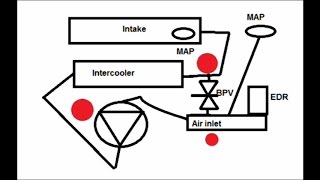
- MINI Cooper S (R53) (2002-2006) — This supercharged model sets P1242 when the Bypass Valve (BPV) sticks or vacuum lines break. The small vacuum hose under the MAP sensor is the most common failure.
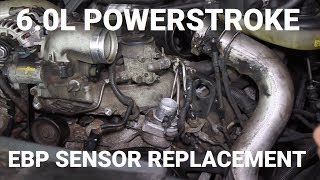
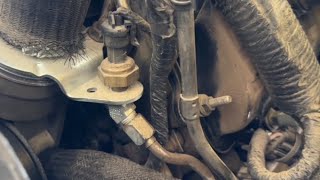
- Ford F-Series Super Duty (with Powerstroke) (2003-2010) — On 6.0L and 7.3L Powerstroke engines, this code links to a faulty turbo wastegate solenoid, Exhaust Back Pressure (EBP) sensor/tube, or injector wiring issues.
- Ford Fusion, F-150 (with EcoBoost) (2013-2019) — The turbocharger wastegate solenoid (Boost Control Solenoid) is a common failure part on these engines.
- Volkswagen/Audi GTI, Jetta, A4 (6-cylinder models) (2002-2010) — P1242 specifically points to an open circuit in the fuel injector for cylinder 6. Diagnosis must focus entirely on the injector and its wiring.
- Nissan Terrano II (2.7L Diesel) (1997-2004) — P1242 indicates a fault with the 'Needle Lift Sensor' integrated into the number 1 fuel injector. A clogged micro-filter in the fuel pump is a common related cause.
- Honda Accord, Odyssey, Pilot, Ridgeline (2005-2018) — P1242 is defined as 'Throttle Vent Control Motor Circuit 2 Malfunction,' pointing to an issue with the electronic throttle body or its wiring.
- Subaru Legacy GT (Twin-Turbo models) (1990-2004) — P1242 means '2 Stage Twin Turbo System (Twin),' indicating a problem with the system controlling the switchover between primary and secondary turbochargers.
- Jaguar XK8 (1996-2002) — The code means 'Sensor Power Supply High Input' and is caused by a faulty throttle body or a failing battery creating voltage irregularities.
- Toyota Land Cruiser (1998-2007) — A similar code (C1242) indicates an 'IG2 Power Source Circuit' fault within the ABS and Vehicle Stability Control system, unrelated to the powertrain.
Manufacturer-Specific Notes

- Volkswagen / Audi: P1242 means 'Injector 6 - Open Circuit'. It points to a bad fuel injector or wiring fault on 6-cylinder engines, completely unrelated to pressure sensors.
- MINI: Means 'Secondary Upstream Manifold Air Pressure Sensor Too High in Deceleration'. Almost always caused by a sticking supercharger bypass valve or a broken vacuum hose under the MAP sensor.
- Nissan (Diesel): Refers to the 'Needle Lift Sensor' inside the #1 injector, which verifies injection timing.
- Honda: Means 'Throttle Vent Control Motor Circuit 2 Malfunction', pointing to the electronic drive-by-wire throttle body assembly.
- Ford (Powerstroke): Often an injector circuit code caused by water in the fuel, or a clogged Exhaust Back Pressure (EBP) sensor tube.
- Jaguar: Means 'Sensor Power Supply High Input', often caused by a failing battery providing unstable voltage to engine sensors.
Real Owner Stories
2005 MINI Cooper S (R53) with 190k miles
Check Engine Light with code P1242 ('Secondary Upstream Manifold Air Pressure Sensor Too High in Deceleration') appeared. Car drove great but had the light.
What they tried:
- Replaced the supercharger bypass valve (BPV).
- Replaced the MAP sensor.
- Cleaned the throttle body.
Outcome: The code kept returning. The owner suspected a vacuum leak was preventing the new BPV from operating correctly. Forum members pointed to the small, hard, crumbly vacuum hose that runs from the BPV as a common failure point that causes this exact issue.
Lesson: On an R53 MINI, P1242 is very frequently caused by a simple, cheap vacuum line failure, not the more expensive BPV or MAP sensor. Always inspect the vacuum lines first, especially the one under the MAP sensor, before replacing parts.
2005 MINI Cooper S (R53) with 122k miles
Car had horrible throttle response, would sometimes go into limp mode, and had a severe lack of power on hills, requiring 5,000 RPM to maintain speed.
What they tried:
- The owner read the codes and found P1688 (related to electronic throttle control), which pointed him toward the boost system.
Outcome: Replaced the original bypass valve (BPV) with a Detroit Tuned BPV. The original valve's spring was worn out, causing the valve to stick open and not close properly. After replacement, the owner reported the car felt brand new, with power and throttle response fully restored.
Lesson: A mechanically failed or sticking BPV causes severe drivability issues without always throwing the most obvious code. If you have poor power and bad throttle response, manually checking the BPV for free movement and proper sealing is a critical diagnostic step.
Volkswagen/Audi with 6-cylinder engine
Check Engine Light on with codes P1242 and P0306.
What they tried:
- A mechanic unfamiliar with the brand might start diagnosing the turbo/boost system, checking MAP sensors and looking for vacuum leaks, wasting hours of diagnostic time.
Outcome: An experienced technician knows that on these specific vehicles, P1242 means 'Injector 6 - Open Circuit'. The problem is electrical, located in the cylinder 6 fuel injector or its wiring harness. The accompanying P0306 'Cylinder 6 Misfire' code confirms this. The correct fix is to test the injector circuit and replace the faulty injector or repair the wiring.
Lesson: The definition of P1242 is extremely manufacturer-specific. A misdiagnosis is almost guaranteed if you don't look up the exact definition for your make and model. For VW/Audi, P1242 + P0306 is a classic sign of a failed #6 injector.
DIY Supercharger Swap on MINI Cooper S
Immediately after installing a new supercharger, the owner got a P1242 code.
What they tried:
- The owner suspected they had damaged the bypass valve (BPV) during installation, as it got pinched.
Outcome: After replacing both the BPV and the MAP sensor, the code remained. The next logical step was to double-check all vacuum lines and intercooler boots for damage or improper connection during the reassembly. A tiny leak from a hose that became hard and crumbly with age was the culprit.
Lesson: If a code like P1242 appears immediately after a repair, the cause is almost certainly related to the work performed. Before buying new parts, meticulously re-check all connections, hoses, and wiring that were touched during the job.
How to Prevent This Code From Triggering
- Periodically treat rubber vacuum hoses with a silicone-based protectant (Every 1-2 years or during major service) — Heat and age cause rubber hoses to become brittle and crack. Applying a non-petroleum, silicone-based spray or oil keeps the rubber supple, preventing the formation of micro-cracks that lead to vacuum leaks.
- Clean and lubricate wastegate/bypass valve actuator rods and linkages (Every 30,000-50,000 miles) — Carbon buildup and corrosion cause the mechanical parts of the wastegate or bypass valve to seize or stick. Periodically cleaning the components and applying a high-temperature lubricant to pivot points ensures smooth operation and prevents boost control problems.
- Inspect and clean major sensor electrical connectors (Every 2-3 years, especially in humid or salt-belt climates) — Moisture ingress leads to corrosion (green or white powder) on connector pins, increasing resistance and causing faulty signals. Disconnecting, spraying with electrical contact cleaner, and applying dielectric grease prevents this corrosion and ensures a reliable connection.
- Use a top-tier fuel injector cleaner additive or have injectors professionally cleaned (Additive every 3,000-5,000 miles; professional cleaning every 60,000-90,000 miles.) — For makes where P1242 is an injector code (VW/Audi), preventing clogs and deposit buildup is key. Additives help dissolve minor deposits, while professional ultrasonic cleaning restores the factory spray pattern, preventing 'open circuit' faults caused by internal debris or coil failure.
Frequently Asked Questions
Why does the meaning of P1242 change so much between car brands?
Codes starting with 'P1' are manufacturer-specific, allowing carmakers to create codes for unique systems. Generic 'P0' codes are identical across all cars. You must look up the exact 'P1' definition for your specific make and model to diagnose the correct system.
Can I just replace the MAP sensor to fix this?
You can, but it rarely solves the problem. The MAP sensor is usually just reporting a real pressure issue caused by a vacuum leak or bad turbocharger valve. Perform a smoke test and voltage checks to avoid wasting money on good parts.
What are the most common misdiagnosis mistakes for P1242?
The most common mistake is replacing the MAP sensor without performing a smoke test to check for vacuum leaks. Another pitfall is using cheap aftermarket sensors that fail out of the box. Finally, mechanics unfamiliar with VW/Audi waste time checking boost systems when the code actually means a failed fuel injector.
My car runs fine, but the P1242 light comes on intermittently. Can I ignore it?
Ignoring it is dangerous. An intermittent fault like a chafed wire or sticking valve quickly becomes permanent, forcing the car into limp mode and causing long-term catalytic converter damage.
I just installed a new supercharger/pulley and got this code. What happened?
This is a common issue caused by a vacuum line left disconnected or an intercooler boot not sealing properly. Double-check all connections made during the repair.
Is this an expensive repair?
Repair costs depend entirely on the root cause. A simple cracked vacuum hose costs under $150 to diagnose and fix. Replacing a high-pressure fuel injector on a German vehicle exceeds $800.
Can a bad battery cause a P1242 code?
Yes, on sensitive systems like older Jaguars, a failing battery causes voltage fluctuations that trigger a 'Sensor Power Supply High Input' code (P1242). Always ensure your battery and charging system are healthy before starting complex diagnostics.
What does 'Open Circuit' mean for a VW/Audi P1242?
An 'Open Circuit' means there is a physical break in the electrical path for the cylinder 6 fuel injector. This happens due to a broken wire, an unplugged connector, or an internal failure in the injector's coil windings. The PCM sends a signal but receives no response.
Key Takeaways
- Look up the exact P1242 definition for your specific vehicle make, as it means 'Injector 6 Open Circuit' on a VW but 'Manifold Pressure Issue' on a MINI.
- Perform a $100-$180 smoke test to find cracked vacuum hoses before spending money on replacement sensors.
- Test the MAP sensor voltage at idle; a healthy sensor drops from 5.0V (engine off) to 1.0-1.5V when running.
- Inspect the $10 vacuum hose directly under the MAP sensor on 2002-2006 MINI Cooper S models, as it is the number one cause of this code.
- Stop driving if P1242 is paired with a flashing check engine light or misfire code, as raw fuel destroys an $800+ catalytic converter within days.
Helpful Videos
![Wie Bypassklappe beim MINI Cooper S tauschen [Tutorial] Bypass Valve replace](https://img.youtube.com/vi/AuCKFaPCab4/mqdefault.jpg)


The information in this article is provided for general reference and educational purposes only. Vehicle specifications, procedures, and part compatibility can vary by production date, trim level, and region. Always consult your vehicle's factory service manual and verify part numbers before purchasing or performing repairs. Safety-critical components such as airbags, seat belts, and braking systems should be installed by a qualified professional.
- 🎬 Helpful Videos
- What Does P1242 Mean?
- Can I Drive With P1242?
- Common Causes
- Symptoms
- Diagnostic Flowchart
- Common Fixes & Costs
- Used vs. New Parts: Buying Guide
- What Happens If You Wait — Timeline
- Cost of Not Fixing It
- Diagnosis Steps
- When This Code Triggers (Freeze-Frame Conditions)
- Related Codes
- Climate & Environmental Factors
- How to Talk to a Mechanic About This Code
- Where to Take It: Dealer vs Independent vs Chain
- When to Walk Away From the Repair
- What Scan Tool You Need for This Code
- How to Clear the Code After You Fix It
- Will This Fail Emissions / State Inspection?
- Most Commonly Affected Vehicles
- Manufacturer-Specific Notes
- Real Owner Stories
- 2005 MINI Cooper S (R53) with 190k miles
- 2005 MINI Cooper S (R53) with 122k miles
- Volkswagen/Audi with 6-cylinder engine
- DIY Supercharger Swap on MINI Cooper S
- How to Prevent This Code From Triggering
- Frequently Asked Questions
- Why does the meaning of P1242 change so much between car brands?
- Can I just replace the MAP sensor to fix this?
- What are the most common misdiagnosis mistakes for P1242?
- My car runs fine, but the P1242 light comes on intermittently. Can I ignore it?
- I just installed a new supercharger/pulley and got this code. What happened?
- Is this an expensive repair?
- Can a bad battery cause a P1242 code?
- What does 'Open Circuit' mean for a VW/Audi P1242?
- Key Takeaways
- 🎟️ Get 5% Off