

P1239 on 2014 Jeep Cherokee: Engine Oil Temperature Too Low Causes and Fixes
On a 2014 Jeep Cherokee, the P1239 code is most often caused by a software glitch in the Powertrain Control Module (PCM), not a faulty part. The primary fix is a software update performed by a Jeep dealer, as outlined in multiple Technical Service Bulletins. Replacing sensors before checking the software version can lead to unnecessary expense and repeated repairs.
- For a 2014 Jeep Cherokee, P1239 is most likely a software error, not a hardware failure.
- Before replacing any parts, have a Jeep dealer check if your vehicle's computer (PCM) has the latest software. The cost is typically one hour of shop labor.
- The official fix is often a software update (reflash) as detailed in TSBs 18-031-14 and 18-093-16.
- If the software is up-to-date and the code persists, the EOT sensor is the next suspect, but be aware its replacement on the 3.2L V6 is a major, multi-hour repair.
What's Unique About the 2014-2014 Jeep CHEROKEE
For the 2014 Jeep Cherokee, particularly those with the 3.2L engine, this code is very frequently a "ghost" code caused by a software logic error rather than a true mechanical failure. Jeep acknowledged this issue through several Technical Service Bulletins (TSBs), which call for a PCM software update (reflash) to correct the faulty logic that compares actual oil temperature to a modeled warm-up curve. It's so common that sometimes the code appears alongside the contradictory P0298 (Engine Oil Temperature Too High), further pointing to a software issue.
Diagnostic Flowchart
Tap your situation to follow the diagnostic path that matches what you're seeing on this vehicle.
Symptoms You May Notice
- Check Engine Light (Malfunction Indicator Lamp - MIL) is on
- In some cases, a rough idle may be noticed when engaging Drive in 4-LOW after a cold start.
- Replacing the engine oil temperature sensor without first checking if a PCM software update is available. Many owners and shops have replaced sensors, and even the entire oil cooler assembly, multiple times only to find the issue was software-related. 🎬 Watch: How a mechanic diagnosed this tricky software-related ghost code.
Most Likely Causes
- Outdated Powertrain Control Module (PCM) Software 🔴 High Probability Jeep issued multiple TSBs (e.g., 18-031-14, 18-093-16) specifically to address this code via a software update, confirming it's a known logic flaw in how the PCM interprets sensor data in cold weather.
How to confirm: A Jeep dealership or a properly equipped independent shop must use a wiTECH scan tool to check the current PCM software calibration against the latest available version referenced in the TSBs.
Typical fix: Reprogramming (flashing) the PCM with the updated software. This is a non-mechanical repair that adjusts the parameters the computer uses to monitor oil temperature.
Est. part cost: $0 - Faulty Engine Oil Temperature (EOT) Sensor 🟡 Medium Probability Sensors can fail over time by sending inaccurate readings. This becomes the likely cause if the PCM software is already up to date. The sensor is located in a high-heat area deep in the engine valley, which can contribute to failure.
How to confirm: With a diagnostic scan tool, monitor the EOT sensor reading during engine warm-up. If the reading is erratic, doesn't change, or is illogical compared to the Engine Coolant Temperature (ECT), the sensor is likely faulty. The sensor and its circuit can also be tested for resistance.
Typical fix: Replace the Engine Oil Temperature sensor. On the 3.2L V6, this sensor is located in the oil filter/cooler housing, which requires removing the upper and lower intake manifolds for access, making it a labor-intensive job. 🎬 See this walkthrough for accessing the sensor under the intake manifolds.
Est. part cost: $20-$50 - Thermostat Stuck Open ⚪ Low Probability
How to confirm: Monitor both the engine coolant temperature and engine oil temperature during warm-up. If both are extremely slow to rise and the heater performance is poor, the thermostat is likely stuck open, preventing the engine from reaching operating temperature.
Typical fix: Replace the engine thermostat and refill the coolant.
Est. part cost: $25-$75
Rare But Worth Checking
- Incorrect Engine Oil Viscosity: Using an oil that is too thick for cold weather can slightly slow the warm-up process, potentially contributing to the code. Ensure the oil meets the manufacturer's specification (e.g., 5W-20).
- Wiring or Connector Issue: Damage or corrosion in the wiring or connector for the EOT sensor can cause a loss of signal or incorrect readings. A wiggle test on the harness while monitoring sensor data can help identify intermittent connection problems.
Diagnosis Steps
- Check for Technical Service Bulletins (TSBs). The first step for this specific code on this vehicle is to see if TSBs #18-031-14 REV. A, #18-060-16, or #18-093-16 REV. A apply to your vehicle's VIN and build date.
- Verify PCM Software Version. Have a dealer or qualified shop connect a wiTECH scan tool to check if the PCM software is the latest version. If not, perform the reflash procedure as described in the TSBs. This is the most critical step.
- Clear codes and re-test. After the reflash, clear all DTCs and drive the vehicle under similar conditions (e.g., cold start) to see if the code returns.
- If the code returns, monitor live sensor data. Use a scan tool to watch the Engine Oil Temperature (EOT) and Engine Coolant Temperature (ECT) sensors from a cold start. They should rise steadily and track each other logically. A large, persistent discrepancy could point to a faulty sensor.
- Test the EOT Sensor Circuit. If the EOT reading is stuck, erratic, or absent, disconnect the sensor. Check for 5 volts on the reference wire and a good ground. If the wiring is good, the sensor is the likely culprit.
- Inspect the Thermostat. If both oil and coolant temperatures are very slow to rise and stay low during operation, the thermostat may be stuck open.
- Consider the Oil Cooler Assembly. On the 3.2L V6, the EOT sensor is part of the oil filter/cooler housing. Due to the high labor cost to access this area, if the sensor is confirmed bad, many mechanics recommend replacing the entire oil cooler assembly, which often includes a new EOT sensor and oil pressure sensor. 🎬 Watch: Step-by-step guide to replacing the entire oil cooler assembly.
Parts You'll Likely Need
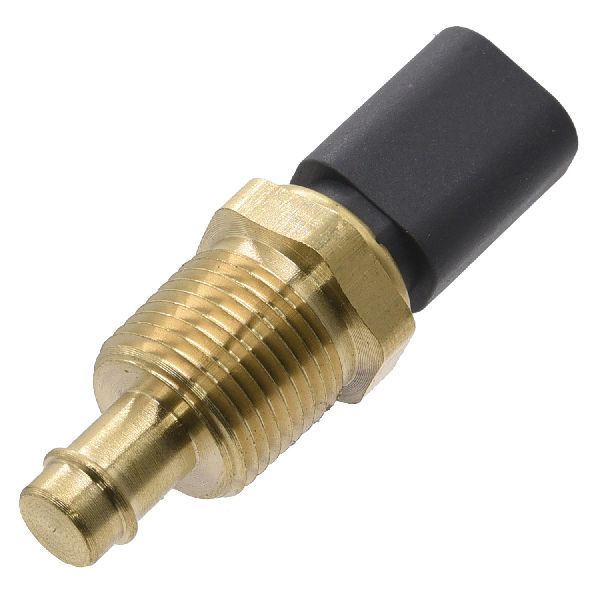
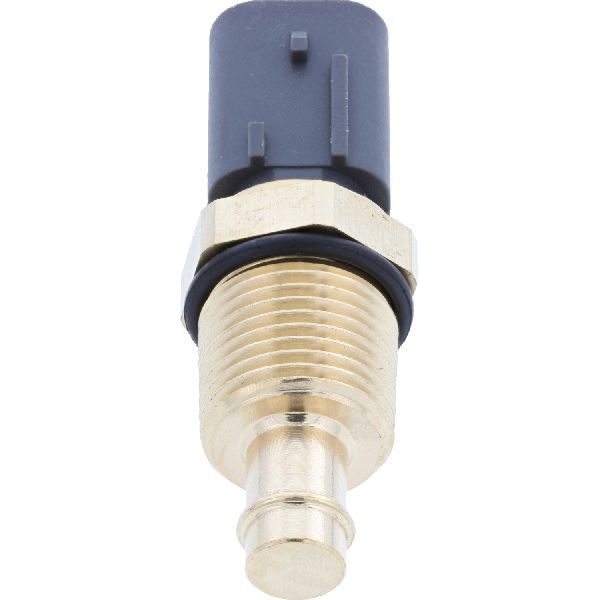
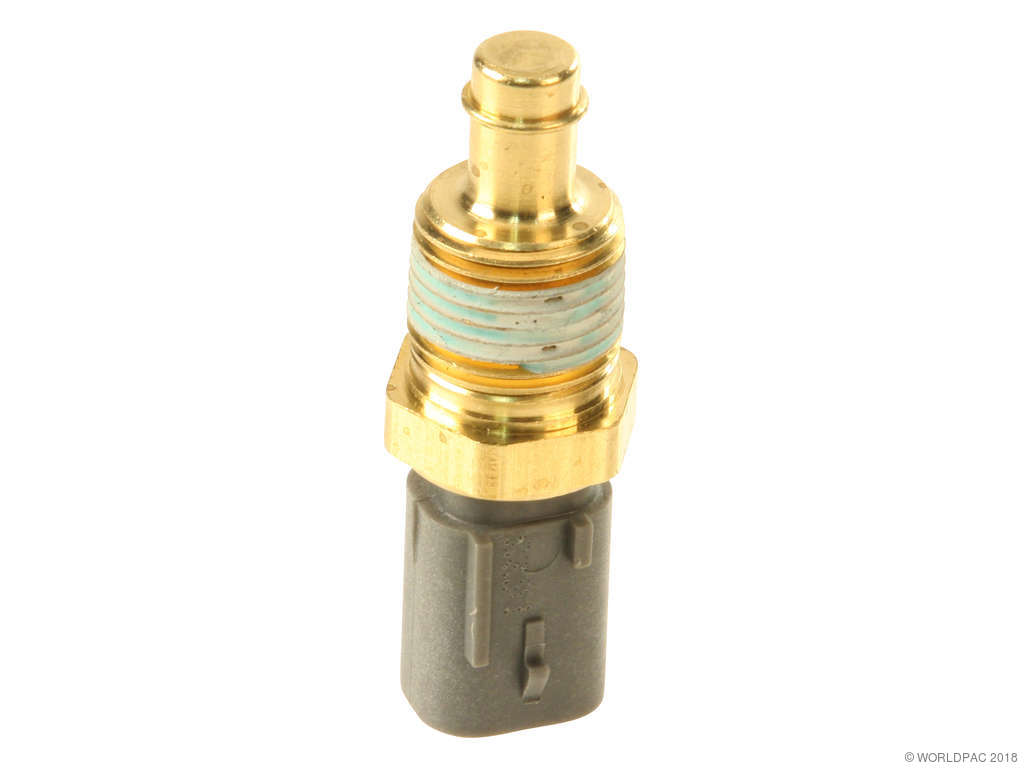
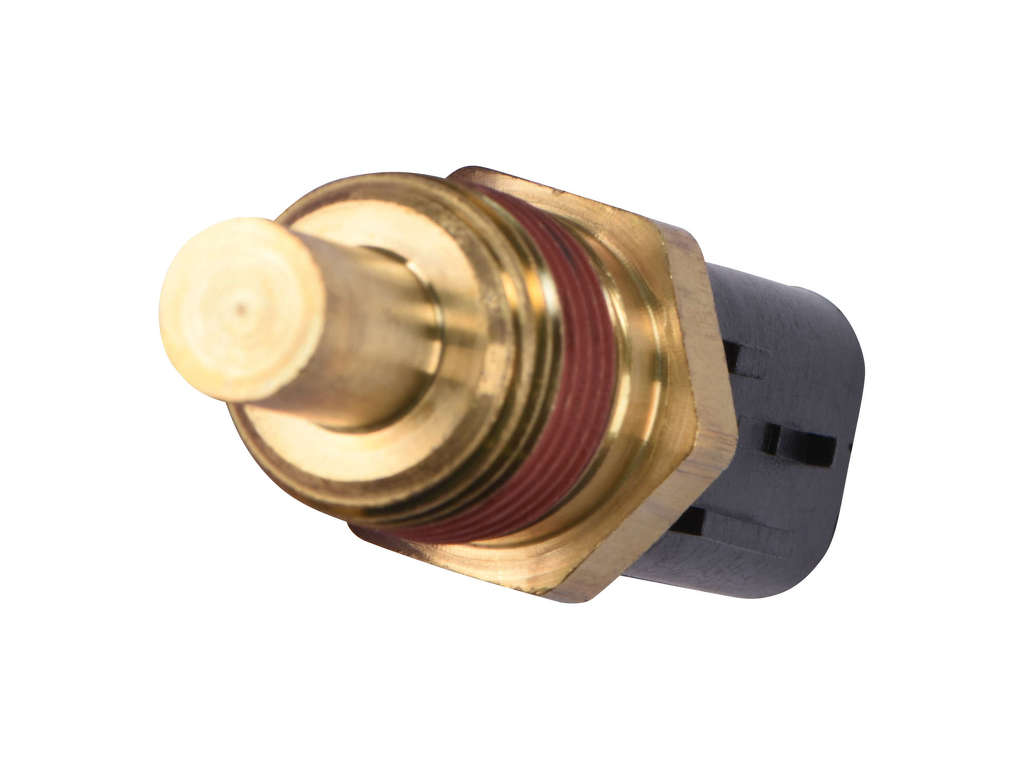
- Engine Oil Temperature Sensor
(OEM #5149077AB)— This sensor is the primary hardware component responsible for the reading. If the PCM software is up-to-date and the code persists, this sensor is the next most likely cause. Note that this part number is also used for coolant temperature on many Chrysler/Jeep/Dodge vehicles and supersedes part number 5149096AB.
Trusted brands: Mopar, Standard Motor Products (TX195), NTK, Holstein, Walker
OEM price range: $30-$50
Aftermarket price range: $15-$35
Related Codes That Often Appear With This One
- P0298 — Engine Oil Temperature Too High. This code appearing with P1239, especially in cold weather, is a strong indicator of a PCM software glitch, as it's illogical for the oil to be both too hot and too low. Both codes are explicitly mentioned in TSB 18-031-14.
- P0300 — Multiple Cylinder Misfire. This was another symptom addressed by the same software updates (TSB 18-031-14) that fixed P1239.
- P0335 — Crankshaft Position Sensor Circuit. Also included in the list of codes resolved by the PCM reflash TSB 18-093-16.
- P2610 — PCM Internal Engine Off Timer Performance. Another code pointing to internal PCM logic issues that were fixed by the same software update (TSB 18-093-16).
Technical Service Bulletins (TSBs) & Recalls
- 18-093-16 REV. A: Flash: Powertrain Diagnostic And System Enhancements, addresses P1239 and other codes for the 3.2L engine.
- 18-060-16: Flash: Powertrain Diagnostic And System Improvements, lists P1239 among codes fixed by a software update for the related 3.6L engine in the Wrangler, showing a pattern of software fixes for this code.
- 18-031-14 REV. A: Flash: MIL Illumination P1239, P0298- Engine Oil Temperature Too Low Or High, P0300... specifically calls out reprogramming the PCM for this issue on 3.2L engines built on or before June 7, 2014.
Platform-Specific Known Issues
- A widely documented software issue on 2014 models with the 3.2L engine causes the PCM to incorrectly flag a P1239 code, often in cold weather. The official fix is a software reflash per TSB #18-031-14 REV. A and TSB #18-093-16.
- The EOT sensor on the 3.2L V6 is located on the oil cooler housing, deep in the engine valley under the intake manifolds. This makes replacement a very labor-intensive job, taking several hours.
Mechanic-Grade Diagnostic Values
- DTC Set Condition — expected: The PCM continuously compares the actual Engine Oil Temperature (EOT) reading to a modeled, predicted temperature curve during warm-up.. Failure: The P1239 code will set if the actual EOT reading is more than 40°C (104°F) below the modeled temperature for a duration of three minutes.
Hidden / Shadow Codes Worth Checking
- Mode 6 Data Inaccuracy: This is not a hidden code, but a related issue fixed by the software update. Before the PCM flash, generic scan tools could display inaccurate or misleading Mode 6 diagnostic data, which could send technicians down the wrong path. The same TSBs that fix P1239 also correct this data reporting issue. (see via Mode 6 is a standard OBD-II diagnostic mode available on many advanced scan tools.)
Scan Tool Commands That Help
- wiTECH: Reprogram PCM / Flash ECU — This is the primary repair step for P1239 on this vehicle, as directed by multiple TSBs. It updates the PCM's software logic to correct the faulty comparison between actual and modeled oil temperatures. It should be performed before replacing any hardware.
Real Owner Repair Stories
- YouTube - Online Mechanic Tips (2017 Jeep Wrangler (JK), 3.6L V6 with 92,000 miles. (Note: While a Wrangler, it uses a similar Pentastar engine architecture and was subject to the same software-related P1239 issue).) — Persistent Check Engine Light with code P1239 for low engine oil temperature.
❌ Tried (didn't work) Replacing the entire oil cooler assembly (with an aftermarket aluminum unit)., Replacing the Engine Oil Temperature sensor multiple times (at least three sensors were tried)., The vehicle had been to another shop which gave up after repeated failed hardware replacements.
✅ What actually fixed it The technician consulted the manufacturer's Technical Service Bulletins (TSBs), found one that specifically addressed P1239 with a software update, and performed a PCM reflash using a wiTECH scan tool. This corrected the internal computer logic and resolved the code without replacing any more parts.
OEM Part Supersession History
5149096AB→5149077AB— Part update/revision by manufacturer.
Heads up: Ensure the correct sensor is used for the application (oil vs. coolant). Part number 5149077AB is specified for the engine oil temperature on the oil filter adapter for this engine.
Model Year Variations Within This Range
- 2014: TSB #18-031-14 REV. A, which provides the software flash to fix P1239, specifically applies to 2014 Cherokee models with the 3.2L engine built on or before June 7, 2014 (MDH 0607XX). Vehicles built after this date should already have the updated software from the factory.
Helpful Videos
We Have This Part in Stock


The information in this article is provided for general reference and educational purposes only. Vehicle specifications, procedures, and part compatibility can vary by production date, trim level, and region. Always consult your vehicle's factory service manual and verify part numbers before purchasing or performing repairs. Safety-critical components such as airbags, seat belts, and braking systems should be installed by a qualified professional.
- Jeep CHEROKEE:
- 🎬 Helpful Videos
- 🛍️ Shop This Part
- What's Unique About the 2014-2014 Jeep CHEROKEE
- Diagnostic Flowchart
- Symptoms You May Notice
- Most Likely Causes
- Rare But Worth Checking
- Diagnosis Steps
- Parts You'll Likely Need
- Related Codes That Often Appear With This One
- Technical Service Bulletins (TSBs) & Recalls
- Platform-Specific Known Issues
- Mechanic-Grade Diagnostic Values
- Hidden / Shadow Codes Worth Checking
- Scan Tool Commands That Help
- Real Owner Repair Stories
- OEM Part Supersession History
- Model Year Variations Within This Range
- 🎟️ Get 5% Off