

OBD-II Code P1236: Manufacturer-Specific Fault (Fuel, Turbo, or Engine Sensor)
The Ultimate Guide: What P1236 means, why it triggers, and how to fix it on any make
- Diagnose P1236 strictly by manufacturer: it means a fuel system failure on Fords, an engine bearing warning on Kias, and a turbo overboost on Hondas.
- Inspect the Fuel Pump Driver Module (FPDM) above the spare tire on 2004-2010 Ford trucks; a $60 aftermarket replacement kit fixes 90% of P1236 codes.
- Stop driving immediately if P1236 appears on a 2010-2021 Kia or Hyundai; it triggers a 2000-RPM limp mode and requires a dealer bearing clearance test for a free engine replacement.
- Check the wastegate control solenoid and vacuum lines on turbocharged Honda and Subaru models, as P1236 flags an overboost condition rather than a fuel issue.
- Never ignore P1236, as it carries a 100% risk of stalling in traffic or catastrophic engine seizure depending on the vehicle make.
What Does P1236 Mean?

P1236 is a manufacturer-specific code with definitions that change based on your vehicle. On Ford, Lincoln, and Mercury vehicles, the Powertrain Control Module (PCM) detects an out-of-range signal from the Fuel Pump Driver Module (FPDM), starving the engine of fuel. On turbocharged Honda and Subaru models, it indicates a turbocharger overboost problem. For 2010-2021 Kia and Hyundai vehicles, it is a critical alert from the Knock Sensor Detection System (KSDS) warning of internal connecting rod bearing failure.
Technical definition: The SAE definition for P1236 varies. For Ford: 'Fuel Pump Control Out of Range', meaning the PCM received a feedback signal from the FPDM outside the expected duty cycle. For Honda/Subaru: 'Boost Pressure Higher Than Expected', triggered when the MAP sensor detects boost exceeding the ECU's target. For Kia/Hyundai: 'Knock Sensor Detection System (KSDS)', set when the sensor detects vibration patterns consistent with connecting rod bearing failure.
Can I Drive With P1236?
No — Do Not Drive. P1236 is not safe to drive. On Ford/Lincoln vehicles, a fuel delivery failure creates a high risk of stalling in traffic. On Kia/Hyundai vehicles, this code is a direct warning of internal engine damage and triggers a 2000-RPM limp mode. On turbocharged models (Honda/Subaru), it signifies a loss of boost control. Continuing to drive guarantees stalling, loss of power, or catastrophic engine failure.
Common Causes

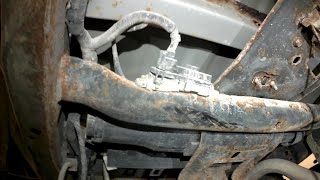
- Failed Fuel Pump Driver Module (FPDM) (Very Common) — The number one cause on Ford trucks and SUVs. The module's aluminum body mounts directly to the steel frame, causing galvanic corrosion that cracks the housing, allows moisture intrusion, and destroys the internal electronics. 🎬 Watch: How to diagnose and replace a corroded Ford FPDM.
- Corroded Wiring, Connector, or Ground (Common) — The FPDM's undercarriage location exposes its wiring to road salt and water. This causes corroded connector pins, broken wires, and poor ground connections that disrupt the signal between the PCM and FPDM.
- Faulty Turbocharger Wastegate Solenoid (Common) — On turbocharged Hondas and Subarus, a sticking wastegate control solenoid fails to regulate exhaust flow through the turbo, causing an overboost condition flagged as P1236. 🎬 Watch: How to test your turbocharger wastegate control solenoid.
- Blown Fuse, Faulty Relay, or Tripped Inertia Switch (Common) — A blown fuel pump fuse, a faulty relay, or a partially tripped inertia switch (on Fords) cuts power to the FPDM, causing it to go offline or perform erratically.
- Failing Fuel Pump (Less Common) — A weak fuel pump draws excessive electrical current (over 10-12 amps). This high amperage overloads and damages the Fuel Pump Driver Module, setting a P1236 code.
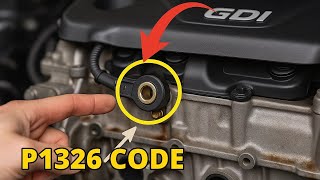
- Faulty Knock Sensor (Less Common) — On Kia and Hyundai models, the knock sensor itself sometimes fails and incorrectly reports excessive vibrations, leading to a false KSDS code. However, actual bearing wear is more common. 🎬 See this explanation of Kia and Hyundai engine bearing failure.
- Clogged Fuel Filter (Rare) — A severely clogged fuel filter restricts flow, forcing the fuel pump to work harder. This increased load strains the pump, causing it to draw more current and overload the FPDM.
- Faulty Powertrain Control Module (PCM) (Very Rare) — The PCM itself has an internal fault and cannot process the feedback signal. Consider this only after exhaustively ruling out wiring, modules, and sensors.
Symptoms

- Engine Stalls Unexpectedly — The engine starts normally but stalls without warning while driving, especially under load or when accelerating.
- Engine Will Not Start — The engine cranks but won't start because the fuel pump is not activated.
- Reduced Engine Power / Limp Mode — The vehicle enters 'limp mode' with drastically reduced acceleration. On affected Kia/Hyundai models, RPM is strictly limited to 1800-2000 RPM.
- Check Engine Light (Solid or Flashing) — The Malfunction Indicator Lamp illuminates. On Kia/Hyundai vehicles, a flashing CEL indicates a severe KSDS condition requiring immediate shutdown.
- Rough Idle and Surging — The engine idles erratically or surges due to inconsistent fuel delivery (Ford) or incorrect boost levels (Honda/Subaru).
Diagnostic Flowchart
Tap your situation to follow the diagnostic path that matches what you're seeing on this code.
Common Fixes & Costs
- Replace Fuel Pump Driver Module (FPDM)
— Parts: $40-$120, Labor: $75-$150, ~0.6 hr book time
(DIY)
: OEM
: OEM - Engine Replacement (Kia/Hyundai) — Parts: $0, Labor: $0, ~8.0 hr book time (Professional)
- Replace Turbocharger Wastegate Solenoid
— Parts: $50-$150, Labor: $100-$250, ~1.5 hr book time
(Intermediate)
: OEM - Repair Damaged Wiring or Connector — Parts: $15-$60, Labor: $150-$400, ~2.0 hr book time (Intermediate)
- Replace Fuel Pump — Parts: $200-$450, Labor: $300-$500, ~3.2 hr book time (Professional)
- Replace Knock Sensor
— Parts: $40-$120, Labor: $150-$400, ~2.5 hr book time
(Intermediate)
: OEM - Replace Fuel Pump Relay — Parts: $15-$40, Labor: $0-$25, ~0.1 hr book time (DIY)
- Replace Fuel Filter — Parts: $20-$70, Labor: $50-$150, ~0.8 hr book time (DIY)
DIY vs Professional
- Replace Fuel Pump Driver Module (FPDM) — Beginner:
Tools: Socket set, wrench to lower spare tire, flashlight. - Replace Turbo Wastegate Solenoid — Beginner:
Tools: Socket set, pliers, vacuum hose removers. - Replace Fuel Filter — Beginner:
Tools: Socket set, fuel line disconnect tools, drain pan.
Used vs. New Parts: Buying Guide
When a used part is worth it: Buying a used Ford FPDM NEVER makes sense due to the flawed original design. For turbochargers or sensors, a used part from a low-mileage donor is acceptable.
Donor-vehicle mileage cap: roughly under 60000 miles for the part to have meaningful remaining life.
Donor quality checklist:
- For the Ford FPDM, only buy a NEW aftermarket 'OE Fix' version with standoffs (e.g., Dorman 590-001).
- Avoid parts from regions with heavy road salt use.
Decision logic:
- If The part is a Ford FPDM → Always buy new. A used part will fail from the same corrosion issue.
- If The part is a wastegate solenoid and budget is tight → A used part from a verified low-mileage donor is acceptable.
Warranty tradeoff: Used parts have a 30-day warranty. Aftermarket new FPDMs often carry a limited lifetime warranty.
Worst-case if a used part fails: $200-$500 if a used FPDM fails, requiring repeat labor and a new part.
What Happens If You Wait — Timeline
- 0-1 month: Intermittent hesitation under acceleration. No CEL may be present yet. (MPG impact: 0-2%% · Added cost: $0)
- 1-4 months: CEL illuminates. Noticeable rhythmic bucking or surging under load. Engine stalls occasionally but restarts. (MPG impact: 3-8%% · Added cost: $100 (towing costs))
- 4-6 months: Severe stalling makes the vehicle dangerous to drive. Erratic voltage strains the in-tank fuel pump. (MPG impact: 10-15%% · Added cost: $400 (cost of a new fuel pump damaged by the failing FPDM))
- 6+ months: Complete FPDM failure. The vehicle will not start. On Kias, catastrophic engine seizure occurs. (MPG impact: 100%% · Added cost: $7,000+ (engine replacement if not covered by warranty))
Cost of Not Fixing It
- Immediate: High risk of engine stalling in traffic. On Kia/Hyundai, engine enters a severe 2000-RPM limp mode. (Added cost: Towing costs ($100-$300))
- 1-3 months: On Ford, erratic voltage burns out the in-tank fuel pump. On Kia/Hyundai, catastrophic engine seizure occurs. (Added cost: $400-$7,000+)
Diagnosis Steps

- Identify Make and Check for Related Codes
Use an OBD-II scanner. On Fords, look for P1233 (FPDM offline). On turbo models, look for P0234 (overboost). On Kias, look for P1326 (KSDS active limp mode). Your vehicle make dictates the entire diagnostic path.
Tools: OBD-II Scanner (Beginner) - Contact Dealer for KSDS Inspection (Kia/Hyundai ONLY)
If you have a P1236 on a 2010-2021 Kia or Hyundai, STOP. Do not clear the code. Tow the vehicle to an authorized dealer. The KSDS detected a potential engine issue covered by a class-action settlement requiring a bearing clearance test.
Tools: Phone, Tow Truck (Beginner) - Visually Inspect the FPDM and Wiring (Ford ONLY)
Lower the spare tire to access the FPDM on the frame crossmember. Inspect the aluminum housing for cracks and white corrosion. Unplug the connector and check for green/white powder, moisture, or broken wires.
Tools: Wrench (for spare tire), Flashlight (Beginner) - Inspect Turbo Vacuum Lines and Solenoid (Honda/Subaru ONLY)
Visually inspect all vacuum hoses connected to the wastegate actuator and boost control solenoid for cracks, brittleness, or loose connections. A small leak causes an overboost condition.
Tools: Flashlight, Vacuum Gauge (Intermediate) - Check the Fuel Pump Fuse and Relay
Locate the fuel pump fuse and relay in the fuse box. Test the fuse for continuity. Swap the fuel pump relay with an identical one from a non-critical system (e.g., horn) to test if the relay is faulty.
Tools: Owner's Manual, Fuse Puller (Beginner) - Advanced FPDM Circuit Test (Ford ONLY)
With the FPDM unplugged and key 'ON', use a multimeter to check for 12V at Pin 5 (power) and <1 ohm resistance to ground at Pin 3. Back-probe the plugged-in connector with an oscilloscope to verify a 5-50% duty cycle on the Fuel Pump Control wire from the PCM.
Tools: Multimeter, Oscilloscope, Wiring Diagram (Advanced) - Test Fuel Pump Amperage Draw
Use an amp clamp around the fuel pump power wire while the pump runs. A healthy pump draws 4-8 amps. A draw over 10-12 amps indicates a failing pump that is overloading the FPDM.
Tools: Amp Clamp, Bi-directional Scan Tool (Advanced) - Check Fuel Pressure
Connect a fuel pressure gauge to the fuel rail Schrader valve. With the engine running, pressure should be 28-45 PSI (for F-150s). Low or erratic pressure confirms a fuel delivery problem.
Tools: Fuel Pressure Gauge (Advanced)
When This Code Triggers (Freeze-Frame Conditions)
- Engine Coolant Temp: 180-205°F (Fully warmed up engine.)
- RPM: 1500-3000 RPM (Occurs at a steady cruise (Ford) or in the RPM range where bearing knock is most pronounced (Kia/Hyundai).)
- Engine Load: 25-60% (Light to moderate acceleration or steady highway driving.)
Related Codes
- P1233 / P1237 (Ford) — P1233 means the FPDM is completely offline (blown fuse or dead module). P1237 points to an issue on the output side (pump or wiring). P1236 means the module is online but erratic.
- P1326 (Kia / Hyundai) — P1326 is the critical KSDS code that forces severe limp mode. P1236 is often logged as the initial warning. Both require an immediate dealer visit.
- P0191 (Ford) — Fuel Rail Pressure Sensor Circuit. A faulty FPDM providing inconsistent power to the fuel pump causes P0191. Diagnose P1236 first.
- P0234 (Turbo Models) — Generic 'Engine Overboost Condition'. P1236 identifies the likely cause (wastegate solenoid), while P0234 describes the result.
- P0171 / P0174 (System Too Lean) — A failing FPDM causes low fuel pressure, starving the engine and triggering lean codes.
Climate & Environmental Factors
- Road Salt and Humidity (Rust Belt): The primary cause of P1236 on Ford vehicles. Salt accelerates galvanic corrosion between the FPDM's aluminum body and the steel frame, cracking the module.
- Moisture and Water Intrusion: High humidity or water crossings introduce moisture into poorly sealed electrical connectors for the FPDM, knock sensor, or wastegate solenoid, causing signal faults.
How to Talk to a Mechanic About This Code
Say this: "{'for_ford': 'I have a P1236 code and stalling under load. Please inspect the Fuel Pump Driver Module above the spare tire for corrosion before diagnosing the in-tank fuel pump.', 'for_kia_hyundai': 'My car has a P1236, a flashing check engine light, and is in limp mode. I need to bring it in for the KSDS warranty inspection. Please check if my VIN is covered by Campaign 953 or PI1803.', 'for_subaru_honda': 'I have a P1236 code indicating a turbo overboost issue. Please check the wastegate control solenoid, actuator, and vacuum lines for leaks.'}"
Directs the mechanic to the most likely cause, preventing expensive misdiagnosis. For Kia/Hyundai, it immediately invokes the warranty settlement process.
Avoid saying:
- 'My car is stalling, just fix it.'
- 'The check engine light is on, I have no idea why.'
Questions to ask before authorizing the repair:
- For Ford: Did you find corrosion on the FPDM? Will the replacement part include rubber standoffs?
- For Kia/Hyundai: Did the engine pass or fail the bearing clearance test? Is the repair fully covered under warranty?
- For Turbo Models: Did you find a failed solenoid or a cracked vacuum hose?
Where to Take It: Dealer vs Independent vs Chain
- Dealer:
Mandatory for Kia/Hyundai. Overpriced for Ford FPDM repairs.
Best for: Kia and Hyundai vehicles to claim the KSDS engine warranty settlement.
Downsides: Highest labor rates., May refuse to use improved aftermarket parts (e.g., Ford FPDM with standoffs). (Typical cost: +50% vs. baseline) - Independent Shop:
The best choice for Ford, Honda, and Subaru repairs.
Best for: Out-of-warranty Ford vehicles with the common FPDM failure., Turbocharged Subaru or Honda models.
Downsides: Diagnostic capabilities vary; check ASE certifications. (Typical cost: +0% vs. baseline) - Chain Shop:
Avoid. The risk of misdiagnosis and being oversold a fuel pump is too high.
Best for: Checking for a simple blown fuse.
Downsides: High pressure to upsell; very likely to misdiagnose a Ford FPDM as a bad fuel pump. (Typical cost: -10% vs. baseline)
When to Walk Away From the Repair
If the estimated repair cost exceeds 50% of the car's Kelley Blue Book value, consider selling the vehicle.
- Car worth $5000, fix is $150: Fix it. A Ford FPDM repair is cheap and restores full function.
- Car worth $8000, fix is $7000: Walk away. An out-of-warranty Kia engine failure costs nearly the entire value of the car.
What Scan Tool You Need for This Code
Minimum: A code reader that displays manufacturer-specific codes and live data streams.
A basic $20 reader won't show the live Fuel Pump Duty Cycle data needed to confirm if the FPDM is working too hard.
Budget: BlueDriver Pro or ANCEL BD310 (~$75) — Connects to your phone to graph fuel pump command vs. actual response in real-time.
Mid-range: Foxwell NT510 Elite (~$180) — Adds bidirectional controls to command the turbo wastegate solenoid directly for testing.
Professional: Autel MS906 (~$1200) — Offers dealership-level functions, necessary only if the PCM requires replacement and coding.
Rent vs buy: For a one-time diagnosis, borrow a capable OBD-II scanner for free from an auto parts store's 'Loan-A-Tool' program.
How to Clear the Code After You Fix It
- Use an OBD-II scan tool to clear the code.
- Reconnect the battery if disconnected.
- Perform a complete drive cycle to set readiness monitors.
Drive cycle (~30 minutes): Idle for 3 minutes. Drive in mixed city/highway conditions for 20 minutes, including steady-speed cruises. Idle for 2 minutes before shutting off.
Readiness monitors affected: Comprehensive Component Monitor, Fuel System Monitor
Before emissions retest: drive at least 50 miles to fully set monitors.
Watch out for:
- For Kia/Hyundai, DO NOT clear the code before taking it to a dealer, as this voids your warranty claim for the engine settlement.
- Disconnecting the battery clears the code but resets all readiness monitors, guaranteeing an emissions test failure.
Will This Fail Emissions / State Inspection?
Yes — this code typically fails an OBD-II emissions inspection.
- California: An illuminated Check Engine Light is an automatic failure. A full drive cycle must be completed after repair.
- New York: An active P1236 code causes an automatic failure. Clearing the code just before the test results in a 'Not Ready' failure.
Most Commonly Affected Vehicles

- Ford F-150 (2004-2008) — Extremely common. The original FPDM corrodes against the steel frame. Use an updated aftermarket kit with rubber standoffs.
- Ford Expedition / Explorer (2005-2010) — Uses the same flawed FPDM design and mounting location as the F-150.
- Kia / Hyundai Optima / Sonata / Sorento / Santa Fe (2010-2021) — Indicates the KSDS detected potential engine failure. Covered by a major class-action settlement.
- Honda Accord / CR-V / Civic (2.2 i-CDTi Diesel) (2003-2008) — Indicates an overboost condition caused by a faulty turbocharger wastegate control solenoid valve.
- Subaru WRX / STI (2004-2006) — Points to a failure of the wastegate control solenoid circuit, a turbo system fault.
- Lincoln Mark LT (2006-2008) — Suffers from the identical FPDM design flaw as the F-150.
- BMW 335i / Various (2006-2013) — Indicates a fault with the fuel pump control module (EKPS) or low-pressure fuel system performance.
Manufacturer-Specific Notes
- Ford, Lincoln, Mercury: P1236 almost always points to the Fuel Pump Driver Module (FPDM) corroding against the steel frame. The fix requires a new module with standoffs to create an air gap.
- Kia / Hyundai: This code is a critical alert from the Knock Sensor Detection System (KSDS). Do not clear the code; tow to a dealer immediately to claim a potential free engine replacement under warranty campaigns PI1803 or 953.
- Honda & Subaru: P1236 has nothing to do with fuel. It means 'Boost Pressure Higher Than Expected' and points to a problem with the turbocharger wastegate solenoid or vacuum lines.
- General Motors (GM): On some GM vehicles, P1236 refers to a 'Passenger Seat Weight Sensor Performance' issue, which is part of the SRS (airbag) system, not the engine.
Real Owner Stories
2007 Ford F-150 at 145K miles - The Classic FPDM Failure
Truck started bucking and stalling under acceleration. No CEL initially, but the fuel pump cycled erratically at idle.
What they tried:
- Viewed live data and saw 'Relative Fuel Rail Pressure' fluctuating wildly.
- Lowered the spare tire and found the FPDM severely corroded with a cracked housing.
Outcome: Replaced the FPDM with a Dorman aftermarket part including standoff hardware. The truck ran perfectly. Total cost was under $100 for 30 minutes of DIY labor.
Lesson: Severe bucking and stalling on a 2004-2008 Ford is the classic symptom of a failed FPDM. Always inspect this module before suspecting the expensive fuel pump.
2018 Kia Optima at 33K miles - The KSDS Engine Save
Flashing Check Engine Light and limp mode. Scanned codes P1326 and P1236. Engine was smoking from the oil filler cap.
What they tried:
- Researched the codes and discovered the KSDS class-action settlement.
- Towed the car to the Kia dealership without clearing the codes.
Outcome: The dealer confirmed the engine failed due to connecting rod bearings. The engine was replaced for free under the settlement warranty.
Lesson: Do NOT clear P1236 or P1326 on a Kia/Hyundai. Tow it to a dealer immediately to qualify for a free engine replacement.
2005 Subaru WRX - A Turbo Problem, Not Fuel
Car sputtered and misfired under acceleration. Code reader showed P1236 and P0245 (Wastegate Solenoid A Low).
What they tried:
- Fixed an exhaust leak and bypassed the boost control solenoid.
- Attempted to manually adjust the wastegate actuator arm, finding it seized.
Outcome: A failed boost control solenoid caused the wastegate to stick, leading to overboost and severe misfires. Replacing the solenoid resolved the issue.
Lesson: On turbocharged Subarus and Hondas, P1236 points directly to the turbo's boost control system, not the fuel system.
How to Prevent This Code From Triggering
- Proactively Replace the Ford FPDM (Once, especially in the Rust Belt) — The original FPDM is guaranteed to fail. Replacing it with an updated kit containing standoffs prevents galvanic corrosion.
- Ensure KSDS Software Update is Installed (Kia/Hyundai) (One-time check with dealer) — Having the KSDS update (Campaign 953/PI1803) is a prerequisite for qualifying for a free engine replacement if the engine fails.
- Inspect Turbocharger Vacuum Hoses (Honda/Subaru) (Every oil change) — Prevents overboost conditions caused by brittle or disconnected vacuum lines to the wastegate solenoid.
Frequently Asked Questions
Where is the Fuel Pump Driver Module located on my Ford F-150?
It is bolted to a frame crossmember located under the truck bed, directly above the spare tire. You must lower or remove the spare tire to access it.
My Check Engine Light is flashing with a P1236 on my Kia. Does this mean I need a new engine?
Yes, act immediately. A flashing light with P1236 means the Knock Sensor Detection System (KSDS) detected severe engine bearing wear and activated limp mode. Tow the vehicle to a dealer to see if you qualify for a free engine replacement under the class-action settlement.
What is the difference between P1236 and P1326 on a Kia or Hyundai?
P1236 is the initial warning when the KSDS first detects abnormal vibrations. P1326 is the final action that triggers the flashing check engine light and forces the engine into a severe limp mode. Both point to the same underlying bearing failure.
What are common misdiagnosis mistakes with P1236 on a Ford?
The most common mistake is replacing the expensive in-tank fuel pump when the actual cause is the cheaper, easily accessible Fuel Pump Driver Module (FPDM). Always inspect the FPDM and its wiring first. Another error is replacing the PCM for a simple bad ground.
I replaced the FPDM on my Ford and the code came back. What now?
If a new FPDM doesn't fix it, the issue is elsewhere in the circuit. The most likely culprits are a corroded wire harness, a poor ground connection, or a failing in-tank fuel pump drawing over 10 amps. Perform advanced electrical tests on the wiring and measure the fuel pump's amperage draw.
What is the 'FPDM settlement kit' for Fords?
Replacement aftermarket FPDM kits (like Dorman 590-001) include new mounting bolts with rubber spacers. These standoffs create an air gap between the aluminum module and the steel frame, preventing the galvanic corrosion that destroys the original part. Using this kit is essential for a permanent repair.
Can a clogged fuel filter cause a P1236 code?
Yes. A clogged filter makes the fuel pump work harder, causing it to draw excessive electrical current that overloads and damages the FPDM.
Can I just bypass the FPDM to see if it's bad?
No, bypassing the module sends unregulated voltage to the fuel pump, causing dangerously high fuel pressure and potential pump burnout. Given the high failure rate and low cost of a new FPDM, replacement is the correct diagnostic step. Never bypass the FPDM for extended driving.
Is P1236 covered under a recall?
For Ford, there is no safety recall for the FPDM. For Kia/Hyundai, the issue is covered under a class-action settlement providing a lifetime engine warranty if the KSDS software was previously installed.
Can I just clean the FPDM connector to fix the code?
Cleaning minor surface corrosion provides a temporary fix. However, external corrosion usually means moisture has already penetrated and destroyed the module's internal electronics, requiring full replacement.
Key Takeaways
- Diagnose P1236 strictly by manufacturer: it means a fuel system failure on Fords, an engine bearing warning on Kias, and a turbo overboost on Hondas.
- Inspect the Fuel Pump Driver Module (FPDM) above the spare tire on 2004-2010 Ford trucks; a $60 aftermarket replacement kit fixes 90% of P1236 codes.
- Stop driving immediately if P1236 appears on a 2010-2021 Kia or Hyundai; it triggers a 2000-RPM limp mode and requires a dealer bearing clearance test for a free engine replacement.
- Check the wastegate control solenoid and vacuum lines on turbocharged Honda and Subaru models, as P1236 flags an overboost condition rather than a fuel issue.
- Never ignore P1236, as it carries a 100% risk of stalling in traffic or catastrophic engine seizure depending on the vehicle make.
Helpful Videos



The information in this article is provided for general reference and educational purposes only. Vehicle specifications, procedures, and part compatibility can vary by production date, trim level, and region. Always consult your vehicle's factory service manual and verify part numbers before purchasing or performing repairs. Safety-critical components such as airbags, seat belts, and braking systems should be installed by a qualified professional.
- 🎬 Helpful Videos
- What Does P1236 Mean?
- Can I Drive With P1236?
- Common Causes
- Symptoms
- Diagnostic Flowchart
- Common Fixes & Costs
- DIY vs Professional
- Used vs. New Parts: Buying Guide
- What Happens If You Wait — Timeline
- Cost of Not Fixing It
- Diagnosis Steps
- When This Code Triggers (Freeze-Frame Conditions)
- Related Codes
- Climate & Environmental Factors
- How to Talk to a Mechanic About This Code
- Where to Take It: Dealer vs Independent vs Chain
- When to Walk Away From the Repair
- What Scan Tool You Need for This Code
- How to Clear the Code After You Fix It
- Will This Fail Emissions / State Inspection?
- Most Commonly Affected Vehicles
- Manufacturer-Specific Notes
- Real Owner Stories
- 2007 Ford F-150 at 145K miles - The Classic FPDM Failure
- 2018 Kia Optima at 33K miles - The KSDS Engine Save
- 2005 Subaru WRX - A Turbo Problem, Not Fuel
- How to Prevent This Code From Triggering
- Frequently Asked Questions
- Where is the Fuel Pump Driver Module located on my Ford F-150?
- My Check Engine Light is flashing with a P1236 on my Kia. Does this mean I need a new engine?
- What is the difference between P1236 and P1326 on a Kia or Hyundai?
- What are common misdiagnosis mistakes with P1236 on a Ford?
- I replaced the FPDM on my Ford and the code came back. What now?
- What is the 'FPDM settlement kit' for Fords?
- Can a clogged fuel filter cause a P1236 code?
- Can I just bypass the FPDM to see if it's bad?
- Is P1236 covered under a recall?
- Can I just clean the FPDM connector to fix the code?
- Key Takeaways
- 🎟️ Get 5% Off