

OBD-II Code P1235: A Comprehensive Guide to Fuel Pump & System Control Faults
The Ultimate P1235 Resource: What it Means, Why it Triggers, and Exactly How to Fix It
- Stop driving immediately; P1235 causes sudden engine stalling at highway speeds, creating a severe safety risk and potential $1,000+ catalytic converter damage.
- Identify your manufacturer's specific P1235 definition first, as it means a failed Fuel Pump Driver Module on Fords, a High-Pressure Fuel Pump issue on Toyotas, or a broken grille flap on Hyundais.
- Inspect fuse #27 and the Fuel Pump Driver Module (FPDM) above the spare tire on 2004-2014 Ford F-150s; replacing a corroded $60 FPDM fixes the issue 80% of the time.
- Test the Injector Driver (EDU) and wiring harness on Toyota and Lexus models before spending $1,200+ on a new High-Pressure Fuel Pump.
- Check the front grille for debris or ice on 2011-2016 Hyundai and Kia hybrids, as P1235 indicates a jammed Active Air Flap rather than a fuel system failure.
What Does P1235 Mean?

P1235 is a manufacturer-specific diagnostic trouble code (DTC), meaning its definition changes entirely depending on your vehicle's make. For Ford, Lincoln, and Mercury, it signifies the Powertrain Control Module (PCM) detected an 'out of range' fuel pump performance, almost always pointing to a corroded Fuel Pump Driver Module (FPDM). For Toyota, Lexus, and Scion, it indicates a malfunction in the high-pressure fuel pump circuit. On supercharged Mercedes-Benz models, it relates to the supercharger's magnetic clutch. For Hyundai and Kia hybrids, this code points to a jammed Active Air Flap system in the grille, completely unrelated to the fuel system.
Technical definition: The official definition for P1235 varies by manufacturer. Ford/Lincoln/Jaguar: 'Fuel Pump Control Out Of Range' (FPDM detected an invalid command signal). Toyota/Lexus/Scion: 'High Pressure Fuel Pump Circuit Malfunction' (open or short in the direct injection pump circuit). Mercedes-Benz: 'Supercharger Magnet Clutch' fault. Chevrolet/GM: 'Injector 5 Output Circuit' fault (Duramax diesels). Hyundai/Kia: 'Active Air Flap System' failure.
Can I Drive With P1235?
No — Do Not Drive. This code indicates a critical fuel delivery or system control problem. Your engine will stall unexpectedly at any time, including at highway speeds, creating a severe safety risk. Continuing to drive causes engine misfires that destroy the catalytic converter—a secondary repair costing between $1,000 and $4,000. It is unsafe to drive until the issue is resolved.
Common Causes


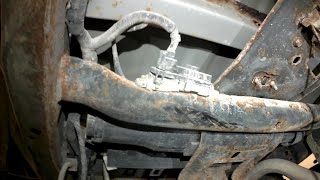
- Failed Fuel Pump Driver Module (FPDM) (Very Common) — This is the number one cause on millions of Ford, Lincoln, and Mercury vehicles. The module mounts directly to a steel frame crossmember, where galvanic corrosion eats through the aluminum housing, allowing water to destroy the internal circuit board.
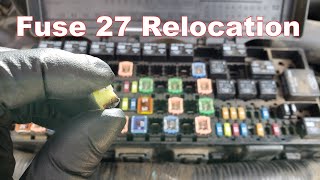
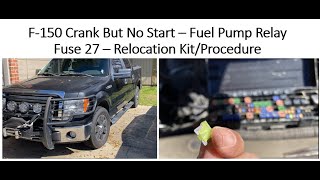
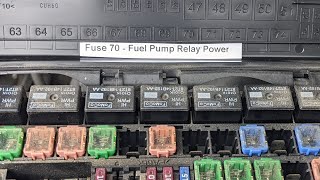
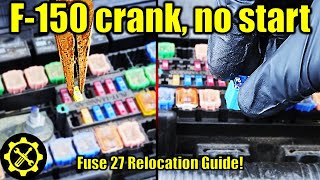
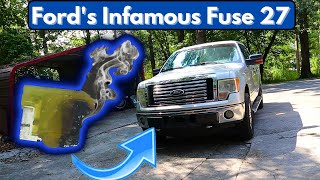
- Melted Fuel Pump Fuse (Ford 2009-2014) (Common) — On 2009-2014 Ford F-150s, the original 20A fuse in position 27 of the under-hood fuse box overheats and melts. This causes intermittent stalling or a no-start condition that perfectly mimics a failed FPDM. Ford issued TSB 15-0137 to address this with a fuse relocation kit. 🎬 See this full guide on installing the Ford fuse relocation kit.
- Faulty High-Pressure Fuel Pump (HPFP) (Common) — On gasoline direct injection (GDI) engines, common in Toyota and Lexus models, the mechanically driven high-pressure pump is a frequent failure point that triggers P1235.
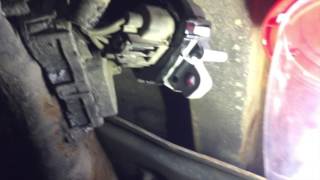
- Wiring or Connector Issues (Common) — Damage to the wiring harness is a frequent culprit. This includes frayed wires, corroded pins, or a loose connection at the FPDM, HPFP, or Active Air Flap motor. On Lexus models, the connector on the HPFP frequently vibrates loose.
- Failed Injector Driver (EDU) (Toyota/Lexus) (Less Common) — On Toyota and Lexus direct-injection models, the Injector Driver (EDU) is a separate computer controlling the high-pressure fuel pump. This module fails and causes a P1235 code even if the pump and wiring are in perfect condition.
- Failed Active Air Flap Actuator/Assembly (Hyundai/Kia) (Less Common) — For affected Hyundai and Kia hybrids, the motor controlling the grille shutters fails, or the flaps get knocked off track by a minor front-end impact or road debris.
- Failed Fuel Pump Relay (Less Common) — The relay supplying power to the fuel pump control circuit fails over time. On high-performance cars like the Ford GT, the secondary relay's contacts become pitted, causing erratic voltage.
- Faulty Supercharger Magnet Clutch (Mercedes-Benz) (Less Common) — On 'Kompressor' models, the electromagnetic clutch engaging the supercharger fails, which misleadingly sets a P1235 code on standard diagnostic systems.
- Faulty Powertrain Control Module (PCM) (Rare) — The internal driver circuit within the main engine computer that sends the command signal to the fuel pump module fails. Consider this only after exhaustively ruling out all other possibilities.
Symptoms
- Engine stalls or will not start — The engine cranks but does not start, or starts and immediately dies. The stalling is intermittent at first and happens without warning while driving at highway speeds.
- Reduced engine power or 'Limp Mode' — The vehicle severely limits acceleration as the computer tries to prevent engine damage. This is the primary symptom in Toyota and Lexus vehicles when P1235 triggers.
- Hesitation or sputtering under acceleration — When pressing the gas pedal, the car stumbles, sputters, or surges because the engine is starved for fuel.
- Whining or buzzing from the fuel tank area — You hear an unusually loud humming or whining noise from the rear of the vehicle. A failing Ford FPDM causes the fuel pump to run at 100% continuously, even with the key on but the engine off.
- Check Engine Light is on — The Malfunction Indicator Lamp (MIL) illuminates on the dashboard as soon as the PCM detects and stores the P1235 fault.
- Sudden decrease in fuel economy (also visible on scanner) — An intermittent fault causes the fuel system to operate inefficiently, leading to a noticeable drop in your average miles per gallon (MPG).
Diagnostic Flowchart
Tap your situation to follow the diagnostic path that matches what you're seeing on this code.
Common Fixes & Costs
- Replace Fuel Pump Driver Module (FPDM) — Parts: $50-$120, Labor: $100-$200, ~1 hr book time (DIY)
- Repair Wiring Harness or Connector — Parts: $10-$50, Labor: $125-$400, ~2.5 hr book time (Intermediate)
- Replace High-Pressure Fuel Pump (HPFP) — Parts: $400-$1,200, Labor: $250-$500, ~3 hr book time (Professional)
- Replace Active Air Flap Assembly (Hyundai/Kia) — Parts: $200-$500, Labor: $150-$300, ~2 hr book time (Intermediate)
- Replace In-Tank Fuel Pump Assembly — Parts: $250-$600, Labor: $300-$600, ~3 hr book time (Intermediate)
- Reprogram Engine Control Module (ECM/PCM) — Parts: $0, Labor: $100-$200, ~1 hr book time (Professional)
Used vs. New Parts: Buying Guide
When a used part is worth it: For an electronic part like a Ford FPDM, a used part from a low-mileage vehicle in a dry climate is a cost-effective option. For a high-wear mechanical part like a Toyota HPFP, the risk is too high and a new or remanufactured part is mandatory.
Donor-vehicle mileage cap: roughly under 80000 miles for the part to have meaningful remaining life.
Donor quality checklist:
- Verify the donor vehicle was not scrapped for a related engine or fuel system failure.
- For FPDMs, avoid parts from 'Rust Belt' states due to the high risk of corrosion.
- Match the OEM part number exactly, as superseded numbers are often incompatible.
Decision logic:
- If The part is electronic (FPDM) and the vehicle is over 150K miles → A used part is a reasonable, budget-conscious choice.
- If The part is high-pressure and mechanical (HPFP) → Buy new or a professionally remanufactured unit to avoid premature failure and repeat labor costs.
- If The cost of a new aftermarket part is less than $150 → Buy new for the longer warranty and peace of mind.
Warranty tradeoff: Used parts from salvage yards typically offer a 30-90 day functional warranty on the part only. New aftermarket parts carry a 1-year to limited lifetime warranty. OEM parts have a 1-year warranty.
Worst-case if a used part fails: $400-800 if a used part fails after installation, representing the cost of repeat labor and sourcing another part.
What Happens If You Wait — Timeline
- 0-1 month: Intermittent symptoms. Engine hesitates, stalls once a week, or has trouble starting. Check Engine Light turns on and off. Vehicle is unreliable. (MPG impact: 0-5%% · Added cost: $0-50 in wasted fuel)
- 1-3 months: Symptoms become consistent. Stalling is frequent, especially when the engine is warm or under load. 'Limp mode' activates. Vehicle is unsafe to drive. (MPG impact: 5-15%% · Added cost: $200+ for a tow when it finally leaves you stranded.)
- 3-6 months: Sustained lean fuel conditions from poor delivery cause a rapid increase in exhaust gas temperatures. This overheats and degrades the precious metals inside the catalytic converter. (MPG impact: 10-20%% · Added cost: $800-$2,500 for a now-necessary catalytic converter replacement on top of the original fuel system repair.)
- 6+ months: Complete failure of the control module or fuel pump, resulting in a permanent no-start condition. The catalytic converter is completely melted or clogged, causing extreme backpressure. (MPG impact: N/A (vehicle won't run)% · Added cost: $1,500-$4,000+ for towing, diagnostics, the original P1235 repair, and replacement of a destroyed catalytic converter.)
Cost of Not Fixing It
- 0-1 month: Intermittent stalling, reduced engine power, and a drop in fuel economy. The vehicle is unreliable and unsafe. (Added cost: Negligible, other than increased fuel consumption.)
- 1-6 months: Running a lean fuel mixture due to poor fuel delivery causes the catalytic converter to overheat and fail. (Added cost: $1,200-$2,800)
- 6+ months: Complete and permanent failure of the fuel pump or control module, resulting in a no-start condition that leaves you stranded. This causes secondary damage to fuel injectors. (Added cost: $200+ for towing and diagnostics, plus the original repair cost.)
Diagnosis Steps
- Identify Your Vehicle's Specific P1235 Definition
Before any diagnosis, you must know what P1235 means for your car. Search online for your exact make, model, and year with 'P1235 code definition' to confirm if you are diagnosing a Ford FPDM, a Toyota HPFP, a Hyundai Air Flap, or another system.
Tools: Internet access (Beginner) - Check For Technical Service Bulletins (TSBs)
Check for TSBs related to P1235 for your vehicle. For example, 2013 Scion FR-S models have TSB S-SB-0036-12, which fixes the code with a simple ECU software update, saving you from an expensive parts replacement.
Tools: Internet access (Beginner) - Inspect Fuses and Relays
Using the owner's manual, locate and inspect all related fuses. For 2009-2014 Ford F-150s, pull fuse #27 in the under-hood fuse box and check for melting (TSB 15-0137). For other vehicles, check fuses for the fuel pump, FPDM, and ECU.
Tools: Owner's manual, fuse puller (Beginner) - Visual Inspection of the Component
On Ford vehicles, locate the FPDM (typically above the spare tire) and inspect it for a cracked, swollen, or heavily corroded aluminum housing. On Hyundai/Kia models, inspect the Active Air Flap assembly in the front grille for road debris, ice, or physical damage.
Tools: Flashlight, wrench for spare tire (if applicable) (Intermediate) - Listen for the Fuel Pump
Have a helper turn the key to the 'On' position (engine off). Listen near the fuel tank for a 1-2 second hum. No sound means the pump isn't getting power. If the pump runs continuously without the engine starting, it is a classic sign of a failed Ford FPDM.
Tools: A helper (Intermediate) - Check for Power and Ground at the Component
Using a multimeter and a wiring diagram, confirm the component (FPDM, HPFP, Air Flap Actuator) receives proper voltage (12V with key on) and has a solid ground connection (less than 1 ohm of resistance to chassis ground). A bad ground is a frequent cause of this code.
Tools: Multimeter, vehicle-specific wiring diagram (Intermediate) - [PRO TIP] Test Ford FPDM Feedback Signal (FPM)
On Ford vehicles, back-probe the Fuel Pump Monitor (FPM) wire at the FPDM connector with a multimeter set to Duty Cycle (%). With the key on, a healthy FPDM sends a 50% duty cycle signal. A 25% duty cycle indicates a wiring or PCM issue. A 75% duty cycle indicates a fault in the fuel pump circuit itself.
Tools: Multimeter with Duty Cycle (%) function, back-probe pins (Advanced) - [PRO TIP] Analyze Scan Tool Fuel Data
For Ford, monitor PIDs for Fuel Pump Command (`FP_DUTY`) and Fuel Pump Monitor (`FPM_DUTY`). `FP_DUTY` should be between 5-51%. For Toyota/Lexus, monitor the `Fuel Pressure (High)` PID. At idle, it should be stable between 500-700 PSI. Under acceleration, it should rise quickly to 1,800+ PSI. Low or erratic pressure confirms a high-pressure system fault.
Tools: OBD-II Scan Tool with Live Data capability (Advanced) - [PRO TIP] Check Toyota/Lexus HPFP Resistance
Disconnect the high-pressure fuel pump electrical connector. Using a multimeter, measure the resistance between the two terminals of the pump. Compare this reading to the manufacturer's specification. An open circuit or shorted reading confirms a failed pump.
Tools: Multimeter, vehicle-specific service manual (Advanced) - [PRO TIP] Test Toyota/Lexus HPFP Waveform (Oscilloscope)
For Toyota/Lexus GDI engines, connect an oscilloscope to the FPD (Fuel Pump Drive) and FPF1 (Fuel Pump Feedback) terminals at the ECM. While cranking, you must see a specific square wave signal on the FPD line. Absence or distortion points directly to a fault in the ECM, the Injector Driver (EDU), or the wiring.
Tools: Oscilloscope, vehicle-specific wiring diagram, back-probe pins (Advanced)
When This Code Triggers (Freeze-Frame Conditions)
- Engine Coolant Temp: 180-200°F (The code is often set when the engine is fully warmed up.)
- RPM: 1500-2500 (Occurs during steady-state cruise or light acceleration, not typically at idle or full throttle.)
- Engine Load: 30-60% (The fault appears under moderate engine load as the fuel system is actively managed.)
- Vehicle Speed: 40-60 mph (Highway driving conditions are a common scenario for this code to trigger.)
Related Codes
- P1233 — 'Fuel Pump Driver Module Offline.' This Ford-specific code means the PCM lost all communication with the FPDM. P1235 means the PCM communicates with the FPDM, but performance is out of range. P1233 points directly to a dead FPDM or a complete loss of power/ground.
- P1237 — 'Fuel Pump Secondary Circuit Fault.' This Ford-specific code triggers when the FPDM's internal diagnostics detect a problem with the circuit going to the fuel pump. If you have P1235 and P1237, the problem is on the pump-side of the FPDM.
- P0087 — 'Fuel Rail/System Pressure - Too Low.' This is a symptom code. P1235 indicates an electrical control fault (the cause), while P0087 indicates the resulting mechanical condition (the effect). Fix P1235 first to clear P0087.
- P0300-P0308 — 'Cylinder Misfire Detected.' A failing fuel pump or control circuit causes a lean condition, leading to engine misfires. You must resolve the root P1235 fault to fix the misfires.
Climate & Environmental Factors
- Road Salt & Humidity (Rust Belt): This is the primary killer of the Ford Fuel Pump Driver Module (FPDM). The aluminum module housing mounts directly to the steel frame, trapping salt and moisture. This causes severe galvanic corrosion that cracks the housing and destroys the internal electronics.
- Cold Weather / Ice: On Hyundai and Kia vehicles, ice and snow build up on the Active Air Flap assembly in the grille. When the system attempts to move the frozen flaps, it burns out the actuator motor, triggering a P1235 code.
How to Talk to a Mechanic About This Code
Say this: "I have a [Your Vehicle Year, Make, Model] with a P1235 code causing it to stall. Based on my research for this specific car, I suspect the issue is the [mention likely part, e.g., 'Fuel Pump Driver Module for a Ford', 'High-Pressure Fuel Pump circuit for a Lexus', 'Active Air Flap for a Hyundai']. I'd like to schedule a diagnostic to confirm this specific part or circuit is the cause before replacing anything."
This signals you are an informed customer. It directs the technician to the most probable cause, saving diagnostic time and preventing them from suggesting unrelated or unnecessary repairs. It frames the conversation around confirming a specific fault rather than open-ended exploration.
Avoid saying:
- 'My check engine light is on, can you just fix it?' (This is too vague and invites a costly, wide-ranging diagnostic.)
- 'I think it's the fuel pump.' (This causes them to replace the expensive in-tank pump on a Ford instead of the cheap FPDM.)
- 'Just do whatever you think is best.' (This gives up your control over the repair process and budget.)
Questions to ask before authorizing the repair:
- Can you confirm you tested the specific component we discussed (e.g., FPDM, HPFP circuit, Air Flap motor)?
- What were the results of that test (e.g., 'Did the FPDM show a 75% duty cycle?', 'Was there proper voltage at the connector?')
- Is the quoted price for an OEM or aftermarket part?
- What is the warranty on both the part and your labor for this specific repair?
Where to Take It: Dealer vs Independent vs Chain
- Dealer:
Best for: Vehicles under warranty (powertrain or emissions)., Complex manufacturer-specific issues (e.g., Toyota/Lexus HPFP circuit diagnosis, Scion ECU reflash)., When a Technical Service Bulletin (TSB) exists for the problem.
Downsides: Typically the highest labor rates., Prefers to replace an entire assembly rather than a smaller failed component. (Typical cost: +50% vs. baseline) - Independent Shop:
Best overall fit for most P1235 scenarios, especially on domestic vehicles like Ford. For complex import diagnostics (Toyota HPFP, Mercedes), ensure the independent shop has specific experience and equipment for that brand.
Best for: Out-of-warranty vehicles., Common, well-documented P1235 causes (e.g., Ford FPDM replacement)., Vehicle owners seeking a better value and a direct relationship with the technician.
Downsides: Quality and expertise vary greatly; look for shops specializing in your vehicle's make., Lacks expensive, dealer-specific diagnostic tools for very complex issues. (Typical cost: +0% vs. baseline) - Chain Shop:
AVOID for P1235 diagnosis. The risk of misdiagnosis and being sold unnecessary, expensive parts is high due to the code's complexity and vehicle-specific nature.
Best for: Simple, unrelated maintenance like oil changes or tires.
Downsides: Technicians lack the specialized knowledge for manufacturer-specific codes like P1235., Business model pressures technicians to upsell, leading to misdiagnosis (e.g., selling a fuel pump when the FPDM is the issue). (Typical cost: -10% vs. baseline)
When to Walk Away From the Repair
If the total estimated repair cost exceeds 40-50% of your car's private-party value (check Kelley Blue Book or Edmunds), you should seriously consider selling or trading in the vehicle instead of repairing it.
- Car worth $5000, fix is $800: Fix it. The repair cost is well below the 40% threshold and is a good investment to keep the car running.
- Car worth $4000, fix is $1800: Borderline. The cost is 45% of the car's value. Get a second opinion and consider the car's overall condition before proceeding.
- Car worth $3000, fix is $2000: Walk away. The repair cost is 67% of the car's value and is not a sound financial decision.
What Scan Tool You Need for This Code
Minimum: A scanner that reads manufacturer-specific codes and displays live data PIDs (Parameter IDs).
A basic $20 code reader only shows the P1235 code but cannot display the essential live data needed for diagnosis, such as 'High Fuel Pressure' on a Toyota or 'FPDM Duty Cycle' on a Ford. Without this data, you are just guessing at the cause.
Budget: BlueDriver Pro Scan Tool (~$100) — Connects to your smartphone via Bluetooth. It reads manufacturer-specific codes (like P1235's true meaning for your car), clears them, and graphs live data, which is crucial for watching fuel pressure or FPDM performance.
Mid-range: Foxwell NT510 Elite / NT530 (~$180) — This is a powerful handheld unit offering OE-level diagnostics for a specific car brand. It provides deep access to all modules and supports bidirectional controls (active tests), allowing you to command a component like the fuel pump to turn on.
Professional: Autel MaxiCOM MK808BT / XTOOL D7 (~$450-600) — These are professional-grade, tablet-based scanners. They offer full bidirectional control, extensive live data graphing, and special service functions. An Autel or XTOOL performs active tests on the FPDM, HPFP circuit, or Active Air Flap motor, making diagnosis faster and more accurate.
How to Clear the Code After You Fix It
- Use an OBD-II scan tool to clear the diagnostic trouble code
- Perform a complete drive cycle to allow readiness monitors to reset
- Reconnect the battery (less preferred method, as it clears other vehicle memory)
Drive cycle (~30 minutes): After an 8-hour 'cold soak', start the engine and idle for 2-3 minutes. Drive for 15-20 minutes with a mix of stop-and-go city conditions and steady highway speed (around 55 mph for at least 5 minutes). Allow the vehicle to cool down completely.
Readiness monitors affected: Catalyst monitor, Evaporative System monitor, O2 sensor monitor
Before emissions retest: drive at least 100 miles to fully set monitors.
Watch out for:
- Clearing the code with a scanner resets all OBD-II readiness monitors to 'Not Ready', causing an immediate emissions test failure.
- The code returns quickly if the underlying mechanical or electrical fault is not properly repaired.
Will This Fail Emissions / State Inspection?
Yes — this code typically fails an OBD-II emissions inspection.
- California: An illuminated Check Engine Light results in an automatic smog check failure. After repairs, you must complete a drive cycle to set all readiness monitors to 'Ready' before re-testing.
- New York: The NYS vehicle safety/emissions inspection includes an OBD-II scan. An active P1235 code causes the vehicle to fail the inspection.
- Texas: In the 17 counties requiring emissions testing (including Harris, Dallas, and Travis), an illuminated Check Engine Light is an automatic failure.
Most Commonly Affected Vehicles
- Ford F-150 (2004-2014) — Extremely common failure of the FPDM due to corrosion. For 2009-2014 models, always check fuse #27 for melting (per TSB 15-0137) before replacing the FPDM.
- Ford Escape (2005-2008) — Suffers from FPDM corrosion failure. The module is located under the vehicle, near the driver's side rear tire, making it a relatively easy DIY replacement.
- Lexus IS350 (2006-2013) — Prone to issues with the high-pressure fuel pump circuit. Diagnosis must include checking the HPFP connector for looseness and testing the Injector Driver (EDU) before condemning the expensive pump.
- Scion FR-S (2013-2014) — A well-documented issue covered by TSB S-SB-0036-12 where overly sensitive ECU logic triggers P1235. The official fix is a simple software reflash performed by a dealer.
- Subaru BRZ (2013-2014) — Shares the same direct injection engine and fuel system as the Scion FR-S. It experiences the same P1235 faults related to the HPFP circuit, wiring, or the Injector Driver (EDU).
- Hyundai Sonata Hybrid (2011-2015) — P1235 indicates a failure in the 'Active Air Flap System'. This is caused by debris or a minor front-end impact knocking the flaps out of alignment.
- Kia Optima Hybrid (2011-2016) — Shares the same platform and Active Air Flap system as the Sonata Hybrid. Owners frequently report a 'Check Active Air Flap System' message on the dash along with the P1235 code.
- Mercedes-Benz C230 Kompressor (2003-2005) — The code on these supercharged models points to a problem with the electromagnetic clutch on the supercharger, not the fuel pump itself.
Manufacturer-Specific Notes

- Ford: The aluminum FPDM corrodes against the steel frame. Replacement modules from Ford and Dorman include rubber standoffs to create an air gap and prevent this. For 2009-2014 F-150s, a melting fuse #27 is a major quirk that must be checked first (TSB 15-0137).
- Toyota/Lexus: Diagnosis is complex due to the three-part system: ECM, Injector Driver (EDU), and the mechanical high-pressure pump. A common DIY mistake is immediately replacing the expensive HPFP when the issue is a less expensive bad EDU or a loose electrical connector.
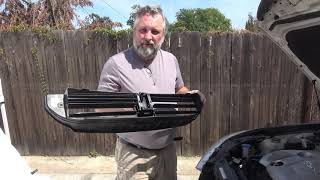
- Hyundai/Kia: The code has nothing to do with fuel. It points to the Active Air Flap system in the grille. This system is fragile and easily damaged by minor front-end impacts from curbs or road debris.
- Scion/Subaru: For the 2013 Scion FR-S, P1235 is commonly triggered by sensitive software logic. Toyota issued TSB S-SB-0036-12 to fix it with a simple ECU reflash, covered under the 8-year/80,000-mile Federal Emissions Warranty.
- Jaguar: The code definition is 'Fuel Pump Control Out Of Range' but the fault lies with the signal from the ECM to the Rear Electronic Module (REM), which controls the fuel pump. Diagnosis involves checking the pulse-width modulated signal between these two units.
Real Owner Stories
2007 Ford F-150 with 5.4L V8, intermittent stall
Truck cranked but would not start, or stalled while driving. The owner heard the fuel pump making unusual clicking sounds or running continuously with the key on.
Outcome: The FPDM's aluminum housing was severely corroded and cracked, allowing water to damage the internal circuit board. Replaced the FPDM with a Dorman aftermarket part ($105) that included new rubber standoffs. The truck started immediately.
Lesson: On a Ford truck with stalling or no-start issues and code P1235, always inspect the FPDM for corrosion before considering the more expensive in-tank fuel pump replacement.
2007 Lexus IS350 at 111K miles, sudden limp mode
While accelerating on the freeway, the car suddenly lost power and went into 'limp-home mode' with the Check Engine and VSC lights on. The code was P1235. The engine ran very rough and would not restart.
Outcome: In many Lexus cases, the problem is not the HPFP itself but a poor connection at the pump or a failure of the separate Injector Driver unit. One owner fixed both P1235 and a misfire code by replacing only the fuel rail.
Lesson: For P1235 on a Toyota/Lexus, do not immediately assume the worst (a $1,200 HPFP). Thoroughly check all related wiring and connectors first. A loose connection or a fault in the injector driver produces the exact same code.
2013 Scion FR-S, intermittent P1235 at idle
The Check Engine Light came on intermittently, but only when the car was idling. The code was P1235. The car drove normally otherwise.
Outcome: The TSB states the code is caused by overly sensitive software logic in the Engine Control Module (ECM). The official fix is a simple software reflash performed by a dealer, covered under the 8-year/80,000-mile Federal Emissions Warranty.
Lesson: Always check for TSBs before starting any repair. For a 2013 Scion FR-S or Subaru BRZ, a P1235 code is fixed with a free software update, saving hundreds on unnecessary parts.
2012 Hyundai Sonata Hybrid, 'Check Active Air Flap System' message
A 'Check Active Air Flap System' message appeared on the dash, accompanied by a P1235 Check Engine Light. The car exhibited jerky motion at slow speeds.
Outcome: The fix is to repair or replace the active air flap assembly. In some cases, cleaning debris from the mechanism restores function. If the actuator motor is burned out, the assembly must be replaced, requiring front bumper removal.
Lesson: On a Hyundai or Kia hybrid, P1235 has nothing to do with the fuel system. Before authorizing an expensive repair, inspect the grille flaps for visible damage or obstruction.
How to Prevent This Code From Triggering
- Install Ford FPDM with updated mounting hardware (When replacing a failed module) — Newer OEM and quality aftermarket (like Dorman) FPDMs come with rubber standoffs. These create an air gap between the aluminum module and the steel frame, preventing the galvanic corrosion that destroys the original part.
- Periodically clean the front grille area (Seasonally, especially after winter) — For Hyundai/Kia models, removing leaves, snow, ice, and road debris from the Active Air Flap mechanism prevents the actuator motor from becoming obstructed and burning out.
- Use high-quality, Top Tier gasoline (Every fill-up) — For direct injection engines (Toyota/Lexus), fuels with robust detergent packages keep both the low-pressure and high-pressure fuel systems clean and operating efficiently.
- Change the in-line fuel filter (if equipped) (Per manufacturer's schedule (e.g., every 30,000 miles)) — A clogged fuel filter forces the entire fuel system to work harder. This increases electrical load and heat, accelerating wear and leading to premature failure.
Frequently Asked Questions
What does 'fuel pump control out of range' actually mean?
It means the engine's computer (PCM) sent a specific command to the fuel pump control module, but the module reported back that it couldn't achieve that speed or pressure. On a Ford, this corresponds to the FPDM receiving a command duty cycle outside the normal 5-51% range. This mismatch triggers the P1235 code.
Can I just bypass the Fuel Pump Driver Module on my Ford?
No, bypassing the FPDM forces the fuel pump to run at 100% capacity continuously. This causes excessive fuel pressure, drastically shortens the pump's life, and creates a safety hazard. Given the high failure rate and low $60 cost of a new FPDM, replacing the module is the only correct repair.
What is the most common misdiagnosis for P1235?
On Ford vehicles, the most common mistake is replacing the expensive in-tank fuel pump when the actual problem is the cheap, easily accessible Fuel Pump Driver Module (FPDM). On Toyota and Lexus vehicles, mechanics often replace the $1,200 high-pressure fuel pump when the fault is actually a loose wire or a failed Injector Driver (EDU).
Why did my Lexus IS350 go into limp mode with code P1235?
Your Lexus entered limp mode because the computer detected a critical fault in the high-pressure fuel pump circuit. To protect the engine from catastrophic damage caused by incorrect fuel pressure, the computer severely restricts engine power and RPMs until you repair the fault.
My car has P1235 but only stalls sometimes. What does that mean?
This indicates an intermittent electrical failure, such as a failing FPDM that overheats or a corroded connector that loses contact over bumps. The problem will inevitably become more frequent. It will eventually leave you stranded, so diagnose it immediately.
Is a P1235 repair covered under warranty?
Repairs under a TSB, like the ECU reflash for the 2013 Scion FR-S, fall under the Federal Emission Warranty (8 years/80,000 miles). For other vehicles, the repair requires an active bumper-to-bumper or powertrain warranty. Hyundai/Kia air flap repairs typically fall under the 5-year/60,000-mile basic warranty.
Can a bad ground wire cause a P1235 code?
Yes. A corroded or loose ground connection for the FPDM, fuel pump, or ECM causes erratic voltage and communication errors within the fuel control circuit. Checking grounds is a mandatory first step in diagnosing any P1235 electrical fault.
Key Takeaways
- Stop driving immediately; P1235 causes sudden engine stalling at highway speeds, creating a severe safety risk and potential $1,000+ catalytic converter damage.
- Identify your manufacturer's specific P1235 definition first, as it means a failed Fuel Pump Driver Module on Fords, a High-Pressure Fuel Pump issue on Toyotas, or a broken grille flap on Hyundais.
- Inspect fuse #27 and the Fuel Pump Driver Module (FPDM) above the spare tire on 2004-2014 Ford F-150s; replacing a corroded $60 FPDM fixes the issue 80% of the time.
- Test the Injector Driver (EDU) and wiring harness on Toyota and Lexus models before spending $1,200+ on a new High-Pressure Fuel Pump.
- Check the front grille for debris or ice on 2011-2016 Hyundai and Kia hybrids, as P1235 indicates a jammed Active Air Flap rather than a fuel system failure.
Helpful Videos

The information in this article is provided for general reference and educational purposes only. Vehicle specifications, procedures, and part compatibility can vary by production date, trim level, and region. Always consult your vehicle's factory service manual and verify part numbers before purchasing or performing repairs. Safety-critical components such as airbags, seat belts, and braking systems should be installed by a qualified professional.
- 🎬 Helpful Videos
- What Does P1235 Mean?
- Can I Drive With P1235?
- Common Causes
- Symptoms
- Diagnostic Flowchart
- Common Fixes & Costs
- Used vs. New Parts: Buying Guide
- What Happens If You Wait — Timeline
- Cost of Not Fixing It
- Diagnosis Steps
- When This Code Triggers (Freeze-Frame Conditions)
- Related Codes
- Climate & Environmental Factors
- How to Talk to a Mechanic About This Code
- Where to Take It: Dealer vs Independent vs Chain
- When to Walk Away From the Repair
- What Scan Tool You Need for This Code
- How to Clear the Code After You Fix It
- Will This Fail Emissions / State Inspection?
- Most Commonly Affected Vehicles
- Manufacturer-Specific Notes
- Real Owner Stories
- 2007 Ford F-150 with 5.4L V8, intermittent stall
- 2007 Lexus IS350 at 111K miles, sudden limp mode
- 2013 Scion FR-S, intermittent P1235 at idle
- 2012 Hyundai Sonata Hybrid, 'Check Active Air Flap System' message
- How to Prevent This Code From Triggering
- Frequently Asked Questions
- What does 'fuel pump control out of range' actually mean?
- Can I just bypass the Fuel Pump Driver Module on my Ford?
- What is the most common misdiagnosis for P1235?
- Why did my Lexus IS350 go into limp mode with code P1235?
- My car has P1235 but only stalls sometimes. What does that mean?
- Is a P1235 repair covered under warranty?
- Can a bad ground wire cause a P1235 code?
- Key Takeaways
- 🎟️ Get 5% Off