

OBD-II Code P1232: Low-Speed Fuel Pump Primary Circuit Failure
An ASE-Certified Master Technician's Expanded Guide to P1232
- Code P1232 indicates a failure in the low-speed fuel pump primary circuit, cutting off proper voltage to the pump.
- On 2004-2008 Ford trucks and SUVs, a corroded Fuel Pump Driver Module (FPDM) causes over 80% of P1232 codes.
- Expect sudden engine stalling at speeds between 35-55 mph, creating an immediate safety hazard.
- Verify your manufacturer's specific code definition; on VW/Audi vehicles, P1232 points to a Cylinder 8 fuel injector short, not the fuel pump.
- Do not drive with an active P1232 code, as the resulting lean air/fuel mixture destroys a $1,200+ catalytic converter within months.
What Does P1232 Mean?

The Powertrain Control Module (PCM) detected a problem with the electrical circuit controlling the fuel pump at low speed. The fuel pump is not getting the correct voltage to deliver fuel when the engine is under light load. The computer commanded the fuel pump to run at a lower speed but did not see the expected electrical current or voltage return.
Technical definition: The official SAE/OBD-II definition is "Low Speed Fuel Pump Primary Circuit Failure." The Engine Control Module (ECM) commanded the low-speed fuel pump circuit on and detected no current flow, or commanded the circuit off and detected voltage. This fault isolates the issue to the electrical pathway: the relay, Fuel Pump Driver Module (FPDM), wiring, or the fuel pump motor.
Can I Drive With P1232?
Yes, But With Caution. You can drive, but it carries significant risk. The engine stalls suddenly and without warning, including in traffic or at high speeds, increasing crash risk. Continuing to drive damages other components; an inconsistent fuel supply creates a lean running condition that destroys the catalytic converter over time, adding $800-$2500 to the final repair bill. Diagnose the issue promptly to avoid being stranded.
Common Causes

- Failed Fuel Pump Driver Module (FPDM) (Very Common) — This small electronic module controls voltage to the fuel pump. Mounted on the vehicle's frame near the fuel tank, it is highly susceptible to galvanic corrosion and damage from road debris, causing it to fail and disrupt power.
- Corroded or Damaged Wiring/Connectors (Common) — Wiring and connectors leading to the fuel pump or FPDM corrode, loosen, or suffer water intrusion. This is especially common at the main FPDM connector, leading to a poor electrical connection and intermittent short circuits.
- Poor Ground Connection (Common) — The fuel pump and control module rely on a solid ground connection to the chassis. Corrosion at the ground point creates high resistance, leading to intermittent operation or complete pump failure.
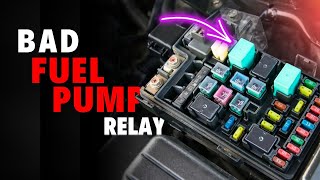
- Faulty Fuel Pump Relay (Common) — The fuel pump relay is an electrical switch that powers the fuel pump. It wears out over time or fails due to cracked solder joints, preventing the fuel pump from receiving power. 🎬 See how to troubleshoot a faulty fuel pump relay.
- Failed Fuel Pump (Less Common) — The electric motor inside the fuel pump fails. An internal short or open circuit in the pump's low-speed winding prevents it from running correctly. A seized pump causes an over-current condition that blows a fuse.
- Blown Fuse (Less Common) — A blown fuse for the fuel pump circuit cuts all power. Fuses blow because another component, like a failing fuel pump or a shorted wire, draws too much electrical current. 🎬 Watch: A guide to testing fuel pump fuses and relays.
- Faulty Powertrain Control Module (PCM) (Rare) — The driver circuit inside the PCM that controls the fuel pump relay or FPDM fails. Consider this a last resort after thoroughly testing all wiring, relays, modules, and the pump.
Symptoms

- Engine Stalling — The engine starts and runs, but suddenly shuts off at idle or low speeds. It restarts after cooling down, a classic symptom of a failing relay or module.
- Engine Cranks but Won't Start — The engine turns over but never fires up because it lacks fuel. This is intermittent; the vehicle starts fine sometimes and fails completely others.
- Hesitation and Poor Acceleration — The vehicle hesitates, sputters, or loses power when pressing the gas pedal because the engine lacks a consistent fuel supply.
- Rough Idle — The engine runs unevenly or sputters while idling due to fluctuating fuel pressure.
- Check Engine Light is On (also visible on scanner) — The PCM illuminates the Malfunction Indicator Lamp (MIL) immediately upon detecting the P1232 fault.
Diagnostic Flowchart
Tap your situation to follow the diagnostic path that matches what you're seeing on this code.
Common Fixes & Costs
- Replace Fuel Pump Driver Module (FPDM) — Parts: $70-$150, Labor: $125-$250, ~0.5 hr book time (DIY)
- Replace Fuel Pump Relay — Parts: $10-$30, Labor: $0-$50, ~0.1 hr book time (DIY)
- Repair Damaged Wiring or Connectors — Parts: $10-$50, Labor: $150-$300, ~2 hr book time (Intermediate)
- Replace Fuel Pump Assembly — Parts: $200-$400, Labor: $250-$500, ~3 hr book time (Professional)
- Replace Powertrain Control Module (PCM) — Parts: $850-$1400, Labor: $150-$300, ~1 hr book time (Professional)
Used vs. New Parts: Buying Guide
When a used part is worth it: Buying a used Fuel Pump Driver Module (FPDM) is rarely recommended due to the high failure rate from corrosion. It only makes sense if it's from a very low-mileage, dry-climate donor vehicle and the cost is minimal.
Donor-vehicle mileage cap: roughly under 50000 miles for the part to have meaningful remaining life.
Donor quality checklist:
- Verify the part number exactly, including any updated or superseded numbers from the manufacturer.
- Avoid parts from vehicles in the 'Salt Belt' or coastal regions due to high risk of corrosion.
- Inspect the aluminum housing for any signs of pitting, swelling, or white powder (corrosion).
Decision logic:
- If The part is a Ford FPDM (pre-2009) with an aluminum body → Always buy new. New OEM or quality aftermarket parts have an improved design with spacers to prevent corrosion.
- If The part is an electronic module and the cost savings for used are less than 50% → Buy new for the warranty and reliability. The risk of a used electronic part failing shortly after installation is high.
- If Budget is the absolute primary concern and the vehicle is old → A used part is a gamble, but serves as a temporary solution. Expect a much shorter lifespan.
Warranty tradeoff: Used parts from a salvage yard typically have a 30-90 day warranty, covering only the part itself. New aftermarket parts offer a 1-year to limited lifetime warranty. New OEM parts carry a 1-2 year warranty.
Worst-case if a used part fails: $200-$500 if a used FPDM fails after installation, requiring repeat labor and another part.
What Happens If You Wait — Timeline
- 0-1 month: Code P1232 sets. You notice occasional hesitation or a slightly longer crank time to start. The Check Engine Light illuminates. (MPG impact: 0-5%% · Added cost: $0-$50 in wasted fuel.)
- 1-3 months: Hesitation and stumbling under light acceleration become noticeable. The engine stalls at idle when warm but usually restarts. Fuel economy worsens. (MPG impact: 5-15%% · Added cost: $50-$150 in wasted fuel and high risk of being stranded.)
- 3-6 months: Engine stalling becomes frequent and unpredictable. The inconsistent fuel supply creates a lean air/fuel mixture, significantly raising combustion temperatures. (MPG impact: 15-25%% · Added cost: $200+ in wasted fuel. Damage to the catalytic converter begins.)
- 6+ months: The vehicle is unreliable and barely drivable. Extreme heat from the chronic lean condition destroys the internal structure of the catalytic converter, causing a permanent P0420/P0430 code. (MPG impact: 25%+% · Added cost: $1200-$3000+ to replace the damaged catalytic converter.)
Cost of Not Fixing It
- 0-1 month: Intermittent stalling and no-start conditions become more frequent, posing a significant safety risk. A noticeable drop in fuel economy occurs. (Added cost: Negligible, but includes high risk of being stranded and requiring a tow.)
- 1-6 months: The inconsistent fuel supply creates a lean air/fuel mixture, causing the catalytic converter to overheat and sustain permanent damage. (Added cost: $1200-$2800)
- 6+ months: Continued operation with a failing fuel delivery system strains and damages the fuel injectors or the high-pressure fuel pump on direct injection models. (Added cost: $3000+)
Diagnosis Steps

- Read the Trouble Codes and Freeze Frame Data
Use an OBD-II scanner to confirm P1232 is the active code. Note any other codes (e.g., P1233, P0191) to pinpoint the problem. Check the freeze-frame data to see the engine conditions when the code set.
Tools: OBD-II Scanner (Beginner) - Visually Inspect the Fuel Pump Driver Module (FPDM)
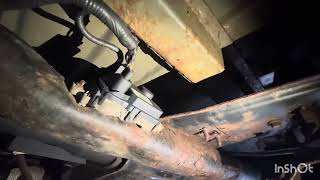
Locate the FPDM on the frame rail near the rear axle or above the spare tire. Inspect the aluminum back for corrosion and cracks where it touches the steel frame. Inspect the electrical connector for corrosion.
Tools: Flashlight, Socket Set (Intermediate) - Inspect Fuses and Relays
Locate the fuse and relay for the fuel pump circuit in the fuse box. Visually inspect the fuse. Test the relay by swapping it with an identical one from a non-essential circuit (like the horn).
Tools: Owner's Manual, Fuse Puller (Beginner) - Test the FPDM Ground Connection
Locate the ground wire for the fuel pump and FPDM (usually a black wire bolted to the chassis). Remove the bolt, clean the contact surfaces to bare metal with a wire brush, and re-secure tightly.
Tools: Wrench/Socket Set, Wire Brush (Intermediate) - Check for Voltage at the FPDM and Fuel Pump
Using a multimeter, check for battery voltage at the power supply wire for the FPDM or fuel pump connector when the key is turned to the 'On' position. You should see 12 volts for a few seconds as the pump primes.
Tools: Multimeter (Advanced) - Perform a Wiggle Test
While monitoring voltage at the pump connector, carefully wiggle the wiring harness and connectors for the FPDM and fuel pump. Voltage fluctuations indicate an intermittent connection or a break in the wiring.
Tools: Hands, Safety Glasses (Intermediate) - FPDM Voltage Drop Test
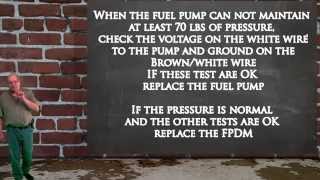
Probe the FPDM connector with the key on. Pin 5 (White wire on Fords) should have battery voltage. Pin 3 (Black/Yellow wire) is the ground; a voltage drop test between this pin and a clean chassis ground must show less than 0.2 volts.
Tools: Multimeter, Back-probe kit (Advanced) - Test the Fuel Pump Motor Resistance
Disconnect the pump and test its resistance with a multimeter. A healthy fuel pump motor reads between 1 and 4 ohms. Infinite resistance (OL) indicates an open circuit, requiring pump replacement.
Tools: Multimeter, Service Manual (Advanced) - Check Fuel Pressure
Connect a fuel pressure gauge to the service port on the fuel rail. With the key on, engine off (KOEO), pressure should build to 35-45 PSI. No pressure confirms a fuel delivery problem.
Tools: Fuel Pressure Gauge (Advanced) - Scope the FPDM Duty Cycle Signal
Use an oscilloscope to monitor the duty cycle signal from the PCM to the FPDM. A missing or erratic square wave signal points to a PCM or wiring fault. A good signal with no pump response confirms a failed FPDM or pump.
Tools: Oscilloscope, Service Manual (Advanced)
When This Code Triggers (Freeze-Frame Conditions)
- Engine Coolant Temp: 180-200°F (Fully warmed up during steady driving.)
- RPM: 1500-2500 (Light cruise or steady throttle application.)
- Engine Load: 20-40% (Indicates the engine is not under heavy acceleration but is maintaining speed.)
- Vehicle Speed: 35-55 mph (Typical of city or highway cruising speeds when the low-speed pump circuit is active.)
Related Codes
- P1233 — Means 'Fuel Pump Driver Module Offline.' P1232 indicates an electrical circuit fault, while P1233 means the PCM cannot communicate with the FPDM at all. If you have P1233, the FPDM or its power/ground is the problem.
- P0191 — Indicates 'Fuel Rail Pressure Sensor Circuit Range/Performance.' A failing FPDM causes erratic fuel pressure. P1232 is the electrical circuit code; P0191 is the sensor reporting the result. Fix P1232 first.
- P0232 — Indicates 'Fuel Pump Secondary Circuit High.' P1232 refers to the primary low-speed control circuit between the PCM and relay/FPDM. P0232 refers to the secondary high-power circuit between the relay/FPDM and the fuel pump.
- P0627 — Means 'Fuel Pump "A" Control Circuit / Open'. This generic code points to an open circuit condition in the fuel pump control system. If both are present, the cause is a break in the wiring or a failed component.
Climate & Environmental Factors
- High Humidity and Road Salt (Salt Belt Regions): The FPDM on many Ford vehicles is made of aluminum and bolted directly to a steel frame. High humidity and road salt create severe galvanic corrosion, destroying the FPDM housing and causing circuit failure.
- Extreme Cold: Cold temperatures exacerbate existing problems. Older plastic wiring insulation and connectors become brittle and crack if disturbed during diagnosis in freezing temperatures.
How to Talk to a Mechanic About This Code
Say this: "I have a P1232 code on my [Make, Model, Year] causing stalling and no-start issues. Based on my research, the Fuel Pump Driver Module and its wiring are common failure points. Please start by inspecting the FPDM for corrosion and testing its power and ground circuits before recommending a full fuel pump replacement."
This signals you understand the likely cause. It directs the technician to the most probable and cost-effective starting point, preventing them from immediately quoting an expensive fuel pump replacement.
Avoid saying:
- 'My car won't start, I think it's the fuel pump.'
- 'The check engine light is on, can you just fix it?'
- 'I read online it's the FPDM, just replace it.'
Questions to ask before authorizing the repair:
- If you recommend a fuel pump, did you first confirm the FPDM is good and receiving the correct command signal from the computer?
- Did you perform a voltage drop test on the power and ground wires at the module and the pump?
- If the FPDM needs replacement, does the new part include spacers to prevent future corrosion?
- What is the warranty on the parts and labor for this repair?
Where to Take It: Dealer vs Independent vs Chain
- Dealer:
Not the first choice unless the vehicle is under warranty. An independent shop is more cost-effective for this well-known issue.
Best for: Vehicles still under powertrain warranty., Complex, manufacturer-specific electrical issues after an independent shop fails to diagnose it.
Downsides: Significantly higher labor rates and parts costs., More likely to replace an entire assembly rather than repair a wire, leading to higher costs. (Typical cost: +50% vs. baseline) - Independent Shop:
Best fit. A reputable independent shop diagnoses this efficiently without defaulting to the most expensive repair.
Best for: Out-of-warranty vehicles, especially Fords, where P1232 is a common and well-understood problem., Owners who want a good balance of expertise and cost.
Downsides: Quality and diagnostic capabilities vary, requiring you to choose a shop with ASE-certified technicians. (Typical cost: +0% vs. baseline) - Chain Shop:
AVOID for this code. P1232 requires specific electrical diagnostic steps. The risk of misdiagnosis is high.
Best for: Simple jobs like tire changes or oil services.
Downsides: Technician skill varies dramatically., Focused on speed and volume, leading to misdiagnosis of electrical issues., High pressure to upsell services and parts. (Typical cost: -10% vs. baseline)
When to Walk Away From the Repair
If the total estimated repair cost for the P1232 fault exceeds 40-50% of your car's private-party value, pause and consider if the investment is worthwhile.
- Car worth $4500, fix is $500: Fix it. A $500 FPDM replacement is well below the threshold and restores a critical function.
- Car worth $4500, fix is $1800: Borderline. If the diagnosis requires a new fuel pump ($1200) and reveals other needed repairs, you approach 40% of the car's value. Get a second opinion.
- Car worth $3000, fix is $2000: Walk away. Spending $2,000 (67% of the car's value) on a complex wiring and fuel pump issue is not a sound investment on an older vehicle.
What Scan Tool You Need for This Code
Minimum: A scanner that reads manufacturer-specific codes and views live data for the fuel system.
A basic $20 code reader only shows the generic P1232 code and cannot perform active tests. To diagnose this correctly, you must command the fuel pump on and off and monitor the circuit's response, requiring bidirectional control.
Budget: BlueDriver Pro (~$100) — Reads and clears the specific P1232 code, provides freeze-frame data, and views live data streams for fuel pump voltage and fuel pressure. Lacks full bidirectional control.
Mid-range: Innova 5610 (~$330) — Offers bidirectional control to command the fuel pump and FPDM on and off directly from the tool. This is the key feature needed to test the circuit and definitively determine if the module, wiring, or pump failed.
Professional: Autel MaxiCOM MK808S / XTOOL D7 (~$450-600) — Provides full, OE-level bidirectional control. You can command the fuel pump, view the duty cycle signal from the PCM, and access advanced manufacturer-specific data PIDs. Essential for diagnosing tricky wiring faults.
Rent vs buy: For a one-time code read, a free scan at an auto parts store is a starting point, but they cannot perform the necessary diagnostics. If you plan to diagnose P1232 yourself, you must buy a bidirectional scanner.
How to Clear the Code After You Fix It
- Reconnect battery if it was disconnected for the repair
- Use an OBD-II scan tool to clear the P1232 code from the PCM's memory
- Perform a complete drive cycle to allow readiness monitors to run.
Drive cycle (~30 minutes): From a cold start, let the engine idle for 2-3 minutes. Drive in mixed city/highway conditions, including steady cruising between 40-60 mph for at least 10 minutes. Allow the vehicle to idle for another 2-3 minutes before shutting it off. Let the vehicle cool down completely.
Readiness monitors affected: Comprehensive Component Monitor, Fuel System Monitor, Evaporative System (EVAP) Monitor
Before emissions retest: drive at least 100 miles to fully set monitors.
Watch out for:
- Disconnecting the battery clears the code but resets all emissions readiness monitors to 'Not Ready', causing an automatic failure at an emissions testing station.
- The code returns immediately if the underlying electrical fault is not properly repaired.
Will This Fail Emissions / State Inspection?
Yes — this code typically fails an OBD-II emissions inspection.
- California: An illuminated Check Engine Light is an automatic failure of the Smog Check. All required readiness monitors must be set to 'Ready.' After a repair, a drive cycle of up to 100-200 miles is needed before testing.
- New York: A vehicle fails the NYS inspection if the 'Check Engine' light is on. For 2001 and newer vehicles, only one readiness monitor is allowed to be 'Not Ready' to pass the OBD-II emissions test.
- Texas: In counties requiring emissions testing, an illuminated Check Engine Light results in an automatic inspection failure. After clearing codes, a drive of 50-100 miles is recommended to reset monitors.
Most Commonly Affected Vehicles
- Ford F-150 (2004-2008) — The FPDM is mounted directly to the steel frame, causing severe galvanic corrosion. The replacement part includes spacers to prevent this.
- Ford Explorer / Expedition (2002-2008) — Shares the same vulnerable FPDM design and corrosion issue as the F-150.
- Lincoln Navigator (2003-2008) — Suffers from the identical FPDM corrosion issue as its Ford counterparts.
- Chevrolet / GMC Silverado, Sierra, Tahoe, Suburban (2000-2009) — Experiences failures in the fuel pump control module (FPCM), wiring, or the pump itself. On some GM models, P1232 means 'Fuel Injector 4 Output Circuit Malfunction'.
- Nissan Cedric, Cefiro, Primera (with Neo Di engine) (1997-2004) — P1232 points to a failure of the high-pressure fuel pump's pressure regulator, not a low-speed primary circuit issue.
- BMW 3-Series (E90 with N54 engine) (2007-2010) — Known for issues with the low-pressure fuel sensor and the fuel pump control module (EKP), causing identical symptoms.
- Subaru Outback (2005-2009) — Experiences fuel pump controller failure, leading to constant fuel pump operation or no operation at all.
- Hyundai / Kia Various (2005-2015) — P1232 is defined as a 'Fuel Pump Speed Primary Circuit Malfunction', pointing towards issues with the pump or its control circuit.
Manufacturer-Specific Notes

- Ford: On mid-2000s Ford trucks and SUVs, P1232 is almost always caused by the Fuel Pump Driver Module (FPDM) corroding against the steel frame. The updated replacement part includes rubber spacers to create an air gap.
- Volkswagen / Audi: P1232 means 'Cylinder 8 Injector Circuit Short To Ground'. Do not diagnose the fuel pump; the problem is with the wiring or the fuel injector for cylinder #8.
- Nissan: On models with 'Neo Di' (Direct Injection) engines, P1232 refers to the Pressure Regulator on the high-pressure fuel pump. Diagnosis involves checking the high-pressure fuel system.
- Mitsubishi: P1232 relates to the 'Fail Safe System' for the throttle actuator control motor. The ECU checks if it can shut down the throttle motor and sets this code if it cannot.
- Honda: Honda does not use P1232, but identical symptoms (no-start when hot, stalling) are famously caused by cracked solder joints on the main fuel pump relay.
Real Owner Stories
2006 Ford F-150 with 110K miles
Truck cranked but would not start after sitting. Sometimes it started but stalled and bucked violently when accelerating.
What they tried:
- Scanned for codes, but none were present initially as the problem was intermittent.
Outcome: The owner inspected the Fuel Pump Driver Module (FPDM) above the spare tire and found it heavily corroded. Replacing the FPDM with a new Dorman part completely solved the issues.
Lesson: On a 2004-2008 Ford truck, intermittent stalling and no-start issues are classic signs of a corroded FPDM. Always inspect this part before considering a fuel pump replacement.
2006 Lincoln Mark LT (F-150 platform)
Owner replaced the FPDM preventively. After installing the new aftermarket FPDM, the truck would not start at all.
What they tried:
- Checked all related fuses and verified the inertia switch was not tripped. Plugged the old FPDM back in, but the truck still wouldn't start.
Outcome: The owner bypassed the FPDM with a jumper wire, which allowed the truck to start, proving the new aftermarket module was dead on arrival. A new OEM module fixed the problem.
Lesson: New parts are sometimes faulty out of the box. Bypassing the FPDM confirms the module is the problem, not the wiring or pump.
2004 Ford F-150 with 5.4L engine
Truck experienced surging at highway speeds and stalled, throwing a P0191 (Fuel Rail Pressure Sensor) code.
What they tried:
- The owner initially suspected a fuel pressure sensor issue due to the P0191 code.
Outcome: The owner inspected the FPDM and found it extremely corroded. Replacing the FPDM resolved both the surging and the P0191 code.
Lesson: A fuel pressure sensor code (P0191) is often a symptom of the fuel delivery problem caused by the failing FPDM, not the root cause.
How to Prevent This Code From Triggering
- Proactively Replace Ford FPDM (Once, especially if living in the Salt Belt.) — On 2004-2008 Fords, the original FPDM is a guaranteed failure point due to galvanic corrosion. Replacing it with an updated part that includes spacers creates an air gap, preventing corrosion.
- Clean Chassis Ground Connections (Every 5 years or during other under-vehicle service.) — The FPDM and fuel pump rely on a clean ground to the chassis. Rust and corrosion create resistance, causing voltage drops. Cleaning main ground points prevents this.
- Apply Dielectric Grease to Connectors (Anytime a relevant connector is disconnected for service.) — Applying a thin layer of dielectric grease to the weather seal of connectors keeps moisture out, preventing pin corrosion which leads to high resistance.
- Keep Fuel Level Above 1/4 Tank (Daily habit.) — Fuel in the tank cools the electric fuel pump motor. Consistently running the tank near empty causes the pump to overheat, straining the motor and damaging the FPDM or relay.
Frequently Asked Questions
What are common misdiagnosis mistakes for P1232?
The biggest mistake is replacing the fuel pump when the Fuel Pump Driver Module (FPDM) is the actual cause. Another is ignoring manufacturer differences; on a VW, this code points to an injector, not the fuel pump. Technicians also overlook simple issues like a bad ground connection before replacing expensive components.
I replaced the FPDM and the fuse is good, but the code came back. What's next?
If a new FPDM doesn't fix the issue, meticulously check the wiring for corrosion at the FPDM and fuel pump connectors. Perform a voltage drop test on both the power and ground wires. If the wiring is intact, the fuel pump itself is the next most likely culprit.
What is a Fuel Pump Driver Module (FPDM)?
The FPDM is a small computer that controls the speed of your fuel pump. Instead of running at full speed constantly, the module adjusts the voltage sent to the pump based on engine demand. This improves efficiency, reduces noise, and extends the fuel pump's life.
Can I just replace the fuse if it's blown?
You can replace a blown fuse, but it is almost always a symptom of a larger problem. If the new fuse blows immediately, a short circuit or failing fuel pump is drawing too much power. You must find and repair the root cause to prevent repeat failures.
How much does it cost to fix P1232?
Repair costs vary widely based on the root cause and vehicle model. Replacing a Ford FPDM typically costs $195 to $400 for parts and labor at an independent shop. A full fuel pump assembly replacement is much more expensive, generally ranging from $450 to $900.
Can I fix P1232 myself?
Yes, replacing a fuse, relay, or an externally mounted Fuel Pump Driver Module are straightforward DIY jobs. However, if the problem requires dropping the fuel tank to replace the pump, stop DIY and tow to a shop. Complex wiring diagnostics also require specialized tools and experience.
What does 'primary circuit' mean in P1232?
The 'primary circuit' refers to the low-current control side of the fuel pump system between the PCM and the relay or FPDM. The 'secondary circuit' is the high-current side running from the relay/FPDM directly to the fuel pump motor. P1232 specifically isolates the fault to the primary control side.
Key Takeaways
- Code P1232 indicates a failure in the low-speed fuel pump primary circuit, cutting off proper voltage to the pump.
- On 2004-2008 Ford trucks and SUVs, a corroded Fuel Pump Driver Module (FPDM) causes over 80% of P1232 codes.
- Expect sudden engine stalling at speeds between 35-55 mph, creating an immediate safety hazard.
- Verify your manufacturer's specific code definition; on VW/Audi vehicles, P1232 points to a Cylinder 8 fuel injector short, not the fuel pump.
- Do not drive with an active P1232 code, as the resulting lean air/fuel mixture destroys a $1,200+ catalytic converter within months.
Helpful Videos

The information in this article is provided for general reference and educational purposes only. Vehicle specifications, procedures, and part compatibility can vary by production date, trim level, and region. Always consult your vehicle's factory service manual and verify part numbers before purchasing or performing repairs. Safety-critical components such as airbags, seat belts, and braking systems should be installed by a qualified professional.
- 🎬 Helpful Videos
- What Does P1232 Mean?
- Can I Drive With P1232?
- Common Causes
- Symptoms
- Diagnostic Flowchart
- Common Fixes & Costs
- Used vs. New Parts: Buying Guide
- What Happens If You Wait — Timeline
- Cost of Not Fixing It
- Diagnosis Steps
- When This Code Triggers (Freeze-Frame Conditions)
- Related Codes
- Climate & Environmental Factors
- How to Talk to a Mechanic About This Code
- Where to Take It: Dealer vs Independent vs Chain
- When to Walk Away From the Repair
- What Scan Tool You Need for This Code
- How to Clear the Code After You Fix It
- Will This Fail Emissions / State Inspection?
- Most Commonly Affected Vehicles
- Manufacturer-Specific Notes
- Real Owner Stories
- 2006 Ford F-150 with 110K miles
- 2006 Lincoln Mark LT (F-150 platform)
- 2004 Ford F-150 with 5.4L engine
- How to Prevent This Code From Triggering
- Frequently Asked Questions
- What are common misdiagnosis mistakes for P1232?
- I replaced the FPDM and the fuse is good, but the code came back. What's next?
- What is a Fuel Pump Driver Module (FPDM)?
- Can I just replace the fuse if it's blown?
- How much does it cost to fix P1232?
- Can I fix P1232 myself?
- What does 'primary circuit' mean in P1232?
- Key Takeaways
- 🎟️ Get 5% Off