

OBD-II Code P1229: In-Depth Guide to Fuel & Engine Control Faults
What P1229 means, manufacturer-specific causes, and advanced diagnostic solutions
- P1229 is a severe manufacturer-specific code that causes sudden engine stalling or limp mode; stop driving immediately to prevent catastrophic engine damage.
- On Toyota and Lexus diesel engines, P1229 indicates fuel rail over-pressure, fixable 90% of the time by replacing the $150 Suction Control Valve (SCV).
- On supercharged Fords, this code flags a dead intercooler pump; driving under boost with this fault pushes intake temperatures past 150°F and destroys pistons.
- For Nissan vehicles, P1229 signals a 5-volt reference circuit short, most frequently caused by a failed $50 A/C refrigerant pressure sensor rather than a bad ECU.
What Does P1229 Mean?

P1229 is a manufacturer-specific code with entirely different definitions based on your vehicle's make. For Toyota and Lexus, it means fuel rail pressure is dangerously high. For supercharged Ford, Lincoln, and Mercury vehicles, it indicates a dead intercooler pump. For Nissan, it flags a short in a 5-volt sensor power supply. In all cases, the Engine Control Unit (ECU) has detected a critical hardware failure requiring immediate repair.
Technical definition: The SAE/ISO definition for P1229 varies strictly by manufacturer. Toyota/Lexus: 'Fuel System Over Pressure', triggered when actual fuel rail pressure exceeds target pressure by more than 5,000 kPa. Ford/Lincoln/Mercury: 'Supercharger Intercooler Pump Not Operating'. Nissan: 'Sensor Power Supply Short'. MINI/Jaguar: 'Throttle Potentiometer Adaption Fault' or 'Electronic Throttle Control Circuit'.
Can I Drive With P1229?
No — Do Not Drive. Do not drive with this code. It signifies a critical failure in a core engine control system. Depending on the manufacturer, this indicates a fuel system over-pressure event (Toyota), a failed intercooler pump (Ford), or a throttle control malfunction (Jaguar/MINI). Any of these cause the engine to stall suddenly, enter a severely limited limp mode, or fail completely, creating a significant safety risk. Continuing to drive a supercharged engine with a failed intercooler pump guarantees catastrophic engine damage from detonation.
Common Causes

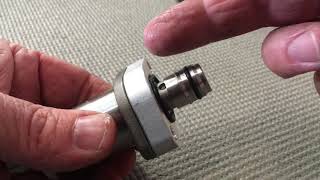
- Defective Suction Control Valve (SCV) (Toyota/Lexus) (Very Common) — The Suction Control Valve (SCV) on the high-pressure pump sticks open, forcing fuel pressure thousands of kPa above the ECU's target. This is the definitive cause for 90% of Toyota P1229 codes. 🎬 Watch: Understanding how the Suction Control Valve fails on Toyotas.
- Failed Intercooler Coolant Pump (Supercharged Fords) (Very Common) — The electric pump circulating coolant to the supercharger intercooler dies. Intake air temperatures exceed 150°F, forcing the ECU to trigger P1229 and cut ignition timing to prevent engine-destroying detonation.
- Sensor Power Supply Short (Nissan) (Very Common) — A short circuit occurs on the 5-volt reference line powering multiple sensors. A shorted A/C refrigerant pressure sensor is the most frequent culprit, pulling down the entire circuit.
- Throttle Body Malfunction (Jaguar/MINI) (Common) — The electronic throttle body fails its internal self-test due to worn internal potentiometers, dirty butterfly valves, or a poor electrical connection at the harness.
- Faulty Fuel Pump Driver Module (Common) — The module controlling voltage to the fuel pump fails, sending maximum power continuously and creating an uncontrollable high-pressure fuel condition.
- Wiring and Electrical Shorts (Common) — Chafed wires, corroded connectors, or blown fuses in the fuel pump, intercooler pump, or 5V sensor circuits physically break the connection to the ECU.
- Failed Fuel Injector Circuit (Chevrolet) (Less Common) — On Duramax diesel models, P1229 specifically isolates a voltage fault in the #3 fuel injector driver circuit within the ECM or its wiring harness.
- Clogged Fuel Return Line (Rare) — A severe physical blockage in the fuel return line prevents excess fuel from returning to the tank, artificially spiking pressure in the fuel rail.
Symptoms

- Engine Stalling or No-Start — The engine suddenly dies while driving or refuses to start. This is the primary safety hazard associated with P1229.
- Severe Loss of Power / Limp Mode — The ECU intentionally restricts engine power to prevent internal damage, making the vehicle extremely slow to accelerate.
- Engine Jerking or Rough Idle — The engine shakes violently or misfires under load due to fuel flooding from an over-pressure condition.
- Strong Fuel Smell — Extreme fuel pressure forces raw gasoline or diesel past injector O-rings, creating a strong fuel odor in the cabin.
Diagnostic Flowchart
Tap your situation to follow the diagnostic path that matches what you're seeing on this code.
Common Fixes & Costs
- Replace Suction Control Valve (SCV) — Parts: $70-$200, Labor: $100-$250, ~1.5 hr book time (Intermediate)
- Replace Supercharger Intercooler Pump — Parts: $120-$300, Labor: $150-$300, ~2.0 hr book time (Intermediate)
- Replace A/C Refrigerant Pressure Sensor (Nissan) — Parts: $40-$100, Labor: $75-$150, ~1.0 hr book time (Intermediate)
- Replace Throttle Body Assembly — Parts: $200-$600, Labor: $100-$200, ~1.2 hr book time (Intermediate)
- Repair Wiring/Connectors — Parts: $10-$50, Labor: $150-$400, ~2.5 hr book time (Professional)
DIY vs Professional
- Replace Suction Control Valve (SCV) — Beginner: No. Recommended for intermediate DIYers.
Tools: Socket set, 5mm hex key, torque wrench, rags. - Replace Supercharger Intercooler Pump — Beginner: Yes, a patient beginner can do this.
Tools: Socket set, hose clamp pliers, coolant catch pan, funnel. - Replace Throttle Body Assembly — Beginner: No. Recommended for intermediate DIYers.
Tools: Socket set, torque wrench, advanced scan tool. - Repair Wiring/Connectors — Beginner: No. Recommended for professionals.
Tools: Multimeter, wire strippers, soldering iron, heat shrink.
Used vs. New Parts: Buying Guide
When a used part is worth it: Never buy a used Toyota Suction Control Valve (SCV) or Ford intercooler pump; these are known wear items that fail predictably. Used throttle bodies for older MINIs are acceptable if pulled from a low-mileage donor.
Donor-vehicle mileage cap: roughly under 60000 miles for the part to have meaningful remaining life.
Donor quality checklist:
- Verify the exact part number matches; superseded parts are common.
- Inspect electrical connector pins for green corrosion.
- Ensure the butterfly valve on a used throttle body snaps shut smoothly without binding.
Decision logic:
- If The part is a Toyota SCV or Ford intercooler pump. → Buy new. The labor to replace these parts makes installing a used, failure-prone component a terrible financial risk.
- If The part is a MINI throttle body and a new OEM unit exceeds $600. → Purchase a used unit from a reputable salvage yard offering a minimum 90-day warranty.
Warranty tradeoff: Used parts carry 30-90 day warranties covering only the part. New OEM or premium aftermarket parts (like Bosch or Denso) offer 1-year to lifetime warranties.
Worst-case if a used part fails: $500 if a used SCV fails, requiring you to pay for a second part and repeat the labor.
What Happens If You Wait — Timeline
- 0-2 weeks: Toyota enters limp mode. Ford loses power under heavy acceleration. Nissan experiences intermittent stalling. (MPG impact: 15%% · Added cost: $0)
- 2 weeks - 2 months: Ford ECU aggressively pulls timing; chronic detonation begins under boost. Toyota high pressure strains fuel injector seals. (MPG impact: 25%% · Added cost: $200)
- 2-6 months: Ford detonation physically damages piston rings. Toyota over-pressure blows out diesel injectors. Nissan 5V short thermally stresses the ECU. (MPG impact: 40%% · Added cost: $1500-$4000)
- 6+ months: Catastrophic failure. Ford requires a complete engine rebuild due to cracked pistons. Nissan requires a new ECU. (MPG impact: Vehicle undrivable% · Added cost: $4000-$10000)
Cost of Not Fixing It
- Immediate: Engine stalls in traffic or enters a severe limp mode, creating an extreme safety hazard. (Added cost: 0)
- 1-3 months: On supercharged Fords, chronic high intake temperatures cause engine detonation (knock), damaging pistons. On Toyotas, constant 40,000+ kPa fuel pressure blows out expensive fuel injector seals. (Added cost: $1500-$4000)
- 6+ months: Catastrophic engine failure. Ford pistons crack under detonation. Nissan 5V shorts burn out the Engine Control Module (ECU) motherboard. (Added cost: $4000-$10000)
Diagnosis Steps

- Identify Your Vehicle's Specific Definition
P1229 means completely different things across brands. Search '[Your Car Make] P1229' to confirm if you are diagnosing a fuel pressure issue (Toyota), an intercooler pump (Ford), a 5V short (Nissan), or a throttle fault (MINI).
Tools: Smartphone or computer (Beginner) - Scan for Codes & Freeze Frame Data
Pull all stored codes. If P0088 accompanies P1229 on a Toyota, you have a confirmed mechanical over-pressure fault. Review freeze frame data to identify the exact RPM and temperature when the code triggered.
Tools: OBD-II Scanner (Beginner) - Live Data Analysis: Fuel Pressure (Toyota/Lexus)
Monitor live data for 'Fuel Press' and 'Target Common Rail Pressure'. At idle, actual pressure must stay within +/- 5,000 kPa of the target. If actual pressure is wildly higher and fluctuates by over 500 PSI, the Suction Control Valve (SCV) is stuck open.
Tools: Advanced Scan Tool (Intermediate) - Live Data Analysis: Intake Air Temp (Ford)
Monitor the 'IAT2' (Intake Air Temperature Sensor 2) PID. During normal cruising, IAT2 should sit 10-20°F above ambient temperature. If IAT2 climbs steadily past 140°F without heavy acceleration, the intercooler pump is dead.
Tools: Advanced Scan Tool (Intermediate) - 5-Volt Reference Circuit Test (Nissan)
Back-probe the throttle position sensor connector with the key on. You need a steady 5V signal. If voltage is low or zero, unplug the A/C pressure sensor. If the 5V reference instantly returns, the A/C sensor is internally shorted and causing the P1229.
Tools: Multimeter, T-pins (Advanced) - Component Functional Test (Ford)
Bypass the intercooler pump relay using a jumper wire between pins 30 and 87. You should hear the pump run and see coolant circulating in the reservoir. If the pump remains silent, replace it.
Tools: Jumper wire (Intermediate) - Inspect Fuses and Relays
Check the fuses for the fuel pump, ECU, and intercooler pump. On supercharged Fords, a blown 20-amp maxi fuse in the under-hood box instantly kills the intercooler pump.
Tools: Fuse puller, multimeter (Beginner) - SCV Resistance Check (Toyota)
Disconnect the SCV on the high-pressure fuel pump. Measure resistance across its two pins. A healthy SCV reads 1.9 to 2.3 ohms at 68°F. An open line (infinity) or short (zero ohms) confirms a dead valve.
Tools: Multimeter (Advanced)
When This Code Triggers (Freeze-Frame Conditions)
- Fuel Rail Pressure (Toyota): >40,000 kPa (Actual fuel pressure exceeds the ECU target pressure by 5,000-10,000 kPa at idle.)
- Intake Air Temp 2 (Ford): >140°F (60°C) (IAT2 sensor shows excessively high post-intercooler temperatures during normal cruising, proving the pump is dead.)
- Engine Coolant Temp: 180-200°F (82-93°C) (The fault triggers after the engine reaches operating temperature and enters closed-loop fuel control.)
Related Codes
- P0088 — Fuel Rail Pressure Too High. Seeing this alongside P1229 on a Toyota guarantees a mechanical over-pressure fault, confirming a bad SCV.
- P0550 — Power Steering Pressure Sensor Circuit. On Nissans, seeing this with P1229 confirms a circuit-wide 5V short, not an individual sensor failure.
- P1125 — Throttle Position Sensor Plausibility. Appears with P1229 on MINIs, pointing directly to a failing electronic throttle body.
Climate & Environmental Factors
- Cold Weather: Diesel fuel gels in extreme cold, increasing viscosity. This strains the Toyota high-pressure pump and SCV, triggering P1229.
- High Heat: Hot climates expose marginal Ford intercooler pumps. The pump fails to cool the intake charge against high ambient temps, triggering the code under boost.
How to Talk to a Mechanic About This Code
Say this: "I have a P1229 code on my [Vehicle Year, Make, Model]. Based on my research, this points to a [fuel pressure issue/failed intercooler pump/5V sensor short]. Can you verify [live fuel pressure vs. target / intercooler pump operation / the 5V reference circuit] before recommending major part replacements?"
This directs the technician to the manufacturer-specific cause, preventing them from starting a broad, expensive diagnostic process or misdiagnosing a $150 SCV as a $1,500 fuel pump failure.
Avoid saying:
- 'My check engine light is on, can you look at it?'
- 'I think I need a new fuel pump.'
Questions to ask before authorizing the repair:
- Can you show me the live data confirming the failure?
- Are you replacing the entire assembly or just the failed sub-component (like the SCV)?
- Does this repair require an electronic relearn procedure, and is it included in the quote?
Where to Take It: Dealer vs Independent vs Chain
- Dealer:
Use only for warranty work or if an independent shop fails to find a complex electrical short.
Best for: Vehicles under powertrain warranty., Complex Nissan 5V short diagnostics requiring proprietary wiring diagrams.
Downsides: Highest labor rates., Will likely refuse to replace just the SCV, forcing a full high-pressure fuel pump replacement. (Typical cost: +50% vs. baseline) - Independent Shop:
The best choice for 90% of P1229 repairs. Ensure they have experience with your specific vehicle make.
Best for: Out-of-warranty vehicles., Replacing known failure points like the Toyota SCV or Ford intercooler pump.
Downsides: May lack the advanced scan tool required for MINI throttle body adaptations. (Typical cost: +0% vs. baseline) - Chain Shop:
Avoid completely. The risk of misdiagnosis and unnecessary part replacement is extremely high.
Best for: Tires and oil changes.
Downsides: Technicians lack the manufacturer-specific knowledge required to diagnose P1229 accurately. (Typical cost: -10% vs. baseline)
When to Walk Away From the Repair
If the repair cost exceeds 50% of the vehicle's current private-party value, sell or trade in the vehicle.
- Car worth $4000, fix is $2200: Walk away. The repair is over 50% of the car's value.
- Car worth $12000, fix is $500: Fix it. The repair cost is minor compared to the vehicle's value.
What Scan Tool You Need for This Code
Minimum: A scan tool capable of reading manufacturer-specific codes and displaying live data PIDs (Fuel Pressure, IAT2).
A $20 code reader only provides the 'P1229' number. It cannot display the live fuel pressure or intake temperature data required to prove the hardware has failed.
Budget: XTOOL Anyscan A30M (~$90) — Reads manufacturer-specific live data (Fuel Rail Pressure, IAT2) and offers bidirectional controls to manually test components.
Mid-range: Innova 5610 (~$350) — Provides live data graphing and performs the critical 'Throttle Adaptation Reset' required after replacing a MINI throttle body.
Professional: Autel MaxiCOM MK808BT (~$500-800) — Offers full OEM-level bidirectional control, allowing you to command the fuel pump, actuate the throttle body, and perform all relearn procedures.
Rent vs buy: Buy. Auto parts store loaner tools cannot read the advanced live data required to diagnose P1229 accurately.
How to Clear the Code After You Fix It
- Verify all electrical connectors are fully seated and locked.
- Use an OBD-II scan tool to clear P1229 and any secondary codes.
- Perform a throttle adaptation reset via scan tool if a MINI/Jaguar throttle body was replaced.
Drive cycle (~30 minutes): Start the engine from a cold soak (parked 8+ hours). Idle for 3 minutes. Drive for 20 minutes in mixed conditions, maintaining a steady 55 mph for at least 5 continuous minutes. Idle for 2 minutes before shutting down.
Readiness monitors affected: Fuel System Monitor, Comprehensive Component Monitor
Before emissions retest: drive at least 50 miles to fully set monitors.
Watch out for:
- Clearing the code without replacing the failed hardware causes the vehicle to instantly re-enter limp mode.
- Failing to bleed air from the Ford intercooler system after pump replacement mimics a dead pump and triggers the code again.
Will This Fail Emissions / State Inspection?
Yes — this code typically fails an OBD-II emissions inspection.
- California: An active P1229 is an automatic failure. CARB regulations require all monitors to be 'Ready' before a retest. Expect to drive 100+ miles over several days to set all monitors.
- New York: Fails NYVIP3 inspection immediately due to the illuminated MIL. Only one readiness monitor is allowed to be 'Not Ready' for 2001+ vehicles.
- Texas: An illuminated check engine light is an automatic failure. Texas allows one monitor to be 'Not Ready' for model year 2001+ vehicles to pass after repair.
Most Commonly Affected Vehicles
- Toyota Hilux, Prado, Land Cruiser (D-4D Engines) (2005-2016) — Notorious for Suction Control Valve (SCV) failures causing massive fuel over-pressure.
- Ford Mustang SVT Cobra, Shelby GT500, F-150 Lightning (1999-2014) — The factory Bosch intercooler pump fails predictably. Upgrading to the Bosch '010' pump is the standard fix.
- Nissan 350Z, Sentra, X-Trail (2003-2009) — P1229 indicates a 5V sensor short. The A/C refrigerant pressure sensor is the most common culprit, often damaged by aftermarket radiators.
- MINI Cooper S (R53) (2002-2006) — Indicates a throttle adaptation fault. Often caused by a failing throttle body, but low battery voltage triggers the exact same code.
Manufacturer-Specific Notes

- Toyota/Lexus: Mechanics frequently misdiagnose P1229 and replace the entire $1,500 high-pressure fuel pump. In reality, replacing just the $150 Suction Control Valve (SCV) bolted to the pump fixes the issue 90% of the time.
- Ford (Supercharged): The code triggers with zero drivability symptoms during normal city driving. The vehicle only loses power and enters limp mode under heavy acceleration (boost) when intake temps spike.
- Nissan: P1229 is a generic 5V power supply fault, but shops often condemn the ECU. Unplugging the A/C pressure sensor is the fastest way to prove the ECU is fine and the sensor is shorted.
Real Owner Stories
2008 Toyota Hilux (D-4D) - Intermittent Power Loss
Owner experienced sudden limp mode when climbing hills. A shop quoted $2,000 for a new high-pressure fuel pump.
What they tried:
- Researched Toyota P1229 and found the SCV is the primary failure point.
- Purchased an OEM Denso SCV for $120.
Outcome: Replaced the SCV in the driveway in 2 hours. The idle smoothed out instantly, and the power loss never returned, saving over $1,800.
Lesson: Never replace a Toyota D-4D high-pressure fuel pump for P1229 without replacing the Suction Control Valve first.
2004 Ford Mustang SVT Cobra - Power Loss Under Boost
Car ran perfectly in the city but fell flat during wide-open throttle. P1229 was stored in the ECU.
What they tried:
- Checked the intercooler reservoir and saw zero coolant circulation.
- Jumped the intercooler pump relay; the pump remained dead.
Outcome: Replaced the dead factory pump with an upgraded Bosch 010 pump. Bled the coolant system. Full power was restored under boost.
Lesson: A dead intercooler pump on a Ford shows no symptoms until you accelerate hard. Verify coolant flow in the reservoir to confirm the diagnosis.
2003 Nissan 350Z - Multiple Sensor Codes & Limp Mode
Car threw P1229 alongside accelerator pedal and EVAP codes, refusing to rev past 2000 RPM.
What they tried:
- Replaced the throttle body and pedal sensor, wasting $400 with no fix.
- Took it to a specialist who noticed a newly installed aftermarket radiator.
Outcome: The aftermarket radiator was physically rubbing against the A/C pressure sensor, shorting the 5V circuit. Replacing the $50 sensor and securing the harness fixed all codes permanently.
Lesson: On Nissans, P1229 means a 5V short. Unplug sensors one by one (starting with the A/C sensor) until the 5V reference returns before buying expensive parts.
How to Prevent This Code From Triggering
- Use High-Quality Diesel Additives (Toyota) (Every 3,000 miles) — Lubricates the high-pressure pump and prevents the Suction Control Valve (SCV) from sticking due to low-lubricity diesel fuel.
- Flush Intercooler System Coolant (Ford) (Every 50,000 miles) — Removes degraded coolant that destroys the internal seals of the electric intercooler pump.
- Clean Throttle Body (MINI/Jaguar) (Every 50,000 miles) — Removes carbon buildup that binds the butterfly valve, preventing electronic throttle adaptation faults.
Frequently Asked Questions
Is it safe to drive my car with a P1229 code?
No. The code indicates a critical fault that causes your engine to stall without warning, creating an extreme safety hazard in traffic.
What is the most common misdiagnosis for P1229?
On Toyota diesels, mechanics often incorrectly replace the entire $1,500 high-pressure fuel pump when the actual fault is the $150 suction control valve (SCV). On Nissans, replacing the throttle body is a common mistake when the true cause is a shorted A/C sensor on the same 5V circuit.
How much will it cost to fix a P1229 code in 2024?
Costs vary strictly by manufacturer. A Toyota SCV replacement averages $300-$500, while a Ford intercooler pump runs $350-$600. Major wiring repairs or throttle body replacements for MINI/Jaguar typically cost $500-$800.
Can a bad battery cause a P1229 code?
Yes, particularly on sensitive European makes like MINI. Low or unstable battery voltage during startup prevents electronic components like the throttle body from adapting correctly. This triggers a P1229 'Throttle Potentiometer Adaption Fault'.
Can I fix code P1229 myself?
Simple fixes like checking fuses, testing relays, or replacing an A/C pressure sensor are DIY-friendly. Replacing an external component like an intercooler pump or suction control valve is manageable for an intermediate DIYer. Stop DIY and take the car to a shop if the repair requires complex wiring diagnostics or in-tank fuel pump replacement.
Will clearing the code make the problem go away?
No. Clearing the code only turns off the check engine light temporarily. The underlying hard fault remains, and the ECU will re-trigger the code immediately upon the next drive cycle.
Can a bad tune or ECU flash cause P1229?
Yes, an improper tune on a supercharged vehicle commands parameters that stock components cannot handle. A tune increasing boost without upgrading the intercooler pump's capacity indirectly causes P1229 on a Ford. However, a physical hardware fault is far more likely.
Can I pass an emissions test with a P1229 code?
No. An active P1229 code causes an automatic failure of any OBD-II emissions test. You must repair the underlying fault and complete a full drive cycle to reset readiness monitors before testing.
Key Takeaways
- P1229 is a severe manufacturer-specific code that causes sudden engine stalling or limp mode; stop driving immediately to prevent catastrophic engine damage.
- On Toyota and Lexus diesel engines, P1229 indicates fuel rail over-pressure, fixable 90% of the time by replacing the $150 Suction Control Valve (SCV).
- On supercharged Fords, this code flags a dead intercooler pump; driving under boost with this fault pushes intake temperatures past 150°F and destroys pistons.
- For Nissan vehicles, P1229 signals a 5-volt reference circuit short, most frequently caused by a failed $50 A/C refrigerant pressure sensor rather than a bad ECU.
Helpful Videos


The information in this article is provided for general reference and educational purposes only. Vehicle specifications, procedures, and part compatibility can vary by production date, trim level, and region. Always consult your vehicle's factory service manual and verify part numbers before purchasing or performing repairs. Safety-critical components such as airbags, seat belts, and braking systems should be installed by a qualified professional.
- 🎬 Helpful Videos
- What Does P1229 Mean?
- Can I Drive With P1229?
- Common Causes
- Symptoms
- Diagnostic Flowchart
- Common Fixes & Costs
- DIY vs Professional
- Used vs. New Parts: Buying Guide
- What Happens If You Wait — Timeline
- Cost of Not Fixing It
- Diagnosis Steps
- When This Code Triggers (Freeze-Frame Conditions)
- Related Codes
- Climate & Environmental Factors
- How to Talk to a Mechanic About This Code
- Where to Take It: Dealer vs Independent vs Chain
- When to Walk Away From the Repair
- What Scan Tool You Need for This Code
- How to Clear the Code After You Fix It
- Will This Fail Emissions / State Inspection?
- Most Commonly Affected Vehicles
- Manufacturer-Specific Notes
- Real Owner Stories
- 2008 Toyota Hilux (D-4D) - Intermittent Power Loss
- 2004 Ford Mustang SVT Cobra - Power Loss Under Boost
- 2003 Nissan 350Z - Multiple Sensor Codes & Limp Mode
- How to Prevent This Code From Triggering
- Frequently Asked Questions
- Is it safe to drive my car with a P1229 code?
- What is the most common misdiagnosis for P1229?
- How much will it cost to fix a P1229 code in 2024?
- Can a bad battery cause a P1229 code?
- Can I fix code P1229 myself?
- Will clearing the code make the problem go away?
- Can a bad tune or ECU flash cause P1229?
- Can I pass an emissions test with a P1229 code?
- Key Takeaways
- 🎟️ Get 5% Off