

OBD-II Code P1223: Throttle & Pedal Sensor Circuit Malfunction
What P1223 means, why it triggers, and how to fix it
- P1223 is a manufacturer-specific code that indicates a throttle pedal sensor failure on most gas cars, but signals a critical high-pressure fuel leak on Dodge Cummins diesels.
- Never replace a $300 throttle body or pedal assembly without first using a multimeter to verify the 5-volt reference and ground circuits are intact.
- For 2004-2005 GM Duramax trucks, inspect the injector wiring harness near the alternator bracket for chafing before assuming the injectors have failed.
- Driving with a P1223 code is dangerous because it triggers a sudden 'limp mode' that restricts engine power to a maximum of 20-30 mph in traffic.
What Does P1223 Mean?

P1223 is a manufacturer-specific code with entirely different definitions based on your car brand. For most gasoline cars (Nissan, BMW), the engine computer (ECU) receives an out-of-range voltage signal from the accelerator pedal or throttle position sensor. For Dodge Ram Cummins diesels, it indicates a high-pressure fuel system leak. Always verify the specific definition for your make and model.
Technical definition: Because P1223 is a manufacturer-specific code, there is no single universal definition. The most common definitions are: * **Nissan, Infiniti:** Throttle Position Sensor (TPS) 2 Circuit Low Voltage. * **BMW:** Accelerator Pedal Position (APP) Sensor 2 Circuit High Input. * **Dodge / Cummins Diesel:** Leak Detection Based on Quantity Balance (indicates a fuel system leak). * **Toyota:** ABS System Malfunction (an issue within the anti-lock brake system, often displayed as C1223). * **GM / Chevrolet (Duramax Diesel):** Fuel Injector 1 Output Circuit Malfunction. * **GM / Chevrolet (Gasoline):** Fault in the emission control system, such as the EGR circuit. * **Volkswagen / Audi:** Throttle Position Sensor (TPS) fault or an open circuit in the Cylinder Shut-Off Exhaust Valve system. * **Hyundai / Kia:** Pedal Demand Sensor B Circuit High Input or Engine oil pump control valve circuit high. * **Mercedes-Benz:** Fuel Rack Travel Sensor or Slide Valve Position Sensor fault.
Can I Drive With P1223?

No — Do Not Drive. Driving is not recommended. This code indicates a critical fault in the throttle control or fuel system. It causes sudden stalling at intersections, complete power loss on the highway, or unpredictable acceleration. The vehicle enters a severely restricted 'limp mode' limiting speed to 20-30 mph, making it unsafe in traffic.
Common Causes

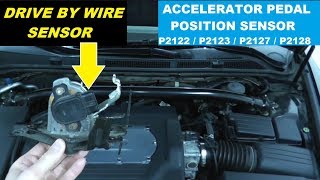
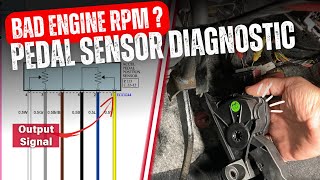
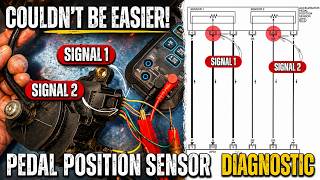
- Faulty Accelerator Pedal Position (APP) Sensor or Assembly (Very Common) — In most modern cars, the entire gas pedal assembly contains redundant sensors. This is the most frequent point of failure for this code 🎬 Watch: How to diagnose a faulty accelerator pedal sensor. on brands like BMW and many gasoline vehicles.
- Faulty Throttle Position Sensor (TPS) (Common) — For brands like Nissan, the sensor is located on the throttle body in the engine bay. It fails internally, sending incorrect voltage readings to the ECU.
- Wiring or Connector Damage (Common) — The wires going to the pedal or throttle body sensor fray, corrode, or a pin in the connector becomes loose, interrupting the signal. This is the primary suspect for intermittent faults.
- Bad Sensor Ground Connection (Common) — A corroded or loose ground wire for the sensor circuit causes incorrect voltage readings, tricking the computer into thinking the sensor itself failed. This is a frequently overlooked cause.
- Weak CP3 Injection Pump or Leaking Injectors (Dodge Cummins Only) (Common) — On Dodge Ram trucks with the Cummins diesel engine, this code points to a problem with the high-pressure fuel system. The truck loses fuel pressure due to a weak injection pump or failing injectors.
- Wiring Harness Chafing (GM Duramax Only) (Common) — On LLY Duramax engines (2004-2005), the injector wiring harness chafes on a metal support brace located 4-6 inches from the FICM connectors, causing a short and triggering injector circuit codes 🎬 See this quick ice pick fix for Duramax injector harnesses. like P1223.
- Dirty or Contaminated Electronic Throttle Body (Less Common) — Carbon buildup causes the throttle plate to stick, or internal plastic gears fail. On some Ford EcoBoost engines, oil contamination from the PCV system builds up inside the throttle body, interfering with the motor and electronics.
- Loose High-Pressure Fuel Line/Connector Tube (Dodge Cummins Only) (Less Common) — The fix for P1223 on a Cummins is sometimes as simple as re-torquing the fuel delivery connector tubes leading to the injectors. Loose tubes create a high-pressure leak that triggers the code.
- Faulty ABS Control Module or Brake Switch (Toyota Only) (Less Common) — On specific Toyota models, this code indicates a failure within the Anti-lock Brake System's computer or a faulty brake light switch. It typically reads as a 'C' code (C1223) on a capable scanner.
- Faulty Powertrain Control Module (PCM) (Rare) — The car's main computer fails, but this is uncommon. Rule out all other possibilities, especially wiring and sensor grounds, before suspecting the PCM.
Symptoms
- Check Engine Light is On — The most obvious sign; the car's computer logged a fault.
- Reduced Power or "Limp Mode" — The car intentionally limits its speed and power to prevent further damage, restricting speeds to 20-30 mph.
- Poor or Hesitant Acceleration — The car feels sluggish, bogs down, or doesn't respond immediately when you press the gas pedal.
- Engine Stalls Unexpectedly — The engine shuts off when you come to a stop or while driving at low speeds.
- Rough or Unstable Idle — The engine's RPMs jump up and down or idle very low when the car is in park or at a stoplight.
- Engine Revs on Its Own — The engine revs without the gas pedal being pressed, indicating a serious throttle control malfunction.
- Heater Grid Light and Chime (Dodge Cummins Only) — On Dodge Ram trucks, the 'Wait to Start' or heater grid light flashes, accompanied by 10 audible chimes.
Diagnostic Flowchart
Tap your situation to follow the diagnostic path that matches what you're seeing on this code.
Common Fixes & Costs
- Replace the Accelerator Pedal Assembly — Parts: $70-$450, Labor: $75-$150, ~0.8 hr book time (DIY)
- Replace the Electronic Throttle Body — Parts: $200-$700, Labor: $125-$200, ~1.2 hr book time (Intermediate)
- Replace CP3 Injection Pump (Dodge Cummins) — Parts: $700-$2000, Labor: $500-$900, ~5.5 hr book time (Professional)
- Repair Damaged Wiring or Connectors — Parts: $5-$50, Labor: $100-$400, ~2 hr book time (Intermediate)
- Clean the Throttle Body — Parts: $10-$20, Labor: $75-$200, ~0.8 hr book time (DIY)
- Replace ABS Control Module (Toyota) — Parts: $450-$1200, Labor: $150-$250, ~1.5 hr book time (Professional)
Used vs. New Parts: Buying Guide
When a used part is worth it: For a simple accelerator pedal assembly on a common, high-volume vehicle where the new part is expensive, a used part from a low-mileage, accident-damaged donor is a reasonable budget option. For electronic throttle bodies and especially high-pressure fuel pumps, used parts are a significant gamble.
Donor-vehicle mileage cap: roughly under 60000 miles for the part to have meaningful remaining life.
Donor quality checklist:
- Verify the donor vehicle's mileage and reason for being scrapped (e.g., collision is better than engine failure).
- For CP3 pumps, avoid any part that shows signs of rust in the ports or was stored improperly, as internal contamination is likely.
- Match part numbers exactly; electronic components look identical but have different internal programming.
Decision logic:
- If The part is a high-pressure fuel component like a CP3 pump. → Do not buy used. Buy new or a quality remanufactured unit from a reputable brand like Bosch.
- If The part is an electronic throttle body and the vehicle is over 100k miles. → Favor a new aftermarket or OEM part. A used part has significant wear and fails shortly after installation.
- If The part is an accelerator pedal, the vehicle is low-mileage, and the cost saving is over 50%. → A used part is a calculated risk but is acceptable if a short-term warranty is offered.
Warranty tradeoff: Used parts from a salvage yard typically have a 30-90 day warranty at best. New aftermarket parts often carry a 1-year to limited lifetime warranty. OEM parts have a 12-month warranty.
Worst-case if a used part fails: $500-$1500 if a used part fails. This includes the cost of repeat labor, diagnostics, and purchasing the correct new part that should have been used initially.
What Happens If You Wait — Timeline
- 0-1 month: Gasoline: Intermittent check engine light, occasional hesitation. Diesel (Cummins): Intermittent flashing 'Wait to Start' light with chimes, especially when coasting or at steady highway speed. Code clears on its own. (MPG impact: 0-5%% · Added cost: $0)
- 1-3 months: Gasoline: Check engine light stays on. Noticeable rough idle, poor acceleration, and stalling becomes frequent. Diesel (Cummins): Limp mode becomes common, hard starting when the engine is hot. The weak pump or leaking injector worsens. (MPG impact: 5-15%% · Added cost: $50-$200 in wasted fuel and potential towing.)
- 3-6 months: Gasoline: Driving is consistently difficult. An incorrect air/fuel mixture from the faulty throttle control overheats and damages the catalytic converter. Diesel (Cummins): The truck is unreliable. The weak CP3 pump or leaking injector is at high risk of complete failure, leading to a no-start condition. (MPG impact: 15-25%% · Added cost: $1200-$2800 (Catalytic Converter replacement) or $1500-$2500 (CP3 Pump replacement before it grenades).)
- 6+ months: Gasoline: Catastrophic catalytic converter failure. The vehicle fails emissions and has severely restricted exhaust flow, causing engine damage. Diesel (Cummins): Catastrophic CP3 pump failure. The pump 'grenades,' sending metal fragments throughout the entire high-pressure fuel system, destroying the fuel rails and all six injectors. (MPG impact: >25%% · Added cost: $4000-$10,000+ (Complete diesel fuel system replacement including pump, rails, lines, and all injectors).)
Cost of Not Fixing It
- 0-1 month: For gasoline engines, a noticeable drop in fuel economy (5-15%) and increasingly frequent stalling or hesitation. For Cummins diesels, hard starting that gets progressively worse. (Added cost: $50-$150 in wasted fuel)
- 1-6 months: For gasoline engines, an incorrect air/fuel mixture overheats and damages the catalytic converter, a very expensive repair. For Cummins diesels, a weak CP3 pump or leaking injector fails completely, leading to a no-start condition and stranding the vehicle. (Added cost: $1200-$2800 (Catalytic Converter) or $300-$500 (Towing + Diagnostics))
- 6+ months: For gasoline engines, continued driving leads to spark plug fouling and internal engine carbon buildup. For Cummins diesels, a catastrophic failure of the CP3 pump sends metal fragments throughout the entire high-pressure fuel system, destroying all injectors and requiring a complete system replacement. (Added cost: $4000-$8000+ (Diesel fuel system replacement))
Diagnosis Steps

- Scan for All Trouble Codes & Check TSBs
Use an OBD-II scanner to confirm P1223 is present. Note the exact definition provided by the scanner. Look for other related codes (like P2135, P0121, or P0148 on a Cummins) as they provide crucial clues. Perform a search for any Technical Service Bulletins (TSBs) for your specific vehicle and this code.
Tools: OBD-II Scanner, Smartphone/Internet (Beginner) - Visually Inspect Wiring and Connectors
Look at the wiring harness connected to the gas pedal assembly and the throttle body. Check for frayed wires, melting, corrosion on the connector pins, or chafing against other components. On Duramax trucks, inspect the harness near the FICM bracket.
Tools: Flashlight (Beginner) - Check Live Data with a Scan Tool
Watch the 'APP Sensor 1 %', 'APP Sensor 2 %', 'TPS 1 %' and 'TPS 2 %' readings as you slowly press and release the gas pedal. The readings must be smooth. APP sensors often correlate where one voltage is double the other (e.g., APP1 reads 2.0V while APP2 reads 1.0V). If a signal jumps, sticks, or has dead spots, the sensor is bad.
Tools: Advanced OBD-II Scanner (Intermediate) - Pro Tip: Test the Sensor Circuit with a Multimeter
With the key ON and sensor plugged in, back-probe the connector terminals. On a typical 3-wire TPS/APP, you find: 1) A 5-volt reference wire from the PCM. 2) A ground wire (reads less than 0.1 volts). 3) The signal wire. At idle/closed throttle, the signal is a steady voltage between 0.5V and 1.0V. At wide-open throttle, it is around 4.5V. Slowly sweep the pedal/throttle and watch for voltage dropouts or spikes, indicating a bad sensor.
Tools: Digital Multimeter, T-pins or Back-probe Kit (Advanced) - Pro Tip: Check for a Bad Ground
A common misdiagnosis is a bad sensor when the ground is faulty. With the key on and sensor connected, place the red multimeter lead on the battery positive terminal and the black lead on the sensor's ground wire. The reading must be very close to battery voltage (e.g., 12.6V). If it's significantly lower, you have high resistance or a bad ground connection that must be repaired.
Tools: Digital Multimeter (Advanced) - Clean the Throttle Body
If the issue is related to the throttle body, a simple cleaning is often all that's needed. Remove the air intake hose and use a dedicated throttle body cleaner and a soft cloth to wipe away carbon buildup from the throttle plate and bore. Do not push the plate open by hand on an electronic throttle body; have a helper turn the key to 'ON' (engine off) to make it open.
Tools: Throttle Body Cleaner, Rags, Basic Hand Tools (Intermediate) - Advanced: Check Sensor Resistance (Ohms)
With the sensor disconnected, set a multimeter to Ohms (Ω). Test between the 5V reference and ground pins; this shows a fixed resistance that does not change, typically between 1.3kΩ and 4.9kΩ. Then, test between the signal pin and ground pin. As you slowly operate the sensor, the resistance sweeps smoothly with no sudden jumps or dropouts. A dropout indicates a worn spot on the sensor's internal track.
Tools: Digital Multimeter (Advanced) - Advanced: Check Fuel Pressure (Dodge Cummins Only)
Using a capable scan tool, monitor 'Desired Fuel Rail Pressure' vs. 'Actual Fuel Rail Pressure'. At idle, pressure is stable around 4,000-7,500 PSI. Code P1223 triggers when the ECM detects a large discrepancy between the amount of fuel it commands the CP3 pump to deliver and the resulting rail pressure. If the actual pressure cannot keep up with the desired pressure under load, it indicates a leak or a weak pump.
Tools: Advanced OBD-II Scanner (Advanced) - Professional: Check for Fuel Leaks (Dodge Cummins Only)
If you have a Dodge Ram with a Cummins engine, this code means a fuel leak. A mechanic performs a fuel system pressure and return flow test to find if the leak is from the CP3 injection pump, an injector, or a connector tube. A common DIY first step is to re-torque the connector tubes to 37 ft-lbs.
Tools: Professional Fuel System Diagnostic Tools, Torque Wrench (Professional) - Professional: Analyze the Signal with an Oscilloscope
For intermittent issues a multimeter is too slow to catch, an oscilloscope is the definitive tool. Connect to the signal and ground wires. As you slowly open and close the throttle, the waveform is a smooth, clean ramp up and down. Any sharp drops ('glitches'), spikes, or hash in the signal indicates a failing sensor track and confirms the need for replacement.
Tools: Oscilloscope (Professional)
When This Code Triggers (Freeze-Frame Conditions)
- Engine Coolant Temp: 180-200°F (82-93°C) (Fully warmed up. The code often sets after the vehicle has been running for several minutes.)
- RPM: 1500-2500 RPM (For gasoline engines, this occurs during steady-state cruise or light acceleration. For diesels, it occurs under heavy load when commanded fuel pressure is high.)
- Engine Load: 20-50% (The fault is detected under moderate load conditions where the throttle/pedal sensor readings are expected to be stable but are found to be erratic or out of range.)
- Vehicle Speed: 40-65 mph (Consistent with highway driving, where a discrepancy between pedal request and throttle response becomes more apparent to the ECU.)
Related Codes
- P2135 — This code means 'Throttle/Pedal Position Sensor/Switch 'A'/'B' Voltage Correlation.' It triggers when the two redundant sensors disagree with each other. P1223 identifies which specific sensor circuit ('A' or 'B') is reading low or high, causing the disagreement. If you have P2135 and P1223 together, P1223 tells you which circuit to investigate first.
- P0122 — This is the generic equivalent of P1223 for many manufacturers, meaning 'Throttle Position Sensor 'A' Circuit Low Input.' If your scanner shows both, it strongly points to a low voltage fault in the primary TPS circuit.
- P0223 — This is the direct opposite of P1223 for many manufacturers, indicating a 'Circuit High Input' instead of low. Seeing both points to an intermittent wiring short that fluctuates between an open circuit (low voltage) and a short to power (high voltage), or a completely erratic sensor.
- P0148 — On Cummins diesel engines, this code for 'Fuel Delivery Error' frequently appears with P1223. P1223 is set when the ECM detects a 'leak' by having to send more fuel than calculated to maintain pressure. P0148 confirms that despite this effort, the required fuel delivery is not being met. Having both codes is a very strong indication of a mechanical fault in the high-pressure fuel system.
Climate & Environmental Factors
- Cold Weather (Diesel): For Dodge Cummins trucks, extremely cold temperatures (below 15-20°F or -9°C) cause the paraffin wax in #2 diesel fuel to crystallize, a process called 'gelling'. This clogs the fuel filter and lines, starving the CP3 pump for fuel. This lack of supply causes a large deviation between desired and actual fuel pressure, triggering a P1223 or P0148 code, even if the high-pressure system has no leaks.
- High Humidity / Road Salt: In regions with high humidity or heavy road salt use, corrosion is a major enemy. This degrades the ground connections for the sensor circuits or corrodes the pins within the electrical connectors for the APP and TPS sensors, leading to intermittent or permanent circuit faults.
How to Talk to a Mechanic About This Code
Say this: "I have a [Your Vehicle Year/Make/Model] with a P1223 code. For a gasoline engine, say: 'I'd like a diagnostic that checks the accelerator pedal and throttle body sensor circuits, including wiring and grounds, before replacing parts.' For a Cummins diesel, say: 'I need a diagnostic for a high-pressure fuel leak. Please check commanded vs. actual rail pressure and be prepared to do a return rate test to isolate the leak.'"
This signals you are informed and directs the mechanic toward a logical diagnostic process, rather than just replacing the most expensive component. It establishes that you expect a proper test-and-verify approach.
Avoid saying:
- 'My check engine light is on, can you just fix it?' (This is too vague and invites expensive guesswork).
- 'I think it needs a new throttle body.' (Don't diagnose for the mechanic; describe the symptoms and the code).
- 'Just do whatever you think is best.' (This gives up all control over the cost and process).
Questions to ask before authorizing the repair:
- Can you show me the faulty part or the data that proves it has failed (e.g., the erratic voltage reading or the fuel pressure drop)?
- For a gasoline engine: Did you test the sensor's 5-volt reference and ground circuits?
- For a Cummins diesel: What were the results of the injector and CP3 pump return flow tests?
- Is this repair estimate inclusive of all diagnostic fees?
- What is the warranty on both the parts and the labor for this specific repair?
Where to Take It: Dealer vs Independent vs Chain
- Dealer:
Best for: Vehicles still under warranty., Complex manufacturer-specific issues (e.g., Toyota ABS, BMW electronics)., Repairs related to software updates or TSBs (like on a Dodge Cummins).
Downsides: Highest labor rates, often 1.5-2x more than independent shops., Defaults to replacing an entire assembly instead of a smaller faulty component. (Typical cost: +50% vs. baseline) - Independent Shop:
Best for most gasoline cars. A reputable shop with good diagnostic tools handles this well. For diesel trucks, take it to a specialized diesel shop.
Best for: Out-of-warranty gasoline vehicles with common throttle/pedal sensor issues., Shops with strong electrical diagnostic skills and positive reviews., Getting a second opinion on a high-dollar dealer quote.
Downsides: Quality varies greatly; a general mechanic lacks the specific tools or knowledge for complex diesel diagnostics. (Typical cost: +0% vs. baseline) - Chain Shop:
AVOID for this code. The risk of them replacing expensive parts without proper diagnosis (e.g., putting on a new throttle body when the wiring is bad) is very high.
Best for: Simple maintenance like oil changes and brakes.
Downsides: High potential for misdiagnosis on a complex, manufacturer-specific code like P1223., Technicians lack in-depth diagnostic experience and are pressured to upsell. (Typical cost: -10% vs. baseline)
When to Walk Away From the Repair
If the estimated repair cost exceeds 50% of the vehicle's current private-party market value, it's time to seriously consider selling or scrapping it.
- Car worth $4500, fix is $650: Fix it. The repair cost is well below the threshold and restores a critical function.
- Car worth $12000, fix is $2500: Borderline, but likely worth fixing. A $2,500 CP3 pump replacement on a Cummins truck worth $12,000 is a significant but necessary investment to keep a valuable asset running.
- Car worth $3000, fix is $8000: Walk away. If a Cummins CP3 pump fails catastrophically and requires a full fuel system replacement, the cost far exceeds the truck's value.
What Scan Tool You Need for This Code
Minimum: A scanner that reads and graphs live data streams. For this code, you must be able to see sensor voltages/percentages in real-time.
A simple $20 code reader only shows 'P1223', which is useless for diagnosis. You need to see the live data to determine if a sensor is failing, if wiring is intermittent, or (on a diesel) to monitor commanded vs. actual fuel pressure.
Budget: BlueDriver Pro (~$100) — Connects to your smartphone and displays and graphs live data for APP/TPS sensors or fuel rail pressure, allowing for basic diagnosis. It provides repair reports based on a database of verified fixes.
Mid-range: Foxwell NT510 Elite / XTOOL D7 (~$150-350) — These offer manufacturer-specific diagnostics, providing more accurate code definitions. Crucially, they include bidirectional controls, which command procedures like the Nissan 'Idle Air Volume Learn' after a throttle body replacement.
Professional: Autel MaxiCOM MK808 / Innova 5610 (~$450-600) — Provides full bidirectional control, comprehensive live data, and dealership-level functions. These tools run advanced system tests, making it much easier to isolate the root cause of intermittent electrical faults or complex fuel system issues.
Rent vs buy: For a one-time check, many auto parts stores rent basic scanners. However, because P1223 requires monitoring live data and potentially performing a relearn procedure, buying a capable tool like the BlueDriver or Foxwell is a smart investment for any DIYer.
How to Clear the Code After You Fix It
- Use an OBD-II scan tool to clear the fault codes.
- Perform any required relearn procedures (e.g., Nissan Idle Air Volume Learn).
- Complete a full OBD-II drive cycle to ensure all readiness monitors are 'Ready'.
Drive cycle (~30 minutes): A universal drive cycle includes: 1) Cold start (sit overnight). 2) Idle for 2-3 minutes with A/C on. 3) Drive at a steady speed of 55 mph for 3-5 minutes. 4) Perform 15-20 minutes of mixed city driving with stop-and-go and varied acceleration. 5) Allow the vehicle to cool down.
Readiness monitors affected: Comprehensive Component Monitor, Catalyst Monitor, Oxygen (O2) Sensor Monitor, EGR System Monitor
Before emissions retest: drive at least 100 miles to fully set monitors.
Watch out for:
- Clearing the code with a scanner or by disconnecting the battery resets all readiness monitors to 'Not Ready', causing an immediate emissions test failure.
- The code returns immediately if the root cause of the fault has not been properly repaired.
- Not performing a manufacturer-specific relearn procedure after replacing a part (like a Nissan throttle body) causes new symptoms and prevents the code from staying clear.
Will This Fail Emissions / State Inspection?
Yes — this code typically fails an OBD-II emissions inspection.
- California: An illuminated Check Engine Light is an automatic failure of the smog inspection. After repairs, you must complete a drive cycle to set all readiness monitors to 'Ready' before you can pass the test.
- New York: A vehicle fails the NYVIP3 OBD-II inspection if the Check Engine Light is on. For vehicles 2001 and newer, you can have a maximum of one readiness monitor 'Not Ready'; for 1996-2000 vehicles, two are allowed.
- Texas: In counties requiring emissions testing, an illuminated Check Engine Light is an automatic fail. Clearing the code just before the test also results in failure due to 'Not Ready' monitors.
Most Commonly Affected Vehicles
- Dodge Ram 2500/3500 (2003-2007) — Very common for the 5.9L Cummins diesel engine, where P1223 indicates a fuel system leak, often from a weak CP3 pump or injectors. This code sometimes appears after a dealer software update incorporating TSB 18-006-12. High-mileage trucks (200k+ miles) are particularly susceptible to injector and pump wear.
- Chevrolet / GMC Silverado 2500/3500, Sierra 2500/3500 (2004-2005) — On models with the 6.6L LLY Duramax diesel, P1223 ('Fuel Injector X Output Circuit Malfunction') is frequently caused by the injector wiring harness chafing on a metal support brace near the FICM, causing a short.
- Toyota RAV4 (2006-2012) — On these models, P1223 is stored as an ABS code (C1223) indicating a malfunction in the ABS hydraulic control unit. Pro tip: If codes C1241 and C1249 are also present, check the inexpensive brake light switch on the pedal first before condemning the ABS module.
- Nissan Altima, Sentra, Frontier (2002-2012) — Commonly experience failures of the throttle position sensor. After replacing the throttle body or sensor, a mandatory 'Idle Air Volume Learning' procedure must be performed, which is done manually or with a scan tool.
- BMW 3-Series (E46, E90), 5-Series (E60) (2001-2013) — Prone to failures of the accelerator pedal position (APP) sensor, which is integrated into the gas pedal assembly. The entire pedal assembly must be replaced. Used parts are available but carry risk.
- Ford F-150, Explorer, Edge (2011-2017) — These models suffer from electronic throttle body (ETB) failure, sometimes due to internal oil contamination. Ford issued customer satisfaction program 16B32 for some vehicles. This often triggers codes P2111 or P2112.
- Volkswagen / Audi Jetta, Golf, A4 (2005-2015) — For VW and Audi, P1223 indicates a standard Throttle Position Sensor failure. On some specific engines (e.g., 4.0T V8), it points to an issue with the cylinder deactivation system's exhaust valve circuit.
- Hyundai / Kia i30, Ceed, Elantra (2010-2018) — Owners report P1223 with conflicting definitions from different scan tools, sometimes pointing to the pedal sensor, other times to an oil pump control valve. This highlights the need for advanced, manufacturer-specific diagnostics for an accurate diagnosis.
Manufacturer-Specific Notes

- Dodge/Cummins: The code P1223 is almost always related to a fuel leak in the high-pressure system. This diagnostic test was added via a software update outlined in TSB 18-006-12. A truck runs for years without issue, then gets a dealer software flash and suddenly starts throwing this code if a pre-existing mechanical issue is present.
- Toyota: Toyota uses P1223 (often displayed as C1223 on a good scanner) to indicate a fault within the ABS/VSC (Vehicle Stability Control) system. Toyota issued a Warranty Enhancement Program (ZG1) for the Brake Actuator Assembly on some 2004-2009 Prius and 2006-2007 Highlander Hybrid models, extending coverage to 10 years or 150,000 miles.
- Nissan/Infiniti: On many models from the 2000s, after replacing the throttle body or cleaning it aggressively, an 'Idle Air Volume Learning' procedure is mandatory. Failure to perform it results in a high or unstable idle. This is done with a specific sequence of pedal presses or a capable scan tool.
- GM/Duramax: For the 2004-2005 LLY Duramax, injector circuit codes like P1223 are so commonly caused by the wiring harness chafing on a specific FICM bracket that GM released a technical service bulletin (05-06-04-047B) and a harness repair kit (P/N 98017958) to address it. This must be one of the first places you inspect.
- Ford: For certain 2011-2017 models, Ford initiated Customer Satisfaction Program 16B32 due to widespread electronic throttle body (ETB) failures that cause limp mode and set codes like P2111 and P2112. The program provided a free ETB replacement, though the program had an expiration date.
Real Owner Stories
2006 Dodge Ram 2500 5.9L Cummins at 210K miles - The Misdiagnosis Runaround
Truck suddenly started throwing P1223 and P0148, with the heater grid light flashing and chiming. The truck went into limp mode under steady load on the highway.
What they tried:
- First shop couldn't find the issue.
- Owner checked for mechanical issues himself: lift pump, FCA, PRV, injectors.
- A second shop re-torqued the connector tubes and found them 1/4 turn loose, which helped but didn't solve the problem.
- The second shop performed an injector return test and a CP3 return test.
Outcome: The CP3 injection pump was diagnosed as weak and unable to hold rail pressure under load. Replacing it with a new Bosch unit resolved both the P1223 and P0148 codes.
Lesson: On a Cummins, P1223 is a fuel system leak. Don't replace expensive parts randomly. A systematic diagnosis (checking connector tube torque, then injector return rates, then CP3 return rates) is critical to pinpointing the leak.
2011 Nissan Altima 2.5L at 190K miles - The Recurring Code
Car went into limp mode. Mechanic replaced the throttle body, which fixed it for a week. Then limp mode returned. Mechanic replaced the accelerator pedal and a second new throttle body.
What they tried:
- Replaced throttle body (failed).
- Replaced accelerator pedal and another throttle body (worked for a few weeks).
- Code P2135 returned. Mechanic performed the idle relearn procedure, clearing the code temporarily.
- The code kept returning, even though multimeter tests on the parts seemed fine.
Outcome: The owner was left in a loop of the code returning intermittently, especially in cold weather. The mechanic was unable to find a definitive cause because the parts tested okay when the car was in the shop.
Lesson: Intermittent electrical faults are difficult to diagnose. If a relearn procedure temporarily fixes the issue, it points strongly to a problem in that system, but it is often a wiring issue or a faulty ECU, not just the sensor itself.
2005 GMC Sierra 2500 LLY Duramax - The Easy Fix That's Hard to Find
Truck intermittently went into limp mode, killing power to one bank of cylinders. Turning the truck off and on fixed it temporarily. Codes for injector circuits (P1223, P0202, P0207) were present.
What they tried:
- Owner tried the 'ice pick' trick to tighten the pins on the injector connectors for cylinders #2 and #7.
- Owner spliced in new pigtail harnesses for injectors #2 and #7.
- Problem returned intermittently, throwing codes for various cylinders.
Outcome: The root cause for LLY Duramax trucks is the main injector wiring harness chafing on a metal bracket near the alternator/FICM. The vibration wears through the loom and insulation, causing intermittent shorts. Repairing the damaged wires and wrapping the harness resolved it.
Lesson: Always check for Technical Service Bulletins (TSBs) and known pattern failures. For the LLY Duramax, the injector harness chafe is so common that it must be the absolute first thing you inspect for these symptoms.
2006 Toyota RAV4 - The Unrelated Brake Light Switch
ABS, TRAC, and VSC lights all came on at the same time while driving. The codes stored were C1223 (ABS Malfunction), C1241 (Low Voltage), and C1249 (Stop Lamp Switch Circuit Open).
What they tried:
- A scan tool was used to pull the chassis codes, identifying C1223, C1241, and C1249.
Outcome: Despite the serious-sounding C1223 and C1241 codes, the actual culprit was the C1249 code. A faulty brake light switch on the brake pedal sent erroneous signals to the ABS computer. Replacing the inexpensive switch cleared all codes.
Lesson: When multiple codes are present, one causes the others. On many Toyota vehicles, a faulty brake light switch triggers a cascade of seemingly unrelated ABS and VSC fault codes. Always investigate the cheapest and simplest potential cause first.
How to Prevent This Code From Triggering
- Install a quality lift pump (Diesel only) (Once, especially on modified or high-mileage trucks) — A lift pump (like FASS or AirDog) provides the CP3 injection pump with a steady, positive supply of filtered fuel. This prevents the CP3 from having to 'suck' fuel, which causes cavitation and premature wear, the primary cause of P1223 on Cummins engines.
- Periodically clean the electronic throttle body (Gasoline only) (Every 50,000-75,000 miles) — Carbon and oil residue from the PCV system builds up on the throttle plate and bore, causing it to stick. This makes the motor work harder and causes the plate's actual position to not match the sensor's reading, triggering throttle performance codes.
- Use high-quality diesel fuel additives (Every fill-up) — Modern ultra-low sulfur diesel (ULSD) has poor lubricity. Additives like Stanadyne or Hot Shot's Secret add lubricity, which is critical for protecting the tight-tolerance moving parts inside the CP3 pump and injectors from wear.
- Add protective loom to wiring harnesses (GM LLY Duramax) (Once, as a preventative measure) — The injector harness on 2004-2005 Duramax engines rubs against a sharp metal bracket. Proactively wrapping this area with extra convoluted tubing or a piece of rubber hose prevents the wires from chafing and shorting out.
- Apply dielectric grease to connectors (Whenever a sensor is replaced or inspected) — Applying a small amount of dielectric grease to the weather pack seal of connectors for the APP sensor, TPS, and injector harnesses keeps moisture and oxygen out. This prevents corrosion on the pins and ensures a reliable electrical connection.
Frequently Asked Questions
What is the most common misdiagnosis for P1223?
For Dodge Cummins, it is replacing expensive injectors before performing a return flow test. For gas cars, it is replacing the throttle body when the actual problem is a corroded connector or bad ground. Always verify wiring first.
My scanner gives a different definition for P1223 than what's listed here. Why?
Generic OBD-II readers often provide misleading definitions for manufacturer-specific codes like P1223. You need a manufacturer-specific scan tool to get the true fault description. This is especially true for brands like Hyundai and Kia.
Can I just replace the sensor myself?
Replacing a gas pedal assembly is usually a simple DIY job requiring basic hand tools. Throttle body sensors are more complex and often require a computer 'relearn' procedure afterward. If you lack a bidirectional scan tool for the relearn, take it to a shop.
What's the difference between a Throttle Position Sensor and an Accelerator Pedal Position Sensor?
The Accelerator Pedal Position (APP) sensor tells the computer how far your foot presses the gas pedal. The Throttle Position Sensor (TPS) confirms the actual position of the metal flap letting air into the engine. They work together as a redundant safety check.
Can a bad ground wire cause a P1223 code?
Yes. A poor ground connection increases circuit resistance, altering the voltage signal sent to the computer. The computer interprets this altered voltage as a sensor failure, triggering P1223 even if the sensor is perfectly fine.
What is an 'Idle Air Volume Learn' and why is it needed for a Nissan?
After cleaning or replacing a Nissan throttle body, the engine computer must relearn the new 'zero' position of the throttle plate. Skipping this causes a dangerously high or erratic idle. You perform it using a bidirectional scan tool or a specific timed sequence of pedal presses.
Will cleaning the throttle body fix the P1223 code?
It fixes the code if carbon buildup causes the throttle plate to stick, creating a mismatch between expected and actual sensor readings. It is an inexpensive, 30-minute first step before replacing expensive parts. However, it will not fix a hard electrical short or failed sensor track.
Key Takeaways
- P1223 is a manufacturer-specific code that indicates a throttle pedal sensor failure on most gas cars, but signals a critical high-pressure fuel leak on Dodge Cummins diesels.
- Never replace a $300 throttle body or pedal assembly without first using a multimeter to verify the 5-volt reference and ground circuits are intact.
- For 2004-2005 GM Duramax trucks, inspect the injector wiring harness near the alternator bracket for chafing before assuming the injectors have failed.
- Driving with a P1223 code is dangerous because it triggers a sudden 'limp mode' that restricts engine power to a maximum of 20-30 mph in traffic.
Helpful Videos

![NISSAN Electronic Throttle Body [ETB] | EASY RE-LEARN Procedure](https://img.youtube.com/vi/hUlGxqylpCs/mqdefault.jpg)

The information in this article is provided for general reference and educational purposes only. Vehicle specifications, procedures, and part compatibility can vary by production date, trim level, and region. Always consult your vehicle's factory service manual and verify part numbers before purchasing or performing repairs. Safety-critical components such as airbags, seat belts, and braking systems should be installed by a qualified professional.
- 🎬 Helpful Videos
- What Does P1223 Mean?
- Can I Drive With P1223?
- Common Causes
- Symptoms
- Diagnostic Flowchart
- Common Fixes & Costs
- Used vs. New Parts: Buying Guide
- What Happens If You Wait — Timeline
- Cost of Not Fixing It
- Diagnosis Steps
- When This Code Triggers (Freeze-Frame Conditions)
- Related Codes
- Climate & Environmental Factors
- How to Talk to a Mechanic About This Code
- Where to Take It: Dealer vs Independent vs Chain
- When to Walk Away From the Repair
- What Scan Tool You Need for This Code
- How to Clear the Code After You Fix It
- Will This Fail Emissions / State Inspection?
- Most Commonly Affected Vehicles
- Manufacturer-Specific Notes
- Real Owner Stories
- 2006 Dodge Ram 2500 5.9L Cummins at 210K miles - The Misdiagnosis Runaround
- 2011 Nissan Altima 2.5L at 190K miles - The Recurring Code
- 2005 GMC Sierra 2500 LLY Duramax - The Easy Fix That's Hard to Find
- 2006 Toyota RAV4 - The Unrelated Brake Light Switch
- How to Prevent This Code From Triggering
- Frequently Asked Questions
- What is the most common misdiagnosis for P1223?
- My scanner gives a different definition for P1223 than what's listed here. Why?
- Can I just replace the sensor myself?
- What's the difference between a Throttle Position Sensor and an Accelerator Pedal Position Sensor?
- Can a bad ground wire cause a P1223 code?
- What is an 'Idle Air Volume Learn' and why is it needed for a Nissan?
- Will cleaning the throttle body fix the P1223 code?
- Key Takeaways
- 🎟️ Get 5% Off