

OBD-II Code P1218: Injector Control Circuit Malfunction
What P1218 means, why it triggers, and how to fix it
- Code P1218 on a 1994-2003 Ford 7.3L Powerstroke almost always indicates a failed Injector Driver Module (IDM) or a chafed wiring harness shorting to ground.
- Before spending $300+ on a replacement IDM, visually inspect the 42-pin wiring harness where it rubs against the driver-side valve cover for exposed wires.
- On 1996-2000 GM 6.5L diesels, P1218 points to a missing or failed injection pump calibration resistor, requiring a resistor transfer or a $600+ pump replacement.
- Never ignore a P1218 code; driving with an active IDM short circuit frequently destroys the $800+ Powertrain Control Module (PCM) and leaves you stranded.
What Does P1218 Mean?

P1218 is a manufacturer-specific powertrain code indicating a problem within the fuel injector control circuits. Your car's main computer, the Powertrain Control Module (PCM), detects a voltage reading that is higher than expected from the system controlling the fuel injectors. This points directly to a problem with the Injector Driver Module (IDM) or its wiring, especially on Ford diesel trucks. For General Motors vehicles, it indicates a problem with the injection pump's internal calibration resistor.
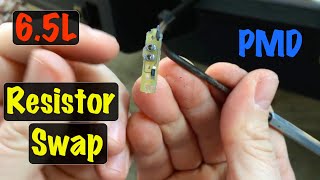
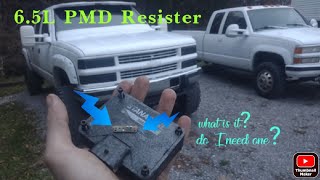
🎬 See how to swap the calibration resistor on GM 6.5L enginesTechnical definition: The official SAE/OBD-II definition for P1218 varies significantly by manufacturer. For Ford, it is 'CID High' (Cylinder Identification High). For General Motors, it is 'Injection Pump Calibration Circuit'. For Volkswagen/Audi, it translates to 'Cyl.6 - Fuel Inj. Circ. Short to B+'. Despite the different names, they all point to an electrical fault in the fuel injection control system.
Can I Drive With P1218?
Yes, But With Caution. You can drive short distances, but the vehicle will likely stall unexpectedly, run rough, or lose power. Do not drive until the issue is fixed to avoid getting stranded in dangerous situations, such as an intersection or highway. The primary risk is a sudden stall when the engine reaches operating temperature. While driving with the code rarely causes immediate mechanical engine damage, the underlying electrical short triggers the code and damages the Injector Driver Module (IDM) or Powertrain Control Module (PCM), leading to expensive repairs.
Common Causes

- Failed Injector Driver Module (IDM) (Very Common) — The IDM is a high-voltage module that fires the fuel injectors. Internal components like capacitors and solder joints fail from years of heat cycles and vibration, causing intermittent stalling or a no-start condition when hot. This is the most common cause on Ford 7.3L Powerstroke engines. 🎬 Watch: How to replace the IDM on your 7.3 Powerstroke
- Chafed or Shorted Wiring Harness (Common) — The wiring harness between the IDM, PCM, and engine rubs against engine components like the valve cover, alternator bracket, or fuel lines. This friction wears through the insulation and causes wires to short circuit, sending faulty voltage signals.
- Faulty Under Valve Cover Harness (UVCH) (Common) — The wiring harness running under the valve covers to connect the injectors and glow plugs is a frequent failure point. The connectors become loose or brittle from heat and oil exposure, causing intermittent connections to an entire bank of injectors.
- Water Intrusion into IDM or Connectors (Common) — The IDM case has a vent that allows moisture to enter, especially after driving through deep puddles or pressure washing the engine. This water corrodes the internal circuit board and causes failure, frequently resulting in a no-start after heavy rain.
- Weak Electrical System (Batteries/Alternator/Grounds) (Less Common) — The IDM is a sensitive electronic module requiring stable voltage. Weak batteries, a failing alternator, or a corroded ground wire cause low or fluctuating system voltage. This unstable voltage triggers faults in the IDM and sets a P1218 code even if the IDM itself is perfectly fine.
- Aftermarket Performance Tuner/Chip (Less Common) — Aggressive aftermarket performance chips command the IDM to operate outside its designed parameters. This over-stresses the module, causing premature failure and triggering fault codes like P1218.
- Faulty Powertrain Control Module (PCM) (Rare) — The main engine computer (PCM) that commands the IDM occasionally fails. The PCM is the last component to suspect after ruling out the IDM and wiring.
Symptoms

- Engine Stalls When Hot and Refuses to Restart — The engine dies unexpectedly while driving, particularly when it reaches full operating temperature. It restarts only after cooling down for a period, a classic sign of a thermally failing electronic module like the IDM.
- Engine Runs Rough, Misfires, or Bucks — The engine shakes, stumbles, or sounds like it is not firing on all cylinders. This feels like a violent rocking or knocking sensation as the injectors misfire inconsistently.
- Sudden Loss of Power — The vehicle feels sluggish and struggles to accelerate. This happens because the injectors do not receive the correct signals to deliver the right amount of fuel.
- Check Engine Light is On — The Malfunction Indicator Lamp (MIL) on your dashboard illuminates.
- Excessive Black Smoke from Exhaust — On GM 6.5L diesel engines, a faulty injection pump calibration circuit causes severe over-fueling, resulting in large amounts of black smoke from the tailpipe.
- Poor Fuel Economy — The vehicle uses significantly more fuel than usual because the injectors are not controlled efficiently, wasting fuel.
Diagnostic Flowchart
Tap your situation to follow the diagnostic path that matches what you're seeing on this code.
Common Fixes & Costs
- Replace the Injector Driver Module (IDM) — Parts: $250-$500, Labor: $100-$150, ~0.8 hr book time (DIY)
- Repair Chafed Wiring Harness — Parts: $10-$50, Labor: $150-$450, ~2.5 hr book time (Intermediate)
- Replace Under Valve Cover Harness (UVCH) and Gasket — Parts: $50-$150 per side, Labor: $300-$600, ~3.5 hr book time (Intermediate)
- Send IDM for Repair Service — Parts: $150-$350, Labor: $50-$100, ~0.8 hr book time (DIY)
- Replace Injection Pump (GM 6.5L Diesel) — Parts: $600-$1300, Labor: $400-$600, ~5.0 hr book time (Advanced)
Used vs. New Parts: Buying Guide
When a used part is worth it: A used IDM from a known-good, low-mileage donor truck is a cost-effective diagnostic tool or a budget-friendly replacement. It makes sense if the budget is tight and you verify the part works before purchase.
Donor-vehicle mileage cap: roughly under 120000 miles for the part to have meaningful remaining life.
Donor quality checklist:
- Verify the donor vehicle was not scrapped for engine-related electrical issues.
- Inspect the module for external corrosion or missing vent covers, which suggest water intrusion.
- On Ford 7.3L, all IDMs from 1994-2003 are interchangeable for testing, but matching the series (e.g., IDM-120 for a late '99+) is best for a permanent fix.
Decision logic:
- If The goal is definitive diagnosis → Swap with a known-good used IDM; if the problem moves to the other vehicle, your IDM is bad.
- If The vehicle is a high-mileage work truck and budget is the top priority → A tested used part from a reputable salvage yard is acceptable.
- If Reliability is the primary concern → Choose a new aftermarket unit or a professionally repaired and upgraded original unit.
Warranty tradeoff: Used parts typically offer a 30-90 day warranty at best. Remanufactured or new aftermarket parts often come with a 1-year to limited lifetime warranty. Repair services for your original module also typically include a 1-year or longer warranty.
Worst-case if a used part fails: $200-$500 if a used part fails shortly after installation, requiring repeat labor and the cost of another replacement part.
What Happens If You Wait — Timeline
- 0-1 month: Intermittent rough running, especially when hot. Engine stumbles or bucks occasionally. Check Engine Light is on. The truck is still driveable but unreliable. (MPG impact: 5-10%% · Added cost: $50-$150 in wasted fuel.)
- 1-3 months: Stalling becomes frequent and predictable (e.g., every time the engine reaches operating temperature). Hard-starting or no-start conditions appear, especially after a hot soak or heavy rain. (MPG impact: 10-20%% · Added cost: $200+ in towing and wasted fuel. Risk of being stranded increases significantly.)
- 3-6 months: The underlying electrical short causes cascading failures. The high current draw or voltage spikes from a failing IDM damages the much more expensive Powertrain Control Module (PCM). The truck becomes completely undriveable. (MPG impact: N/A (No-start condition)% · Added cost: $800-$1500 if the PCM is damaged, in addition to the original IDM/wiring repair cost.)
- 6+ months: Complete and permanent failure of the IDM occurs. On GM 6.5L engines, continued operation with a faulty injection pump calibration leads to severe over-fueling, washing cylinder walls of oil, and damaging the turbo. (MPG impact: N/A (No-start condition)% · Added cost: $1500-$3000+ for a new PCM and IDM, or a new injection pump and potential turbo/engine damage on a GM diesel.)
Cost of Not Fixing It
- Short-Term (0-1 month): Frequent stalling, rough running, and poor fuel economy. High risk of being stranded, especially as the engine gets hot. (Added cost: Negligible, besides fuel costs and towing.)
- Medium-Term (1-6 months): Continued electrical stress from a short circuit or failing module damages the Powertrain Control Module (PCM), a much more expensive component to replace. (Added cost: $800-$1500)
- Long-Term (6+ months): Complete failure of the Injector Driver Module (IDM) occurs, resulting in a no-start condition. On GM 6.5L engines, continued operation with a faulty injection pump leads to poor performance and eventual pump seizure. (Added cost: $400-$1900)
Diagnosis Steps

- Scan for All Trouble Codes
Use an OBD-II scanner to read all codes. Look for related codes like P1219, P1316, P1298, or P1668. The presence of these codes strongly proves the fault is in the IDM system and not a base engine problem.
Tools: OBD-II Scanner (Beginner) - Perform a Thorough Visual Inspection
Look closely at the Injector Driver Module (IDM), located on the driver's side fender well on a Ford 7.3L. Check its connector for looseness, corrosion, or signs of water entry. Carefully trace the wiring harness from the IDM to the engine, looking for rubbing, melting, or chafing, especially where it passes over the driver's side valve cover and near the alternator.
Tools: Flashlight (Beginner) - Check Fuses and IDM Relay
Locate and inspect the fuse and relay for the IDM/PCM in the vehicle's power distribution box. A blown fuse (often Fuse #22 on Super Duty trucks) or a faulty relay cuts power to the module and causes this code.
Tools: Owner's Manual, Fuse Puller, Multimeter (Beginner) - Perform an Injector "Buzz Test"
Using a capable diagnostic scanner (like FORScan for Fords), run the injector buzz test. This test commands the IDM to cycle all injectors. You must hear each injector make a distinct 'buzz' sound. If some or all injectors are silent, it points directly to a problem with the IDM or the wiring.
Tools: Advanced OBD-II Scanner (Intermediate) - Check Battery, Grounds, and Charging System
Ensure the electrical foundation is solid. Use a multimeter to verify the batteries have at least 12.5 volts with the engine off. Start the engine and check that the alternator output is between 13.7 and 14.7 volts. Inspect and clean the main battery terminals and chassis ground connections.
Tools: Digital Multimeter, Wire Brush (Beginner) - [PRO TIP] Wiggle Test the Wiring Harness
With the engine idling, carefully wiggle sections of the wiring harness between the PCM, the 42-pin connector, and the IDM. If wiggling a specific area causes the engine to stumble or stall, you have found the exact location of an intermittent short or open in the harness.
Tools: Gloves (Intermediate) - Inspect Under Valve Cover Harness (UVCH)
If a buzz test fails for an entire bank of injectors, the UVCH is the prime suspect. Remove the valve covers and inspect the wiring and the large rectangular connectors where they pass through the gasket. Look for burnt pins, loose connections, or oil-saturated wiring.
Tools: Socket Set, New Gaskets, Flathead Screwdriver (Advanced) - [PRO TIP] Check CID Circuit Voltage at the PCM
Using a breakout box or by carefully back-probing the PCM connector, measure the voltage on the Cylinder Identification (CID) circuit (Pin 96, Yellow/Light Blue wire on a 7.3L). With the key on, engine off, the voltage must be approximately 2-3 volts. A reading of 5 volts or battery voltage indicates a short to power, while 0 volts suggests a short to ground or an open circuit.
Tools: Digital Multimeter, Breakout Box or T-pins, Wiring Diagram (Advanced) - [ADVANCED] Measure Injector Circuit Resistance from IDM Connector
With the key off and IDM disconnected, use a multimeter to measure the resistance of each injector circuit. Probe between the power feed pin and each individual injector return pin on the harness connector. A healthy circuit reads between 2.8 and 3.6 ohms. A reading that is significantly higher, infinite (OL), or close to zero indicates a wiring or injector solenoid problem.
Tools: Digital Multimeter, IDM Connector Pinout Diagram (Advanced) - [ADVANCED] Verify IDM Output Voltage
This is a dangerous test and requires extreme caution. A standard Ford 7.3L IDM outputs approximately 110-115 volts DC to the injector banks when the engine is running. Back-probe the IDM connector while the engine is running using a high-voltage multimeter. A lack of this high voltage confirms an internal IDM failure.
Tools: High-Voltage Digital Multimeter, T-pins, Safety Equipment (Expert) - [PRO TIP] Analyze the CID Signal with an Oscilloscope
For definitive diagnosis, connect an oscilloscope to the CID signal wire at the PCM. A healthy signal is a clean square wave that changes with engine RPM. A flat line at 0 or 5 volts, or a noisy/garbled pattern, confirms an electrical fault in the circuit or a failing IDM.
Tools: Automotive Oscilloscope, Wiring Diagram (Expert)
When This Code Triggers (Freeze-Frame Conditions)
- Engine Coolant Temp: 170-200°F (Fully warmed up)
- RPM: 1200-2500 (Cruise, light acceleration, or maintaining speed)
- Engine Load: 25-50% (Under moderate load, not idling or full throttle)
- Vehicle Speed: 30-60 mph (City or highway driving)
Related Codes
- P1219 — This code means 'CID Low' and is the direct counterpart to P1218 'CID High'. They appear together and point to the same set of problems with the IDM or wiring. P1218 suggests a short to power, while P1219 suggests a short to ground.
- P1316 — This code indicates the IDM detected a fault and stored its own internal trouble codes. Seeing P1316 alongside P1218 is a strong confirmation that the problem lies within the IDM system.
- P1298 — This is a direct code meaning 'IDM Failure'. It frequently appears alongside P1218 and indicates the IDM failed an internal self-test. Seeing both together makes the IDM the primary suspect.
- P1668 — This code indicates a PCM-to-IDM communication error. If P1218 is also present, it proves the communication line itself is compromised (chafed wire, loose 42-pin connector) or the IDM has an internal fault.
Climate & Environmental Factors
- High Humidity / Rain: Increases the risk of P1218 on Ford 7.3L engines. The original IDM design is susceptible to water intrusion through a case vent and failing seals. Moisture corrodes the internal circuit board, causing failure.
- High Ambient Temperature / Heat Soak: Triggers the classic 'stalls when hot, restarts when cold' symptom. As the IDM reaches operating temperature, failing solder joints or electronic components on the circuit board expand and create an open circuit.
- Cold Weather: Cold weather exacerbates underlying injector issues. On a 7.3L, if a buzz test reveals weak or silent injectors, the problem is more pronounced during a cold start when the oil is thick.
How to Talk to a Mechanic About This Code
Say this: "I have a P1218 code on my [Ford 7.3L Powerstroke / GM 6.5L Diesel]. The engine is [stalling when hot / running rough]. I'd like to schedule a diagnostic. I suspect it is the IDM or a wiring issue on my Ford / an injection pump issue on my GM. Please check the wiring harness for chafing before recommending a new IDM."
This signals to the shop that you are an informed owner. It directs them to the most likely causes for this specific code on your vehicle, preventing them from starting with generic, unrelated diagnostics. Mentioning the wiring harness specifically saves you from paying for an IDM you might not need.
Avoid saying:
- 'My truck is acting funny, can you fix it?'
- 'The check engine light is on, I don't know why.'
- 'Just replace the IDM.'
Questions to ask before authorizing the repair:
- Did you find a chafed wire or evidence of water in the IDM connector?
- If you are recommending an IDM, how did you rule out a wiring or UVCH problem?
- For a GM, did you confirm the calibration resistor is missing or bad before quoting an entire injection pump?
- Can you show me the damaged part or the photo of the shorted wire?
- What is the warranty on the replacement part and the labor?
Where to Take It: Dealer vs Independent vs Chain
- Dealer:
Acceptable, but likely not the best value. A dealer is a good choice if you are out of options, but an independent diesel specialist has more hands-on experience with this specific, common failure.
Best for: Vehicles still under an extended warranty, Complex electrical issues where the dealer has access to proprietary tools and information
Downsides: Higher labor rates, often 1.5-2x more than independent shops., May not have deep experience with older (20+ year old) 7.3L trucks., More likely to replace an entire harness than repair a single wire. (Typical cost: +50% vs. baseline) - Independent Shop:
Best Fit. An independent shop specializing in Powerstroke or diesel trucks is the ideal choice. They see P1218 and its related failures frequently and know exactly where to look, saving diagnostic time and money.
Best for: Out-of-warranty Ford Powerstroke or GM 6.5L diesels., Owners looking for better value and a more personal relationship with the technician.
Downsides: Quality and experience vary widely. You must find a true diesel specialist, not a general auto repair shop. (Typical cost: +0% vs. baseline) - Chain Shop:
AVOID. A chain shop is not equipped to properly diagnose or repair a P1218 code on a diesel truck. The likelihood of misdiagnosis is extremely high.
Best for: Tires, batteries, and oil changes.
Downsides: Technicians generally lack the specialized tools and experience for complex diesel electronic diagnostics., High pressure to sell parts leads to misdiagnosis and unnecessary repairs. (Typical cost: -10% vs. baseline)
When to Walk Away From the Repair
If the estimated repair cost exceeds 40-50% of the truck's private-party value, pause and carefully consider your options.
- Car worth $8000, fix is $800: Fix it. This is a common and relatively inexpensive repair for a valuable truck. It is well below the threshold.
- Car worth $5000, fix is $2500: Borderline. This repair costs 50% of the truck's value. Get a second opinion to confirm the diagnosis and cost. If the rest of the truck is in great shape, it is worth it. If it has other pending issues, it might be time to sell.
- Car worth $3000, fix is $2800: Walk away. The repair cost is nearly the entire value of the vehicle. The underlying problem likely damaged other expensive components like the PCM.
What Scan Tool You Need for This Code
Minimum: A scanner that reads manufacturer-specific codes (not just generic P-codes) and performs bidirectional tests like the 'injector buzz test' for Ford vehicles.
A cheap $20 code reader only shows you the P1218 code. It cannot command the injector buzz test, which is a critical step to differentiate between an IDM, wiring, or injector fault. You will be guessing and likely replacing the wrong, expensive parts.
Budget: FORScan with OBDLink Adapter (~$80) — FORScan is a powerful software for laptops (free) or a 'Lite' app for phones that, when paired with a compatible OBDII adapter (like OBDLink EX or MX+), provides dealer-level diagnostics for Fords. It reads all codes, runs the injector buzz test, performs a cylinder contribution test, and graphs live data from the IDM and PCM. This is the most recommended setup for DIY diagnosis of P1218.
Mid-range: Autel MaxiCheck MX808S (~$350) — This is a tablet-based, all-in-one tool providing comprehensive diagnostics for most makes and models. For a Ford with P1218, it performs the injector buzz test and other bidirectional controls needed for diagnosis. It is a great option for a serious DIYer who works on multiple vehicle brands.
Professional: Autel MaxiCOM MK906BT / Snap-on Solus (~$1200-4000) — These professional-grade tools offer full bidirectional control, advanced coding and programming functions, and built-in oscilloscopes for deep electrical diagnosis. They definitively diagnose the root cause of P1218 by analyzing the raw signal data between the PCM and IDM. These are what a top-tier independent shop or dealership uses.
Rent vs buy: For P1218, a basic parts store loaner tool is insufficient. You need bidirectional control. Given the low cost and high power of the FORScan setup, buying the adapter is a smart investment for any 7.3L Powerstroke owner and pays for itself in one use.
How to Clear the Code After You Fix It
- Reconnect battery if disconnected during repair
- Use an OBD-II scan tool to clear all diagnostic trouble codes
- Perform a complete drive cycle to allow readiness monitors to run
Drive cycle (~30 minutes): Start with a cold engine. Idle for 2-3 minutes. Drive for 15-20 minutes with mixed city/highway speeds, including at least 5 minutes of steady driving between 40-60 mph. Perform several moderate accelerations and decelerations. Allow the vehicle to cool completely (8+ hours) and repeat if necessary.
Readiness monitors affected: Comprehensive Component Monitor (CCM), Misfire Monitor
Before emissions retest: drive at least 50 miles to fully set monitors.
Watch out for:
- Simply clearing the code does not fix the underlying hardware problem; the code will return quickly.
- Disconnecting the battery will clear codes but also resets all emissions readiness monitors, which can cause an automatic emissions test failure until a full drive cycle is completed.
Will This Fail Emissions / State Inspection?
Yes — this code typically fails an OBD-II emissions inspection.
- California: An active Check Engine Light for a powertrain code like P1218 is an automatic smog check failure. All readiness monitors must also be set to 'Ready'.
- New York: The NYS inspection includes an OBD-II scan. An illuminated Malfunction Indicator Lamp (MIL) results in an emissions test failure.
- Texas: In counties requiring emissions testing, an illuminated Check Engine Light and a stored P1218 code causes the vehicle to fail the OBD-II portion of the inspection.
Most Commonly Affected Vehicles
- Ford F-250/F-350 Super Duty (1994-2003) — The 7.3L Powerstroke diesel engine in these trucks is the most common vehicle to experience code P1218. The IDM is located on the driver-side inner fender.
- Ford Excursion (2000-2003) — Equipped with the same 7.3L Powerstroke engine and IDM system as the Super Duty trucks, making it equally susceptible to P1218.
- Ford E-Series (E-350/E-450) (1994-2003) — The workhorse vans with the 7.3L Powerstroke share the same design. Accessing the engine components, including the wiring harnesses, is more difficult due to the van's doghouse configuration.
- International / Navistar Various (with T444E engine) (1994-2003) — The International T444E is the commercial version of the 7.3L Powerstroke and shares the exact same IDM system, wiring, and related problems.
- Chevrolet / GMC C/K 2500/3500 Trucks & Suburbans (1996-2000) — On these trucks with the 6.5L diesel, P1218 means 'Injection Pump Calibration Circuit' and points to a failed injection pump or a missing/damaged calibration resistor on the Pump Mounted Driver (PMD).
- Volkswagen / Audi Various with V6/V8 engines (A4, A6, Passat) (1998-2005) — On many VW and Audi models, P1218 specifically indicates 'Cyl.6 - Fuel Inj. Circ. Short to B+'. This points to a wiring short or a failed fuel injector on cylinder #6.
- Hyundai Mighty / County (with D4DD engine) (2004-2015) — In some Hyundai commercial vehicles using a DENSO common rail system, P1218 indicates a severe supply pump malfunction where pressure exceeds the upper limit, requiring pump replacement.
- Nissan Forklift (K21/K25 engines) (2000-2010) — In some industrial applications, a Nissan-powered forklift displays an E32 code, which corresponds to a P1218 fault. On these machines, it relates to the engine's coolant temperature sensor circuit reading an overheat condition.
Manufacturer-Specific Notes
- Ford: This code is extremely common on 7.3L Powerstroke engines and almost always relates to the Injector Driver Module (IDM) or its wiring harness. A common chafing spot is the harness rubbing on the driver-side valve cover.
- General Motors (Chevrolet/GMC): On 6.5L diesel engines, P1218 refers to the 'Injection Pump Calibration Circuit'. It means the PCM cannot read the calibration resistor inside the fuel injection pump, requiring pump replacement or a new Pump Mounted Driver (PMD) with the correct resistor.
- Volkswagen / Audi: On these brands, P1218 is highly specific and points to an electrical short in the fuel injector circuit for cylinder #6 ('Short to B+'). Diagnosis must immediately focus on the wiring and injector for that single cylinder.
- Hyundai Commercial: For trucks with the D4DD engine, P1218 indicates the fuel supply pump pressure exceeded the maximum limit for a sustained period. This is a critical code that results in engine shutdown and requires pump replacement.
Real Owner Stories
2001 Ford E-450 with 170K miles: The Classic 'Stalls When Hot' Misdiagnosis
While driving, the engine suddenly died and would not restart. After being towed to a mechanic and cooling down, it started again but would die as soon as it warmed up. Codes P1218 and P1219 were present.
Outcome: The owner sought advice online and was directed to inspect the 42-pin connector harness where it runs over the driver's side valve cover. This is a very common chafing point. The issue was a short in this harness that was overlooked, causing the new IDMs to function incorrectly.
Lesson: Do not replace the IDM without meticulously inspecting the wiring harness, especially at common rub points like over the valve cover. A wiring short mimics a failed IDM perfectly and causes replacement parts to also appear faulty.
2001 Ford F-350 with repeat failures: Chasing the Root Cause
A 7.3L truck arrived at a shop with a crank/no-start condition. Codes P1668 and P1670 were present. The shop replaced the IDM, and the truck ran fine for about 1,000 miles before returning with the same issue.
Outcome: The root cause was an intermittent short in the wiring harness that was not caught during initial diagnosis. An intermittent short over-stresses and eventually destroys the IDM. The owner was advised to thoroughly inspect all related wiring before installing a fourth IDM.
Lesson: If a replacement part like an IDM fails prematurely, stop and find the root cause. A short circuit in the injector wiring or a failing alternator producing voltage spikes repeatedly destroys new modules.
1999 Chevy Suburban 6.5L Diesel: The GM-Specific Fix
After installing a new injection pump, the truck ran terribly and threw code P1218. The owner was confused as P1218 is often associated with Ford IDM issues.
Outcome: The problem was a missing PMD (Pump Mounted Driver) calibration resistor. On 6.5L GM diesels, P1218 points to the PCM being unable to read this resistor. The owner installed the resistor from the old pump, and the code cleared and the truck ran properly.
Lesson: P1218 is manufacturer-specific. On a GM 6.5L diesel, it points directly to the injection pump calibration resistor. Always transfer the resistor from the old PMD to the new one to avoid this code and ensure correct fueling.
How to Prevent This Code From Triggering
- Protect the Main Wiring Harness (Once, during other maintenance) — The engine harness on a 7.3L is prone to chafing, especially where it passes over the driver's side valve cover. Inspect this area and add protective wire loom or high-quality tape (like Tesa tape) to prevent wires from rubbing through and shorting out.
- Waterproof or Relocate the IDM (Once) — The stock IDM is vulnerable to water intrusion through its case vent. Apply a bead of silicone to create a water-shedding shield around the vent, or relocate the IDM to a drier location under the hood.
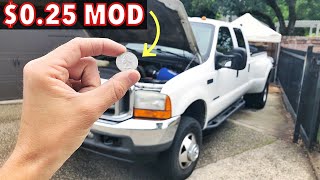
- Secure the UVCH Connectors (The '$0.50 Mod') (When valve covers are off) — The Under Valve Cover Harness (UVCH) connectors wiggle loose over time, causing an entire bank of injectors to lose power. Wedging a quarter or similar shim in the connector keeps it firmly seated.
- Maintain a Healthy Electrical System (Ongoing) — The IDM is sensitive to voltage fluctuations. Ensure your batteries are strong, alternator output is stable (13.7-14.7V), and all battery and ground connections are clean and tight.
Frequently Asked Questions
What is the most common misdiagnosis for P1218?
On Ford 7.3L engines, the most common mistake is immediately replacing the IDM without thoroughly inspecting the wiring harness. A chafed wire causing a short is repaired for a fraction of the cost of a new module. Another error is replacing injectors when a 'buzz test' fails, when the true cause is the Under-Valve-Cover-Harness (UVCH) or the IDM itself.
What is the '$0.50 mod' for a 7.3L Powerstroke?
This is a community term for a simple fix to prevent the Under-Valve-Cover-Harness (UVCH) connectors from coming loose. It involves wedging a small object, like a quarter, between the connector and the rocker arm carrier to keep it firmly seated. This resolves intermittent misfires for an entire bank of injectors.
Can I swap an IDM from another truck to test mine?
Yes, on 1994-2003 Ford 7.3L Powerstroke engines, the IDMs are generally interchangeable for diagnostic purposes. Swapping in a known-good IDM from another truck is a quick way to determine if your IDM is the problem. If the code and symptoms disappear with the donor IDM, your original module is faulty.
Why does my truck stall when hot but restart when it's cold?
This is a classic symptom of a failing IDM. Electronic components and solder joints on the module's circuit board expand and separate when they heat up, breaking the electrical connection. When the module cools down, the connection is restored, and the engine runs again until it gets hot.
What does it mean if I also have a P0603 code?
P0603 indicates a Keep Alive Memory (KAM) error, often appearing after disconnecting batteries during diagnosis. Address P1218 first. If P0603 returns independently, investigate the PCM power supply.
Will clearing the code fix the problem?
No. Clearing the code only turns off the check engine light temporarily. Since P1218 is caused by a physical hardware fault, the code returns as soon as the computer runs its self-test again.
Is it better to repair my IDM or buy a remanufactured one?
Repairing your original IDM preserves programming and includes upgrades to prevent common failures. Buying a quality remanufactured unit from brands like Dorman or Cardone is faster. Avoid cheap, untested used units which often hide the same underlying faults.
Key Takeaways
- Code P1218 on a 1994-2003 Ford 7.3L Powerstroke almost always indicates a failed Injector Driver Module (IDM) or a chafed wiring harness shorting to ground.
- Before spending $300+ on a replacement IDM, visually inspect the 42-pin wiring harness where it rubs against the driver-side valve cover for exposed wires.
- On 1996-2000 GM 6.5L diesels, P1218 points to a missing or failed injection pump calibration resistor, requiring a resistor transfer or a $600+ pump replacement.
- Never ignore a P1218 code; driving with an active IDM short circuit frequently destroys the $800+ Powertrain Control Module (PCM) and leaves you stranded.
Helpful Videos


The information in this article is provided for general reference and educational purposes only. Vehicle specifications, procedures, and part compatibility can vary by production date, trim level, and region. Always consult your vehicle's factory service manual and verify part numbers before purchasing or performing repairs. Safety-critical components such as airbags, seat belts, and braking systems should be installed by a qualified professional.
- 🎬 Helpful Videos
- What Does P1218 Mean?
- Can I Drive With P1218?
- Common Causes
- Symptoms
- Diagnostic Flowchart
- Common Fixes & Costs
- Used vs. New Parts: Buying Guide
- What Happens If You Wait — Timeline
- Cost of Not Fixing It
- Diagnosis Steps
- When This Code Triggers (Freeze-Frame Conditions)
- Related Codes
- Climate & Environmental Factors
- How to Talk to a Mechanic About This Code
- Where to Take It: Dealer vs Independent vs Chain
- When to Walk Away From the Repair
- What Scan Tool You Need for This Code
- How to Clear the Code After You Fix It
- Will This Fail Emissions / State Inspection?
- Most Commonly Affected Vehicles
- Manufacturer-Specific Notes
- Real Owner Stories
- 2001 Ford E-450 with 170K miles: The Classic 'Stalls When Hot' Misdiagnosis
- 2001 Ford F-350 with repeat failures: Chasing the Root Cause
- 1999 Chevy Suburban 6.5L Diesel: The GM-Specific Fix
- How to Prevent This Code From Triggering
- Frequently Asked Questions
- What is the most common misdiagnosis for P1218?
- What is the '$0.50 mod' for a 7.3L Powerstroke?
- Can I swap an IDM from another truck to test mine?
- Why does my truck stall when hot but restart when it's cold?
- What does it mean if I also have a P0603 code?
- Will clearing the code fix the problem?
- Is it better to repair my IDM or buy a remanufactured one?
- Key Takeaways
- 🎟️ Get 5% Off