

OBD-II Code P1213: Comprehensive Diagnostic and Repair Guide
What P1213 means, why it triggers, and how to fix it for Ford, VW, GM, and more
- P1213 definitions vary by brand: Ford Power Stroke engines indicate a high-pressure oil system failure, while VW/Audi models flag a cylinder 1 injector circuit short.
- Ford HEUI system faults trigger 90% of P1213 codes, stemming from a failed IPR valve, a faulty ICP sensor, or a high-pressure oil leak.
- A 'hot no-start' condition is the primary symptom on Ford diesels, occurring when hot, thin oil escapes through worn internal seals and drops injection pressure below 500 PSI.
- Diagnosis requires an advanced scan tool to verify Injector Control Pressure (ICP) exceeds 500 PSI during cranking and IPR duty cycle remains below 85%.
What Does P1213 Mean?

P1213 is a manufacturer-specific diagnostic trouble code (DTC). For Ford Power Stroke diesel engines, it indicates a failure in the high-pressure oil system controlling the fuel injectors. For Volkswagen and Audi, it points directly to an electrical short in the fuel injector circuit for cylinder 1.
Technical definition: The official definition of P1213 is brand-dependent. The most prevalent definition for Ford Power Stroke diesels is "Injector Control Pressure Higher or Lower Than Desired." Other definitions include "Start Injector Circuit Malfunction" (Ford, GM, Jaguar) and "Cylinder 1 Fuel Injector Circuit Short to B+" (Volkswagen/Audi).
Can I Drive With P1213?
No — Do Not Drive. Driving with a P1213 code is strongly discouraged. The fault causes sudden stalling, a no-start condition, or severe power loss, creating a significant safety risk. Continued operation leads to catastrophic engine damage, such as a shorted injector destroying a catalytic converter (a $1,500+ repair) or washing fuel into the oil, causing bearing failure.
Common Causes


- High-Pressure Oil System Leak (Very Common) — Leaks from injector O-rings, standpipes, dummy plugs, or HPOP fittings are the primary cause on 6.0L Power Strokes. These leaks worsen when oil is hot and thin, causing a 'hot no-start' condition.
- Faulty Injector Control Pressure (ICP) Sensor (Very Common) — This sensor measures high-pressure oil system pressure. A failed sensor or an oil-soaked pigtail connector sends incorrect data to the PCM, triggering the code.
- Faulty Injector Pressure Regulator (IPR) Valve (Very Common) — This solenoid regulates the high-pressure oil required to fire Ford HEUI injectors. It fails electronically, sticks open, or suffers from a debris-clogged screen, preventing pressure buildup.
- Low or Contaminated Engine Oil (Common) — Ford HEUI systems use engine oil to power the injectors. Low oil levels starve the high-pressure oil pump (HPOP), while dirty or incorrect viscosity oil prevents proper pressure generation.
- Wiring Harness Damage (Common) — Wires for the ICP sensor, IPR valve, or fuel injectors chafe, melt, or corrode. The Under Valve Cover Harness (UVCH) on Ford 7.3L engines frequently loosens, causing immediate injector circuit faults.
- Failed Fuel Injector(s) (Common) — An electronically failed or internally leaking fuel injector triggers this code. On VW/Audi vehicles, a short in the cylinder 1 injector is the exclusive cause.
- Failed High-Pressure Oil Pump (HPOP) (Common) — A weak HPOP cannot generate the minimum 500 PSI required to fire the injectors, especially when oil is hot. This triggers P1213 when the PCM's requested pressure remains unmet.
- Faulty Fuel Injector Control Module (FICM) or PCM (Rare) — Internal driver circuit failures within the FICM (6.0L Fords) or main PCM disrupt voltage signals to the injectors, causing faults.
Symptoms
- Engine will not start (Hot No-Start) — The engine cranks but refuses to fire. 🎬 Watch: Step-by-step troubleshooting for a 7.3 Powerstroke no-start condition. This occurs almost exclusively when the engine is warm on Ford Power Stroke engines suffering from high-pressure oil leaks.
- Severe loss of power and stalling — The vehicle struggles to accelerate and shuts off unexpectedly while driving or idling due to insufficient injection control pressure.
- Check Engine Light is on — The vehicle's computer detects the fault and stores the P1213 code, illuminating the Malfunction Indicator Lamp (MIL).
- Increased black smoke from exhaust — Incorrect injection pressure or timing causes incomplete combustion, resulting in excessive black smoke under acceleration.
Diagnostic Flowchart

Tap your situation to follow the diagnostic path that matches what you're seeing on this code.
Common Fixes & Costs
- Replace Injector Control Pressure (ICP) Sensor and/or Pigtail — Parts: $105-$230, Labor: $80-$200, ~1.5 hr book time (DIY)
- Repair or Replace Wiring Harness (UVCH/Pigtail) — Parts: $50-$100, Labor: $150-$300, ~2.5 hr book time (Intermediate)
- Replace Injector Pressure Regulator (IPR) Valve — Parts: $180-$300, Labor: $150-$300, ~2.0 hr book time (Intermediate)
- Replace Fuel Injector(s) — Parts: $200-$550, Labor: $300-$650, ~4.0 hr book time (Professional)
- Replace High-Pressure Oil Pump (HPOP) — Parts: $500-$1,200, Labor: $700-$1,300, ~8.5 hr book time (Professional)
Used vs. New Parts: Buying Guide
When a used part is worth it: Used parts are not recommended for core components like sensors and regulators. The only exception is a major wiring harness from a low-mileage vehicle if a specific connector is unavailable.
Donor-vehicle mileage cap: roughly under 50000 miles for the part to have meaningful remaining life.
Donor quality checklist:
- Ensure wiring shows no signs of heat damage, oil saturation, or brittle connectors.
- Avoid parts from vehicles scrapped due to engine failure or fire.
- Verify the exact part number, as sensors for different model years look identical but are not interchangeable.
Decision logic:
- If The part is an electronic sensor like an ICP or IPR valve. → Always buy new OEM. Used sensors have an unknown lifespan and fail frequently.
- If The part is a High-Pressure Oil Pump (HPOP). → Buy a new or professionally remanufactured unit with a warranty. The high labor cost makes a used pump too risky.
- If The part is a wiring pigtail or Under Valve Cover Harness (UVCH). → Buy new. Old plastic connectors become brittle and fail under engine heat.
Warranty tradeoff: Used parts offer a 30-day warranty at best. New aftermarket parts provide a 1-year to limited lifetime warranty. Given the high labor costs, a new part with a strong warranty is the most cost-effective choice.
Worst-case if a used part fails: $400-$1500 if a used part fails after installation, primarily due to the repeated labor cost to diagnose and replace it again.
What Happens If You Wait — Timeline
- 0-1 month: Intermittent symptoms appear. On a Power Stroke, this manifests as a slightly longer crank time when hot. On a VW, a slight rough idle becomes noticeable. (MPG impact: 0-5%% · Added cost: $0-$50 in wasted fuel)
- 1-3 months: Symptoms become consistent and severe. The 'hot no-start' on a Power Stroke becomes a regular occurrence, requiring long cool-down periods. Stalling at intersections increases. (MPG impact: 5-15%% · Added cost: $150-$500 (Towing fees, diagnostic charges from being stranded))
- Immediate to 4 months: Primary component failure leads to a hard-down situation. The vehicle becomes completely immobile and will not start hot or cold, forcing a repair. (MPG impact: 100% (vehicle is not drivable)% · Added cost: $400-$2,500 (Cost of the primary repair, e.g., IPR valve, injector O-rings, or HPOP))
- 4+ months (if driven with early symptoms): Consequential damage occurs. Continuously forcing a weak HPOP to compensate for a leak causes complete pump failure. Shorted injectors destroy catalytic converters. (MPG impact: N/A% · Added cost: $2,500-$15,000+ (HPOP replacement, catalytic converter replacement, or full engine replacement))
Cost of Not Fixing It
- Immediate: High risk of being stranded due to a sudden no-start or stalling in traffic. (Added cost: $150-$500 (Towing and diagnostic fees))
- 1-3 months: Operating with low injection control pressure strains the High-Pressure Oil Pump (HPOP), causing premature pump failure. (Added cost: $1,200-$2,500)
- 3+ months: On VW/Audi models, a shorted injector dumps unburned fuel into the exhaust, destroying the catalytic converter. (Added cost: $1,000-$2,800)
- Long-term: Fuel washes past piston rings, diluting engine oil and causing catastrophic bearing failure. (Added cost: $5,000-$15,000 (Engine replacement))
Diagnosis Steps
- Check Engine Oil Level and Condition
Verify the oil level is at the full mark. Low oil starves the HPOP and prevents a Ford Power Stroke from starting.
Tools: Dipstick, clean rag (Beginner) - Scan for All Trouble Codes
Read all codes using an OBD-II scanner. Accompanying codes like P1211 (ICP Not Controllable) or P1280 (ICP Sensor Circuit Low) isolate the fault to the high-pressure oil system.
Tools: OBD-II Scanner (Beginner) - Monitor Live Data with a Scan Tool
Monitor ICP, ICP Desired, and IPR Duty Cycle % while cranking. Ford Power Strokes require 500 PSI of ICP to start. If ICP is below 500 PSI while IPR duty cycle is maxed (85%), the system has a massive leak or failed pump.
Tools: Advanced OBD-II Scanner (Advanced) - Test the ICP Sensor
Unplug the ICP sensor's electrical connector during a no-start condition. If the engine starts and runs rough, the ICP sensor is faulty. The PCM defaults to 750 PSI when unplugged, bypassing the false low reading.
Tools: Basic hand tools (Intermediate) - Visually Inspect Wiring and Connectors
Inspect harnesses for the ICP sensor, IPR valve, and fuel injectors for melted plastic, chafed wires, or oil saturation. Check the 42-pin connector and Under Valve Cover Harness (UVCH) on Ford 7.3L engines.
Tools: Flashlight, Mirror (Beginner) - [PRO TIP] Perform High-Pressure Oil System Leak Test
Remove the IPR valve or ICP sensor, install an adapter, and apply 100 PSI of compressed shop air into the high-pressure oil rail. Listen for audible air leaks from injector O-rings, standpipes, or dummy plugs.
Tools: Air Compressor, High-Pressure Oil System Adapter (Advanced) - [PRO TIP] Quantitative HEUI System Analysis
Monitor live PIDs: Idle ICP must stabilize around 480-580 PSI. Idle IPR Duty Cycle must sit at 10-15% (7.3L) or 21-24% (6.0L). Full Throttle ICP must reach 2,500-2,800+ PSI. Deviations indicate leaks or pump wear.
Tools: Advanced OBD-II Scanner (Advanced) - [PRO TIP] Test Injector Circuit with a Multimeter
For VW/Audi models, disconnect the cylinder 1 injector and measure resistance across its pins. It must read under 1.0 ohm. Measure resistance from each pin to ground; a reading other than infinite (OL) confirms a short.
Tools: Digital Multimeter (Advanced) - [PRO TIP] ICP Sensor Voltage & Resistance Test
Back-probe the ICP sensor connector with the key on, engine off (KOEO). The reference voltage (VREF) wire must read 4.5-5.5V. The signal wire must read 0.4-0.6V. Oil leaking through the connector itself is a definitive sign of sensor failure.
Tools: Digital Multimeter, Back-probe kit (Advanced) - [PRO TIP] FICM Voltage Test (Ford 6.0L)
Monitor FICM Main Power via scan tool. It must remain above 45 volts with the key on, while cranking, and while running. Readings below 45 volts confirm a failing power supply requiring FICM replacement.
Tools: Advanced OBD-II Scanner or Digital Multimeter (Advanced) - [PRO TIP] Perform a Bubble Test (Ford 6.0L)
Remove the secondary fuel filter cap, ensure fuel covers the standpipe, and crank the engine. A steady stream of bubbles confirms compression is leaking past a failed injector copper washer into the fuel galley.
Tools: Basic hand tools (Advanced)
When This Code Triggers (Freeze-Frame Conditions)
- Engine Coolant Temp: 190-210°F (88-99°C) (The code sets when the engine is fully warmed up, as hot, thin oil exacerbates high-pressure oil leaks.)
- Engine RPM: 0 (during crank/no-start) or 1500-2500 (Triggers during cranking if ICP fails to reach the 500 PSI minimum, or during steady driving if the HPOP cannot meet pressure demands.)
- ICP Pressure (Actual vs. Desired): Actual < Desired (Freeze frame shows the PCM commanding a high pressure (e.g., 800 PSI) but the system only achieving a lower value (e.g., 400 PSI).)
- IPR Duty Cycle: 65-85% (A maxed-out IPR duty cycle indicates the PCM is commanding the regulator to close completely to build pressure, confirming a large leak or weak pump.)
Related Codes
- P1211 — Indicates 'ICP Above/Below Desired' while running. P1213 is the severe cranking version. Together, they confirm a major high-pressure oil leak or HPOP failure.
- P1280 — Means 'ICP Sensor Circuit Low Input'. This electrical code points directly to the ICP sensor or wiring, which subsequently causes the P1213 performance fault.
- P0301 — On VW/Audi, P1213 (Cylinder 1 short) directly causes P0301 (Cylinder 1 Misfire). Diagnose the electrical short first to resolve the misfire.
- P1291 / P1292 — Modern equivalents on newer Ford diesels indicating an 'Injector High Side Short to Ground', pointing to a shorted injector or harness.
Climate & Environmental Factors
- Hot Climate / High Engine Temperature: Hot, thin oil escapes through worn injector O-rings or standpipe seals, causing the classic 'hot no-start' where the HPOP cannot build 500 PSI.
- Cold Climate: Thick oil strains a weak HPOP, causing a no-start. On 6.0L engines, a weak FICM fails to provide the 48+ volts needed to fire injectors in the cold.
- High Altitude: Thinner air worsens pre-existing low power conditions caused by incorrect injection pressure, though altitude does not directly trigger the code.
How to Talk to a Mechanic About This Code
Say this: "I have a P1213 code on my Ford Power Stroke with a hot no-start issue. I need a diagnostic that monitors live data for ICP actual vs. desired pressure and IPR duty cycle during cranking. Please perform a high-pressure oil system air leak test before recommending an HPOP replacement."
This proves you understand the HEUI system and expect a data-driven diagnosis. It forces the technician to differentiate between a bad sensor, a leak, or a failed pump rather than blindly swapping expensive parts.
Avoid saying:
- 'Just fix whatever's wrong'
- 'My check engine light is on, can you look at it?'
- 'My truck won't start, I think it needs a new oil pump.'
Questions to ask before authorizing the repair:
- What were the ICP pressure and IPR duty cycle readings when you cranked the engine hot?
- If you are recommending a new HPOP, how did you rule out a high-pressure oil leak from the standpipes, dummy plugs, or injector O-rings?
- Did you perform a high-pressure air test? If so, where did you hear the leak?
- Can you show me the old part and explain why it failed?
- What is the warranty on the recommended parts and labor?
Where to Take It: Dealer vs Independent vs Chain
- Dealer:
A viable but expensive option. They possess factory tools, but an independent diesel specialist is more cost-effective for this common Power Stroke issue.
Best for: Vehicles still under powertrain warranty, Complex electrical issues or when a PCM reflash is required, When you have an established relationship with a trusted dealer tech
Downsides: Highest labor rates, often 1.5-2x more than independent shops., Defaults to replacing large, expensive assemblies instead of smaller failed components. (Typical cost: +50% vs. baseline) - Independent Shop:
Best Fit. Seek out a dedicated, reputable independent DIESEL repair shop. They specialize in Power Stroke engines and possess the specific tools (air test adapters, advanced scanners) to diagnose P1213 efficiently.
Best for: Out-of-warranty Power Stroke trucks, Diagnosing common, well-documented issues like HEUI system faults, Owners seeking a better cost-to-expertise ratio
Downsides: Quality is highly variable; general auto shops lack the equipment for diesel work. (Typical cost: +0% vs. baseline) - Chain Shop:
AVOID. A P1213 on a Power Stroke is a complex diagnostic task far beyond the scope of a typical chain repair shop.
Best for: Basic services like oil changes, tires, and batteries.
Downsides: Technicians lack the specialized training and tools for complex diesel diagnostics., High probability of misdiagnosis, leading to unnecessary parts replacement. (Typical cost: -10% vs. baseline)
When to Walk Away From the Repair
If the estimated repair cost exceeds 40-50% of the vehicle's private-party value, consider selling it as-is. HPOP replacements on older trucks frequently cross this threshold.
- Car worth $10000, fix is $1800: Fix it. The repair cost for diagnosed injector O-rings and standpipes is well below the threshold.
- Car worth $8000, fix is $3000: Borderline. A $3,000 HPOP replacement is a major expense. Get a second opinion from another diesel shop before proceeding.
- Car worth $4500, fix is $3500: Walk away. The repair cost is nearly the entire value of the truck. It is not economically viable.
What Scan Tool You Need for This Code
Minimum: A tool that reads manufacturer-specific live data PIDs for Ford, specifically: Injector Control Pressure (ICP), ICP Desired, and IPR Duty Cycle %.
A basic $20 code reader only shows 'P1213'. It cannot display the critical live data needed to see what the high-pressure oil system is doing, reducing diagnosis to pure guesswork.
Budget: FORScan software with OBDLink EX (~$70) — The most powerful DIY option for Ford owners. FORScan provides dealer-level diagnostics, allowing you to view and graph ICP, IPR, and FICM voltage, and run injector buzz tests.
Mid-range: Foxwell NT530 or BlueDriver Pro (~$120-180) — Accesses Ford-specific live data, including necessary ICP and IPR parameters. More user-friendly than FORScan but features fewer active test functions.
Professional: Autel MaxiCOM MK808BT (~$450-600) — Provides full bidirectional control to command tests directly from the tool. Offers comprehensive live data graphing and access to all vehicle modules.
Rent vs buy: Buy. Auto parts store loaner tools are basic readers and fail to provide live data. Buying a FORScan-compatible adapter is a low-cost investment that pays for itself immediately.
How to Clear the Code After You Fix It
- Ensure all connectors are securely fastened.
- Use a compatible OBD-II scan tool to erase the diagnostic trouble codes.
- Perform a complete drive cycle to allow the vehicle's readiness monitors to run and complete.
Drive cycle (~30 minutes): Start the engine cold (sit for 8+ hours). Idle for 3 minutes. Drive for 15 minutes in mixed city/highway conditions, maintaining steady cruising between 45-65 mph. Perform three smooth accelerations and decelerations. Idle for 60 seconds before shutting down.
Readiness monitors affected: Comprehensive Component Monitor (CCM), Misfire Monitor, Fuel System Monitor
Before emissions retest: drive at least 100 miles to fully set monitors.
Watch out for:
- Disconnecting the battery clears the code but resets all readiness monitors to 'incomplete', causing an automatic emissions test failure.
- The code returns immediately if the underlying mechanical or electrical fault remains unrepaired.
- Failing to drive under the correct conditions prevents the drive cycle from completing, resulting in a 'Not Ready' status.
Will This Fail Emissions / State Inspection?
Yes — this code typically fails an OBD-II emissions inspection.
- California: An active P1213 code causes an automatic Smog Check failure. After repairs, all readiness monitors must be 'complete' (1996-1999 models) or all but one can be 'incomplete' (2000+ models).
- New York: The NYS DMV inspection includes an OBD-II scan. An illuminated Check Engine Light and a stored P1213 code result in an emissions failure, blocking registration renewal.
- Texas: In the 17 counties requiring emissions testing, a vehicle with an active P1213 code fails the OBD portion of the inspection. The Check Engine Light must be off and readiness monitors must indicate 'Ready'.
Most Commonly Affected Vehicles
- Ford F-250/F-350 Super Duty (1999-2007) — Extremely common on 7.3L and 6.0L Power Stroke diesels. The 7.3L suffers from UVCH and ICP sensor issues. The 6.0L is notorious for HPOP failures and standpipe leaks.
- Ford Excursion (2000-2005) — Shares the 7.3L and 6.0L Power Stroke engines with the Super Duty trucks and suffers from the exact same HEUI system vulnerabilities.
- Ford E-350/E-450 (1999-2010) — These vans use 7.3L and 6.0L Power Stroke engines and are prone to the same faults, though repairs are harder due to tight engine bay access.
- Volkswagen Jetta, Golf, Beetle (1999-2006) — On TDI models (engine codes ALH, AHU), this code specifically means 'Cylinder 1 Fuel Injector Circuit Short to B+', pointing to a wiring or injector fault.
- Audi A4, A6 (1998-2005) — Like its VW counterparts, P1213 indicates 'Cylinder 1 Fuel Injector Circuit Short to B+'. Diagnosis centers on the wiring and injector for the first cylinder.
- Chevrolet / GMC Silverado, Sierra, Express, Savana (1996-2002) — On models with the 6.5L diesel engine, P1213 indicates a 'Start Injector Circuit Malfunction', pointing to an issue with the cold start fuel injector system.
- Ford C-Max, Focus (Diesel) (2005-2010) — On European models with TDCi engines, P1213 points to a 'Start Injector Circuit Malfunction' or a fault with a specific injector.
- BMW Various Models (2000-2010) — For many BMWs, P1213 is defined as 'EGR Valve Actuator - Circuit Low' or 'Start Injector Circuit Malfunction', requiring a different diagnostic path.
Manufacturer-Specific Notes

- Ford: On 7.3L and 6.0L diesels, P1213 is exclusively a high-pressure oil (HEUI) issue. The 7.3L is famous for the '50-cent fix' where shimming the UVCH connector restores function.
- Volkswagen / Audi: P1213 specifically means 'Cylinder 1 Fuel Injector Circuit Short to B+'. Diagnosis must immediately center on testing the wiring and resistance of the #1 fuel injector.
- General Motors (GM): On older 6.5L diesels, P1213 indicates a 'Start Injector Circuit Malfunction', referring to a separate cold-start system rather than the primary injectors.
- Kia: P1213 means 'Driver Door Ajar Switch 2 Circuit High', proving the absolute necessity of verifying manufacturer-specific code definitions.
Real Owner Stories
2002 Ford F-250 7.3L with 330K miles - The Classic 'Hot No-Start'
Truck ran fine when cold, but after driving for 30-45 minutes and shutting it off, it would crank but not restart. Occasionally stalled coming to a stop when hot. Threw codes P1211 and P1212.
What they tried:
- Initially suspected the IPR valve, as this is a common failure for hot-no-start.
- Unplugged the ICP sensor; the truck still wouldn't start, which correctly ruled out a failed ICP sensor sending false readings.
- Data logged with a scan tool, which showed ICP pressure struggling to get over 300 PSI during hot cranking, while IPR duty cycle went to maximum. This pointed to a large high-pressure oil leak.
Outcome: Owner performed a high-pressure air test and heard a significant leak under the passenger side valve cover. Upon removal, found the rear injector's O-rings were completely blown out. Replaced the injector O-rings, and the truck started perfectly when hot.
Lesson: The 'hot no-start' symptom is the number one sign of a high-pressure oil leak. Don't immediately replace the IPR or HPOP; use scan tool data and an air leak test to find the source of the leak first.
1999 Ford F-350 7.3L - Misdiagnosis Leads to Unnecessary Parts
Truck suddenly started running very rough, with no power and lots of smoke. It would barely idle. Owner feared the HPOP had failed.
What they tried:
- Without proper diagnosis, the owner replaced the expensive High-Pressure Oil Pump (HPOP). The problem remained exactly the same.
- Then replaced the IPR valve, with no change.
- Finally, after consulting a forum, was told to check the Under Valve Cover Harness (UVCH) connectors.
Outcome: The driver's side UVCH connector had vibrated loose. The owner performed the '$0.50 fix' by shimming the connector with a piece of a quarter to hold it tight. The truck immediately started and ran perfectly.
Lesson: Always start with the simplest, most common failures. On a 7.3L, a loose UVCH connector can mimic a catastrophic HPOP or injector failure. Check connectors and wiring before spending thousands on hard parts.
2001 VW Jetta TDI (ALH) - A Straightforward Electrical Fault
Car suddenly developed a rough idle and hesitation, with the Check Engine Light on. A basic scan showed code P1213.
What they tried:
- Knowing that P1213 on a VW specifically means 'Cylinder 1 Fuel Injector Circuit Short to B+', the owner focused diagnosis there.
- Visually inspected the wiring harness going to the #1 injector and found no obvious damage.
- Used a multimeter to test the #1 injector. Measured resistance between the two pins and found it was shorted (near zero ohms), outside of the typical 0.5-1.5 ohm spec.
Outcome: Replaced the #1 fuel injector with a new Bosch unit. Cleared the code, and the engine ran smoothly with no further issues.
Lesson: Your vehicle's make is critical. While P1213 on a Ford means a complex oil issue, on a VW/Audi it's a very specific electrical fault. A simple multimeter test can confirm a bad injector in minutes, saving diagnostic time.
2006 Ford F-250 6.0L - Chasing Multiple Leak Points
Truck with 180K miles developed a long crank time when hot, which eventually became a complete no-start when hot. Scan tool showed low ICP during cranking.
What they tried:
- Based on common 6.0L issues, the owner first replaced the STC fitting on the HPOP, but the problem persisted.
- Performed a high-pressure air test and heard air leaking, but couldn't pinpoint it.
- Decided to replace the standpipes and dummy plugs in the high-pressure oil rail, as the seals are a known failure point.
Outcome: After replacing the standpipes and dummy plugs with an updated kit, the system held pressure perfectly. The hot no-start was resolved. The original O-rings were found to be brittle and deformed.
Lesson: On a 6.0L Power Stroke, high-pressure oil leaks can come from multiple places (STC fitting, standpipes, dummy plugs, injector O-rings). It's often best to replace the standpipes and dummy plugs as a set with updated parts whenever the valve covers are off for another HPO-related repair.
How to Prevent This Code From Triggering
- Use correct specification engine oil and change it on schedule. (Every 5,000 miles or 6 months for 7.3L/6.0L Power Stroke.) — The HEUI system uses engine oil as hydraulic fluid to fire the injectors. Clean, correct-viscosity oil is critical for the health of the HPOP and prevents IPR valve damage.
- Use high-quality diesel fuel and a quality fuel additive. (Every fill-up.) — Good fuel with additives like cetane boosters and lubricity agents helps keep injector nozzles clean and prevents wear in the fuel system.
- Regularly inspect wiring harnesses in the engine bay. (Every oil change.) — On Power Stroke engines, harnesses are exposed to extreme heat and vibration. Look for signs of chafing, melting, or oil contamination on the ICP, IPR, and UVCH connectors.
- Monitor key engine parameters with a digital gauge. (During operation.) — Using a tool to watch live data (ICP, IPR duty cycle) helps you spot developing problems like a weak HPOP or a small oil leak before they cause a no-start situation.
- Change the fuel filter at recommended intervals. (Every 15,000-20,000 miles or as specified.) — A clean fuel filter ensures the injectors receive adequate fuel supply and prevents debris from damaging the injectors.
Frequently Asked Questions
Why does my Power Stroke truck only fail to start when it's hot?
This is a classic symptom of a high-pressure oil leak on a 6.0L or 7.3L Power Stroke. When engine oil gets hot, its viscosity decreases, allowing it to escape through worn O-rings on injectors or standpipes. The high-pressure oil pump (HPOP) cannot build the 500 PSI required to start the engine until the oil cools and thickens.
What is the '50-cent fix' for a P1213 code?
The '50-cent fix' is a DIY repair for the Under Valve Cover Harness (UVCH) on the Ford 7.3L Power Stroke. It involves shimming a loose main electrical connector with a quarter or Ford clip (P/N 2C3Z-14A163-AB). This secures the connection to the injectors and glow plugs, instantly resolving related codes.
What is the difference between the ICP sensor and the IPR valve?
The ICP (Injector Control Pressure) sensor reads oil pressure and reports it to the computer. The IPR (Injector Pressure Regulator) valve is a solenoid the computer commands to open or close to achieve desired pressure. A failure in either component causes a P1213 code.
What are the most common misdiagnosis mistakes for P1213?
A common mistake on Ford diesels is replacing the IPR valve when the actual root cause is a high-pressure oil leak. Another frequent error is replacing the ICP sensor when the fault lies in an oil-soaked pigtail connector. Always perform a high-pressure air leak test and review live scan tool data before replacing expensive parts.
Can I fix P1213 myself?
Simple causes like low engine oil or an accessible ICP sensor replacement are DIY-friendly. However, replacing an IPR valve, locating a high-pressure oil leak, or tracing a wiring short requires advanced skills and specialized tools. Stop DIY efforts and consult a diesel specialist if the issue requires removing the turbocharger or high-pressure oil pump.
Will a new fuel filter fix a P1213 code?
No, a new fuel filter will not fix a P1213 code. On affected Ford and VW vehicles, this code points to a failure in the high-pressure oil injection control system or a specific injector electrical circuit. It does not indicate a problem with the primary low-pressure fuel supply.
How much does it cost to diagnose a P1213 code?
Most repair shops charge a diagnostic fee equal to one or two hours of labor. Expect to pay between $150 and $250 for a professional diagnosis using an advanced scan tool. Shops typically credit this fee toward the final repair cost if you authorize the work.
Key Takeaways
- P1213 definitions vary by brand: Ford Power Stroke engines indicate a high-pressure oil system failure, while VW/Audi models flag a cylinder 1 injector circuit short.
- Ford HEUI system faults trigger 90% of P1213 codes, stemming from a failed IPR valve, a faulty ICP sensor, or a high-pressure oil leak.
- A 'hot no-start' condition is the primary symptom on Ford diesels, occurring when hot, thin oil escapes through worn internal seals and drops injection pressure below 500 PSI.
- Diagnosis requires an advanced scan tool to verify Injector Control Pressure (ICP) exceeds 500 PSI during cranking and IPR duty cycle remains below 85%.
Helpful Videos
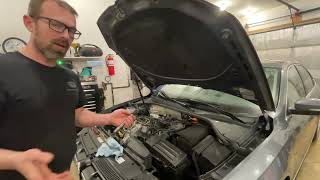

The information in this article is provided for general reference and educational purposes only. Vehicle specifications, procedures, and part compatibility can vary by production date, trim level, and region. Always consult your vehicle's factory service manual and verify part numbers before purchasing or performing repairs. Safety-critical components such as airbags, seat belts, and braking systems should be installed by a qualified professional.
- 🎬 Helpful Videos
- What Does P1213 Mean?
- Can I Drive With P1213?
- Common Causes
- Symptoms
- Diagnostic Flowchart
- Common Fixes & Costs
- Used vs. New Parts: Buying Guide
- What Happens If You Wait — Timeline
- Cost of Not Fixing It
- Diagnosis Steps
- When This Code Triggers (Freeze-Frame Conditions)
- Related Codes
- Climate & Environmental Factors
- How to Talk to a Mechanic About This Code
- Where to Take It: Dealer vs Independent vs Chain
- When to Walk Away From the Repair
- What Scan Tool You Need for This Code
- How to Clear the Code After You Fix It
- Will This Fail Emissions / State Inspection?
- Most Commonly Affected Vehicles
- Manufacturer-Specific Notes
- Real Owner Stories
- 2002 Ford F-250 7.3L with 330K miles - The Classic 'Hot No-Start'
- 1999 Ford F-350 7.3L - Misdiagnosis Leads to Unnecessary Parts
- 2001 VW Jetta TDI (ALH) - A Straightforward Electrical Fault
- 2006 Ford F-250 6.0L - Chasing Multiple Leak Points
- How to Prevent This Code From Triggering
- Frequently Asked Questions
- Why does my Power Stroke truck only fail to start when it's hot?
- What is the '50-cent fix' for a P1213 code?
- What is the difference between the ICP sensor and the IPR valve?
- What are the most common misdiagnosis mistakes for P1213?
- Can I fix P1213 myself?
- Will a new fuel filter fix a P1213 code?
- How much does it cost to diagnose a P1213 code?
- Key Takeaways
- 🎟️ Get 5% Off