

P1206 on 2020 Jeep Gladiator: Fuel Pump Circuit Fault Causes and Fixes
On a 2020 Jeep Gladiator, code P1206 almost always indicates a software issue in the Powertrain Control Module (PCM). The primary fix is a simple software update from a Jeep dealer, as outlined in multiple Technical Service Bulletins. This is a quick, low-cost repair if done under warranty. Do not replace any hardware until the PCM software has been verified and updated.
- For a 2020 Jeep Gladiator, P1206 is most likely a software bug.
- Do not replace any parts until you have confirmed the PCM has the latest software update per TSB 18-048-22 or 18-053-20.
- The repair is a simple PCM flash at a dealership, which should be a low-cost or no-cost (under warranty) procedure.
- If code P025A appears after the update, then a real hardware problem exists in the fuel pump circuit that needs diagnosis.
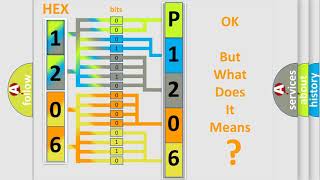
What's Unique About the 2020-2020 Jeep GLADIATOR 🎬 Watch: A quick overview of what the P1206 code means.
For the 2020 Jeep Gladiator, this code is unique because it's often a 'ghost' code caused by outdated PCM software. Manufacturer TSBs state that on vehicles with the old software, this code may appear when the actual issue would be correctly identified as P025A ('Fuel Pump Module Control Circuit Open') after a software update. Therefore, unlike on other vehicles where this code would immediately point to a hardware failure, the first step for a 2020 Gladiator is always to check the PCM software version. The TSBs explicitly state this diagnostic path.
Diagnostic Flowchart
Tap your situation to follow the diagnostic path that matches what you're seeing on this vehicle.
Symptoms You May Notice
- Check Engine Light (Malfunction Indicator Lamp) is on.
- Engine may crank but fail to start.
- Engine may stall unexpectedly, even while driving.
- Loss of power during acceleration.
- ABS light may also illuminate.
- Pinging or detonation sound from the engine at low RPM (1000-1500 RPM).
- Remote start may fail; the engine starts and then immediately shuts off.
- Replacing the fuel pump or Fuel Pump Control Module without first performing the PCM software update. The TSBs make it clear that the software flash is the first and most critical step for this specific code on this vehicle.
Most Likely Causes
- Outdated Powertrain Control Module (PCM) Software 🔴 High Probability Multiple Technical Service Bulletins (TSBs 18-048-22, 18-053-20) were issued by the manufacturer to address this specific software glitch on early production 2020 Gladiators built on or before July 10, 2020.
How to confirm: A Jeep dealership or a qualified shop with a wiTECH scan tool can check the current software version of the PCM and compare it against the latest available version specified in the TSBs. This can be verified by looking up the vehicle's VIN in the DealerCONNECT system.
Typical fix: Reprogramming (flashing) the PCM with the latest software. This is typically a 15-30 minute procedure at a dealership and may be covered under warranty or as part of a Rapid Response Transmittal (RRT).
Est. part cost: $0
Rare But Worth Checking
- Damaged Wiring or Connectors: If the PCM software is up to date and the code (or code P025A) persists, the next step is to inspect the wiring harness between the FPCM and the fuel pump for any breaks, corrosion, or loose pins. This would be a true hardware fault.
- Failed Fuel Pump Control Module (FPCM): While less common than the software issue, the module itself can fail. In some real-world cases, owners have had the FPCM replaced, sometimes in conjunction with the fuel pump, to resolve starting and stalling issues. It is an electronic component that can be damaged by voltage spikes or environmental factors.
- Failed In-Tank Fuel Pump: The internal windings of the fuel pump motor can fail, creating an open circuit. This would typically be accompanied by a no-start condition and an audible lack of the fuel pump priming when the key is turned. One owner reported a fuel pump failure at only 2,300 miles.
- Failed Powertrain Control Module (PCM): In very rare instances, the PCM itself can fail. This usually presents with multiple, often unrelated, trouble codes and erratic vehicle behavior. Owners have reported needing PCM replacements after experiencing numerous warning lights and stalling.
Diagnosis Steps
- Verify the Build Date: Check if the vehicle was built on or before July 10, 2020, as specified in TSB 18-053-20.
- Check for TSBs: Confirm with a dealer or using a professional database that TSBs 18-048-22 or 18-053-20 apply to the vehicle's VIN. This can be done via a VIN search in DealerCONNECT/Service Library.
- Update PCM Software: Have a Jeep dealer or qualified shop with a wiTECH tool reprogram the PCM to the latest software version. The dealer should ensure a battery charger is connected to maintain voltage between 13.2 and 13.5 volts during the flash. This is the most likely fix.
- Clear Codes and Re-test: After the flash, clear all DTCs and drive the vehicle to see if any codes return. Note if P1206 is gone but P025A appears, which would indicate a persistent hardware issue needing further diagnosis.
- Inspect Wiring: If codes return, perform a visual inspection of the wiring harness and connectors between the FPCM and the fuel pump. Look for chafing, breaks, corrosion, or loose pins.
- Test the Circuit: Use a multimeter to check for continuity and proper voltage at the FPCM and fuel pump connectors according to the factory service manual. Perform voltage drop tests on power and ground circuits.
- Test Components: If the circuit is intact, use a bidirectional scan tool to command the fuel pump on. If it doesn't run, the pump is likely faulty. If it does run, the FPCM may be the issue. An owner on JeepGladiatorForum.com reported needing both the module and the pump replaced.
Parts You'll Likely Need
- Powertrain Control Module (PCM) Reprogramming — This is not a physical part, but a software update that is the primary fix specified by the manufacturer for this code on this vehicle.
Trusted brands: Mopar (Dealer Service)
OEM price range: $100-$200
Aftermarket price range: N/A - Fuel Pump Control Module
(OEM #68434538AA)— If the PCM flash does not resolve the issue and the module is diagnosed as faulty, it will need replacement. This part is shared with the Jeep Wrangler and other Chrysler vehicles and is specified for vehicles built after 8/25/2018.
Trusted brands: Mopar
OEM price range: $115-$165
Aftermarket price range: $70-$120 - Fuel Pump and Sender Assembly
(OEM #68413956AD (supersedes 68413956AA, 68413956AB, 68413956AC))— If the wiring and FPCM are good, the open circuit may be inside the in-tank fuel pump assembly, requiring its replacement.
Trusted brands: Mopar, Delphi, Crown Automotive
OEM price range: $400-$550
Aftermarket price range: $125-$400
Related Codes That Often Appear With This One
- P025A — According to manufacturer TSBs, after the required PCM software update, the P1206 code will be superseded by P025A for the same fault condition. If P025A appears after the flash, it confirms a persistent hardware issue in the fuel pump circuit.
- P0456 — This EVAP System Small Leak code is listed in the same TSBs (18-053-20, 18-048-22) and can be triggered by the same PCM software issue.
- P0300 — This random/multiple cylinder misfire code is also mentioned in related TSBs. If P0300 is present with P1206, the repair is more involved, requiring right intake camshaft replacement in addition to the PCM flash.
- P258B — Electronic Vacuum Pump Performance is another code listed in the TSBs that can be resolved by the same PCM software update.
- C1252-92 — Vacuum Pump Control Circuit - Performance Or Incorrect Operation is an ABS-related code that is also addressed by the PCM flash specified in the TSBs.
Technical Service Bulletins (TSBs) & Recalls
- 18-048-22 REV. A: Addresses PCM updates for various DTCs including P1206, and notes it may be replaced by P025A after the flash. Also mentions the specific symptom of engine pinging.
- 18-055-19: Superseded bulletin, also calling for a PCM flash to resolve P1206 and other codes on vehicles built on or before September 27, 2019.
- 18-053-20 REV. B: A key bulletin that supersedes previous versions, applying to vehicles built on or before July 10, 2020. It clearly outlines the P1206 to P025A code change post-flash.
- 18-053-20 REV. A: An earlier revision that also details the PCM flash procedure and associated codes.
Platform-Specific Known Issues
- A series of TSBs (including 18-048-22, 18-055-19, and 18-053-20) were released for 2020 Gladiators with the 3.6L engine, specifically to address this code and others via a PCM software update.
- TSB 18-053-20 REV. B specifically applies to vehicles built on or before July 10, 2020, highlighting that this was an early production issue.
- The issue is so well-defined that the TSBs explicitly state that P1206 is the 'before' code and P025A is the 'after' code for the same hardware fault once the software is corrected.
Mechanic-Grade Diagnostic Values
- FPCM Power/Ground Circuit Voltage Drop — expected: Close to 0V, but no more than 0.1V for each connection in the circuit. A good circuit will typically show 0.2V to 0.5V total.. Failure: A reading higher than 0.5V indicates excessive resistance in the power feed or ground circuit, which can cause the module to malfunction.
- CAN Bus Circuit Voltage — expected: With the system active, the CAN High and CAN Low wire voltages should add up to approximately 5V (e.g., CAN High at 2.7V and CAN Low at 2.3V).. Failure: Abnormal voltages, such as a CAN High reading of 7V, indicates a short to power or a fault in a connected module that is disrupting the entire network.
- CAN Bus Circuit Resistance — expected: With the battery disconnected, the resistance between the CAN High and CAN Low lines should be approximately 60 Ω.. Failure: A reading of 120 Ω indicates a missing terminating resistor or a break in the circuit. A reading near 0 Ω indicates a short between the two CAN lines.
Scan Tool Commands That Help
- wiTECH: Fuel Pump Actuation / On-Demand Test — After verifying the PCM software is up-to-date but the code persists (or P025A appears). This command directly energizes the fuel pump, bypassing the FPCM's control logic. If the pump runs during this test, it confirms the pump motor and its wiring are likely good, pointing the diagnosis towards the FPCM or the control signal from the PCM. If the pump does not run, it confirms a hard fault in the pump itself or its dedicated power/ground circuit.
Wiring & Ground Locations
- Fuel Pump Control Module (FPCM) — On the driver's side frame rail, above the rear axle, near the fuel tank. It is a small electronic box bolted to the frame.. This is the module at the center of the P1206 and P025A fault codes. Its location on the frame rail exposes it to moisture and corrosion, making its connectors and ground a primary inspection point for a true hardware fault.
- Fuse F04 — In the Power Distribution Center (main fuse box) under the hood.. This fuse is specifically labeled 'FUEL PMP MTR/FPCM' and supplies power to both the fuel pump motor and the control module. A blown F04 fuse will cause a no-start and trigger this code.
- Rear Frame Grounds — There are factory ground points on the frame rails above the spare tire area. Wiring diagrams for the similar JL platform identify these as G915A/B.. The FPCM and in-tank fuel pump assembly must have a solid connection to chassis ground. A corroded or loose ground in this rear area is a common cause of intermittent or persistent open circuit faults in the fuel system.
Real Owner Repair Stories
- Tech28 on YouTube (2020 Jeep Gladiator) — Vehicle had 114 communication fault codes, with numerous warning lights for stop/start, power steering, service shifter, and anti-lock brakes. The radiator fan was running at high speed.
❌ Tried (didn't work) Initial diagnosis showed abnormal voltage on the CAN bus network (7V on CAN high). The technician began unplugging modules from the STAR connector one by one to isolate the source of the fault.
✅ What actually fixed it The technician discovered an aftermarket 'taser' module plugged into the Security Gateway Module. This module was malfunctioning and disrupting the entire CAN bus network. Removing the aftermarket module and plugging the factory connectors back in resolved all communication faults.
Helpful Videos
Used OEM Parts in Stock
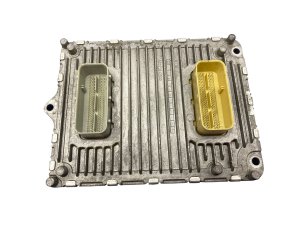
New Aftermarket Parts Available




The information in this article is provided for general reference and educational purposes only. Vehicle specifications, procedures, and part compatibility can vary by production date, trim level, and region. Always consult your vehicle's factory service manual and verify part numbers before purchasing or performing repairs. Safety-critical components such as airbags, seat belts, and braking systems should be installed by a qualified professional.
- Jeep GLADIATOR:
- 🎬 Helpful Videos
- 🛍️ Shop This Part
- What's Unique About the 2020-2020 Jeep GLADIATOR
- Diagnostic Flowchart
- Symptoms You May Notice
- Most Likely Causes
- Rare But Worth Checking
- Diagnosis Steps
- Parts You'll Likely Need
- Related Codes That Often Appear With This One
- Technical Service Bulletins (TSBs) & Recalls
- Platform-Specific Known Issues
- Mechanic-Grade Diagnostic Values
- Scan Tool Commands That Help
- Wiring & Ground Locations
- Real Owner Repair Stories
- 🎟️ Get 5% Off