

OBD-II Code P1202: A Comprehensive Guide to Injector Circuit & Misfire Faults
What P1202 means, why it triggers, and how to fix it for good
- The definition of code P1202 varies by manufacturer; for Ford and VW it indicates a cylinder #2 injector circuit fault, while Jeep CRD models use it for fuel over-pressure.
- Inspect the cylinder #2 fuel injector wiring harness first, as broken wires or corroded connectors cause over 50% of P1202 electrical faults.
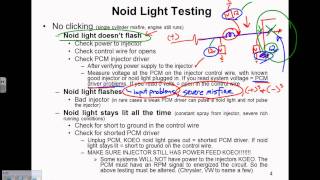
- Never replace a fuel injector without first testing the circuit with a $15 noid light to confirm the engine computer is actually sending a pulse signal.
- Stop driving immediately if the check engine light flashes, as the resulting severe misfire destroys a $1,500+ catalytic converter in under 50 miles.
What Does P1202 Mean?

P1202 is a manufacturer-specific code with definitions varying by brand. For Ford, Peugeot, and VW, it indicates an electrical problem with the cylinder #2 fuel injector circuit (open or shorted wire). For Acura and Honda, it signals a cylinder #2 misfire. For Chrysler/Jeep diesels, it points to high fuel pressure. For GM alternative fuel vehicles, it relates to a gas mass sensor fault. Identifying your vehicle's specific definition is the mandatory first step.
Technical definition: The official SAE/ISO definition for P1202 is not standardized. Common manufacturer-specific definitions include: 'Injector Circuit Open / Shorted - Cylinder #2' (Ford, Peugeot, Kia, VW, Land Rover, Volvo), 'Cylinder 2 Misfire' (Acura, Honda), 'Fuel System Over Pressure - Stuck Regulator' (Chrysler/Dodge/Jeep CRD), and 'Alternative Fuel Gas Mass Sensor Circuit Low Frequency' (GM).
Can I Drive With P1202?
Yes, But With Caution. You can drive short distances, but continued operation risks severe damage. The engine runs poorly, stalls, and suffers from reduced power. A persistent misfire dumps unburned fuel into the exhaust, rapidly overheating and destroying the catalytic converter—a repair costing $1,200 to $2,500+. Diagnose the fault immediately to prevent expensive, cascading damage.
Common Causes

- Damaged or Corroded Injector Wiring/Connector (Very Common) — The wiring harness leading to the cylinder #2 fuel injector is exposed to engine heat and vibration. Over time, this causes wires to break, chafe, or develop corrosion in the connector, creating an open or shorted circuit.
- Failed Fuel Injector (Common) — The cylinder #2 fuel injector fails electrically (internal coil shorts or breaks) or mechanically (clogged with deposits), preventing proper fuel spray.
- Faulty Ignition Coil (Common) — For misfire-related P1202 definitions (Honda/Acura), a weak or failed ignition coil is the primary suspect. It fails to generate the high voltage required for a strong spark, causing incomplete combustion.
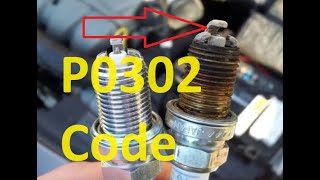
- Worn or Fouled Spark Plug (Common) — An old spark plug, one contaminated with oil or carbon, or one with an incorrect electrode gap fails to produce a consistent spark, causing a misfire in cylinder #2.
- Faulty Fuel Pressure Regulator (Jeep CRD) (Less Common) — On Jeep 2.8L CRD engines, P1202 indicates excessive fuel pressure. A malfunctioning fuel pressure regulator on the fuel rail gets stuck closed, causing pressure to build beyond specifications. 🎬 Watch: Understanding and diagnosing fuel pressure regulator failures.
- Intake Air (Vacuum) Leak (Less Common) — A cracked vacuum hose or a faulty intake manifold gasket near cylinder #2 introduces unmetered air. This leans out the air-fuel mixture for that cylinder, causing a misfire.
- Low Cylinder Compression (Less Common) — Mechanical engine problems like worn piston rings, a burnt exhaust valve, or a leaking head gasket cause a loss of compression in cylinder #2. Without sufficient compression, the air/fuel mixture cannot ignite properly.
- Faulty Alternative Fuel Gas Mass Sensor (GM) (Rare) — On GM vehicles with CNG or LPG systems, this code points to a low frequency signal from the gas mass sensor, indicating a sensor failure, wiring fault, or low alternative fuel pressure.
- Powertrain Control Module (PCM) Driver Fault (Rare) — The internal transistor within the PCM that fires the injector for cylinder #2 fails. Consider this only after thoroughly ruling out all wiring and component faults.
Symptoms

- Rough Idle and Engine Vibration — The engine shakes, shudders, or runs unevenly at idle, indicating one cylinder is not contributing power.
- Reduced Engine Power and Hesitation — The vehicle feels sluggish, weak, and stumbles during acceleration because it operates on fewer cylinders.
- Poor Fuel Economy — Fuel consumption increases noticeably as the PCM compensates for the fault or dumps fuel into a non-firing cylinder.
- Hard Starting or Stalling — The engine takes longer to start or stalls intermittently at low speeds.
- Fuel Smell — A distinct smell of raw gasoline emits from the exhaust as unburned fuel pushes out of the non-firing cylinder.
- Engine Backfire or Exhaust Pop — On deceleration, popping or a small backfire occurs as unburned fuel ignites in the hot exhaust pipes.
- Limp Mode Activation — The PCM enables 'limp mode,' severely restricting engine power and speed to prevent further damage.
- Check Engine Light is On or Flashing (also visible on scanner) — A solid Check Engine Light (MIL) is the first indicator. A flashing light signals a severe misfire that rapidly damages the catalytic converter; stop driving immediately.
Common Fixes & Costs
- Repair Injector Wiring or Replace Connector Pigtail — Parts: $15-$60, Labor: $150-$400, ~1.5 hr book time (Professional)
- Replace Failed Fuel Injector — Parts: $70-$350, Labor: $100-$450, ~2.5 hr book time (Intermediate)
- Replace Ignition Coil — Parts: $40-$120, Labor: $50-$150, ~0.8 hr book time (DIY)
- Replace Spark Plugs — Parts: $10-$50, Labor: $100-$250, ~1.2 hr book time (DIY)
- Replace Fuel Pressure Regulator (Jeep CRD) — Parts: $150-$300, Labor: $200-$400, ~2.0 hr book time (Intermediate)
Used vs. New Parts: Buying Guide
When a used part is worth it: For a common fix like a fuel injector or ignition coil, a used part from a reputable salvage yard with a warranty is a cost-effective option, especially for older, high-mileage vehicles where the cost of new parts is prohibitive.
Donor-vehicle mileage cap: roughly under 80000 miles for the part to have meaningful remaining life.
Donor quality checklist:
- Verify the part comes with at least a 30-90 day warranty.
- Ask for the VIN of the donor vehicle to check for accident history or flood damage.
- Match the part number exactly. Even similar-looking injectors have different flow rates or electrical properties.
- Distinguish between 'used/refurbished' (cleaned and tested) and 'remanufactured' (disassembled and rebuilt with new components), as quality and price differ significantly.
Decision logic:
- If The part is an ignition coil or easily accessible port fuel injector and the vehicle is over 100K miles → A tested used part with a warranty is a reasonable choice to save money.
- If The part is a complex diesel or direct-injection (GDI) fuel injector → Favor new or professionally remanufactured parts, as used ones carry a high risk of failure and installation is labor-intensive.
- If The part is electrical wiring, such as a pigtail connector → Always buy new. Used wiring has the same age-related brittleness and corrosion issues.
Warranty tradeoff: Used parts typically offer a 30-90 day functional warranty. Aftermarket new parts often come with a 1-year to limited lifetime warranty. OEM new parts carry a 1-2 year warranty, but are the most expensive option.
Worst-case if a used part fails: $300-$800 if a used injector or coil fails after installation, requiring a second labor charge plus a new part.
Cost of Not Fixing It
- 0-1 month: Noticeable drop in fuel economy (5-15%), rough idle, and poor acceleration. Potential for stalling and hard starts. (Added cost: Negligible, other than increased fuel consumption.)
- 1-6 months: Risk of catalytic converter damage. Unburned fuel from the misfiring cylinder superheats the converter, melting its internal structure and causing a blockage. (Added cost: $1,200-$3,400 to replace the damaged catalytic converter.)
- 6+ months: Potential for internal engine damage. 'Cylinder wash' occurs where excess fuel strips oil from the cylinder wall, leading to accelerated wear on the piston rings and cylinder. In severe cases, engine replacement is necessary. (Added cost: $3,000-$8,000+ for major engine repair or replacement.)
Diagnosis Steps

- Scan for Codes and Review Freeze Frame Data
Use an OBD-II scanner to confirm P1202 and check for companion codes like P0302 (Cylinder 2 Misfire) or P0202 (Injector Circuit Malfunction). Analyze freeze-frame data to pinpoint the exact engine RPM, load, and temperature when the fault triggered.
Tools: OBD-II Scanner (Beginner) - Perform a Detailed Visual Inspection
Thoroughly inspect the cylinder #2 fuel injector and ignition coil wiring harness. Look for chafing, melted insulation, broken wires, or green corrosion on connector pins. Perform a gentle 'wiggle test' on the harness while the engine idles to expose intermittent faults.
Tools: Flashlight, Mirror (Beginner) - Test the Injector Circuit Pulse with a Noid Light
Disconnect the cylinder #2 injector harness and plug in a noid light. Start the engine. A consistent flash indicates the PCM is sending a trigger signal. If the light remains off, dim, or solid, you have a wiring or PCM driver fault.
Tools: Noid light set (Intermediate) - Measure Fuel Injector Resistance
Disconnect the fuel injector and use a multimeter set to Ohms to measure resistance across its terminals. Compare the reading to the manufacturer's specification. An out-of-spec reading, open circuit (OL), or short (near zero Ohms) confirms a failed injector.
Tools: Multimeter (Intermediate) - Swap Components (for Misfire Codes)
To isolate a component failure on misfire-defined P1202s, swap the cylinder #2 ignition coil with cylinder #3. Clear codes and drive. If the fault moves to P1203, the coil is bad. If it remains P1202, repeat the process with the spark plugs.
Tools: Socket set, Spark plug socket (Intermediate) - Analyze Live Data with a Scan Tool
Monitor live data PIDs. Check Injector Pulse Width for cylinder #2; at warm idle, it should be stable (typically 1.5ms-4.0ms). On Jeep CRD models, monitor 'Actual' vs. 'Commanded' Fuel Rail Pressure. If 'Actual' significantly exceeds 'Commanded', the over-pressure condition is confirmed.
Tools: Advanced OBD-II Scanner (Advanced) - Perform an Injector Circuit Load Test
A multimeter shows voltage but cannot confirm current capacity. Connect a 21w headlamp bulb between the injector connector's power pin and a known good ground; it should light brightly. Connect it between the power pin and PCM ground pin while cranking; it should flash. A dim light proves high wiring resistance.
Tools: 21w bulb with test leads (Advanced) - Check Specific Component Electrical Values
Measure key values. High-impedance injector coils read ~10-16 Ohms; low-impedance read ~1-4 Ohms; piezoelectric (modern diesels) read 180-200 kOhms. Backprobe the injector power wire with the key on, engine off; you must see battery voltage (12.0-12.6V).
Tools: Multimeter (Advanced) - Analyze Injector Waveform with an Oscilloscope
Connect a lab scope to the injector's ground-side control wire. A healthy waveform shows battery voltage, a sharp drop to near-zero as the PCM grounds the circuit, and a 60V+ inductive kick when released. A misshapen or absent pattern pinpoints a wiring or PCM driver issue.
Tools: Automotive Oscilloscope (Advanced) - Perform a Cylinder Compression and Leak-Down Test
If fuel and ignition components pass, test for mechanical failure. A compression test reveals if cylinder #2 has significantly lower compression (over 15% variance is a red flag). Follow up with a leak-down test to identify leaking valves, rings, or head gaskets.
Tools: Compression Tester, Leak-Down Tester (Advanced)
When This Code Triggers (Freeze-Frame Conditions)
- Engine Coolant Temp: 180-205°F (The engine has reached full operating temperature.)
- RPM: 1500-3000 (The fault often appears under light to moderate acceleration or steady-state cruising, not typically at idle.)
- Engine Load: 25-60% (The code is frequently set when the engine is under a sustained, moderate load.)
- Vehicle Speed: 40-65 mph (Often occurs during highway or suburban driving speeds.)
Related Codes
- P0202 — This is the generic, standardized code for 'Injector Circuit Malfunction - Cylinder 2.' For many manufacturers, P0202 and P1202 are identical in meaning and diagnosis. If you see P1202, consider P0202 its generic twin.
- P0302 — This is the generic code for 'Cylinder 2 Misfire Detected.' P1202 identifies the specific electrical cause of the misfire. If you have both codes, the P1202 fault is the reason the P0302 is setting. Fix P1202 to clear both.
- P0266 — This code means 'Cylinder 2 Contribution/Balance Fault.' It indicates the PCM detects cylinder #2 is not producing equal power. This is a common companion code on diesel engines, pointing directly to a faulty or clogged injector.
- P0093 — 'Fuel System Leak Detected - Large Leak.' This code appears with P1202 on Jeep CRD models. The 'leak' is an internal pressure drop caused by the same faulty fuel pressure regulator that triggers the P1202 over-pressure code.
- P0300 — This code for 'Random/Multiple Cylinder Misfire' appears if the root cause, such as a major vacuum leak, failing fuel pump, or unstable system voltage, intermittently affects multiple cylinders.
Climate & Environmental Factors
- High Humidity / Road Salt: Moisture penetrates wiring harnesses and connectors in high-humidity or 'Salt Belt' regions. This accelerates copper wire and pin corrosion, creating high resistance or open circuits that trigger P1202.
- Extreme Cold: Very cold temperatures make old plastic wiring insulation brittle and prone to cracking when disturbed. This exposes wires, leads to shorts, and exacerbates pre-existing intermittent connection issues.
- Engine Bay Heat: Years of heat cycles bake wiring insulation, making it brittle. Plastic locking tabs on connectors become fragile and break during service, leading to poor connections that trigger the code.
How to Clear the Code After You Fix It
- Reconnect the battery if it was disconnected for the repair.
- Use a quality OBD-II scan tool to erase the diagnostic trouble codes.
- Perform a complete OBD-II drive cycle to allow the readiness monitors to run.
Drive cycle (~30 minutes): Start from a cold soak (engine off for 8+ hours). Idle for 2-3 minutes with electrical loads on (A/C, defroster). Accelerate to 55 mph and hold steady for 3-5 minutes. Coast down to 20 mph without braking. Accelerate again to 55-60 mph and hold steady for 5 minutes. Coast to a stop.
Readiness monitors affected: Catalyst monitor, Misfire monitor, Oxygen (O2) sensor monitor, Evaporative (EVAP) system monitor
Before emissions retest: drive at least 100 miles to fully set monitors.
Watch out for:
- Simply disconnecting the battery clears the code, but it also resets all emissions readiness monitors to 'Not Ready', causing an automatic emissions test failure.
- The code returns immediately if the underlying mechanical or electrical fault has not been properly repaired.
Will This Fail Emissions / State Inspection?
Yes — this code typically fails an OBD-II emissions inspection.
- California: An active P1202 code is an automatic failure. All readiness monitors must be set to 'Ready' to pass the OBD-II test. After repair, a full drive cycle is required before re-testing.
- New York: A vehicle fails the NYVIP3 inspection if the Check Engine Light is on. Additionally, 2001 and newer vehicles are only allowed one readiness monitor to be 'Not Ready'; clearing the code and immediately testing results in a failure.
- Texas: In the 17 counties requiring emissions testing, an active P1202 code causes an automatic failure of the OBD-II scan. The vehicle also fails if the readiness monitors have not been set after a repair.
Most Commonly Affected Vehicles
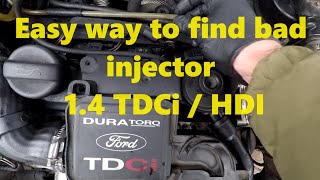
- Ford Fiesta, Focus, Transit (especially 1.4L TDCi & other diesels) (2007-2018) — Extremely prone to injector wiring harness failures. On the 1.4 TDCi engine, cylinder numbering is reversed: Cylinder #1 is at the gearbox/flywheel end, making #2 the second from that side.
- Jeep Liberty (2.8L CRD) (2005-2006) — On these diesel models, P1202 means 'Fuel System Over Pressure.' This is often caused by a failed fuel pressure regulator. A common technician error is swapping the #4 injector connector with the nearby fuel pressure solenoid connector, which also triggers this code.
- Peugeot / Citroen 206, 207, C3 (with 1.4L HDi engine) (2001-2015) — These vehicles share the same engine platform as the affected Fords and suffer from the same P1202 injector circuit faults, often related to wiring.
- Kia / Hyundai Optima, Sorento, Sportage (2004-2020) — Experience P1202 or the equivalent generic P0202, pointing to an injector circuit fault. The cause is frequently the injector itself or the harness connector.
- Volkswagen/Audi Various models with TDI and FSI engines (2004-2016) — These brands define P1202 as 'Cyl.2 - Fuel Inj. Circ. Electrical Malfunction,' pointing directly to an electrical issue with the injector, its wiring, or the ECU driver.
- GM (Buick, Cadillac, Chevrolet, GMC) Various models with Alternative Fuel (CNG/LPG) (2002-2014) — On vehicles equipped with factory CNG or LPG systems, P1202 means 'Alternative Fuel Gas Mass Sensor Circuit Low Frequency.' Diagnosis must focus on the alternative fuel system's flow sensor, not the gasoline injectors.
- Land Rover / Volvo Various models (2006-2015) — These manufacturers use P1202 to indicate 'Injector 2 Open Circuit or Ground Short Fault,' following the same diagnostic path as Ford and VW for an electrical injector circuit issue.
- Nissan Qashqai, various models (2010-2019) — On some models, it relates to the 'Gas Mass Sensor Circuit' similar to GM's alternative fuel vehicles. For others, it follows standard injector circuit diagnosis.
Manufacturer-Specific Notes

- Ford: On 1.4L TDCi engines (used in Fiesta, Focus, and Fusion), the cylinder numbering is reversed from convention. Cylinder #1 is at the flywheel/gearbox end of the engine. Therefore, P1202 refers to the second cylinder from the flywheel, not the timing belt.
- Chrysler/Dodge/Jeep: On the 2.8L CRD engine, P1202 means 'Fuel System Over Pressure.' A critical mistake during service is mixing up the electrical connectors for the #4 fuel injector and the fuel pressure solenoid on the rail; swapping them causes this code.
- General Motors (GM): For GM vehicles with factory-installed alternative fuel systems (like CNG or LPG), P1202 is completely unrelated to a gasoline injector. It points to a fault with the 'Gas Mass Sensor Circuit.' Diagnosis must focus entirely on the alternative fuel system.
- Honda/Acura: On some Honda and Acura models, the PCM's misfire detection is highly sensitive. A single failing ignition coil or injector causes the computer to log phantom misfire codes for other cylinders. Always use the component swapping technique to isolate the true faulty part.
- All: While no widespread recalls for P1202 are active, many manufacturers issue Technical Service Bulletins (TSBs) providing specific diagnostic guidance for common failure points, such as updated wiring harness inspection procedures. Check with a dealer for TSBs relevant to your VIN.
Frequently Asked Questions
Can I fix a P1202 code myself?
Replacing a spark plug or an easily accessible ignition coil is manageable for a DIYer. Diagnosing and repairing wiring, or replacing a fuel injector on complex diesel engines, requires intermediate to advanced skills and tools like a multimeter or noid light.
I replaced the injector and spark plug, but the P1202 code came back. What now?
If new parts don't fix an electrical circuit code, the fault lies in the wiring harness or the connector between the PCM and the component. You must test the circuit's integrity under load, not just check for voltage. A broken wire or corroded pin is the likely culprit.
What is the cylinder order on a Ford 1.4 TDCi engine?
Unlike most engines, the cylinder order is reversed. Cylinder #1 is on the gearbox (flywheel) side, and cylinder #4 is on the timing belt side. For a P1202 code, inspect the second cylinder from the gearbox end.
What does 'limp mode' mean?
Limp mode is a self-preservation feature where the vehicle's computer significantly reduces engine power and limits RPMs. It allows you to 'limp' to a safe location or repair shop without causing catastrophic engine damage.
Can a bad fuel filter cause a P1202 code?
In most cases, no. However, on vehicles where P1202 indicates a fuel pressure issue (like the Jeep CRD or GM Alternative Fuel systems), a severely clogged filter restricts flow and contributes to setting the code.
What's the difference between P1202 and P0202?
P0202 is the generic, universal OBD-II code for 'Injector Circuit Malfunction - Cylinder 2.' P1202 is a manufacturer-specific code. For many brands like Ford and VW, they mean the exact same thing.
Why is my check engine light flashing?
A flashing check engine light indicates a severe, active misfire. This means unburned fuel is dumping into the exhaust, which destroys your catalytic converter in a very short time. Stop driving as soon as it is safe to do so.
Could a bad battery cause a P1202 code?
While not a direct cause, a failing battery or alternator providing low or unstable voltage confuses the PCM. This leads to various erroneous circuit codes being set. If you experience other electrical issues, test your battery and charging system first.
Key Takeaways
- The definition of code P1202 varies by manufacturer; for Ford and VW it indicates a cylinder #2 injector circuit fault, while Jeep CRD models use it for fuel over-pressure.
- Inspect the cylinder #2 fuel injector wiring harness first, as broken wires or corroded connectors cause over 50% of P1202 electrical faults.
- Never replace a fuel injector without first testing the circuit with a $15 noid light to confirm the engine computer is actually sending a pulse signal.
- Stop driving immediately if the check engine light flashes, as the resulting severe misfire destroys a $1,500+ catalytic converter in under 50 miles.
Helpful Videos

The information in this article is provided for general reference and educational purposes only. Vehicle specifications, procedures, and part compatibility can vary by production date, trim level, and region. Always consult your vehicle's factory service manual and verify part numbers before purchasing or performing repairs. Safety-critical components such as airbags, seat belts, and braking systems should be installed by a qualified professional.
- 🎬 Helpful Videos
- What Does P1202 Mean?
- Can I Drive With P1202?
- Common Causes
- Symptoms
- Common Fixes & Costs
- Used vs. New Parts: Buying Guide
- Cost of Not Fixing It
- Diagnosis Steps
- When This Code Triggers (Freeze-Frame Conditions)
- Related Codes
- Climate & Environmental Factors
- How to Clear the Code After You Fix It
- Will This Fail Emissions / State Inspection?
- Most Commonly Affected Vehicles
- Manufacturer-Specific Notes
- Frequently Asked Questions
- Can I fix a P1202 code myself?
- I replaced the injector and spark plug, but the P1202 code came back. What now?
- What is the cylinder order on a Ford 1.4 TDCi engine?
- What does 'limp mode' mean?
- Can a bad fuel filter cause a P1202 code?
- What's the difference between P1202 and P0202?
- Why is my check engine light flashing?
- Could a bad battery cause a P1202 code?
- Key Takeaways
- 🎟️ Get 5% Off