

OBD-II Code P1200: Injector Control Circuit Malfunction
What P1200 means, why it triggers, and how to fix it — The Ultimate 2026 Guide
- Verify your vehicle's specific P1200 definition before buying parts; on a Toyota it means a $40 fuel pump relay failure, while on a Ford it signals a $500 Injector Driver Module fault.
- Stop driving immediately if P1200 triggers a flashing check engine light, as dumping unburnt fuel into the exhaust destroys a $2,000 catalytic converter in under 50 miles.
- Test the fuel injector circuit using a $15 noid light to visually confirm if the engine computer is sending the electrical pulse required to fire the injector.
- Measure the fuel injector's resistance with a digital multimeter; a healthy high-impedance injector reads between 11.0 and 16.0 Ohms, while an 'OL' reading confirms a dead internal coil.
What Does P1200 Mean?

P1200 is a manufacturer-specific code signaling a problem in the electrical circuit controlling a fuel injector or the fuel pump. Your car's main computer (the ECU or PCM) detected that the voltage, resistance, or signal in a critical fuel delivery circuit is out of its expected range. This prevents the engine from getting the correct amount of fuel, causing severe performance issues.
Technical definition: The official definition of P1200 varies significantly by manufacturer. It most commonly translates to 'Injector Control Circuit Malfunction.' However, for Toyota and Lexus, it means 'Fuel Pump Relay/ECU Circuit Malfunction.' For Mazda SKYACTIV diesels, it indicates a software issue: 'Fuel injector injection amount correction is not completed correctly.' In all cases, the Powertrain Control Module (PCM) detects an out-of-spec electrical condition in the fuel delivery system for a set period, typically several seconds.
Can I Drive With P1200?
No — Do Not Drive. Driving with a P1200 fault causes sudden stalling, engine misfires, or a no-start condition, which is unsafe in traffic. Continuing to drive with a misfire dumps unburnt fuel into the exhaust, destroying the catalytic converter—a secondary repair costing $1,000 to $4,000.
Common Causes

- Damaged Wiring or Corroded Connectors (Very Common) — Wires break, chafe against engine parts, or melt from exhaust heat. Connectors at the fuel injector, control module, or PCM corrode, suffer bent pins, or fill with moisture, causing high resistance or an open circuit.
- Failed Fuel Pump Relay (Very Common) — For manufacturers like Toyota and GM, P1200 points directly to the relay powering the fuel pump. When the internal contacts of the relay burn out, the pump loses power, and the engine starves for fuel.
- Failed Fuel Injector (Common) — The electrical coil inside the fuel injector shorts out or breaks (goes open). This prevents the injector from opening and closing when the computer commands it.
- Failed Injector Driver Module (IDM) (Common) — On Ford 7.3L Power Stroke diesels and some Mitsubishi models, a separate module controls the injectors. These modules suffer from water intrusion or internal component failure, triggering a P1200 code.
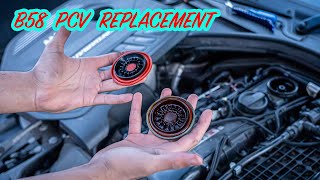
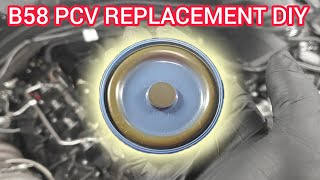
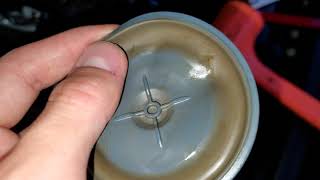
- Vacuum Leaks / Ruptured PCV Diaphragm (Common) — On BMWs (especially the B58 engine), P1200 indicates a 'Fuel System Too Lean' condition. This is almost always caused by unmetered air entering the engine from a ruptured PCV valve diaphragm.
- Failed Fuel Pump (Less Common) — If the fuel pump relay and wiring are functional on a Toyota or GM, the pump itself has failed electrically, leading to a loss of fuel pressure that triggers this circuit code.
- Failed Powertrain Control Module (PCM) (Rare) — The internal transistor inside the main engine computer that grounds the injector circuit (the 'driver') burns out. Consider this only after ruling out all external wiring and component failures.
Symptoms

- Engine Hard to Start or No-Start — The engine cranks indefinitely without firing, or starts and immediately dies due to lack of fuel delivery.
- Rough Idle, Misfires, and Power Loss — The engine shakes violently, stumbles at idle, and hesitates during acceleration because one or more cylinders are dead.
- Strong Fuel Smell — If an injector is stuck open or a related fuel line leaks, a strong odor of raw gasoline permeates the cabin.
- Blue or White Exhaust Smoke — On BMWs, a failed PCV valve causing this code forces the engine to burn oil, producing thick blue or white smoke from the exhaust.
- Check Engine Light On (also visible on scanner) — The Malfunction Indicator Lamp (MIL) illuminates immediately upon detecting the circuit fault.
Diagnostic Flowchart

Tap your situation to follow the diagnostic path that matches what you're seeing on this code.
Common Fixes & Costs
- Replace Fuel Pump Relay — Parts: $20-$40, Labor: $50-$100, ~0.5 hr book time (DIY)
- Repair Damaged Wiring or Replace Connector — Parts: $10-$60, Labor: $150-$400, ~1.5 hr book time (Intermediate)
- Replace a Single Fuel Injector — Parts: $70-$300, Labor: $150-$450, ~2.5 hr book time (Intermediate)
- Replace Injector Driver Module (IDM) — Parts: $300-$600, Labor: $150-$300, ~1 hr book time (Intermediate)
- Replace Fuel Pump Assembly — Parts: $250-$800, Labor: $200-$500, ~3 hr book time (Professional)
- Replace Engine Control Module (ECM/PCM) — Parts: $500-$1500, Labor: $150-$300, ~1.5 hr book time (Professional)
DIY vs Professional
- Replace Fuel Pump Relay — Beginner: Yes
Tools: None, or needle-nose pliers. - Replace Injector Driver Module (Ford 7.3L) — Beginner: Yes
Tools: Socket set (8mm and 10mm), flashlight. - Repair Damaged Wiring — Beginner: No
Tools: Soldering iron, heat shrink tubing, wire strippers, multimeter. - Replace Fuel Injector — Beginner: No
Tools: Socket set, torque wrench, fuel line disconnect tools, new O-rings. - Replace Fuel Pump Assembly — Beginner: No
Tools: Floor jack, jack stands, socket set, fuel tank lock ring tool.
Used vs. New Parts: Buying Guide
When a used part is worth it: For electronic modules like a Ford IDM, a tested, used part from a reputable salvage yard with a warranty is a cost-effective option. Avoid used wear items like fuel injectors or fuel pumps.
Donor-vehicle mileage cap: roughly under 80000 miles for the part to have meaningful remaining life.
Donor quality checklist:
- Verify the part comes with at least a 30-day warranty.
- Avoid parts with visible corrosion, water damage, or broken connector tabs.
- Ensure the part number matches exactly; 'close enough' fails for electronic modules.
Decision logic:
- If The part is a non-wear electronic module and the vehicle is over 100k miles. → A tested used part offers significant savings with moderate risk.
- If The part is a fuel injector or fuel pump. → Buy new or professionally remanufactured parts to ensure reliability.
- If The cost of a new part is less than $100. → Buy new; the small savings from a used part isn't worth the risk of premature failure.
Warranty tradeoff: Used parts offer a 30-90 day functional warranty. New aftermarket parts include a 1-year warranty. New OEM parts carry a 1-2 year warranty.
Worst-case if a used part fails: $300-$800 if a used part fails, requiring repeat labor costs plus another replacement part.
What Happens If You Wait — Timeline
- 0-1 week: Check Engine Light illuminates. Vehicle experiences intermittent hesitation, rough idle, or a no-start condition. The car is unsafe to drive in traffic. (MPG impact: 5-15%% · Added cost: $100-$300 (Towing and diagnostic fees))
- 1 week - 1 month: Persistent misfires dump unburnt fuel into the exhaust, coating the internal honeycomb structure of the catalytic converter. (MPG impact: 15-25%% · Added cost: $50-$150 (Wasted fuel))
- 1-3 months: Unburnt fuel ignites inside the catalytic converter, pushing internal temperatures past 1,600°F. The ceramic substrate melts and collapses, creating a severe exhaust restriction. (MPG impact: 25-40%% · Added cost: $1,200-$2,500 (Catalytic converter replacement is now mandatory).)
Cost of Not Fixing It
- Immediate (0-1 month): Stranded due to a no-start or stalling condition. Significant drop in fuel economy (10-25%). Failed emissions test. (Added cost: $100-$300 (Towing and diagnostic fees))
- Short-Term (1-6 months): Catalytic converter damage from unburnt fuel overheating the ceramic substrate past 1,600°F. (Added cost: $1200-$2800 (Catalytic converter replacement))
- Long-Term (6+ months): Washed cylinder walls from excess fuel stripping away lubricating oil, leading to internal engine damage. (Added cost: $3000+ (Engine repair or replacement))
Diagnosis Steps
- Read Codes and Manufacturer Definition
Use an OBD-II scanner to confirm P1200. Crucially, use a tool that provides the manufacturer-specific definition for your vehicle. Note all paired codes, like misfire (P030X) or fuel pressure (P0087) codes.
Tools: OBD-II Scanner (with manufacturer specifics) (Beginner) - Check Fuses and Relays
Locate the fuse box and check all fuses labeled 'Injectors', 'Fuel', 'EFI', or 'ECM'. If your car's P1200 definition points to the fuel pump relay (e.g., Toyota), swap it with an identical relay (like the horn relay) to see if the engine starts.
Tools: Owner's Manual, Fuse Puller (Beginner) - Perform a Thorough Visual Inspection
Inspect the wiring harness for the fuel injectors, fuel pump, and control modules. Look for melted plastic, chafed wires, or green corrosion on connector pins. Check for cracked vacuum lines around the intake manifold.
Tools: Flashlight, Inspection Mirror (Beginner) - Test the Injector Circuit with a Noid Light
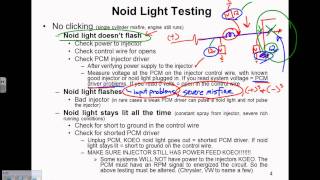
Plug a noid light into the fuel injector's electrical connector. When cranking the engine, it must flash rapidly, indicating the PCM is sending a trigger signal. 🎬 Watch: A pro guide to testing injector circuits with noid lights. If it doesn't flash, the problem is in the wiring or PCM. If it flashes, the injector is faulty.
Tools: Noid Light Set (Intermediate) - Measure Injector Resistance
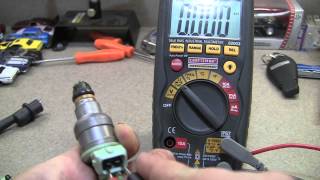
Unplug the injector and use a multimeter set to Ohms (Ω) to measure resistance across its two pins on a cold engine. High-impedance injectors must read between 11.0 and 16.0 Ohms. A reading of infinity (OL) means the internal coil is broken, and near zero means it is shorted.
Tools: Digital Multimeter (Intermediate) - [ADVANCED] Check Fuel Pressure
For vehicles where P1200 points to the fuel pump circuit, connect a fuel pressure gauge to the service port on the fuel rail. With the Key On, Engine Off (KOEO), pressure must meet manufacturer specifications (e.g., 50-57 PSI for GM trucks). Zero pressure indicates a dead pump or relay.
Tools: Fuel Pressure Gauge, Service Manual (Advanced) - [ADVANCED] Perform a Voltage Drop Test
To find hidden resistance, perform a voltage drop test while cranking the engine. Connect the red multimeter lead to the component's ground pin and the black lead to the battery negative post. A reading above 0.2 volts indicates a bad ground. Repeat on the power side; a reading above 0.5 volts indicates excessive resistance in the power feed.
Tools: Digital Multimeter with long leads (Advanced) - [PROFESSIONAL] Analyze Injector Waveform
Connect a lab scope to the injector's control wire. A healthy voltage pattern shows a drop to ~0V, followed by a sharp inductive kick of 60-80V when the injector closes. The absence of the inductive kick indicates a failed injector coil or compromised circuit.
Tools: Automotive Oscilloscope (Lab Scope) (Professional)
When This Code Triggers (Freeze-Frame Conditions)
- Engine Coolant Temp: 180-200°F (82-93°C) (The fault frequently appears after the engine reaches full operating temperature, as heat increases electrical resistance in failing coils.)
- RPM: 700-2500 RPM (Triggers at idle, during steady-state cruising, or under light acceleration.)
- Engine Load: 20-50% (Detected under normal driving conditions, not necessarily heavy load.)
- Vehicle Speed: 0-55 mph (Occurs both when the vehicle is stationary (at idle) or during city/highway driving.)
Related Codes
- P0300-P0308 — These misfire codes are a direct symptom of P1200. P1200 is the electrical cause (no signal to the injector), and P030X is the physical effect (the cylinder isn't firing). Fixing P1200 resolves the misfire.
- P0200-P0208 — These are the generic OBD-II codes for 'Injector Circuit Malfunction'. If you see both, prioritize the P1200 manufacturer-specific definition for diagnostic direction.
- P1211 — On Ford Power Stroke engines, this code for 'Injector Control Pressure Not Controllable' often appears with P1200. Both are frequently caused by a failing Injector Driver Module (IDM).
- P0087 — Means 'Fuel Rail/System Pressure - Too Low.' It accompanies P1200 on vehicles where P1200 signifies a 'Fuel Pump Relay Circuit' fault (like Toyota). The relay failure causes the low pressure.
Climate & Environmental Factors
- High Humidity / Salt Belt Regions: Moisture and road salt accelerate corrosion on wiring harnesses and connectors. On Ford 7.3L engines, the original IDM case vent allows moisture to enter, causing internal circuit board corrosion and triggering P1200.
- Extreme Cold: Cold temperatures make old wiring insulation brittle, causing it to crack and create short circuits. Cold starts also place maximum electrical strain on failing relays and modules, often pushing them to complete failure.
How to Talk to a Mechanic About This Code
Say this: "I have a P1200 code on my [Year/Make/Model]. I know this is a manufacturer-specific code, so I need a diagnostic to pinpoint the exact cause. Please verify the code's definition for my vehicle and perform electrical circuit tests before recommending any part replacements."
This signals you are an informed customer. It directs the mechanic to perform a proper diagnosis for a complex electrical code, preventing costly misdiagnosis based on generic code readers.
Avoid saying:
- 'Just fix whatever's wrong'
- 'My check engine light is on, can you look at it?' (too vague — invites upsell)
- 'I think it's the fuel injector.'
Questions to ask before authorizing the repair:
- What is the specific definition of P1200 for my vehicle?
- What diagnostic tests did you perform to arrive at this conclusion (e.g., noid light test, resistance measurement)?
- Can you show me the failed part or the multimeter test results?
- What is the warranty on the recommended parts and labor?
Where to Take It: Dealer vs Independent vs Chain
- Dealer:
Best for: Vehicles under warranty., Complex manufacturer-specific issues (e.g., BMW PCV warranty extensions, Mazda software updates).
Downsides: Significantly higher labor rates and parts costs., Recommends replacing larger assemblies instead of smaller failed components. (Typical cost: +40% vs. baseline) - Independent Shop:
Best fit for most cases. For common vehicles like Ford, GM, and Toyota, a good independent is ideal. For newer European cars, a European-specialist indie is necessary.
Best for: Out-of-warranty vehicles., Common P1200 faults on domestic and Japanese brands (e.g., Ford IDM, Toyota relay).
Downsides: Diagnostic capability varies widely; requires vetting for strong electrical skills. (Typical cost: +0% vs. baseline) - Chain Shop:
AVOID for P1200 diagnosis. The risk of misdiagnosis and being sold unnecessary parts is very high.
Best for: Simple, routine maintenance like oil changes and tires.
Downsides: Technician skill varies dramatically., Lack the in-depth diagnostic tools and oscilloscope experience for complex electrical faults. (Typical cost: -10% vs. baseline)
When to Walk Away From the Repair
If the estimated repair cost exceeds 40-50% of the car's private-party value, seriously consider selling or trading it in instead of repairing it.
- Car worth $4000, fix is $1800: Borderline (45%). Get a second opinion before authorizing. This repair cost is approaching half the car's value.
- Car worth $12000, fix is $900: Fix it. At only 7.5% of the vehicle's value, this repair is well below the walk-away threshold.
- Car worth $2500, fix is $1500: Walk away. The repair cost is 60% of the car's value. It is not a sound financial decision to proceed.
What Scan Tool You Need for This Code
Minimum: A scanner that reads and displays manufacturer-specific code definitions. A basic reader that only shows 'P1200' leads to misdiagnosis.
A generic $20 reader shows 'P1200' but won't tell you if it's a Toyota 'Fuel Pump Relay' fault or a Ford 'Injector Driver Module' fault. Guessing costs time and money.
Budget: BlueDriver Bluetooth Pro (~$120) — Pairs with your smartphone to provide manufacturer-specific P1200 definitions, freeze-frame data, and live data graphing to monitor circuit performance.
Mid-range: Autel MaxiCOM MK808S (~$380) — Provides full manufacturer-specific diagnostics and bidirectional control. This allows you to actively command a fuel pump relay or injector to turn on/off, confirming if the component works.
Professional: Launch X431 Series (~$800) — Offers OEM-level diagnostics, including injector coding, module programming, and access to wiring diagrams directly on the tool.
Rent vs buy: Auto parts stores offer free loaner tools, but these are often basic readers lacking manufacturer-specific definitions. Buying a tool like the BlueDriver is a mandatory investment for DIY electrical diagnosis.
How to Clear the Code After You Fix It
- Reconnect the battery if it was disconnected for the repair.
- Use an OBD-II scan tool to clear the P1200 and any related fault codes.
- Perform a complete OBD-II drive cycle to allow readiness monitors to run.
Drive cycle (~20 minutes): Start the engine cold and idle for 3 minutes. Drive in mixed stop-and-go traffic for 15 minutes, including several steady accelerations. Drive for 5 minutes at a steady highway speed (55-65 mph). Allow the vehicle to cool down completely.
Readiness monitors affected: Comprehensive Component Monitor, Misfire Monitor, Fuel System Monitor, Catalyst Monitor
Before emissions retest: drive at least 100 miles to fully set monitors.
Watch out for:
- Disconnecting the battery clears the code but resets all readiness monitors to 'Not Ready', causing an automatic emissions test failure.
- The code returns immediately if the underlying electrical fault has high resistance and was not properly soldered.
Will This Fail Emissions / State Inspection?
Yes — this code typically fails an OBD-II emissions inspection.
- California: An illuminated Check Engine Light results in an automatic Smog Check failure. All readiness monitors must be 'Ready' (except EVAP) before passing a re-test.
- New York: Fails the NYVIP3 OBD-II inspection if the Check Engine Light is on. For 2001+ vehicles, only one readiness monitor can be 'Not Ready'.
- Texas: In emissions counties, an illuminated Check Engine Light is an automatic failure. For 2001+ vehicles, only one monitor is allowed to be 'Not Ready'.
Most Commonly Affected Vehicles
- Ford F-250 / F-350 Super Duty (1996-2003) — Extremely common on the 7.3L Power Stroke diesel. It almost always points to a failed Injector Driver Module (IDM) or a chafed wiring harness.
- Toyota Corolla / Camry / Tacoma (1998-2008) — P1200 means 'Fuel Pump Relay/ECU Circuit Malfunction.' Diagnosis must start with the 'EFI' relay in the engine bay and the 'Circuit Opening' relay under the dashboard.
- Chevrolet / GMC Silverado / Sierra (1999-2007) — This code means either 'Injector Control Circuit' or 'Fuel Pump Relay Control Circuit.' A scanner providing the manufacturer-specific sub-code is mandatory.
- BMW 3-Series (F30) / M240i (B58 Engine) (2012-2020) — Indicates a 'Fuel System Too Lean' condition. The primary cause is a ruptured PCV valve diaphragm (repair kit P/N 11121025447).
- Nissan Altima / Sentra / 350Z (2002-2012) — Consistently translates to 'Injector Control Circuit,' pointing to a fault with an injector coil, the harness, or the PCM driver.
- Audi / Volkswagen A4 / Jetta / GTI (1.8T Engine) (1998-2005) — Signifies an 'Injector Control Circuit' fault, commonly caused by a deteriorated wiring harness due to age and extreme under-hood heat.
Manufacturer-Specific Notes
- Ford: On 7.3L Power Stroke engines, P1200 is a near-certain indicator of a failed Injector Driver Module (IDM). Note: A faulty Camshaft Position Sensor (CPS), covered under Ford recall 07S57, causes similar stalling symptoms and must be ruled out.
- Toyota: Defines P1200 as 'Fuel Pump Relay/ECU Circuit Malfunction.' Diagnosis must start with the 'EFI' relay and 'Circuit Opening' relay, not the fuel injectors.
- BMW: Uses P1200 as a generic code for 'Fuel System Too Lean.' A ruptured PCV diaphragm is the most common cause on B58 engines. BMW issued Service Information Bulletin SIB B01 14 23, extending the PCV valve warranty to 15 years/150,000 miles.
- Mazda: On SKYACTIV diesels, P1200 means 'Fuel injector injection amount correction is not completed correctly.' This is a software calibration issue requiring a dealer-level tool to perform an injector quantity relearn procedure.
Real Owner Stories
2002 Ford F-250 7.3L at 185K miles
Truck suddenly died in traffic and would crank but not fire. P1200 code was present.
What they tried:
- Checked all fuses, which were intact.
- Swapped the fuel pump relay, but the truck still wouldn't start.
- Inspected the wiring harness near the driver-side valve cover for chafing.
Outcome: Replaced the Injector Driver Module (IDM) located on the driver's side inner fender. The truck started immediately. The old IDM had visible water intrusion near its connector.
Lesson: On a Ford 7.3L Power Stroke, a P1200 with a no-start condition almost always points to the IDM or its wiring. It is the definitive failure point for this specific engine.
2005 Toyota Camry at 144K miles
Car cranked but would not start. Code P1200 was stored.
What they tried:
- Assumed it was a fuel injector issue based on generic code definitions.
- Researched the code specifically for Toyota and learned it meant 'Fuel Pump Relay/ECU Circuit Malfunction'.
- Located the EFI relay in the engine bay fuse box and tapped it with a screwdriver handle. The car started.
Outcome: Replaced the EFI relay (Toyota P/N 90987-02028). The fix cost $35 and took five minutes.
Lesson: Never assume P1200 means 'injector circuit' without verifying the definition for your specific vehicle. On a Toyota, this code directs you to the fuel pump relays, not the injectors.
2018 BMW 340i (B58 Engine) at 70K miles
Engine emitted a loud squeaking noise followed by large amounts of white/blue exhaust smoke. Scanner showed code P1200.
What they tried:
- Researched BMW forums linking these symptoms to a failed PCV diaphragm.
- Started the engine and removed the oil fill cap. A massive vacuum suction was present, and the squealing noise stopped, confirming a ruptured PCV diaphragm.
Outcome: Replaced the PCV diaphragm repair kit. The squealing and smoke vanished, and the code cleared.
Lesson: On modern BMWs, P1200 translates to a 'Fuel System Too Lean' condition. A ruptured PCV diaphragm creates a massive vacuum leak that triggers this code.
How to Prevent This Code From Triggering
- Change the fuel filter at recommended intervals (typically 30,000-60,000 miles). (Per owner's manual) — A clean fuel filter reduces the electrical load on the fuel pump. This extends the life of the pump and the fuel pump relay, which are primary failure points for P1200 on many Asian and Domestic vehicles.
- Apply dielectric grease to critical electrical connectors. (When servicing or exposing connectors) — In humid or salt-belt regions, applying dielectric grease to the seals of connectors (like the Ford IDM or main engine harness) prevents moisture intrusion and corrosion, stopping circuit faults before they start.
- Avoid extended periods of engine idling. (Daily habit) — Extended idling causes incomplete combustion, leading to soot buildup on injector tips and contributing to premature PCV system failure on engines like the BMW B58.
Frequently Asked Questions
Why does P1200 mean different things for different cars?
Codes starting with 'P1' are manufacturer-specific, not standardized by the SAE. Each automaker reserves these codes for their own use, so a P1200 on a Ford points to a different system than on a Toyota. Always verify the definition for your exact vehicle.
What is the most common misdiagnosis for a P1200 code?
Assuming the code's meaning without checking the manufacturer-specific definition is the biggest mistake. For example, replacing a fuel injector on a Toyota when the P1200 code actually points to the fuel pump relay circuit. This mistake costs hundreds of dollars and won't fix the car.
Can I fix a P1200 code myself?
Sometimes. If the cause is a simple blown fuse or a bad fuel pump relay, it is a straightforward DIY fix. However, diagnosing intermittent wiring problems, replacing control modules, or changing in-tank fuel pumps requires special tools and experience.
How much does it cost to fix a P1200 code?
The cost varies dramatically based on the root cause. A simple relay costs under $100, while a single fuel injector replacement runs $220 to $600. A fuel pump replacement ranges from $450 to $1,300, and a Ford IDM or main ECU replacement exceeds $750 at a shop.
Will a fuel injector cleaner fix a P1200 code?
No. P1200 is an electrical fault code indicating a problem with a circuit, wiring, or electronic component. Fuel injector cleaner removes physical carbon deposits but cannot fix an electrical problem like an open or shorted circuit.
Can a bad battery cause a P1200 code?
Yes. Low system voltage from a weak battery or failing alternator causes unpredictable behavior in electronic modules. Always ensure your battery is fully charged and the charging system is healthy before diagnosing complex circuit faults.
Can a clogged fuel filter cause P1200?
Indirectly, yes. A clogged filter forces the fuel pump to work harder, leading to the failure of the fuel pump relay or the pump itself. This secondary failure triggers a P1200 code on vehicles like Toyota or GM where the code relates to the fuel pump circuit.
Key Takeaways
- Verify your vehicle's specific P1200 definition before buying parts; on a Toyota it means a $40 fuel pump relay failure, while on a Ford it signals a $500 Injector Driver Module fault.
- Stop driving immediately if P1200 triggers a flashing check engine light, as dumping unburnt fuel into the exhaust destroys a $2,000 catalytic converter in under 50 miles.
- Test the fuel injector circuit using a $15 noid light to visually confirm if the engine computer is sending the electrical pulse required to fire the injector.
- Measure the fuel injector's resistance with a digital multimeter; a healthy high-impedance injector reads between 11.0 and 16.0 Ohms, while an 'OL' reading confirms a dead internal coil.
Helpful Videos



The information in this article is provided for general reference and educational purposes only. Vehicle specifications, procedures, and part compatibility can vary by production date, trim level, and region. Always consult your vehicle's factory service manual and verify part numbers before purchasing or performing repairs. Safety-critical components such as airbags, seat belts, and braking systems should be installed by a qualified professional.
- 🎬 Helpful Videos
- What Does P1200 Mean?
- Can I Drive With P1200?
- Common Causes
- Symptoms
- Diagnostic Flowchart
- Common Fixes & Costs
- DIY vs Professional
- Used vs. New Parts: Buying Guide
- What Happens If You Wait — Timeline
- Cost of Not Fixing It
- Diagnosis Steps
- When This Code Triggers (Freeze-Frame Conditions)
- Related Codes
- Climate & Environmental Factors
- How to Talk to a Mechanic About This Code
- Where to Take It: Dealer vs Independent vs Chain
- When to Walk Away From the Repair
- What Scan Tool You Need for This Code
- How to Clear the Code After You Fix It
- Will This Fail Emissions / State Inspection?
- Most Commonly Affected Vehicles
- Manufacturer-Specific Notes
- Real Owner Stories
- 2002 Ford F-250 7.3L at 185K miles
- 2005 Toyota Camry at 144K miles
- 2018 BMW 340i (B58 Engine) at 70K miles
- How to Prevent This Code From Triggering
- Frequently Asked Questions
- Why does P1200 mean different things for different cars?
- What is the most common misdiagnosis for a P1200 code?
- Can I fix a P1200 code myself?
- How much does it cost to fix a P1200 code?
- Will a fuel injector cleaner fix a P1200 code?
- Can a bad battery cause a P1200 code?
- Can a clogged fuel filter cause P1200?
- Key Takeaways
- 🎟️ Get 5% Off