

OBD-II Code P1193: Engine Power Limited / Limp Mode Activated
What P1193 means, why it triggers, and how to fix it
- P1193 is a manufacturer-specific code; on 2011-2016 Hyundai and Kia vehicles, it indicates a critical high-pressure fuel system failure that triggers a 3,000 RPM limp mode.
- Never replace the $800 High-Pressure Fuel Pump without first verifying the low-pressure in-tank pump delivers at least 45 PSI of fuel pressure.
- If P1193 appears alongside P0087 (Fuel Pressure Too Low), the High-Pressure Fuel Pump has likely failed mechanically and requires immediate replacement.
- For GM, Chrysler, and BMW owners, P1193 points to entirely different systems—such as a chafed wiring harness (GM TSB 21-NA-149) or a faulty IAT sensor (Chrysler)—requiring make-specific diagnostic steps.
What Does P1193 Mean?

P1193 is a manufacturer-specific code with drastically different definitions depending on the carmaker. On the most commonly affected vehicles (Hyundai and Kia), the Engine Control Module (ECM) detects a critical fuel system problem and forces the engine into a low-power 'limp home mode'. On Chrysler, GM, or Honda, this code points to entirely different sensors or wiring issues.
Technical definition: For Hyundai and Kia, the official definition is 'Electronic Throttle System (ETS) Limp Home - Low RPM', triggered by a high-pressure fuel system fault. For Chrysler, it means 'Inlet Air Temperature Sensor Circuit High Voltage'. For Honda, it indicates 'Fuel Tank Pressure Sensor Circuit High Voltage'.
Can I Drive With P1193?
Yes, But With Caution. Your car has entered a protective 'limp mode', severely limiting speed and power (usually below 3,000 RPM). You can drive slowly to a repair shop, but avoid highways. Continuing to drive with a serious fuel system fault forces the engine to run excessively rich or lean, destroying the catalytic converter and adding $1,200-$2,500 to your repair bill.
Common Causes

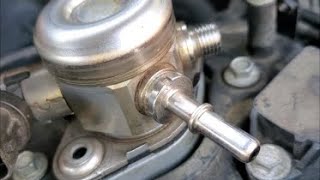
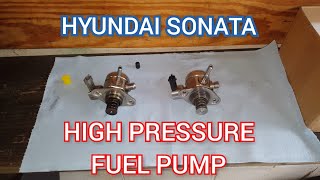
- Failing High-Pressure Fuel Pump (HPFP) (Very Common) — This is the most frequent cause on Hyundai and Kia Gasoline Direct Injection (GDI) engines. 🎬 Watch: Step-by-step high pressure fuel pump replacement for Hyundai and Kia. The mechanical pump wears out and fails to supply the 400-2,000 PSI required, triggering limp mode.
- Faulty Fuel Rail Pressure Sensor (FRPS) (Common) — This sensor measures fuel pressure. If it shorts out or sends incorrect voltage signals, the computer receives conflicting data and triggers limp mode as a precaution.
- Wiring Harness or Connector Damage (Common) — Wires for the fuel pump, pressure sensor, or main engine harness corrode, fray, or short to ground. On 2019-2022 GM trucks, TSB 21-NA-149 identifies a known issue where the main harness chafes on the generator bracket.
- Low-Pressure Fuel System Failure (Less Common) — A weak in-tank fuel pump or a severely clogged fuel filter starves the high-pressure pump. This pressure drop cascades through the system, triggering the fault.
- ECM Software Glitch or Internal Fault (Rare) — The control module's software contains a bug that sets a P1193 code erroneously (common on BMW E46 models per TSB SI B12 07 04), or the ECM suffers an internal hardware failure due to low battery voltage during cranking.
Symptoms
- Engine Enters 'Limp Mode' — The car suddenly loses power, refuses to accelerate, and limits engine speed to roughly 3,000 RPM.
- Check Engine Light Illuminated — The check engine light remains solidly lit on the dashboard.
- Engine Stalling, Hard Starting, or Rough Idle — The engine stalls under load, cranks for an extended period before starting, or shakes violently at a stoplight due to incorrect fuel pressure.
- Flashing Glow Plug Light (VW TDI specific) — On Volkswagen TDI models, a flashing glow plug light accompanies the check engine light, indicating a critical fuel pressure sensor fault.
Diagnostic Flowchart

Tap your situation to follow the diagnostic path that matches what you're seeing on this code.
Common Fixes & Costs
- Replace the High-Pressure Fuel Pump (HPFP)
— Parts: $350 - $800, Labor: $150 - $300, ~1.5 hr book time
(Professional)
: OEM 35320-2G740 (Alt: {'Bosch': 'HPP0004', 'Delphi': 'HM10016'}) - Replace the Fuel Rail Pressure Sensor (FRPS)
— Parts: $50 - $150, Labor: $50 - $100, ~0.8 hr book time
(DIY)
: OEM 35340-2G710 (Alt: {'Standard Motor Products': 'FPS50'}) - Replace the In-Tank Low-Pressure Fuel Pump
— Parts: $200 - $600, Labor: $150 - $300, ~2.0 hr book time
(Intermediate)
: OEM 31111-2W750 (Alt: {'Delphi': 'HM10051'}) - Repair Damaged Wiring or Connectors — Parts: $10 - $50, Labor: $100 - $300, ~2.0 hr book time (Intermediate)
- ECM/DME Reprogramming — Parts: $0, Labor: $150 - $250, ~1.0 hr book time (Professional)
Used vs. New Parts: Buying Guide
When a used part is worth it: For a high-cost part like a High-Pressure Fuel Pump (HPFP), a used OEM part from a low-mileage vehicle is a cost-effective alternative to unproven aftermarket parts.
Donor-vehicle mileage cap: roughly under 60000 miles for the part to have meaningful remaining life.
Donor quality checklist:
- Verify the OEM part number matches exactly.
- Inspect for corrosion, damage to the electrical connector, or fuel residue stains.
- Purchase from a reputable auto recycler offering at least a 90-day warranty.
Decision logic:
- If Vehicle is under a recall or extended warranty for the HPFP → Use the free dealer repair; do not buy any part.
- If Vehicle is older, out of warranty, and budget is the primary concern → A low-mileage used OEM part is a reasonable choice.
- If You plan to keep the vehicle long-term and want maximum reliability → Buy a new OEM part. Avoid cheap, unbranded aftermarket pumps which have a high failure rate.
Warranty tradeoff: Used parts typically come with a 30-90 day part-only warranty. New OEM parts carry a 1-year/12,000-mile warranty.
Worst-case if a used part fails: $300-600. If a used pump fails, you pay for repeat labor plus a new replacement part.
What Happens If You Wait — Timeline
- 0-1 week: Check Engine Light on, P1193 set. Vehicle enters limp mode, limiting speed and RPMs. May stall or start with difficulty. No permanent damage yet. (MPG impact: 5-10%% · Added cost: $0)
- 1-4 weeks: Continued driving forces the engine to run consistently rich or lean. The catalytic converter operates outside its normal temperature range, degrading its precious metals. (MPG impact: 10-20%% · Added cost: $50-150 in wasted fuel)
- 1-3 months: The catalytic converter substrate melts or cracks from sustained overheating. Code P0420 appears. The damage is permanent. (MPG impact: 15-25%% · Added cost: $1,200 - $2,500)
- 3+ months: The catalytic converter completely melts down, clogging the exhaust pipe. This creates extreme backpressure, causing severe power loss and potential internal engine damage. (MPG impact: >30%% · Added cost: $2,500 - $4,500+)
Cost of Not Fixing It
- Immediate: Vehicle is in low-power limp mode, making it unsafe for highway driving or merging. High risk of stalling in traffic. (Added cost: Negligible)
- 1-4 weeks: Continued driving forces the engine to run consistently rich or lean, overheating the catalytic converter and degrading its precious metals. (Added cost: $100 in wasted fuel)
- 1-3 months: The catalytic converter substrate melts or cracks from sustained overheating. Code P0420 appears, and the converter requires replacement. (Added cost: $1200 - $2500)
Diagnosis Steps
- Scan for Additional Codes
Use an OBD-II scanner to check for companion codes. P1193 rarely appears alone. Code P0087 (Fuel Pressure Too Low) points to a failing pump, while P0193 (Fuel Pressure Sensor Circuit High) isolates the sensor.
Tools: OBD-II Scanner (Beginner) - Check Low-Side Fuel Pressure
Connect a fuel pressure gauge to the low-pressure line from the fuel tank. On most GDI systems, pressure must be 45-75 PSI at key-on, engine-off. A reading below 45 PSI confirms a weak in-tank pump or clogged filter, which must be fixed before replacing the expensive high-pressure pump.
Tools: Fuel Pressure Gauge (Intermediate) - Test the High-Pressure Fuel System
Use an advanced scan tool to read live high-pressure fuel data. Compare 'Desired Fuel Pressure' to 'Actual Fuel Pressure'. At idle, a healthy Hyundai/Kia GDI engine shows 400-600 PSI. Under acceleration, it climbs over 2,000 PSI. A mismatch greater than 200 PSI confirms a failing High-Pressure Fuel Pump.
Tools: Advanced Bi-Directional Scan Tool (Advanced) - Test the Fuel Rail Pressure Sensor (FRPS) Signal
Monitor the FRPS voltage with a multimeter or scan tool. Voltage must change smoothly as RPMs increase. For a typical Hyundai/Kia, key-on engine-off voltage is ~0.5V, and idle voltage is ~1.5-2.0V. A sensor stuck at ~4.8V is faulty.
Tools: Multimeter, Advanced Scan Tool (Advanced) - Inspect Wiring and Connectors
Visually inspect the wiring harness for the FRPS and HPFP. Look for corrosion, loose pins, or chafing against metal brackets. Perform a wiggle test on the connectors while monitoring live data to expose intermittent shorts.
Tools: Flashlight (Beginner) - Test the Sensor's Electrical Circuit
Disconnect the suspect sensor. Use a multimeter to verify a 5-volt reference signal from the ECM on one pin and a solid ground on another with the key on. Missing voltage or ground confirms a wiring or ECM issue, not a bad sensor.
Tools: Multimeter, Vehicle Wiring Diagram (Advanced) - Test IAT Sensor (Chrysler/Dodge/Jeep Only)
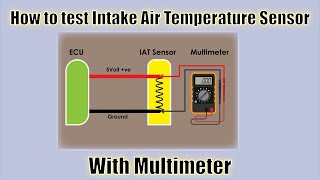
For Chrysler vehicles where P1193 means an IAT fault, disconnect the sensor and measure resistance. At 68°F, resistance is around 10,000 ohms. If it reads an open circuit (infinite resistance) or shorted (near zero ohms), replace the sensor.
Tools: Multimeter (Intermediate)
When This Code Triggers (Freeze-Frame Conditions)
- Engine Coolant Temp: 170-220°F (Fully warmed up)
- RPM: 1500-2800 (Light acceleration or steady cruise)
- Engine Load: 20-50% (Under moderate load, not idling or full throttle)
Related Codes
- P0087 — P0087 means 'Fuel Rail Pressure Too Low'. It is the direct mechanical cause, while P1193 is the computer's limp-mode reaction. If both are present, the High-Pressure Fuel Pump is the primary suspect.
- P0193 — P0193 means 'Fuel Rail Pressure Sensor Circuit High Input'. This isolates the fault to the sensor or its wiring. If present with P1193, replace or test the sensor first.
- P0300 — P0300 means 'Random Misfire'. This is a direct symptom of the fuel starvation triggering P1193. Do not replace spark plugs or coils; fix the fuel pressure issue first.
Climate & Environmental Factors
- Cold Weather: Freezing temperatures increase fuel viscosity and strain both fuel pumps during startup, accelerating wear on a failing High-Pressure Fuel Pump.
- Road Salt: Salt corrosion destroys electrical connectors on the fuel pump or pressure sensor, increasing resistance and triggering false voltage readings.
How to Talk to a Mechanic About This Code
Say this: "I have a P1193 code on my [Make, Model]. I know this code is manufacturer-specific. For my car, it points to the [fuel system/IAT sensor/etc.]. Please start by [checking for TSBs/testing fuel pressure/inspecting the wiring harness per TSB 21-NA-149]."
This signals you've done your research, directs the technician to the correct system for your vehicle, and requests specific, logical diagnostic steps.
Avoid saying:
- 'My check engine light is on, can you look at it?' (too vague, invites an expensive diagnostic process)
- 'I looked online and I think I need a new HPFP.' (Don't diagnose for the mechanic; describe the symptoms and the code.)
- 'Just fix whatever's wrong.' (This is a blank check for unnecessary repairs and upsells.)
Questions to ask before authorizing the repair:
- Can you show me the data that confirms this part has failed (e.g., desired vs. actual fuel pressure)?
- Did you check for any Technical Service Bulletins or warranty extensions for this specific issue?
- What is the warranty on the recommended parts and labor?
- Can I see the old part that was replaced?
Where to Take It: Dealer vs Independent vs Chain
- Dealer:
Recommended if the repair is covered by a warranty extension or involves a complex software reflash. Otherwise, get a comparative quote from an independent shop.
Best for: Vehicles under warranty, recall, or a known warranty extension (very common for Hyundai/Kia HPFPs)., Complex manufacturer-specific issues requiring software updates (BMW) or specialized tools.
Downsides: Highest labor rates., Unwilling to install customer-supplied or used parts. (Typical cost: +40% vs. baseline) - Independent Shop:
Best overall fit for most out-of-warranty P1193 repairs, provided you choose a reputable shop with modern diagnostic equipment.
Best for: Out-of-warranty vehicles where the cause is a known mechanical issue (e.g., HPFP on a Hyundai, IAT sensor on a Chrysler)., Owners who want flexible repair options using aftermarket or used parts.
Downsides: Quality varies; ensure the shop is ASE-certified and has good reviews for diagnostic work. (Typical cost: +0% vs. baseline) - Chain Shop:
AVOID for initial diagnosis. The manufacturer-specific nature of P1193 requires expertise not consistently found at chain shops.
Best for: Simple part replacements AFTER a definitive diagnosis has already been made elsewhere.
Downsides: Technician skill varies dramatically; not ideal for complex diagnostic work., High pressure to upsell services leads to misdiagnosis. (Typical cost: -10% vs. baseline)
When to Walk Away From the Repair
If the estimated repair cost exceeds 40-50% of the car's private-party value, seriously consider selling or trading it in.
- Car worth $4000, fix is $2200: Walk away. The repair cost is over 50% of the car's value. It's not a sound investment.
- Car worth $12000, fix is $1100: Fix it. The repair cost is less than 10% of the car's value.
- Car worth $3000, fix is $150: Fix it. If the issue is a simple sensor or wiring repair, the low cost makes sense even on an older vehicle.
What Scan Tool You Need for This Code

Minimum: A scanner that reads and graphs live data, specifically Fuel Rail Pressure for GDI engines.
A basic $20 code reader only gives you the P1193 code. You cannot distinguish a cheap sensor from an expensive pump without viewing live fuel pressure data.
Budget: BlueDriver Pro Scan Tool (~$100) — Connects to your phone via Bluetooth to display and graph live data, including Fuel Rail Pressure. Reads enhanced codes (ABS, Airbag) for more context.
Mid-range: Foxwell NT510 Elite (~$180) — Offers manufacturer-specific software and bidirectional controls. Allows you to read live fuel pressure and command the fuel pump to run for testing.
Professional: Autel MaxiCOM MK808S (~$500) — A full-featured diagnostic tablet with extensive bidirectional controls. Performs comprehensive fuel system tests and views desired vs. actual pressure.
Rent vs buy: Auto parts stores scan codes for free, but their scanners rarely show the live data needed for P1193. Buying a tool like the BlueDriver is a worthwhile investment.
How to Clear the Code After You Fix It
- Use an OBD-II scan tool to clear Diagnostic Trouble Codes (DTCs)
- Perform a complete drive cycle to allow readiness monitors to run
- Check monitor status with the scan tool to confirm they are 'Ready'
Drive cycle (~30 minutes): Cold start the vehicle and idle for 3 minutes. Drive for 20 minutes with a mix of stop-and-go city driving and steady highway speeds (55 mph for 10 minutes). Allow the vehicle to cool down completely (8 hours) and repeat if monitors are not set.
Readiness monitors affected: Catalyst (CAT) monitor, Oxygen (O2) Sensor monitor, Evaporative (EVAP) System monitor
Before emissions retest: drive at least 50 miles to fully set monitors.
Watch out for:
- Disconnecting the battery clears the code but resets all readiness monitors to 'Not Ready', guaranteeing an emissions test failure.
- The code returns immediately if the underlying mechanical or electrical fault is not repaired.
Will This Fail Emissions / State Inspection?
Yes — this code typically fails an OBD-II emissions inspection.
- California: An illuminated Check Engine Light results in an automatic failure. After repairs, a full drive cycle must be completed to set all readiness monitors to 'Ready' before a retest.
- New York: The NYVIP3 inspection includes an OBD-II scan. An active P1193 code is an automatic failure. Recently cleared codes reject the test due to 'Not Ready' monitors.
- Texas: In emissions-testing counties, an active P1193 causes an automatic failure. For 2001+ vehicles, only one non-continuous monitor is allowed to be 'Not Ready'.
Most Commonly Affected Vehicles
- Hyundai Sonata (2011-2016) — Extremely common HPFP failure on 2.4L and 2.0T GDI engines. Covered under multiple class-action settlements providing extended warranties.
- Kia Optima (2011-2016) — Shares the exact GDI engine and fuel system as the Sonata, suffering identical HPFP failures.
- Hyundai Santa Fe (2013-2017) — Prone to P1193 due to fuel pump and sensor issues. Included in Service Campaign T3G for related engine faults.
- Chevrolet Silverado 1500 (2019-2022) — TSB 21-NA-149 identifies engine wire harness chafing on the generator bracket, causing shorts that trigger P1193. Inspect wiring before replacing parts.
- BMW 3-Series (E46) (2000-2006) — P1193 indicates 'Post-Catalyst Fuel Trim System Bank 2'. TSB SI B12 07 04 prescribes a DME software update to fix this false code before replacing O2 sensors.
- Chrysler/Dodge/Jeep Various Models (1998-2010) — P1193 exclusively means 'Inlet Air Temperature (IAT) Circuit High Voltage'. Diagnosis must focus on the IAT sensor, not the fuel system.
Manufacturer-Specific Notes

- Chrysler/Dodge/Jeep: P1193 means 'Inlet Air Temperature (IAT) Circuit High Voltage'. The PCM logs this code if it sees sensor voltage above 4.9 volts. It has zero connection to the fuel system.
- GM/Chevrolet: Commonly caused by engine wire harness chafing per TSB 21-NA-149. Inspect the harness near the generator bracket before replacing any sensors or modules.
- BMW: On M54 engines, P1193 points to a downstream O2 sensor issue but is usually a software glitch. TSB SI B12 07 04 requires reprogramming the DME (ECU) before replacing hardware.
- Hyundai/Kia: Numerous recalls and warranty extensions exist for GDI HPFP failures. Recall 21V-524 addresses fuel leaks at the HPFP connection. Always check your VIN with a dealer before paying out of pocket.
Real Owner Stories
2013 Kia Optima SXL at 105k miles
While accelerating, the car lost power, the check engine light illuminated, and RPMs locked below 3,000. The engine shook violently at idle.
What they tried:
- A shop scanned codes P1193 and P0087 (Fuel Rail Pressure Too Low).
- They replaced the Fuel Rail Pressure Sensor, but the code returned immediately.
- Live data confirmed the High-Pressure Fuel Pump (HPFP) failed to build pressure under load.
Outcome: Replaced the HPFP with a new OEM unit. Total cost was ~$1,100 at an independent shop. Power was restored and codes cleared.
Lesson: On a Hyundai/Kia GDI engine, P1193 paired with P0087 almost always points to the HPFP. Don't waste money on the sensor first; confirm by comparing desired vs. actual fuel pressure.
2020 Chevy Silverado 1500 at 40k miles
The check engine light came on intermittently with P1193. The truck hesitated and idled roughly in wet weather.
What they tried:
- The dealership initially suspected a faulty ECM.
- A technician consulted TSB 21-NA-149 and inspected the engine wiring harness.
- They found the harness rubbing against a sharp edge on the generator bracket, shorting wires to ground.
Outcome: The technician repaired the damaged wires and rerouted the harness with protective sheathing. The repair was covered under warranty, avoiding an unnecessary ECM replacement.
Lesson: Always check for Technical Service Bulletins (TSBs). A known wiring issue mimics major component failure, and the TSB provides the exact, inexpensive fix.
2003 Chrysler Town & Country at 130k miles
The check engine light came on, but the van drove normally. A parts store scan revealed code P1193.
What they tried:
- The owner read online about fuel pumps and took it to a mechanic.
- The mechanic knew that on Chrysler products, P1193 means 'Inlet Air Temperature (IAT) Sensor Circuit High Voltage'.
- A multimeter test showed the IAT sensor had failed (open circuit).
Outcome: Replaced the IAT sensor for $30 in 15 minutes. The code cleared permanently.
Lesson: P1193 is highly manufacturer-specific. Look up the code's exact definition for your specific vehicle make to avoid diagnosing the wrong system entirely.
2008 Hyundai Santa Fe after DIY tune-up
Immediately after replacing spark plugs, the engine ran rough, stalled, and set code P1193.
What they tried:
- The owner re-checked spark plug connections and found nothing.
- A shop performed a compression test and found zero compression in cylinder 1.
- A borescope revealed a small washer dropped inside the cylinder during the tune-up.
Outcome: The piston hit the dropped washer, bending a valve. The ECM detected the catastrophic malfunction and triggered limp mode (P1193) protectively. Repair required a $2,500 cylinder head rebuild.
Lesson: If P1193 appears immediately after a repair, retrace your steps. The ECM uses limp-mode to respond to any critical engine problem, not just sensor failures.
How to Prevent This Code From Triggering
- Use TOP TIER™ certified gasoline (Every fill-up) — TOP TIER™ fuels contain detergents that prevent deposits in GDI fuel injectors and the high-pressure fuel pump, maintaining proper fuel flow.
- Perform regular oil changes with synthetic oil (Every 5,000 miles) — The HPFP is driven by a camshaft lobe. Clean, proper-viscosity oil prevents accelerated wear on this lobe, ensuring the pump generates full pressure.
- Change the in-tank fuel filter (Every 60,000 miles) — A clogged filter restricts fuel flow, starving the high-pressure pump and forcing it to work harder until it fails.
- Apply dielectric grease to key electrical connectors (Whenever connectors are disconnected) — In salt-belt regions, dielectric grease keeps moisture out of fuel pump and sensor connectors, preventing voltage irregularities.
Frequently Asked Questions
What exactly is 'Limp Mode'?
Limp mode is a safety feature where the engine computer intentionally reduces power and limits speed, usually below 3,000 RPM. It protects the engine and transmission from catastrophic damage when a critical fault is detected. This allows you to safely drive to a repair facility.
Can I just clear the code and keep driving?
No. Clearing the code with a scanner only turns off the light temporarily; it returns immediately or within minutes of driving. P1193 indicates a hard mechanical or electrical fault that requires physical repair.
Can a bad O2 sensor cause a P1193 code?
Yes, but only on specific manufacturers like BMW or Land Rover, where P1193 directly relates to the oxygen sensor circuit. On a Hyundai or Kia, a bad O2 sensor sets a different code. Always look up the exact definition for your vehicle make.
What are common misdiagnosis mistakes for P1193?
The biggest mistake is 'parts swapping' without a full diagnosis, like replacing an $800 fuel pump when the actual cause is a $50 chafed wire. Another error is ignoring Technical Service Bulletins (TSBs), which often prescribe simple software updates instead of hardware replacements. Always test electrical circuits before condemning expensive components.
Why is this such an expensive repair?
On Gasoline Direct Injection (GDI) vehicles, the most common cause is a failed High-Pressure Fuel Pump. This complex, camshaft-driven mechanical pump costs between $350 and $800 for the part alone. Labor adds another $150 to $300.
Why is P1193 so common on Hyundai and Kia GDI engines?
Early GDI high-pressure fuel pumps in 2011-2016 Hyundai and Kia models suffer from premature internal plunger wear. This wear causes a severe loss of fuel pressure, triggering limp mode. Multiple class-action lawsuits and extended warranty programs cover these specific failures.
Could a weak battery cause a P1193 code?
Yes. On some Hyundai models, P1193 indicates an ECM hardware fault. If battery voltage drops too low during cranking, it causes a module 'brown out' that the computer misinterprets as an internal failure.
I just did a major engine repair and now I have a P1193 code, what happened?
The code is almost certainly related to the recent work. You likely forgot to reconnect a sensor, pinched a wiring harness, or improperly seated a component. Retrace your steps and inspect all electrical connections in the repaired area.
Key Takeaways
- P1193 is a manufacturer-specific code; on 2011-2016 Hyundai and Kia vehicles, it indicates a critical high-pressure fuel system failure that triggers a 3,000 RPM limp mode.
- Never replace the $800 High-Pressure Fuel Pump without first verifying the low-pressure in-tank pump delivers at least 45 PSI of fuel pressure.
- If P1193 appears alongside P0087 (Fuel Pressure Too Low), the High-Pressure Fuel Pump has likely failed mechanically and requires immediate replacement.
- For GM, Chrysler, and BMW owners, P1193 points to entirely different systems—such as a chafed wiring harness (GM TSB 21-NA-149) or a faulty IAT sensor (Chrysler)—requiring make-specific diagnostic steps.
Helpful Videos


The information in this article is provided for general reference and educational purposes only. Vehicle specifications, procedures, and part compatibility can vary by production date, trim level, and region. Always consult your vehicle's factory service manual and verify part numbers before purchasing or performing repairs. Safety-critical components such as airbags, seat belts, and braking systems should be installed by a qualified professional.
- 🎬 Helpful Videos
- What Does P1193 Mean?
- Can I Drive With P1193?
- Common Causes
- Symptoms
- Diagnostic Flowchart
- Common Fixes & Costs
- Used vs. New Parts: Buying Guide
- What Happens If You Wait — Timeline
- Cost of Not Fixing It
- Diagnosis Steps
- When This Code Triggers (Freeze-Frame Conditions)
- Related Codes
- Climate & Environmental Factors
- How to Talk to a Mechanic About This Code
- Where to Take It: Dealer vs Independent vs Chain
- When to Walk Away From the Repair
- What Scan Tool You Need for This Code
- How to Clear the Code After You Fix It
- Will This Fail Emissions / State Inspection?
- Most Commonly Affected Vehicles
- Manufacturer-Specific Notes
- Real Owner Stories
- 2013 Kia Optima SXL at 105k miles
- 2020 Chevy Silverado 1500 at 40k miles
- 2003 Chrysler Town & Country at 130k miles
- 2008 Hyundai Santa Fe after DIY tune-up
- How to Prevent This Code From Triggering
- Frequently Asked Questions
- What exactly is 'Limp Mode'?
- Can I just clear the code and keep driving?
- Can a bad O2 sensor cause a P1193 code?
- What are common misdiagnosis mistakes for P1193?
- Why is this such an expensive repair?
- Why is P1193 so common on Hyundai and Kia GDI engines?
- Could a weak battery cause a P1193 code?
- I just did a major engine repair and now I have a P1193 code, what happened?
- Key Takeaways
- 🎟️ Get 5% Off