

OBD-II Code P1190: The Ultimate Manufacturer-Specific Guide
What P1190 means, why it triggers, and how to fix it on any make
- P1190 is a manufacturer-specific code, meaning it signals a vacuum leak on a Chevy, but a fuel pressure failure on a Ford.
- Always look up your exact vehicle make before diagnosing; scanning a GM requires checking fuel trims, while a Ford requires a mechanical fuel pressure gauge.
- The three most common fixes are replacing cracked $20 vacuum hoses (GM), swapping a $150 fuel pressure regulator (Ford/Land Rover), or replacing a $250 intake throttle actuator (Hyundai/Kia).
- Do not drive with P1190 for more than a few days; a persistent lean condition or fuel pressure drop destroys an $800-$2,500 catalytic converter within months.
What Does P1190 Mean?

P1190 is a manufacturer-specific trouble code, meaning its definition changes entirely depending on your vehicle's make. It points to a vacuum leak on GM vehicles, a fuel pressure system fault on Fords, an intake throttle actuator failure on Hyundai/Kia diesels, or an oxygen sensor circuit issue on Volkswagens. The Engine Control Unit (ECU) sets this code when a specific sensor operates outside its programmed voltage or pressure range.
Technical definition: The SAE/ISO J2012 definition for P1190 varies by automaker. On GM vehicles, it is 'Engine Vacuum Leak.' On Ford vehicles, it is 'Calibration Resistor Out Of Range' (indicating a fuel system fault). On Chrysler, it is 'Inlet Air Pressure Sensor Circuit High.' On Volkswagen, it is 'Linear O2 Sensor Reference Voltage Incorrect Signal.' On diesel Hyundai/Kia models, it is 'Intake Throttle Actuator - Malfunction.'
Can I Drive With P1190?
Yes, But With Caution. You can drive to a shop, but expect stalling, hesitation, and poor fuel economy. Do not drive long-term. A persistent lean condition from a vacuum leak destroys catalytic converters ($800-$2,500), while severe fuel pressure issues create immediate fire hazards.
Common Causes

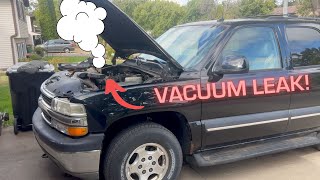
- Vacuum Leaks (Hoses or Intake Gasket) (Very Common) — The primary cause on GM and Chrysler vehicles. Cracked rubber hoses or a failed intake manifold gasket allow unmetered air into the engine, creating a lean condition.
- Faulty Fuel Pressure Regulator or Sensor (Very Common) — On Ford, Mazda, Volvo, and Land Rover models, the regulator fails mechanically or the sensor sends incorrect pressure data to the ECU.
- Faulty Intake Throttle Actuator (Common) — On diesel Hyundai and Kia models, the intake throttle flap motor fails or binds, preventing smooth engine shutdown and airflow regulation.
- Clogged Fuel Filter or Regulator Screen (Common) — A dirty fuel filter restricts flow, dropping pressure. On diesels (like Maruti Suzuki), a clogged screen on the fuel pressure regulator (DRV) causes pressure spikes.
- Damaged Wiring or Connectors (Common) — Melted wires or corroded connectors in the fuel pressure sensor, O2 sensor, or throttle actuator circuits cause open or short circuits.
- Faulty Linear O2 Sensor or Circuit (Less Common) — On Volkswagen and Audi vehicles, the ECU detects an incorrect 5V reference signal from the pre-catalytic converter oxygen sensor.
- Leaking Fuel Injectors (Less Common) — On common-rail diesels (Land Rover TD4, BMW), injectors leaking excessive fuel back to the return line cause rail pressure to drop under load.
- Failing Fuel Pump or Relay (Rare) — A weak fuel pump or a failing relay fails to supply the necessary pressure to the fuel rail, triggering fuel-related P1190 variants.
Symptoms

- Check Engine Light is on — The Malfunction Indicator Lamp (MIL) illuminates immediately upon fault detection.
- Rough or uneven idle — The engine stutters, surges, or vibrates excessively when stopped at a light.
- Engine stalling and hesitation — The vehicle stalls unexpectedly at idle or lacks power when accelerating.
- Poor Fuel Economy — Disrupted air-fuel mixtures or incorrect fuel pressure force the engine to consume 10-25% more fuel.
- Black smoke from exhaust — A faulty fuel pressure regulator forces a rich mixture, emitting black soot from the tailpipe.
Diagnostic Flowchart

Tap your situation to follow the diagnostic path that matches what you're seeing on this code.
Common Fixes & Costs
- Replace cracked vacuum hoses or intake gaskets — Parts: $10-$50, Labor: $50-$150, ~0.8 hr book time (DIY)
- Replace Fuel Pressure Regulator — Parts: $80-$200, Labor: $100-$250, ~1.5 hr book time (Intermediate)
- Replace Intake Throttle Actuator — Parts: $150-$350, Labor: $100-$200, ~1.2 hr book time (Intermediate)
- Replace Fuel Filter — Parts: $20-$80, Labor: $60-$120, ~0.8 hr book time (DIY)
- Repair Damaged Wiring or Connectors — Parts: $5-$30, Labor: $100-$300, ~2.0 hr book time (Intermediate)
- Replace Linear O2 Sensor — Parts: $80-$180, Labor: $80-$150, ~1.0 hr book time (Intermediate)
- Clean or Replace Fuel Injectors — Parts: $150-$400 per injector, Labor: $200-$500, ~3.0 hr book time (Advanced)
DIY vs Professional
- Replace cracked vacuum hoses — Beginner: True
Tools: Pliers, flashlight, hose pick set. - Replace Fuel Filter — Beginner: True
Tools: Wrenches, safety glasses, fuel line disconnect tool, drain pan. - Replace Fuel Pressure Regulator — Beginner: False
Tools: Socket set, Torx bits, wrenches, safety glasses, fire extinguisher. - Replace Intake Throttle Actuator — Beginner: False
Tools: Socket set, screwdrivers, pliers, gasket scraper. - Repair Damaged Wiring/Connectors — Beginner: False
Tools: Multimeter, wire strippers, crimpers, heat shrink tubing, soldering iron.
Used vs. New Parts: Buying Guide
When a used part is worth it: Buy used only for expensive, non-wear assemblies (like a throttle body) on vehicles over 10 years old. Always buy new for sensors, regulators, and hoses.
Donor-vehicle mileage cap: roughly under 60000 miles for the part to have meaningful remaining life.
Donor quality checklist:
- Verify the exact OEM part number matches your original part.
- Ensure the donor vehicle was not salvaged due to engine fire or flooding.
- Buy from a reputable salvage yard offering a 30-day warranty.
Decision logic:
- If The part is an electronic sensor (fuel pressure, O2) or wear item (fuel filter, regulator). → Buy new. Used sensors fail quickly, doubling your labor costs.
- If The part is a $300+ intake throttle actuator and the vehicle is 15 years old. → Buy a used OEM part from a low-mileage donor to save money.
- If The part is a rubber vacuum hose. → Buy new. Old rubber is brittle and worthless.
Warranty tradeoff: Used parts offer 30-day warranties. New aftermarket parts offer 1-year warranties. New OEM parts offer 2-year warranties at premium prices.
Worst-case if a used part fails: $200-$500 in repeat labor if a used electronic sensor fails immediately.
What Happens If You Wait — Timeline
- 0-1 month: Check Engine Light illuminates. You experience a slightly rough idle and a 5-10% drop in fuel economy. No permanent damage yet. (MPG impact: 5-10%% · Added cost: $20-$50 in wasted fuel)
- 1-4 months: Symptoms worsen to stalling and hesitation. The incorrect air/fuel mixture forces the catalytic converter to run dangerously hot. (MPG impact: 10-15%% · Added cost: $50-$150 in wasted fuel)
- 4-8 months: The catalytic converter's internal honeycomb melts from prolonged overheating (lean mixture) or raw fuel exposure (rich mixture). The fuel pump degrades. (MPG impact: 15-25%% · Added cost: $800-$2500 (catalytic converter) + $400-$800 (fuel pump))
- 8+ months: The melted catalytic converter clogs the exhaust, causing severe power loss. Extreme lean conditions burn exhaust valves. Leaking regulators cause engine fires. (MPG impact: >25%% · Added cost: $2,500-$7,000+ for major engine rebuilds.)
Cost of Not Fixing It
- 0-1 month: Noticeable decrease in fuel economy (5-15%), rough idling, and stalling. Annoying, but not causing immediate catastrophic damage. (Added cost: $20-$60 in wasted fuel.)
- 1-6 months: Persistent lean/rich conditions overheat the catalytic converter. Faulty regulators overwork and destroy the fuel pump. (Added cost: $800-$2500 for catalytic converter replacement; $400-$800 for fuel pump replacement.)
- 6+ months: Continuous lean conditions cause detonation, burning exhaust valves and damaging pistons. Leaking regulators cause engine fires. (Added cost: $2,500-$7,000+ for major engine repair or rebuild.)
Diagnosis Steps
- Identify the Manufacturer-Specific Definition
Use an OBD-II scanner to read the code. Research the exact definition for your car's make, model, and year. This dictates whether you test for vacuum leaks (GM), fuel pressure (Ford), or electrical faults (VW).
Tools: OBD-II Scanner, Internet Access (Beginner) - Analyze Fuel Trims (GM Vacuum Leak Path)
For GM vehicles, monitor live Short-Term (STFT) and Long-Term Fuel Trims (LTFT). If LTFT exceeds +10% at idle but drops near 0% at 2,500 RPM, you have a confirmed vacuum leak.
Tools: Advanced OBD-II Scan Tool (Intermediate) - Visual Inspection
Inspect based on your manufacturer definition. Look for cracked hoses around the intake (GM), fuel leaks near the rail (Ford), or chafed wiring harnesses near the throttle actuator (Hyundai).
Tools: Flashlight (Beginner) - Check Fuel Pressure (Ford/Land Rover Path)
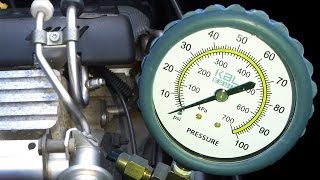
Connect a fuel pressure gauge to the fuel rail test port. Verify Key On Engine Off (KOEO) pressure matches manufacturer specs (typically 35-45 PSI for gas Fords). Rev the engine to ensure pressure holds under load.
Tools: Fuel Pressure Gauge, Safety Glasses (Intermediate) - Perform a Smoke Test (GM/Chrysler Path)
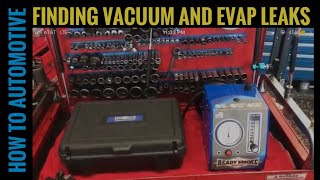
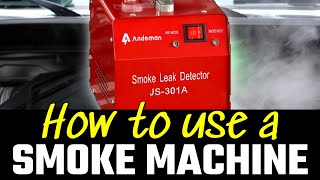
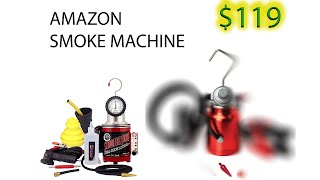
Force low-pressure smoke into the intake manifold. Watch for smoke escaping from cracked PCV hoses, vacuum lines, or intake gaskets to pinpoint unmetered air leaks.
Tools: Smoke Machine (Intermediate) - Test Sensor Circuits (VW/Chrysler Path)
Use a multimeter to backprobe the implicated sensor (e.g., VW O2 sensor). Verify the ECU is supplying a steady 5.0V reference voltage and a solid ground with the ignition on.
Tools: Multimeter, Vehicle-Specific Wiring Diagram, Backprobe Pins (Advanced) - Test Actuator Duty Cycle (Hyundai/Kia Path)
Monitor the 'Throttle Flap Actuator' duty cycle via a scan tool. It should rest near 5% at idle. If stuck high, test the control circuit for shorts before replacing the actuator.
Tools: Advanced OBD-II Scan Tool, Multimeter (Advanced) - Perform Injector Leak-Off Test (Diesel Path)
For 'Plausibility' codes on common-rail diesels (Land Rover TD4), connect a leak-off kit to the injectors. An injector returning significantly more fuel than the others is faulty and dropping rail pressure.
Tools: Diesel Injector Leak-Off Test Kit (Advanced)
When This Code Triggers (Freeze-Frame Conditions)
- Engine Coolant Temp: 180-210°F (The fault sets after the engine is fully warmed up and enters closed-loop fuel control.)
- RPM: 1500-3000 RPM (Triggers under load or during steady-state cruising, rarely at idle.)
- Engine Load: 25-60% (Occurs under moderate engine load, such as maintaining speed on a flat road.)
- Vehicle Speed: 40-65 mph (Steady highway driving allows fuel system and vacuum leak monitors to run and detect faults.)
Related Codes
- P0171 / P0174 — These 'System Too Lean' codes appear alongside P1190 on GM vehicles. The P1190 vacuum leak causes the lean condition. Fixing the leak resolves all three codes.
- P0088 — 'Fuel Rail Pressure Too High' accompanies P1190 on diesels (Maruti Suzuki, Land Rover). P1190 points to the clogged regulator, while P0088 confirms the resulting high pressure.
- P1191 — A closely related manufacturer-specific code (e.g., 'Intake Air Duct Air Leak' on Chrysler). The diagnostic path mirrors P1190, starting with visual inspections and smoke tests.
- P0090 — 'Fuel Pressure Regulator 1 Control Circuit' points strictly to an electrical short or open in the regulator wiring, whereas P1190 often indicates a mechanical failure.
Climate & Environmental Factors
- Cold Weather: Extreme cold turns rubber vacuum hoses brittle, causing them to crack and trigger GM P1190 vacuum leaks. It also thickens diesel fuel, straining pumps and skewing pressure readings.
- Humidity and Moisture: Water ingress corrodes electrical connectors for fuel pressure sensors and throttle actuators. On Land Rover TD4s, moisture in the rail sensor connector is a primary cause of P1190.
- Road Salt: Heavy winter road salt accelerates underbody corrosion, destroying wiring harnesses and grounds for fuel system components.
How to Talk to a Mechanic About This Code
Say this: "I have a P1190 code on my [Make]. I know this is a manufacturer-specific code. For my car, it indicates a [Vacuum Leak / Fuel Pressure Issue]. Can I book a diagnostic that includes a [Smoke Test / Fuel Pressure Test] to pinpoint it?"
This proves you are an informed customer. It directs the mechanic toward the correct diagnostic test immediately, preventing them from charging you for baseline guesswork.
Avoid saying:
- 'Just fix whatever's wrong'
- 'My check engine light is on, can you look at it?'
- 'Whatever you recommend'
Questions to ask before authorizing the repair:
- What specific test result confirmed the failure? (e.g., 'What were the fuel trim readings?')
- Can you show me the failed part or the leak location?
- Is the proposed fix a guaranteed solution for the P1190 code?
- What is the warranty on the parts and labor?
Where to Take It: Dealer vs Independent vs Chain
- Dealer:
Best for: Vehicles under warranty, Complex electrical versions of P1190 (VW O2 sensor circuit), Brand-specific 'plausibility' faults (Land Rover TD4)
Downsides: Highest labor rates (1.5-2x independent shops), Will recommend replacing entire assemblies instead of repairing wiring. (Typical cost: +50% vs. baseline) - Independent Shop:
Best fit for most P1190 issues. A good independent shop has fixed typical GM vacuum leaks or Ford fuel pressure faults dozens of times. This is your best value.
Best for: Out-of-warranty vehicles, Common P1190 variants (GM vacuum leak, Ford fuel pressure sensor)
Downsides: Diagnostic equipment varies; vet shops by ASE certifications. (Typical cost: +0% vs. baseline) - Chain Shop:
Avoid for initial diagnosis. Acceptable only for straightforward part swaps you have already diagnosed yourself.
Best for: Simple, pre-diagnosed part replacements (like a fuel filter).
Downsides: Technician skill varies dramatically., High pressure to upsell leads to misdiagnosis., Lack advanced diagnostic tools for complex electrical faults. (Typical cost: -10% vs. baseline)
When to Walk Away From the Repair
If the estimated repair cost exceeds 40-50% of the car's private-party value, seriously consider selling or trading it in.
- Car worth $3000, fix is $1800: Walk away. The repair cost is 60% of the car's value. It is not a sound investment.
- Car worth $8000, fix is $900: Fix it. The repair is 11% of the car's value and restores reliability.
- Car worth $4500, fix is $2000: Borderline. The cost is 44% of the car's value. Get a second opinion and evaluate the car's overall condition.
What Scan Tool You Need for This Code
Minimum: A scanner that reads manufacturer-specific codes and displays live data streams (STFT/LTFT and Fuel Rail Pressure).
A $20 reader only gives the 'P1190' code. You need live fuel trims to diagnose a GM vacuum leak or fuel pressure PIDs to diagnose a Ford fault. Without live data, you are guessing.
Budget: BlueDriver Pro Bluetooth Scanner (~$100) — Pairs with your phone to read manufacturer codes and graph live fuel trims. Perfect for confirming a GM vacuum leak.
Mid-range: Innova 5610 or Foxwell NT510 Elite (~$180) — Offers bidirectional controls to command actuators. Essential for testing a Hyundai throttle actuator or forcing a fuel pump on.
Professional: Autel MaxiCOM MK808 (~$450) — Provides full bidirectional control, advanced coding for replacing modules, and access to all OEM-level data PIDs.
Rent vs buy: For a one-time fix, use the free 'Loan-A-Tool' program at AutoZone. Buy a scanner only if you plan to diagnose vehicles regularly.
How to Clear the Code After You Fix It
- Perform the necessary repair.
- Use an OBD-II scan tool to erase the DTCs.
- Perform a complete drive cycle to run onboard readiness monitors.
Drive cycle (~20 minutes): Start cold. Idle for 3 minutes with A/C on. Accelerate to 55 mph and hold for 5 minutes. Decelerate to 20 mph without braking. Accelerate to 60 mph at 3/4 throttle and hold for 5 minutes. Stop and idle for 2 minutes.
Readiness monitors affected: Catalyst Monitor, Oxygen (O2) Sensor Monitor, Fuel System Monitor
Before emissions retest: drive at least 50 miles to fully set monitors.
Watch out for:
- Clearing the code without fixing the root cause guarantees the Check Engine Light will return within 50 miles.
- Testing emissions immediately after clearing codes results in an automatic failure due to 'Not Ready' monitors.
Will This Fail Emissions / State Inspection?
Yes — this code typically fails an OBD-II emissions inspection.
- California: An illuminated Check Engine Light is an automatic failure. A full drive cycle must be completed post-repair to set readiness monitors.
- New York: Fails the OBD-II inspection immediately. NY allows one readiness monitor to be 'not ready' for 2001+ vehicles.
- Texas: In the 17 emissions-testing counties, the active code causes an automatic failure. Monitors must be set to pass re-inspection.
Most Commonly Affected Vehicles
- Ford Focus, Fiesta, Mondeo (1995-2010) — Code relates to fuel pressure issues ('Calibration Resistor Out of Range'). Test KOEO pressure at the fuel rail (target 35-45 PSI).
- Chevrolet / GM Silverado, Cruze, Malibu, Equinox (2000-2015) — P1190 guarantees an 'Engine Vacuum Leak'. Diagnose exclusively with a smoke test and by verifying high positive fuel trims at idle.
- Chrysler / Dodge / Jeep Various Models (2000-2009) — Defined as 'Engine Vacuum Leak' or 'Inlet Air Pressure Sensor Circuit High'. Confirm the exact definition with a scan tool before proceeding.
- Hyundai Tucson, Santa Fe (Diesel) (2004-2010) — Defined as 'Intake Throttle Actuator - Malfunction'. Wiring harness chafing is as common as actual actuator failure.
- Land Rover Freelander (TD4) (2000-2006) — Defined as 'Fuel Pressure Plausibility'. Common culprits are faulty injectors, regulators, or high-pressure fuel pumps. Perform a leak-off test.
- Mercedes-Benz Sprinter, GLC (CDI models) (2003-2022) — Relates to the 'Fuel pressure control valve' or 'Intake air pressure sensor circuit'. Sub-codes dictate the diagnostic path.
- Maruti Suzuki Swift (Diesel) (2010-2018) — Caused by a clogged fuel pressure regulator (DRV) screen, resulting in dangerously high fuel pressure.
- BMW E39, X3, X5 (2000-2015) — Points to 'Pre-Catalyst Fuel Trim System Bank 1' or 'Rail Pressure Control', indicating air-fuel mixture or fuel pressure monitoring faults.
- Volkswagen Jetta, Golf (1999-2010) — Defined as 'Linear O2 Sensor Reference Voltage Incorrect Signal'. This is strictly an electrical fault in the oxygen sensor circuit.
- Kia Sorento, Carens (Diesel) (2002-2012) — Mirrors Hyundai; indicates 'Intake Throttle Actuator Malfunction'. Check wiring grounds before replacing parts.
Manufacturer-Specific Notes
- General Motors (Chevrolet, GMC, Cadillac): P1190 exclusively means 'Engine Vacuum Leak.' Ignore fuel pressure tests and focus entirely on finding unmetered air via smoke testing.
- Ford (Lincoln, Mercury): The definition 'Calibration Resistor Out of Range' is highly misleading. It actually points to a fuel pressure sensor or regulator failure.
- Hyundai / Kia: On diesels, the 'Intake Throttle Actuator' code is frequently caused by a chafed wiring harness rubbing against a metal bracket, not a failed actuator.
- Land Rover / Jaguar: The 'Fuel Pressure Plausibility' code on TD4 engines is notoriously caused by high resistance in the fuel pressure sensor connector. Land Rover issued an overlay harness to fix this.
Real Owner Stories
2006 Chevy Silverado 1500 - The Easy Fix
Check Engine Light illuminated with code P1190. The truck idled roughly and lost 2 MPG.
What they tried:
- Monitored live data: Long-Term Fuel Trims (LTFT) were +18% at idle but dropped to +4% at 2,500 RPM.
- Performed a DIY smoke test using a cheap online smoke machine.
- Found smoke billowing from a cracked PCV hose elbow behind the intake manifold.
Outcome: Replaced the PCV hose elbow for $22. Fuel trims normalized immediately, and the rough idle vanished.
Lesson: On GM vehicles, P1190 guarantees a vacuum leak. High positive fuel trims at idle that normalize with RPM are the definitive proof.
2008 Hyundai Santa Fe 2.2L Diesel - The Misdiagnosis
Car stalled at stops and threw P1190 ('Intake Throttle Actuator Malfunction').
What they tried:
- A shop quoted $450 to replace the throttle actuator assembly.
- The owner inspected the wiring harness leading to the actuator.
- Found a frayed wire rubbing against a metal bracket.
Outcome: Repaired the broken wire with a butt connector and heat shrink for $5. The stalling stopped completely.
Lesson: For Hyundai/Kia P1190, wiring issues are as common as actuator failures. Always inspect the harness for chafing before buying expensive parts.
2004 Land Rover Freelander TD4 - The Unusual Cause
Vehicle entered 'limp mode' past 2,000 RPM with P1190 ('Fuel Pressure Plausibility').
What they tried:
- Replaced the fuel filter and fuel rail pressure sensor with no success.
- A mechanic suggested a $1,000 high-pressure fuel pump replacement.
- Owner demanded an injector leak-off test first.
Outcome: The test proved one injector was returning massive amounts of fuel, dropping rail pressure. Replacing the single $250 injector fixed the vehicle.
Lesson: For 'plausibility' codes, the sensor is rarely the issue. A leak-off test is mandatory for common-rail diesels before condemning the fuel pump.
How to Prevent This Code From Triggering
- Inspect vacuum hoses visually (Every oil change) — Catching brittle or cracked rubber hoses early prevents vacuum leaks and lean conditions before they trigger codes.
- Replace the fuel filter (Every 30,000 miles) — Prevents restricted fuel flow, which overworks the fuel pump and triggers pressure-related P1190 codes on Fords.
- Clean engine bay ground connections (Every 3 years) — Corroded grounds cause erratic voltage in sensor circuits, mimicking failed O2 sensors (VW) or throttle actuators (Hyundai).
Frequently Asked Questions
Can I fix P1190 myself?
It depends on your vehicle's make. Replacing a cracked GM vacuum hose is a simple DIY fix requiring basic hand tools. However, diagnosing a Ford fuel pressure issue or VW electrical fault requires a multimeter, pressure gauges, and intermediate electrical knowledge.
What does 'manufacturer-specific' mean?
Generic codes (like P0300) mean the same thing on every car, but manufacturer-specific codes change definitions by brand. A P1190 on a Chevy indicates a vacuum leak, while on a Ford it signals a fuel system fault. You must look up the code alongside your specific vehicle make.
Will clearing the code fix the car?
No. Clearing the code only turns off the Check Engine Light temporarily. The engine computer will detect the same fault during its next drive cycle and trigger the light again until the root cause is repaired.
What is 'Calibration Resistor Out Of Range'?
This confusing definition is commonly used by Ford for P1190. It indicates a fault in a fuel system circuit, not an actual standalone resistor. Diagnosis almost always leads to a faulty fuel pressure sensor, regulator, or fuel pump.
What is a common misdiagnosis for Hyundai P1190?
Mechanics often immediately replace the expensive intake throttle actuator. However, the actual failure is frequently a chafed wire, corroded connector, or bad ground in the actuator's circuit. Always inspect and test the wiring harness before buying a new actuator.
Why does my car run better when I unplug the fuel pressure sensor?
Disconnecting a faulty sensor forces the engine computer into a 'limp mode' where it uses safe, pre-programmed default values instead of erratic live data. If performance improves, the sensor was sending wildly incorrect information. This strongly indicates a failed sensor or a short in its wiring.
How much does it cost to fix P1190?
Costs range from $20 for a DIY vacuum hose replacement to $400+ for a shop to replace a fuel pressure regulator. Complex diesel fuel system repairs, like replacing a high-pressure pump or injectors, exceed $1,000. Your exact cost depends entirely on your vehicle's make and the specific failure.
Can a vacuum leak damage my catalytic converter?
Yes. A vacuum leak forces the engine to run lean (too much air, not enough fuel), which drastically increases exhaust temperatures. Prolonged driving in this state melts the internal honeycomb structure of the catalytic converter, resulting in a $1,000+ replacement bill.
Key Takeaways
- P1190 is a manufacturer-specific code, meaning it signals a vacuum leak on a Chevy, but a fuel pressure failure on a Ford.
- Always look up your exact vehicle make before diagnosing; scanning a GM requires checking fuel trims, while a Ford requires a mechanical fuel pressure gauge.
- The three most common fixes are replacing cracked $20 vacuum hoses (GM), swapping a $150 fuel pressure regulator (Ford/Land Rover), or replacing a $250 intake throttle actuator (Hyundai/Kia).
- Do not drive with P1190 for more than a few days; a persistent lean condition or fuel pressure drop destroys an $800-$2,500 catalytic converter within months.
Helpful Videos

The information in this article is provided for general reference and educational purposes only. Vehicle specifications, procedures, and part compatibility can vary by production date, trim level, and region. Always consult your vehicle's factory service manual and verify part numbers before purchasing or performing repairs. Safety-critical components such as airbags, seat belts, and braking systems should be installed by a qualified professional.
- 🎬 Helpful Videos
- What Does P1190 Mean?
- Can I Drive With P1190?
- Common Causes
- Symptoms
- Diagnostic Flowchart
- Common Fixes & Costs
- DIY vs Professional
- Used vs. New Parts: Buying Guide
- What Happens If You Wait — Timeline
- Cost of Not Fixing It
- Diagnosis Steps
- When This Code Triggers (Freeze-Frame Conditions)
- Related Codes
- Climate & Environmental Factors
- How to Talk to a Mechanic About This Code
- Where to Take It: Dealer vs Independent vs Chain
- When to Walk Away From the Repair
- What Scan Tool You Need for This Code
- How to Clear the Code After You Fix It
- Will This Fail Emissions / State Inspection?
- Most Commonly Affected Vehicles
- Manufacturer-Specific Notes
- Real Owner Stories
- 2006 Chevy Silverado 1500 - The Easy Fix
- 2008 Hyundai Santa Fe 2.2L Diesel - The Misdiagnosis
- 2004 Land Rover Freelander TD4 - The Unusual Cause
- How to Prevent This Code From Triggering
- Frequently Asked Questions
- Can I fix P1190 myself?
- What does 'manufacturer-specific' mean?
- Will clearing the code fix the car?
- What is 'Calibration Resistor Out Of Range'?
- What is a common misdiagnosis for Hyundai P1190?
- Why does my car run better when I unplug the fuel pressure sensor?
- How much does it cost to fix P1190?
- Can a vacuum leak damage my catalytic converter?
- Key Takeaways
- 🎟️ Get 5% Off