

OBD-II Code P1189: Engine Fuel & Oil System Fault
What P1189 means, why it triggers, and how to fix it
- Always verify your manufacturer's specific definition for P1189, as it means 'Fuel Pressure Regulator' on a VW but 'Oil Pressure Switch' on a Chevy.
- On VW and Audi 1.8T engines, a ruptured fuel pressure regulator diaphragm is the #1 cause; check for raw fuel in the regulator's vacuum line.
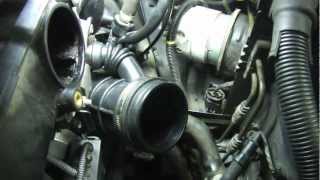
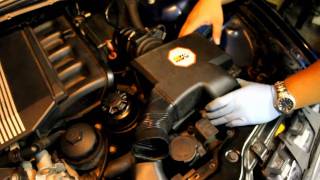
- For BMWs showing P1189 alongside P1188, a massive vacuum leak is present, requiring a smoke test to locate torn intake boots or a failed CCV system.
- On GM 3.4L V6 engines, replace the engine oil pressure switch if the scan tool reads 'High' pressure while the engine is off.
What Does P1189 Mean?

P1189 is a manufacturer-specific code, meaning its definition changes entirely depending on your vehicle's make. For Volkswagen and Audi, it indicates a fuel pressure control system problem. For General Motors (Chevrolet/Pontiac), it signals a fault in the engine oil pressure switch circuit. For BMWs, it points to a fuel-air mixture problem caused by vacuum leaks. On Mercedes-Benz diesels, it indicates a failed Inlet Port Shutoff Motor.
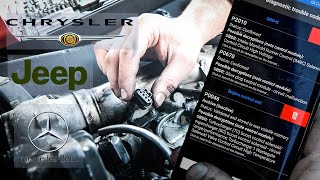
Technical definition: The official SAE/OBD-II definition for P1189 varies by manufacturer. Common definitions include 'Pump Speed Signal Fault' (Ford), 'Engine Oil Pressure (EOP) Switch Circuit' (GM), 'Fuel Pressure Monitoring' (Kia, Hyundai), 'Linear O2 Sensor Short to B+' (Volkswagen/Audi), and 'Inlet Air Pressure Sensor Circuit Low' (Chrysler/Dodge/Jeep).
Can I Drive With P1189?
Yes, But With Caution. Driving is not recommended. If the fault is fuel-related, continuing to drive damages the catalytic converter, a repair costing $1,000 to $4,000. If the fault is related to oil pressure, you risk catastrophic engine failure. Diagnose and repair the issue promptly to avoid escalating repair costs and ensure vehicle safety.
Common Causes


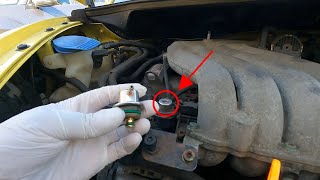
- Defective Fuel Pressure Regulator (VW/Audi) (Very Common) — The regulator fails to maintain correct pressure in the fuel rail, leaking raw fuel into the vacuum system and causing severe performance issues. 🎬 Watch: How to replace the fuel pressure regulator on a VW.
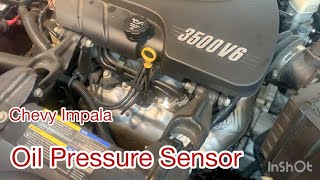
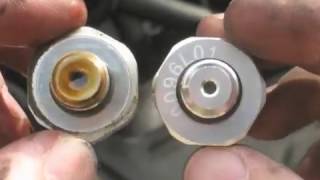
- Faulty Engine Oil Pressure Switch (GM) (Very Common) — The oil pressure switch fails internally, often leaking oil into its electrical connector, and sends incorrect high-pressure signals to the computer when the engine is off. 🎬 See this walkthrough for replacing a Chevy oil pressure sensor.
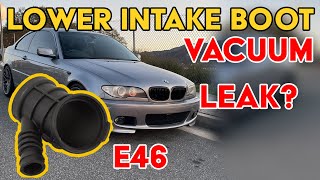
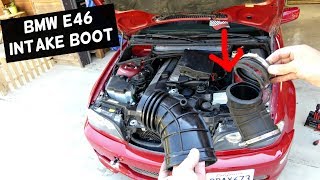
- Vacuum Leaks (BMW) (Very Common) — Unmetered air enters the engine from cracked hoses in the Crankcase Ventilation (CCV) system or torn intake boots, disrupting the air-fuel ratio and triggering P1189 alongside P1188.
- Broken Inlet Port Shutoff Motor Linkage (Mercedes-Benz) (Common) — On Mercedes CDI engines, the plastic linkage connecting the M55 swirl flap actuator motor to the intake manifold flaps breaks or pops off its ball joints.
- Failing Fuel Pump or Speed Sensor (Ford/Hyundai) (Common) — A weak fuel pump cannot supply enough fuel at the correct pressure. On Fords, this specifically points to a missing or erratic speed feedback signal from the pump module.
- Clogged Fuel Filter (Less Common) — A restricted fuel filter impedes fuel flow, causing a pressure drop that triggers the code on fuel-sensitive systems like VW, Audi, and Hyundai.
- Damaged Wiring or Connectors (Less Common) — Corroded or loose wiring to the fuel pressure regulator, oil pressure switch, or fuel pump disrupts the sensor signal.
- Faulty O2 Sensor Heater Circuit (Kia/Jaguar) (Rare) — The oxygen sensor's internal heater fails, preventing the sensor from reaching operating temperature quickly enough for accurate emissions control.
Symptoms

- Check Engine Light On — The Malfunction Indicator Lamp (MIL) illuminates immediately upon the PCM detecting the manufacturer-specific fault.
- Engine Stalling, Hesitation, or Power Loss — The engine stumbles, hesitates during acceleration, or enters a sluggish 'limp mode' due to incorrect fuel pressure or unmetered air.
- Rough or Irregular Idle — The engine shakes or runs unevenly at idle, a primary indicator of a vacuum leak on BMWs or a ruptured fuel pressure regulator on VWs.
- Hard Starting or No Start — The vehicle cranks longer than usual or fails to start, pointing directly to a failing fuel pump or severe fuel pressure regulation issue.
- Black Smoke from Exhaust — A classic sign of a rich fuel condition caused by a bad fuel pressure regulator leaking raw fuel into the intake manifold.
- Incorrect Oil Pressure Gauge Reading — On GM vehicles, the dashboard oil pressure gauge reads zero or pegs to maximum erratically due to a failed oil pressure switch.
Diagnostic Flowchart
Tap your situation to follow the diagnostic path that matches what you're seeing on this code.
Common Fixes & Costs
- Replace Fuel Pressure Regulator — Parts: $40-$100, Labor: $100-$150, ~1.2 hr book time (Intermediate)
- Replace Engine Oil Pressure Switch — Parts: $20-$60, Labor: $80-$150, ~0.8 hr book time (DIY)
- Repair Vacuum Leak (CCV System/Intake Boot) — Parts: $150-$300, Labor: $300-$700, ~5.5 hr book time (Intermediate)
- Replace/Repair Inlet Port Shutoff Motor or Linkage — Parts: $30-$400, Labor: $300-$700, ~4.0 hr book time (Professional)
- Replace Fuel Pump Assembly — Parts: $200-$450, Labor: $250-$600, ~2.5 hr book time (Professional)
Used vs. New Parts: Buying Guide
When a used part is worth it: Buying used parts for P1189 fixes is strongly discouraged. These are relatively low-cost wear items where the labor for installation far exceeds the part cost.
Donor-vehicle mileage cap: roughly under 20000 miles for the part to have meaningful remaining life.
Donor quality checklist:
- Match part numbers exactly, including any supersessions.
- Avoid electronic sensors from vehicles with flood or fire damage.
Decision logic:
- If The part is an electronic sensor (oil pressure switch) or a precision mechanical part with rubber seals (fuel pressure regulator). → Always buy new. The cost savings are minimal and the risk of premature failure is high.
- If The part is a BMW CCV kit or Mercedes swirl motor. → Buy new. These parts are known failure points with plastic components that become brittle over time.
Warranty tradeoff: Used parts typically have a 30-90 day warranty. New aftermarket parts carry a 1-year to limited lifetime warranty.
Worst-case if a used part fails: $300 - $800, primarily from paying for the same installation labor twice.
What Happens If You Wait — Timeline
- 0-1 month: Check Engine Light illuminates. Fuel issues cause a slight drop in MPG or minor idle roughness. Oil issues cause incorrect gauge readings but no driveability symptoms. (MPG impact: 0-5%% · Added cost: $0-50 in wasted fuel)
- 1-4 months: Fuel Issues: Hard starting, black smoke, and noticeable power loss occur. Oil Issues: The driver ignores the faulty gauge, creating a high-risk situation if real oil pressure drops. (MPG impact: 5-15%% · Added cost: $50-200 in wasted fuel. Risk of engine damage becomes significant.)
- 4-8 months: Fuel Issues: Chronic rich/lean conditions overheat and degrade the catalytic converter. Oil Issues: The ignored sensor fails to warn of a real low-oil event, causing internal engine wear. (MPG impact: 15-25%% · Added cost: $1,200 - $3,000 (Catalytic converter replacement becomes likely))
- 8+ months: Catastrophic failure. Fuel Issues: The catalytic converter melts completely. Oil Issues: A real oil pressure loss event goes unnoticed, leading to spun bearings and complete engine seizure. (MPG impact: >25%% · Added cost: $4,000 - $10,000+ (Full engine replacement cost))
Cost of Not Fixing It
- Short-Term (0-1 month): Reduced fuel economy, poor engine performance, and potentially hard starting. For GM oil pressure faults, there is a risk of not being alerted to a true low oil pressure event. (Added cost: Negligible, aside from extra fuel costs.)
- Medium-Term (1-6 months): A persistent rich or lean condition overheats and damages the catalytic converter. Continued driving without a reliable oil pressure warning is extremely risky. (Added cost: $1,200 - $3,000 (Catalytic Converter Replacement))
- Long-Term (6+ months): Catastrophic engine failure. If a genuine low oil pressure event occurs unnoticed, it leads to seized bearings and complete engine destruction. (Added cost: $4,000 - $10,000+ (Engine Replacement))
Diagnosis Steps
- Confirm Vehicle-Specific Definition
Use a high-quality OBD-II scanner to find the precise definition of P1189 for your car's make and year. Misinterpreting this manufacturer-specific code guarantees a misdiagnosis.
Tools: Quality OBD-II Scanner, Service Manual (Beginner) - Check for Related Trouble Codes
Scan for other stored codes. Codes like P1188 (BMW), P0171/P0174 (Lean Condition), or P0087 (Low Fuel Pressure) provide the critical context needed to pinpoint the root cause.
Tools: OBD-II Scanner (Beginner) - Visual Inspection
Inspect the engine bay based on your vehicle's code definition. Look for cracked vacuum hoses (BMW), fuel leaks near the fuel rail (VW), or oil saturation inside the oil pressure switch connector (GM).
Tools: Flashlight, Inspection Mirror (Beginner) - VW/Audi: Check Fuel Pressure Regulator Vacuum Line
Disconnect the small vacuum hose from the fuel pressure regulator. If raw fuel drips from the vacuum port, the internal diaphragm has ruptured. The regulator must be replaced.
Tools: Pliers, Rag (DIY) - GM: Test EOP Switch Circuit
With Key On, Engine Off (KOEO), check the 'Low Engine Oil Pressure Switch' parameter on a scan tool. It should read 'High'. Disconnect the sensor and jump the signal wire to ground; the tool should now read 'Low'. This confirms the wiring is good and the switch is faulty.
Tools: OBD-II Scanner (with live data), Fused Jumper Wire (Intermediate) - BMW: Perform a Smoke Test
If P1188 and P1189 are present, a smoke test is mandatory. Force low-pressure smoke into the intake system to reveal leaks escaping from cracked CCV hoses, intake boots, or gaskets.
Tools: Smoke Machine (Intermediate) - Mercedes CDI: Inspect M55 Motor Linkage
Visually inspect the plastic linkage connecting the M55 inlet port shutoff motor to the swirl flaps. If the linkage is broken or disconnected, install an aluminum repair kit instead of replacing the expensive motor.
Tools: Flashlight, Inspection Mirror (Intermediate) - Test Fuel Pressure (Ford/Hyundai/Kia)
Connect a fuel pressure gauge to the fuel rail's test port. Compare the readings at idle and under load to the specifications in your service manual to identify a weak fuel pump or clogged filter.
Tools: Fuel Pressure Gauge, Service Manual (Intermediate) - BMW: Fuel Trim Analysis
Monitor live data for Long-Term Fuel Trims (LTFT). When P1188/P1189 are present, LTFTs will max out (often +25% or higher), confirming the PCM is adding maximum fuel to compensate for a massive vacuum leak.
Tools: OBD-II Scanner with Live Data (Advanced) - Mercedes CDI: M55 Motor Resistance Test
Disconnect the M55 motor electrical connector. Measure the resistance between the power and ground pins. A reading of 'Open Loop' (infinite resistance) or a dead short confirms a failed motor.
Tools: Multimeter (Advanced)
When This Code Triggers (Freeze-Frame Conditions)
- Engine Coolant Temp: 180-210°F (82-99°C) (The fault sets when the engine is fully warmed up and operating in closed-loop fuel control.)
- Long Term Fuel Trim (LTFT): > +20% or < -20% (For fuel/air-related faults (BMW, VW), freeze frame shows LTFT at its maximum limit as the ECU tries to compensate for a leak or pressure issue.)
- Engine State (for GM): Key On, Engine Off (KOEO) (For GM oil pressure switch faults, the code sets before the engine starts because the PCM expects a specific voltage state from the switch with the engine off.)
Related Codes
- P1188 — On BMWs, P1188 (Fuel Control Bank 1) and P1189 (Fuel Control Bank 2) almost always appear together. This indicates a large vacuum leak affecting the entire intake manifold.
- P0171 / P0174 — These 'System Too Lean' codes appear with P1189 on vehicles where a vacuum leak is the cause. P1189 shows the fuel trim has reached its limit, while P0171/P0174 state the resulting lean condition.
- P0087 — This code for 'Fuel Rail/System Pressure - Too Low' confirms the fuel pressure is actually low on VW, Audi, or Hyundai models. It points towards a failing fuel pump or clogged filter rather than a sensor fault.
Climate & Environmental Factors
- Cold Weather: Exacerbates vacuum leaks on BMWs by making plastic CCV hoses brittle. Condensation freezes inside the standard CCV system, causing blockages and catastrophic pressure buildup. Cold weather also thickens engine oil, causing sluggish GM oil pressure switch readings and erroneous P1189 faults.
- Hot Weather: Causes weak fuel pumps to fail. Higher ambient temperatures put more stress on the fuel pump motor and lower the viscosity of the fuel, making it harder for a worn pump to generate adequate pressure on Ford, VW, and Hyundai models.
- High Altitude: Affects air-fuel mixture calculations. A pre-existing issue like a small vacuum leak or borderline fuel pressure problem is pushed past the threshold for setting P1189 at higher altitudes where the air is less dense.
How to Talk to a Mechanic About This Code
Say this: "I have an OBD-II code P1189 on my [Your Car's Make and Model]. Based on my research for this specific car, the issue is likely [mention likely cause, e.g., 'a vacuum leak on my BMW', 'the fuel pressure regulator on my VW', 'the oil pressure switch on my Chevy']. Can you please start by investigating that specific area?"
This signals to the shop that you are an informed consumer. It directs them to the most probable cause, saving diagnostic time and preventing them from starting with generic, unnecessary tests.
Avoid saying:
- 'My check engine light is on, can you just fix it?'
- 'I think it's the O2 sensor, can you replace it?'
- 'Just do whatever you think is best.'
Questions to ask before authorizing the repair:
- Based on your diagnosis, what is the specific part that failed and why?
- For BMW: Did you perform a smoke test to confirm the location of the vacuum leak?
- For VW: Did you check the regulator's vacuum line for raw fuel?
- For GM: Did you test the oil pressure switch circuit with the key on and engine off?
- What is the warranty on the parts and labor for this specific repair?
Where to Take It: Dealer vs Independent vs Chain
- Dealer:
Best for: Vehicles under warranty., Complex diagnostics on German makes (BMW, Mercedes-Benz) where manufacturer-specific software is critical.
Downsides: Highest labor rates, often 1.5-2x more than independent shops., May recommend replacing large, expensive assemblies when a smaller component is the sole issue. (Typical cost: +50% vs. baseline) - Independent Shop:
Best overall fit, especially if you can find a specialist. A good independent shop provides the best balance of expertise and value.
Best for: Out-of-warranty vehicles., Common P1189 causes on non-German cars (e.g., GM oil pressure switch, Ford fuel pump)., Finding a reputable European specialist for BMW/VW/Mercedes repairs.
Downsides: Quality and expertise vary widely. Vet shops carefully through reviews and certifications. (Typical cost: +0% vs. baseline) - Chain Shop:
AVOID for P1189 diagnosis. The complexity and vehicle-specific nature of this code make it a poor fit for the chain shop model.
Best for: Simple, unrelated maintenance like tire rotations or oil changes.
Downsides: High risk of misdiagnosis for a manufacturer-specific code like P1189., Likely to use basic code readers that don't provide the necessary manufacturer-specific definitions. (Typical cost: -10% vs. baseline)
When to Walk Away From the Repair
If the estimated repair cost exceeds 40-50% of the car's private-party value, consider selling or trading it in.
- Car worth $3500, fix is $1800: Walk away. The repair cost is over 50% of the car's value. It's not a sound financial decision.
- Car worth $8000, fix is $900: Fix it. The repair cost is well under the threshold and restores the vehicle's function and value.
- Car worth $2000, fix is $150: Fix it. Even on a low-value car, a sub-$200 repair to resolve a key driveability issue is worthwhile.
What Scan Tool You Need for This Code
Minimum: A scanner that reads manufacturer-specific code definitions and displays live data, particularly Long Term Fuel Trims (LTFT).
A generic $20 code reader only shows 'P1189', which is useless as the meaning varies by car maker. Without the specific definition and live data, you cannot diagnose the root cause.
Budget: BlueDriver Pro (~$120) — Connects to your smartphone and provides manufacturer-specific code definitions and live data graphing to see fuel trims maxing out on a BMW or check the oil pressure switch status on a GM.
Mid-range: Autel MaxiCOM MK808S / Foxwell NT510 Elite (~$350) — Offers deeper functionality, including bi-directional controls to command components like fuel pumps directly, providing a more definitive diagnosis.
Professional: Autel MaxiSys Series (~$600-1500) — Offers full, dealer-level diagnostics. For P1189, this level of tool is generally overkill unless you are dealing with a rare PCM-related fault.
Rent vs buy: Major auto parts stores offer a 'Loan-A-Tool' program for free basic scanners. However, these loaner tools may not offer the manufacturer-specific details needed for P1189. Buying a tool like BlueDriver is a better investment.
How to Clear the Code After You Fix It
- Use an OBD-II scan tool to clear the diagnostic trouble code (DTC).
- Ensure the fuel tank is between 1/4 and 3/4 full.
- Perform a complete drive cycle to allow the readiness monitors to run.
Drive cycle (~30 minutes): A generic drive cycle includes a cold start, 2-3 minutes of idling, 10-15 minutes of steady highway driving (55 mph), and 15-20 minutes of mixed stop-and-go city driving.
Readiness monitors affected: Fuel System Monitor, Catalyst Monitor, O2 Sensor Monitor
Before emissions retest: drive at least 50 miles to fully set monitors.
Watch out for:
- Clearing the code resets all readiness monitors to 'Not Ready', causing an automatic emissions test failure.
- The code returns immediately if the underlying mechanical or electrical fault has not been properly repaired.
Will This Fail Emissions / State Inspection?
Yes — this code typically fails an OBD-II emissions inspection.
- California: An illuminated Check Engine Light is an automatic failure. After repairs, all required readiness monitors must be set to 'Ready', requiring 100+ miles of driving before a re-test.
- New York: An active Check Engine Light causes an automatic failure of the NYVIP3 inspection. Clearing the code resets monitors, blocking a passing test until a drive cycle is completed.
- Texas: In the 17 counties requiring emissions testing, an illuminated Check Engine Light is an automatic failure.
Most Commonly Affected Vehicles
- Volkswagen Golf, Passat, Jetta (1998-2008) — Prone to fuel pressure regulator failures. The 1.8T and 2.8L V6 engines are commonly affected.
- Audi A3, A4, A6, TT (1997-2006) — Shares the same fuel pressure control system issues as Volkswagen, particularly in models with the 1.8T engine.
- BMW 3-Series (E36, E46), 5-Series (E39) (1996-2006) — Throws P1189 with P1188 due to vacuum leaks from the CCV system, intake boots, and valve cover gaskets. The M54 engine is particularly known for CCV failures.
- Chevrolet Impala, Malibu, Monte Carlo, Venture (2000-2005) — Frequently experiences failures of the Engine Oil Pressure (EOP) switch on the 3.4L V6 engine. The switch leaks oil into the electrical connector.
- Pontiac Grand Am, Grand Prix (2000-2005) — Affected by the GM-specific Engine Oil Pressure (EOP) switch circuit malfunction, sharing the 3.4L V6 powertrain with Chevrolet.
- Ford Focus, Mondeo, Transit (2000-2007) — P1189 means 'Pump Speed Signal Fault', indicating an issue with the fuel pump's feedback circuit or the pump module itself.
- Hyundai / Kia Tucson, Sorento, Sportage, Accent (2003-2012) — Defined as 'Fuel Pressure Monitoring'. Caused by a faulty fuel filter, pump, or rail pressure sensor on early common-rail diesel (CRDi) models.
- Mercedes-Benz C-Class (W203), E-Class (W211), GL-Class (X164) with CDI engines (2002-2009) — Points to a failure of the M55 'Inlet Port Shutoff Motor' or its plastic control linkage, which operates the intake manifold swirl flaps.
- Jaguar X-Type, S-Type (1997-2006) — Defined as 'Oxygen sensor heater 1, low resistance', pointing to a fault in the upstream O2 sensor's heating element.
Manufacturer-Specific Notes
- BMW: P1189 is a 'ghost code' used by generic OBD-II scanners when they cannot interpret BMW's specific fuel trim fault. A BMW-specific scanner reveals precise codes pointing directly to a vacuum leak or bad MAF sensor.
- General Motors (Chevrolet, Pontiac): The code sets when the key is on but the engine is off. The PCM expects a 'low pressure' signal (closed switch) before startup; seeing a 'high pressure' signal (open switch) flags the P1189 fault immediately.
- Volkswagen / Audi: A failed fuel pressure regulator leaks raw fuel into the vacuum line connected to it. Pull the vacuum hose off the regulator; if fuel is present, the diaphragm has ruptured.
- Mercedes-Benz: For CDI engines, the motor itself is often fine, but the cheap plastic linkage arms break. Technicians solder a 4.7k ohm resistor into the motor's connector to clear the code after fixing the swirl flaps mechanically.
Real Owner Stories
2003 BMW 325i (E46) at 150K miles with P1188 & P1189
Check Engine Light illuminated with codes P1188 and P1189. The car had a rough idle when cold and hesitated on acceleration.
What they tried:
- Cleaned the MAF sensor with no change.
- Replaced the full CCV system, which improved idle slightly but codes returned.
- Performed a smoke test and found a large tear in the lower intake boot.
Outcome: Replaced both upper and lower intake boots for $60. The light stayed off, idle smoothed out, and power was restored.
Lesson: On BMWs, P1188/P1189 means a vacuum leak. Perform a smoke test to find the exact source before replacing expensive parts.
2004 Chevy Impala 3.4L at 125K miles
Check Engine Light for P1189 was on. The oil pressure gauge read zero at idle but rose when driving. No engine noise was present.
What they tried:
- Checked engine oil level, which was full.
- Used a scan tool and saw the oil pressure switch read 'High' with the engine off.
- Inspected the oil pressure switch and found the electrical connector saturated with oil.
Outcome: Replaced the faulty oil pressure switch (ACDelco D1846A) and cleaned the connector. The code cleared and the gauge read correctly.
Lesson: For GM's P1189, inspect the oil pressure switch connector for oil contamination, which causes a short and triggers the code.
2005 VW Jetta 1.8T at 110K miles
Car was hard to start, idled roughly, blew black smoke, and had poor gas mileage with a P1189 code.
What they tried:
- Pulled the vacuum hose off the fuel pressure regulator.
- Raw fuel immediately dripped out of the vacuum port.
Outcome: Replaced the fuel pressure regulator (Bosch 0280160575) in 15 minutes. All symptoms were resolved instantly.
Lesson: For VW/Audi, the 'fuel in the vacuum line' test is definitive. A bad regulator leaking fuel into the intake causes a massively rich condition.
2007 Mercedes E320 CDI (OM642) at 160K miles
Car entered limp mode with no power over 3000 RPM. A scanner confirmed an 'M55 Inlet Port Shutoff Motor' fault.
What they tried:
- A shop quoted $1,200 to replace the entire intake manifold.
- Owner installed a 4.7k ohm resistor between pins 2 and 3 of the harness plug to trick the ECU.
Outcome: The $1 resistor cleared the code and restored power. The owner later installed a $30 aluminum linkage repair kit to fix the broken plastic original.
Lesson: On Mercedes CDI engines, investigate cheaper fixes like linkage repair kits or the resistor bypass before paying for a costly manifold replacement.
How to Prevent This Code From Triggering
- Perform regular oil changes with high-quality oil (Per manufacturer schedule (e.g., 5,000-7,500 miles)) — Prevents sludge buildup that clogs oil passages and damages oil pressure sensors, a primary cause of P1189 on GM vehicles.
- Replace plastic vacuum hoses and CCV components proactively (Every 7-10 years or 80k-100k miles) — BMW plastic CCV components become brittle and crack. Replacing them with an insulated 'cold climate' kit prevents inevitable vacuum leaks and P1188/P1189 codes.
- Clean intake manifold and inspect swirl flaps (When performing related major service (e.g., oil cooler seals on Mercedes)) — Carbon buildup causes Mercedes swirl flaps to stick, breaking the plastic linkage and burning out the M55 motor. Upgrading to metal linkage rods prevents future P1189 faults.
Frequently Asked Questions
Can I fix P1189 myself?
It depends on the cause. Replacing a VW fuel pressure regulator or GM oil pressure switch is a straightforward DIY job. However, replacing a BMW CCV system or dropping a fuel tank requires advanced skills and tools.
What is the most common cause of P1189?
This entirely depends on your car. For VW/Audi, it's the fuel pressure regulator. For Chevy/Pontiac, it's the oil pressure switch. For BMW, it's a vacuum leak, and for Mercedes CDI, it's the intake swirl flap motor.
How much does it cost to fix P1189?
Costs range from $60 for a DIY sensor replacement to over $1,000 for a shop to replace a BMW CCV system or Mercedes intake manifold. A diagnostic fee of $100-$200 is typical to pinpoint the exact cause first.
What are common misdiagnosis mistakes for P1189?
The biggest mistake is replacing parts without confirming the vehicle-specific code definition. For example, replacing a fuel pump on a GM vehicle when the code actually points to the oil pressure switch. Always use a scanner that provides manufacturer-specific definitions.
My car has P1189 but isn't on the 'most affected' list. What could it mean?
P1189 is used by many manufacturers for different systems. On a Chrysler, it means 'Inlet Air Pressure Sensor Circuit Low', while on a Peugeot, it's 'Pump Speed Signal Fault'. You must use a manufacturer-specific scanner to get the correct definition.
What happens if I ignore P1189?
Ignoring a persistent fuel issue overheats and destroys your catalytic converter, costing thousands to repair. Ignoring an oil pressure warning risks catastrophic engine failure if there is a real loss of oil pressure.
Will clearing the code fix the problem?
No. Clearing the code only turns the check engine light off temporarily. The Powertrain Control Module (PCM) will re-run its diagnostic tests, and the code will return until the underlying mechanical or electrical fault is repaired.
Can a bad O2 sensor cause P1189?
Yes, on specific makes like Jaguar and Kia, where P1189 means 'O2 Sensor Heater Circuit Low Resistance Fault'. On a BMW, a vacuum leak is a far more common cause for the fuel trim codes that generic scanners interpret as P1189.
Key Takeaways
- Always verify your manufacturer's specific definition for P1189, as it means 'Fuel Pressure Regulator' on a VW but 'Oil Pressure Switch' on a Chevy.
- On VW and Audi 1.8T engines, a ruptured fuel pressure regulator diaphragm is the #1 cause; check for raw fuel in the regulator's vacuum line.
- For BMWs showing P1189 alongside P1188, a massive vacuum leak is present, requiring a smoke test to locate torn intake boots or a failed CCV system.
- On GM 3.4L V6 engines, replace the engine oil pressure switch if the scan tool reads 'High' pressure while the engine is off.
Helpful Videos


The information in this article is provided for general reference and educational purposes only. Vehicle specifications, procedures, and part compatibility can vary by production date, trim level, and region. Always consult your vehicle's factory service manual and verify part numbers before purchasing or performing repairs. Safety-critical components such as airbags, seat belts, and braking systems should be installed by a qualified professional.
- 🎬 Helpful Videos
- What Does P1189 Mean?
- Can I Drive With P1189?
- Common Causes
- Symptoms
- Diagnostic Flowchart
- Common Fixes & Costs
- Used vs. New Parts: Buying Guide
- What Happens If You Wait — Timeline
- Cost of Not Fixing It
- Diagnosis Steps
- When This Code Triggers (Freeze-Frame Conditions)
- Related Codes
- Climate & Environmental Factors
- How to Talk to a Mechanic About This Code
- Where to Take It: Dealer vs Independent vs Chain
- When to Walk Away From the Repair
- What Scan Tool You Need for This Code
- How to Clear the Code After You Fix It
- Will This Fail Emissions / State Inspection?
- Most Commonly Affected Vehicles
- Manufacturer-Specific Notes
- Real Owner Stories
- 2003 BMW 325i (E46) at 150K miles with P1188 & P1189
- 2004 Chevy Impala 3.4L at 125K miles
- 2005 VW Jetta 1.8T at 110K miles
- 2007 Mercedes E320 CDI (OM642) at 160K miles
- How to Prevent This Code From Triggering
- Frequently Asked Questions
- Can I fix P1189 myself?
- What is the most common cause of P1189?
- How much does it cost to fix P1189?
- What are common misdiagnosis mistakes for P1189?
- My car has P1189 but isn't on the 'most affected' list. What could it mean?
- What happens if I ignore P1189?
- Will clearing the code fix the problem?
- Can a bad O2 sensor cause P1189?
- Key Takeaways
- 🎟️ Get 5% Off