

P1185 on 2016-2017 Jeep Renegade: Causes and Fixes for General Pressure Sensor Correlation
On a 2016-2017 Jeep Renegade, code P1185 is most often caused by a faulty Manifold Absolute Pressure (MAP) sensor or outdated engine computer software. Before replacing parts, check if your vehicle needs a software update, as several Technical Service Bulletins (TSBs) address this code specifically. The MAP sensor is the most common hardware failure, and on the 2.4L engine, it is located in a difficult-to-access position on the rear of the intake manifold.
- P1185 on a Jeep Renegade means there's a conflict in air pressure readings, not a fuel pressure problem.
- For 2016 models, the first step should always be to check if a PCM software update is available, as this is a very common fix covered by TSBs.
- The most likely failed part is the Manifold Absolute Pressure (MAP) sensor.
- On the 2.4L engine, the MAP sensor is on the back of the intake manifold and is challenging to access.
- Always check for simple issues like damaged wiring or vacuum leaks before replacing more expensive components.
What's Unique About the 2016-2017 Jeep RENEGADE

Unlike many manufacturers that use P1xxx codes for fuel system issues, Jeep designates P1185 for an intake air pressure fault. For the 2016-2017 Renegade, particularly with the 2.4L engine, this code is frequently linked to software glitches. FCA (Jeep's parent company) released multiple Technical Service Bulletins (TSBs) for the 2016 model year specifically to resolve this and other codes with a PCM software update. TSB 18-061-16 and its revisions directly list P1185 as a code addressed by a PCM flash. Therefore, checking for an available software update is a critical first step before replacing any hardware.
Diagnostic Flowchart
Tap your situation to follow the diagnostic path that matches what you're seeing on this vehicle.
Symptoms You May Notice
- Check Engine Light is on
- Rough or erratic idle
- Poor acceleration or hesitation
- Decreased fuel economy
- Engine may stall
- Engine won't go over 2,000 RPM (limp mode)
- Replacing fuel system components. This code is often mistaken for a fuel pressure issue due to its definition on other car brands, but on a Jeep, it relates to the air intake pressure system.
Most Likely Causes

- Outdated Powertrain Control Module (PCM) Software 🔴 High Probability Multiple TSBs were issued for the 2016 model year to correct software logic that could falsely trigger P1185 among other codes. TSB 18-061-16 specifically targets this issue on the 2.4L engine.
How to confirm: A Jeep dealership or a well-equipped independent shop can check your vehicle's software version against the latest available version using a wiTECH scan tool. This is the only way to definitively confirm if the update is needed.
Typical fix: Reprogramming (flashing) the PCM with the updated software. This procedure takes approximately 3-5 minutes for the download itself, plus shop setup time.
Est. part cost: $0 - Faulty Manifold Absolute Pressure (MAP) Sensor 🔴 High Probability The MAP sensor is a common failure point that directly causes this code when its readings become inaccurate. It is a known issue across multiple FCA vehicles using the 2.4L engine.
How to confirm: With a scan tool, compare the MAP sensor reading to the Barometric Pressure (BARO) reading with the key on, engine off. They should be nearly identical (within ~1 inHg or 0.5 PSI). If they differ significantly, the MAP sensor is likely faulty.
Typical fix: Replace the MAP sensor. On the 2.4L engine, it is located on the back of the intake manifold and can be difficult to access, often requiring access from underneath the vehicle. The sensor is removed by twisting it about 90-100 degrees counter-clockwise and pulling it out.
Est. part cost: $40-$100 - MAP Sensor Wiring or Connector Issue 🟡 Medium Probability The wiring harness can be damaged, or the connector can become loose or corroded, interrupting the signal to the PCM. TSB 08-061-16 was issued for 2015 models for improperly sealed wire terminations near the MAP sensor that could cause this code. The harness routing near the serpentine belt can also lead to chafing if not secured properly.
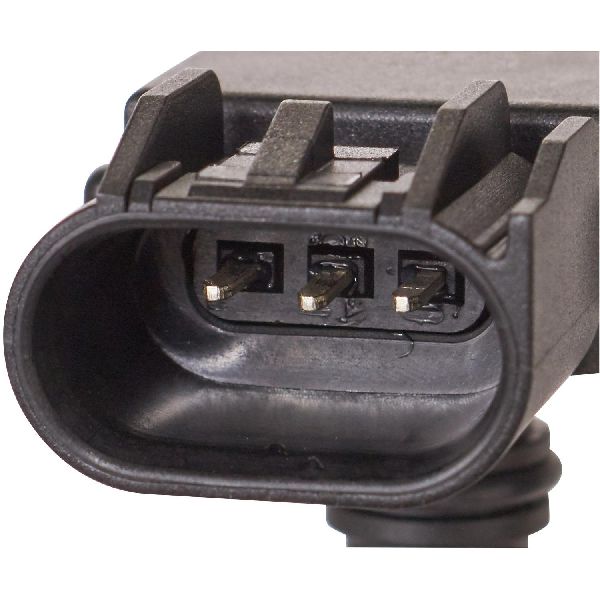
How to confirm: Visually inspect the wiring harness leading to the MAP sensor for any signs of damage, chafing, or melting. Disconnect the sensor and check for corrosion or bent pins. Check for the presence of the TSB 08-061-16 repair (heat shrink tubing on three wires).
Typical fix: Repair the damaged wiring or clean/replace the connector. A MAP sensor wire harness repair kit is available from some aftermarket suppliers.
Est. part cost: $5-$50 - Engine Vacuum Leak ⚪ Low Probability Cracked vacuum hoses or a leaking intake manifold gasket can cause MAP sensor readings that are out of the expected range, potentially triggering a correlation code. PCV hoses and intake gaskets are common points of failure with age.
How to confirm: Perform a smoke test on the intake system to reveal any leaks. Listen for hissing sounds around the engine bay at idle. Spraying soapy water on suspected areas can also reveal leaks by forming bubbles.
Typical fix: Replace the leaking hose or gasket.
Est. part cost: $10-$150
Rare But Worth Checking
- Faulty Powertrain Control Module (PCM): This is very rare. All other possibilities, especially software updates and sensor replacement, should be exhausted before considering PCM failure. A replacement PCM will require programming to the vehicle's VIN.
Diagnosis Steps

- Check for Service Bulletins: Before any other step, check with a dealer if your vehicle's VIN has any open campaigns or TSBs related to PCM updates for P1185, specifically TSB 18-061-16 and its revisions.
- Scan for Other Codes: Use an OBD-II scanner to check for other codes, especially P0108, P0106, or P0107, which point more directly to the MAP sensor.
- Inspect Wiring: Perform a thorough visual inspection of the MAP sensor connector and its wiring harness for any damage, corrosion, or loose connections. Pay close attention to the area near the serpentine belt and check for evidence of the TSB 08-061-16 wire repair.
- Verify Sensor Readings: Use a scan tool with live data capability. With the Key On, Engine Off (KOEO), compare the MAP sensor pressure reading to the Barometric Pressure (BARO) reading. They should be within a very small margin of each other (e.g., under 1.0 inHg difference). If not, the MAP sensor is the likely fault.
- Check for Vacuum Leaks: If sensor readings seem plausible, perform a smoke test to check the intake manifold, vacuum lines, and throttle body for leaks that could skew pressure readings.
- Replace MAP Sensor: If the sensor readings are incorrect or if all other checks pass, replace the MAP sensor. This is the most common hardware fix.
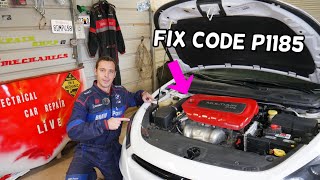
- Clear Codes and Test Drive: After the repair, clear the trouble codes and perform a test drive to ensure the fault does not return. 🎬 Watch a mechanic explain the common causes for code P1185.
Parts You'll Likely Need
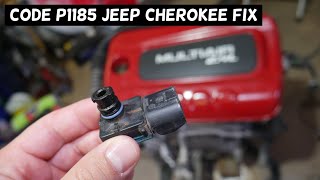
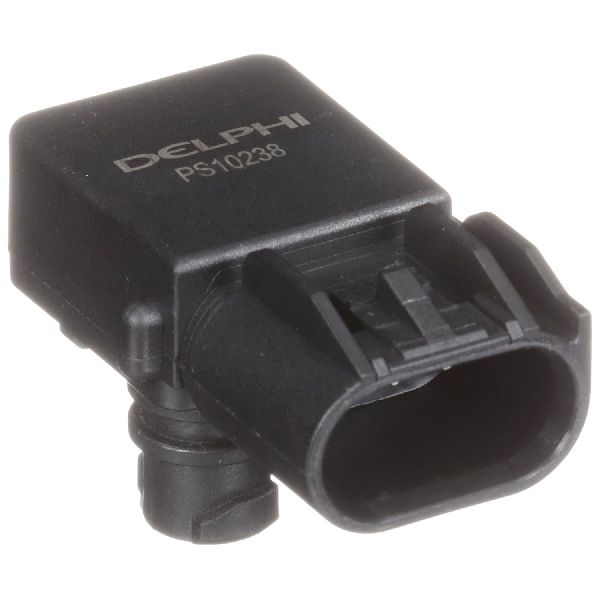
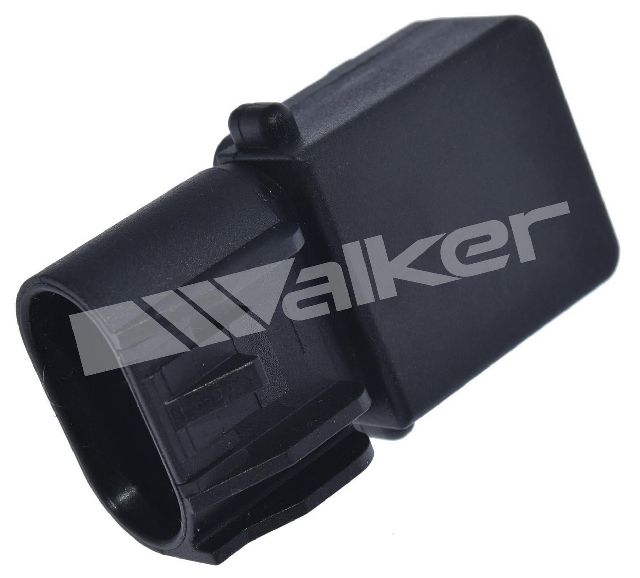
- Manifold Absolute Pressure (MAP) Sensor
(OEM #68093409AA (Verify with VIN, may be superseded))— This sensor is the most common hardware failure that causes the P1185 code by providing inaccurate pressure readings to the PCM.
Trusted brands: Mopar, Delphi, NGK/NTK, Standard Motor Products
OEM price range: $70-$120
Aftermarket price range: $40-$80
Related Codes That Often Appear With This One
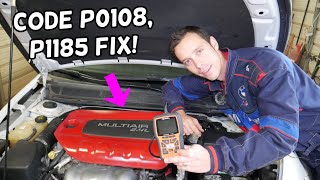
- P0108 — P0108 (Manifold Absolute Pressure/Barometric Pressure Circuit High) is a more specific MAP sensor fault that can directly trigger the P1185 correlation code. They often appear together. 🎬 See how to diagnose P1185 and P0108 codes simultaneously.
- P0128 — P0128 (Thermostat Rationality) is often listed alongside P1185 in TSBs that are resolved with a PCM software update, such as TSB 18-061-16 REV. C.
- P050D — P050D (Cold Start Rough Idle) is another code frequently bundled with P1185 in software update TSBs for the 2.4L engine.
- P0652 — P0652 (Sensor Reference Voltage 2 Circuit Low) is mentioned in TSB 08-061-16 along with P1185 as being caused by a wiring harness issue.
Technical Service Bulletins (TSBs) & Recalls
- 18-061-16 REV. C: A powertrain software update to address P1185 and other codes on 2016 models with the 2.4L engine.
- 18-061-16 REV. B: An earlier revision of the powertrain software update for 2016 models to fix P1185.
- 1806116REVA: The first revision of the software update TSB for 2016 models that includes P1185.
- 08-061-16: Details a wiring harness repair for some 2015-build vehicles that can cause P1185, P0652, and P0340.
- 1805520: Mentions P1185 - General Pressure Sensor Correlation as part of a list of potential DTCs.
- 1801617: Lists P1185 as a possible code.
Platform-Specific Known Issues
- A PCM software update is a very common fix for the 2016 model year. TSBs #18-061-16 (Revisions A, B, and C) were released to address this code among a list of others.
- On the 2.4L MultiAir engine, the MAP sensor is located on the rear of the intake manifold, close to the firewall. Mechanics report it is best accessed from underneath the vehicle after jacking it up.
- A wiring issue covered by TSB 08-061-16 affects some 2015-build vehicles, where improperly sealed wire terminations in the engine harness can cause P1185 and other codes. The fix involves sealing the exposed wires with heat shrink tubing.
Mechanic-Grade Diagnostic Values

- MAP Sensor 5V Reference Voltage — expected: ~5.0 Volts. Failure: Voltage significantly lower or higher than 5.0V indicates a PCM or wiring issue.
- MAP Sensor Ground Circuit — expected: Less than 100 millivolts (0.1V). Failure: Higher voltage indicates a poor ground connection, which can skew sensor readings.
- MAP Sensor Signal Voltage (Key On, Engine Off) — expected: ~4.5 Volts (at sea level). Failure: A significantly different voltage suggests the sensor is not reading atmospheric pressure correctly. The voltage should match the BARO sensor reading.
- MAP Sensor Signal Voltage (Engine Idling) — expected: 1.0 to 2.0 Volts. Failure: Voltage outside this range at a stable idle indicates a sensor fault or a vacuum leak.
Wiring & Ground Locations
- MAP Sensor Connector (C2, Pin 45) — On the MAP sensor, located on the rear of the intake manifold on the 2.4L engine.. This is the MAP signal wire that sends the pressure reading to the PCM. A 2016 Jeep Compass diagram shows this as a VT/BR (Violet/Brown) wire.
- MAP Sensor 5V Supply (C2, Pin 67) — On the MAP sensor connector, from the PCM.. This pin provides the 5-volt reference needed for the sensor to operate. A 2016 Compass diagram shows this as a PK/YL (Pink/Yellow) wire. Loss of this voltage will cause a fault.
- MAP Sensor Ground (C2, Pin 66) — On the MAP sensor connector, providing a ground path back to the PCM.. A poor ground at this pin will cause incorrect sensor readings. A 2016 Compass diagram shows this as a DB/DG (Dark Blue/Dark Green) wire.
- G300 / G301 — Inside the vehicle, typically under the center console or trim near the transmission shifter area.. These are interior ground points. While not directly for the MAP sensor, they provide grounds for various modules including the BCM and TCM. A poor ground here can cause widespread electrical issues that could potentially be misdiagnosed.
Real Owner Repair Stories
- YouTube Channel 'Electrical Car Repair LIVE' (2015 Dodge Dart with 2.4L MultiAir engine (same engine and likely issue as Renegade)) — Check Engine Light with codes P0108 and P1185.
❌ Tried (didn't work) The video focuses directly on the cause, not on other failed attempts.
✅ What actually fixed it The problem was a faulty MAP sensor. After replacing the MAP sensor and clearing the codes, the Check Engine Light stayed off and the pending codes did not return. - YouTube Channel '603 Mechanic Vids' (Jeep Renegade 2.4L) — Check Engine Light with code P2172 (High Airflow/Vacuum Leak), with scan tool readings showing MAP values up to 75 inHg, which is incorrect.
❌ Tried (didn't work) Tested for vacuum leaks and found none.
✅ What actually fixed it Replacing the faulty MAP sensor resolved the issue. After replacement, the live data showed a normal reading of around 8.3 inHg at idle.
OEM Part Supersession History
68093409AA→68529895AA— Part number consolidation and potential design update.
Heads up: While listed as an 'Instrument Panel Wiring' in some catalogs, multiple Mopar sites cross-reference 68529895AA as a valid MAP sensor for various FCA vehicles. However, it's critical to verify fitment with a VIN as the description is inconsistent across platforms.
Helpful Videos
We Have This Part in Stock


The information in this article is provided for general reference and educational purposes only. Vehicle specifications, procedures, and part compatibility can vary by production date, trim level, and region. Always consult your vehicle's factory service manual and verify part numbers before purchasing or performing repairs. Safety-critical components such as airbags, seat belts, and braking systems should be installed by a qualified professional.
- Jeep RENEGADE:
- 🎬 Helpful Videos
- 🛍️ Shop This Part
- What's Unique About the 2016-2017 Jeep RENEGADE
- Diagnostic Flowchart
- Symptoms You May Notice
- Most Likely Causes
- Rare But Worth Checking
- Diagnosis Steps
- Parts You'll Likely Need
- Related Codes That Often Appear With This One
- Technical Service Bulletins (TSBs) & Recalls
- Platform-Specific Known Issues
- Mechanic-Grade Diagnostic Values
- Wiring & Ground Locations
- Real Owner Repair Stories
- OEM Part Supersession History
- 🎟️ Get 5% Off