

P1185 on 2016-2017 Jeep Cherokee: General Pressure Sensor Correlation Causes and Fixes
On a 2016-2017 Jeep Cherokee with the 2.4L engine, P1185 is most often caused by outdated Powertrain Control Module (PCM) software. The first step is a dealer software update, which often fixes a dozen other potential codes simultaneously. If the code returns, the Manifold Absolute Pressure (MAP) sensor is the next likely part to fail.
- For a 2016-2017 Jeep Cherokee, P1185 almost always points to a needed PCM software update. This should be your first check.
- Do not replace any parts until you have verified with a dealer that your vehicle's software is current.
- If a part replacement is necessary after the software is confirmed to be up-to-date, the Manifold Absolute Pressure (MAP) sensor is the most likely cause.
- This code is related to air pressure sensors (MAP/BARO), not the fuel system.
What's Unique About the 2016-2017 Jeep CHEROKEE
The 2.4L MultiAir engine used in the Jeep Cherokee (KL) and other FCA vehicles of this era is known for being sensitive to this specific fault. Chrysler released multiple software updates (Technical Service Bulletins) to correct overly sensitive diagnostic logic in the PCM. These TSBs often bundle a fix for P1185 with fixes for numerous other unrelated codes, strongly indicating the root cause is a software glitch rather than a hardware failure. This makes checking for a software update the mandatory first step.
Diagnostic Flowchart
Tap your situation to follow the diagnostic path that matches what you're seeing on this vehicle.
Symptoms You May Notice
- Check Engine Light (MIL) illuminated
- Rough or unstable idle
- Reduced engine power or vehicle entering 'limp mode'
- Engine stall after startup
- Extended engine cranking time before starting
- Transmission may remain in a fixed gear when in limp mode
- Replacing the MAP sensor before checking for required PCM software updates. This is the most common mistake and often results in the code returning because the underlying software logic issue was not addressed.
- Confusing the code with a fuel pressure issue. Some generic code readers may incorrectly associate P1xxx codes with fuel systems, but on this Jeep, P1185 relates to the MAP/BARO air pressure correlation.
Most Likely Causes
- Outdated Powertrain Control Module (PCM) Software 🔴 High Probability FCA released multiple TSBs to recalibrate the PCM's sensitivity for this specific correlation check, indicating the original software logic was flawed. These updates often fix a large batch of unrelated DTCs at once, pointing to a widespread software bug.
How to confirm: Contact a Jeep dealership or a qualified shop with access to OEM service information (like a wiTECH scan tool). They can check your vehicle's VIN against applicable TSBs (like #18-110-20, #18-032-17, #18-122-16, and #18-014-17) to see if a software update is available and required.
Typical fix: Reprogramming the PCM with the latest manufacturer software. This is a dealer or specialty shop procedure and is often the complete fix.
Est. part cost: $0 - Faulty Manifold Absolute Pressure (MAP) Sensor 🟡 Medium Probability The MAP sensor provides the primary reading for this diagnostic. If it fails or provides an inaccurate reading due to internal wear or contamination, it will directly cause this correlation fault. This should only be suspected after confirming the PCM software is up to date.
How to confirm: Using a scan tool, compare the MAP sensor reading (in kPa or Volts) to the BARO reading with the key on, engine off. They should be almost identical. If the MAP reading is skewed, the sensor is likely bad.
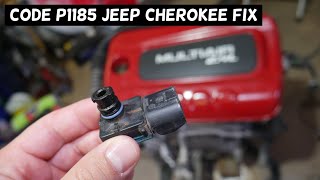
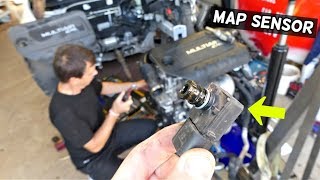
Typical fix: Replace the MAP sensor. It is located on the intake manifold. 🎬 See this walkthrough on how to replace the MAP sensor.
Est. part cost: $50-$92 - Wiring or Connector Issue at MAP Sensor ⚪ Low Probability The wiring harness can be exposed to engine heat and vibration, which may lead to a loose connection, corrosion on the pins, or chafed wires over time.
How to confirm: Visually inspect the MAP sensor connector for a secure fit and look for any signs of damage, corrosion, or backed-out pins. Check the wiring harness for any chafing or breaks, especially where it might contact other engine components. A wiggle test on the harness while monitoring live data can sometimes reveal an intermittent connection.
Typical fix: Repair the damaged wiring or clean/replace the connector pigtail.
Est. part cost: $5-$30
Rare But Worth Checking
- Significant Vacuum Leak: A large vacuum leak from a cracked hose or failed intake gasket could cause irrational MAP sensor readings. However, this would typically be accompanied by other codes like P2172 (High Airflow/Vacuum Leak Detected) and noticeable hissing sounds from the engine bay.
- Faulty VVT Oil Control Solenoid: In some cases, a malfunctioning Variable Valve Timing (VVT) solenoid can cause erratic engine behavior that the PCM misinterprets as a pressure correlation fault. This is less common and would likely be accompanied by other VVT-related codes.
- Faulty Powertrain Control Module (PCM): This is very rare. Before condemning the PCM, all other possibilities, especially software updates and the MAP sensor circuit, must be exhaustively ruled out.
Diagnosis Steps
- Connect a scan tool and confirm P1185 is the active code. Note any other codes present, as they can provide valuable clues (e.g., P0335, U1504).
- Crucial First Step: Contact a Jeep dealer or qualified repair shop to determine if your vehicle's VIN has an open TSB or requires a PCM software update related to P1185. This is the most likely fix and must be done before replacing parts.
- If software is up to date, proceed with hardware diagnosis. With the key on and engine off, use the scan tool to view live data for the MAP sensor and BARO sensor. Compare their values.
- The readings should be nearly identical (within a small margin). If the MAP sensor reading is significantly different from the BARO reading, the MAP sensor or its circuit is suspect.
- Visually inspect the MAP sensor connector and its wiring harness for any signs of damage, corrosion, or loose connections. Pay attention to grounds; a loose main ground can cause a variety of strange electrical issues.
- If the wiring looks good, test the MAP sensor circuit. Check for a 5-volt reference signal and a good ground at the connector.
- If the circuit tests are good but the live data reading is incorrect, the MAP sensor has failed and should be replaced.
- After any repair (including a software update), clear the codes and perform a complete drive cycle to ensure the fault does not return.
Parts You'll Likely Need
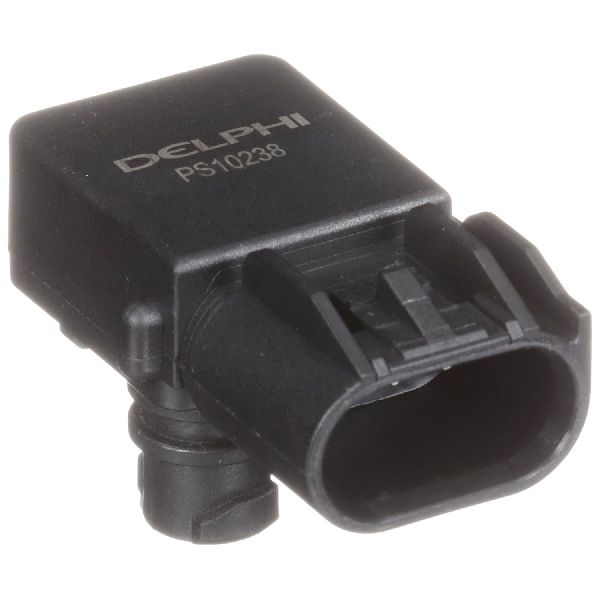
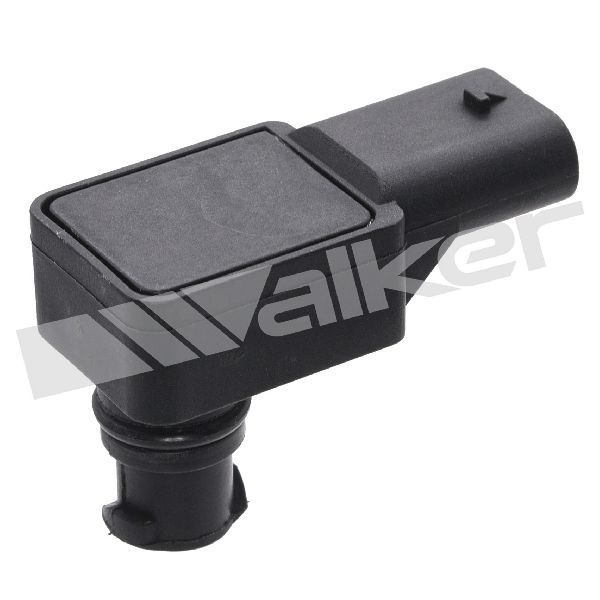
- Manifold Absolute Pressure (MAP) Sensor
(OEM #68271094AB (supersedes 68271094AA))— This is the most common hardware failure to cause P1185, but only after a PCM software update has been ruled out. It provides the pressure reading that is being correlated with the BARO sensor.
Trusted brands: Mopar, Bosch, NTK, Standard Motor Products
OEM price range: $70-$110
Aftermarket price range: $40-$90
Related Codes That Often Appear With This One
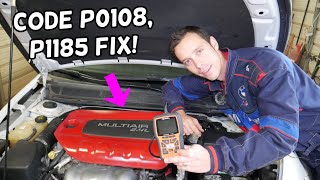
- P0108 — P0108 means 'Manifold Absolute Pressure / Barometric Pressure Circuit High'. Since both codes involve the MAP sensor, a failing sensor or wiring issue can trigger both simultaneously. 🎬 Watch: How to diagnose and fix codes P0108 and P1185.
- P0335 — This is a Crankshaft Position Sensor code. It is listed alongside P1185 in several TSBs (like #18-032-17) as being resolved by the same PCM software update, indicating a software glitch is the common cause for both appearing.
- U1504 — This is a network code for 'Implausible Message Data Length Received From Steering Angle Sensor'. It is also mentioned in TSB #18-110-20 as a code that can be resolved with a PCM flash, highlighting how the software bug can cause seemingly unrelated electrical codes.
- P0128 — This 'Thermostat Rationality' code is frequently listed in the same TSBs as P1185. Its appearance alongside P1185 further strengthens the case for a PCM software update being the required fix.
Technical Service Bulletins (TSBs) & Recalls
- 18-110-20: For 2017 models, lists P1185 as one of many DTCs (including U1504, U1424, P0101, P0128, P0300s) fixed by a PCM software update. Also notes a symptom of the transmission staying in a fixed gear during limp mode.
- 18-032-17: For 2016 models, lists P1185 along with P0335 (Crankshaft Position Sensor) and wheel speed sensor codes as being resolved by a PCM software update.
- 18-122-16: An earlier TSB for 2016 models that also lists P1185 as a code fixed by a PCM software update.
- 18-014-17: A TSB for 2014-2015 models that also includes P1185 as a code fixed by a PCM flash, showing the issue persisted across model years and was consistently addressed with software.
Platform-Specific Known Issues
- A high number of Technical Service Bulletins (TSBs) were issued by FCA for the 2.4L engine to resolve this code via a software update, indicating a widespread issue with the original PCM calibration. [Bulletin #18-110-20, #18-032-17, #18-122-16, 4]
Mechanic-Grade Diagnostic Values
- MAP Sensor vs. BARO Sensor Reading (Key On, Engine Off) — expected: Within 0.5 psi (1 inHg or ~3.4 kPa) of each other.. Failure: A difference greater than the specified tolerance indicates a fault in the MAP sensor or its circuit.
- MAP Sensor 5V Reference Wire Voltage — expected: Approximately 4.5 - 5.0 Volts with key on.. Failure: Significantly lower or no voltage indicates a wiring issue or a problem with the PCM's 5V supply.
- MAP Sensor Ground Wire Voltage — expected: Less than 100 millivolts (0.10 Volts).. Failure: Higher voltage indicates a poor ground connection, which can skew sensor readings.
- MAP Sensor Signal Voltage (Key On, Engine Off) — expected: Approximately 4.5 Volts (reflecting atmospheric pressure).. Failure: A voltage that is significantly lower suggests a faulty sensor or circuit issue.
- MAP Sensor Signal Voltage (Engine at Idle) — expected: Between 1.0 and 2.0 Volts (reflecting engine vacuum).. Failure: Voltage remaining high (near 4.5V) or dropping too low indicates the sensor is not responding to vacuum correctly.
Scan Tool Commands That Help
- wiTECH: MAP/BARO Rationality Test — This is the specific function the PCM uses to compare the MAP and BARO sensor readings with the key on and engine off. A technician can monitor these values in the live data section to confirm if they are within the expected range before the PCM sets the P1185 code.
Wiring & Ground Locations
- Main Engine/Transmission Ground — A cable runs from the negative battery terminal to the chassis/frame, and a second strap connects from the frame to a stud on the side of the transmission case.. The PCM and its sensors rely on a solid engine-to-chassis ground. A loose, corroded, or broken ground strap at the transmission can cause floating or incorrect voltage readings for multiple sensors, including the MAP sensor, leading to correlation codes like P1185.
- MAP Sensor Connector — On the rear of the intake manifold, close to the firewall. Access is often difficult and may be easier from underneath the vehicle.. This is the direct connection point for the sensor. Due to its location, it is subject to heat and vibration which can cause the connector to become loose or the pins to corrode, directly interrupting the 5V reference, ground, or signal wire.
Real Owner Repair Stories
- Reddit user on r/AskMechanics (2009 Chevy Silverado 1500 6.0L (similar correlation code P0069)) — Check Engine Light with code P0069 (MAP/Baro correlation). Code would return after being cleared, usually while driving.
❌ Tried (didn't work) Replacing the MAP sensor (had been replaced a year prior)., Verifying the 5.0V reference to the MAP sensor was good.
✅ What actually fixed it The user identified a short in the barometric pressure sensor's pigtail harness connector. Replacing the BARO sensor and the pigtail harness resolved the fluctuating readings and the short circuit, which was the root cause of the correlation fault.
OEM Part Supersession History
68271094AA→68271094AB— Standard part revision by the manufacturer, likely for improved reliability or a change in supplier.
Helpful Videos
We Have This Part in Stock


The information in this article is provided for general reference and educational purposes only. Vehicle specifications, procedures, and part compatibility can vary by production date, trim level, and region. Always consult your vehicle's factory service manual and verify part numbers before purchasing or performing repairs. Safety-critical components such as airbags, seat belts, and braking systems should be installed by a qualified professional.
- Jeep CHEROKEE:
- 🎬 Helpful Videos
- 🛍️ Shop This Part
- What's Unique About the 2016-2017 Jeep CHEROKEE
- Diagnostic Flowchart
- Symptoms You May Notice
- Most Likely Causes
- Rare But Worth Checking
- Diagnosis Steps
- Parts You'll Likely Need
- Related Codes That Often Appear With This One
- Technical Service Bulletins (TSBs) & Recalls
- Platform-Specific Known Issues
- Mechanic-Grade Diagnostic Values
- Scan Tool Commands That Help
- Wiring & Ground Locations
- Real Owner Repair Stories
- OEM Part Supersession History
- 🎟️ Get 5% Off