

P1185 on 2009-2015 Hyundai Tucson 2.0L Diesel: Causes for Maximum Fuel Pressure Exceeded
This code means the fuel pressure is dangerously high, usually due to a faulty fuel pressure regulator. The vehicle will enter a low-power limp mode. Expect to replace either the regulator on the high-pressure pump or the one on the fuel rail, after first checking the fuel filter.
- P1185 means fuel pressure is too high, which forces the Tucson into a protective low-power limp mode.
- The most likely cause is a sticking fuel pressure regulator. Your engine has two: one on the pump and one on the rail. Diagnosis is needed to find the culprit.
- Before replacing expensive parts, always start by replacing the diesel fuel filter, as a clogged filter is a common and inexpensive potential cause.
- Do not immediately replace the fuel injectors; the loud clattering noise they make is a symptom of the high pressure, not the cause.
- This is not a beginner-friendly DIY repair due to the extreme pressures of the common rail system. Professional service is recommended.
What's Unique About the 2009-2015 Hyundai Tucson
The 2009-2015 Tucson (LM generation) with the D4HA 'R-Line' engine uses a sophisticated 'Dual Pressure Control' common rail system. Unlike earlier diesel engines that used a single regulator on the fuel rail, this system uses two: an Inlet Metering Valve (IMV or Suction Control Valve - SCV) on the high-pressure pump to control fuel entry, and a Pressure Regulator Valve (PRV or DRV) on the fuel rail to bleed off excess pressure. This dual-valve design allows for more precise pressure control but also introduces two potential points of failure for regulation, making diagnosis slightly more complex than on older single-regulator systems.
Symptoms You May Notice
- Check Engine Light is on
- Vehicle enters a low-power 'limp' mode, often limited to 3,000 RPM
- Significant loss of engine power and sluggish acceleration
- Engine may stall, particularly during or after hard acceleration
- Loud 'ticking' or 'clattering' noise from the engine, especially when cold or decelerating. This is often the injectors making noise due to excessive pressure.
- Rough or unstable idle
- Engine may be difficult to start, or may start and then immediately shut down
- Replacing the fuel injectors. Noisy injectors are a common symptom of the excessive pressure, not the cause of it. The high pressure makes them clatter loudly.
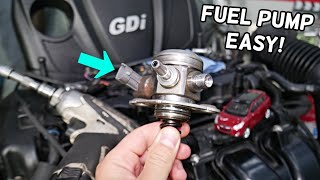
- Replacing the high-pressure fuel pump. While a possibility, 🎬 See this high-pressure fuel pump replacement walkthrough the regulators that control the pump's pressure are far more common failure points and should be diagnosed first.
Most Likely Causes
- Faulty Fuel Pressure Regulator Valve (Sticking) 🔴 High Probability The D4HA engine has two regulators (one on the pump, one on the rail) that are known wear items. They can stick due to internal wear or contamination from debris or poor-quality fuel.
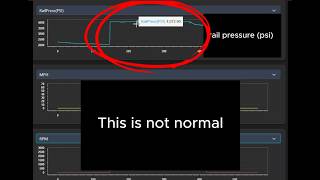
How to confirm: With a diagnostic scan tool, monitor 'Actual Fuel Rail Pressure' and 'Target Fuel Rail Pressure'. If the actual pressure is significantly higher than the target, especially spiking during acceleration just before limp mode engages, a regulator is failing.
Typical fix: Replace the faulty regulator. Diagnosis is required to determine if the fault lies with the Inlet Metering Valve (on the pump) or the Pressure Regulator Valve (on the rail). Many owner experiences point to the pump-mounted SCV/IMV as the more frequent culprit.
Est. part cost: $70-$250 - Clogged Fuel Filter 🟡 Medium Probability As a standard maintenance item, a clogged filter can restrict fuel flow, causing the high-pressure pump to work erratically and leading to pressure spikes. Some owners report this as a recurring maintenance need every 20,000 miles to prevent issues, especially in cold climates where fuel can 'wax'.
How to confirm: Check vehicle service records. If the filter hasn't been replaced per the maintenance schedule (typically every 20,000-40,000 miles), replace it as a first step.
Typical fix: Replace the fuel filter assembly. This is a basic maintenance task that should be performed before replacing more expensive components.
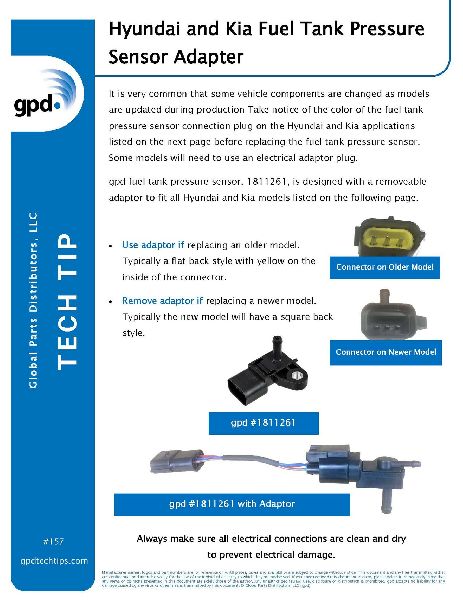
Est. part cost: $40-$80 - Faulty Fuel Rail Pressure Sensor (RPS) ⚪ Low Probability The sensor that reads the pressure can fail and send an erroneously high signal to the ECM, triggering the P1185 code even if the mechanical pressure is normal.
How to confirm: If the fuel pressure reading on a scan tool is stuck at a maximum value or does not change with engine RPM, the sensor is suspect. A technician may also test the sensor's voltage output.
Typical fix: Replace the fuel rail pressure sensor.
Est. part cost: $60-$150
Rare But Worth Checking
- Wiring Harness Damage: A short or open circuit in the wiring for the pressure regulators or the rail pressure sensor can mimic a component failure. Always visually inspect the harness and connectors for damage or corrosion before replacing parts.
- Leaking or Stuck Fuel Injectors: While uncommon to cause high pressure, a malfunctioning injector can sometimes disrupt rail pressure dynamics. This is typically diagnosed with an injector leak-off test after other causes have been ruled out.
Diagnosis Steps
- Connect a diagnostic scan tool and confirm P1185 is the primary code stored.
- Check for any other related fuel system codes like P1186 or P0088.
- Access the live data stream on the scan tool. Monitor 'Target Fuel Rail Pressure' and 'Actual Fuel Rail Pressure'.
- Start the engine. At idle, the pressure should be stable at around 250-300 bar.
- If safe to do so, briefly and gently raise the engine RPM. Observe if the 'Actual' pressure spikes dramatically higher than the 'Target' pressure. A spike that triggers limp mode strongly indicates a regulation problem.
- If pressure regulation is confirmed to be faulty, the next step is to replace the fuel filter as a low-cost, essential maintenance item. Clear codes and re-test.
- If the problem persists, further diagnosis is needed to isolate which of the two pressure regulators (on the pump or on the rail) is at fault. This may require advanced scan tool functions or component-level testing. Many mechanics will start with the pump-mounted SCV/IMV as it is a more frequent failure point.
- Inspect the wiring and connectors for the fuel rail pressure sensor and both regulators for any visible damage, corrosion, or loose pins.
- If regulators and wiring are good, the Fuel Rail Pressure Sensor itself may be faulty and require testing or replacement.
Parts You'll Likely Need
- Fuel Pressure Regulator (Inlet Metering Valve / Suction Control Valve)
(OEM #31402-2F000 (cross-references to Bosch 0928400707 or 0281006037))— This valve, located on the high-pressure fuel pump, is a very common failure point for causing pressure regulation issues on this engine.
Trusted brands: Bosch, Delphi, Hyundai (Genuine)
OEM price range: $150-$250
Aftermarket price range: $70-$150 - Fuel Pressure Regulator (on Rail, DRV)
(OEM #31402-27010 (cross-references to Bosch 0281002718))— This second regulator, located on the common fuel rail, is the other primary cause of pressure spikes when it fails or sticks. While also a common cause, some mechanics report it fails less frequently than the pump-mounted SCV.
Trusted brands: Bosch, Hyundai (Genuine)
OEM price range: $120-$200
Aftermarket price range: $60-$120 - Fuel Rail Pressure Sensor
(OEM #31400-4A700)— This sensor reports the pressure to the ECM. If it fails and sends a false high reading, it will trigger P1185.
Trusted brands: Bosch, Hyundai (Genuine)
OEM price range: $100-$180
Aftermarket price range: $60-$120 - Diesel Fuel Filter
(OEM #31922-2E900 (cartridge) or similar assembly)— A clogged filter is a common maintenance failure that can cause erratic fuel pressure and should be replaced as a first step in diagnosis.
Trusted brands: Mann-Filter, Mahle, Bosch, Hyundai (Genuine)
OEM price range: $40-$80
Aftermarket price range: $25-$50
Related Codes That Often Appear With This One
- P1186 — This code means 'Fuel Pressure Too Low'. Seeing both P1185 and P1186 intermittently suggests a highly unstable fuel system, pointing strongly towards a failing pressure regulator that is sticking in both open and closed positions.
- P0088 — This is the generic SAE code for 'Fuel Rail/System Pressure - Too High'. It is the equivalent of P1185 and confirms the same fault condition. 🎬 Watch: How to diagnose P0088 fuel pressure issues
Mechanic-Grade Diagnostic Values
- Fuel Rail Pressure at warm idle — expected: ~270 bar. Failure: Significantly higher than target pressure, or erratic readings.
- Fuel Rail Pressure Sensor (RPS) signal voltage at warm idle — expected: Under 1.7V. Failure: Voltage is stuck high (near 4.5-5.0V) or does not change with engine load.
- Fuel Rail Pressure Sensor (RPS) signal voltage range — expected: ~0.5V at low pressure (<50 bar) to ~4.5V at high pressure (>2000 bar). Failure: Voltage is outside this range or does not respond linearly to pressure changes.
- Fuel Rail Pressure Sensor (RPS) internal resistance — expected: ~1.8 kΩ at room temperature. Failure: Reading is significantly different, open (OL), or shorted.
- Inlet Metering Valve (IMV/SCV) resistance — expected: A specific value is not published, but a functional test is to check for a reading that is not an open circuit (infinite) or a dead short (near zero ohms).. Failure: Open circuit or short circuit reading on a multimeter.
- P1185 Trigger Threshold — expected: Actual pressure should closely follow target pressure.. Failure: Code sets when actual pressure is >200-350 bar above target, or exceeds a system maximum of ~1750 bar.
Scan Tool Commands That Help
- Hyundai GDS (or equivalent advanced scanner): Resetting Adaptive Values / Reset Engine Adaptive Values — This function should be performed after replacing fuel system components like the fuel rail pressure sensor or regulators. It clears the old learned data from the ECM, allowing it to adapt to the new component's characteristics correctly.
- Hyundai GDS (or equivalent advanced scanner): Fuel Pressure Test (Actuator Test) — Some advanced scan tools may have an actuator test function to command the fuel pressure regulators (IMV and DRV) to specific duty cycles. This allows a technician to verify if the regulators respond to commands and can control pressure, helping to isolate a faulty component without removing it.
Wiring & Ground Locations
- Fuel Rail Pressure Sensor (RPS) Connector — Located on the common fuel rail, often near the center or one end of the rail, mounted to the engine.. This 3-pin connector provides power, ground, and signal for the sensor. Corrosion or damage here can cause incorrect high-pressure readings. Pin 1 is typically +5V power from ECM, Pin 2 is the signal wire, and Pin 3 is the ground.
- ECM Connector (e.g., C100-A) — The main connector(s) at the Engine Control Module (ECM), typically located in the engine bay.. A poor connection at the ECM pins for the RPS can cause the fault. On some models, the RPS signal is on pin 39, ground on pin 38, and +5V on pin 102. Verifying continuity from the sensor to these pins is a key diagnostic step. Technicians should consult the specific wiring diagram for the 2009-2015 Tucson.
- Engine Ground Points — Multiple locations on the engine block, cylinder head, and chassis. Specific diagrams are needed for exact locations.. A poor engine or sensor ground can cause floating voltage references and lead to inaccurate sensor readings, potentially tricking the ECM into thinking pressure is too high.
Real Owner Repair Stories
- Honest John Forums Back Room (2013 Hyundai ix35 1.7L CRDi (sister engine to 2.0L, same issue applies)) — Vehicle would not go above 3000 RPM (limp mode), low on power, and cut out completely on two occasions.
❌ Tried (didn't work) Initially blamed on type of fuel (supermarket vs. branded), but this was ruled out.
✅ What actually fixed it The problem was identified as a blocked ('waxed') fuel filter, which was struggling to supply enough fuel in cold weather, causing pressure regulation problems. Replacing the fuel filter resolved the issue.
OEM Part Supersession History
Bosch 0281002718 (Rail Regulator, DRV)→Bosch 0281002732— Internal revision or update by the manufacturer.
Heads up: The parts are listed as fully interchangeable.Bosch 0928400707 (Pump Regulator, IMV/SCV)→Bosch 1462C00994— Alternative part numbering by Bosch for the same component.
Heads up: The parts are listed as fully interchangeable.Hyundai 31402-2F000 (Pump Regulator, IMV/SCV)→Bosch 0281006037— This is the Bosch OEM part number that corresponds to the Hyundai part number.
Heads up: These are cross-references for the same part.
Model Year Variations Within This Range
- 2009-2015: The D4HA engine in this generation consistently uses the 'Dual Pressure Control' system with two regulators (one on the pump, one on the rail). This differs from older single-regulator CRDi systems but is consistent across the specified model years.
Diagnostic Flowchart
Other Known Issues on This Vehicle
Issues unrelated to this code that are worth knowing about as an owner of this generation:
- Diesel Particulate Filter (DPF) Clogging 🔴 High — Common for vehicles used primarily for short, city-based trips that don't allow for complete DPF regeneration cycles. Can occur from 100,000 km onwards.
- Timing Chain Wear/Rattle 🔴 High — Can become noticeable between 80,000 and 120,000 km, particularly on higher-output versions. Symptoms include a rattling noise on a cold start.
- Dual-Mass Flywheel (DMF) Failure 🟠 Medium — More common on manual transmission models, with symptoms appearing after 100,000 km. Symptoms include vibrations and rattling noises at idle.
- Automatic Transmission Shift Quality Issues 🟠 Medium — Some owners report jerky shifting or transmission failure between 100,000-150,000 km, with 2012 models noted as being particularly affected.
Used vs. New Parts: Buying Guide for This Vehicle
When a used part is the smart pick: For this specific fault, using used parts is highly discouraged. The primary causes—fuel pressure regulators and the pressure sensor—are wear-and-tear items. A used part from a salvage yard carries a high risk of having the same issue or failing shortly after installation. A used complete high-pressure pump assembly might be considered only if from a very low-mileage, verified running vehicle, but the regulators on it would still be a gamble.
Donor-vehicle mileage cap: roughly under 60000 miles for the part to have meaningful remaining life.
What to inspect on the donor part:
- Verify the donor vehicle was running before being dismantled.
- Inspect the part for any signs of external damage, corrosion, or contamination.
- Avoid parts from vehicles that show signs of long-term outdoor storage or flood damage.
OEM-only on this vehicle (don't cheap out):
- Fuel Pressure Regulator (Inlet Metering Valve / SCV)
- Fuel Pressure Regulator (on Rail, DRV)
- Fuel Rail Pressure Sensor
Aftermarket brands forum-validated for this vehicle:
- Bosch (This is the Original Equipment Manufacturer for the fuel system)
Brands owners have reported issues with on this vehicle:
- Unbranded 'white-box' parts from online marketplaces. These often have incorrect calibrations or high premature failure rates, leading to repeat repairs.
Real Owner Stories
Aggregated from forums and TSBs cited above. Mileages and costs reflect what owners reported in those sources.
2014 Hyundai ix35 2.0 CRDi
Symptoms: The owner described a knocking sound and clatter coming from the engine while at idle or driving at low speeds.
What fixed it: While the specific thread focused on symptom corroboration, the technical context identifies this clatter as injectors making noise due to excessive pressure, typically resolved by replacing the failing fuel pressure regulator (SCV/IMV).
Source hint: Reddit r/MechanicAdvice: Hyundai IX35 (2014, 2.0 CRDi, 184 hp automatic) rough idle & knocking sounds
Related OBD-II Codes
Frequently Asked Questions
My 2014 ix35 2.0 CRDi has a loud knocking sound at idle; could this be related to P1185?
Which regulator is more likely to fail on the D4HA engine, the one on the pump or the rail?
How often should I change the fuel filter on my Tucson diesel to avoid P1185 pressure spikes?
Can I use a used Fuel Rail Pressure Sensor from a salvage yard to fix this code?
Why does my Tucson enter a 'limp mode' limited to 3,000 RPM when P1185 triggers?
Is the P1185 code common on other Hyundai or Kia models with the R-Line engine?
Helpful Videos
We Have This Part in Stock


The information in this article is provided for general reference and educational purposes only. Vehicle specifications, procedures, and part compatibility can vary by production date, trim level, and region. Always consult your vehicle's factory service manual and verify part numbers before purchasing or performing repairs. Safety-critical components such as airbags, seat belts, and braking systems should be installed by a qualified professional.
- Hyundai Tucson:
- 🎬 Helpful Videos
- 🛍️ Shop This Part
- What's Unique About the 2009-2015 Hyundai Tucson
- Symptoms You May Notice
- Most Likely Causes
- Rare But Worth Checking
- Diagnosis Steps
- Parts You'll Likely Need
- Related Codes That Often Appear With This One
- Mechanic-Grade Diagnostic Values
- Scan Tool Commands That Help
- Wiring & Ground Locations
- Real Owner Repair Stories
- OEM Part Supersession History
- Model Year Variations Within This Range
- Diagnostic Flowchart
- Other Known Issues on This Vehicle
- Used vs. New Parts: Buying Guide for This Vehicle
- Real Owner Stories
- 2014 Hyundai ix35 2.0 CRDi
- Related OBD-II Codes
- Frequently Asked Questions
- 🎟️ Get 5% Off